
Discus are notoriously picky eaters, and choosing the wrong diet can stunt their growth, dull their colors, and foul your water quickly. The market is flooded with low-grade flakes and pellets packed with fillers your fish will ignore, making finding a nutritionally complete meal that actually appeals to them a frustrating trial-and-error process.
I’m Mo Mahin — the founder and writer behind Furric. I’ve spent the last fifteen years studying the aquatics market, cross-referencing ingredient lists, analyzing manufacturer quality claims, and meticulously reading through hundreds of owner experiences to find the formulas that truly deliver on protein content, color enhancement, and digestive health for discus.
After comparing five top-tier options side by side, I’m ready to share the results. This guide breaks down the best formulas on the market for your prized fish, helping you select the absolute best food for discus fish to keep them thriving and vibrant.
How To Choose The Best Food For Discus Fish
Discus have unique dietary needs that separate them from standard tropical community fish. A wrong choice can lead to stunted growth, faded colors, and digestive blockages. Focus on these four factors to pick a winner.
Crude Protein Content
Discus are carnivores that demand a protein-rich diet. Look for a guaranteed analysis showing at least 45% crude protein, with premium options hitting 50% or higher. Lower protein levels force your fish to eat more, generating excess waste and ammonia in the tank.
Natural Color Enhancers vs. Artificial Dyes
Vibrant discus colors come from natural carotenoids like astaxanthin (from Haematococcus algae) and spirulina. These ingredients are biologically available and safe. Avoid foods that list “artificial colors” or “FD&C dyes” — these provide a superficial tint and offer no nutritional benefit.
Form and Texture
Flakes float and appeal to surface feeders, while sinking granules match the natural bottom-grazing behavior of discus. Slow-sinking pellets that soften without swelling are ideal because they prevent bloating and let every fish get a share before the food disintegrates.
Probiotic and Digestive Support
Discus have sensitive digestive tracts. Formulas that include BS probiotics or other beneficial bacteria help establish a healthy gut microbiome, improve nutrient absorption, and break down waste compounds, leading to cleaner water and less frequent maintenance.
Quick Comparison
On smaller screens, swipe sideways to see the full table.
| Model | Category | Best For | Key Spec | Amazon |
|---|---|---|---|---|
| Ultra Fresh 2.12oz | Flake | Picky eaters | 67% shrimp & krill ingredients | Amazon |
| Sera Discus Color Gran | Granule | Natural color boosting | Astaxanthin + Spirulina | Amazon |
| Hikari Bio-Gold | Pellet | Maximum growth | Crude Protein min 50% | Amazon |
| Seachem NutriDiet Flakes | Flake | Appetite stimulation | Contains Chlorella Algae | Amazon |
| Ultra Fresh 7.05oz | Flake | Long-term value supply | 200g bulk bottle | Amazon |
In‑Depth Reviews
1. Ultra Fresh Tropical Fish Flakes 2.12oz
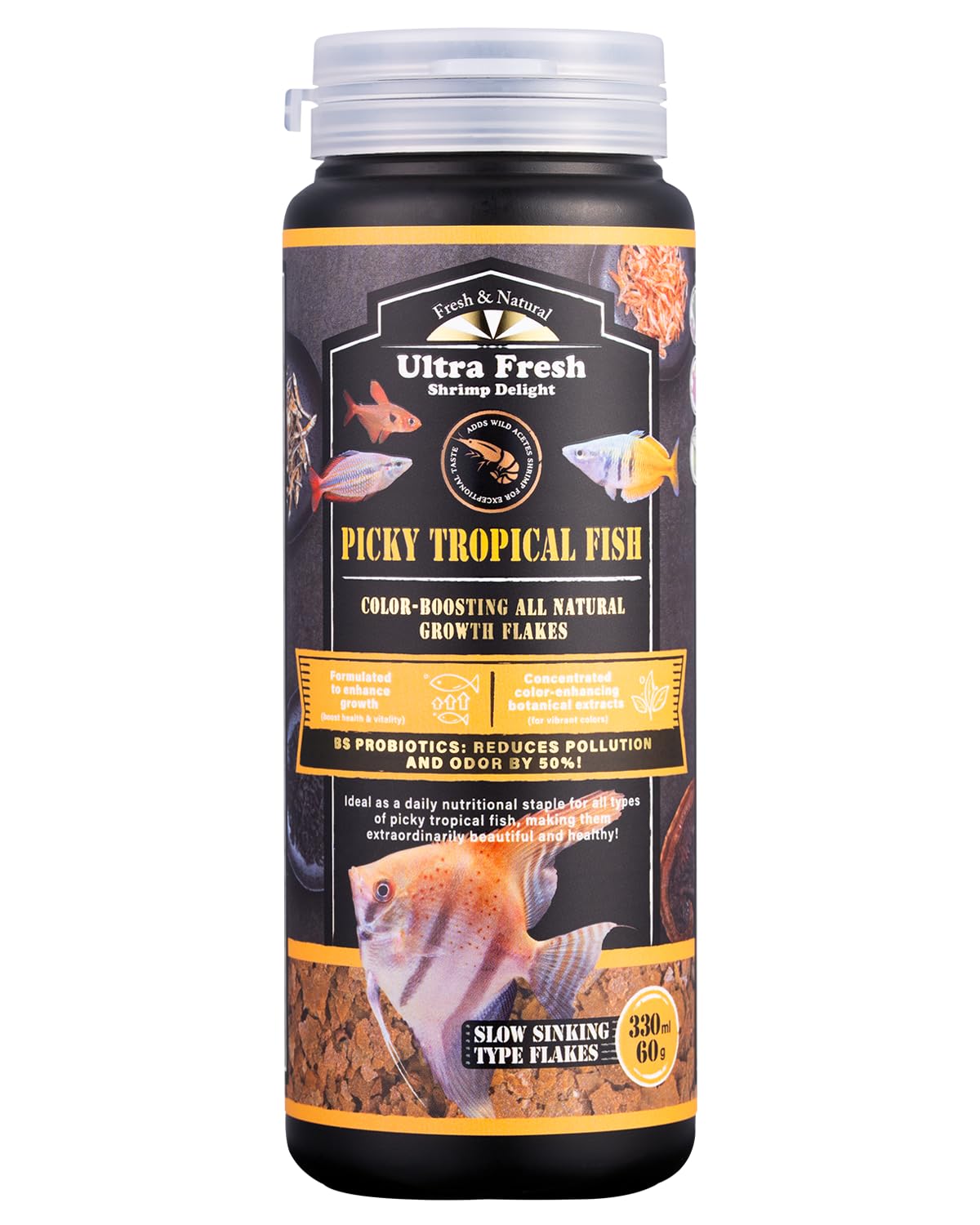
The Ultra Fresh Flakes earn the top spot because they solve two discus problems at once: picky eating and water quality. With 67% of the formula consisting of acetes shrimp, sardines, and antarctic krill, even the most reluctant discus in your tank will come out to feed. The inclusion of BS probiotics is a standout feature — these beneficial bacteria break down ammonia and hydrogen sulfide in waste, reducing water odor and pollution by up to 50%.
Beyond palatability, this formula delivers comprehensive nutrition through Ganoderma polysaccharides and a full vitamin B complex. The natural plant-extracted carotenoids combined with spirulina produce visible color improvement without relying on artificial dyes or fillers. Owners consistently report that shy fish become bold at feeding time, a strong indicator of high acceptance.
The 2.12-ounce bottle is a perfect entry point to test your discus’ preference. If your fish devour it, the larger 7.05-ounce version offers a better cost-per-feed ratio. Just be mindful that flakes can float longer than sinking granules, so ensure your discus have time to feed at the surface before any bottom-dwelling tank mates intercept.
Why we love it
- Extremely high palatability for picky discus
- BS probiotics cut down water pollution significantly
- No artificial colors, flavors, or byproducts
Good to know
- Floating flakes may not suit bottom-grazing discus
- Small bottle size requires frequent repurchase
2. Sera Discus Color Gran 250ml
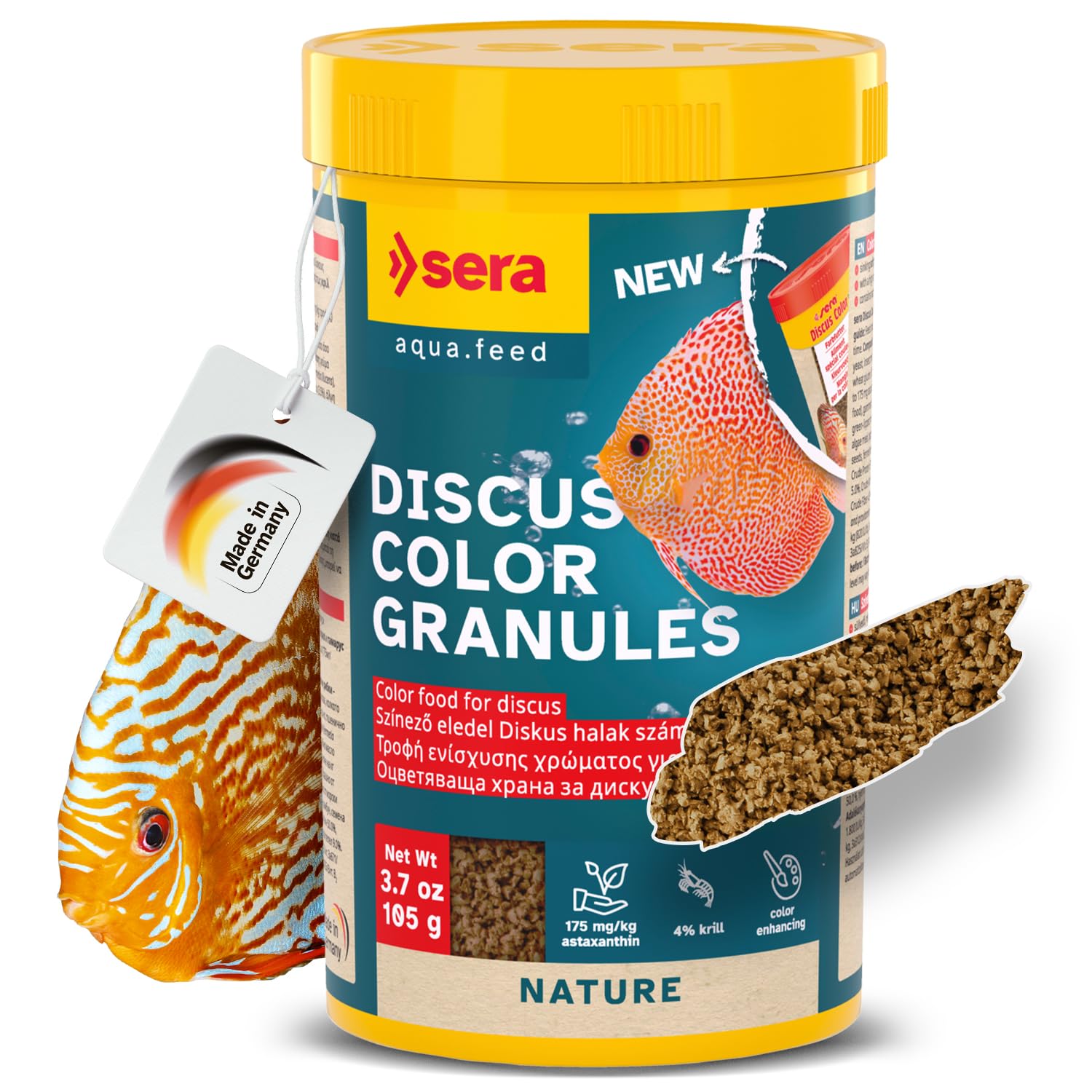
Sera targets the color-conscious discus keeper with a formula built around natural astaxanthin harvested from Haematococcus algae and spirulina. This dual-carotenoid approach produces rich reds and blues without the use of artificial dyes or preservatives. The soft granules are designed to sink slowly and become pliable without swelling, preventing the digestive bloating common with cheap pellets that expand in the stomach.
The ingredient list emphasizes aquatic protein from krill and fish, providing the essential Omega fatty acids discus need for robust immune function and fertility. Owners with multi-species tanks report that even non-discus tropical fish eagerly accept these granules, reducing the need for separate feeding regimens. The form factor minimizes waste because uneaten granules don’t break down into fine particles that cloud the water.
One important detail: the 250ml container is labeled by volume, not weight. Several buyers noted that the actual net weight is around 3.7 ounces rather than the implied 8.4 ounces. That doesn’t diminish the quality of the food, but it does mean you’ll go through the container faster than you might expect with a heavily stocked discus tank.
Why we love it
- 100% natural color enhancement without dyes
- Non-swelling granules prevent digestive issues
- Sinking format matches discus feeding behavior
Good to know
- Volume-based labeling may mislead on quantity
- Krill smell is strong and may linger on hands
3. Hikari Tropical Discus Bio-Gold 2.82 oz

Hikari Bio-Gold is the long-standing benchmark for discus growth. With a guaranteed minimum of 50% crude protein, it provides the dense amino acid profile discus require for rapid muscle development and skeletal health. The proprietary Bio-Gold formulation incorporates krill and crushed silkworm, delivering a meaty aroma that triggers an aggressive feeding response even from fish that have been on a hunger strike.
The discs are designed to float initially then slowly sink, giving surface-feeding discus first access before the pellets drift down for bottom-grazers. Owners report that discus fed on Bio-Gold alongside frozen worms show faster size gains compared to flake-only diets. The pellets produce minimal waste because the high digestibility means less undigested protein enters the water column.
The main trade-off is cost per ounce. You’re paying a premium for that 50% protein floor, and the 2.82-ounce tub doesn’t last long in a tank with multiple adult discus. Alternate feeding with a high-quality flake can stretch the tub while still providing the growth benefits. Also, some picky discus may need a gradual introduction — mixing a few pellets with their current food helps overcome initial hesitation.
Why we love it
- Industry-leading 50% crude protein for growth
- Floating-to-sinking design reduces competition
- Proven results for size and color development
Good to know
- Small tub size relative to daily feeding needs
- Some discus need time to accept the pellets
4. Seachem NutriDiet Discus Flakes 3.52 oz
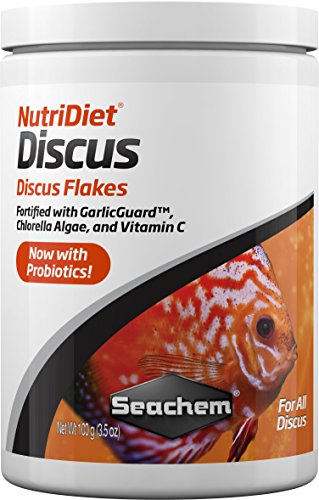
Seachem’s NutriDiet Discus Flakes are the specialist’s choice for coaxing a fish off a hunger strike. The formula combines fish, squid, and earthworm meal with chlorella algae — a nutrient-dense superfood that provides a broad spectrum of vitamins and amino acids. Multiple owners confirm that discus that refused every other food for days immediately raced to the surface when these flakes hit the water.
The inclusion of probiotics supports the digestive system by promoting nutrient uptake and reducing waste output. The flakes are designed to be highly digestible, meaning less undigested material breaks down in the tank. Several reviewers noted that water clarity improved after switching from beef heart flakes to this formula, as the Seachem flakes don’t cloud the water or leave a greasy film on the surface.
The downside is that the initial acceptance can be slow with some fish. A few owners reported their discus took several days of consistent offering before showing interest. The garlic-and-seasoning smell is distinctive and may be off-putting to the keeper, but fish seem to find it attractive. For best results, feed as much as your fish can consume in three minutes, up to three times daily.
Why we love it
- Highly effective appetite stimulant for reluctant feeders
- Chlorella algae provides complete vitamin profile
- Probiotics aid digestion and reduce waste
Good to know
- Strong garlic-like smell may be noticeable
- Some fish need a gradual transition period
5. Ultra Fresh Tropical Fish Flakes 7.05oz
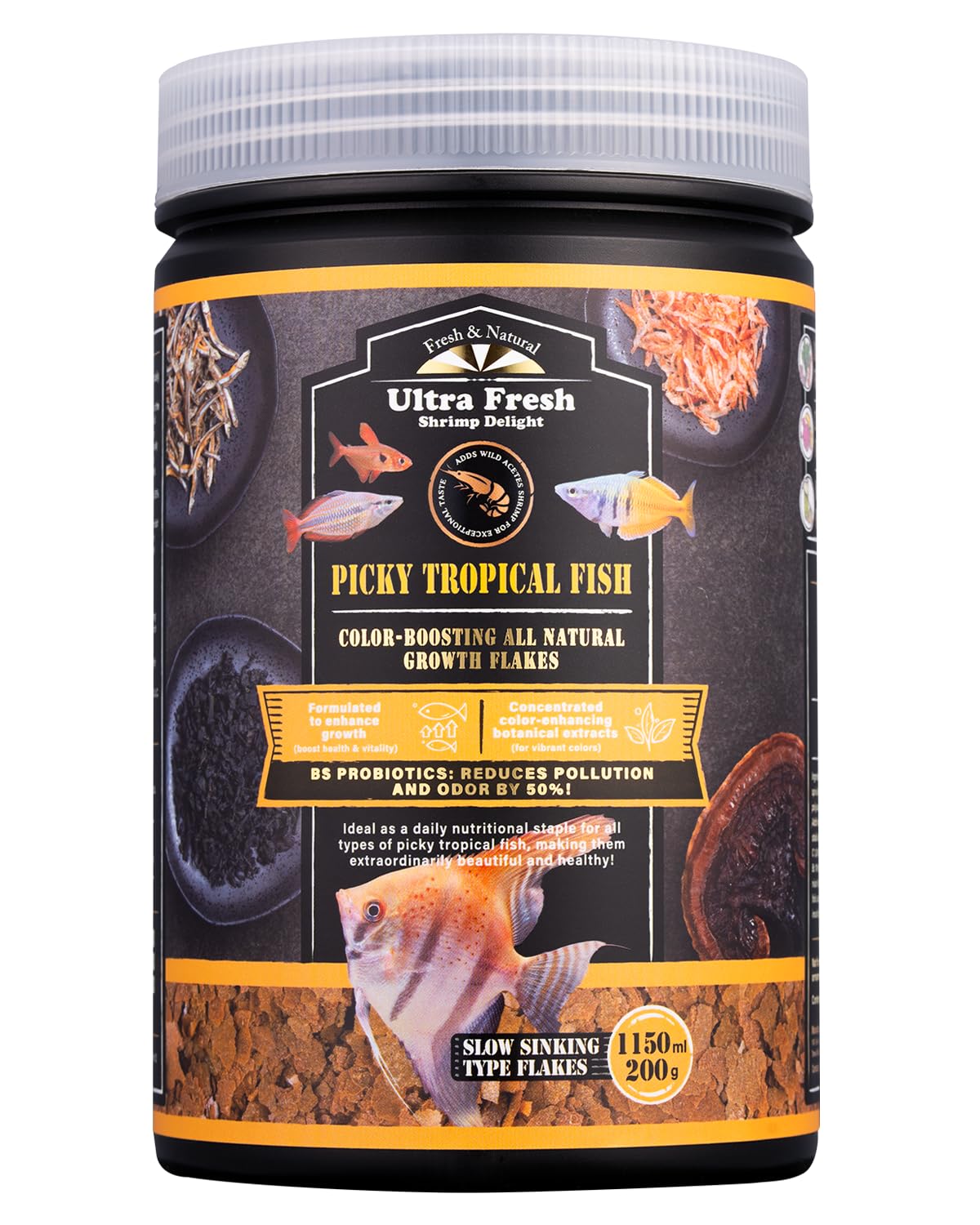
The larger 7.05-ounce bottle of Ultra Fresh Flakes is the same premium formula as the smaller 2.12-ounce version, but scaled for keepers with multiple discus or larger community tanks. The 67% shrimp, sardine, and krill composition remains identical, as does the BS probiotic inclusion that reduces water pollution by up to 50%. The bottle includes a convenient scoop for consistent portion control.
Owners appreciate that the bulk size reduces the frequency of repurchasing without sacrificing ingredient quality. The natural color-enhancing carotenoids and spirulina work just as effectively as the smaller bottle, producing visible brightening in discus within a week of consistent feeding. The lack of artificial colors, flavors, and byproducts makes it a safe daily staple.
The only real risk with the large bottle is freshness. Flakes begin to lose potency and palatability after prolonged exposure to air and light. Store the bottle in a cool, dark cabinet and always seal it tightly after each feeding. If you keep only a pair of discus in a smaller tank, the 2.12-ounce bottle is a smarter choice to ensure every flake is consumed at peak quality.
Why we love it
- Best cost-per-feed ratio for multiple discus
- Same premium ingredients as the smaller bottle
- BS probiotics keep the tank cleaner between water changes
Good to know
- Flakes lose freshness if not stored properly
- Large volume may be excessive for single-fish tanks
FAQ
Can I feed discus flakes exclusively or do they need pellets too?
How do I transition my discus to a new food if they refuse to eat it?
What crude protein percentage is ideal for juvenile discus versus adults?
Final Thoughts: The Verdict
For most keepers, the best food for discus fish winner is the Ultra Fresh 2.12oz Flakes because it combines the highest palatability for picky eaters with BS probiotics that actively reduce water pollution. If you want a natural color-enhancing granule with no artificial dyes, grab the Sera Discus Color Gran. And for maximum growth rates in juvenile discus, nothing beats the proven 50% protein formula of the Hikari Bio-Gold.