
Choosing the right fuel for a Labrador comes down to more than just the protein percentage. Labs are genetically prone to hip dysplasia, elbow issues, and weight gain — meaning a kibble that’s great for a Border Collie could actively harm a Lab’s long-term mobility. The best options deliver joint-supporting compounds like glucosamine and chondroitin, moderate fat levels to prevent obesity, and a calorie density that matches their high-energy but easily overfed nature.
I’m Mo Mahin — the founder and writer behind Furric. I’ve spent years analyzing pet food formulations, comparing guaranteed analysis panels, and cross-referencing AAFCO nutrient profiles against the specific metabolic demands of large-breed retrievers to identify which bags truly deliver measurable health benefits.
After digging through dozens of formulas and hundreds of verified owner reports, these five options stand out as the most reliable dog food for labs currently available.
How To Choose The Best Dog Food For Labs
Labrador Retrievers have unique nutritional requirements that separate them from generic large-breed dogs. Their genetic predisposition for rapid growth, joint vulnerability, and a notorious lack of a satiety switch means three specific factors matter more than anything else on the ingredient panel.
Joint Support Compounds Are Non-Negotiable
Hip and elbow dysplasia are the leading health concerns in Labs. A diet fortified with glucosamine hydrochloride and chondroitin sulfate — ideally with measured amounts on the guaranteed analysis — actively supports cartilage health and can delay the onset of degenerative joint disease. Omega-3 fatty acids from fish oil (DHA and EPA) further reduce inflammatory markers around the joints.
Calorie Density and Fat Moderation
A 70-pound intact male Lab requires roughly 1700 to 2000 kcal per day depending on activity level. Foods exceeding 400 kcal per cup push many Labs into rapid weight gain, especially after neutering. Look for formulas with moderate fat content — around 12 to 15 percent on a dry matter basis — paired with fiber sources like beet pulp or oats that promote a feeling of fullness without adding empty calories.
Kibble Shape and Eating Speed
Labs are infamous for inhaling their meals, which raises the risk of gastric dilatation-volvulus (bloat). Some breed-specific formulas use a donut-shaped or large-cross kibble that forces slower chewing. If your chosen food lacks a designed kibble geometry, a slow-feed bowl becomes a necessary add-on.
Quick Comparison
On smaller screens, swipe sideways to see the full table.
| Model | Category | Best For | Key Spec | Amazon |
|---|---|---|---|---|
| Royal Canin Labrador Retriever Puppy | Breed Specific | Puppy growth & joint development | Donut-shaped kibble, 30 lb | Amazon |
| Hill’s Science Diet Perfect Weight & Joint Support | Veterinary Diet | Weight loss & senior joint health | Omega-3 fish oil, 25 lb | Amazon |
| Eukanuba Senior Large Breed | Senior Formula | Senior Labs over 55 lb | 50% more glucosamine, 30 lb | Amazon |
| Fromm Large Breed Adult Gold | Grain Inclusive | Adult active Labs with sensitive digestion | Three protein sources, 30 lb | Amazon |
| NutriSource Adult Chicken & Rice | All Life Stages | Households with multiple dog sizes | Prebiotics & probiotics, 26 lb | Amazon |
In-Depth Reviews
1. Royal Canin Breed Health Nutrition Labrador Retriever Puppy Dry Dog Food

Royal Canin designed this formula exclusively for purebred Labrador Retrievers between 8 weeks and 15 months old, which means the calcium-to-phosphorus ratio was calibrated specifically for the breed’s rapid skeletal growth. The 30-pound bag contains a donut-shaped kibble that instinctively slows down a Lab puppy’s speed-eating habit — a critical feature during the high-risk growth phase when bloat concerns are highest. Multiple owner reports note that transitioning from a generic large-breed puppy food to this formula resolved chronic loose stools within days.
Digestibility is the standout advantage here. High-quality chicken protein paired with prebiotics supports firm, manageable stool formation, while added DHA from fish oil promotes cognitive development during the puppy’s socialization window. The kibble size also discourages gulping without requiring a separate slow-feed bowl. Owners consistently report their pups maintain a healthy body condition score without the rapid weight gain that plagues many Lab puppies on higher-calorie foods.
The breed-specific approach means this isn’t a formula you can feed to a mixed-breed household, and the price point sits at the premium end of the puppy food aisle. However, for a purebred Lab puppy’s first 15 months, the targeted joint protection, stool consistency, and eating-speed design make it a genuinely specialized tool rather than a marketing gimmick. Pair with the Royal Canin Labrador Retriever wet food if your puppy needs extra hydration or mealtime encouragement.
Why we love it
- Donut kibble shape slows rapid eating naturally
- Calcium and phosphorus levels optimized for Lab puppy bone development
- High digestibility eliminates runny stool issues common in the breed
Good to know
- Only formulated for purebred Labrador Retrievers
- Premium price tier compared to generic puppy foods
2. Hill’s Science Diet Adult Perfect Weight & Joint Support Large Breed

This formula from Hill’s tackles two problems that plague adult Labs simultaneously: obesity and joint degeneration. The clinically tested Omega-3 fish oil concentration targets hip and knee inflammation, while the calorie-controlled matrix is designed to shift metabolic function in overweight dogs. A published USA study showed over 70 percent of adult dogs lost weight within 10 weeks on this diet — a number that aligns with real owner reports of Labs dropping 5 to 8 pounds without appearing hungry or losing muscle tone.
The 25-pound bag delivers a kibble that is slightly larger than standard Hill’s Adult kibble, encouraging mindful chewing. L-carnitine is included to support fat metabolism while preserving lean muscle mass, which is critical for a breed that needs strong hindquarters to maintain mobility into their senior years. Owners of picky Labs — a relatively rare but frustrating subset — report high palatability, likely due to the chicken and brown rice base that avoids the strong fish notes some weight-management foods lean on.
The catch is cost. This sits firmly in the premium veterinary diet category, and at roughly 94 dollars per bag, it demands a serious budget commitment. It’s also designed for adult dogs between one and five years old, so senior Labs may need the additional glucosamine levels found in dedicated senior formulas. But for an overweight adult Lab that needs to shed pounds while keeping joints pain-free, this is the most evidence-backed option on the market.
Why we love it
- Clinically proven 70% weight loss success rate in controlled study
- Omega-3 fish oil actively reduces joint inflammation markers
- High palatability even for picky adult Labs
Good to know
- Premium price tier — among the most expensive per pound on this list
- Not formulated for senior dogs over 5 years old
3. Eukanuba Senior Large Breed Dry Dog Food
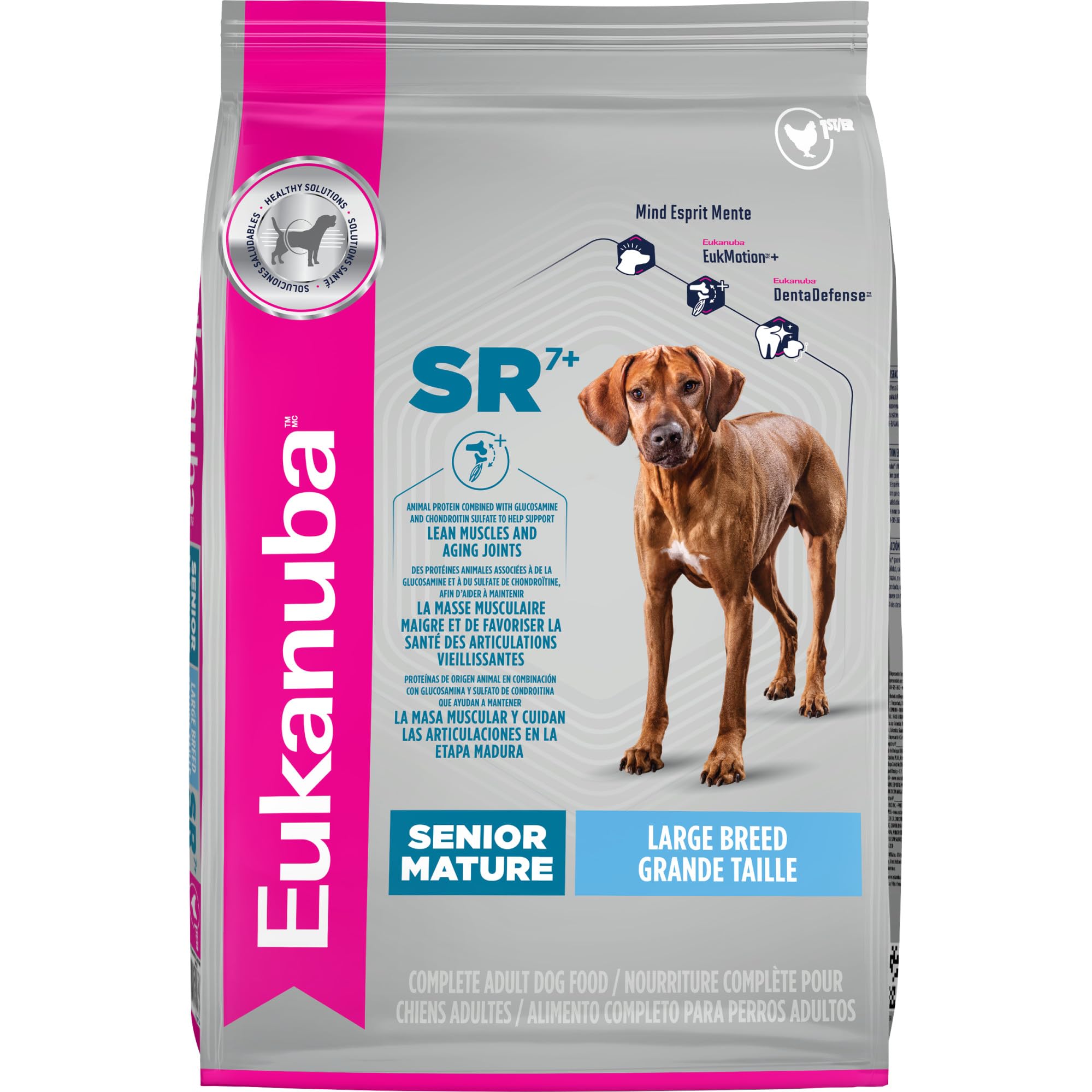
When a Lab crosses the seven-year mark, the priority shifts from muscle growth to joint preservation and cognitive function. Eukanuba Senior Large Breed delivers 50 percent more glucosamine than their adult medium-breed formula, combined with chondroitin sulfate to support synovial fluid viscosity. The 30-pound bag is designed for dogs weighing over 55 pounds — which covers virtually every adult male Lab and most females. DHA and antioxidant levels are calibrated to support continued brain function, an often overlooked concern in aging large breeds.
Owner feedback from service dog organizations — including those handling Labrador retrievers specifically — consistently points to this formula as their go-to for dogs working past age eight. The pellet size is generous enough to encourage chewing but not so large that older dogs with dental sensitivity struggle. Fat and carbohydrate levels are optimized for the lower activity patterns of senior dogs, meaning you can feed the recommended portion without seeing the mid-life weight creep that sends many older Labs to the vet for thyroid checks.
One trade-off is the flavor profile. While most dogs accept it readily, owners of particularly picky seniors may need to rotate in wet food or toppers periodically to maintain enthusiasm at meal time. The absence of grain-free positioning is actually a benefit for Labs without confirmed grain allergies, as whole grains provide the fiber needed for consistent bowel movements in older dogs. If your senior Lab already shows early signs of arthritis, combining this kibble with a standalone glucosamine supplement is worth discussing with your vet.
Why we love it
- 50% more glucosamine than standard adult formulas
- DHA supports cognitive function in aging Labs
- Trusted by service dog organizations for working senior Labs
Good to know
- Some picky seniors may need toppers to stay interested
- Not grain-free — relies on whole grains for fiber
4. Fromm Large Breed Adult Gold Premium Dry Dog Food

Fromm’s Large Breed Adult Gold formula stands apart through its protein diversity — chicken, duck, and lamb provide a complete amino acid profile while reducing the likelihood of food sensitivities that sometimes develop from eating a single protein source meal after meal. The 30-pound bag includes probiotics specifically for digestive regularity, plus salmon oil for coat health. This combination is particularly effective for Labs with sensitive stomachs, a common complaint in the breed that often manifests as bile vomiting between meals or inconsistent stool quality.
Whole grain inclusion — primarily brown rice and oatmeal — delivers complex carbohydrates that provide sustained energy without the insulin spike associated with high-glycemic fillers. Owners of active field-line Labs report that their dogs maintain steady energy levels through long hikes or training sessions without the crash that follows cheaper carbohydrate sources. The kibble size is moderate, not oversized, meaning it works well for adult Labs with normal eating speeds when paired with a slow-feed bowl if needed.
The limiting factor is that this formula targets adult maintenance rather than weight loss or senior joint support. It contains neither the elevated glucosamine levels of the Eukanuba senior formula nor the calorie restriction of the Hill’s weight management option. It also does not have a breed-specific kibble shape. But for a healthy adult Lab that maintains a good body condition score and simply needs a high-quality, digestible daily ration, the Fromm formula delivers exceptional consistency at a mid-range price point.
Why we love it
- Three-protein blend reduces sensitivity risk from single-protein diets
- Probiotics support consistent digestion in sensitive Labs
- Whole grain carbohydrates provide steady, sustained energy levels
Good to know
- No breed-specific kibble shape for slowing fast eaters
- Not designed for weight loss or senior joint support
5. NutriSource Adult Dry Dog Food, Chicken and Rice

NutriSource Chicken and Rice is the most flexible option on this list because it is formulated to meet AAFCO guidelines for all life stages — meaning it can feed a Lab puppy through adulthood without a formula switch. The grain-inclusive recipe relies on prebiotics and probiotics to maintain gut flora balance, and the addition of highly absorbable trace minerals like organic selenium supports cellular health across different age groups. For multi-dog households with varying breed sizes, this 26-pound bag eliminates the hassle of managing separate food bins.
Balanced Omega-3 and Omega-6 fatty acids are paired with L-carnitine, taurine, and choline chloride to promote heart health — a consideration for a breed with a statistically higher incidence of dilated cardiomyopathy than smaller dogs. Owners who practice rotational feeding — alternating protein sources across bags — report that NutriSource’s formula causes zero digestive adjustment issues when switching flavors. The kibble shape is a standard round pellet, which means fast-eating Labs will still need a slow-feeder, but the moderate calorie density helps prevent overeating.
The compromises are subtle. The protein level is adequate for adult maintenance but may be insufficient for high-drive field Labs working multiple hours daily. It also lacks the joint-specific compound concentrations found in the breed-specific and senior-focused options. NutriSource positions itself as a budget-friendly entry point into premium ingredients without the specialized markup — you pay for quality protein and gut support, not for breed-specific marketing. For a family with a moderately active adult Lab and other dogs of different sizes, this is the most cost-effective way to feed everyone well.
Why we love it
- Formulated for all life stages — feeds puppy to adult without transition
- Prebiotics and probiotics maintain consistent gut health
- Heart-support nutrients (taurine, L-carnitine) at a budget-friendly price
Good to know
- Protein level may be too low for high-activity working Labs
- No added glucosamine or chondroitin for joint support
FAQ
How much glucosamine does a Lab need in their daily food?
Is grain-free better for Labs with allergies?
Why does my Lab vomit bile between meals on some foods?
Can I feed a puppy formula to my adult Lab for more protein?
How do I transition my Lab from one food to another on this list?
Final Thoughts: The Verdict
For most owners raising a purebred Lab from puppyhood, the dog food for labs winner is the Royal Canin Labrador Retriever Puppy because its donut-shaped kibble, breed-specific calcium ratio, and digestion-stabilizing prebiotics directly address the three highest-risk health issues in young Labs: bloat, skeletal deformity, and loose stools. If your adult Lab needs to drop weight while protecting aging hips, grab the Hill’s Science Diet Perfect Weight & Joint Support. And for a senior Lab past seven years that needs concentrated joint support without breaking the bank, nothing beats the Eukanuba Senior Large Breed.