
A brittle, cracked hoof wall isn’t just an eyesore—it’s a direct pathway to lameness, infection, and expensive farrier bills. The wrong conditioner leaves you with greasy, slippery hooves that fail to retain moisture the moment the weather shifts. Finding a formula that penetrates the horn tubules without turning your barn aisle into a skating rink is the difference between a horse that moves sound and one that’s constantly favoring a foot.
I’m Mo Mahin — the founder and writer behind Furric. Over the past fifteen years, I’ve analyzed hundreds of equine product formulations, studied the osmotic draw of humectants in hoof horn, and cross-referenced thousands of owner-reported outcomes to identify which conditioners actually rebuild structural integrity versus those that simply sit on the surface.
This guide breaks down the top five contenders by their active ingredients, application texture, and real-world performance data. Whether you’re battling dry, dusty paddocks or wet, muddy turnouts, you’ll find a best hoof conditioner that matches your horse’s specific environmental stress.
How To Choose The Best Hoof Conditioner
Selecting a hoof dressing requires matching the formula’s chemical behavior to your horse’s environment and hoof condition. The wrong choice can seal in moisture when you need to draw out infection, or fail to provide enough lubrication in arid conditions.
Humectants vs. Occlusives
Humectants like glycerin and lanolin actively pull moisture from the air into the hoof horn. Occlusives like petrolatum and pine tar form a physical barrier that locks existing moisture in but prevent external water from soaking the hoof. In wet climates, an occlusive-heavy formula prevents softening; in dry climates, a humectant base is critical to prevent cracking. Most premium conditioners use a balanced blend of both.
Viscosity and Application Method
Thin, oil-based dressings (mineral oil, neatsfoot oil) wick into deep cracks and white line separations quickly but may require daily reapplication. Thick, paste-like conditioners (lanolin, petrolatum blends) stay on the hoof wall longer and provide sustained moisture but can be messy to apply. Brushes integrated into the cap offer convenient application; dropper bottles allow precision for treating specific cracks or the frog.
Antifungal and Antibacterial Additives
If thrush, white line disease, or seedy toe is a recurring issue, look for conditioners containing pine tar, iodine, or copper-based compounds. Pine tar is a natural topical antiseptic that also helps maintain hoof elasticity. Products like Vetericyn use a hypochlorous acid technology to draw out exudate. For purely cosmetic conditioning without medical intervention, stick to simple oil or lanolin blends.
Quick Comparison
On smaller screens, swipe sideways to see the full table.
| Model | Category | Best For | Key Spec | Amazon |
|---|---|---|---|---|
| Absorbine Hooflex All Natural | Mid-Range | Daily moisture balance | 15 oz / No artificial dyes | Amazon |
| Fiebing’s Hoof Oil | Premium | Deep conditioning & shine | 32 oz / Mineral oil base | Amazon |
| Farnam Rain Maker Triple Action | Premium | Dry weather protection | 32 oz / Triple Action | Amazon |
| Bickmore Pine Tar | Entry-Level | Thrush & fungal control | 32 oz / 100% Pine Tar | Amazon |
| Vetericyn Equine Hoof Care | Entry-Level | Thrush & white line healing | 8 oz / Hypochlorous acid | Amazon |
In‑Depth Reviews
1. Absorbine Hooflex All Natural
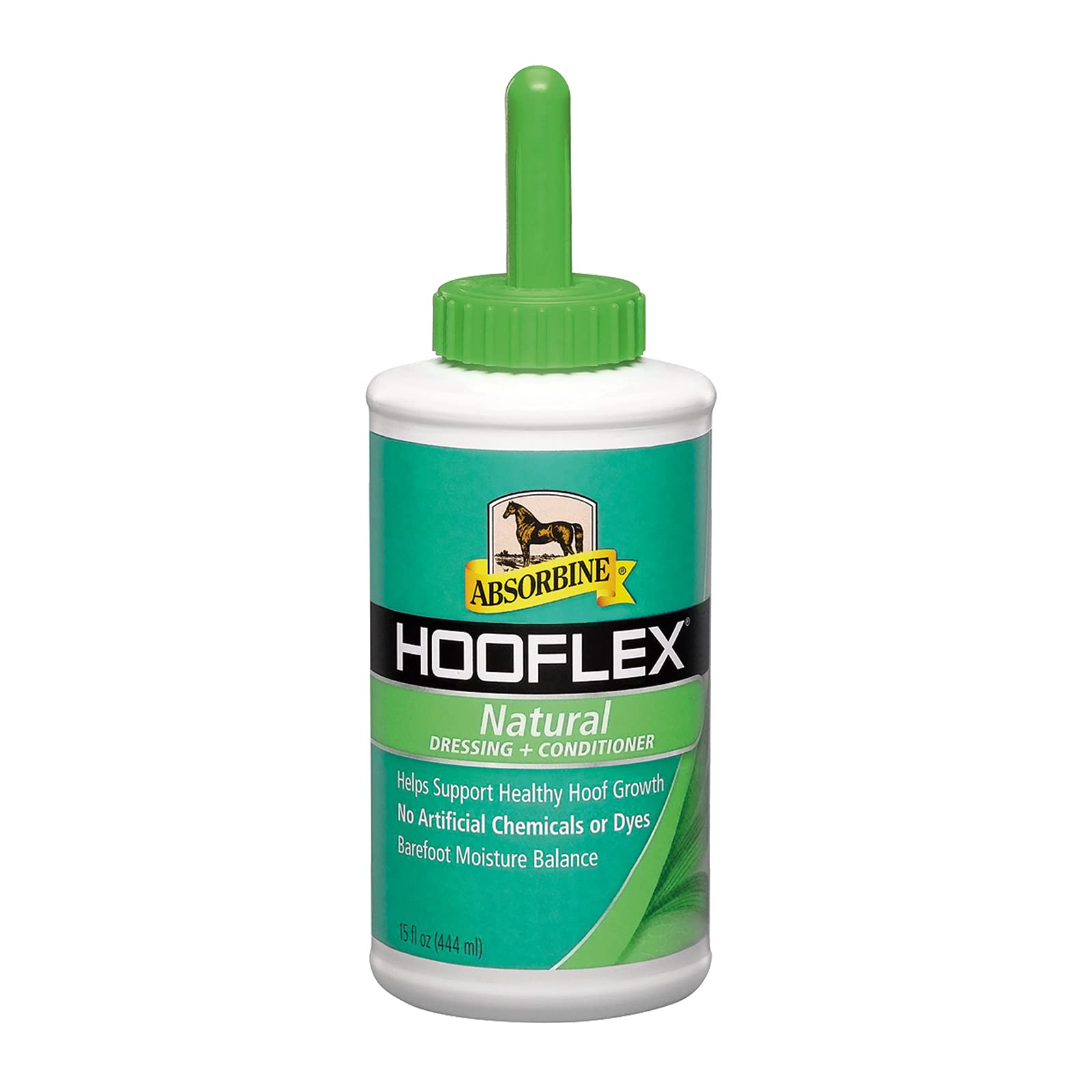
The Absorbine Hooflex formula uses a blend of natural oils and lanolin to penetrate the hoof wall quickly without leaving a tacky, dirt-attracting residue. Owners in both arid and humid climates report that it maintains the hoof’s natural moisture balance without over-softening the sole or frog. The included applicator brush makes it easy to work the conditioner into the periople and heel bulbs, areas that often get neglected with drippy oils.
Farriers frequently recommend this for horses transitioning between seasons or moving to new boarding facilities with different footing. The lack of artificial dyes means it won’t stain white hooves or bedding, and the non-greasy finish allows daily application without slippery footing on stall mats. Multiple reviewers noted a visible reduction in chipping and cracking after two to three weeks of regular use.
This is the most versatile option in the lineup, handling everything from dry, brittle walls to routine sole conditioning. For horse owners who want one product that covers daily maintenance, seasonal stress, and cosmetic sheen without the mess, this is the safest first pick.
Why we love it
- Non-greasy formulation won’t attract shavings or bedding
- Penetrates fast for deep conditioning without heavy residue
- All-natural ingredients free of artificial dyes and chemicals
Good to know
- Thinner consistency may require daily application in extreme dryness
- Some users prefer a thicker paste for very deep cracks
2. Fiebing’s Hoof Oil

With a heritage stretching back to 1895, Fiebing’s delivers a mineral oil-based dressing that provides both deep moisturization and a satin sheen. The 32-ounce container is generous, and the built-in brush applicator allows for quick, even coverage across the entire hoof wall and sole. The oil penetrates deeply into the horn tubules, helping to prevent the splits and cracks that develop from dry, brittle hooves in arid barn environments.
Owners of thoroughbreds and performance horses note that the semi-gloss finish improves the visual presentation for shows while keeping the hoof flexible enough to absorb daily concussive forces. The mineral oil base acts as an effective occlusive, meaning it locks in whatever moisture is already present. This makes it particularly effective when applied immediately after a hoof soak or wash, before the horn can dry out.
One practical downside is that the oil can saturate concrete or porous surfaces, so application on grass or over a drain is advisable. The included plastic hoof pick in the container lid is generally considered unnecessary and is often discarded. For horses living in consistently dry conditions, this remains a trusted, century-proven solution.
Why we love it
- Trusted formulation with over a century of professional use
- Large 32-ounce bottle delivers excellent value per application
- Provides a glossy finish suitable for show-ring presentation
Good to know
- Mineral oil base can be slippery on concrete if over-applied
- Included plastic hoof pick is considered redundant by most owners
3. Farnam Rain Maker Triple Action
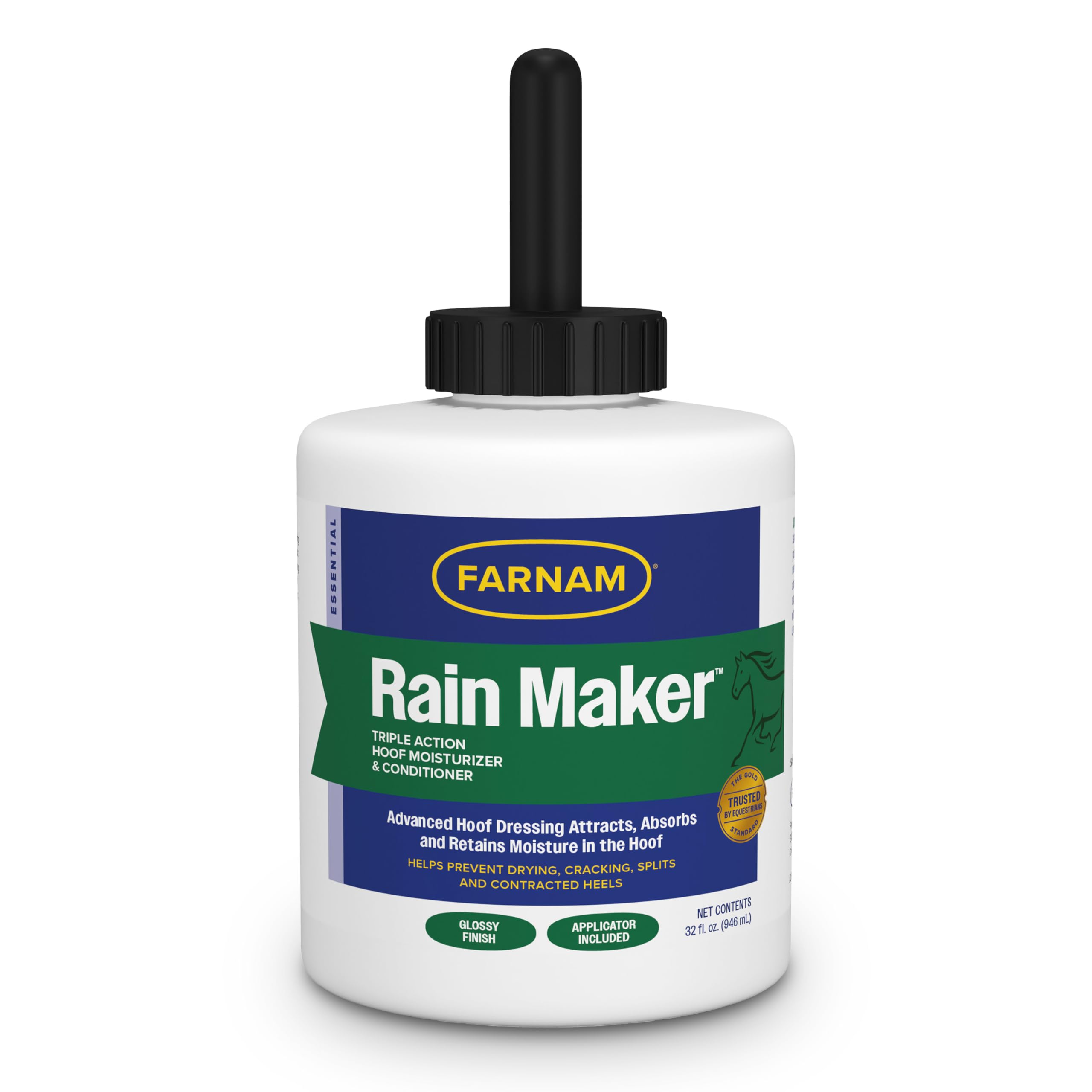
Farnam’s Rain Maker combines neatsfoot oil, petrolatum, and glycerin into a triple-action formula specifically engineered to combat dry-weather hoof stress. The neatsfoot oil provides deep penetration while the petrolatum creates a surface barrier that slows moisture evaporation. The glycerin acts as the humectant, drawing ambient moisture into the hoof horn even when humidity is low. This layered approach makes it a top choice for horses in desert climates or dusty, sandy turnouts.
Veterinary podiatrists have specifically recommended this product for managing moisture balance after hoof wall punctures or abscess drainage. The consistency is notably thick—ideal for staying on the hoof wall rather than dripping off—but it can become difficult to spread when barn temperatures drop below 40°F. Owners report that the thick layer helps mud slide off easily, reducing the risk of moisture wicking into the hoof from wet footing.
The scent is a traditional pine tar note that leans heavily smoky, often compared to barbecue sauce, which some find off-putting in a grooming stall. The price point is higher than basic oils, but the triple action and large container size justify the cost for severe dryness. For farriers managing chronic cracking in hot, dry regions, this is often the go-to dressing.
Why we love it
- Triple-action humectant/occlusive blend tackles extreme dryness
- Thick consistency stays on the hoof without dripping
- Veterinary-recommended for post-injury moisture management
Good to know
- Strong smoky scent may linger in the barn
- Thickens significantly in cold weather below 40°F
4. Bickmore Pine Tar

Bickmore Pine Tar is a 100% pure pine tar product that serves a dual role as both a hoof conditioner and a topical antifungal/antiseptic. Its primary value lies in treating and preventing thrush, white line separation, and seedy toe by creating an inhospitable environment for bacterial and fungal growth while still allowing the hoof to maintain some elasticity. Unlike many medicated treatments, pine tar also helps retain natural moisture in the horn.
Users frequently report dramatic results with thrush infections clearing within a week of daily application. The texture is thick and tacky, which ensures it stays in contact with the frog and sulci where infections thrive. A small amount goes a very long way, making the 32-ounce container exceptionally economical for multi-horse barns or those battling chronic infections.
The product is undeniably messy to work with—it has a strong, smoky odor that can transfer to hands and clothing. This is not a cosmetic dressing; it leaves a dark, tar-like appearance on the hoof rather than a shine. However, for owners prioritizing therapeutic treatment over aesthetics, this is the most effective natural option for resolving deep-seated hoof infections at a minimal cost.
Why we love it
- Clinically effective against thrush with visible results in one week
- Pure form without dilution or fillers common in baseball-grade tar
- Extremely economical for treating multiple horses
Good to know
- Very messy application with strong, persistent odor
- Dark color and tacky texture is not cosmetic-friendly
5. Vetericyn Equine Hoof Care

Vetericyn breaks from traditional oil-based dressings by using a hypochlorous acid technology designed to treat active infections in the sole, frog, and heel bulbs. Unlike pine tar or iodine, which kill bacteria and fungi but can also dry out healthy tissue, this formulation targets the exudate and biofilm that drive diseases like thrush and white line separation while allowing the hoof to heal without chemical burning. It is specifically designed for damage already present, not for daily preventive conditioning.
User reports show marked improvement in frog health and heel expansion within eight to nine days when applied three times weekly. The bright blue color allows owners to see exactly where the solution has been applied, ensuring coverage in deep sulci and cracks. However, this same blue stain is a significant drawback—it transfers aggressively to skin, clothing, and stall surfaces, and can take days to wash off human hands.
The spray nozzle included with the bottle is notoriously messy and imprecise; many owners transfer the solution to a dropper bottle for better control. This is not a conditioner in the traditional sense—it does not moisturize or add shine. But for horses actively suffering from thrush, seedy toe, or white line separation, the therapeutic speed and effectiveness make it an essential tool in the medicine cabinet.
Why we love it
- Fast, chemical-free resolution of thrush and white line disease
- Penetrates deep into sulci and cracks without burning tissue
- Visible blue color helps ensure complete coverage
Good to know
- Bright blue stain is extremely difficult to remove from skin and clothes
- Spray nozzle is messy; recommend transferring to a dropper bottle
FAQ
Can I use pine tar on a hoof with thrush every day?
How do I prevent blue staining from Vetericyn on my hands?
Is Farnam Rain Maker suitable for wet, muddy climates?
Final Thoughts: The Verdict
For most gardeners, the best hoof conditioner winner is the Absorbine Hooflex All Natural because it blends fast-absorbing moisture with a non-greasy finish suitable for daily use across all climates. If you need deep conditioning and a show-ring shine, grab the Fiebing’s Hoof Oil. And for treating active thrush or white line disease, nothing beats the targeted therapy of the Vetericyn Equine Hoof Care.