
Choosing the wrong bedding for a ball python is one of the fastest ways to fight humidity lows, risk scale rot, or deal with impaction scares. The ideal substrate holds 60–80% relative humidity without staying soggy, allows burrowing, and resists mold between spot cleans.
I’m Mo Mahin — the founder and writer behind Furric. I’ve spent years cross-referencing horticultural data on coconut coir structure, studying moisture retention curves, and aggregating owner feedback across hundreds of ball python enclosures to find what truly works.
This guide breaks down the top contenders based on chip size, dust levels, moisture handling, and safety for your snake. After reviewing dozens of options, these are the best choices for a substrate for a ball python.
How To Choose The Best Substrate For A Ball Python
Ball pythons have specific environmental needs that directly tie to the substrate you choose. The wrong option can cause stuck sheds, respiratory issues, or dangerous bacterial growth. Here are the critical factors to weigh before buying.
Moisture Retention vs. Surface Saturation
Coconut husk chips hold moisture within the chip itself while keeping the surface relatively dry, reducing the risk of scale rot. Aspen shavings, by contrast, wick moisture away and dry out fast — better for arid species but a constant battle for ball python humidity targets. The ideal substrate absorbs 4–6 times its weight in water and releases it slowly into the air, not onto your snake’s belly.
Chip Size and Impaction Risk
Fine coco coir or dusty aspen can clump when ingested, leading to impaction — particularly dangerous for young ball pythons. Small-to-medium coconut chips (roughly 0.25–0.5 inches) pass through the digestive system more safely if accidentally swallowed while feeding. Avoid substrates with large sharp shards or fine dust that cakes when wet.
Dust Levels and Respiratory Health
Ball pythons have sensitive respiratory tracts. Substrates that produce heavy dust when disturbed increase the risk of mouth rot or respiratory infections. Premium brands sift and wash their chips to near-zero dust. Compressed bricks often require more rinsing before use. Always shake a sample in a bag — if visible dust clouds form, the product is not suited for a snake enclosure.
Quick Comparison
On smaller screens, swipe sideways to see the full table.
| Model | Category | Best For | Key Spec | Amazon |
|---|---|---|---|---|
| BabiChip Coconut Chip 6 qt | Coco Chip Loose | Small enclosures, young snakes | 6-quart bag, small chip size, zero dust | Amazon |
| Zilla Aspen Litter 24 qt | Aspen Shavings | Kingsnakes, arid species | 24-quart bag, heat-treated, hypoallergenic | Amazon |
| Legigo Coco Fiber 4 Pack | Compressed Fiber | Budget builds, frogs, tortoises | 4 bricks, 1.4 lb each, organic coco fiber | Amazon |
| RediChip Medium Chip 12 qt | Coco Chip Loose | Ball python humidity control | 12-quart bag, medium chip, washed & sifted | Amazon |
| Legigo Coco Chips 8 Pack | Compressed Chips | Bioactive mixes, large tanks | 8 bricks, 8.8 lb total, pH 5.5–6.5 | Amazon |
In‑Depth Reviews
1. BabiChip Coconut Chip Substrate 6 Quart
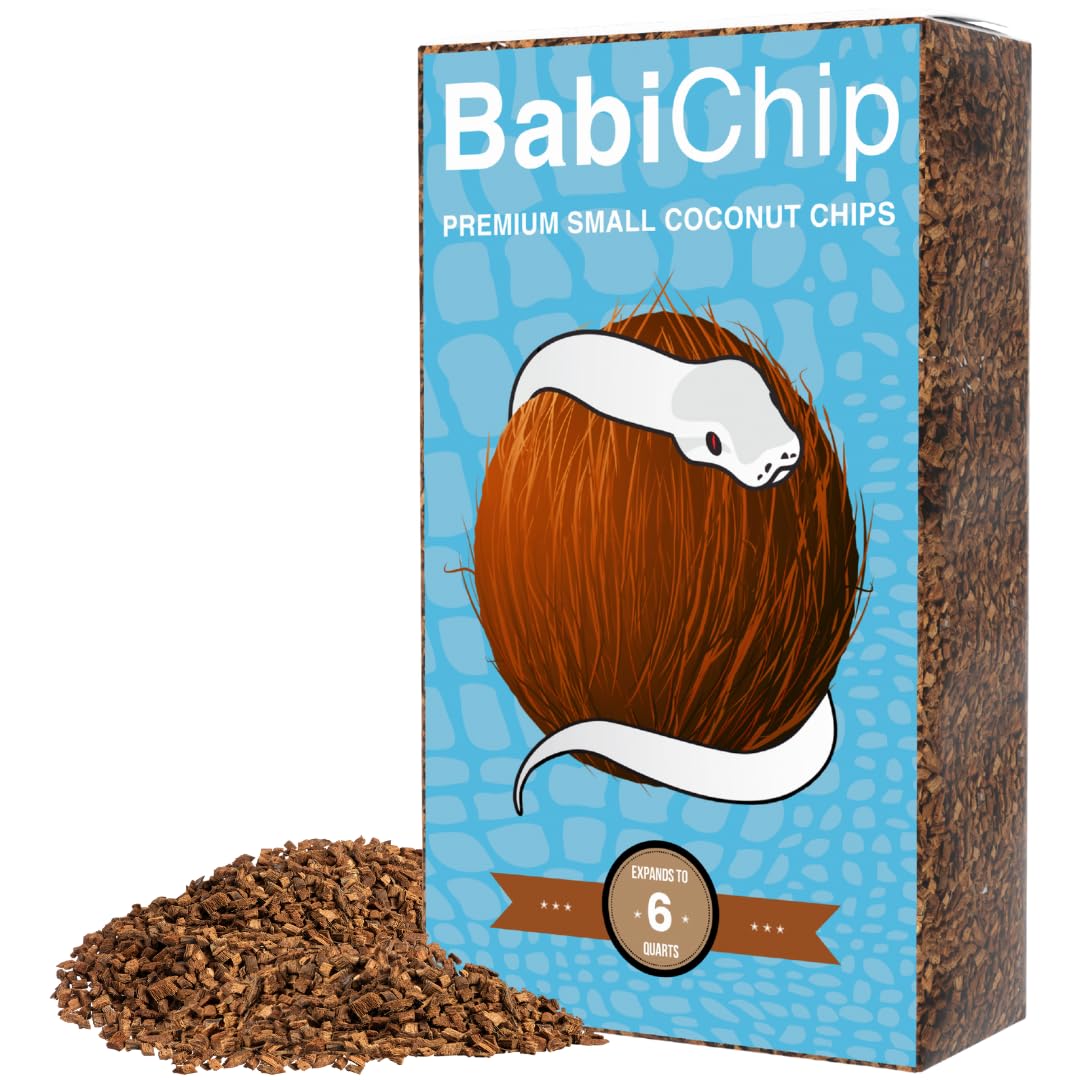
BabiChip delivers a loose, ready-to-use coco chip that hits the sweet spot for ball python keepers. The small chip size — noticeably smaller than standard forest floor mixes — reduces impaction risk for juvenile snakes while still holding impressive moisture for humidity targets. Multiple 6-quart bags provide a few inches of depth in a standard 40-gallon breeder tank.
Out of the bag, the chips are clean with minimal dust, requiring no pre-soaking for arid setups. For tropical ball python enclosures, a quick spray activates the chip’s internal moisture reservoir without leaving standing water. Reviewers noted a fresh, neutral smell and zero molding after weeks of use, even in 80%+ humidity environments like PVC enclosures.
The only limitation is volume — the 6-quart size works best for smaller tanks or as a top layer over a deeper base. For larger pvc cages, you may need multiple bags to reach the recommended 2–3 inch depth. Still, for its chip consistency, dust profile, and moisture handling, it’s the most balanced option on this list.
Why we love it
- Near-zero dust, safe for sensitive respiratory systems
- Small chip size reduces impaction risk for young pythons
- Holds humidity without surface saturation or mold
Good to know
- Small bag requires multiple units for large enclosures
- Chips may feel sharp for very small colubrids like corn snakes
2. RediChip Medium Coconut Chip Substrate 12 Quart

RediChip is the premium loose-chip option designed specifically for ball python humidity management. The medium chip size allows for deep burrowing while retaining moisture inside each chip — not on the surface — which prevents scale rot even when ambient humidity stays above 70%. Owners of 3-foot PVC enclosures report perfect sheds with RediChip as the base layer.
Like BabiChip, this is processed and sorted in the United States, yielding a remarkably clean product. Reviewers consistently mention the absence of dust and debris compared to cheaper coco brands. The 12-quart bag offers better value per square foot of enclosure than the 6-quart BabiChip, making it a strong choice for 55-gallon or larger tanks.
The primary complaint is consistency from Amazon fulfillment — delayed shipments and bag damage during transit are recurring themes. Buying direct from the producer avoids this issue. Also, while excellent for humidity, RediChip works best when mixed with orchid bark or sphagnum moss for maximum airflow and diversity of texture.
Why we love it
- Exceptional humidity retention without surface wetness
- Clean, sifted chips with near-zero dust
- Supports burrowing and natural behaviors
Good to know
- Amazon delivery reliability is inconsistent for this item
- Best used as part of a substrate mix for larger tanks
3. Legigo 8 Pack Coco Coir Chips 8.8 LB
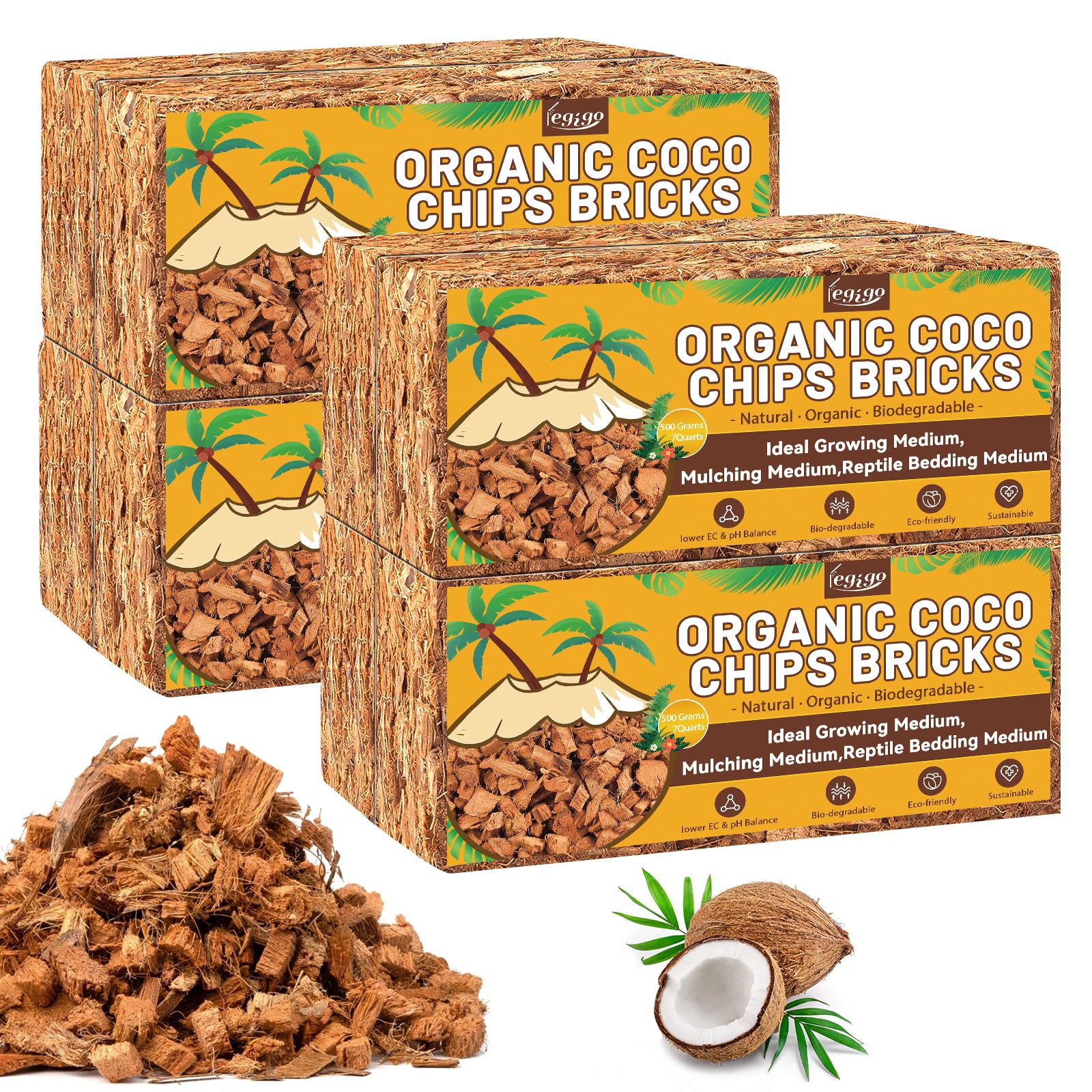
Legigo’s 8-pack of coco chips is a versatile option for keepers building bioactive enclosures or mixing their own substrate blends. Each brick expands to roughly 5–7 times its dry volume when hydrated, providing significant coverage for the footprint. The pH range of 5.5–6.5 aligns well with the needs of ball pythons and the plants in a bioactive setup.
Unlike loose chip products, these bricks require prep — soaking in warm water and breaking apart before use. Reviewers note that the chips are small chunks rather than long fibers, which reduces the risk of entanglement and makes them easier to incorporate into custom mixes. The low EC value prevents nutrient burn if you add fertilizer for live plants.
The trade-off is that these chips are marketed primarily for horticultural use, so they lack the herpetology-specific sifting that brands like BabiChip and RediChip offer. Some dust is present during expansion, though rinsing after rehydration solves this. If you prioritize cost per pound and enjoy customizing your substrate, this is a strong foundation.
Why we love it
- Excellent value per pound for large enclosures
- pH balanced ideal for bioactive plant and animal cohabitation
- Small chip size safe for burrowing and digestion
Good to know
- Requires soaking and breaking apart before use
- Not pre-sifted; some dust may need rinsing
4. Legigo 4 Pack Compressed Coconut Fiber Substrate
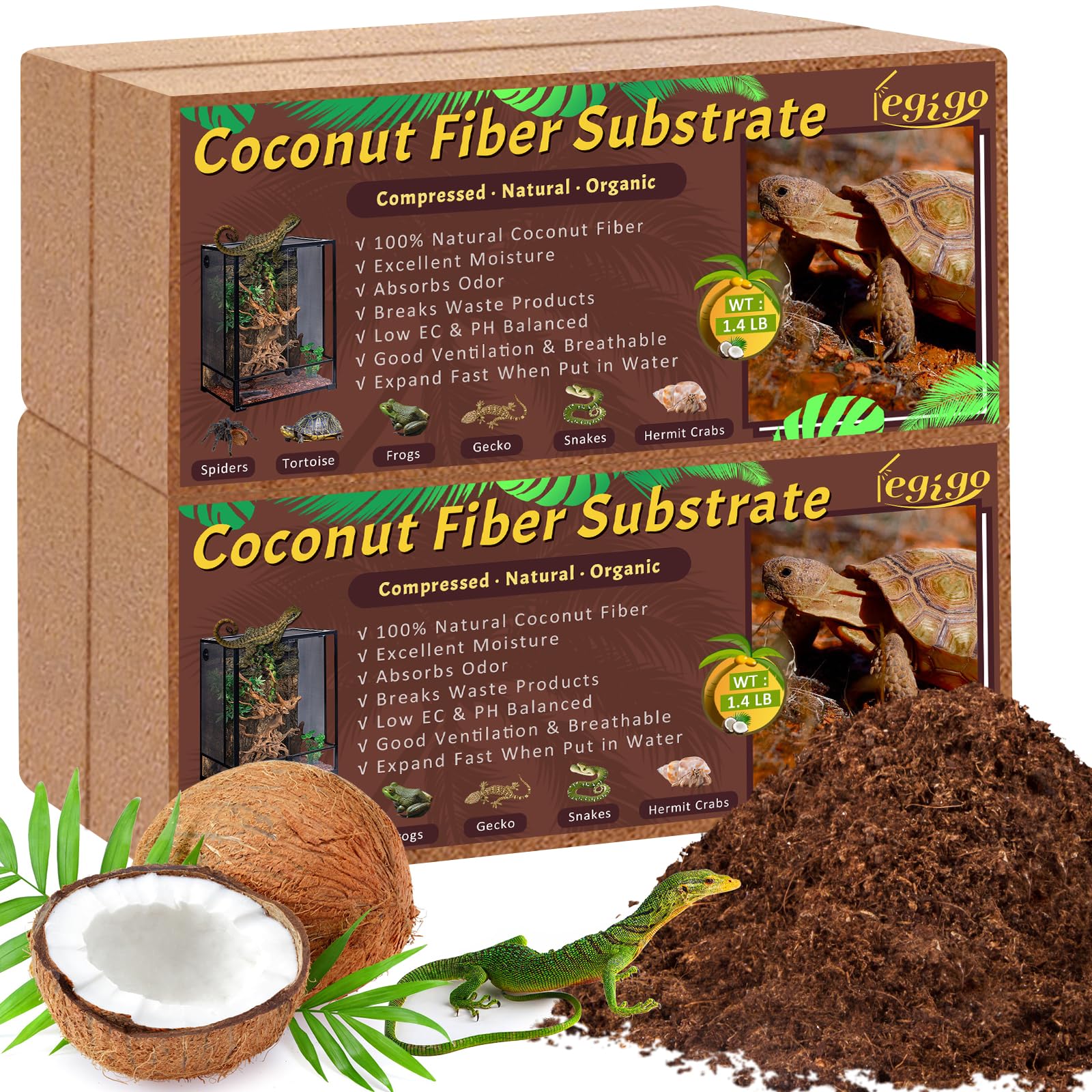
Legigo’s 4-pack coconut fiber bricks are the most entry-level option on this list, offering a low-cost path to a humidity-retaining substrate. The compressed coir fiber expands substantially when hydrated, creating a soft, soil-like texture that holds moisture well. It is odorless and effectively decomposes waste, keeping the enclosure cleaner between full changes.
However, this is fine coco fiber rather than chunky chips, which means it compacts more easily and can become muddy if oversaturated. For ball pythons, this increases the risk of scale rot compared to a chip-based substrate. It works better as a moisture layer beneath a chip topper or in a bioactive cleanup crew substrate rather than as a standalone bedding.
Several reviewers noted the absence of instructions on the packaging, though the process is straightforward — add hot water, break apart, and spread. Keepers using this for ball pythons should monitor belly contact points closely and add a coarse top layer to prevent constant direct contact with the fiber.
Why we love it
- Very affordable for the coverage volume
- Odorless and biodegradable
- Works well in bioactive mixes for microfauna
Good to know
- Fine fiber texture can compact and risk scale rot
- Requires pre-soaking and may need rinsing
5. Zilla Reptile Terrarium Bedding Substrate 24 Quart

Zilla’s aspen snake and lizard litter is a heat-treated, hypoallergenic bedding that excels in one area — ease of spot cleaning. The small aspen chips clump loosely around waste, allowing you to scoop out soiled areas without disrupting the entire enclosure. It is extremely low in dust and contains no aromatic oils that could irritate a snake’s respiratory system.
The catch is moisture. Aspen is naturally moisture-wicking and dries out quickly, making it a poor choice for ball python humidity targets. Keepers using this bedding must supplement with damp moss hides or frequent misting to maintain 60% humidity. Even then, aspen will not hold humidity the way coconut chips do, and it molds quickly if left wet.
Zilla aspen works best for kingsnakes, corn snakes, or other colubrids that prefer arid conditions. For ball pythons, it is only suitable as a temporary quarantine bedding or for hatchlings where you need to monitor waste closely. Owners feeding wet prey noted that chips stick to worms or pinkies, increasing ingestion risk for baby snakes.
Why we love it
- Extremely low dust, safe for respiratory health
- Heat-treated to remove harmful oils and pathogens
- Excellent for spot cleaning — waste sits on top
Good to know
- Does not hold humidity needed for ball pythons
- Molds quickly if it gets wet; not for high-humidity setups
FAQ
Can I use aspen bedding for a ball python?
How often should I replace the substrate in a ball python enclosure?
Is coconut fiber or coconut chip better for ball python humidity?
Final Thoughts: The Verdict
For most ball python keepers, the best substrate for a ball python is the BabiChip Coconut Chip 6 Quart because it balances chip size, dust control, and moisture retention perfectly for juvenile and adult snakes alike. If you manage a larger enclosure and want premium humidity performance, grab the RediChip Medium Chip 12 Quart. And for budget-conscious keepers building a bioactive mix, the Legigo 8 Pack Coco Chips gives you the volume to customize without breaking the bank.