
A feeder full of dusty filler is the fastest way to watch songbirds bounce to a neighbor’s yard. Real sunflower seeds for birds deliver the oil and protein that keep cardinals, chickadees, and grosbeaks returning dawn to dusk — but sorting the fresh, high-meat bags from the generic sacks takes a sharp eye on the kernel-to-hull ratio.
I’m Mo Mahin — the founder and writer behind Furric. I’ve spent years cross-referencing bag weight, seed size, and shell integrity against thousands of verified owner reports to rank which shelf-stable sunflower seeds actually match the feeding habits of common backyard species.
This guide breaks the category into two real-world styles — striped shells for larger-beaked visitors and black oil for near-universal appeal — so you can confidently pick the best sunflower seeds for birds that minimize mess and maximize daily visits.
How To Choose The Best Sunflower Seeds For Birds
The wrong seed type sends high-energy kernels to the ground as wasted hulls or attracts pests that bully shy finches. Matching shell thickness to your feeder crowd and confirming low debris content gives you the most feeding time per bag.
Black Oil Versus Striped Shell
Black oil sunflower seeds carry a thin, oil-rich shell that any bird from a tiny chickadee to a plump cardinal can crack open effortlessly — the universal crowd-pleaser. Striped sunflower seeds have a thicker, tougher hull that demands the beak strength of larger visitors like blue jays, grosbeaks, and woodpeckers, which means fewer aggressive birds monopolizing your feeder.
Freshness and Debris Content
Stale seeds lose the natural oils birds crave and often develop a stale odor that deters picky eaters. Real-world buyer feedback consistently flags bags with visible dust, stick fragments, or empty hulls as low-value because birds pick around the debris instead of consuming every kernel. Look for brands that explicitly state low filler or non-GMO, single-ingredient harvesting.
Bag Size Versus Feeding Frequency
A 4-pound bag emptied every three days by a busy flock quickly becomes an expensive habit. Calculate how many birds visit your feeder in a typical week and scale up to a 5 or 6-pound bag if you see nearly daily refills. Bigger bags often cost less per ounce, but they also risk going stale if stored in a damp garage — airtight containers solve that problem.
Quick Comparison
On smaller screens, swipe sideways to see the full table.
| Model | Category | Best For | Key Spec | Amazon |
|---|---|---|---|---|
| Wagner’s 62028 Striped Sunflower Seed | Striped Shell | Large-beaked songbirds (jays, cardinals, grosbeaks) | 5 lb; thick-hulled striped seed | Amazon |
| Kaytee Cardinal Wild Bird Seed | Seed Blend | Cardinal-focused feeding with squirrel deterrent | 7 lb; black oil + safflower blend | Amazon |
| Four Season Black Oil Sunflower Seed | Black Oil | All-species, everyday feeding | 4 lb; single-ingredient black oil seed | Amazon |
| Happy Wings Black Oil Sunflower Seeds | No-Grow / Black Oil | Clean, mess-free backyard feeding | 5 lb (2.27 kg); heat-treated to prevent sprouts | Amazon |
| Old Potters Wildlife Black Oil Sunflower Seeds | Non-GMO / Black Oil | Conservation-minded buyers, small-farm sourcing | 6 lb; non-GMO, unprocessed with field debris | Amazon |
In‑Depth Reviews
1. Wagner’s 62028 Striped Sunflower Seed Wild Bird Food, 5-Pound Bag
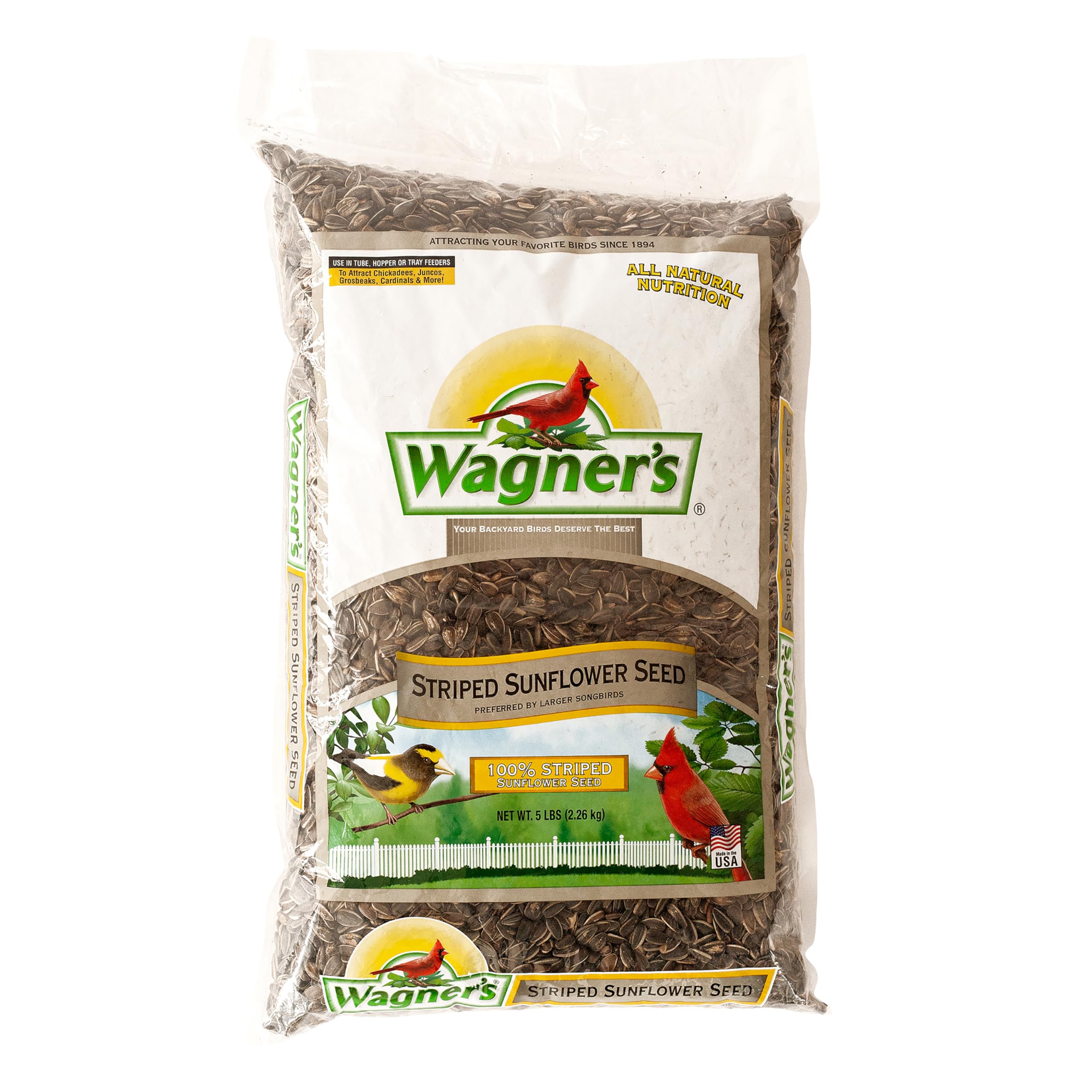
The Wagner’s striped sunflower seed delivers a thick shell that smaller, aggressive feeder bullies struggle to crack, making this bag ideal for attracting cardinals, blue jays, and grosbeaks without the feeder chaos common with black oil mixes. Each kernel tests fresh in real-world use — multiple owners report virtually no dust or powder at the bottom of the bag, a sign of proper storage and handling. The 5-pound size hits a sweet spot for weekly feeding without going stale in humid weather.
Owner feedback consistently highlights the “loyal cardinal pairs” returning morning after morning, along with chickadees and squirrels that scavenge the fallen pieces. The single-ingredient formula means zero filler like millet or cracked corn that birds tend to kick out of the tray. One long-time buyer specifically compared it to a cheaper generic brand and noted “no excess powder” as the defining difference in freshness.
Because the striped shell is thicker, this seed works best in tray, hopper, or platform feeders where larger birds can perch comfortably. It also mixes well with safflower seed if you want to tilt the balance further toward cardinals while discouraging starlings and sparrows. The main trade-off is that finches and smaller songbirds rarely crack these hulls, so this bag targets medium-to-large species exclusively.
Why we love it
- Thick hull limits access from smaller, aggressive species
- Consistently fresh with minimal dust in the bag
- Attracts large-beaked songbirds like cardinals and jays
Good to know
- Not suitable for finches or chickadees — shell is too thick
- 5-pound bag may require frequent refills with a large flock
2. Kaytee Cardinal Wild Bird Seed, 7 lb

Kaytee combines black oil sunflower seeds with safflower in a 7-pound blend specifically formulated to attract cardinals while using safflower’s bitter taste to dissuade squirrels from monopolizing the feeder. The black oil component provides the thin, oil-rich shell that cardinals, chickadees, and nuthatches crack easily, while the safflower pieces offer an alternative seed type that sparrows and starlings typically reject. Owners consistently report that cardinals “love this” and return daily, with multiple reviewers noting blue jays and woodpeckers also appearing as regular visitors.
The 7-pound bag size is a genuine advantage compared to the 4-to-5-pound bags common in this category — buyers feeding a moderate flock typically get a full week between refills. However, several owners warn that squirrels and doves still find the black oil portion attractive, so the squirrel deterrent isn’t absolute. One reviewer noted that the blend actually attracted squirrels along with the desired cardinals, calling it “bird and squirrel food” in a single bag.
The seed quality is consistent across feedback: no foul odors, minimal dust, and the raw, additive-free formulation keeps birds healthy. The main criticism from cost-conscious buyers is that a larger bag from a farm store may offer a lower per-ounce price, though the convenience of Amazon delivery and the proven cardinal appeal tip the scales for most backyard birders.
Why we love it
- Safflower component naturally discourages some squirrels
- 7-pound bag reduces refill frequency
- Attracts cardinals, chickadees, nuthatches, and woodpeckers
Good to know
- Squirrels and doves still enjoy the black oil portion
- Per-ounce cost higher than bulk store options
3. Four Season Black Oil Sunflower Seed, 4 Pounds

This Four Season offering from Family Farm and Feed is a straight black oil sunflower seed with no filler, no blend, and no additives — pure high-energy nutrition that works for virtually every backyard bird species. The thin shell makes it accessible to finches, chickadees, titmice, cardinals, and even the occasional woodpecker, and owners confirm that both birds and squirrels “devour” the seeds within hours of a fresh fill. The 4-pound clear bag lets you inspect seed quality before opening, and buyer feedback consistently rates freshness as excellent.
A particularly telling owner review mentions using this seed to impress a rescued Cockatiel, noting the bird “awaits his sunflower seeds each morning” — a strong indicator of consistent kernel quality and high oil content. Another creative reviewer stuffed pine cones with peanut butter and rolled them in these seeds to feed cardinals in snowy weather, reporting great results. The single-ingredient simplicity means zero wasted filler at the bottom of the feeder, translating to more pure nutrition per pound.
The main limitation is the 4-pound size, which disappears quickly if multiple species and a squirrel or two are hitting the feeder daily. Some owners report raccoons finding the feeder within three days, which speaks to the seed’s strong aroma and wildlife appeal. If you feed a modest backyard flock, this bag delivers premium nutrition without the markup of specialty blends.
Why we love it
- Single-ingredient black oil seed with no filler
- Thin shell suits all species from finches to cardinals
- Consistent freshness and high oil content
Good to know
- 4-pound bag refills quickly for active feeders
- Strong aroma may attract raccoons if feeder is not secure
4. Happy Wings Black Oil Sunflower Seeds – 5 lb
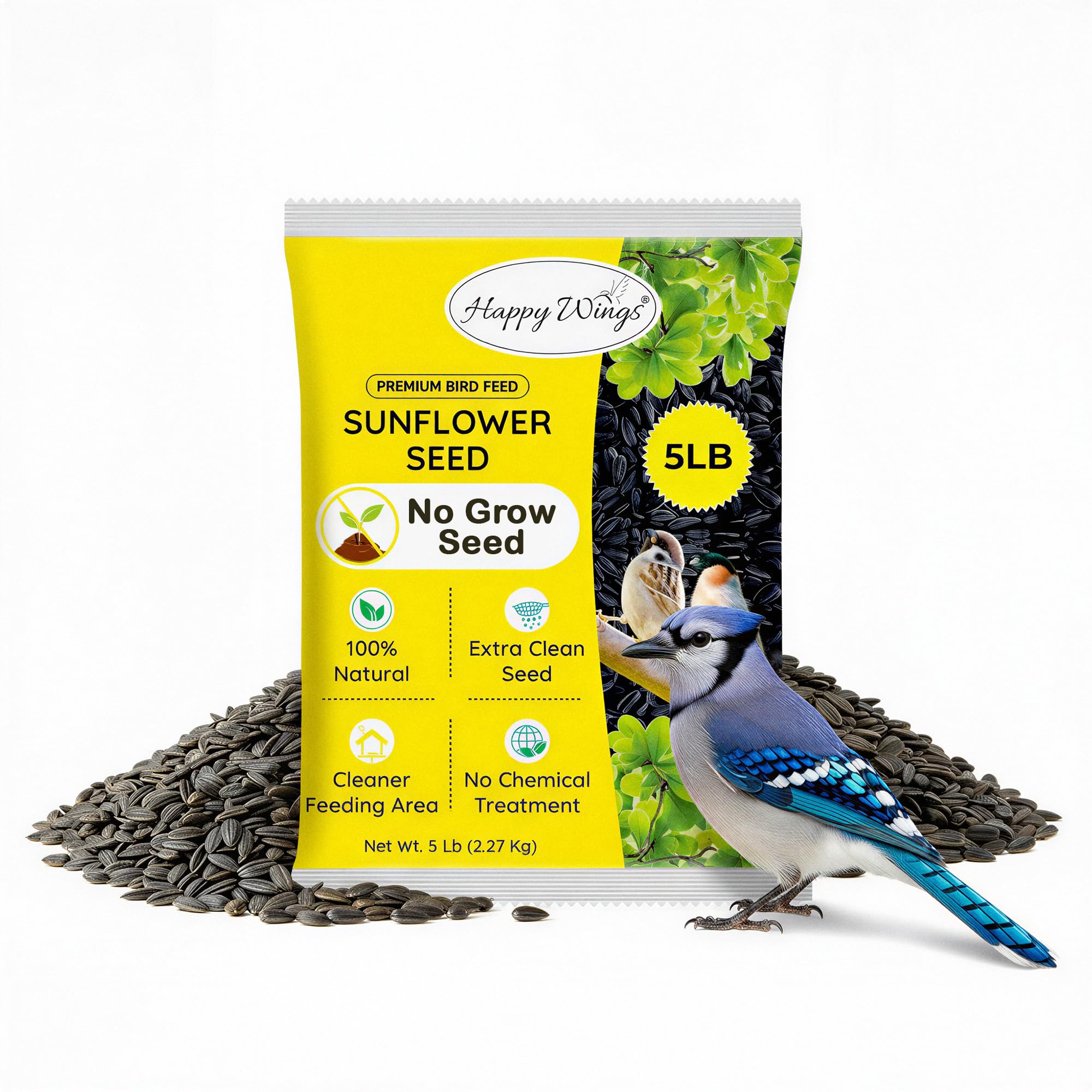
The Happy Wings black oil sunflower seed stands apart because of its heat-treated, no-grow formulation that prevents seeds from sprouting under your feeder — a detail owners with manicured lawns or patio feeders appreciate immediately. The seeds still deliver the high oil and protein content that attracts finches, sparrows, chickadees, and cardinals, and the USDA/BRC-GS approved facility processing ensures consistent quality. Multiple buyers call it “excellent bird seed” that attracts beautiful birds without the weed problem that untreated seeds cause in warm weather.
One detail from owner feedback worth noting: the seeds run slightly smaller than typical black oil kernels, but birds show no hesitation in accepting them. The 5-pound (2.27 kg) bag offers a solid middle ground between small sample packs and bulk sacks, and the resealable packaging helps maintain freshness between fills. Several reviewers specifically mention the value-per-pound as competitive against other mid-range brands with similar no-grow claims.
The waste-free formulation lives up to its name — owner comments describe noticeably less mess under the feeder compared to standard black oil seeds. The only real trade-off is the smaller kernel size, which some buyers accustomed to jumbo striped seeds initially found surprising, but the birds themselves don’t seem to mind. If a clean patio and zero volunteer sunflower seedlings matter to you, this bag earns serious consideration.
Why we love it
- Heat-treated to prevent sprouts under feeder
- High oil content attracts a wide variety of songbirds
- Resealable bag maintains seed freshness
Good to know
- Kernels are slightly smaller than typical black oil seeds
- 5-pound bag may be too small for heavy flocks
5. Old Potters Wildlife Black Oil Sunflower Seeds, 6 lbs
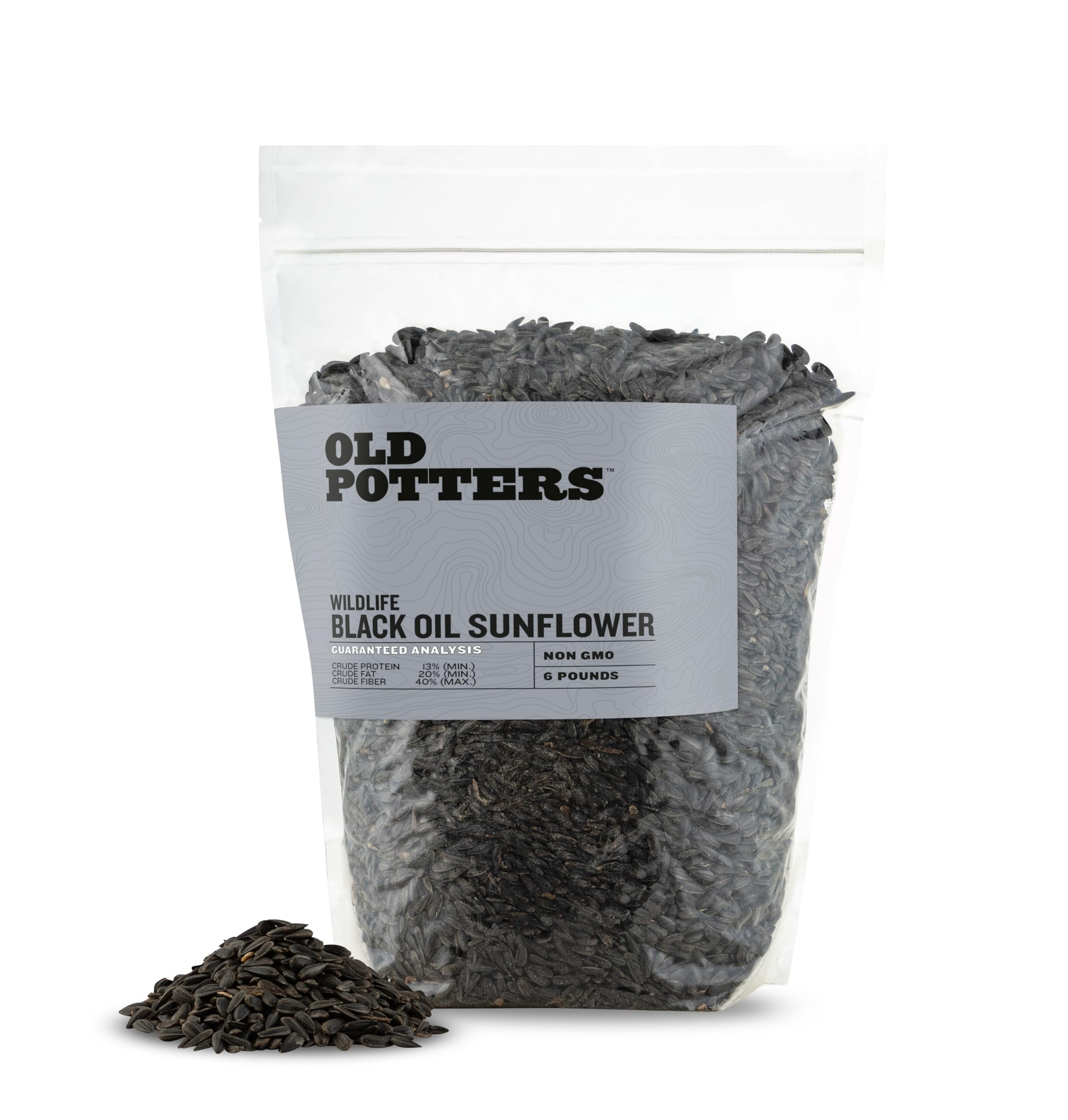
Old Potters sources its black oil sunflower seeds from small U.S. farms and ships them non-GMO, unprocessed, and with the natural field debris that proves minimal artificial handling — fine twigs and leaf fragments may appear in the bag, which the brand considers a positive authenticity marker. The 6-pound bag is among the largest in this guide, and buyers confirm it lasts a respectable 4 months for a small collection of five rabbits, or feeds a moderate bird flock for 2–3 weeks depending on visitor volume. The resealable bag design keeps the seeds fresh between fills.
Owner reviews consistently praise the seed quality and value, with one buyer calling it a “decent amount for the price in comparison” to other brands. The non-GMO claim appeals to conservation-minded birders who want to support responsible farming. The seeds themselves are smaller than the jumbo striped variety, but the thin black oil hull makes them accessible to cardinals, finches, chickadees, and even the occasional woodpecker — essentially the same broad appeal as other black oil options.
The honest trade-off is the presence of field debris — some owners report “scraps mixed in” that can accumulate at the bottom of the feeder. This is a deliberate choice from Old Potters to avoid chemical processing, but it means you get a slightly lower usable seed weight per pound than polished brands. For buyers who prioritize non-GMO sourcing and a longer-lasting 6-pound quantity over immaculate bag uniformity, this pick delivers solid value.
Why we love it
- Non-GMO and sourced from small U.S. farms
- 6-pound bag provides better longevity for active feeders
- Resealable packaging keeps seeds fresh
Good to know
- Field debris (twigs, leaf bits) present due to minimal processing
- Kernels are smaller than jumbo striped seeds
FAQ
Can I feed sunflower seeds to birds year-round or only in winter?
What is the difference between black oil and striped sunflower seeds for birds?
Do sunflower seeds attract squirrels more than other bird seed types?
Should I worry about non-GMO sunflower seeds for my bird feeder?
How long does a 5-pound bag of sunflower seeds last in a typical feeder?
Final Thoughts: The Verdict
For most backyard birders, the best sunflower seeds for birds winner is the Wagner’s 62028 Striped Sunflower Seed because it naturally filters out aggressive smaller species while delivering fresh, dust-free kernels that keep cardinals and jays loyal every morning. If you want a squirrel-deterrent blend that also attracts cardinals, grab the Kaytee Cardinal Blend. And for mess-free feeding with no sprouts under the feeder, nothing beats the Happy Wings Black Oil Sunflower Seeds.