
Choosing the wrong food for your tropical fish can quickly lead to dull colors, poor growth, and a tank full of uneaten waste that spikes ammonia levels. The right pellet or flake delivers balanced nutrition, supports the immune system, and brings out the natural brilliance your fish are capable of — all while keeping the water crystal clear and your filtration happy.
I’m Mo Mahin — the founder and writer behind Furric. I’ve spent years analyzing aquarium nutrition research, comparing protein percentages, ingredient sourcing, and digestibility data, and studying thousands of verified owner experiences across dozens of tropical fish species and feeding scenarios.
This guide breaks down the top options available right now so you can confidently select the fish food for tropical fish that matches your specific tank inhabitants and your feeding style.
How To Choose The Best Fish Food For Tropical Fish
Selecting the right food involves more than grabbing the first jar you see at the store. The best match depends on your fish species, their mouth size, their feeding zone preferences, and the nutritional profile that supports their specific biology.
Protein Content and Ingredient Profile
Carnivorous species like cichlids and angelfish thrive on protein levels above 40%, while herbivorous fish such as tangs need a plant-based formula rich in spirulina and kelp. Omnivorous community fish benefit from a balanced mix with moderate protein and vegetable matter. Check the guaranteed analysis on the label rather than relying on marketing claims.
Pellet Size and Sinking Behavior
Nano fish like tetras and rasboras need pellets around 0.5 millimeters to eat comfortably. Larger cichlids and monster fish need chunky pellets that hold shape. Floating pellets let you monitor consumption and are ideal for surface feeders, while sinking pellets reach bottom-dwellers like corydoras and plecos. Slow-sinking formulas buy time for mid-water fish to grab a bite before it hits the substrate.
Water Clarity and Waste Management
Poor-quality food disintegrates quickly, clouding the water and producing excess waste that taxes your biological filter. Formulas that hold their shape and are highly digestible reduce leftover particles and lower the bioload on your aquarium. Look for specifically non-clouding formulations if you run a heavily stocked tank or a planted setup.
Quick Comparison
On smaller screens, swipe sideways to see the full table.
| Model | Category | Best For | Key Spec | Amazon |
|---|---|---|---|---|
| Hikari Cichlid Gold | Floating Pellet | Color enhancement for African cichlids | Floating medium pellet, high beta carotene | Amazon |
| Hikari Massivore Delite | Sinking Pellet | Large carnivorous fish and bottom feeders | X-Large sinking pellet, 13.4 oz bag | Amazon |
| Ocean Nutrition Formula Two | Sinking Pellet | Herbivorous and omnivorous marine fish | Protein 40%, spirulina based, small pellets | Amazon |
| Xtreme Nano 0.5mm Pellets | Sinking Pellet | Nano and community freshwater fish | 0.5mm pellet, krill based, high protein | Amazon |
| Ocean Nutrition Tropical XL Pellets | Sinking Pellet | Large marine angelfish and carnivores | Protein 41.1%, XL pellets, 1.1 lb bag | Amazon |
In‑Depth Reviews
1. Hikari Cichlid Gold Floating Pellets (3 Pack)
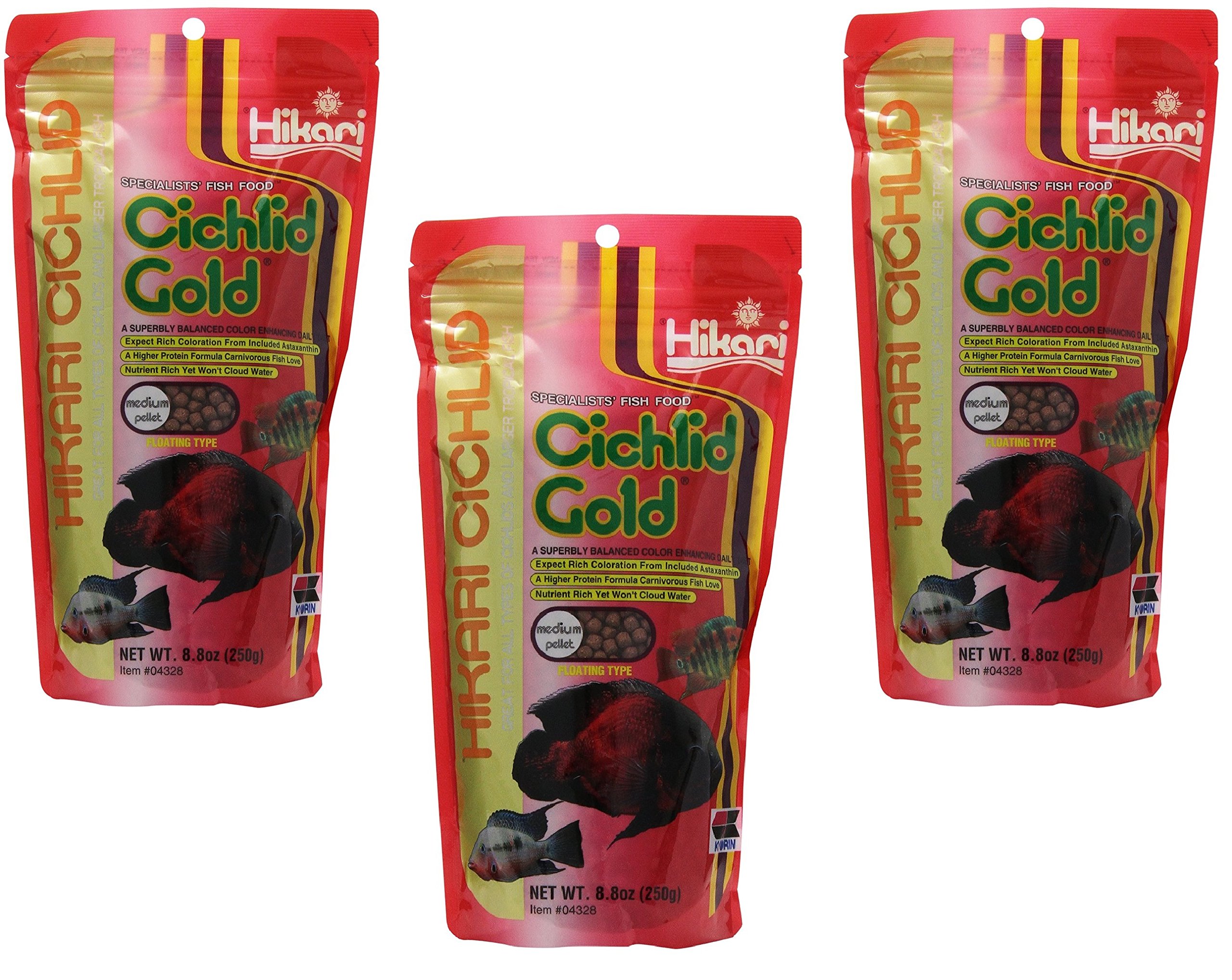
This three-pack from Hikari delivers a reliable floating medium pellet that African cichlid keepers have trusted for decades. The formula is high in beta carotene and stabilized vitamin C, which directly supports vibrant red and orange color expression while boosting immune function. Because the pellets float, you can visually confirm every fish is eating without food sinking into the substrate and decomposing.
At medium size, these pellets fit the mouths of most adult mbuna, peacocks, and haps comfortably, while juveniles may struggle slightly with the larger pieces. The resealable bags keep the food fresh between feedings, and the pellets hold their shape well in water — they do not cloud the tank when used as directed. Owner reports consistently note faster growth and noticeably brighter patterning within two to three weeks of switching to this food.
If you keep a cichlid tank and want a floating staple that minimizes mess, maximizes color, and comes in a value-sized bundle, this is your best long-term investment. The triple-pack reduces the per-ounce cost compared to buying single containers, making it a smart purchase for multi-tank setups or heavy feeding schedules.
Why we love it
- Floating design lets you monitor feeding easily and reduces waste.
- High beta carotene content visibly enhances red and orange coloration.
- Three-pack offers strong value for multi-tank or high-volume feeders.
Good to know
- Medium pellet size may be too large for juvenile cichlids.
- Strong fishy smell may be noticeable during storage.
2. Hikari Tropical Massivore Delite

Designed specifically for larger carnivorous tropical fish, Massivore Delite uses an X-large porous pellet that softens rapidly as it absorbs water. This texture encourages aggressive feeding behavior from big cichlids, oscars, bichirs, and large catfish that might reject standard pellets. The formula provides complete nutrition without the parasite and bacteria risks that come with live foods.
Each pellet sinks straight to the bottom, making it ideal for bottom-dwelling species like plecos and eartheaters that rarely venture to the surface. The food retains its shape even after softening, so it does not dissolve into particulate waste that fouls the gravel bed. Owner reviews highlight how quickly picky bichirs and larger cichlids attack these pellets, and many report that finicky fish that previously ignored dry food finally eat consistently with Massivore Delite.
If you keep monster fish or a community with several large carnivores, this product replaces the need for live feeder fish while delivering better nutritional control. The 380-gram bag size is appropriate for a single large tank; keep the bag tightly sealed after opening to preserve freshness and aroma.
Why we love it
- X-large porous pellet softens quickly for easy consumption by big fish.
- Eliminates live food risks while providing balanced protein-rich nutrition.
- Strong palatability triggers feeding response in even picky carnivores.
Good to know
- Pellet size is too large for small or nano community fish.
- Bag does not have a resealable zipper; best transferred to an airtight container.
3. Xtreme Nano 0.5mm Sinking Pellets

This krill-based formula from Xtreme Aquatic Foods targets nano fish and community species with a tiny 0.5-millimeter pellet that even the smallest mouths can handle easily. Tetras, guppies, rasboras, and dwarf cichlids can take bites without struggling, and the sinking action ensures bottom-dwellers like corydoras and shrimp also get their share. The high-protein profile supports strong muscle development and sustained energy levels.
The pellets are highly digestible, which means less waste and a cleaner tank compared to flake foods that produce dust. Owners report that their fish exhibit more vibrant coloration and increased activity after switching to these pellets. The food stays intact in the water for several minutes without disintegrating, giving fish ample time to forage without clouding the water column.
If you run a community tank with a mix of small top-, mid-, and bottom-feeders, this single product can replace multiple specialized foods. The 5-ounce bottle lasts a good while given how little you need per feeding, making it a budget-friendly choice that does not compromise on ingredient quality.
Why we love it
- 0.5mm pellet size is perfect for nano fish, fry, and shrimp.
- Krill-based proteins enhance color and overall vitality quickly.
- Minimal waste output helps maintain cleaner aquarium water.
Good to know
- Strong smell may be off-putting to some aquarists.
- Not suitable for large cichlids or monster fish.
4. Ocean Nutrition Formula Two Pellets

Ocean Nutrition’s Formula Two uses a plant-based recipe centered on spirulina, dried kelp, and soybean meal, making it an ideal choice for herbivorous and omnivorous marine and freshwater tropical fish. The small slow-sinking pellets are soft and moist, which promotes easy digestion for species like tangs, rabbitfish, and larger community cichlids. The 40% protein level comes primarily from plant sources rather than fish meal, matching the natural diet of herbivores.
The pellets are packed in oxygen-free pouches that lock in freshness for up to several months after opening. When dropped into the tank, they sink relatively fast, which is great for mid- and bottom-feeders but may be too quick for slow surface-oriented fish. Owners appreciate that the food does not cloud water even with regular feeding, and many use it to spot-feed corals and inverts in reef setups.
If you keep a mixed community with a heavy herbivore presence or want a high-plant-protein option for omnivores, this formula provides a clean, reliable alternative to protein-heavy pellets that can foul the water when overfed. The 200-gram jar is a practical size for a single medium tank.
Why we love it
- Spirulina and kelp based, perfect for herbivorous species like tangs.
- Soft moist texture aids digestion and reduces constipation risk.
- Oxygen-free packaging extends shelf life after opening.
Good to know
- Pellets sink quickly, which may leave surface feeders struggling to eat.
- Small size may not satisfy large-bodied fish like adult oscars.
5. Ocean Nutrition Tropical XL Pellets
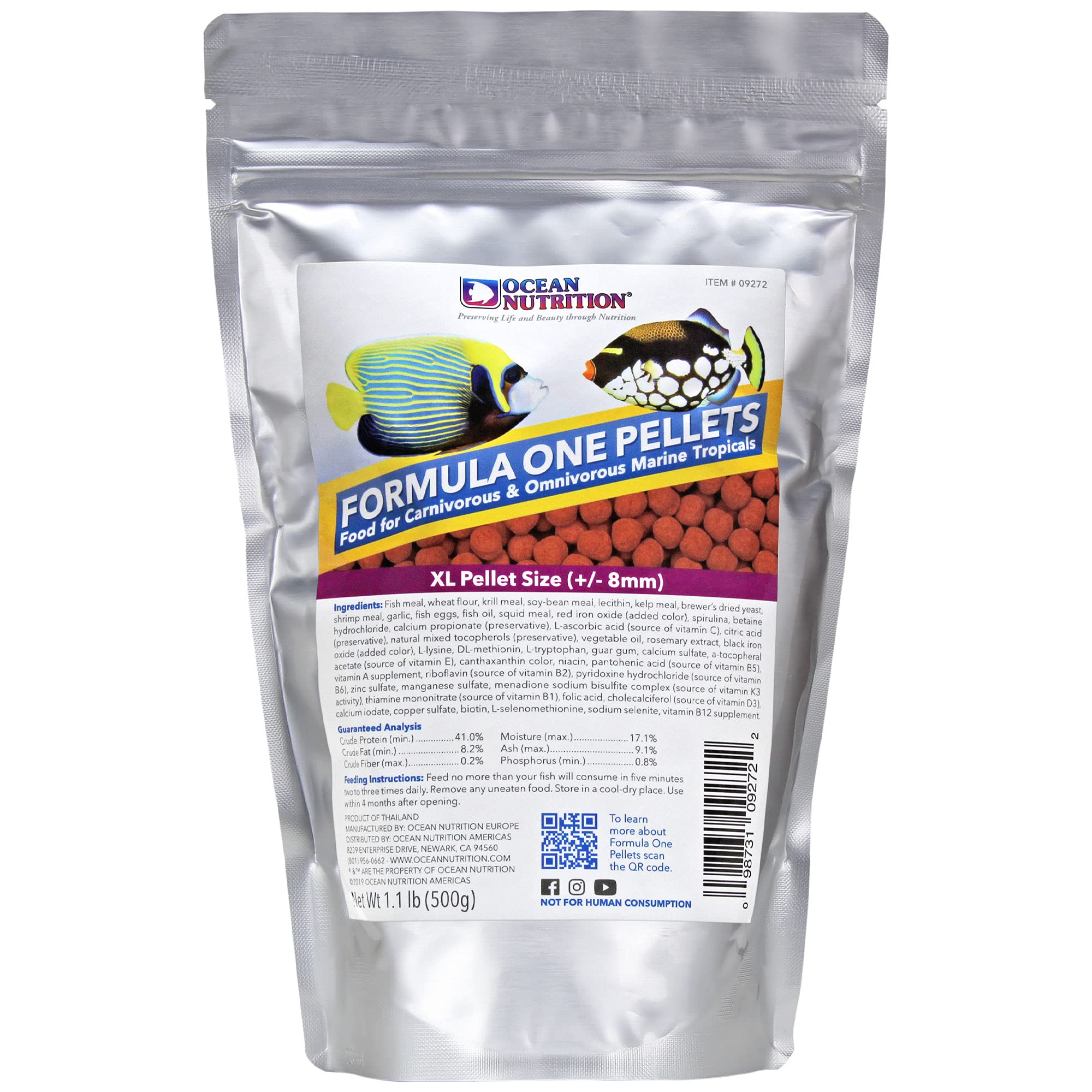
This 500-gram bag of XL sinking pellets from Ocean Nutrition delivers a high-protein formula at 41.1% that caters to larger carnivorous and omnivorous tropical species. Developed by aquaculture biologists, the soft moist pellets are designed for marine angelfish, butterflyfish, wrasses, and puffers, but freshwater community owners also report success with their larger cichlids and clown loaches. The non-clouding formula keeps the water column clear even with daily feeding sessions.
The pellets are sealed in an oxygen-free pouch to maintain freshness for three to four months after opening, which is a significant advantage for a bag this size. Because the pellets sink, they work well in tanks with strong surface agitation where floating food would get swept into overflow systems. Owners consistently note that their fish show brighter colors and more active behavior after switching to this food, and the XL size satisfies larger specimens without needing to feed multiple pellets per fish.
If you need a large quantity of high-protein sinking food for a tank of bigger tropical fish without paying a premium per ounce, this bag offers the best value in its weight class. Be mindful that the XL pellet size is inappropriate for small community fish or nano setups.
Why we love it
- 41.1% protein supports growth and color in large carnivorous species.
- Large 500-gram bag provides excellent per-ounce value.
- Oxygen-free packaging preserves freshness for months after opening.
Good to know
- XL pellets are too large for nano fish, tetras, and small barbs.
- Sinking action may be too fast for fish that prefer feeding at the surface.
FAQ
Should I choose floating or sinking pellets for my tropical community tank?
What is the ideal protein percentage for tropical fish food?
How do I prevent fish food from clouding my aquarium water?
Can I feed my tropical fish the same food as my goldfish?
Final Thoughts: The Verdict
For most tropical fish keepers, the fish food for tropical fish winner is the Hikari Cichlid Gold 3-Pack because it combines a proven color-enhancing formula, a practical floating pellet design that reduces waste, and exceptional value per ounce. If you keep large carnivorous fish that need a heavy sinking pellet, grab the Hikari Massivore Delite. And for a community tank full of nano fish, nothing beats the palatability and digestibility of the Xtreme Nano 0.5mm Pellets.