
A persistent nasal congestion that clears the moment you step outside. A layer of fine dust on the nightstand just hours after you wiped it clean. A lingering cooking smell that clings to the living room curtains. These are the quiet signals that your central HVAC — even with a fresh filter — is simply not engineered to handle the microscopic particle load of modern indoor living. A standalone unit must move enough cubic feet of air to turn over an entire floor, while trapping sub-micron irritants that standard furnace filters let straight through.
I’m Mo Mahin — the founder and writer behind Furric. My process for this guide involved cross-referencing CADR ratings against real-world coverage claims, examining filter media density and surface area specifications, and analyzing hundreds of verified owner reports to separate machines that genuinely scrub a whole house from those that only manage a single bedroom.
After weeks of deep-dive research, I’ve narrowed the field to the nine contenders that earn a spot in any serious discussion about the best whole house air cleaner for a range of budgets and living situations.
How To Choose The Best Whole House Air Cleaner
Selecting a whole-house air cleaner is fundamentally different from choosing a small bedroom purifier. You are selecting a machine that must scrub a volume of air many times larger, often across multiple rooms or an entire floor, with enough airflow to circulate clean air effectively. The following criteria separate true whole-house performers from over-marketed space heaters with fans.
CADR and True Coverage Area
Clean Air Delivery Rate (CADR) is the single most important technical specification for a whole-house unit. A CADR of 300 CFM or higher for smoke particles is the baseline for a unit claiming to handle 1,500 square feet or more. Pay attention to the manufacturer’s “room size” claim — many quote the maximum space a unit can theoretically stir air in, not the space it can effectively clean at a useful air-change rate. Look for a coverage figure based on four air changes per hour (ACH), not two.
Filter Type and Total Cost of Ownership
The filter media used dictates both the machine’s efficiency and its long-term expense. True HEPA H13/H14 captures 99.97% of 0.3-micron particles but needs periodic replacement, often at a substantial annual cost. Washable electrostatic filters, like those found in some high-end units, eliminate recurring purchases but require diligent manual cleaning and may have slightly lower initial particle-capture efficiency. Compare the cost of replacement filter packs over a five-year period — that figure often exceeds the purchase price of the machine itself.
Airflow Architecture: Intake, Fan, and Outlet Design
How a machine pulls in dirty air and pushes out clean air determines whether it can effectively condition a whole house. Look for a 360-degree intake design that draws air from all directions rather than a single side. The fan motor should deliver sufficient static pressure to move air through dense filter media without stalling. Adjustable outlet vents, such as 45- to 90-degree angle panels, allow you to direct the clean air stream toward the center of the room rather than straight at the ceiling — a critical feature for circulating air across an open floor plan.
Sensor Quality and Smart Controls
A whole-house unit that responds slowly to changes in air quality wastes energy and fails to protect occupants. Multi-channel laser sensors that differentiate particle sizes — PM1, PM2.5, and PM10 — provide far more granular and reactive auto-mode performance than basic infrared dust sensors. The ability to connect to a smartphone app for remote monitoring and scheduling is useful, but the sensor’s real-world response time and accuracy matter more than the number of app features.
Quick Comparison
On smaller screens, swipe sideways to see the full table.
| Model | Category | Best For | Key Spec | Amazon |
|---|---|---|---|---|
| Blueair Blue 211+ | Mid-Range | Style and Quiet Operation | 3385 sq ft coverage | Amazon |
| Levoit EverestAir-P | Mid-Range | Detailed Air Quality Monitoring | 354 CFM CADR | Amazon |
| Coway Airmega 400S | Premium | Automated Eco Operation | 3120 sq ft coverage | Amazon |
| AirDoctor AD3500 | Premium | Hospital-Grade Filtration | 0.003 micron capture | Amazon |
| Nuwave OxyPure ZERO | Mid-Range | Zero Filter Replacement Waste | Washable Bio-Guard filters | Amazon |
| Nuwave Forever | Mid-Range | Adjustable Airflow Direction | 7-stage washable system | Amazon |
| VEVOR Air Scrubber | Budget | Powerful Spot Remediation | 550 CFM airflow | Amazon |
| Austin Air HealthMate B400 | Premium | VOC and Odor Neutralization | 15 lbs carbon/zeolite | Amazon |
| Dyson Big+Quiet BP03 | Premium | Formaldehyde Detection and Destruction | 32 foot air projection | Amazon |
In‑Depth Reviews
1. Blueair Blue 211+
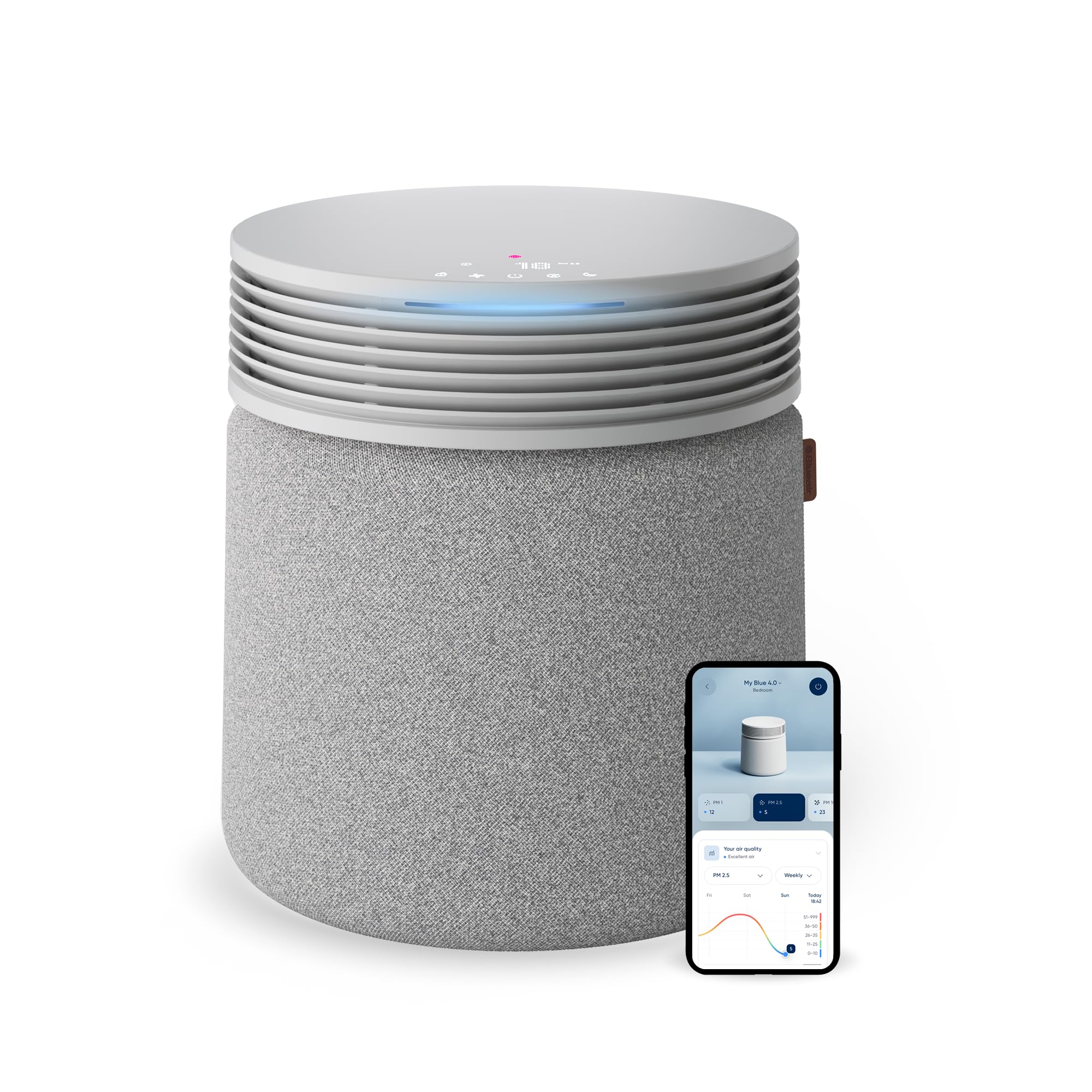
The Blueair Blue 211+ delivers a compelling balance of coverage, noise discipline, and aesthetic integration that justifies its top position. Its HEPASilent filtration technology combines electrostatic capture with mechanical filtration, allowing the unit to use a lower-energy fan while still achieving high CADR. The 3,385 square foot coverage claim is among the highest in this class, making it a legitimate one-unit solution for open-concept living areas.
Real-world owner feedback consistently highlights the near-silent low-speed operation — a critical factor for units placed in living rooms or bedrooms where constant background noise is unacceptable. The integrated smart sensors automatically adjust fan speed based on detected particle loads, and the companion app provides remote monitoring of both indoor air quality and filter life. The double as a side table is not mere marketing; the clean grey cabinet actually blends into modern decor without looking like an appliance.
The primary long-term cost consideration is the replacement filter set, which is priced at a mid-range level compared to the disposable filters of competitors. Owners report that the pre-filter captures enough large dust to extend the main filter’s usable life, and that the unit requires no special cleaning routine beyond occasional exterior wiping. Second-year filter costs are well within the range of other mid-tier units, keeping the total five-year operating expense manageable.
Why we love it
- Exceptionally quiet at all speeds — lower decibel rating than most comparably sized units
- Stylish cabinet design doubles as functional furniture, not a medical device
- Strong 3,385 sq ft coverage makes it viable for single-unit whole-floor filtration
Good to know
- Replacement HEPASilent filter packs cost more than standard pre-filter-only units
- App connection reliability varies between iOS and Android platforms
- Maximum fan speed is noticeably less powerful than dedicated shop-style scrubbers
2. Levoit EverestAir-P

The Levoit EverestAir-P earns its place near the top through a combination of industry-standard certification and genuinely useful sensor technology. It holds the AHAM VERIFIDE seal, meaning its CADR rating of 354 CFM has been independently validated for smoke, dust, and pollen removal. The coverage of 2,655 square feet at a single air change per hour is realistic for an open-plan home, though you will want a second unit for a multi-level house.
What sets this unit apart from typical HEPA machines is the three-channel laser sensor that differentiates between PM1.0, PM2.5, and PM10 particles. This granular data is displayed on the unit and in the VeSync app, allowing you to identify specific pollution sources — for example, whether a spike in PM2.5 is coming from cooking smoke or outdoor wildfire infiltration. The adjustable air outlet angles between 45 and 90 degrees let you direct the clean air stream away from the ceiling and toward occupied zones of the room.
The carbon pellet filter in the EverestAir-P is substantially larger — owners report 60 percent more carbon media than the brand’s own Vital 200S — which directly improves its ability to absorb odors and VOCs from cooking, pets, and cleaning chemicals. Replacement filters are a moderate expense, but the washable pre-filter reduces the load on the main HEPA element, extending its life between replacements. The noise profile remains conversational at speeds one through three, with turbo mode producing the familiar rush of a high-output fan.
Why we love it
- AHAM VERIFIDE certification provides an independent third-party confirmation of CADR claims
- Three-channel laser sensor identifies specific particle size ranges for targeted awareness
- Adjustable outlet vent angles prevent clean air from being wasted on the ceiling
Good to know
- Official replacement filters are expensive and third-party alternatives may reduce performance
- Wheels only swivel in one axis, making sideways maneuvering slightly awkward
- Auto mode can overreact to minor transient events, cycling fan speed up and down unnecessarily
3. Coway Airmega 400S
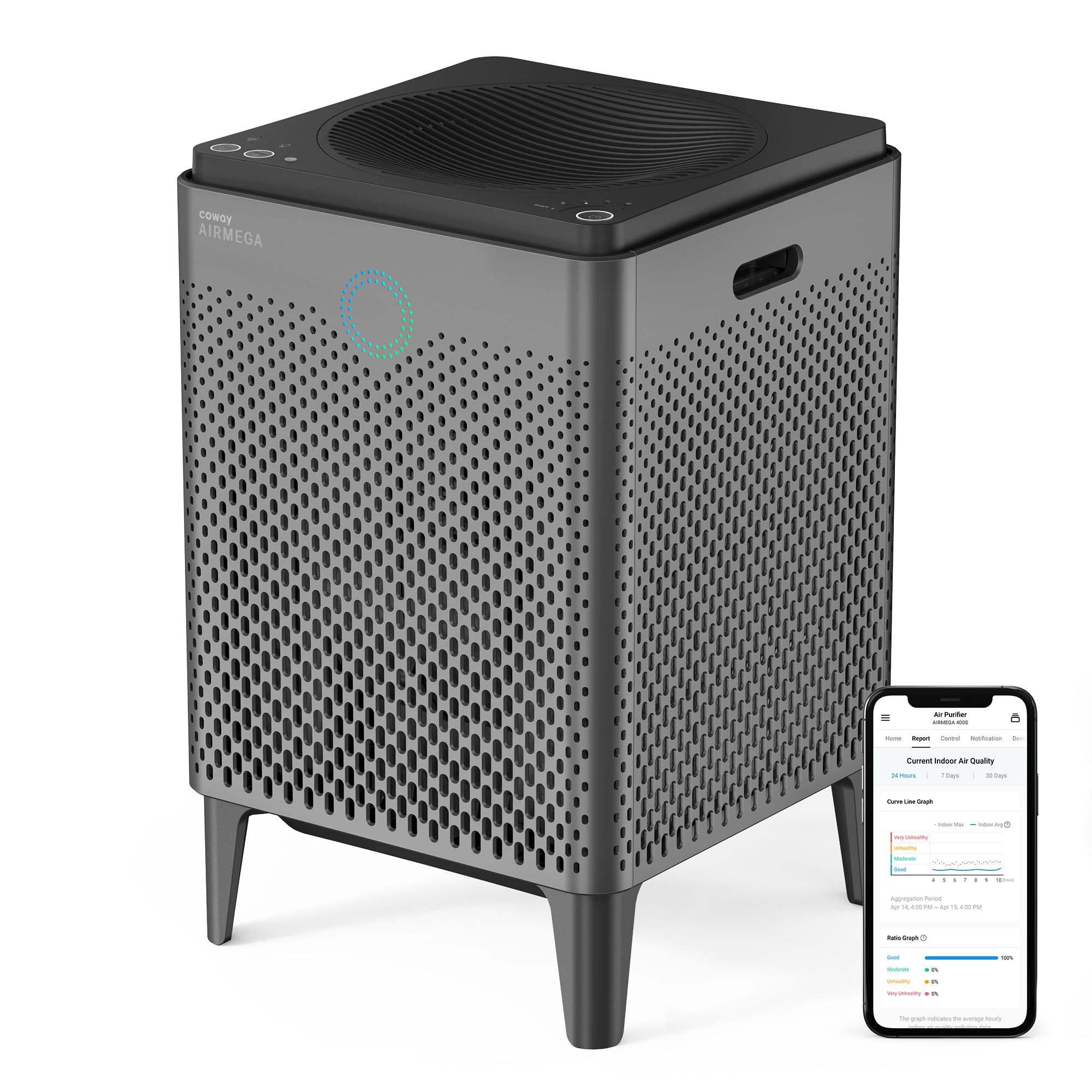
The Coway Airmega 400S is engineered for the user who values set-and-forget operation above all else. Its HyperCaptive filtration system uses a permanent pre-filter, an activated carbon filter, and a true HEPA filter stacked in series. The dual intake design — the unit pulls air from two sides simultaneously — allows it to process a larger volume of air per minute than single-intake units of similar size. Coverage is rated at 3,120 square feet in one hour, which positions it as a true whole-home contender for ranch-style layouts and upper-floor master suites.
The Smart Mode feature continuously monitors the incoming air quality and adjusts fan speed without user intervention. When the unit detects that air quality has remained clean for 30 minutes, it enters Eco Mode and shuts the fan off entirely to conserve energy. This automated cycling is powered by a real-time particle sensor that owners report is genuinely responsive — the machine will ramp up moments after someone enters the room from outside or begins cooking. The IoCare app adds outdoor air quality integration, so you can see whether your indoor readings correlate with regional conditions.
Owners consistently note the unit’s quiet operation on low fan speeds — the mechanical hum is present but not intrusive, making it suitable for bedrooms and nurseries. The five-year warranty is one of the strongest in this class, reflecting Coway’s confidence in the long-term reliability of the brushless DC motor and the sensor array. Filter replacements are required every 12 months and cost a moderate amount, though the pre-filter can be vacuumed to reduce the main filter’s particulate load between swaps.
Why we love it
- Eco Mode shuts off the fan entirely when air quality holds clean, saving significant energy over continuous operation
- Five-year warranty provides industry-leading protection for a premium appliance
- Dual-side intake design increases volumetric throughput compared to single-front-intake competitors
Good to know
- The Android app historically had initial connection and stability issues, though recent updates have improved reliability
- Unit is physically large at 14.8 inches square and 22.8 inches tall — it requires dedicated floor space
- Smart scheduling features require app access; the physical controls on the unit are minimal
4. AirDoctor AD3500
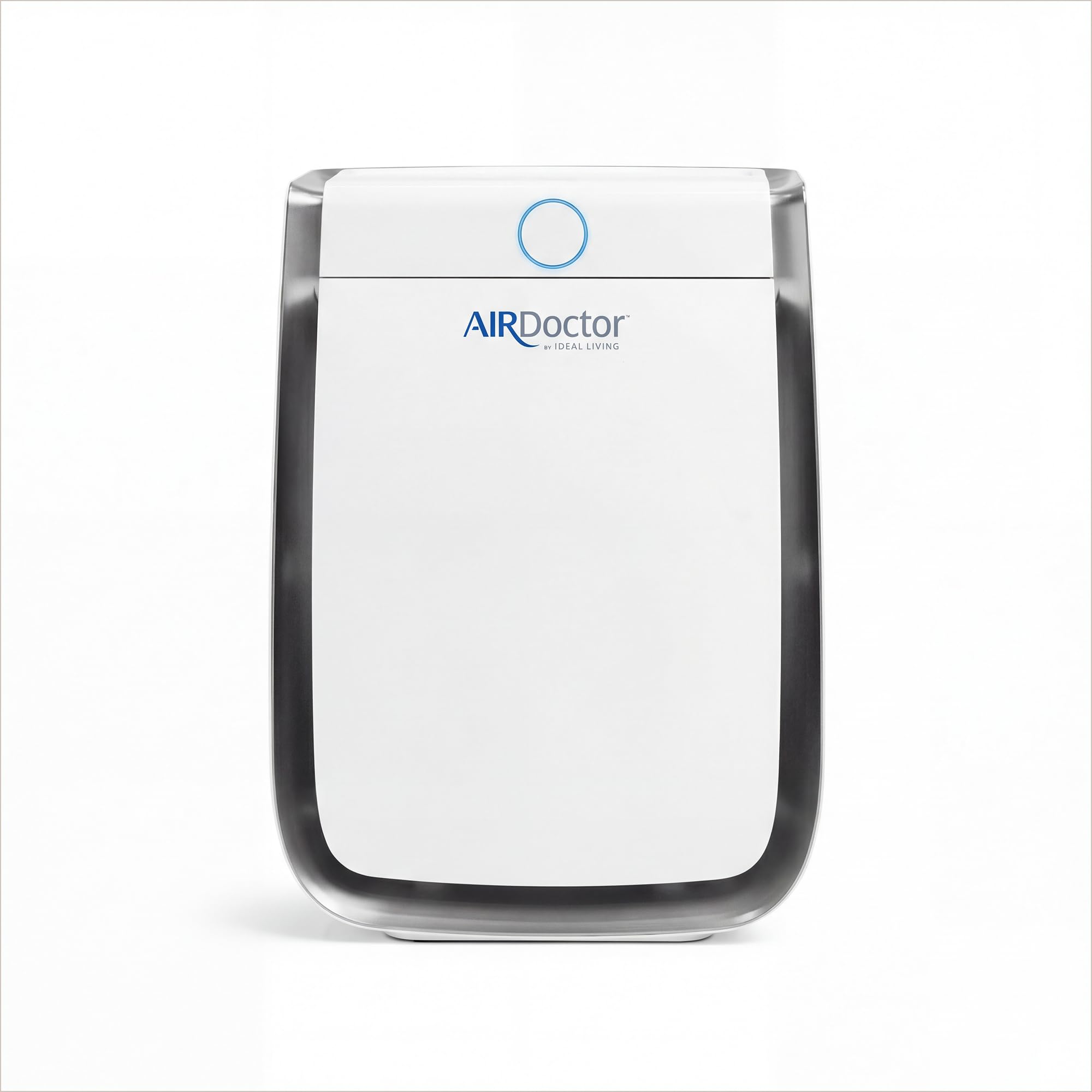
The AirDoctor AD3500 targets buyers with specific health concerns — sinus congestion, asthma triggers, pet allergies, or viral particle reduction — by offering a filter specification that exceeds the standard HEPA baseline. Its UltraHEPA filter media is independently tested to capture 99.99 percent of airborne particles at 0.003 microns, a size class that includes bacteria, viruses, and fine combustion particles from wildfire smoke. The included pre-filter and premium activated carbon filter add VOC and odor absorption capacity that pure HEPA units lack.
The unit’s coverage is rated at 2,520 square feet in one hour, making it a strong option for large main-floor spaces or open basement areas. The Halo air quality display uses a color-coded ring — green, yellow, orange, red — based on real-time PM2.5 readings from the onboard laser sensor. Auto Mode responds to changes in particle concentration by boosting fan speed until the air clears, then quietly ramping back down. Owners report that the sensor detects cooking smoke within seconds and that the Boost setting rapidly clears the room.
Replacement filters are a notable ongoing expense: the carbon filter needs swapping every six months, while the UltraHEPA filter lasts roughly 12 months. AirDoctor recommends using only genuine filters to maintain the certified 99.99 percent capture rate. The physical footprint is substantial — nearly 20 inches deep and 27 inches tall — so measure your intended placement carefully. The unit is eligible for FSA and HSA reimbursement, which can offset the initial purchase for those with eligible spending accounts.
Why we love it
- UltraHEPA filtration certified for 99.99% particle capture at 0.003 microns
- Color-coded Halo display provides an immediate visual cue of changing air quality
- FSA and HSA eligibility reduces the effective cost for eligible buyers
Good to know
- Replacement filter costs are high over a multi-year ownership period
- Physical dimensions are larger than most competitors, requiring generous floor space
- Maximum fan speed produces a loud, turbine-like sound that can be disruptive in quiet rooms
5. Nuwave OxyPure ZERO

The Nuwave OxyPure ZERO fundamentally rethinks the maintenance cycle by eliminating filter replacements entirely. Its four-stage filtration system uses a stainless-steel pre-filter, an ozone emission removal filter, and two patented Bio-Guard electrostatic filters — all of which are washable with water and reusable. Only the ozone removal filter cannot be washed, and its lifespan is measured in years rather than months. This design completely eliminates the recurring annual expense that defines most HEPA-based purifiers.
The unit is certified by Intertek to capture 100 percent of airborne particles as small as 0.1 microns, including smoke, dust, pollen, and pet dander. It also reduces ozone levels to less than one part per billion, meeting California Air Resource Board standards. The coverage rating of 2,002 square feet is realistic for a large single room or combined living area, and the unit achieves two air changes per hour in a 1,000-square-foot space. A notable feature is the adjustable vent panel that can be set to 30, 60, or 90 degrees, allowing you to aim the clean air stream away from the ceiling and toward breathing zones.
Owner experiences highlight the plasma-based odor and particle sensor’s ability to detect events like cooking smoke, pet dander releases, and even heavy dust from construction. The auto mode responds to these readings by adjusting fan speed, and the night-time sleep mode drops the noise level to a whisper-quiet 21.41 dB. The primary trade-off is that the washable electrostatic filters must be rinsed and dried thoroughly — a process that takes roughly 24 hours — so you may need to plan your maintenance around periods of lower usage.
Why we love it
- Washable Bio-Guard filters eliminate the need for any disposable filter replacements
- Adjustable 30-90 degree air vent provides precise directional control of clean airflow
- Ultra-quiet sleep mode at 21.41 dB is barely audible for light sleepers
Good to know
- Washable filters require thorough drying for up to 24 hours, creating a maintenance window
- The plasma sensor sometimes triggers false positives from strong-smelling events like scented candles
- The unit does not display real-time numeric particle counts like some laser-sensor competitors
6. Nuwave Forever

The Nuwave Forever takes the washable-filter philosophy of the OxyPure ZERO and refines it with a seven-stage filtration system and a more user-friendly adjustable flow panel. Like its stablemate, all filters except the ozone removal elements are washable and reusable, meaning the only recurring cost is electricity. The 7-stage system includes stainless-steel pre-filters, Bio-Guard filters, an ozone removal filter, and a Bio-Guard 360 filter that wraps around the cylindrical core for 360-degree particulate capture.
Coverage is rated at 2,002 square feet in one hour, and the unit is Intertek certified to capture 100 percent of particles down to 0.1 microns. The adjustable flow panel is a direct carryover from automotive vent design — you can set it at 30, 60, or 90 degrees to direct clean air exactly where the room needs it most. Owners with open floor plans report that this feature makes a tangible difference in how quickly the entire space feels fresher, especially when the unit is placed near a corner or in an alcove where airflow might otherwise be blocked.
Real-world feedback from owners with multiple large pets emphasizes the dramatic reduction in wet dog smell and pet dander accumulation. The washable filters can be cleaned with hot water and a mild detergent every few weeks, depending on the particle load, and they dry in roughly 24 hours. The auto mode uses both particle and odor sensors to adjust fan speed across six levels, and the companion app adds remote control and monitoring. The unit is notably quiet on lower speeds, though fan levels four through six produce a level of noise comparable to a range hood.
Why we love it
- Seven-stage filtration with all primary filters washable and reusable — zero consumable waste
- Adjustable flow panel directs clean air at 30, 60, or 90 degrees for precise targeting
- Highly effective on pet odors and dander based on extensive owner feedback from multi-pet households
Good to know
- Washable filters need a full 24-hour drying cycle after cleaning, requiring planning
- Fan speeds above level 3 produce noticeable noise comparable to a kitchen exhaust fan
- Upfront cost is higher than disposable-filter competitors of similar coverage
7. VEVOR Air Scrubber

The VEVOR Air Scrubber occupies a unique niche: it is an industrial-grade negative air machine designed for construction remediation that also works exceptionally well in residential settings where raw air-moving power is the primary requirement. Its 550 CFM airflow rating is among the highest in this comparison, and the 15.5-inch intake diameter allows it to pull in a large volume of particle-laden air from a broad area. The three-stage filtration uses a MERV-10 pre-filter, a carbon filter, and an H13 HEPA filter rated for 99.97 percent capture of 0.3-micron particles.
This is not a furniture-grade appliance — the VEVOR is a 35-pound steel box with a foldable handle, designed to be stacked, daisy-chained, and wheeled into construction sites, fire remediation zones, and basements with severe mold or dust problems. The daisy-chain feature is genuinely useful for whole-house scenarios: you can plug up to three units together via the auxiliary sockets on the panel, creating a combined 1,650 CFM system that can clear the air in a multi-room renovation in a fraction of the time a single consumer purifier would take.
Owner reports confirm that the unit makes a visible difference in particle load — one reviewer noted the fog of visible dust cleared from the air in a heavily soiled room within minutes. The unit is louder than consumer-grade machines, but the noise is a consistent fan hum rather than a high-pitched whine, and many owners find it tolerable even in occupied spaces. A critical user note: remove the individual plastic wrap from each filter before operation, as the filters ship sealed and will not allow airflow until unwrapped.
Why we love it
- 550 CFM airflow provides aggressive air exchange far beyond typical consumer purifier specs
- Daisy-chain capability allows up to three units to work in parallel for heavy remediation
- Three-stage MERV-10, carbon, and H13 HEPA filtration captures a broad range of particle sizes
Good to know
- Industrial aesthetic and larger footprint may not blend into a living room or bedroom decor
- No smart features or integrated air quality sensors — operation is fully manual
- Noise level is higher than consumer-focused units, more like a high-velocity fan
8. Austin Air HealthMate Standard B400

The Austin Air HealthMate Standard B400 is an appliance built around one overriding principle: a massive volume of granular activated carbon and zeolite media provides unmatched VOC and odor removal. While most HEPA purifiers treat the carbon filter as a thin afterthought, the HealthMate integrates 15 pounds of blended carbon and zeolite into its four-stage filter pack. This sheer mass of adsorbent media allows it to neutralize heavy chemical loads — cigarette smoke, wildfire smoke, paint fumes, off-gassing from new furniture — that would saturate a standard carbon pre-filter within weeks.
The unit covers up to 700 square feet, which is a smaller area than many other units in this comparison, but its filter pack is designed to last up to five years with continuous use. That five-year replacement interval dramatically reduces the total cost of ownership: you buy filters roughly twice per decade, not twice per year. The construction is straightforward: a powder-coated steel body, a 360-degree intake grille, and a three-speed fan. No smart sensors, no WiFi, no app — just mechanical switches and a box of highly effective filtration media.
Owner feedback from those dealing with neighbor cigarette smoke or heavy wildfire seasons is consistently emphatic about its effectiveness — multiple long-term owners report that the unit eliminated 90 percent or more of the odor within the first hours of operation. The noise profile is louder than modern smart purifiers on high speed, but the low setting is quiet enough for a bedroom. The low EMF design is a specific selling point for health-conscious users concerned about electromagnetic field exposure from electronics in sleeping areas.
Why we love it
- 15 pounds of activated carbon and zeolite provides industry-leading VOC and odor adsorption capacity
- Five-year filter life dramatically reduces long-term operating costs compared to annual-replacement units
- Simple, robust construction with low EMF emissions for health-conscious placements
Good to know
- No smart features, no particle sensors, no remote control — pure manual operation only
- Coverage of 700 sq ft is smaller than many competing whole-house units
- High fan speed produces a noticeable whir that may be intrusive for silent-room environments
9. Dyson Purifier Big+Quiet Formaldehyde BP03

The Dyson Purifier Big+Quiet BP03 is the most technologically audacious unit in this comparison, targeting a specific pollutant — formaldehyde — that few other purifiers even acknowledge. It uses a catalytic oxidation filter that permanently destroys formaldehyde molecules rather than merely adsorbing them onto a media that can become saturated and re-release them. This is a genuinely distinct capability for a residential air cleaner, particularly relevant if your home contains pressed-wood furniture, laminate flooring, or certain insulation materials that off-gas formaldehyde for years.
The BP03 projects filtered air over 32 feet, a specification that Dyson backs with an oblique airfoil design that creates a long-range laminar airflow stream. This allows the unit to circulate clean air across large open spaces without relying on ceiling fans or furnace blowers. The HEPA H13 filter is 3.8 times larger than Dyson’s previous generation, extending its lifespan to up to five years. The onboard sensor suite is exhaustive: it monitors PM2.5, PM10, nitrogen dioxide, volatile organic compounds, relative humidity, and the specific formaldehyde level, all displayed in real time on the LCD screen.
Owners praise the unit’s quiet operation at every speed — Dyson’s acoustic engineering is evident in the low-turbulence airflow that produces far less rushing sound than comparably powerful units. The MyDyson app provides comprehensive analytics, including historical air quality data and a breakout of each measured pollutant. The primary concessions are the purchase price and the replacement filter cost — a combined HEPA and carbon filter set runs around for HEPA and for carbon, though the five-year lifespan of the main filter mitigates the per-year impact.
Why we love it
- Catalytic filter permanently destroys formaldehyde rather than temporarily adsorbing it
- 32-foot air projection creates laminar airflow for even distribution in large open spaces
- Comprehensive sensor suite measures PM2.5, PM10, NOx, VOCs, humidity, and formaldehyde individually
Good to know
- Premium purchase price is the highest in this comparison, reflecting the advanced technology
- Replacement carbon filter still requires periodic swapping, adding to the operating cost
- Some long-term Dyson owners report past post-warranty support gaps for other product lines
FAQ
How many air changes per hour do I need for a whole-house purifier?
Can a single whole-house air cleaner serve multiple floors?
What is the difference between a whole-house air cleaner and an HVAC filter?
Why do some whole-house purifiers use washable filters instead of replaceable HEPA?
How do I know if my whole-house air cleaner is actually working?
Final Thoughts: The Verdict
For most homeowners looking for the best whole house air cleaner, the winner is the Blueair Blue 211+ because it delivers the strongest combination of wide coverage, whisper-quiet operation, and furniture-grade aesthetics at a mid-range price point. If you need detailed particle-level monitoring and AHAM-certified CADR data to validate performance, grab the Levoit EverestAir-P. And for the complete elimination of filter replacement costs over a decade, nothing beats the Nuwave OxyPure ZERO.