
The wrong salt can stall coral growth, trigger nuisance algae, or crash your alkalinity overnight. The chemistry of your reef tank hinges on the elemental profile of the salt you mix—every water change is either a reset or a risk. Choosing a premium reef salt is about locking in predictable parameters for every single gallon.
I’m Mo Mahin — the founder and writer behind Furric. I spend hundreds of hours cross-referencing batches of ICP-OES analyses, comparing calcium-to-alkalinity ratios, and reading owner feedback to find the salts that deliver batch-to-batch consistency for demanding reef keepers.
After comparing lab reports and real-world results, I’ve found the options that give both SPS and LPS corals the stable elements they need. This guide breaks down the best reef salt for accelerated growth, vibrant coloration, and stable water chemistry.
How To Choose The Best Reef Salt
Every reef salt blend aims to replicate natural seawater, but the measurable differences in calcium concentration, alkalinity (dKH), and magnesium levels dictate which corals thrive. Matching the salt’s chemical signature to your tank’s bioload is the core of successful water changes.
Calcium, Alkalinity, and Magnesium Targets
Hard corals consume calcium and carbonate at a high rate. Salts with elevated calcium (450–500 ppm) and alkalinity (11–12 dKH) support SPS growth without requiring constant dosing. Mixed-reef tanks with soft corals often prefer lower, NSW-like parameters to avoid pH swings.
ICP-OES Batch Testing
Inconsistent salt batches cause parameter shifts that stress corals. Brands that provide ICP-OES verification for every lot guarantee that calcium, strontium, and potassium levels stay within a tight tolerance. This is critical for high-demand SPS systems where a 50-ppm calcium drift can stall growth.
Dissolution Speed and Residue
Anhydrous salts dissolve faster and leave no white residue on pumps or heaters. Rapid dissolution lets you mix and use the water the same day, which is a real advantage for frequent water changes. Granular salt mixes that clump require more aggressive mixing and often need 12–24 hours to clear.
Quick Comparison
On smaller screens, swipe sideways to see the full table.
| Model | Category | Best For | Key Spec | Amazon |
|---|---|---|---|---|
| Red Sea Coral Pro 200 Gal Bag | Premium | SPS growth & accelerated coralline | 200 Gal per bag | Amazon |
| FritzPRO R.P.M. Redline High Alk | Premium | High-alkalinity SPS systems | 55 lbs / 200 Gal | Amazon |
| Red Sea Coral Pro 175 Gal Bucket | Premium | Mixed reef & LPS coral vitality | 175 Gal per bucket | Amazon |
| Instant Ocean Reef Crystals 160 Gal | Mid-Range | Value for stony coral tanks | 160 Gal per bucket | Amazon |
| Instant Ocean Sea Salt 200 Gal | Mid-Range | Fish-only & soft coral systems | 62 lbs / 200 Gal | Amazon |
| NYOS Pure Reef Salt 22 lbs | Mid-Range | ICP-tested consistency for small tanks | 250 Liters per box | Amazon |
| Seachem Vibrant Sea 60 Gal | Budget-Friendly | Entry-level reef & nano tanks | 60 Gal per container | Amazon |
In‑Depth Reviews
1. Red Sea Coral Pro Marine Salt Mix 200 Gallon Bag

The 200-gallon bag format delivers the same elevated calcium and alkalinity profile as the bucket version at a lower per-gallon cost. With calcium near 500 ppm and alkalinity around 12 dKH, this salt provides the scaffolding SPS corals need to build skeleton rapidly. The granular mix dissolves fully in 15 minutes when you use a pump and heater.
Long-term users note improved polyp extension and deeper coloration after switching from standard synthetic salts. The bag requires a dry storage container to prevent clumping, but the heavy-duty inner bag protects against moisture during shipping. Keep a spare bucket or tote to transfer the powder after opening.
This salt is particularly recommended for growing out SPS frags and mixed-reef tanks that demand consistent elemental ratios. The elevated carbonate levels reduce the need for two-part dosing in moderately stocked systems.
Why we love it
- Elevated Ca and Alk for SPS growth
- Dissolves in 15 minutes with proper mixing
- Best per-gallon value in the premium tier
Good to know
- Needs a dry storage container after opening
- Bucket version is easier to handle for smaller systems
2. FritzPRO R.P.M. Redline High Alk Salt Mix Red Box 55 lbs

FritzPRO Redline pushes alkalinity higher than most competing salts, making it a targeted tool for heavy SPS and clam-dominated systems that consume carbonate rapidly. The powder is extremely fine—almost baby-powder consistency—which means it dissolves instantly when you add it to a mixing vessel with a powerhead. No residue, no cloudiness.
Be careful with the dosage: the high alkalinity can overshoot if you follow generic mixing ratios. Start with 4.5 cups per 5 gallons and adjust based on your refraktometer reading. Owners who switched from Reef Crystals report noticeably faster coralline algae spread and thicker SPS branches within two months.
The 55-pound box is heavy but economical for frequent water changes. Fritz Aquatics has produced consistent batches for years, and the nitrate/phosphate-free guarantee prevents nutrient spikes during water changes.
Why we love it
- Ultra-fine powder dissolves instantly
- Very high alkalinity for demanding SPS tanks
- Corals and coralline algae respond aggressively
Good to know
- May overshoot parameters when not measured carefully
- Powder can become airborne—mix in a covered container
3. Red Sea Coral Pro Reef Salt Mix Large Bucket – 175 Gal

This bucket version offers the same elevated calcium and carbonate profile as the bag, but the resealable container is far more practical for reef keepers who value convenience. The salt comes in a thick inner bag inside the bucket, which protects against moisture and makes scooping easy. Twist off the lid and you are ready for the next water change.
Experienced keepers note that salt mixes that rely on elevated alkalinity require careful acclimation. A few reviewers reported pH drifts when switching from lower-alk salts, so it is best to phase in Coral Pro over three water changes. Pairing an airstone or heater during mixing helps stabilize pH before it enters the display tank.
For mixed reefs with a combination of LPS and SPS corals, the 175-gallon bucket hits a practical sweet spot—enough quantity for regular changes without committing to a full bag that requires separate storage.
Why we love it
- Convenient bucket with easy-twist lid
- Thick inner bag prevents moisture damage
- Proven profile for mixed-reef acceleration
Good to know
- Buckets sometimes crack during shipping
- Instructions can be unclear when mixing by weight
4. Instant Ocean Reef Crystals Reef Salt For 160 Gallons

Reef Crystals takes the dependable Instant Ocean base and enriches it with extra calcium, trace elements, and vitamins—making it a direct upgrade for hobbyists keeping stony corals on a budget. The extra calcium encourages coralline algae and LPS skeleton formation without needing the higher alkalinity of premium salts. Mixing is fast, and the water clears within an hour with a heater and pump.
Long-term users report consistent calcium levels around 450–480 ppm and alkalinity holding near 11 dKH across multiple buckets. The addition of metal-detoxifying agents also helps neutralize any contaminants in tap water, which is a safety net for reefers using less refined source water. It mixes to 1.025 SG reliably with 4.75 cups per 5 gallons.
For a mixed-reef tank that does not demand ultra-high alkalinity, Reef Crystals provides the best balance of coral nutrition and per-gallon cost. Many 30-year veterans still consider this the standard before moving to pricier specialty blends.
- Consistent batch quality over decades
- Extra trace elements and vitamins for LPS
- Best cost-to-performance ratio for mixed reefs
- Not aggressive enough for high-SPS demand
- Box container sometimes arrives damaged
5. Instant Ocean Sea Salt for Marine Fish Tank 200 Gal
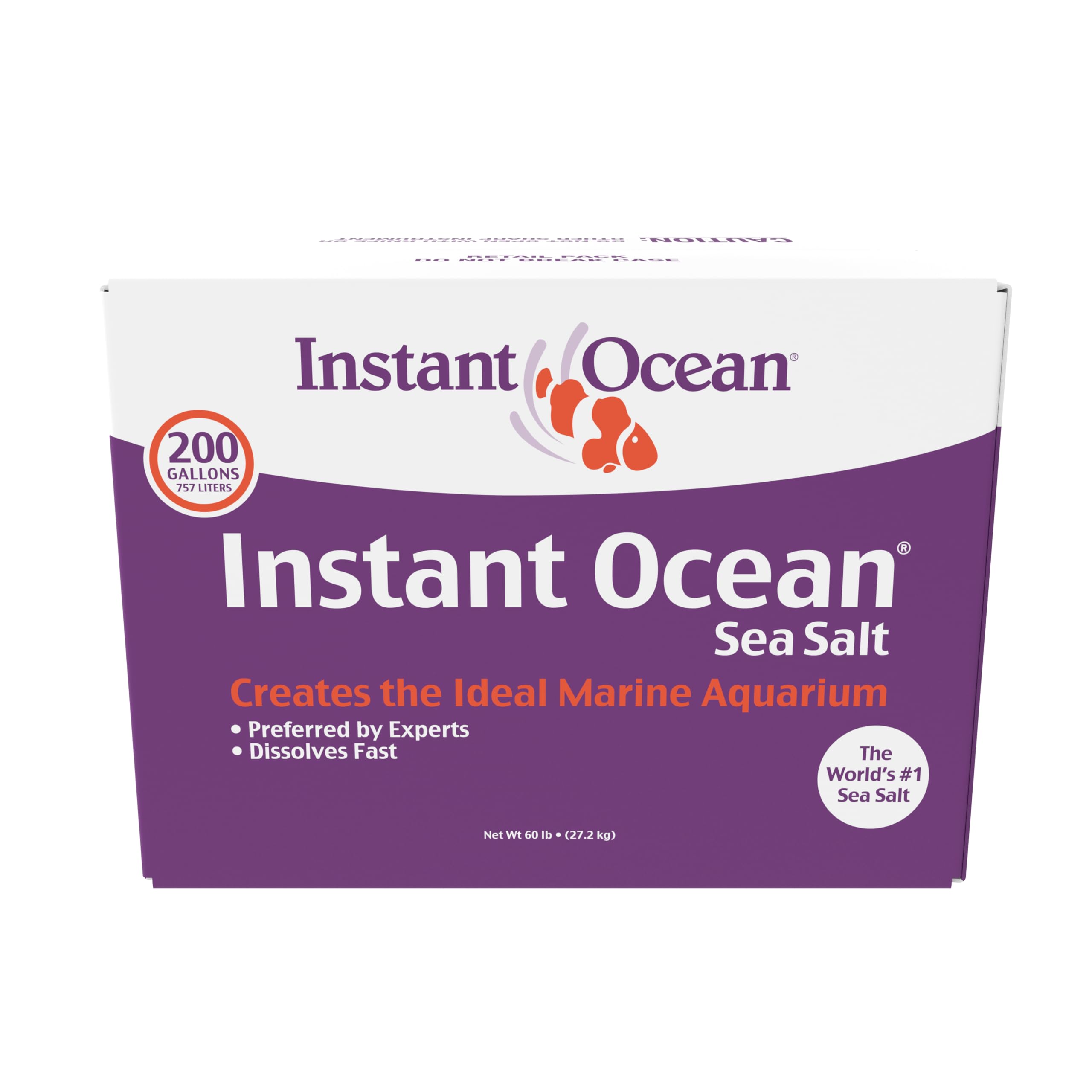
Instant Ocean Sea Salt has been the household name for marine aquariums for over 40 years, and for good reason—it produces stable, NSW-mimicking water without nitrate or phosphate. The 62-pound bucket yields 200 gallons of saltwater that is clear within minutes of mixing. pH settles at 8.2–8.3 without any dosing adjustments.
This salt is formulated for fish-only and soft coral setups where elevated calcium and alkalinity are not required. The elemental profile stays close to natural seawater, which makes it a poor choice for SPS domination but an excellent baseline for quarantine tanks, grow-out systems for inverts, or brine shrimp hatching.
Consistency is this salt’s superpower—every bucket delivers identical parameters. For beginners setting up their first marine tank, it removes the variable of salt chemistry from the equation entirely.
Why we love it
- Decades of proven batch consistency
- Dissolves fast with no cloudiness
- Nitrate and phosphate free
Good to know
- Calcium and alkalinity too low for hard corals
- Not enriched with trace elements like reef mixes
6. NYOS Pure Reef Salt for Saltwater Aquariums 22 lbs (10 kg)
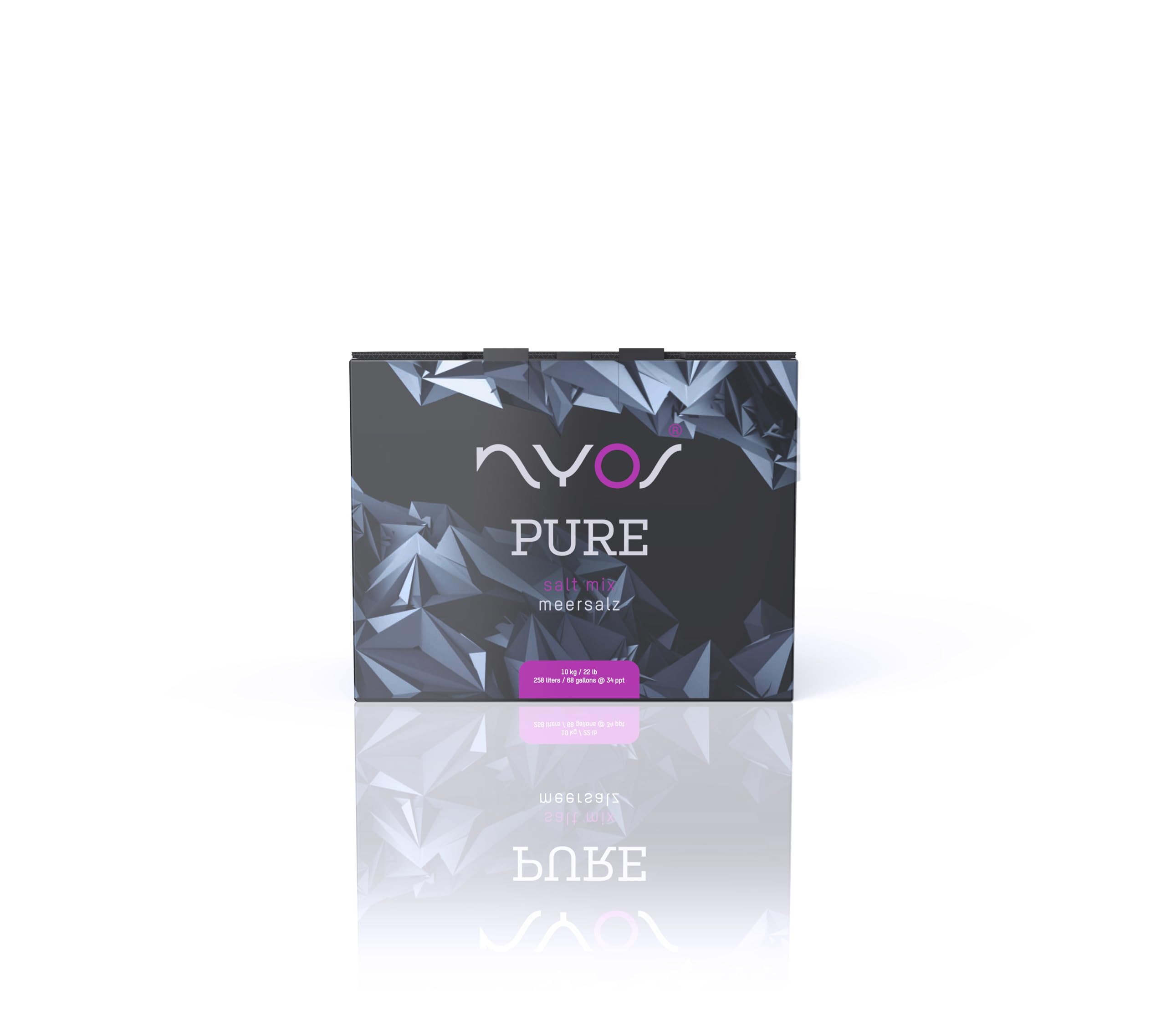
NYOS Pure Reef Salt stands out for its ICP-OES batch verification and balanced mineral composition that promotes vivid coral coloration. Every production run is tested by an independent lab, giving you a certificate of analysis for calcium, alkalinity, magnesium, and trace elements. This level of transparency is rare in the mid-range segment.
The formula dissolves quickly and completely, leaving no residue even without aggressive mixing. Owners report that switching to NYOS resulted in deeper coral pigmentation and less nuisance algae, likely due to the controlled potassium and strontium levels. The 22-pound box makes 250 liters, which is ideal for nano-to-midsized reef systems.
If you run a small reef tank and want lab-verified consistency without paying for a large bucket, NYOS offers a practical middle ground. The resealable box helps keep the powder dry between water changes.
Why we love it
- ICP-OES batch verification included
- Fast dissolving with zero residue
- Promotes vivid coral pigmentation
Good to know
- Box size limits use to smaller systems
- Limited long-term consistency data due to new release
7. Seachem Vibrant Sea Highly Concentrated Synthetic Sea Salt 60 Gallons

Seachem’s Vibrant Sea uses an anhydrous (water-free) salt crystal that makes it about 30% more concentrated than traditional granular mixes. Less salt per gallon means the container lasts longer, and the anhydrous nature eliminates clumping caused by moisture uptake during storage. It dissolves fully with just a powerhead in under an hour.
The formula includes enhanced potassium levels, which can improve coloration in anemones and soft corals. Owners moving from standard sea salt to Vibrant Sea often report a visible increase in polyp extension and tissue thickness within two weeks. The recommended salinity for reef aquariums is 1.020–1.025 SG at 75°F.
For nano reef tanks or as a backup salt for quarantine systems, this is a cost-effective entry point. It does not reach the elevated parameters of premium blends, but it delivers consistent baseline chemistry that beats budget grocery-store mixes.
Why we love it
- Anhydrous formula is 30% more concentrated
- Enhanced potassium improves soft coral colors
- Uniform batch-to-batch consistency
Good to know
- Not enriched for demanding SPS systems
- Requires precise measurement of smaller volume per gallon
FAQ
What is the difference between standard sea salt and reef salt?
How long should I mix reef salt before adding it to my tank?
Can I use reef salt for a fish-only tank?
Final Thoughts: The Verdict
For most reef keepers aiming for accelerated coral growth and vibrant color, the best reef salt winner is the Red Sea Coral Pro 200 Gallon Bag because it delivers elevated calcium and alkalinity at the best per-gallon cost in the premium tier. If you want ultra-high alkalinity and instant dissolving powder, grab the FritzPRO R.P.M. Redline High Alk Salt Mix. And for a budget-friendly, concentrated option ideal for nano systems, nothing beats the Seachem Vibrant Sea.