
Gastric ulcers in horses are a silent thief of performance, comfort, and temperament. The constant burn of stomach acid eroding the squamous lining produces behavior that looks like anxiety, resistance under saddle, or pickiness with feed — but the root is a chemical imbalance inside the stomach. Buying the wrong supplement wastes money and prolongs your horse’s suffering.
I’m Mo Mahin — the founder and writer behind Furric. I’ve spent years analyzing equine supplement formulations, cross-referencing ingredient data against peer-reviewed studies on gastric pH buffering, and reading thousands of owner reports to separate products that neutralize acid effectively from those that just add filler.
The right formula works by buffering excess hydrochloric acid, binding inflammatory toxins, and supporting the mucosal lining with minerals like calcium and magnesium. Finding the best supplement for ulcers in horses requires understanding which active base — bentonite clay, calcium carbonate, or magnesium oxide — matches your horse’s specific condition.
How To Choose The Best Supplement For Ulcers In Horses
Equine gastric ulcers are primarily managed by raising the stomach pH above 4.0 to stop acid erosion of the unprotected squamous mucosa. A supplement that cannot sustain this pH shift for at least 4–6 hours between feedings will fail to prevent recurrence. Understanding the mechanics behind the main active ingredients is the only reliable way to compare products.
Active Base Ingredient: Clay vs. Mineral Salts
Bentonite clay acts as a physical barrier that binds toxins and excess acid while also providing loose trace minerals. Calcium carbonate and magnesium oxide work by directly neutralizing hydrochloric acid through a chemical reaction. Clay-based products like the MagnaGard and Redmond lines provide slower, sustained buffering alongside detoxification, while mineral-salt formulas like Corta-Flx U-Gard rely on rapid pH adjustment via calcium-magnesium buffers. Horses with chronic diarrhea or fecal water syndrome often respond better to clay-based options because of the toxin-binding effect.
Form and Palatability
Powders can be mixed into wet feed but produce dust that some horses reject. Pellets are less messy and easier to top-dress but may contain binding agents that dilute the active ingredient concentration. Several owner reports confirm that picky eaters will clean a bowl when the powder is pre-mixed with water and a splash of apple juice or aloe vera juice. The form matters most for daily compliance — a horse that refuses the supplement gets zero benefit regardless of ingredient quality.
Daily Dosage and Cost Per Day
Typical feeding rates range from 2 to 4 ounces per day depending on the product’s concentration of active buffer. A 6-pound bag at 2 oz per day lasts 48 days, while a 20-pound bucket stretches to roughly 160 days. Premium bentonite clay products tend to have a lower cost per day because the clay is dense and requires a smaller volume to achieve the same pH buffering effect. Always calculate the per-day cost before comparing bags of different weights.
Quick Comparison
On smaller screens, swipe sideways to see the full table.
| Model | Category | Best For | Key Spec | Amazon |
|---|---|---|---|---|
| MagnaGard 20lb Bucket | Premium | Long-term prevention and maintenance | 20 lbs / 5-month supply | Amazon |
| Redmond Daily Gold | Premium | Chronic diarrhea and stress relief | Pure bentonite clay | Amazon |
| Corta-Flx U-Gard Pellets | Mid-Range | Easy top-dress feeding | 10 lb pellet bucket | Amazon |
| Corta-Flx U-Gard Powder | Mid-Range | Clinically tested ulcer reduction | 8 lb powder / 73-day study | Amazon |
| Eagle Equine MagnaGard Plus | Mid-Range | Omega-3s plus gastric support | 6 lb / 45-day supply | Amazon |
In-Depth Reviews
1. MagnaGard 20lb Bucket by Eagle Equine

The 20-pound bucket of MagnaGard delivers roughly 160 days of bentonite clay buffering at the standard 2-ounce daily serving. This is the largest volume option in the lineup and provides the lowest cost per day among all clay-based products reviewed. The bentonite base not only buffers excess stomach acid but also acts as a binder for endotoxins that can contribute to diarrhea and hind-gut inflammation.
Owner reports indicate that performance horses — particularly barrel racers and jumpers — showed measurable improvements in focus and reduced girth sensitivity after the first two to three weeks. Multiple accounts mention that nervous, high-strung mares became calmer and more willing to work when fed consistently. One reviewer noted that a rescued filly with chronic loose manure firmed up within days of starting the supplement.
Several experienced owners emphasize that MagnaGard works best as a maintenance product after an initial 28-day course of omeprazole to heal existing ulcers. The bentonite clay does not have the acid-suppressing strength of pharmaceutical proton pump inhibitors, but it sustains the buffering effect between meals naturally. The powder mixes cleanly when stirred into wet feed with added water, though some horses need a brief weaning period of three to four days before accepting the taste.
Why we love it
- Lowest per-day cost of any bentonite clay product reviewed
- Proven to calm anxious behavior linked to gastric discomfort
- Excellent source of magnesium and trace minerals for overall health
Good to know
- Not strong enough as a standalone treatment for active severe ulcers
- Some horses require a slow introduction to accept the clay flavor
2. Redmond Daily Gold Stress Relief
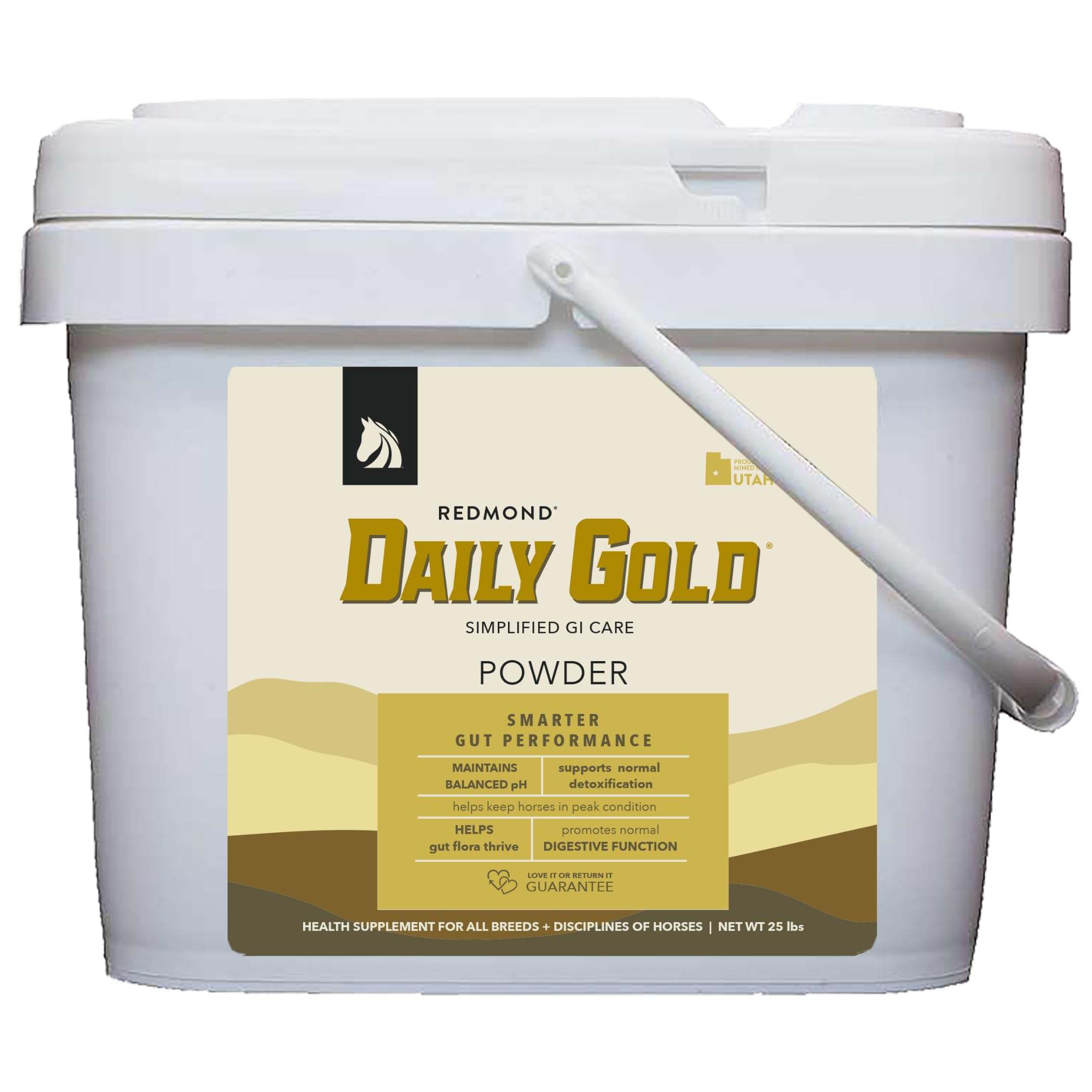
Redmond Daily Gold is 100 percent pure bentonite clay sourced from a Utah deposit — no additives, fillers, or flavoring agents. This simplicity makes it ideal for horses with multiple food sensitivities or those on strict dietary protocols. The 25-pound bag delivers a large volume of clay that can be fed at varying rates depending on the severity of symptoms.
Owner feedback is notably passionate from the chronic-diarrhea crowd. One reviewer described the product as life-saving for a 31-year-old horse with fecal water syndrome that did not respond to multiple vet-recommended treatments — diarrhea resolved after three weeks and the horse regained weight. Multiple accounts confirm that anxious, prancing horses became walkable on a loose rein within a month of daily feeding.
The lack of added flavor means picky horses may refuse the clay initially. Owners recommend mixing it into a slurry with warm water and a small amount of apple sauce or aloe vera juice to improve acceptance. Because it is 100 percent clay, the powder is very fine and can create airborne dust during scooping — mixing in a closed container or wearing a dust mask is advisable for the person feeding.
Why we love it
- Single-ingredient purity with no fillers or artificial flavors
- Dramatically reduces chronic diarrhea and fecal water syndrome
- Excellent value per pound for long-term maintenance
Good to know
- Fine dust requires careful handling during feeding
- Some horses need flavoring to accept the clay taste
3. Corta-Flx U-Gard Pellets 10 lb Bucket

The pelletized version of Corta-Flx U-Gard solves the dust problem inherent in powdered supplements. Each pellet contains calcium and magnesium in a form that horses seem to find palatable — multiple owners report that horses eat the pellets like treats straight from the hand. The 10-pound bucket provides a generous serving that covers roughly 50 to 60 days depending on whether you feed the standard or the higher therapeutic dose.
Users consistently mention that the pellets are easier to mix into grain than powder, with no fallout or waste at the bottom of the bucket. One owner of a 27-year-old Thoroughbred with severe ulcer symptoms switched from omeprazole paste to U-Gard pellets and reported complete resolution of pawing and distress behaviors within weeks.
The main functional difference from the powder version appears to be the binder used to form the pellets. While the active calcium and magnesium concentrations are similar, some owners note that the pellets dissolve more slowly in the stomach, potentially providing a longer buffering window. The trade-off is that the pellets contain slightly less active ingredient per scoop by volume because of the binding matrix.
Why we love it
- Zero dust — ideal for horses with respiratory sensitivity
- Horses readily accept pellets as a treat or mixed in feed
- More economical than veterinary omeprazole for long-term maintenance
Good to know
- Pellets dissolve slower than powder for buffering action
- Binder in pellets dilutes active mineral concentration per scoop
4. Corta-Flx U-Gard Powder 8 lb

The Corta-Flx U-Gard powder formula is the only product in this list with a published 73-day field study on active racehorses showing a measurable decrease in gastric ulcer severity. The active mechanism relies on calcium and magnesium to buffer stomach acid directly, maintaining a proper pH environment that discourages squamous erosion. This makes it a strong choice for trainers and competitive owners who want research-backed dosing.
Owner reports highlight its effectiveness for horses that display fecal water syndrome — a messy, watery manure that irritates the hind end. One owner of a quarter horse mare saw improvement within two weeks when feeding two scoops daily. Another reviewer switched from omeprazole paste to U-Gard powder for a 27-year-old Thoroughbred and noted that symptoms like pawing and apparent abdominal distress vanished within weeks.
The primary drawback is the dust generated by the powder form. Several owners who previously used pellets noted that the powder creates a fine cloud when scooped, and some horses reject feed if the powder is not thoroughly mixed into wet grain or mash. The dust can also be an irritant for the person feeding, especially in enclosed barn stalls with limited airflow.
Why we love it
- Clinically validated in a 73-day racehorse field study
- Calcium-magnesium buffer rapidly raises stomach pH
- Effective for fecal water syndrome and loose manure
Good to know
- Powder form generates dusty scoops that some horses refuse
- Requires thorough mixing to prevent residue in the feed bucket
5. Eagle Equine MagnaGard Plus 6 lb

The MagnaGard Plus formulation adds omega-3 fatty acids and vitamin E to the standard bentonite clay and mineral base, making it a dual-purpose product that supports both gastric health and coat condition. The 6-pound bag provides a 45-day supply at the standard feeding rate, and the apple flavoring appears to improve acceptance among picky eaters compared to unflavored clay products.
Owner reviews consistently report rapid resolution of acute digestive upset. One account described a horse with diarrhea and a sensitive underbelly that normalized within 24 hours of the first feeding and maintained calm gut function through five weeks of severe environmental stress. Another reviewer noted that a quarter horse mare with chronic colic and ulcer symptoms showed noticeable improvement in demeanor and gut comfort when on the supplement versus when it was withdrawn.
The omega-3 content means this product is slightly oilier than standard clay powders, which can help it stick to grain but may also lead to clumping if stored in humid conditions. Several owners suggest keeping the bag sealed tightly between uses to prevent moisture absorption. The cost per day is higher than the larger MagnaGard bucket because the 6-pound bag includes the added omega-3 oil and vitamin E components.
Why we love it
- Omega-3s and vitamin E support hoof and coat health alongside gastric relief
- Apple flavor improves acceptance for picky eaters
- Noticeable reduction in ulcer symptoms within 24 hours per owner reports
Good to know
- Higher cost per day than the unflavored MagnaGard bucket
- Omega-3 oil can cause clumping if stored in humid conditions
FAQ
How long does a bentonite clay supplement take to show results in horses with ulcers?
Can I feed a gastric supplement if my horse is already on omeprazole?
What is the difference between U-Gard powder and U-Gard pellets?
Do these supplements cure ulcers or just manage symptoms?
Final Thoughts: The Verdict
For most horse owners, the best supplement for ulcers in horses winner is the MagnaGard 20lb Bucket because it delivers the lowest per-day cost of any bentonite clay product while providing trace minerals that support overall health and behavioral calmness. If your horse struggles specifically with chronic diarrhea or stress-related gut issues, grab the Redmond Daily Gold for its pure single-ingredient formulation. And for a dust-free, pelletized option that horses eat eagerly, nothing beats the Corta-Flx U-Gard Pellets.