
Finding a lawn that survives the double whammy of dense tree cover and a dog’s high-traffic play zone is a specific headache most seed mixes can’t solve. Deep shade starves grass of the sunlight it needs for photosynthesis, while canine paws tear at shallow root systems and nitrogen-rich urine scalds fragile blades. A single misstep here can leave you with mud pits and brown patches rather than the resilient, dog-friendly turf you are after.
I’m Mo Mahin — the founder and writer behind Furric. I’ve spent years studying turfgrass selection parameters, analyzing seed composition data across hundreds of blends, and cross-referencing owner-reported success rates in combined shade-and-pet conditions to pinpoint mixes with measurable real-world durability.
The most effective solution will tolerate low light, recover from wear, and resist the chemical stress of pet waste. This guide breaks down the five strongest candidates for the best grass for shade and dogs, with the concrete specs and practical trade-offs that determine whether your lawn thrives or thins out.
How To Choose The Best Grass For Shade And Dogs
Not every shade-tolerant grass handles the mechanical stress of daily dog traffic or the nitrogen load of urine. You need a mix whose genetic traits match your specific light levels and pet habits. Here are the three non-negotiable specs to evaluate before buying.
Fine Fescue Content — The Shade Anchor
Fine fescues — creeping red, chewings, hard fescue — are the only cool-season species that photosynthesize efficiently below four hours of direct sun. Blends built on these species maintain root density under trees and along north-facing walls where tall fescue and perennial ryegrass thin out. A bag that lists fine fescue as its first or second ingredient is built for your darkest zones.
Tillering Rate vs. Bunch Growth
Dog paws tear at upright, bunch-type grasses. You want a seed mix dominated by species that spread via tillers — side shoots that fill bare spots without reseeding. Creeping red fescue and certain Kentucky bluegrass varieties regenerate from rhizomes or tillers after wear. Bunch-type grasses like tall fescue need reseeding in high-traffic patches, which frustrates owners with active dogs.
Urine Resistance and Root Depth
Salts and nitrogen compounds in dog urine dessicate shallow-rooted grass. Deep-rooting species like tall fescue — when blended with shade-tolerant companions — access moisture lower in the soil profile and flush the salts faster. Look for products explicitly mentioning deep root systems, or choose a fine fescue mix whose waxy leaf coating reduces moisture loss and dilutes the impact of urine spots.
Quick Comparison
On smaller screens, swipe sideways to see the full table.
| Model | Category | Best For | Key Spec | Amazon |
|---|---|---|---|---|
| Eretz Creeping Red Fescue | Fine Fescue | Deep shade, self-repairing turf | 99.6% pure seed / 0.4% inert | Amazon |
| Outsidepride Legacy Fine Fescue Mix | Coated Fine Fescue | High-traffic shaded lawns | 40% chewings + 40% creeping red | Amazon |
| GreenView Perennial Ryegrass Blend | Perennial Ryegrass | Fast germination in partial shade | 99.9% weed-free / 7-12 day germination | Amazon |
| Jonathan Green Dense Shade | Shade-Specific Mix | Densely shaded front yards | 1,800 sq. ft. coverage per 3 lb bag | Amazon |
| Jonathan Green Black Beauty (Heat & Drought) | Heat/Shade Blend | Sun-to-shade transition zones | Up to 4 ft deep root system | Amazon |
In‑Depth Reviews
1. Eretz Creeping Red Fescue Seed
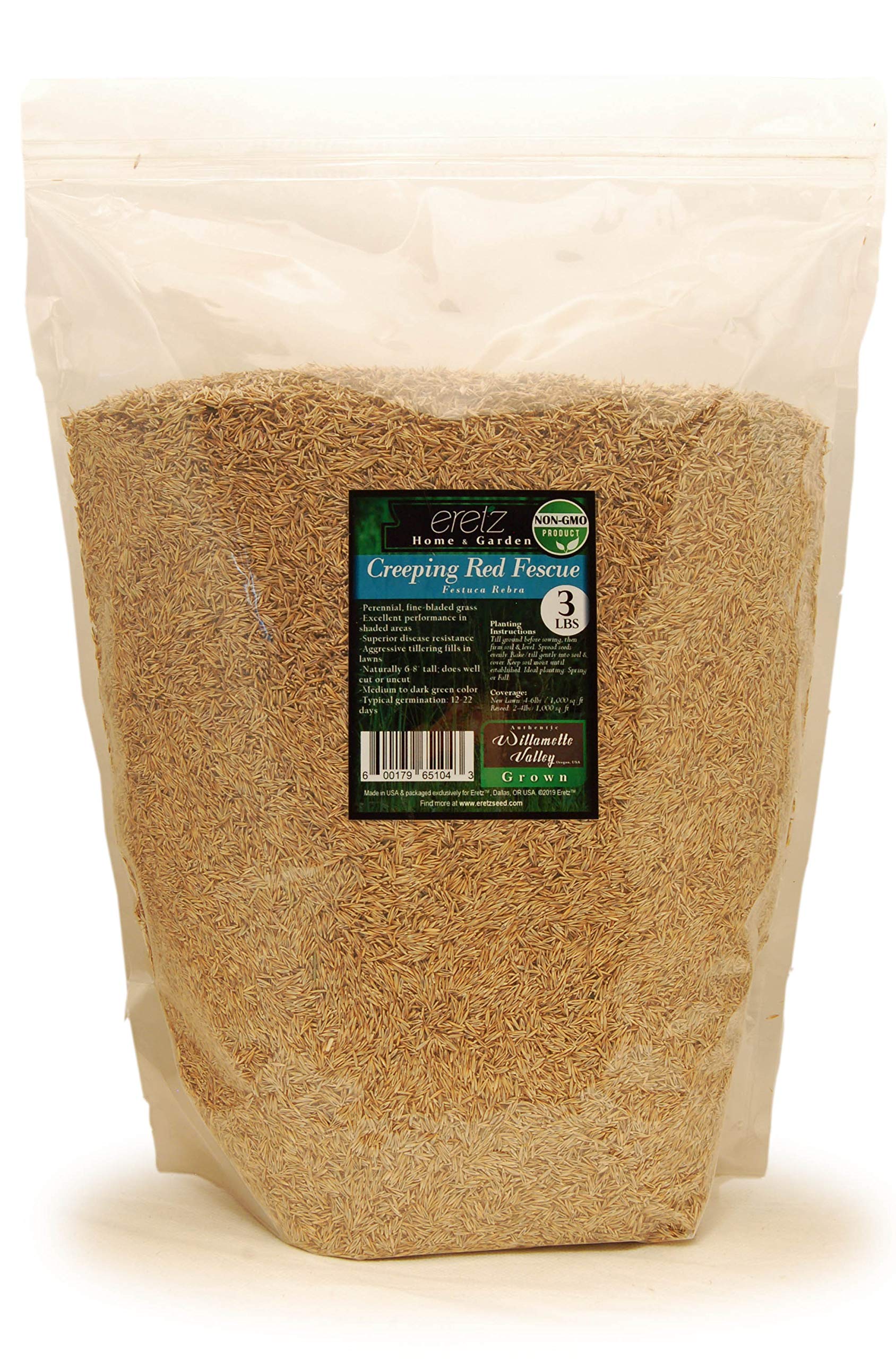
This pure creeping red fescue from Eretz is the ideal single-species solution for deep shade under mature trees or north-facing slopes where dogs run daily. The fine-bladed texture stays manageable at six to eight inches natural height, and the aggressive tillering mechanism fills in paw-worn bare spots without needing a second pass of seed. Owners in the Pacific Northwest report successful germination even during cool wet springs when soil temperatures hover in the upper thirties, and the grass holds a medium-dark green color through winter dormancy.
The 99.6% purity rating means no filler species like annual ryegrass that would die off and leave gaps for mud to form. During summer drought, the waxy leaf coating reduces transpiration, which also helps mitigate the dessicating effect of dog urine on individual blades. Users who planted on clay slopes note the root system holds soil effectively, preventing erosion in high-traffic zones.
Germination is slower than ryegrass blends — expect two to three weeks before seedlings appear — but once established the self-repairing nature reduces long-term maintenance. The bag weight of three pounds covers roughly 750 to 1,000 square feet for new seeding, so measure your shaded area carefully. Some owners in drier summer climates reported spotty germination during extreme heat, underscoring the need for consistent moisture during the establishment phase.
Why we love it
- Aggressive tillering self-repairs spots where dogs dig and run
- 99.6% pure seed with zero weed or crop filler
- Fine texture stays green through winter in moderate climates
Good to know
- Germination takes 14 to 21 days, slower than annual blends
- Needs sharp mower blade to cut fine blades cleanly
2. Outsidepride Legacy Fine Fescue Grass Seed Mix
The Legacy mix is a calculated blend of three fine fescue species — 40% Chewings, 40% Creeping Red, and 20% Hard Fescue — creating genetic diversity that strengthens the lawn’s tolerance across varying shade depths. Hard fescue contributes drought resistance in the driest corners, while Chewings fescue maintains density where light is strongest. This layered approach helps the lawn stay uniform even when dogs concentrate wear on one specific side of the yard.
Outsidepride applies an OptiGrowth coating infused with zinc, phosphorus, and nitrogen plus kelp extract. The coating improves seed-to-soil contact in shady spots where the soil surface stays cool and damp, and the embedded nutrients give seedlings a nutritional boost without requiring immediate fertilizer application. Owners who seeded in early spring with consistent watering reported visible growth within ten days and a thick dark green stand after four weeks.
The five-pound bag covers roughly 1,500 square feet for new lawns, putting it in the higher-value range for larger shaded backyards. A few users in colder northern climates noted slower initial emergence during unseasonably cold weeks, but the grass filled in fully once temperatures stabilized. The fine-bladed texture requires a sharp reel or rotary mower to avoid tearing.
Why we love it
- Triple-blend fine fescue handles varying shade intensities
- OptiGrowth coating speeds germination and reduces early fertilizer need
- Large five-pound bag reduces per-square-foot cost
Good to know
- Slow emergence in cold soil below 45°F
- Needs daily watering during first two weeks for best establishment
3. GreenView Pure Grass Seed Perennial Ryegrass Blend

GreenView’s Perennial Ryegrass blend is not a deep-shade specialist, but it earns a spot here for yards with partial shade and hyperactive dogs that need quick bare-spot recovery. The blend germinates in seven to twelve days under ideal conditions — the fastest of any product on this list — which matters when a muddy patch from the dog’s afternoon zoomies needs covering before rain turns it into a mess. Owners in the Northeast and Midwest report using it successfully for overseeding in early fall with strong spring transitions.
The 99.9% weed-free guarantee means you are not paying for annual ryegrass or Poa annua that would die off in shade and leave gaps. The blend’s dark green color and medium-to-fine texture match the aesthetic of a traditional lawn, which pet owners often sacrifice when they prioritize durability. It adapts to multiple soil types — clay, loam, sandy — reducing the need for heavy soil amendment before seeding.
Where this mix falls short for pure shade-and-dog use is in the deepest dark zones. Ryegrass is a bunch-type grass, so it does not tiller or spread laterally. Bare spots from concentrated dog traffic require reseeding rather than natural recovery. It performs best in lawns that get at least four hours of filtered sun, not the dense full-day shade under a thick canopy. The seven-pound bag covers up to 3,500 square feet for overseeding, making it economical for medium to large properties.
Why we love it
- Fastest germination — visible growth within a week
- Virtually weed-free, preventing invasive species in patchy areas
- Large bag covers up to 3,500 sq. ft. for overseeding
Good to know
- Does not tiller; bare spots from traffic need reseeding
- Not suited for deep, all-day shade conditions
4. Jonathan Green Dense Shade Grass Seed
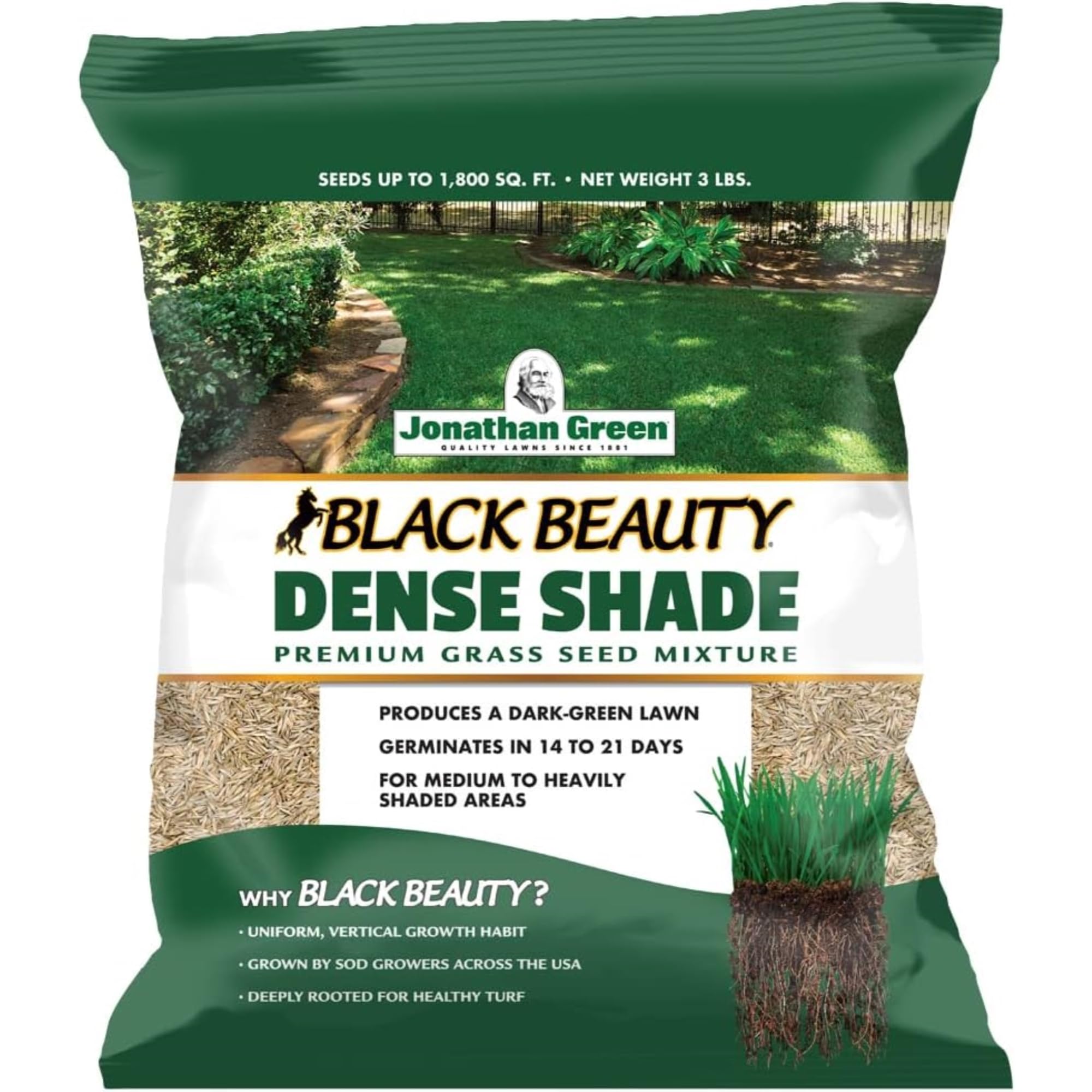
Jonathan Green’s Dense Shade mix is formulated specifically for the most challenging light conditions — under evergreen canopies, north-facing foundations, and densely wooded lots where even fine fescues sometimes struggle. Users who reported total failures with Bermuda and St. Augustine in their shaded front yards saw this product germinate in as little as three days and reach four to five inches in height within weeks. The species composition leans heavily on shade-adapted fine fescues that produce tall, thin, dark green leaves.
The three-pound bag covers up to 1,800 square feet, an unusually high coverage rate that reflects the fine-textured nature of the seed. That efficiency helps when reseeding large shaded zones without breaking the budget. Owners who planted on clay soil under a deck during summer — tilling, adding topsoil, and using a hand spreader — reported sprouts within days and two-inch turf shortly after, with only minor patchiness.
The grass performs best in spring and fall and may go dormant during intense summer heat if not irrigated. Dog urine damage is less pronounced than on ryegrass, but spots where falling leaves accumulate need regular raking because the fine blades smother easily under wet leaf cover. A minority of users experienced low germination rates even with proper prep, so buying an extra bag for touch-ups is practical for heavily shaded sections.
Why we love it
- Rapid germination in deep shade — visible sprouts in 3 to 5 days
- High coverage rate: 1,800 sq. ft. from a 3 lb bag
- Tolerates clay soil and heavy shade where other grasses fail
Good to know
- Needs regular leaf raking; heavy layer smothers fine blades
- Some inconsistency in germination across batches reported
5. Jonathan Green Black Beauty Heat & Drought (10514)

The Black Beauty Heat & Drought mix uses tall fescue and Texas bluegrass — not traditional fine fescues — to solve a different shade-and-dog problem: yards that bake in afternoon sun but also have shaded corners and high pet traffic. Tall fescue’s root system extends up to four feet deep, accessing moisture that helps flush the concentrated nitrogen from dog urine before it burns leaf tips. Owners in the Carolinas who transitioned from cool-season blends reported Kentucky-bluegrass-like density within two weeks of proper prep.
As its name suggests, this mix tolerates heat up to 100°F, which matters in sun-shade transition zones where the shaded dog run borders a sunny patio. The waxy leaf coating reduces evaporation, and the deep roots keep the grass from browning in midsummer droughts. For overseeding, the three-pound bag covers up to 1,500 square feet, making it a practical choice for patching worn areas between shaded and sunlit sections of the yard.
The trade-off is that tall fescue is a bunch-type grass, not a tillering spreader, so concentrated dog traffic creates bare circles that will require annual overseeding. Germination runs 14 to 21 days, slower than ryegrass, and the mix performs best when seeded in late summer or early fall. A few users experienced sparse germination despite following watering guidelines, possibly due to seed contacting dry soil before consistent moisture was established.
Why we love it
- Deep four-foot root system resists dog urine burn
- Handles full sun and partial shade in transitional lawns
- Tolerates heat up to 100°F without dormancy
Good to know
- Bunch-type grass needs annual overseeding in high-traffic zones
- Germination takes 2 to 3 weeks; slower than ryegrass blends
FAQ
How does dog urine specifically affect grass in shaded lawns?
Can fine fescue alone handle heavy dog traffic or do I need a blend?
What is the best time of year to seed grass in a shaded dog yard?
Final Thoughts: The Verdict
For most gardeners, the best grass for shade and dogs winner is the Eretz Creeping Red Fescue Seed because the aggressive tillering fills in paw-worn spots naturally and the 99.6% purity ensures no filler species die off in shaded corners. If you want faster germination with the convenience of a coated seed that reduces early-stage fertilizer needs, grab the Outsidepride Legacy Fine Fescue Mix. And for a transitional lawn that gets both afternoon sun and deep shade — with deep-rooted urine resistance — nothing beats the Jonathan Green Black Beauty Heat & Drought.