
Finding a hay source your rabbit actually eats without wasting half the bag is the real struggle — not all Timothy hay is created equal, and the difference between a dusty, stem-heavy bale and a fragrant, green cut determines whether your bunny gets the dental and digestive benefits they need or simply turns up their nose.
I’m Mo Mahin — the founder and writer behind Furric. I’ve spent years digging through agricultural data, comparing nutritional profiles, and cross-referencing thousands of verified owner experiences to separate premium hay from overpriced filler.
Whether you’re a first-time bunny parent or a seasoned small-pet keeper, you need a clean, consistent source of long-strand fiber. That’s why we built this guide to help you pick the absolute best timothy hay for rabbits based on real freshness, texture, and nutritional value.
How To Choose The Best Timothy Hay For Rabbits
Timothy hay is the backbone of a rabbit’s diet, providing the long-strand fiber necessary for gut motility and tooth wear. Not all bags deliver the same quality, so understanding the key specs helps you avoid wasting money on hay your rabbit won’t touch.
First Cut vs. Second Cut vs. Third Cut
First cut is harvested early in the season — it has thicker stems, more seed heads, and lower protein. Picky eaters often reject it. Second cut is softer, leafier, and more palatable, making it the default for most house rabbits. Third cut is extremely soft and leafy but can be dusty and expensive. Most rabbits do best on a consistent second cut.
Low Dust and Long Strands
Dusty hay can trigger respiratory issues in rabbits and cause sneezing. Look for hand-selected or hand-packed hay that explicitly states low dust. Long strands (6 inches or more) encourage chewing and natural tooth wear, whereas chopped or crumbled hay reduces the dental benefit and leads to more waste at the bottom of the bag.
Color and Smell Are Real Indicators
Fresh Timothy hay should be bright green with a sweet, grassy aroma. Yellowing, browning, or a musty smell indicates age or moisture exposure during storage, which can reduce fiber quality and lead to mold. If the bag feels damp or the hay smells like a barn, send it back.
Protein and Fiber Balance
Adult rabbits need a crude fiber content of at least 25% and protein around 8–12%. Excess protein can cause soft stools or weight gain, while too little fiber leads to GI stasis. Most premium Timothy hay brands from reputable farms naturally hit these numbers without additives.
Packaging Matters for Freshness
Resealable bags preserve moisture and freshness longer than open cartons. Compressed bales are great for multi-pet households, but once opened, any exposure to humidity degrades quality. Boxed hay tends to hold its texture better because it’s less crushed than bagged options during shipping.
Quick Comparison
On smaller screens, swipe sideways to see the full table.
| Model | Category | Best For | Key Spec | Amazon |
|---|---|---|---|---|
| Oxbow Western Timothy Hay | Mid-Range | Consistent quality & vet recommendation | 90 oz bag, hand-sorted | Amazon |
| Grandpa’s Best Timothy Hay | Premium | Low dust, long-strand fiber | 5 lb box, hand-selected | Amazon |
| Kaytee 2nd Cut Soft & Lush | Mid-Range | Pickier eaters who prefer soft hay | 6.5 lb, second cut | Amazon |
| Sherwood Pet Health Adult Rabbit Food | Premium | Hay-pellets for poor hay eaters | 4.5 lb, hay-based pellets | Amazon |
| Kaytee Timothy Hay 12 lb Bulk | Budget | Multi-pet households on a budget | 12 lb bag, long strands | Amazon |
In‑Depth Reviews
1. Oxbow Western Timothy Hay

Oxbow’s Western Timothy Hay is a staple in veterinary clinics and rabbit rescues for a reason — the 90 oz bag delivers long, green strands that are hand-sorted at the farm to remove coarse stems and debris. The hay is harvested from Oxbow’s own family farms in the USA, ensuring consistent protein and fiber levels that support digestive and dental health across all life stages.
Owner feedback consistently highlights how fresh and clean-smelling this hay arrives, with very little dust at the bottom of the bag. Rabbits who reject first-cut hay tend to accept Oxbow’s Western blend because it sits firmly in the second-cut range — leafy and soft without being too fine or crumbly. The 5.63 lb weight is manageable for small-pet households that go through a bag every three to four weeks.
The resealable bag design helps maintain freshness between feedings, though some reviewers note that the 90 oz size runs out quickly if you have multiple rabbits or guinea pigs. For a single bunny, this bag offers an excellent balance of value and quality without introducing the uncertainty of bulk packaging.
Why we love it
- Consistently fresh, green, and fragrant with low dust content
- Hand-sorted and packed for uniform strand quality
- Veterinarian recommended and grown without additives
Good to know
- 90 oz bag may deplete quickly for multi-pet households
- Some owners report occasional variation in greenness between batches
2. Grandpa’s Best Timothy Hay

Grandpa’s Best differentiates itself with a true hand-selection process — the hay is taken straight from the bale and hand-packaged into loose boxes, which preserves the natural flake structure and minimizes crushing during shipping. The result is a uniformly green, long-stranded hay that measures low in protein and calcium, making it ideal for adult rabbits prone to bladder sludge or weight gain.
Owners consistently describe this hay as “fresh and green” with a clean grassy smell, and rabbits who previously ignored bagged hay often start eating immediately. The 5 lb box format is particularly good for single-rabbit households because it stays fresher longer than a large bag once opened — you pull out a flake at a time rather than sifting through compressed strands.
The biggest trade-off is availability; Grandpa’s Best frequently goes out of stock, and some batches have been reported as drier than usual, particularly with their orchard hay variant. For Timothy hay specifically, the quality is remarkably consistent, but you may want to subscribe or order early to avoid gaps.
Why we love it
- Hand-selected and boxed for minimal dust and maximum freshness
- Low protein and calcium suits adult rabbits’ dietary needs
- Long strands encourage chewing and natural tooth wear
Good to know
- Frequently goes out of stock on Amazon
- Some batches can be drier than expected
3. Kaytee 2nd Cut Soft and Lush Timothy Hay

Kaytee markets this 2nd Cut specifically for rabbits and guinea pigs that prefer softer, more tender hay — and it delivers on that promise. The strands are noticeably finer than first-cut offerings, with a higher leaf-to-stem ratio that makes the hay easy to grab and chew for seniors or rabbits with dental issues. It’s grown without pesticides and is non-GMO, which aligns with the expectations of health-conscious pet owners.
Customer reviews are consistently positive on palatability — rabbits who ignore bulk hay from farm stores often switch to this blend without hesitation. The 6.5 lb bag comes in a resealable plastic package that does a good job preserving the soft texture and green color. Many owners rotate this with Oxbow to keep their rabbits engaged with different textures.
Some batches arrive with shorter pieces (3–4 inches) rather than full-length strands, which reduces the dental benefit. A small percentage of bags also contain more dust than expected, though this is less frequent than with Kaytee’s first-cut bulk bags. If your rabbit is picky about length, inspect the bag on arrival and consider exchanging if the pieces are too short.
Why we love it
- Very soft, leafy texture that picky eaters love
- Resealable bag helps maintain freshness
- Grown without pesticides and non-GMO verified
Good to know
- Strand length can be inconsistent (some bags have short pieces)
- Occasional dust accumulation at the bottom of the bag
4. Sherwood Pet Health Adult Rabbit Food
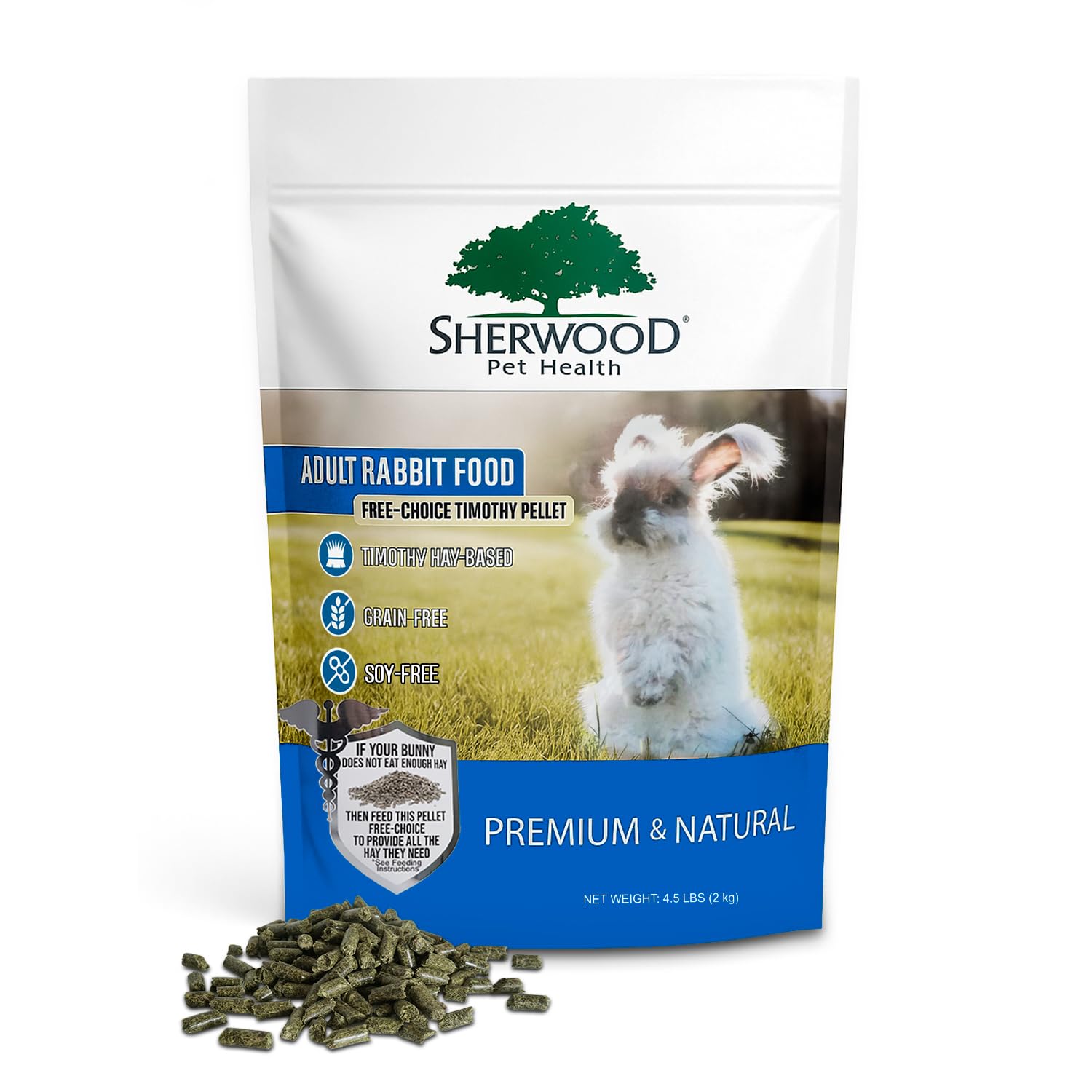
Sherwood’s formula is not loose hay — it’s a grain-free, soy-free pellet made primarily from Timothy hay and fortified with natural vitamins, omega fatty acids, and short-and-long-strand fibers. This makes it a valuable option for rabbits that refuse loose hay entirely, as the pellet form delivers the same high-fiber, low-protein balance that adult rabbits need without relying on the rabbit to self-select long strands.
Owner testimonials report dramatic improvements in GI health for rabbits switched to Sherwood, including resolution of chronic soft stools and recovery from GI stasis. The pellets are dark green with a fresh hay aroma, and rabbits tend to accept them quickly — even lifelong pellet-only eaters who rejected free-choice hay will eat these. The zip-seal bag keeps the pellets from going stale between feedings.
The main limitation is that this product is a pelletized food, not a loose hay substitute for dental wear. You still need to provide some source of long-strand fiber (like hay cubes or fresh hay) for your rabbit to chew. For owners struggling with a hay-rejecting rabbit, Sherwood is a bridge, not a full replacement, but it outperforms any other pellet on the market for digestive support.
Why we love it
- Grain and soy-free formula improves GI health for problem eaters
- Includes natural omega-3 and omega-6 for coat and heart health
- Fresh-smelling, green pellets with high palatability
Good to know
- Not a replacement for loose hay — rabbits still need long-strand fiber
- Premium per-pound cost versus standard pellets
5. Kaytee Timothy Hay 12 lb Bulk

Kaytee’s 12 lb bulk bag is the go-to option for multi-pet households or rabbit owners who go through hay quickly and want the lowest per-pound cost. The hay is farmed specifically for small animals and grown without pesticides, with a fiber profile that supports healthy digestion. The top half of the bag typically contains long, green strands, while the bottom accumulates more broken pieces and fine dust from compression during shipping.
Owners who buy this regularly note that the freshness is reliable — the hay smells sweet and clean, and most rabbits eat it eagerly. The 12 lb bag is big enough to last a single rabbit for two months or more, and the resealable closure (on the plastic bag version) helps keep the remaining hay fresh after opening. For guinea pig owners, this bulk format is especially popular for it being easy to store and dispense.
The dust accumulation at the bottom is the most common complaint — sensitive rabbits may sneeze or refuse the dusty lower portion. Some owners also report occasional batches with thicker, stemmier pieces that generate more waste. If your bunny has a sensitive respiratory system, consider sieving the bottom layer or pairing this with a low-dust boxed hay for the last quarter of the bag.
Why we love it
- Best per-pound value for bulk buyers and multi-pet homes
- Consistently green, fresh-smelling hay with long top strands
- Grown specifically for small pets without pesticides
Good to know
- Bottom of bag accumulates dust and broken pieces
- Some batches have thicker stems that result in more waste
FAQ
How much Timothy hay should my rabbit eat daily?
What is the difference between first cut and second cut Timothy hay?
Why does my rabbit refuse to eat Timothy hay?
Can Timothy hay go bad or expire?
Final Thoughts: The Verdict
For most rabbit owners, the best timothy hay for rabbits winner is the Oxbow Western Timothy Hay because it consistently delivers fresh, hand-sorted, low-dust strands that veterinarians trust and rabbits actually eat. If your rabbit prefers an extra soft, leafy texture, grab the Kaytee 2nd Cut Soft and Lush. And for owners struggling with a hay-rejecting rabbit who needs digestive support, nothing beats the Sherwood Pet Health Adult Rabbit Food formula.