
A new tank’s glass is clean, the gravel is washed, and your first fish are waiting at the store. But without a mature biofilter, that crystal-clear setup is just a few days away from a dangerous ammonia spike that can stress or kill its inhabitants. The difference between a thriving aquatic ecosystem and a frustrating cycle crash often comes down to the specific bacterial strains you introduce and how viable they remain from bottle to tank.
I’m Mo Mahin — the founder and writer behind Furric. I’ve spent years comparing the biological activity claims of bottled nitrifiers, analyzing the shelf-stability science behind each formula, and cross-referencing thousands of owner reports to determine which products actually convert ammonia and nitrite as advertised.
Whether you are cycling a new aquarium from scratch or recovering from a mini-cycle after a water change, the right formula matters. This guide breaks down the five most effective beneficial bacteria for aquarium use, based on real-world cycling speed, strain diversity, and reliability across different tank sizes.
How To Choose The Best Beneficial Bacteria For Aquarium
Not all bottled bacteria are created equal. The formulation, the specific strains included, and how the product is stored all determine whether you get a cycle in days or a frustrating stall. Here are the critical factors to evaluate.
Strain Diversity: Autotrophs vs. Heterotrophs
The most effective products contain multiple strains of Nitrosomonas and Nitrobacter (or Nitrospira) that specifically target ammonia and nitrite. Some premium formulas also add heterotrophic strains like Bacillus that break down organic waste and sludge, helping maintain clear water without competing with autotrophic nitrifiers. A product that only claims “live bacteria” without naming strains offers less predictable results.
Delivery Format: Liquid, Gel, or Powder
Liquid concentrates are the most common and are best for immediate dosing into the water column or directly on filter media. Gel-based products (slow-release balls or pellets) offer prolonged colonization in the substrate or sump but require monitoring as they dissolve. Powdered forms usually have the longest shelf life but need proper rehydration. For a standard freshwater tank, liquid formulas provide the fastest cycling response.
Viability & Shelf Life
Bacteria are living organisms. Heat exposure during shipping or storage in extreme temperatures can kill the culture before you ever open the bottle. Choose products from reputable brands with high turnover, and inspect for any “off” odors or discoloration upon arrival. A product that needs refrigeration to remain viable is more fragile than one that can survive room-temperature storage for several months.
Quick Comparison
On smaller screens, swipe sideways to see the full table.
| Model | Category | Best For | Key Spec | Amazon |
|---|---|---|---|---|
| DrTim’s One & Only | Liquid | Fast fishless cycling | 30 Gallon treatment per 2 oz | Amazon |
| Aqueon Pure Live | Gel Balls | Ongoing maintenance | 240 Gallons per 24-count | Amazon |
| Seachem SureStart Pack | Liquid Trio | Multi-purpose starter kit | 300 mL total (3 x 100 mL) | Amazon |
| TLC StartSmart | Liquid | Clearing cloudy water | 8 oz treats 80 gal cycling | Amazon |
| Aquascape Pond Bacteria | Liquid | Ponds & large tanks | Treats up to 5,000 gallons | Amazon |
In‑Depth Reviews
1. DrTim’s Aquatics One and Only Freshwater
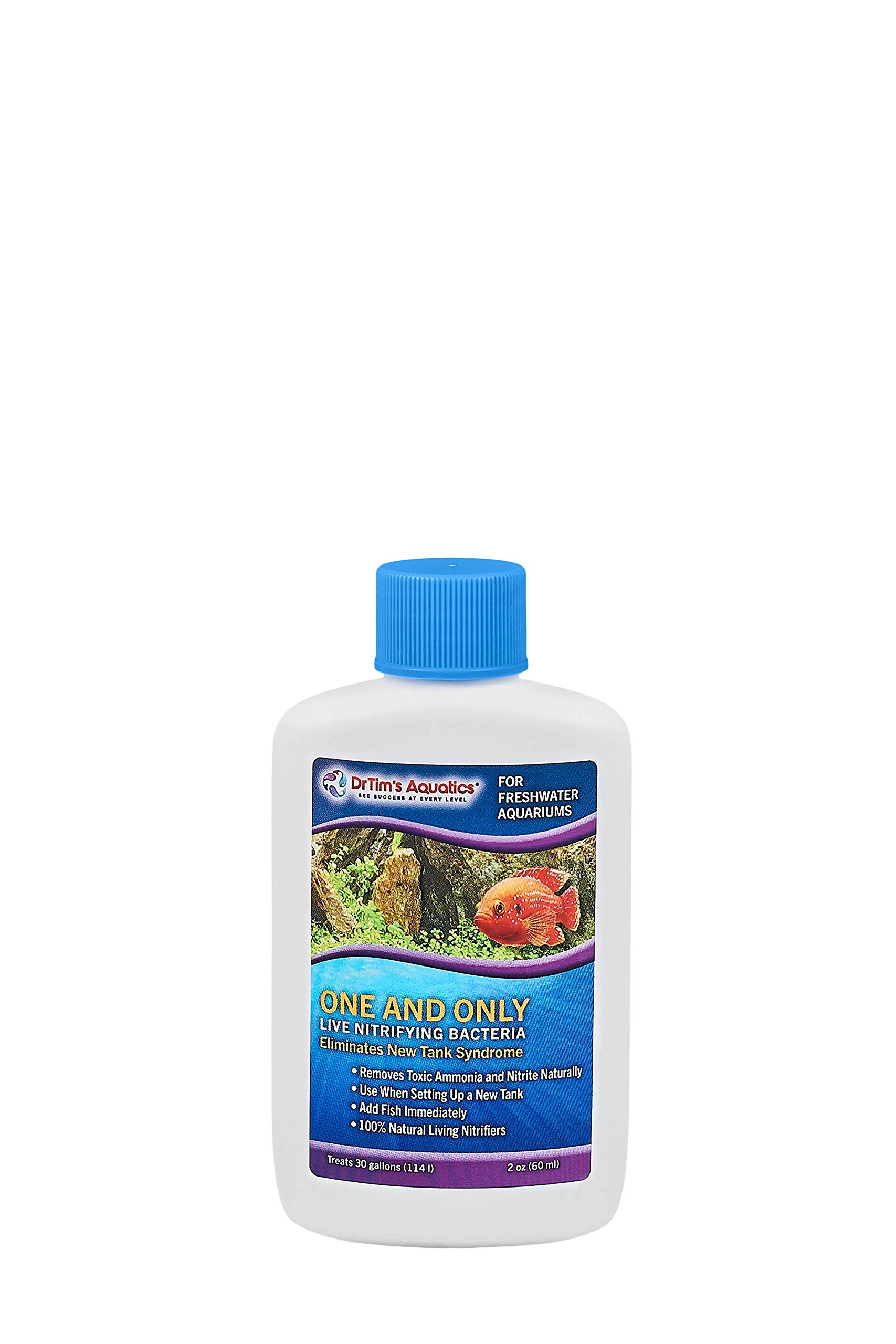
Dr. Tim’s One & Only is widely regarded as the gold standard for fishless cycling among experienced aquarists. Based on marine biology research, this liquid concentrate delivers a high concentration of autotrophic nitrifying bacteria that target ammonia and nitrite conversion. Owner reports consistently show a fully cycled tank in under a week when paired with a pure ammonia source, compared to the typical 4–6 week unassisted cycle.
The formula does not rely on heterotrophic bacteria that compete for oxygen and carbon, so it focuses purely on establishing the biofilter. Users testing with the API Master Kit observed ammonia dropping to near-zero and nitrites rising within 6 days, with nitrates climbing to 50 PPM — a clear sign the cycle is progressing. The key is maintaining pH above 7 and using a clean ammonia source without surfactants.
One critical caveat: the bacteria are living and sensitive to heat. Customers who received bottles that sat in a hot delivery truck during summer experienced failures, while re-ordering during cooler months yielded perfect results. For serious aquarists who want predictable, fast cycling, this is the product that delivers when handled properly.
Why we love it
- Fastest documented cycling times (under 7 days)
- Scientifically backed autotrophic strains
- Works for both freshwater and marine with separate formulas
Good to know
- Requires proper temperature control during shipping
- Needs a pure ammonia source for fishless cycling
- Pricier per ounce than mass-market alternatives
2. Aqueon Pure Live Beneficial Bacteria and Enzymes

Aqueon Pure takes a different approach with its gel ball format. Each ball contains live beneficial bacteria and enzymes that slowly dissolve in the aquarium, providing continuous biological support. The 24-count pack (12 per bottle) treats up to 240 gallons, making it ideal for medium to large tanks or multiple small setups where you want to drop and forget.
Reviewers note that two balls per water change keep a 15-gallon display tank crystal clear with minimal effort. The balls sink to the substrate, stay intact for weeks, and slowly release bacteria without spiking the water column. One user rescued a tank from a dangerous nitrite stall after a competitor product failed — the Aqueon balls cycled the tank within 24 hours and maintained stability on every tank since.
Watch out for the ball size as it dissolves: once it shrinks to a small pellet, fish may try to swallow it. Placing the balls in a perforated cup or media bag prevents this issue. The product arrives ready to use and withstood delivery temperatures up to 106°F without losing viability, according to customer reports, which speaks to the robustness of the gel format.
Why we love it
- No liquid dosing — drop and forget
- Excellent for maintenance between water changes
- Cannot be overdosed, safe for shrimp and fish
Good to know
- Gel balls shrink and may be swallowed if tiny
- Not designed for rapid initial cycling
- Need to remove dissolved ball remnants
3. Seachem SureStart Pack (Prime + Stability + Pristine)

The Seachem SureStart Pack bundles three of the brand’s most trusted products: Prime (dechlorinator and ammonia detoxifier), Stability (live bacteria for biofilter establishment), and Pristine (enzyme cleaner that breaks down sludge). This combination provides a complete water management system for new aquarium owners who want to cover all bases without buying four separate bottles.
Prime instantly neutralizes chlorine, chloramine, and ammonia from tap water, making it safe for fish immediately. Stability introduces a blend of aerobic and anaerobic bacteria that colonize the filter and accelerate the cycle. Pristine then targets organic waste, keeping the water clear and reducing the frequency of gravel vacuuming. Owners report visible water quality improvement within days, with fish showing active, stress-free behavior.
One downside: the Stability component produces a sulfur-like smell when first opened, which dissipates after mixing with water. It also may not target planaria in shrimp tanks, so specialized treatments are still needed. The practical value is excellent — the Prime bottle alone is worth the pack price — making this the smartest starter bundle for beginners who want a turnkey solution for freshwater or marine tanks up to 100 gallons.
Why we love it
- Complete starter kit (dechlorinator + bacteria + enzyme)
- Prime works instantly on chlorine and ammonia
- Excellent value for the bundled cost
Good to know
- Stability has a temporary sulfur odor
- Not as fast as dedicated cycling-only formulas
- Bottles are 100 mL each — monitor usage
4. TLC Products StartSmart Complete Freshwater Cycle Starter
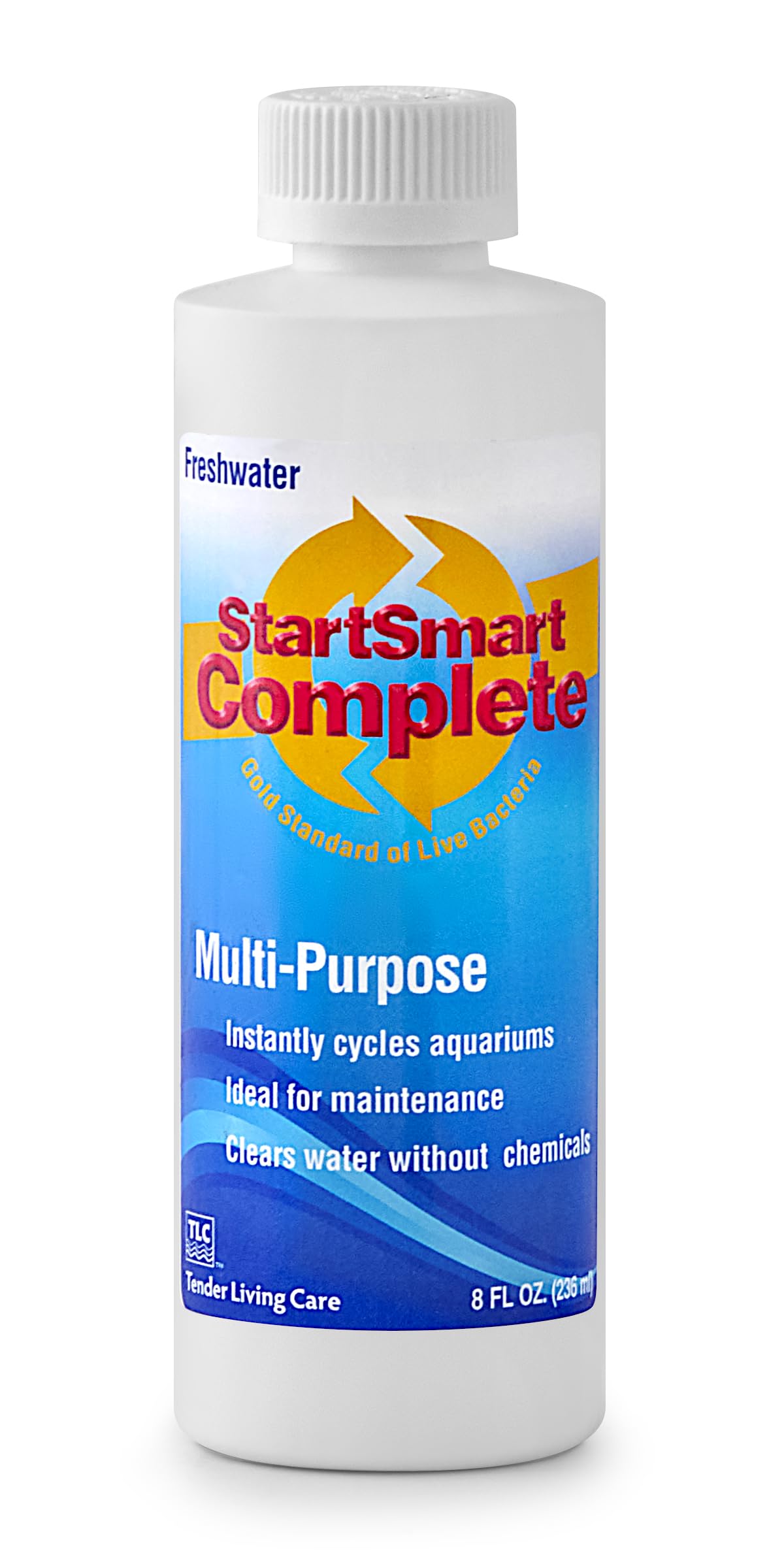
TLC StartSmart is a solid entry-level liquid bacteria that punches above its price point. The 8-ounce bottle offers three dosing tiers: 1 oz per 10 gallons for initial cycling, 1 oz per 20 gallons for water clarity support, and 1 oz per 40 gallons for routine maintenance. This scalability makes it useful for everything from a 10-gallon nano tank to a 75-gallon community aquarium.
Customers who have used the product for years report that it maintains crystal-clear water and prevents mini-cycles after large water changes, even in hard-to-clean cylindrical tanks. One reviewer switched from the popular Fluval Cycle and found StartSmart performed better at stabilizing after 50% water changes without needing to re-dose heavily. The bacteria also break down excess organics, reducing sludge buildup in the substrate.
Cycling from scratch requires a steady ammonia source (fish food or waste), as the bacteria need food to colonize. The manufacturer claims cycling completes within 24–72 hours for established tanks, but starting from sterile conditions takes longer. For the price, this is a dependable maintenance bacteria that keeps established tanks stable and clear, though it lacks the scientific rigor of premium brands for rapid initial cycling.
Why we love it
- Excellent value for the 8 oz volume
- Three dosing levels for different needs
- Proven effective against cloudy water and sludge
Good to know
- Not ideal for cycling brand-new tanks from zero
- Needs consistent ammonia source to keep bacteria alive
- Lacks specific strain information on label
5. Aquascape Beneficial Bacteria for Ponds
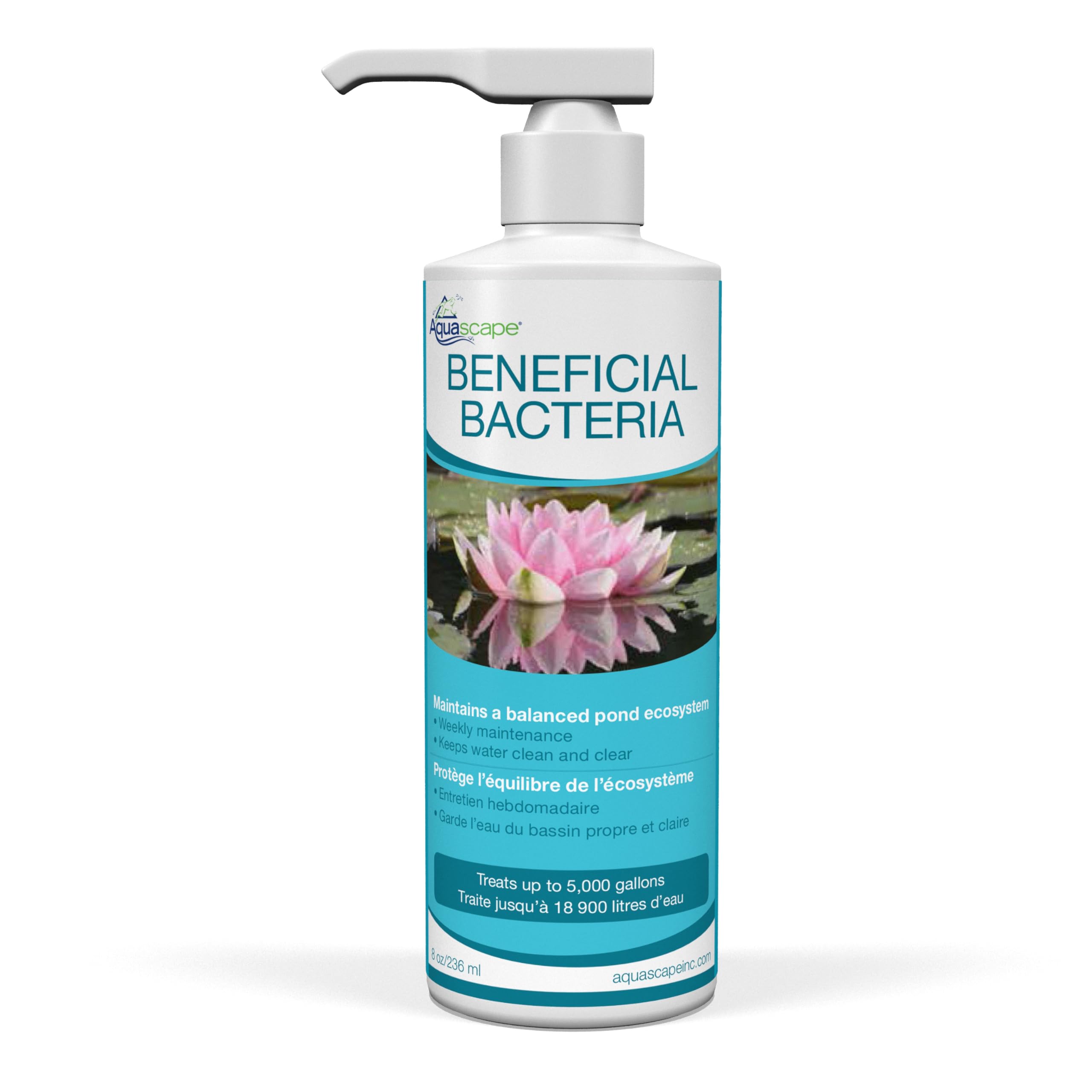
Aquascape designed this formula specifically for pond environments, but it works equally well in large freshwater aquariums that suffer from brown, murky water after storms or filter cleaning. The key differentiator is the inclusion of Photo Synthetic Bacteria (PSB), which clump fine debris and allow it to settle, along with marigold and vitamin B for fish health. The 8-strain blend includes both nitrifiers and heterotrophic cleaners.
Owner feedback is clear: this product removes brown dirt from pond water within two days, especially after wind or plant disturbance. It does not remove algae (you need a different product for that), but it reliably clears suspended sediment that other bacteria ignore. Users report that the water goes from muddy to clear faster than with cheaper alternatives, though the premium price reflects the specialized PSB content.
One bottle treats up to 5,000 gallons, making it the most economical option per gallon for large systems. For indoor aquarium use, a few capfuls every week prevents cloudiness in heavily stocked tanks. Just remember that it is not a rapid cycling aid — this is a maintenance bacteria that keeps established water bodies clean. For pond owners, it is a must-have; for large tank keepers, it is a solid option for clarity maintenance.
Why we love it
- 8 bacterial strains including PSB for fine debris
- Marigold and vitamin B support fish health
- Treats up to 5,000 gallons per bottle
Good to know
- Does not treat algae blooms
- More expensive per bottle than competitors
- Not designed for initial cycle establishment
FAQ
Can I use beneficial bacteria while fish are already in the tank?
How long does bottled bacteria take to cycle a new tank?
What is the difference between heterotrophic and autotrophic bacteria?
Final Thoughts: The Verdict
For most gardeners, the beneficial bacteria for aquarium winner is the Dr. Tim’s One & Only Freshwater because it delivers the fastest, most predictable cycling results with scientifically backed autotrophic strains. If you want a hands-off maintenance solution that works for months without liquid dosing, grab the Aqueon Pure Live Gel Balls. And for the best starter bundle that handles dechlorination, bacteria, and sludge control in one purchase, nothing beats the Seachem SureStart Pack.