
The greasy, musty smell and the relentless scratching are the unmistakable signs. When a dog’s immune system or environment tips the balance of its natural flora, yeast overgrowth takes hold—turning bath time from a chore into a critical therapeutic intervention. Finding a formula that actually strips the biofilm without stripping the coat’s natural barrier is the difference between relief and a recurring cycle.
I’m Mo Mahin — the founder and writer behind Furric. By dissecting veterinary dermatology protocols, cross-referencing active ingredient concentrations against owner-reported outcomes, and tracking long-term efficacy data across hundreds of feedback entries, I’ve separated the clinical-grade solutions from the gentler maintenance washes.
This guide isolates the most effective formulations for tackling Malassezia-related dermatitis, presenting the shampoo for dogs with yeast infection that target the root cause without compromising skin health.
How To Choose The Best Shampoo For Dogs With Yeast Infection
Not every “itch relief” shampoo will kill the yeast. Malassezia requires specific antifungal agents and a contact time that most quick-rinse formulas never achieve. Here’s what separates a true therapeutic wash from a maintenance cleanser.
Active Ingredients That Kill Yeast
The formulation must contain a proven antifungal. Chlorhexidine gluconate (2–4%) paired with miconazole nitrate is the gold standard in veterinary dermatology. Ketoconazole is another potent option. Avoid shampoos that rely solely on oatmeal, aloe, or colloidal ingredients—these soothe but do not kill the organism.
Contact Time Is Non-Negotiable
Yeast cells are protected by a sticky biofilm. A 5 to 10 minute contact time—after lathering thoroughly—is required for the active ingredients to penetrate and disrupt the cell wall. A quick shampoo and rinse will offer cosmetic improvement but no real antimicrobial effect.
Frequency Of Bathing
Yeast cycles fast. Most protocols call for bathing twice weekly for the first two weeks, then tapering to once weekly as symptoms resolve. A shampoo that is too harsh will dry the skin and trigger rebound oil production, so look for formulas that balance antifungal power with conditioning agents.
PH Balance And Free-From Detergents
A dog’s skin pH sits between 5.5 and 7.5. Medicated shampoos must be pH-balanced to avoid disrupting the acid mantle. Paraben, soap, and dye-free formulations reduce the risk of contact irritation on already inflamed skin.
Quick Comparison
On smaller screens, swipe sideways to see the full table.
| Model | Category | Best For | Key Spec | Amazon |
|---|---|---|---|---|
| Mane ‘n Tail Pro-Tect | Medicated | Broad-spectrum infection control | Benzalkonium Chloride 0.13% | Amazon |
| Veterinary Formula Clinical Care | Antifungal | Greasy, scaly, red skin | Chlorhexidine + Ketoconazole | Amazon |
| earthbath Hot Spot Relief | Natural | Mild yeast with hot spots | Tea Tree Oil + Aloe Vera | Amazon |
| KetoWELL by VetWELL | Veterinary | Fungal & bacterial infections | Ketoconazole 1% | Amazon |
| Douxo S3 SEB | Clinical | Oily/flaky skin, seborrhea | Ophytrium 0.5% | Amazon |
In-Depth Reviews
1. Mane ‘n Tail Pro-Tect Medicated Shampoo

This 32-ounce workhorse uses Quatracin (benzalkonium chloride)—a broad-spectrum antimicrobial that tackles bacteria, yeast, mold, fungi, and even ringworm. Owners of Golden Doodles and Labradors reported full resolution of itchy, smelly dander after two baths with a 7-minute massage and 10-minute leave-in period. The formula is safe for use on cuts and abrasions, making it a versatile first-line option for multi-pathogen skin issues.
The nearly odorless, colorless liquid lathers well and leaves the coat soft, conditioned, and manageable—not stripped. Multiple verified buyers noted it worked on both dogs and goats, proving its utility across species. The 32-ounce bottle provides excellent value in terms of volume per application, easily lasting through the intensive twice-weekly protocol required for yeast control.
One reviewer with a Labrador saw hair regrowth and a restored glossy coat after the first bath. The only minor trade-off is that the formula is more antimicrobial than specifically antifungal—it works by eliminating the environment yeast thrives in rather than targeting Malassezia directly. For severe, confirmed yeast infections, a dedicated antifungal may be preferred.
Why we love it
- Broad-spectrum coverage for bacteria, fungi, and yeast
- Safe for open wounds and abrasions
- Large 32-ounce bottle with economical per-wash cost
Good to know
- Not a targeted antifungal—works by eliminating the microbial environment
- Requires strict 10-minute contact time for best results
2. Douxo S3 SEB Shampoo
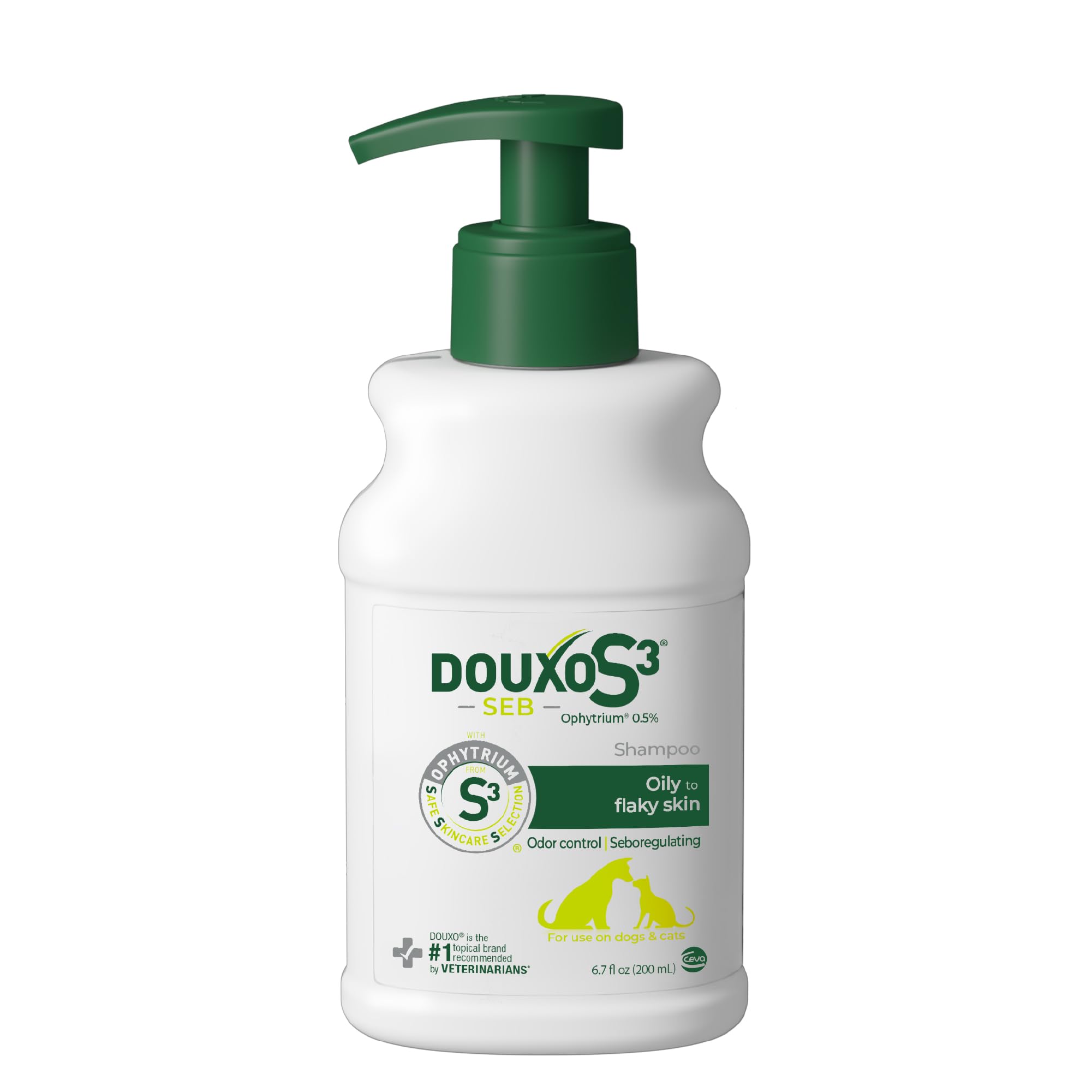
Douxo S3 SEB is the clinical-grade choice for dogs with oily, flaky skin—a hallmark of seborrhea often linked to yeast overgrowth. The active ingredient, Ophytrium (0.5%), is a patented biotechnological complex that normalizes sebum production while hydrating the skin. One owner of a dog with a greasy, stinky neck reported complete odor control and reduced scratching after a single wash.
The formula is hypoallergenic and detangles the fur, leaving the coat soft and shiny without a heavy medicinal scent. It is clinically proven in dogs to reduce dandruff, excess sebum, and unpleasant odors. For maintenance, the brand recommends pairing with the S3 SEB Mousse applied between baths. A senior cat with severe dander saw complete clearance after one use combined with the mousse protocol.
The trade-off is the smaller 6.7-ounce bottle and higher per-ounce cost. Owners of large, double-coated breeds will go through the bottle quickly during the intensive initial phase. One reviewer noted it left a greasy residue on a fine-haired senior cat, making it better suited for dogs with slick, short coats or standard double coats.
Why we love it
- Clinically proven sebum normalization and odor control
- Hypoallergenic and leaves coat soft and detangled
- Excellent for seborrhea management alongside yeast treatment
Good to know
- Smaller bottle size at 6.7 ounces—higher cost per wash
- Less effective for fine-haired cats or heavy debris coats
3. KetoWELL Topical Shampoo

KetoWELL brings a direct 1% ketoconazole concentration—one of the most effective veterinary antifungals for Malassezia. This shampoo is a targeted weapon against confirmed yeast infections. A pit bull owner whose dog had failed multiple other products and vet treatments reported complete resolution of itching, hot spots, and fur loss after bathing every 2-3 days with a 5-10 minute contact time on the second wash. The fur regrew shiny and lush; the skin became baby-soft pink within two weeks.
The formula also cleanses superficial cuts, abrasions, and insect bites, adding antibacterial support. It is paraben-free and safe for use on dogs, cats, and horses. A basset hound with itchy scabs and hair loss improved after the first wash and was fully resolved after three washes over two weeks. The mild scent is far less medicinal than other antifungal shampoos.
The main consideration is the protocol intensity: severe cases require bathing every 2-3 days initially, which can be drying. Owners should pair with a vet-recommended conditioner to maintain coat moisture. The 16-ounce size is adequate for small to medium dogs, but large breeds may need multiple bottles for the initial phase.
Why we love it
- Direct 1% ketoconazole for targeted Malassezia control
- Effective on severe cases resistant to other treatments
- Safe for multiple species including cats and horses
Good to know
- Requires intensive 2-3 day wash schedule for initial clearance
- May be drying; needs a conditioner for long-term use
4. Veterinary Formula Clinical Care Antiseptic and Antifungal
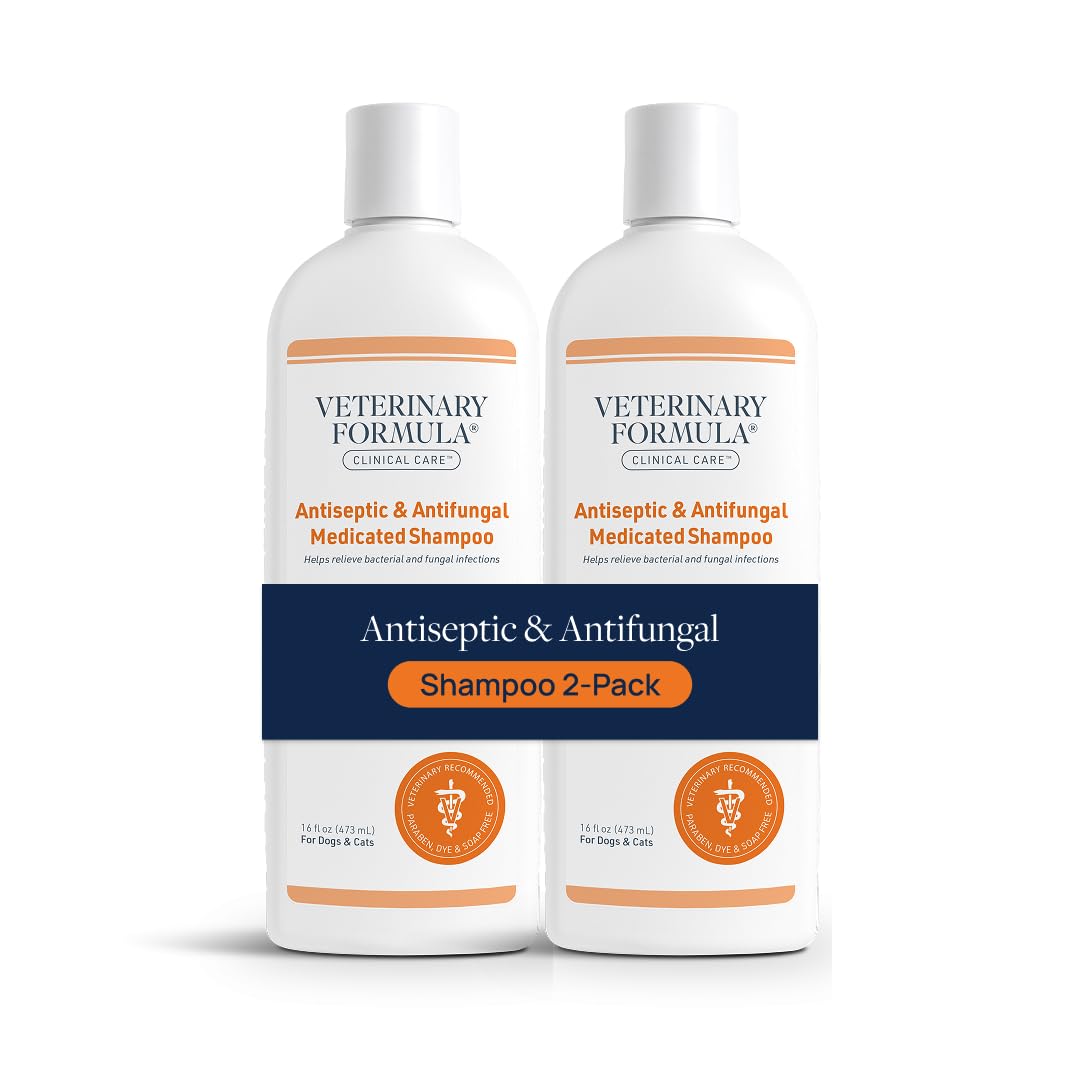
This two-pack of 16-ounce bottles delivers a powerful combination of chlorhexidine and ketoconazole—the dual-action standard that vets often recommend. It targets red, scaly, greasy, and smelly skin directly. A Jack Russell owner reported significant relief from itchy skin and paw licking without drying out the coat when used every other week. The formula is pH-balanced, paraben-free, dye-free, and soap-free, minimizing irritation on already sensitive skin.
The shampoo produces a good lather and leaves a pleasant, mild scent rather than a heavy medicinal or chemical odor. It is suitable for both dogs and cats over 12 weeks of age, with a recommended protocol of twice weekly until the skin clears, then weekly maintenance. One reviewer saw improved coat appearance after just a couple of uses, with no skin irritation or bad fragrance.
Some users noted that the relief was temporary—the dog stopped scratching for the first day but resumed. This may indicate the need for a longer contact time or more frequent bathing during the initial phase. The dual-pack provides good value for starting a regimen, but the 16-ounce size per bottle may mean frequent repurchases for larger dogs or multi-pet households.
Why we love it
- Vet-recommended chlorhexidine + ketoconazole combination
- Two-pack offers great value for starting a treatment protocol
- pH-balanced, soap-free, and gentle on sensitive skin
Good to know
- Some users report only temporary symptom relief
- 16-ounce bottles may require frequent repurchase for large breeds
5. earthbath Hot Spot Relief Pet Shampoo
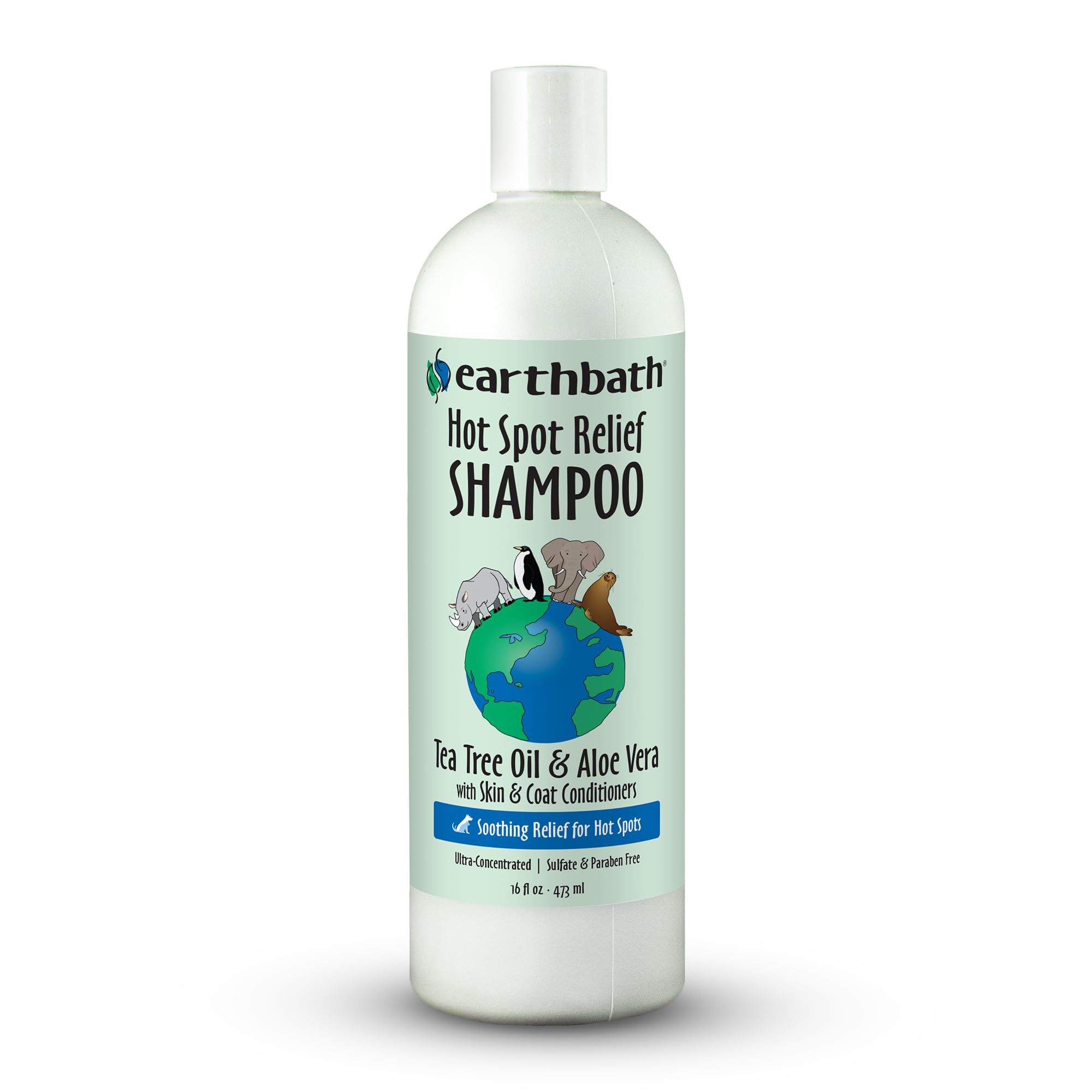
For mild yeast cases or dogs whose skin cannot tolerate harsh antifungals, earthbath’s tea tree oil and aloe vera formula offers a gentler, natural alternative. Tea tree oil has demonstrated antifungal and antibacterial properties, while organic aloe vera soothes inflammation. A 12-year-old Chihuahua with a flea-induced bald spot and allergy itch saw full fur regrowth on the tail and belly after three months of use, with itching reduced to 3-week intervals.
The shampoo is non-toxic, paraben-free, sulfate-free, and dye-free. It lathers well, rinses easily, and leaves a mild herbal scent that lingers for nearly a week. One Australian cattle dog with fungal/allergy skin issues stopped obsessive scratching after using this formula. The brand has been cruelty-free since 1995 and offers a full money-back guarantee if not satisfied.
The caveat is that tea tree oil, while effective, is less potent than chlorhexidine or ketoconazole. For severe or persistent yeast infections, this shampoo may serve as a maintenance wash rather than a primary treatment. The manufacturer recommends a 15-minute application for best results—longer than some medicated options. One reviewer noted it is not a cure but “the best shampoo [they] tried” for yeast problems, reinforcing its role as a supportive rather than clinical solution.
Why we love it
- Natural tea tree oil and aloe vera formula with proven antifungal benefits
- Non-toxic, cruelty-free, and backed by a satisfaction guarantee
- Works well for mild yeast cases and support during regrowth
Good to know
- Less potent than chlorhexidine/ketoconazole for severe infections
- Requires a 15-minute contact time for best results
FAQ
How often should I bathe my dog with a medicated yeast shampoo?
Can I use human dandruff shampoo on my dog for yeast?
How long does it take for a yeast infection to clear up with medicated shampoo?
What if my dog’s yeast infection keeps coming back after shampooing?
Final Thoughts: The Verdict
For most gardeners, the shampoo for dogs with yeast infection winner is the Mane ‘n Tail Pro-Tect Medicated Shampoo because its broad-spectrum benzalkonium chloride formula tackles bacterial and fungal overgrowth in one economical 32-ounce bottle, making it versatile for multi-pathogen skin issues. If you need targeted antifungal power for a severe Malassezia case, grab the KetoWELL by VetWELL with direct 1% ketoconazole. And for dogs with oily, flaky seborrhea alongside yeast, nothing beats the clinical-grade sebum normalization of the Douxo S3 SEB.