
That layer of fur on your couch, your favorite black sweater, and seemingly floating through the air isn’t just a mess — it’s a signal. Your dog or cat is carrying around a thick, dead undercoat that brushing once a week with a standard curry comb just won’t touch. The right deshedding tool doesn’t just grab surface hairs; it reaches deep to pull out the loose, blown undercoat before it ever lands on your furniture.
I’m Mo Mahin — the founder and writer behind Furric. I’ve spent years studying the engineering behind pet grooming tools, comparing blade pitch, tooth density, and handle ergonomics across dozens of models, and analyzing thousands of owner testimonials to find which designs actually reduce shedding without irritating a pet’s skin.
Whether you own a German Shepherd dropping a daily winter coat or a short-haired cat leaving a dusting on every cushion, finding the right tool matters. This guide breaks down the top contenders for the best deshedding brush so you can match the right blade and bristle setup to your pet’s specific coat type.
How To Choose The Best Deshedding Brush
Not all deshedding tools work the same way. A slicker brush with fine, bent wires is excellent for removing surface tangles on a Golden Retriever, but it won’t extract the dense undercoat of a Husky the way a stainless steel rake will. Here are the three factors that matter most when picking the right tool.
Blade Material & Edge Quality
The single biggest difference between a brush that slides through fur and one that tugs or scratches is the blade. Standard stamped stainless steel can have micro-burrs along the edge that irritate the skin over time. Brushed or polished stainless steel, like the kind found on mid-range and premium rakes, provides a smoother glide. For pets with sensitive skin — think short-coated breeds like Pit Bulls or French Bulldogs — a rounded-tip stainless blade is essential to avoid brush burn.
Coat Length & Tooth Configuration
Short-haired breeds (Labradors, Beagles, cats) need a tool with dense, fine teeth spaced closely together to grab the tiny, loose undercoat hairs. Long-haired breeds (Golden Retrievers, Maine Coon cats, Collies) require a wider-tooth rake with longer tines to reach through the topcoat and pull out the shedding undercoat without tearing the guard hairs. A dual-sided tool, with one fine and one coarse side, offers the most flexibility if you own multiple pets with different coat types.
Handle Ergonomics & Self-Cleaning Features
Deshedding a full-coated Labrador can take 15–20 minutes. A handle with a non-slip rubberized grip reduces hand fatigue, especially for owners with arthritis or weaker grips. Push-button retraction mechanisms (found on self-cleaning slicker brushes) let you eject the collected fur with one hand, making the process faster and less messy. Standard blades without this feature require you to manually pick the hair out of the bristles after every few strokes.
Quick Comparison
On smaller screens, swipe sideways to see the full table.
| Model | Category | Best For | Key Spec | Amazon |
|---|---|---|---|---|
| Hertzko Self Cleaning Slicker Brush | Slicker Brush | Long & short coats, easy cleaning | Retractable bristle mechanism | Amazon |
| Freshly Bailey Deshedding Brush | Undercoat Rake | Short-haired dogs & cats | Designed for short coats (up to 95% reduction) | Amazon |
| 3PCS Pet Grooming Rake Set | Rake & Comb Set | Long-haired, matted coats | Double-sided rake (9 & 17 teeth) | Amazon |
| Dual-Sided Grooming Blade | Grooming Blade | Short/medium coats, value price | Stainless steel, fine & coarse teeth | Amazon |
| ACE2ACE Pet Hair Remover | Lint Roller | Furniture & fabric hair removal | Self-cleaning with dust bin | Amazon |
In‑Depth Reviews
1. Hertzko Self Cleaning Slicker Brush
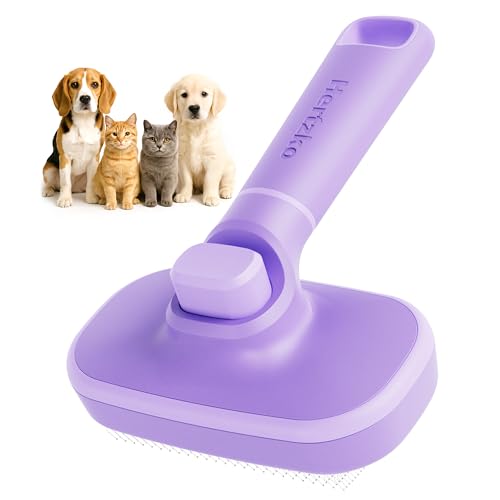
The Hertzko Slicker Brush stands out because of its push-button retraction mechanism — a feature usually found on brushes twice its price. With one press, the fine stainless steel bristles retract into the base, letting you wipe away the accumulated fur in a single swipe. This makes it ideal for owners who groom weekly and want to minimize cleanup time.
The angled bristles are gentle enough for a cat’s sensitive rear and tail area, yet effective enough to detangle a medium-haired dog’s coat. Multiple owners report that cats who are typically wary of brushing eventually lean into the grooming session. The brush handles both long and short hair, but its fine-wire design is best suited for removing surface tangles and loose topcoat rather than deep undercoat extraction on thick-coated breeds.
At 3.2 ounces, the brush is light enough for extended sessions, and the ergonomic handle reduces wrist strain. One common note from cat owners: the brush head is slightly wide for very small breeds like kittens or toy breeds, where a narrower tool might offer more precision around the face and legs.
Why we love it
- Self-cleaning push-button mechanism saves significant time
- Rounded fine bristles are gentle on sensitive skin
- Lightweight and comfortable for extended grooming sessions
Good to know
- Brush head may feel large for very small cats or toy breeds
- Less effective at removing deep undercoat from double-coated breeds like Huskies
2. Freshly Bailey Deshedding Brush for Short Haired Dogs & Cats

The Freshly Bailey Deshedding Brush is engineered specifically for short to medium coats — think Labs, Pit Bulls, Beagles, and short-haired cats. Its unique tooth pattern and design allow it to grip the tiny, loose undercoat hairs that standard bristle brushes miss entirely. Owners of short-haired breeds consistently report a 90%+ reduction in household fur after switching to this tool.
The ergonomic, anti-slip handle makes a real difference when you’re brushing a muscular 65-pound Pit Bull who doesn’t love standing still. The grip stays secure even with wet or sweaty hands, and the handle is wide enough to provide leverage without being bulky. One particularly useful trick from real-world use: this brush is a game-changer when used during bath time, as the wet fur gives the teeth better purchase on loose undercoat.
Constructed from plastic bristles rather than metal, this brush is gentler on short-haired pets with sensitive skin prone to irritation. The downside is that plastic bristles wear down faster than stainless steel, especially if you’re brushing weekly. A few users note that the bristles can lose their grip after several months of heavy use on double-coated short-haired breeds.
Why we love it
- Specifically designed for short-haired coats with excellent undercoat removal
- Non-slip, comfortable handle works well for long grooming sessions
- Gentle enough for daily use on sensitive-skinned breeds
Good to know
- Plastic bristles may wear faster than metal alternatives
- Not designed for long-haired or heavily matted coats
3. 3PCS Pet Grooming Rake & Comb Set
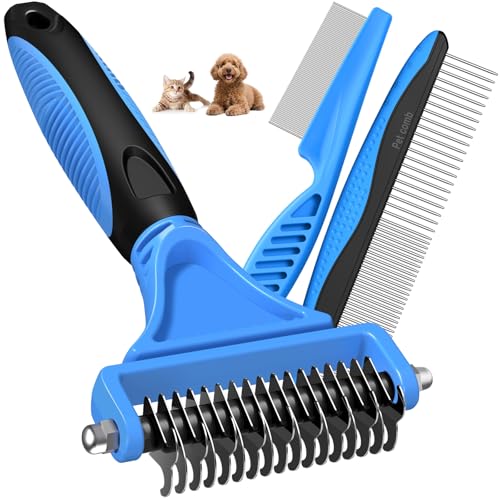
If you’re dealing with a long-haired cat, a Golden Doodle, or any breed that regularly develops mats and tangles, this 3-piece set gives you a comprehensive toolkit. The centerpiece is the double-sided undercoat rake — one side with 9 teeth for stubborn, tight mats, and the other with 17 finer teeth for thinning and removing loose undercoat. Two strokes on a matted feral cat’s side cleared the first tangle entirely, according to one experienced user.
The set also includes a 2-in-1 comb with a wide side for smoothing and a dense side for removing loose hair, plus a fine-toothed flea comb. The flea comb is narrow enough to use on a cat’s legs, head, and tail — areas where larger rakes can’t reach. Made from premium stainless steel with a soft TPR rubber handle, the tools feel substantial in the hand and don’t bend under pressure the way some budget blades do.
With a 2-year warranty backing the purchase, this set is built for the long haul. The main caveat: the design works brilliantly on long-haired and matted coats, but for short-haired cats, the rake’s teeth can be too wide to effectively grab tiny undercoat hairs, and the fur tends to blow away rather than collect neatly.
Why we love it
- Three tools cover dematting, deshedding, and flea prevention
- Double-sided rake (9/17 teeth) handles both tough mats and regular shedding
- Stainless steel construction with a 2-year warranty
Good to know
- Rake teeth can be too widely spaced for short-haired cats
- Best used outdoors or over a trash bag — it pulls a lot of hair
4. Dual-Sided Grooming Blade for Dogs

This dual-sided grooming blade is a no-frills workhorse that prioritizes function over flash. The fine-tooth side works well for short and medium coats, while the coarse-tooth side handles longer fur and thicker undercoat. Unlike a slicker brush or rake, this tool operates like a blade — you hold it at a 45-degree angle and pull through the coat to slice out the undercoat. Owners report collecting enough fur from a single session on a short-haired mixed breed to form a small towel.
The rounded tips on the stainless steel teeth minimize the risk of scratching, making it safe for regular use on dogs and even horses, according to the manufacturer. The non-slip handle provides decent control, though the plastic construction feels less substantial than a full-metal rake. The blade is easy to clean — just wipe or rinse off the accumulated hair.
The primary trade-off at this price point is flexibility. Multiple users mention that the metal blade bends during use on thicker coats, which limits depth penetration compared to a stiffer, pricier alternative. For a medium-sized short-haired dog brushed weekly, this is a capable tool, but owners of dense-coated breeds like Huskies or Malamutes may find it too flexible for thorough undercoat extraction.
Why we love it
- Two tooth sizes in one tool for different coat lengths
- Rounded stainless tips are gentle on skin
- Extremely budget-friendly for basic shedding control
Good to know
- Metal blade can bend under pressure on thick coats
- Plastic handle feels less durable than rubberized alternatives
5. ACE2ACE Pet Hair Removal Tool
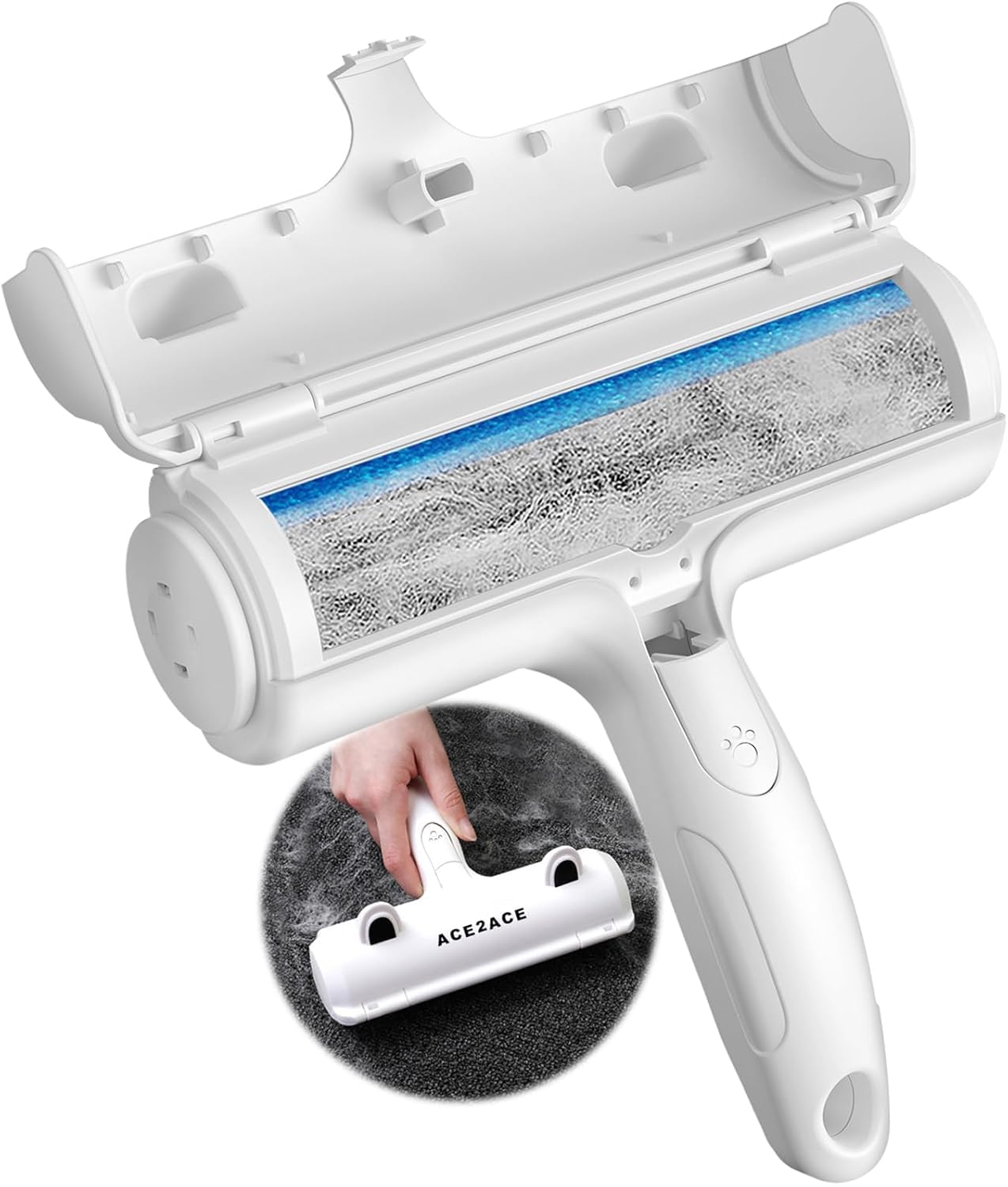
The ACE2ACE Pet Hair Remover occupies a different niche than the other tools on this list — instead of brushing the animal, it removes hair that’s already embedded in furniture, carpets, car seats, and bedding. The tool uses electrostatic silicone pads to attract and grip hair, then stores it in a built-in dust bin that you empty with a single button press. No sticky tape refills, no washing pads — just roll, collect, and dump.
For pet owners who find traditional lint rollers wasteful and expensive, this is a genuinely reusable alternative. The ergonomic handle is shaped to fit the palm comfortably, and the self-cleaning mechanism works well: you pinch the silicone pads together, swing them a few times, and the hair collects into the bin. It’s particularly effective on upholstery fabrics and car carpets where static cling is strongest.
The main limitation is that it’s not designed for use directly on your pet — this is a home-cleaning accessory, not a grooming tool. Also, the plastic hinge connecting the cover to the base is a known weak point. Several users report that the cover can snap off if the tool is dropped or knocked off a table. For indoor cleanup, it’s a great complement to a dedicated deshedding brush.
Why we love it
- 100% reusable — no sticky tape refills needed
- Self-cleaning dust bin makes disposal quick and clean
- Electrostatic pads grip hair effectively on fabric surfaces
Good to know
- Not a grooming tool — for furniture and fabric only
- Plastic hinge on cover can break if dropped
FAQ
Can I use a deshedding brush on a cat with sensitive skin?
How often should I use a deshedding rake on my Labrador?
What’s the difference between a slicker brush and an undercoat rake?
Final Thoughts: The Verdict
For most pet owners, the best deshedding brush winner is the Hertzko Self Cleaning Slicker Brush because its push-button retraction design makes grooming faster and less messy than any standard rake or blade. If you own a short-haired dog or cat and want a tool specifically designed to pull out that stubborn undercoat, grab the Freshly Bailey Deshedding Brush. And for owners of long-haired, matte-prone breeds, the 3PCS Pet Grooming Rake Set offers the most versatile toolkit for tackling tangles and heavy shedding in one package.