
A robot vacuum and mop that empties itself, washes its own mop pads, and navigates with laser precision is now within reach—if you know which compromises to accept and which features are non-negotiable at this price cap. The sub-$500 segment is the most competitive in the category, packed with models that offer self-emptying bases, LiDAR navigation, and anti-tangle brush systems that were once exclusive to flagships. The trick is separating the genuinely capable daily drivers from the ones that trade reliable navigation for a larger spec sheet.
I’m Mo Mahin — the founder and writer behind Furric. I’ve spent the last fifteen years analyzing the robot floor-care market comparing suction curves, dock engineering, and real-world navigation reliability across hundreds of models to help buyers cut through the noise.
Whether you need tangle-free brushes for a long-haired household or sonic mopping that scrubs dried stains, this guide breaks down the nine best options to help you find the right robot vacuum and mop under $500 for your home.
How To Choose The Best Robot Vacuum And Mop Under $500
Sorting through sub-$500 combos requires more than just comparing suction numbers. The real differentiators lie in navigation intelligence, dock capabilities, and how the machine handles hair tangles and carpet-to-hardwood transitions. Here are the five factors that separate reliable daily cleaners from frustrating drifters.
Navigation System — LiDAR vs. Gyroscopic vs. Random Bounce
LiDAR (laser-based) navigation scans the room in seconds, builds a permanent map, and cleans in straight, overlapping rows. It avoids furniture, remembers where it cleaned, and lets you set no-go zones in the app. Gyroscopic models rely on wheel sensors and tend to clean in rough arcs — they work in open areas but struggle with consistent coverage. Random-bounce units skip, miss entire rooms, and take longer to cover the same floor area. For homes with multiple rooms or any furniture, LiDAR is the only sensible choice at this budget — every product in this list uses some form of it.
Self-Emptying Dock Capacity
Self-emptying bases range from a three-liter bag that lasts 45 days to a five-liter bag that stretches to 150 days. The dock size directly affects how often you touch dirt. A 45-day base is fine for a one-person apartment running every other day; a 150-day base suits busy families with pets who vacuum daily. Non-negotiable detail: check if the dock uses disposable bags (ongoing cost) or a bagless cyclone that you rinse out. Some premium models at the upper end of this tier also include mop washing and drying inside the dock — a significant upgrade for homes that mop more than once a week.
Mop System — Passive Drag vs. Sonic Scrubbing vs. Rotating
Passive drag mopping (a wet pad pressed against the floor by gravity) picks up dust and light spills but does nothing for dried stains. Sonic mopping vibrates the pad at several hundred strokes per minute, applying downward force to loosen stuck-on residue. Rotating mop heads (typically found on higher-end units) spin at high RPM and physically scrub the grout line. In the sub-$500 bracket, sonic mopping with auto-lift (so the pad rises on carpet) offers the best balance of effectiveness and carpet safety. Avoid any model that drags a wet pad across every surface without lift detection.
Anti-Tangle Brush Engineering
If you have long hair or any pet that sheds, the brush tangle frequency will define whether you love or hate the machine. Standard roller brushes collect hair around the ends until they seize — then you cut the hair free with scissors. Anti-tangle designs use a comb-like JawScrapers mechanism or bristle patterns that guide hair into the dustbin instead of wrapping it around the roller. A few models go further with dual anti-tangle side brushes. This spec is worth more than an extra 2,000 Pa of suction if you vacuum hair daily.
Carpet Detection and Auto-Lift
A robot that mops into low-pile carpet or area rugs will leave them wet and dirty. Look for ultrasonic carpet sensors that detect the change in surface density, lift the mop module (ideally by 8–10 mm) to keep it dry, and simultaneously boost suction to dig embedded debris out of the carpet fibers. Units without auto-lift require you to set no-mop zones in the app for every rug — a tedious task if your home has multiple small runners.
Quick Comparison
On smaller screens, swipe sideways to see the full table.
| Model | Category | Best For | Key Spec | Amazon |
|---|---|---|---|---|
| DREAME L10s Pro Ultra Heat | Premium | Self-cleaning mop & edge coverage | 220 min battery / 136°F hot water mop wash | Amazon |
| eufy Omni C20 | Premium | Ultra-slim fit under low furniture | 3.35″ height / 7,000 Pa / auto mop wash & dry | Amazon |
| roborock Q10 S5+ | Mid-Range | Sonic mopping & auto mop lift | 10,000 Pa / VibraRise 2.0 / 70-day self-empty | Amazon |
| roborock Q7 M5+ | Mid-Range | Dual anti-tangle & reliable LiDAR | 10,000 Pa / 7-week self-empty | Amazon |
| DREAME D20 Plus | Mid-Range | 150-day self-empty & anti-tangle DuoBrush | 13,000 Pa / 5L dust bag / 32 water levels | Amazon |
| Shark Matrix Plus AV2630WA | Mid-Range | Sonic mopping & HEPA filtration | 45-day bagless base / HEPA sealed system | Amazon |
| Tikom L8000 Plus | Value | Entry-level LiDAR with self-empty | 6,000 Pa / 90-day self-empty / 150 min run time | Amazon |
| uninell (7000Pa) | Value | Long 180-min run time & tangle-free design | 7,000 Pa / 3.5L self-empty / 180 min battery | Amazon |
| KILGONE SDL40 | Value | Ultra-quiet 65dB & threshold climbing | 6,000 Pa / 18mm climb / 200 min battery | Amazon |
In‑Depth Reviews
1. DREAME L10s Pro Ultra Heat

The DREAME L10s Pro Ultra Heat sits at the top of the sub-$500 bracket because it solves the two biggest pain points of mopping robots — dirty pad buildup and edge blind spots — without asking for a premium subscription. Its dock washes the mop pads with 136°F hot water and then dries them with hot air, which means you never touch a soggy, bacteria-laden pad. The MopExtend technology pushes a swinging arm outward to reach baseboards and corners, a rare feature at this price that eliminates the crescent-shaped missed strip most robots leave along walls.
Under the hood, 7,000 Pa of suction handles embedded pet hair and daily debris on hard floors and low-pile carpets. The 3D structured-light obstacle avoidance identifies up to 55 object types — shoes, cables, pet bowls — and routes around them without getting stuck. Owners report that the mapping takes roughly fifteen minutes for a 1,000 sq ft apartment, and the robot reliably remops dirty zones detected by the onboard dirt sensor. The 220-minute runtime covers large single-story homes in one go.
The downsides are worth noting: the clean-water tank is fixed inside the dock, so you must wipe it manually rather than removing it to refill at the sink. Some units have shown water leaks at the dock seal, though a manufacturer-issued rubber mat mitigates this. The battery struggles to finish a second-floor clean on a single charge if the home exceeds 1,500 sq ft per level.
Why we love it
- Hot-water mop washing and hot-air drying — no manual pad handling needed
- MopExtend arm reaches baseboards and corners effectively
- Excellent obstacle avoidance with 3D structured-light sensor
- Long 220-minute battery covers large floor plans
Good to know
- Dock water tank is non-removable — you must wipe it out manually
- Some units have experienced dock water leaks (use the included rubber mat)
- Battery may not cover a full second floor on one charge
2. eufy Robot Vacuum Omni C20
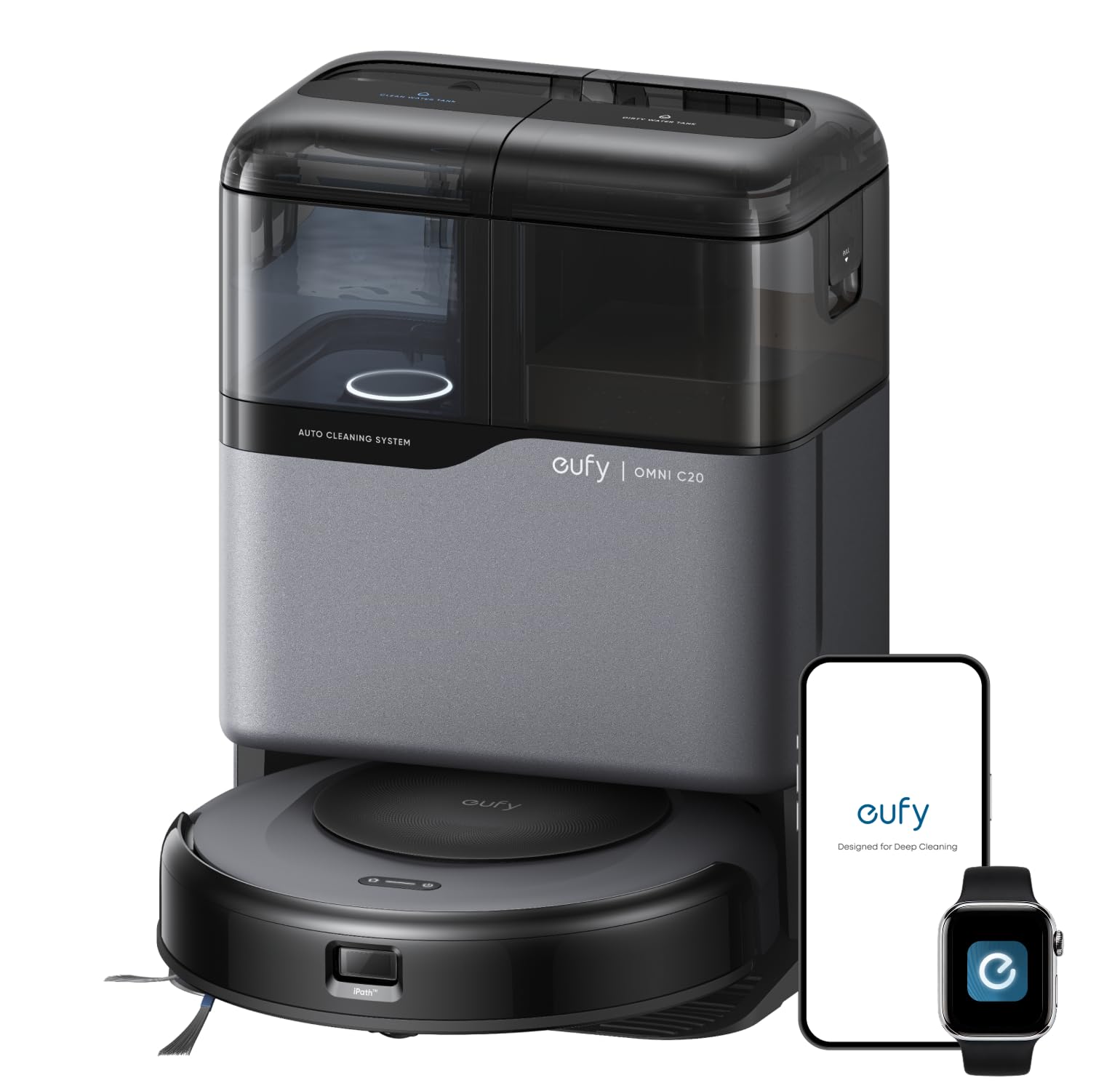
The eufy Omni C20 is the slimmest self-emptying, self-washing robot in this roundup — just 3.35 inches tall — which lets it glide under sofas, bed frames, and cabinets with as little as 3.54 inches of clearance. Its Omni Station handles the three dock chores: it empties the dustbin into a 3.1-liter bag (rated for up to 60 days), washes the mop pad with water, and dries it with room-temperature air that consumes only 1.56 watts per hour during the drying cycle. The transparent clean and dirty water tanks give a no-guess visual on when to refill or dump.
The mop system applies 6 Newtons of downward pressure while rotating at 180 RPM — enough to scrub dried coffee rings and sauce drips from tile and hardwood. On carpets, the mop pad lifts automatically to keep the fibers dry. The Boost IQ adjusts suction up to 7,000 Pa when transitioning from hard floors to carpet, and the Pro-Detangle Comb flips down mid-clean to shove loose hair off the roller brush before it wraps. Owners with long-haired households report noticeably fewer brush-cleaning sessions compared to conventional rollers.
The iPath Laser Navigation is fast — mapping takes under five minutes for a typical living room — but the random cleaning pattern reported by some users suggests the robot sometimes struggles with room-level segmentation. It also lacks a boundary strip compatibility, so you must rely entirely on app-based no-go zones. The battery lasts 132 minutes in standard mode, which covers most mid-sized homes but may require a recharge and resume for larger layouts.
Why we love it
- Ultra-low 3.35-inch profile slides under the lowest furniture
- Auto wash and dry mop — zero manual pad handling
- Pro-Detangle comb actively prevents hair wrap during cleaning
- Transparent water tanks make maintenance status obvious
Good to know
- Battery runtime is shorter than rivals at 132 minutes on standard mode
- Some users report inconsistent room-level navigation
- No boundary strip compatibility — no-go zones are app-only
3. roborock Q10 S5+
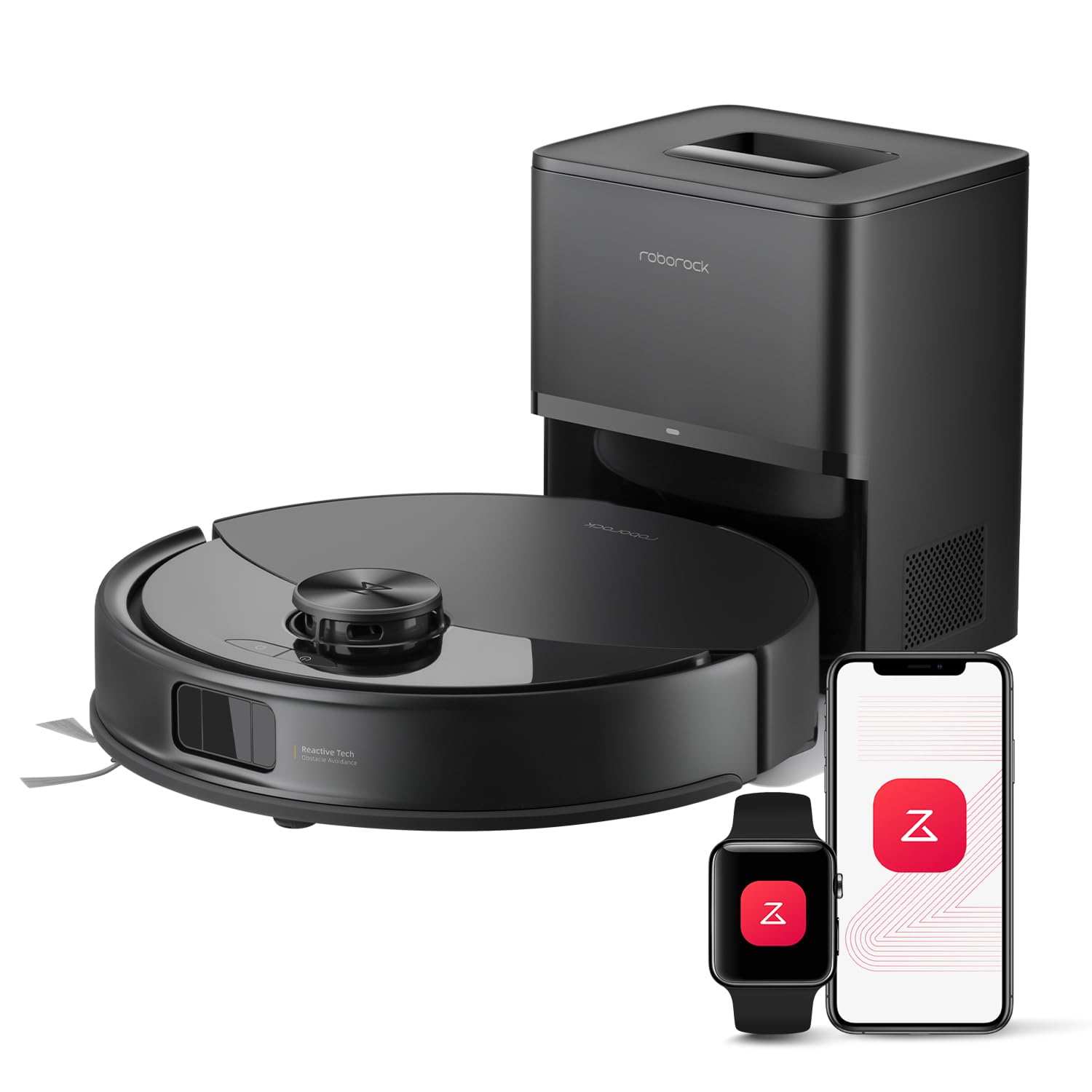
The roborock Q10 S5+ brings VibraRise 2.0 sonic mopping — 3,000 scrubs per minute with a dual-zone vibration plate — into the sub-$500 tier. It applies genuine mechanical scrubbing force rather than relying on pad moisture alone. When the ultrasonic carpet sensor detects a rug, the mop module lifts 8 mm to keep the pad dry while suction boosts automatically to 10,000 Pa for deep carpet cleaning. This means you can let the robot run the full home without having to manually remove the mop pad.
The 2.7-liter self-emptying dock holds up to 70 days of debris, and the bagged system is sealed, making it a good fit for households with allergy concerns. The Dual Anti-Tangle system uses a JawScrapers main brush that combs hair off the roller as it rotates, plus a specialized side brush that also resists wrapping. Owners with two low-shedding dogs report near-zero brush maintenance over several weeks. The PreciSense LiDAR maps multi-level homes and remembers up to three floor plans.
The ReactiveTech obstacle avoidance uses structured light to detect and steer around objects — it stays clear of charging cables, shoe piles, and pet toys. The trade-off is a water tank that requires pre-wetting before each mopping run; the tank is small, so you must refill for larger homes. The dust bag is not reusable, adding an ongoing consumable cost. Some owners note that the app lacks granular scheduling controls compared to the higher-end Roborock models.
Why we love it
- Genuine sonic scrubbing at 3,000 vibrations per minute
- Mop lifts 8 mm on carpet — no manual pad removal needed
- Dual anti-tangle brushes keep maintenance near zero for pet homes
- Structured-light obstacle avoidance avoids most household clutter
Good to know
- Small water tank needs refilling mid-run in larger homes
- Dust bags are single-use consumables — no bagless option
- App lacks advanced scheduling features found on more expensive Roborock models
4. roborock Q7 M5+

The roborock Q7 M5+ earns its spot for the JawScrapers dual anti-tangle system — a comb mechanism that actively strips hair off the main roller during operation and a side brush designed to avoid wrapping. In homes with long-haired humans or medium-shedding dogs, this single feature saves more time than any cleaning spec. The rock dock empties into a 2.7-liter sealed bag rated for seven weeks of debris, and the sealed system keeps fine dust trapped inside the base.
Suction sits at 10,000 Pa — enough to lift sand, cat litter, and pet hair from medium-pile carpets in one pass. The PreciSense LiDAR maps each floor in under ten minutes and supports no-go zones, room-specific cleaning, and multi-floor mapping. The mopping function is basic drag-style with adjustable water flow through three levels; it handles light maintenance wiping on hard floors but won’t scrub dried stains the way sonic mopping does. Owners consistently praise the cleaning performance and the precision of the no-go zones, rarely reporting the robot getting stuck or lost.
The biggest limitation is the dust bin inside the robot itself — it is small, so on high-debris days the robot may return to the dock mid-mission to empty before continuing. The Alexa integration is clunky; some owners report that voice commands require multiple attempts to register. The side brush is a single unit, not the dual-brush setup found on pricier Roborock models, though the JawScrapers main brush compensates for most edge-cleaning gaps.
Why we love it
- JawScrapers anti-tangle brush is one of the best for pet and long hair households
- LiDAR navigation is fast and rarely gets stuck or asks for help
- Sealed self-emptying base keeps allergens contained
- App-based no-go zones are reliable and precise
Good to know
- Robot dust bin is small, requiring mid-mission dock returns on heavy debris days
- Mopping is passive drag-style — no scrubbing action for dried stains
- Alexa voice integration is inconsistent and occasionally unresponsive
5. DREAME D20 Plus
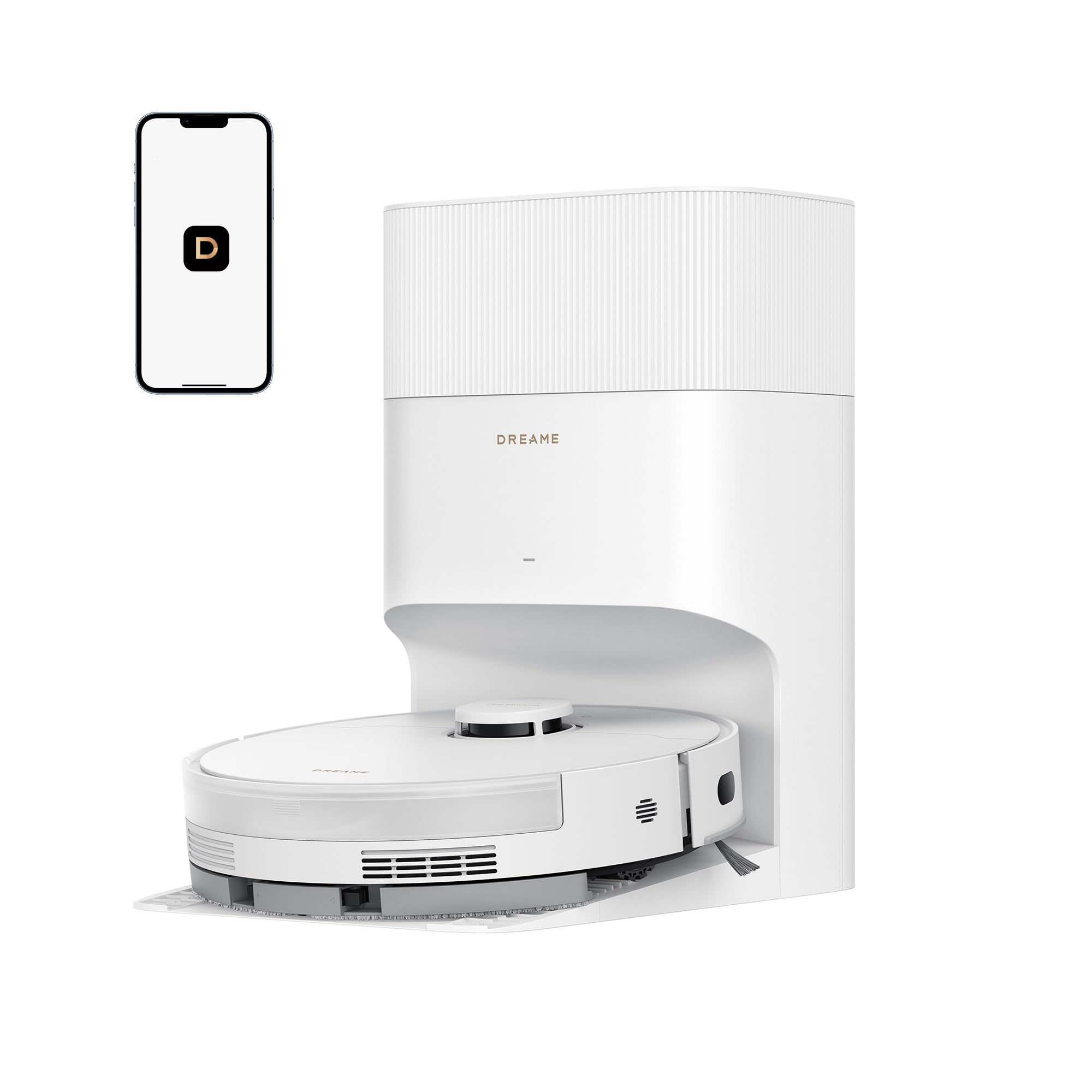
The DREAME D20 Plus delivers the largest self-emptying capacity in this lineup: a 5-liter dust bag that stretches to 150 days before needing replacement — perfect for multi-pet households or anyone who wants to interact with the robot as rarely as possible. The DuoBrush anti-tangle system uses a rubber comb to strip hair off the roller, and paired with 13,000 Pa of suction, it is one of the most aggressive debris-removal combos at this price. For context, 13,000 Pa is more than double the raw suction of some entry-level units in the same tier.
The mopping system uses a 350-milliliter water tank with 32 adjustable water levels, letting you fine-tune wetness from a barely-damp polypropylene pad for hardwood to a steady stream for tile grout lines. Vacuuming and mopping happen simultaneously, and the app allows room-specific settings — you can tell the robot to mop the kitchen at high flow while dry-vacuuming the living room carpet. The Pathfinder LiDAR mapping stores multiple floor plans and supports virtual walls and no-go zones without requiring magnetic strips.
The trade-offs are noise and app polish. Owners report the vacuum is louder than average during max suction mode, and the app interface feels less intuitive compared to the Roborock or eufy apps. The 180-minute battery is strong for a single floor but may need a recharge cycle on very large or multi-story homes. A small number of early users experienced WiFi splitting issues that prevented the robot from connecting, though firmware updates have reduced this problem.
Why we love it
- Massive 5-liter dust bag lasts up to 150 days — lowest maintenance in class
- 13,000 Pa suction is the highest raw power in this roundup
- 32 water levels give granular control over mopping moisture
- DuoBrush effectively resists hair tangling during daily runs
Good to know
- Noisier than most rivals, especially in max suction mode
- App interface is less polished and less intuitive than competing brands
- Occasional WiFi connectivity issues reported during initial setup
6. Shark Matrix Plus AV2630WA

The Shark Matrix Plus AV2630WA stands out with its bagless self-emptying base — a rarity in the sub-$500 tier. Instead of buying disposable dust bags, the base uses a cyclone to drop debris into a bin that you empty directly into the trash (rated for up to 45 days). The True HEPA filter and sealed system trap fine particles inside the base, making this one of the strongest options for allergy-sensitive households. The onboard robot also features a HEPA filter, so the exhaust air stays clean during vacuuming.
The sonic mopping system scrubs hard floors at 100 strokes per minute, applying firm downward pressure — it handles dried mud streaks and sticky spills better than any passive drag mop in the same price range. CleanEdge Detect uses air blasts and corner recognition to push debris from edges and corners into the cleaning path, resulting in visibly better wall-adjacent pickup. The Matrix Clean function makes the robot take multiple overlapping passes on carpet, delivering better deep-cleaning results compared to single-pass-only competitors.
The setup process is the most labor-intensive in this roundup. Early owners report that getting the mapping to recognize separate rooms across multiple floors can take a full evening of troubleshooting. The app is feature-rich but clumsy, with some functions hidden in submenus. The robot uses a square-shaped magnetic carpet zone detection that only supports rectangular area boundaries — if you have an L-shaped rug, you will need to set multiple zones or accept that the robot may mop part of it.
Why we love it
- Bagless self-emptying base eliminates recurring consumable costs
- True HEPA sealed system — excellent for allergy management
- Sonic mopping at 100 strokes per minute actively scrubs stains
- CleanEdge air-blast system improves edge and corner debris pickup
Good to know
- Initial setup and mapping process is time-consuming and fiddly
- App interface is feature-rich but not intuitive
- Carpet zone detection only supports rectangular boundaries
7. Tikom L8000 Plus
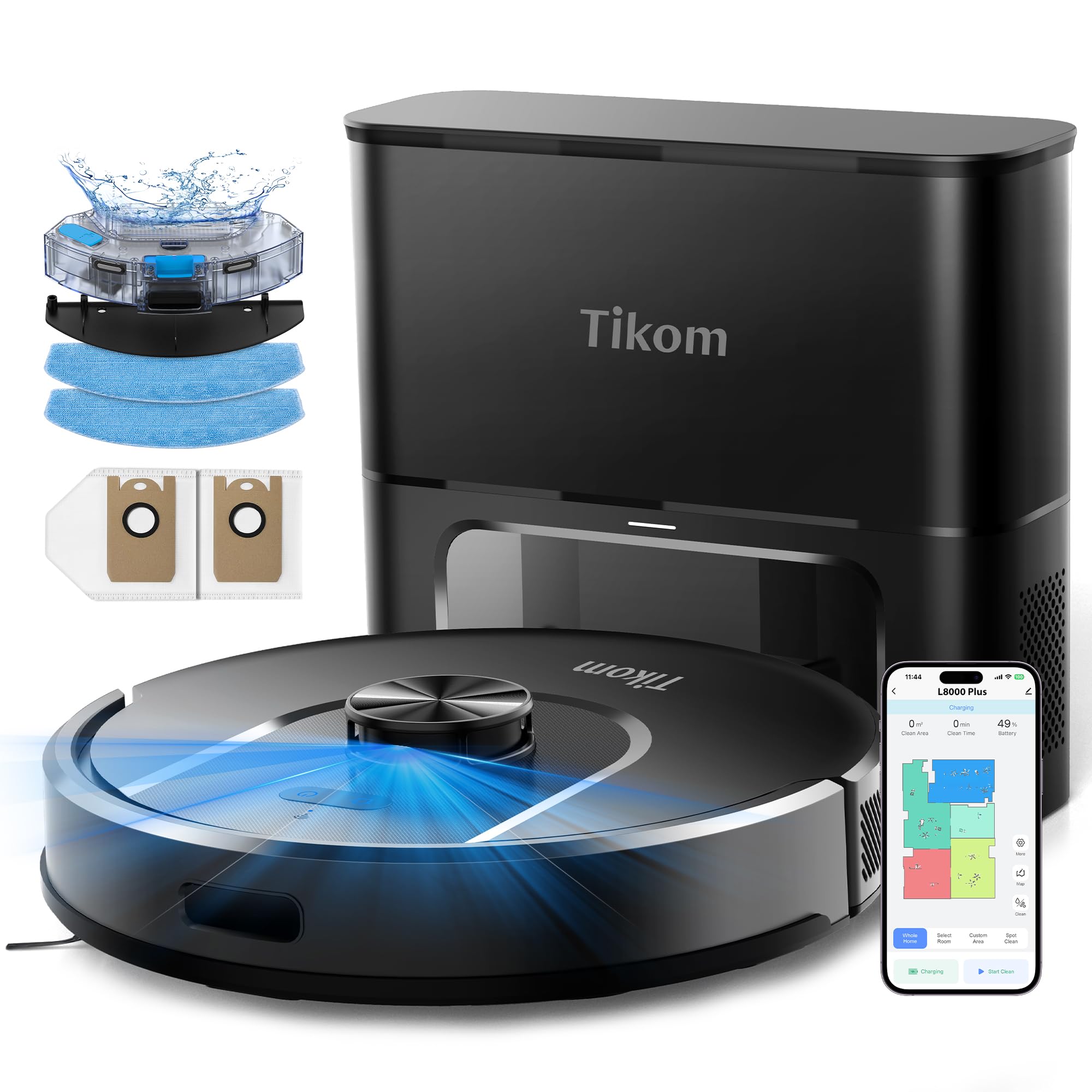
The Tikom L8000 Plus is the most affordable self-emptying, LiDAR-guided combo in this lineup. It packs a 3-liter dust bag that holds debris for up to 90 days and a 6,000 Pa motor that auto-boosts on carpet — enough suction for daily dust, crumbs, and cat litter on hard floors and low-pile rugs. The 360-degree LiDAR creates permanent maps and supports up to five floor plans, so multi-story homes can move the dock between levels without losing saved maps.
The app suite is surprisingly complete for the price: you can set no-go zones, no-mop zones, virtual walls, room-specific cleaning schedules, and adjust both suction levels and water flow individually. The mopping system uses a drip-feed reservoir that you attach to the robot; it works as a damp pass for maintenance cleaning but will not tackle dried-on stains. Owners consistently note that the robot is quiet during gentle suction mode, runs for 150 minutes, and reliably returns to the dock when the battery dips low.
The build quality is not at the same level as the premium Roborock or eufy units — the plastic shell feels lighter, and the cliff sensors are responsive but occasionally false-trigger on dark rugs. The dust bag is a consumable, though replacement bags are inexpensive. The mop pad requires manual removal when the robot cleans carpets, or you must create a no-mop zone for every rug in the app — the robot cannot detect carpets and lift the pad automatically.
Why we love it
- Most affordable LiDAR-guided, self-emptying combo in this roundup
- 90-day dust bag capacity for low-maintenance operation
- App includes granular controls — no-go, no-mop, and virtual walls
- Quiet operation during gentle suction mode (150-minute runtime)
Good to know
- No automatic mop lifting on carpet — requires manual pad removal or app-based no-mop zones
- Plastic build feels less durable than premium rivals
- Cliff sensors may false-trigger on very dark rugs
8. uninell Robot Vacuum and Mop
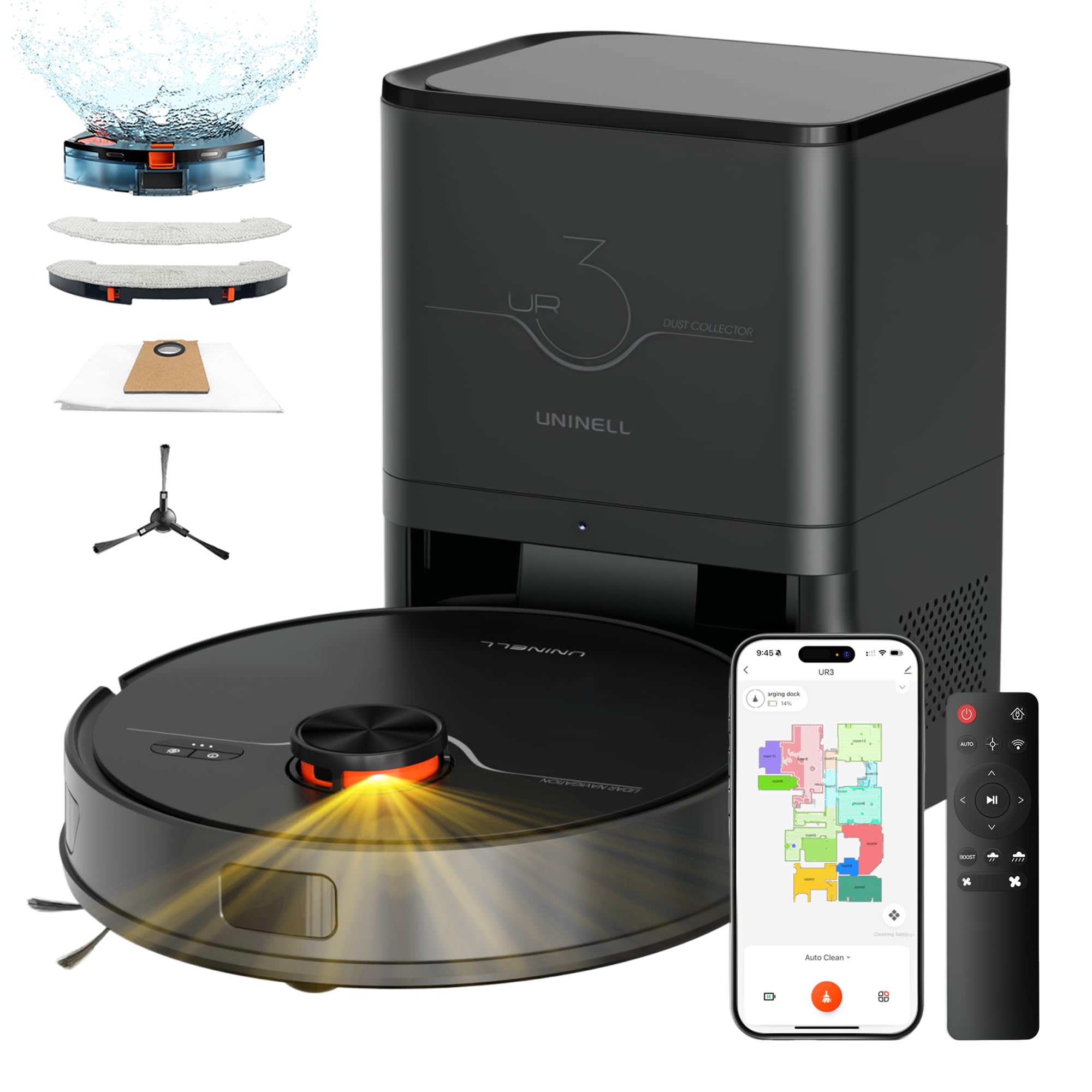
The uninell robot vacuum delivers the longest runtime in the entire roundup — 180 minutes on a single charge, which translates to coverage of roughly 2,000 square feet before it returns to the dock. Its 3.5-liter self-emptying station holds up to 90 days of debris, and the tangle-free brush design actively prevents pet hair and human hair from locking around the roller. The 7,000 Pa suction with auto-carpet boost provides enough lift for cat litter, dog hair, and everyday tracked-in grit from tile to medium-pile carpet.
The 360-degree LiDAR scanner maps the home in a single pass and stores up to five floor plans. The app allows you to set no-go zones, no-mop zones, and room-specific cleaning schedules. The included remote control is a thoughtful addition for elderly users or anyone who prefers physical buttons over smartphone apps. Owners consistently report that the robot is quiet enough to run during a movie or while a baby naps — it operates at a volume level comparable to a refrigerator.
The mopping system uses a gravity-fed cloth pad; it wets the floor for dust pickup but does not scrub or agitate stains. The roller brush still requires occasional cleaning — the anti-tangle design reduces wrap frequency but does not eliminate it entirely in very long hair environments. A small number of users note that the robot’s obstacle avoidance can be fooled by dark furniture legs, causing it to bump into them during navigation.
Why we love it
- 180-minute runtime is the longest in this comparison — great for large floor plans
- 90-day self-emptying bag reduces maintenance intervals
- Physical remote control included as an alternative to app control
- Quiet enough to run during sleep or entertainment
Good to know
- Mopping is passive drag-style — no scrubbing action for dried-on stains
- Roller still picks up some hair wrap despite the anti-tangle design
- Dark furniture legs may not be detected, causing occasional bumps
9. Kilgone SDL40
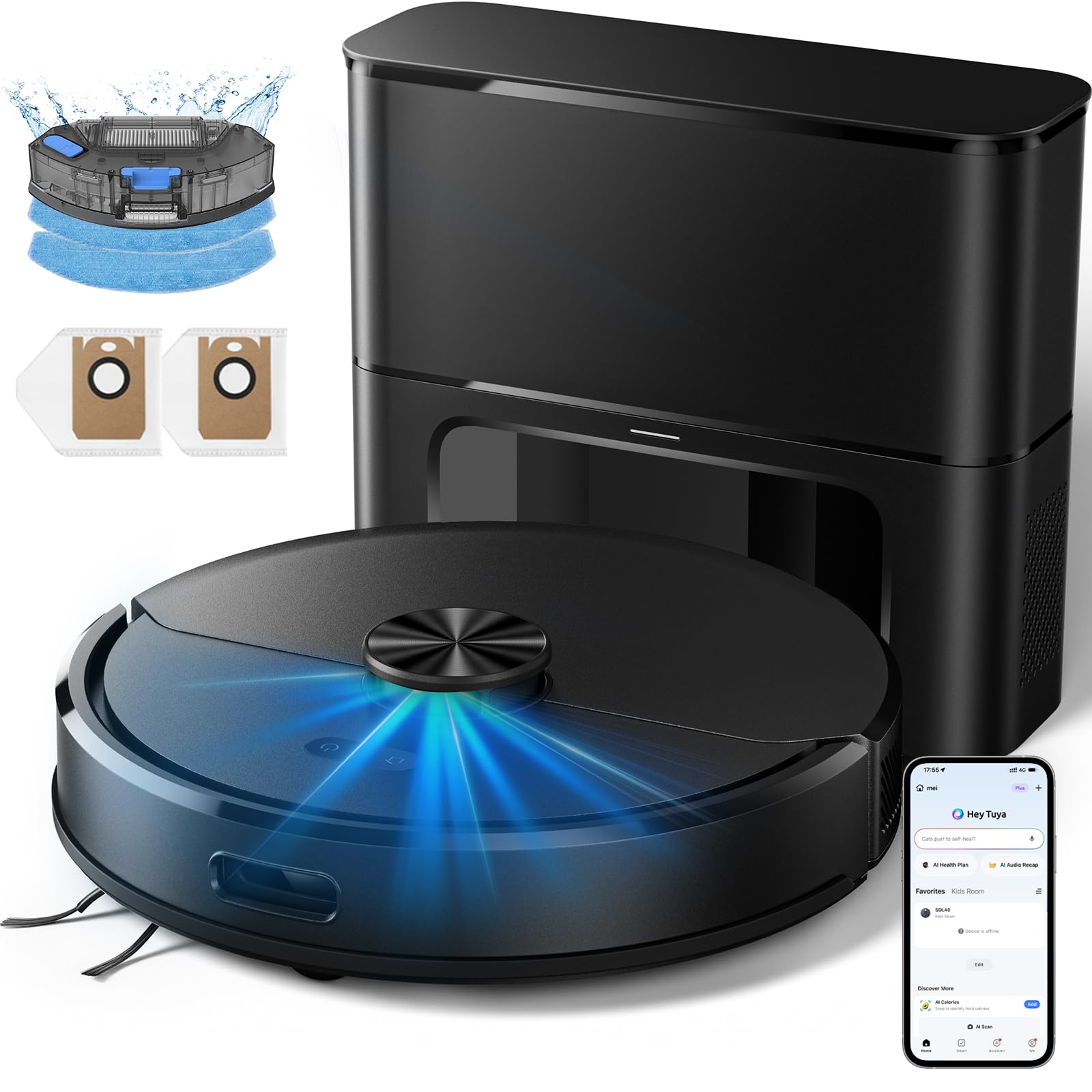
The Kilgone SDL40 is engineered for noise-sensitive environments — it outputs only 65 dB during operation, quieter than a normal conversation, so you can schedule cleaning runs during work calls or nighttime hours without disturbance. The 6,000 Pa cyclone suction and anti-tangle brush lift pet hair and dust from both hard floors and carpets. The self-emptying base uses a 2.5-liter bag rated for 90 days, and the dust bin and water tank assembly sit inside the robot as a single unit, making the swap between vacuuming and mopping straightforward.
The 360-degree LiDAR mapping is fast — it scans and saves a map of the home within minutes. The SDL40 can climb thresholds up to 18 millimeters (roughly 0.7 inches), which means it can transition from a tiled kitchen to a laminate hallway without getting stuck. The app supports virtual walls, no-go zones, scheduled cleanings, and room-specific mode switching. Owners with pets and small children report that the robot handles daily maintenance without intervention and that the 200-minute battery easily covers a whole-home cleaning on a single charge.
Water capacity is limited to a 300-milliliter tank, so mopping runs on larger homes will require a refill mid-mission. The mop attachment essentially wets the pad and drags it — it is effective for picking up surface dust after vacuuming but not for dried food spills or sticky messes. Some users note that the robot occasionally misses spots near the edges of the room, a common trade-off of the round chassis design without a corner-reach extension.
Why we love it
- Ultra-quiet 65 dB operation — suitable for overnight or meeting-hour cleaning
- 18 mm threshold climbing handles most door transitions and rug edges
- 200-minute battery covers entire homes without recharge pauses
- Fast LiDAR mapping with intuitive app controls
Good to know
- Small 300-mL water tank requires mid-run refills on large floor plans
- Mopping is passive drag — no active scrubbing for tough stains
- Edge and corner cleaning is not as thorough as robots with dedicated corner brushes
FAQ
Can a sub-$500 robot vacuum and mop wash its own mop pads?
What suction power is enough for pet hair on medium-pile carpet?
Will a LiDAR navigation robot work in a completely dark room?
How often should I replace the dust bag in a self-emptying base?
Why does my robot leave streaks on hardwood floors after mopping?
Final Thoughts: The Verdict
For most households, the winning robot vacuum and mop under $500 is the DREAME L10s Pro Ultra Heat because it combines hot-water mop washing, active edge cleaning, and strong obstacle avoidance — a rare feature set that addresses the two biggest frustrations of owning a mopping robot. If you need an ultra-slim profile to fit under low furniture with a full auto-wash dock, grab the eufy Omni C20. And for the best anti-tangle brush performance with a proven navigation system, nothing beats the roborock Q10 S5+.