
Equine fungal infections—thrush, rain rot, ringworm—don’t just sit on the surface. They burrow into the frog, sulci, and hoof wall, turning a routine farrier visit into a costly rehab project. The difference between a horse that recovers in a week and one that battles for months often comes down to the active ingredient and application method you choose, not the brand name on the label.
I’m Mo Mahin — the founder and writer behind Furric. My process doesn’t rely on guesswork: I cross-reference active ingredient concentrations (miconazole, ketoconazole, copper iodine) against real owner outcomes reported across hundreds of verified purchases, then map each formula to the specific lesion type—shallow frog crack versus deep central sulcus infection.
After sorting through the top contenders on the market, I’ve isolated the five most effective solutions for different infection depths and horse temperaments. If you’re searching for the best horse fungus treatment that matches your specific barn situation, this guide breaks down exactly where each product excels.
How To Choose The Best Horse Fungus Treatment
Equine fungal problems range from superficial ringworm patches on the coat to deep thrush infections that eat into the frog’s central sulcus. The right product depends on where the infection lives, how cooperative your horse is during application, and whether the formula can stay put long enough to work.
Match the Application Type to the Infection Depth
Liquid sprays and foams work best on surface-level rain rot and ringworm because they cover large areas quickly and don’t require direct contact with the hoof crevice. For thrush that has dug into the frog’s sulci or collateral grooves, a clay putty or semi-solid dressing that you can pack into the space and keep there for 48 hours will outperform any spray.
Check the Active Ingredient Spectrum
Copper iodine-based formulas (like classic thrush solutions) kill on contact but evaporate fast, requiring reapplication. Miconazole nitrate and ketoconazole are longer-acting antifungals that disrupt cell membranes over a 24-hour period—better for stubborn infections but slower to show visible results. Read the label: 1% miconazole is the standard for equine fungal shampoos.
Consider Ease of Application in Real Barn Conditions
If you’re treating a horse that won’t stand for a full hoof wrap, a spray-on solution with a built-in hoof pick saves time and reduces staining on your hands. For horses in muddy paddocks, a thick, water-resistant putty or dressing that doesn’t wash off after the first rain provides consistent coverage without daily reapplication.
Quick Comparison
On smaller screens, swipe sideways to see the full table.
| Model | Category | Best For | Key Spec | Amazon |
|---|---|---|---|---|
| Artimud Hoof Putty | Clay Putty | Deep sulcus thrush | Sticks 48+ hours in hoof crevices | Amazon |
| Vetericyn FoamCare Medicated Shampoo | Foam Wash | Rain rot & ringworm on coat | 1% miconazole nitrate antifungal | Amazon |
| Spurrs Big Fix C Spray | Multi-Action Spray | Skin wounds & hoof thrush | 32-oz spray; skin + hoof compatibility | Amazon |
| Farnam Rain Maker Conditioner | Hoof Dressing | Dry weather crack prevention | Neatsfoot oil + glycerine formula | Amazon |
| Grooms Hand Thrush Solution | Spray + Pick | Mild thrush maintenance | Built-in hoof pick applicator | Amazon |
In‑Depth Reviews
1. Artimud Horse Hoof Putty Thrush Treatment
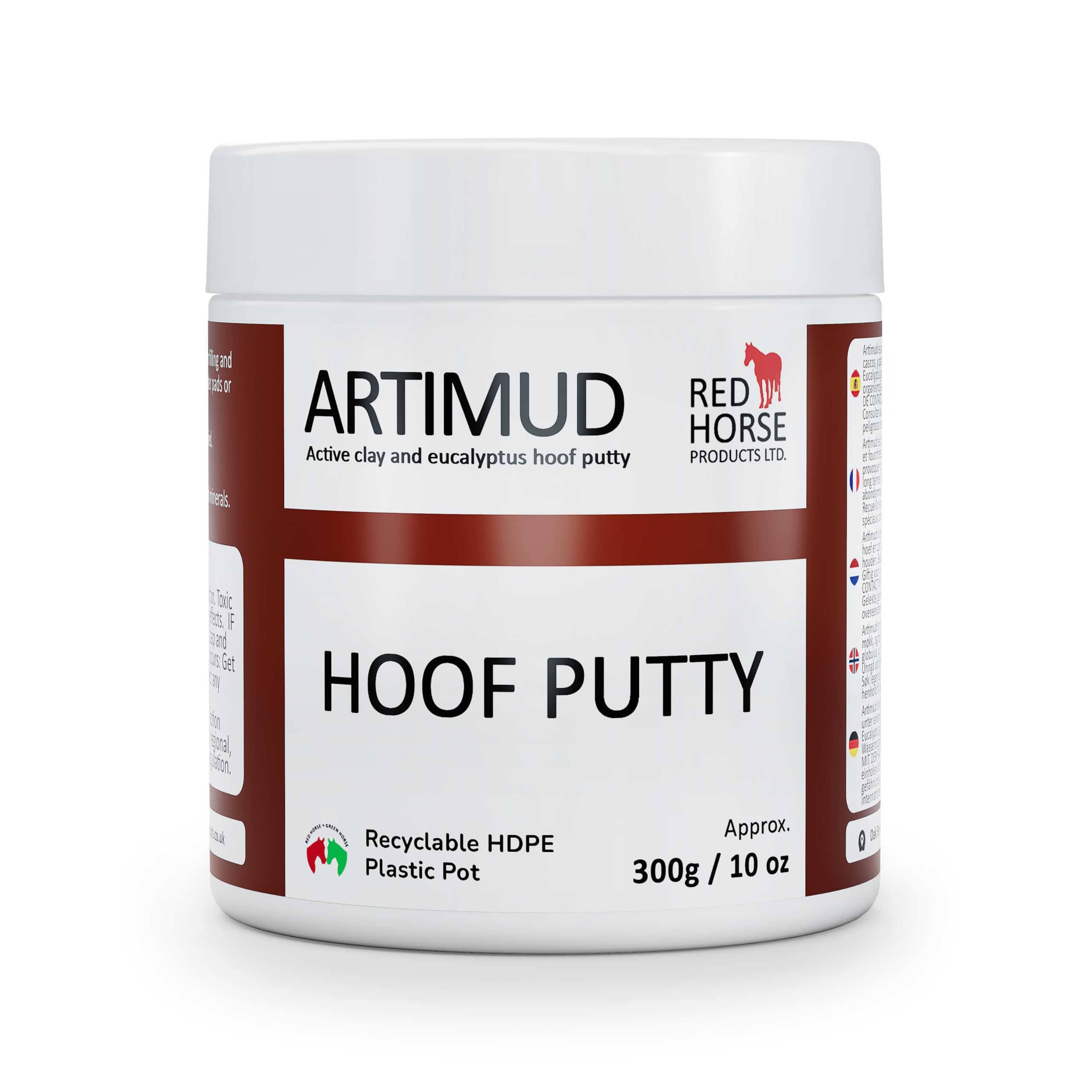
Artimud isn’t a spray—it’s a eucalyptus-infused clay putty designed to stay packed inside the frog’s central sulcus and collateral grooves for up to two days. Owners who applied it daily to deep thrush infections reported complete clearance within two weeks, even in horses that had been battling recurring infections for months. The putty consistency resists washing out when the horse steps through mud or rain, which is what makes it more effective than liquid alternatives for deep-seated frog thrush.
Multiple users noted that their farrier recommended this specific product after traditional copper iodine dips failed. The natural eucalyptus base gives it a pleasant botanical scent compared to the chemical reek of iodine-based treatments, though that same natural formulation has a known downside: if the tub sits open for several weeks, the clay can harden into an unusable rock. Buy the 10-ounce tub only if you’re treating multiple horses or expect to use it within a month.
For owners of horses prone to chronic thrush from clay-heavy paddock footing, this putty provides a non-caustic alternative that treats the infection without drying out the surrounding hoof tissue. The trade-off is whether you can justify the per-ounce cost for a product that has a limited usable lifespan once opened.
Why we love it
- Stays packed in deep sulci for 48 hours
- Non-caustic natural eucalyptus formula
- Cleared chronic thrush where other treatments failed
- Works under shoes, pads, and hoof boots
Good to know
- Clay hardens if left open for weeks
- Higher per-ounce cost than liquid alternatives
- Requires daily application for deep infections
2. Vetericyn FoamCare Medicated Horse Shampoo

FoamCare delivers 1% miconazole nitrate in a spray-on foam format that eliminates the need to scrub a cold, infection-prone horse in freezing weather. The foam expands on contact, coating the entire coat without running off—a distinct advantage over liquid shampoos that puddle on the ground. Owners treating stubborn rain rot reported that their horses’ crusty patches softened and peeled away within two weeks of weekly foam applications, leaving a shiny, healthy coat underneath.
The formula is pH-balanced for equine skin and free of sulfates, parabens, and artificial fragrances, making it safe for horses with sensitive skin or allergic reactions to harsher medicated shampoos. However, at 32 ounces, the bottle doesn’t go as far as a concentrate would—some owners expressed a desire for a more concentrated option to reduce the per-wash cost. The spray nozzle delivers consistent foam coverage but requires you to be within close range of the coat, which can be tricky with a skittish horse.
If your horse’s fungal issue is on the body rather than the hoof—rain rot, ringworm, or scratches on the lower legs—this foam is the most convenient way to treat large surface areas without the mess of a traditional bucket bath. Just be prepared to go through a bottle if you’re treating a full-sized warmblood from neck to hock.
Why we love it
- Spray-on foam eliminates bath-time mess
- 1% miconazole targets fungal issues effectively
- Safe for everyday use on sensitive skin
- Works in freezing temps as spot treatment
Good to know
- No concentrate version available yet
- Bottle only covers 2-3 full-body washes for larger horses
- Light scent may not mask infection odor
3. Spurrs Big Fix C Wound Skin Hoof Spray
Spurrs Big Fix C is a versatile, no-nonsense spray that owners reach for when they aren’t sure whether the problem is fungal, bacterial, or a simple abrasion. Multiple reviewers reported using it successfully on everything from infected hoof thrush to summer skin rashes and bug bites on dogs, horses, and cattle. The formula seems to provide broad-spectrum support rather than targeting a single organism, which makes it a strong first-aid kit staple for multi-animal barns.
The 32-ounce spray bottle applies easily to both hoof crevices and body wounds without requiring rinsing or mixing. Farriers recommended it as an alternative to traditional thrush medicine, particularly for horses with small, deep hooves where liquid treatments struggle to penetrate. On the downside, the price point sits noticeably higher than single-purpose thrush sprays, and the product does not list a specific active ingredient concentration on the label, which may frustrate buyers who want to verify the antifungal potency.
This spray excels as a treatment for mixed conditions where you suspect fungal involvement but aren’t dealing with a confirmed thrush or ringworm diagnosis. Buy it for the flexibility, not for targeted deep-sulcus thrush therapy.
Why we love it
- Works on horses, dogs, and cattle
- Effective on both hoof thrush and skin wounds
- No mixing or rinsing required
- Farrier-recommended for hard-to-treat hooves
Good to know
- No active ingredient percentage disclosed on label
- Price is high for a single-purpose treatment
- Large bottle can be awkward for precise spot application
4. Farnam Rain Maker Triple Action Hoof Moisturizer
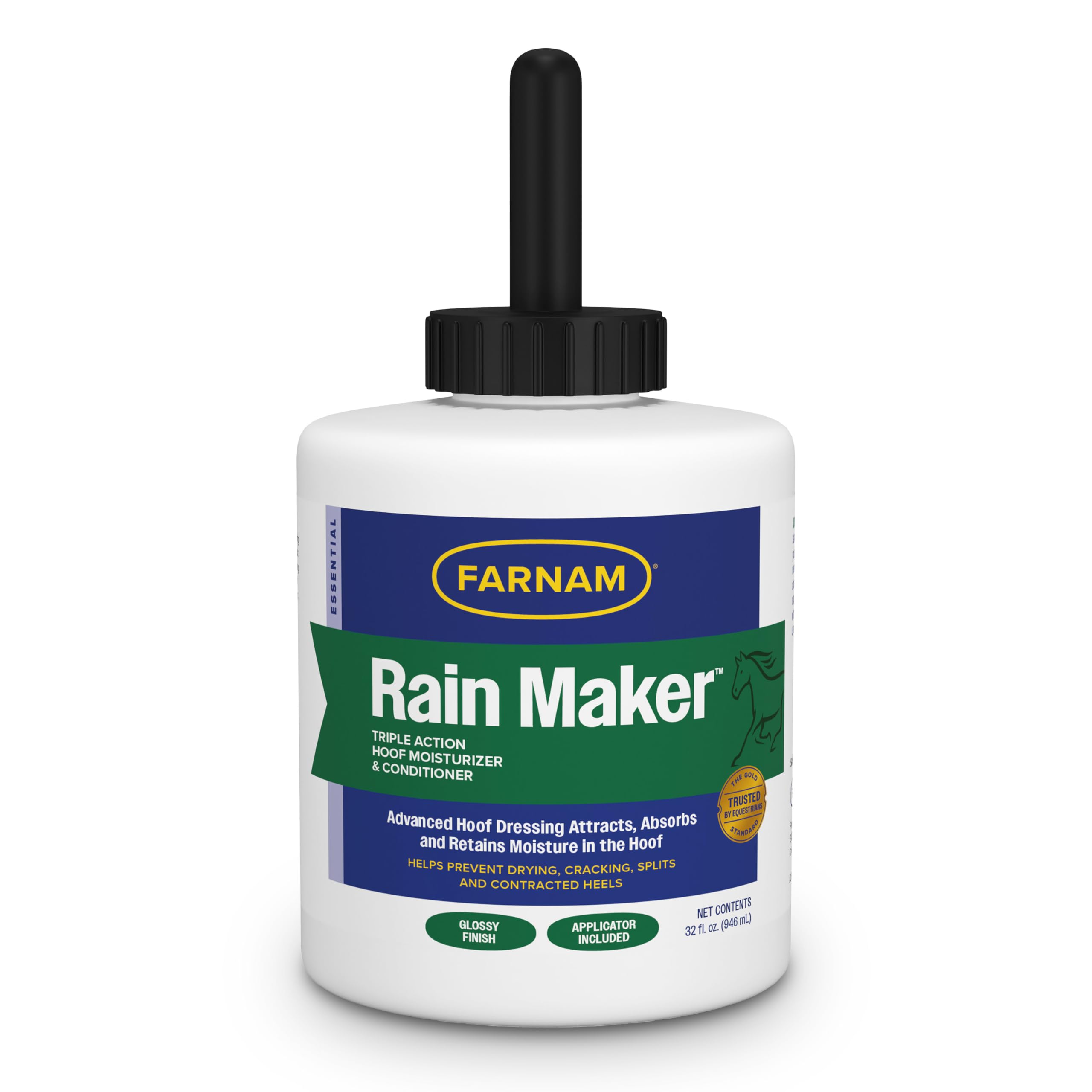
Farnam Rain Maker isn’t a fungicide—it’s a triple-action hoof dressing designed to prevent the dry, cracked hooves that create entry points for fungal spores. The formula combines neatsfoot oil, petrolatum, and glycerine to attract and lock moisture into the hoof wall, reducing the risk of splits, contracted heels, and abscesses that often precede or accompany thrush infections. Reviewers in dry climates like Texas and Arizona reported that their farriers specifically recommended this product to prevent sand cracks and brittle walls.
The built-in brush applicator makes it easy to slather on a thick layer after soaking the hoof, though the consistency turns stiff below 40°F—store it inside the barn during winter. The glossy finish leaves hooves looking show-ready, which is a bonus for competition barns. However, a few long-time users noted that the current formulation lacks the lanolin content of the older version, making it slightly less effective at extreme dryness conditions.
This is a preventive product, not a curative one. Use it alongside a dedicated thrush treatment if an infection is already present, or as a year-round maintenance dressing to keep your horse’s hooves resilient during dry spells.
Why we love it
- Built-in brush for quick application
- Neatsfoot oil and glycerine retain moisture for days
- Prevents cracks that invite fungal infections
- Leaves glossy, show-ready hoof finish
Good to know
- Too thick for easy application below 40°F
- New formula has less lanolin than previous version
- Not a treatment for active thrush or fungus
5. Grooms Hand Thrush Solution

The Grooms Hand Thrush Solution stands out for its packaging: the bottle cap doubles as a hoof pick, allowing you to scrape debris and immediately spray the treatment into the crevice without switching tools. Multiple owners reported that a single application cleared mild thrush within two days, and weekly maintenance kept hooves healthy even through continuous rainy weather. The formula stains hands purple for days—wear gloves unless you don’t mind looking like you dipped your fingers in iodine.
The 4-ounce size is compact enough to toss in a grooming tote for trail rides or show barns, though it won’t last long if you’re treating multiple horses. Users flagged consistency issues with the spray mechanism: some cans developed blowback or clogging after a few uses, which wastes product and forces you to unscrew the cap to pour the solution manually. Despite this, the treatment itself earned near-universal praise from farriers and owners for its effectiveness on mild to moderate thrush.
If you’re looking for a maintenance treatment to keep thrush at bay between farrier visits and prefer the convenience of an all-in-one tool, this is the most affordable route. For deep, chronic infections, you’ll want to step up to a putty that stays packed for longer.
Why we love it
- Built-in hoof pick saves application time
- Cleared mild thrush in 1-2 applications
- Stays on hoof through rain for days
- Compact size fits in grooming tote
Good to know
- Spray nozzle may clog on some bottles
- Purple dye stains hands for days
- Small 4 oz size won’t last for multiple horses
FAQ
How long does it take for a horse thrush treatment to show results?
Can I use a human antifungal cream on my horse’s rain rot?
What is the difference between thrush and white line disease?
How do I prevent thrush from coming back after treatment?
Final Thoughts: The Verdict
For most horse owners dealing with deep or recurring thrush, the horse fungus treatment winner is the Artimud Hoof Putty because its clay consistency stays packed inside the frog’s sulci for up to 48 hours, delivering continuous antifungal action that sprays simply can’t match. If you’re treating rain rot or ringworm over a large body area, grab the Vetericyn FoamCare Shampoo for its mess-free foam application. And for a versatile barn first-aid spray that handles both hoof thrush and skin wounds, nothing beats the Spurrs Big Fix C.