
Keeping community cats warm and dry through freezing nights requires a shelter that traps heat, repels moisture, and offers a quick exit from predators. A poorly built shelter can trap condensation, collapse under snow, or fail to hold enough warmth, leaving the very animals you’re trying to protect vulnerable. The difference between a risk and a refuge comes down to the materials, insulation strategy, and design details chosen.
I’m Mo Mahin — the founder and writer behind Furric. I’ve spent years studying the physical and behavioral needs of outdoor cats, analyzing resin, wood, and fabric shelter constructions, and correlating real owner feedback with sub-zero survivability data to find what actually works for feral colonies.
Whether you’re protecting a colony behind a barn or a solitary stray on your porch, choosing the right feral cat shelter determines whether these animals endure winter or thrive through it.
How To Choose The Best Feral Cat Shelter
The right shelter isn’t just a box with a hole — it’s a survival tool. Focus on the materials, insulation method, and safety features that directly impact a cat’s ability to regulate body temperature in extreme conditions.
Insulation Strategy
Look for shelters that use physical foam, thick sponge liners, or reflective aluminum foil layers sandwiched between walls. Straw (not hay) is the gold standard for filling interior voids because it resists moisture and allows cats to burrow. Avoid shelters that rely only on thin fabric or single-wall resin without an insulation layer — these will drop to ambient temperature within minutes.
Escape Door Design
A single entrance traps a cat against a predator like a raccoon, coyote, or loose dog. A true feral shelter must have a secondary escape door at the rear or side. This feature alone can mean the difference between a safety risk and a safe house. Ensure the escape door is large enough for an adult cat to slip through quickly and is not blocked by snow or debris.
Waterproofing and Ventilation Balance
Complete waterproofing can trap condensation, which drops interior temperature and soaks bedding. The best shelters use slanted roofs to shed rain, elevated floors to prevent ground moisture wicking, and small high vents to allow humid air to exit without creating a draft at cat level. Resin and heavy-duty plastic handle moisture without rotting, but wood shelters must be treated or painted with weatherproof sealant annually.
Quick Comparison
On smaller screens, swipe sideways to see the full table.
| Model | Category | Best For | Key Spec | Amazon |
|---|---|---|---|---|
| FunXplore Insulated Wood Shelter | Wood / Foam | Two-door safety & insulation | 0.6″ foam + 2 escape doors | Amazon |
| GUTINNEEN Insulated Wood House | Wood / Sponge | Extreme cold with heated liner | 0.78″ sponge thermal liner | Amazon |
| Rolimate Heated Fabric Shelter | Fabric / Heated | Active heating below 0°C | UL-tested heating pad + escape door | Amazon |
| TSEHOOHOO Stackable Plastic | Plastic / Stackable | Multi-unit colony setups | Double-wall plastic, stackable design | Amazon |
| Texsens Fabric & Mesh Shelter | Fabric / Elevated | Quick setup with cooling pad | Collapsible, dual-flap doors, elevated base | Amazon |
| DRATO Resin Igloo Style | Resin / Waterproof | Budget-friendly first shelter | 100% waterproof, raised floor | Amazon |
| Rest-Eazzzy Oxford Cloth Tent | Fabric / Portable | Lightweight portable shelter | Sandwich insulation, carry handle | Amazon |
In‑Depth Reviews
1. FunXplore Insulated Wood Shelter
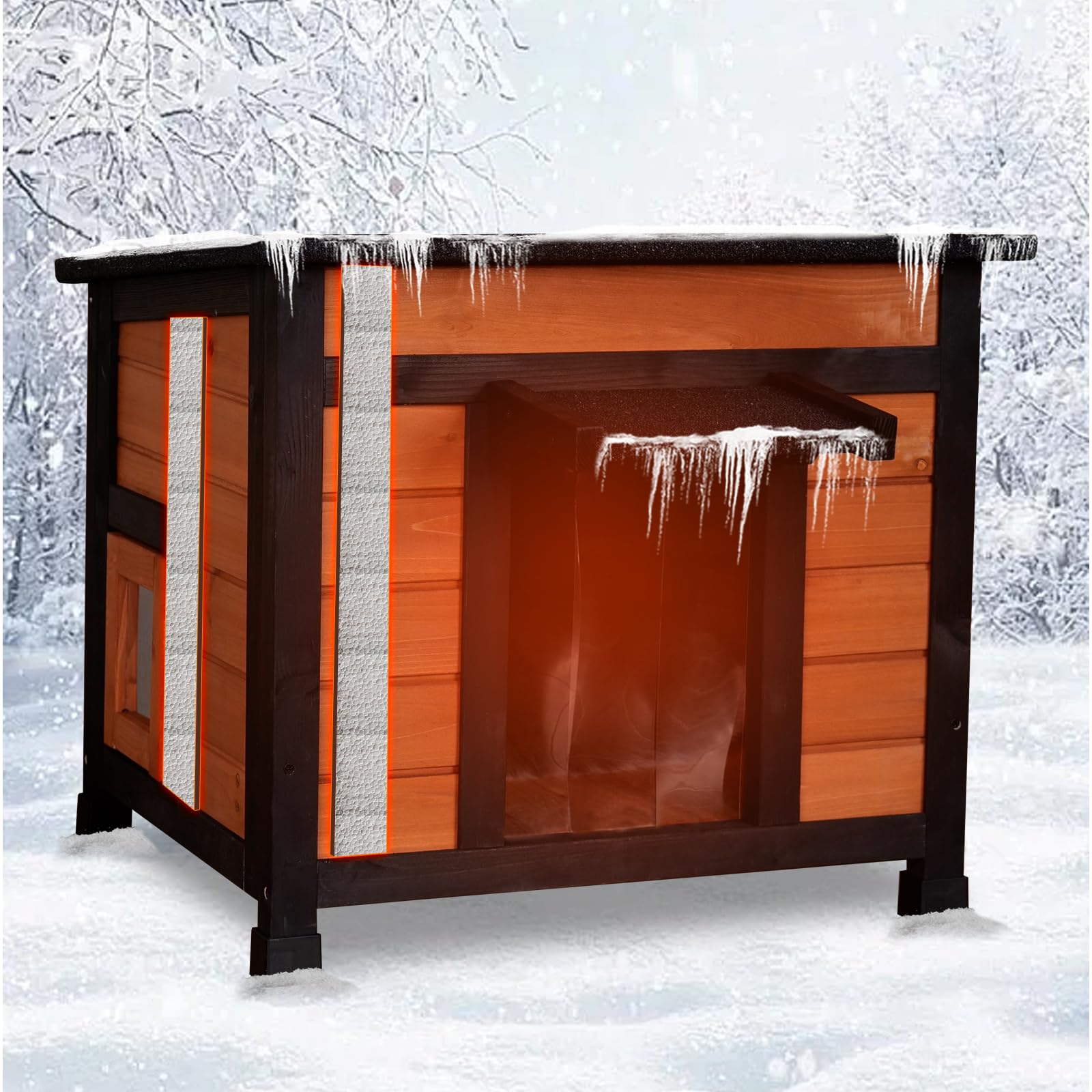
This mid-range shelter combines a solid fir wood frame with 0.6-inch foam sandwiched between the walls, roof, and floor — creating a true thermal break that most budget shelters lack entirely. The slanted asphalt-style roof sheds rain and snow effectively, and the 4 plastic feet pads lift the entire structure off wet ground to prevent moisture wicking. Assembly uses pre-drilled holes and takes roughly 30 minutes with an electric screwdriver.
The defining safety feature here is the pair of predator escape doors — a rear emergency exit that allows a trapped cat to flee if a raccoon or coyote blocks the main entrance. Owners consistently report that feral cats adopt this shelter within hours, and the removable roof panel makes cleaning out straw and debris quick. Some users note the wood arrives with a light pine scent that dissipates in a few days, and the roof material can shed black granules initially.
At 23.58 inches wide and 20.9 inches tall, the interior comfortably holds two average-sized cats or one larger tom. The sandwich construction provides meaningful warmth down to about 20°F, though adding straw and a self-warming pad extends its range for much colder nights. A few owners recommend treating the exterior with an extra coat of wood sealant for long-term weather protection beyond the first season.
Why we love it
- Full 6-side foam insulation creates a warm microclimate inside
- Two predator escape doors provide genuine safety redundancy
- Removable waterproof roof simplifies seasonal deep cleaning
Good to know
- Lightweight and can tip in strong winds if not weighed down
- Asphalt roof may shed fine black granules during first rain
2. GUTINNEEN Insulated Wood House

GUTINNEEN uses a thicker 0.78-inch sponge thermal liner that wraps all six interior sides of this wooden shelter, creating a higher thermal barrier than most similarly priced units. The exterior combines solid wood panels with a slanted tar-and-gravel roof that prevents pooling, and the elevated waterproof base keeps the floor dry even on saturated ground. Dimensions of 23.6 inches by 20.9 inches by 18.3 inches offer enough room for a nursing mother with kittens or multiple small cats.
Feral cats typically investigate and move into this shelter within the first hour of placement, according to owner reports. The all-around liner effectively retains body heat, and the roof overhang provides a small dry vestibule at the entrance. Some users note small gaps along the floor seam and recommend adding a wind barrier or applying silicone caulk to eliminate drafts. The 10-year manufacturer warranty is unusually long for this category and suggests confidence in the wood frame’s durability.
While the sponge insulation is effective, the liner is not sealed inside a vapor barrier, so persistent humidity from wet cats could reduce its loft over time. Owners in heavy snow areas report that the roof sheds snow well, but the structure benefits from being placed on a pallet or patio stones to prevent ground rot. For colonies in climates that see sustained sub-freezing temperatures, adding a self-heating pad or straw inside brings this shelter close to premium performance.
Why we love it
- Thick 0.78-inch sponge liner provides higher thermal retention than foam sheets
- Slanted asphalt roof with overhang creates a dry entryway
- 10-year manufacturer warranty signals long-term build confidence
Good to know
- Small gaps in floor seams may require sealing to block drafts
- Unsealed wood needs annual waterproofing treatment for longevity
3. Rolimate Heated Fabric Shelter
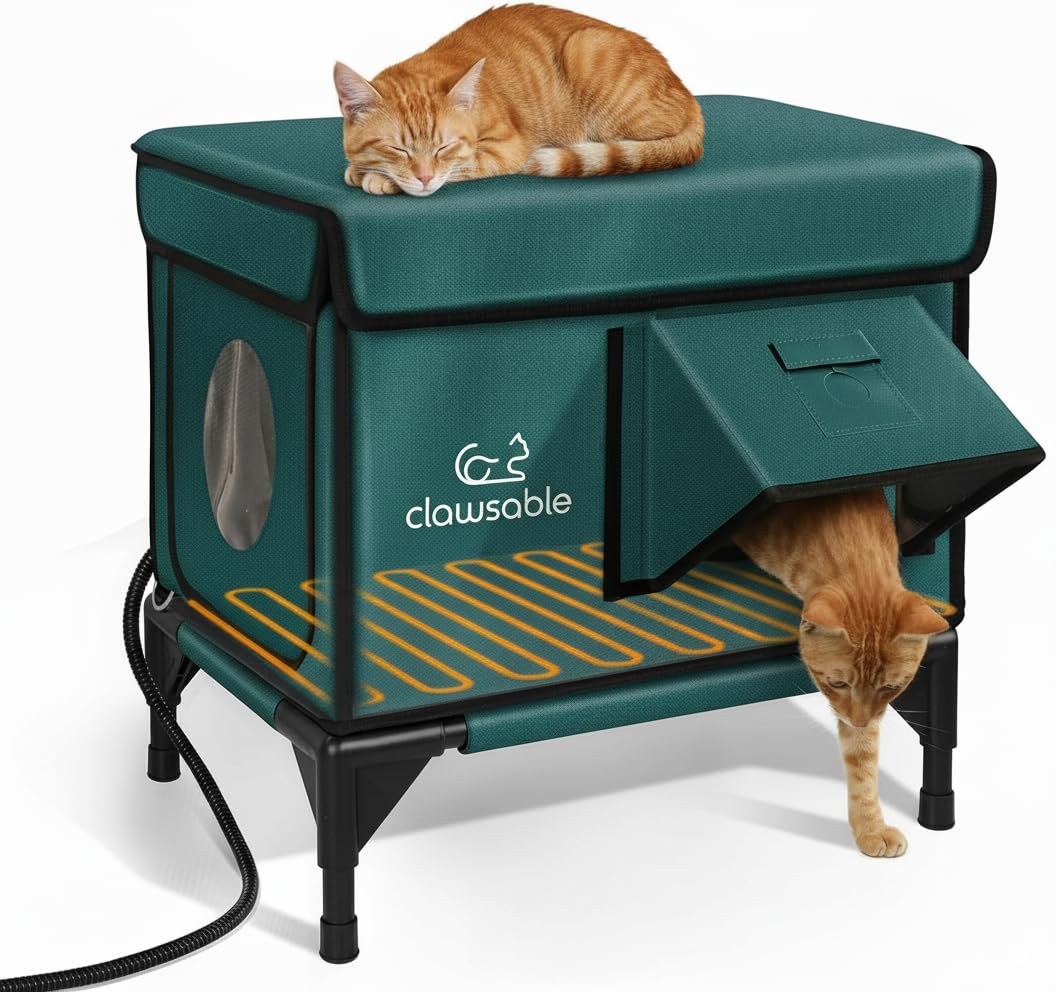
This fully heated shelter uses a UL-tested heating wire embedded in a waterproof pad, making it one of the few options that actively raises the interior temperature rather than just slowing heat loss. The 5-layer insulated fabric walls include reflective foil layers that block wind, and the waterproof outer shell with an extended awning keeps the entrance dry. Assembly takes 5 to 10 minutes, and the kit includes gloves for handling the fiberglass support rods that give the structure its rigidity.
Owner data shows the interior stays roughly 23°F above ambient temperature — measured at 58°F inside when the outside temperature was 35°F. The escape door at the rear includes a clear plastic window so cats can visually confirm a safe exit route before using it. The heat pad is removable and chew-resistant, and the house includes a small foyer area inside that blocks wind from reaching the sleeping space directly.
The main limitation is size: at 13 inches by 17 inches by 18.5 inches, this shelter fits a single adult cat snugly but is too tight for larger breeds or multiple cats. The fabric construction, while portable and quick to set up, won’t resist a determined raccoon or dog the way a rigid wood or resin shelter would. For a single feral cat facing temperatures below 0°F, however, this is the warmest option available in this price tier.
Why we love it
- Active heating pad raises interior 20+°F above ambient temperature
- Escape door with clear viewing window enhances predator safety
- 5-layer reflective walls block wind effectively in exposed locations
Good to know
- Compact size fits one cat snugly, not suitable for large adults
- Fabric walls offer less structural protection against determined predators
4. TSEHOOHOO Stackable Plastic Shelter
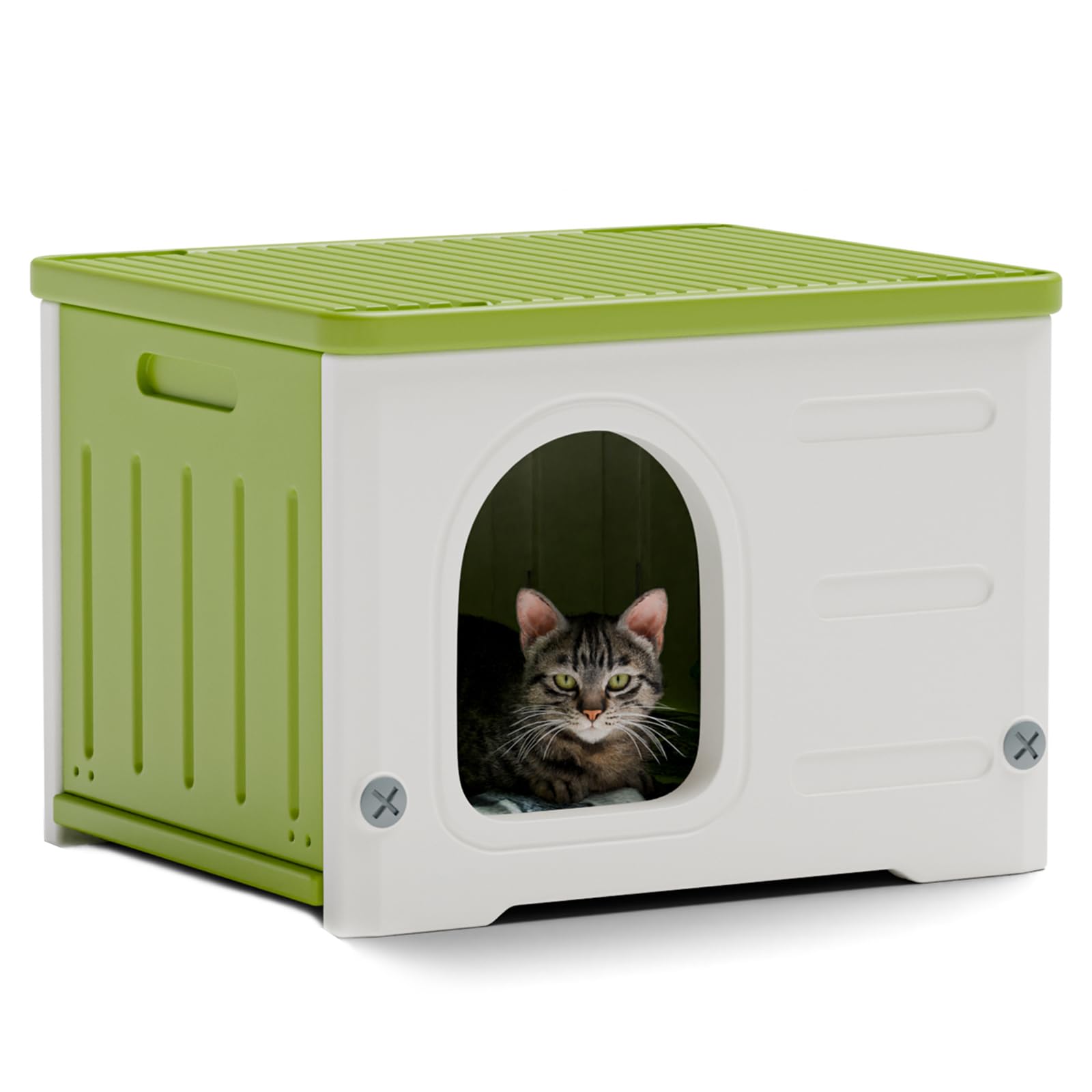
This resin-based shelter uses a double-wall construction similar to high-end children’s play structures, creating a rigid shell that won’t rot, warp, or absorb moisture. The stackable design allows two or more units to lock together firmly, making it ideal for colony caregivers who need multiple sleeping compartments in a small footprint. The interior measures 20.8 inches by 16.1 inches by 15.1 inches, and the elevated stand lifts the floor off the ground to prevent moisture soaking through.
Assembly uses plastic screws and snap-together wall panels, taking about 5 minutes without tools. The top buckle design lets you remove the roof for cleaning, and the included plush cushion and scratch pads add immediate comfort. Owners report that the large front opening provides good visibility and an easy escape route, though a few note that the door opening could allow rain to blow in if the shelter faces the wind without additional cover.
The all-plastic construction is completely weatherproof and easy to disinfect between seasons — a major advantage for colony caregivers managing parasite or illness outbreaks. The double-wall creates a dead-air insulation layer, but this shelter will not retain heat as well as a foam-insulated wood model in sub-freezing conditions. Adding a thick layer of straw inside significantly improves its cold-weather performance, and the stackable feature becomes valuable when managing multiple cats in a single location.
Why we love it
- Rigid double-wall plastic resists rot, mold, and chewing
- Stackable design saves space in multi-cat colony setups
- Tool-free assembly and removable roof simplify cleaning and maintenance
Good to know
- No built-in foam insulation, so heat retention is limited in extreme cold
- Large front opening may let in rain during wind-driven storms
5. Texsens Fabric & Mesh Shelter

Texsens takes a collapsible fabric approach with a Velcro-frame design that assembles in seconds and folds flat for storage or transport. The shelter includes two door flap types — a transparent PVC curtain for blocking rain and wind, and a mesh screen for warm-weather ventilation. The elevated plastic base stands on six legs that screw into the fabric floor, and the kit includes ground stakes for windy locations. An observation window on the roof lets you check on the cat without opening the shelter.
At 25.19 inches wide by 16.92 inches tall, this is one of the widest options tested, making it comfortable for two large cats or a mother with a litter. The included cooling mat for summer and soft cotton pad for winter provide season-switchable bedding. Owners note that the heavy plastic smell upon opening requires airing out for a few days, and the legs can be difficult to push through the floor fabric without using a drill to widen the holes.
The fabric and honeycomb-panel insulation provide moderate warmth but cannot match the cold-weather performance of foam-lined wood shelters or active heating pads. This shelter works best on covered porches or in mild climates where temperatures rarely drop below freezing. The reflective strip on the front improves nighttime visibility, and the two door curtains allow you to seal the shelter during storms or open it for airflow on milder days.
Why we love it
- Collapsible design folds flat for transport or seasonal storage
- Interchangeable solid and mesh door flaps adapt to weather conditions
- Wide interior comfortably accommodates two adult cats or a nursing mother
Good to know
- Fabric construction provides minimal protection against extreme cold
- Strong chemical smell requires several days of airing before use
6. DRATO Resin Igloo Style
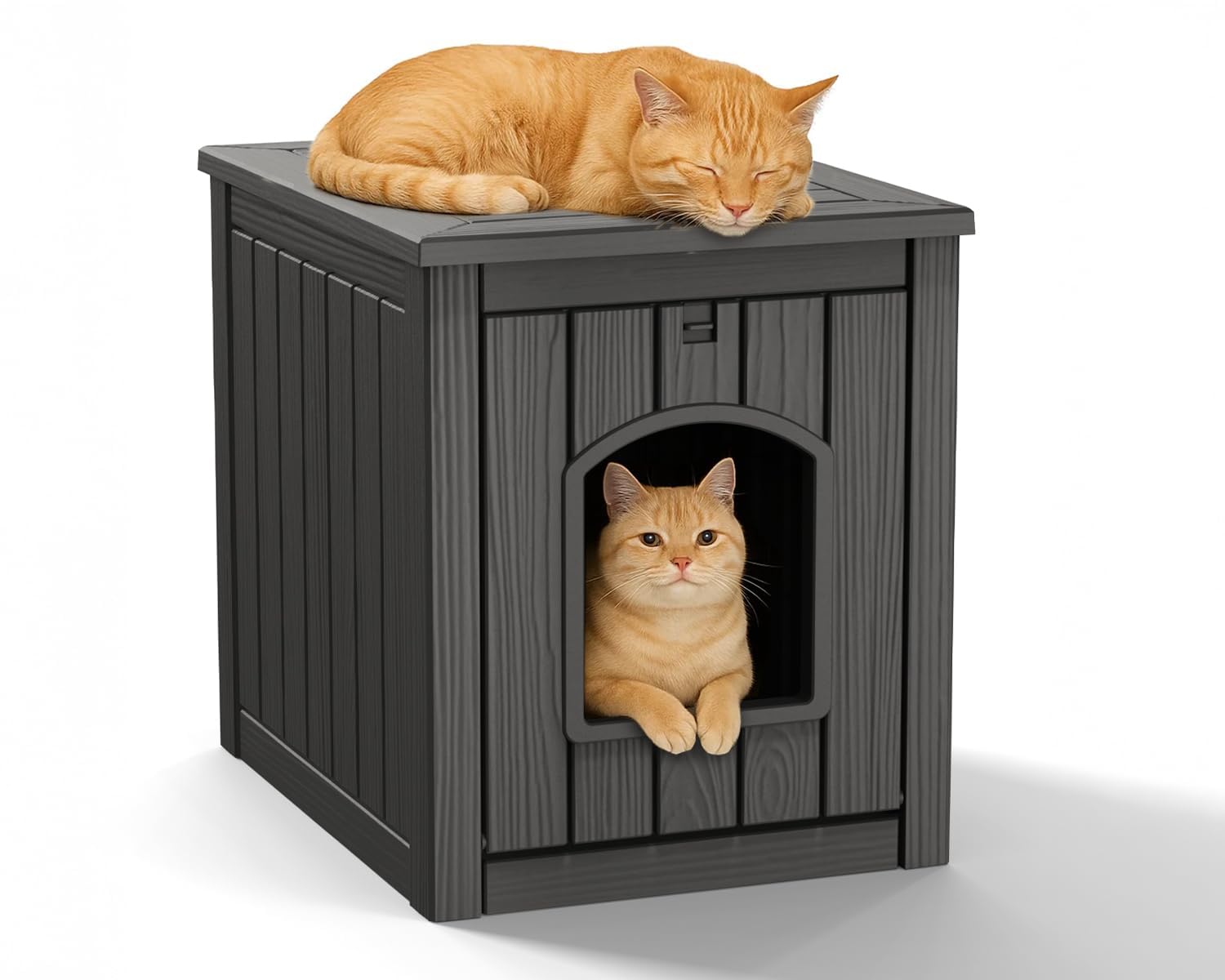
DRATO’s resin igloo is a straightforward, budget-friendly option that nails the fundamentals: it is 100 percent waterproof, stable in wind due to its 5.53-kilogram weight, and the raised front opening keeps snow and rain from blowing directly inside. The full front panel drops down for easy cleaning, and the smooth resin surface can be hosed off or wiped down in seconds. Assembly takes roughly 5 minutes with no tools beyond your hands.
Farm and barn owners report that feral cats accept this structure almost immediately — one reviewer noted a stray occupied it every single night throughout winter. The interior, measuring 21.42 inches wide by 23.62 inches tall, provides enough space for a cat to stand and turn around, with room for a small blanket or straw bedding. Customers consistently describe the build as sturdy and the fit between panels as tight enough to keep drafts minimal.
The all-resin construction has no insulation layer, so the interior temperature will closely track the outside air — this shelter works best as a dry, wind-blocking refuge rather than a warm one. In climates that drop below freezing, you must add straw or a self-heating pad to prevent hypothermia risk. The enclosed design also means air circulation is limited, so moisture from a wet cat can condense inside on colder nights without adequate bedding to wick it away.
Why we love it
- Completely waterproof resin body sheds rain and snow effectively
- Heavy enough to stay put in strong winds without staking
- Drop-down front panel makes cleaning out old bedding effortless
Good to know
- No insulation layer, so interior temperature mirrors ambient air
- Lacks ventilation, which can lead to condensation from wet cat fur
7. Rest-Eazzzy Oxford Cloth Tent
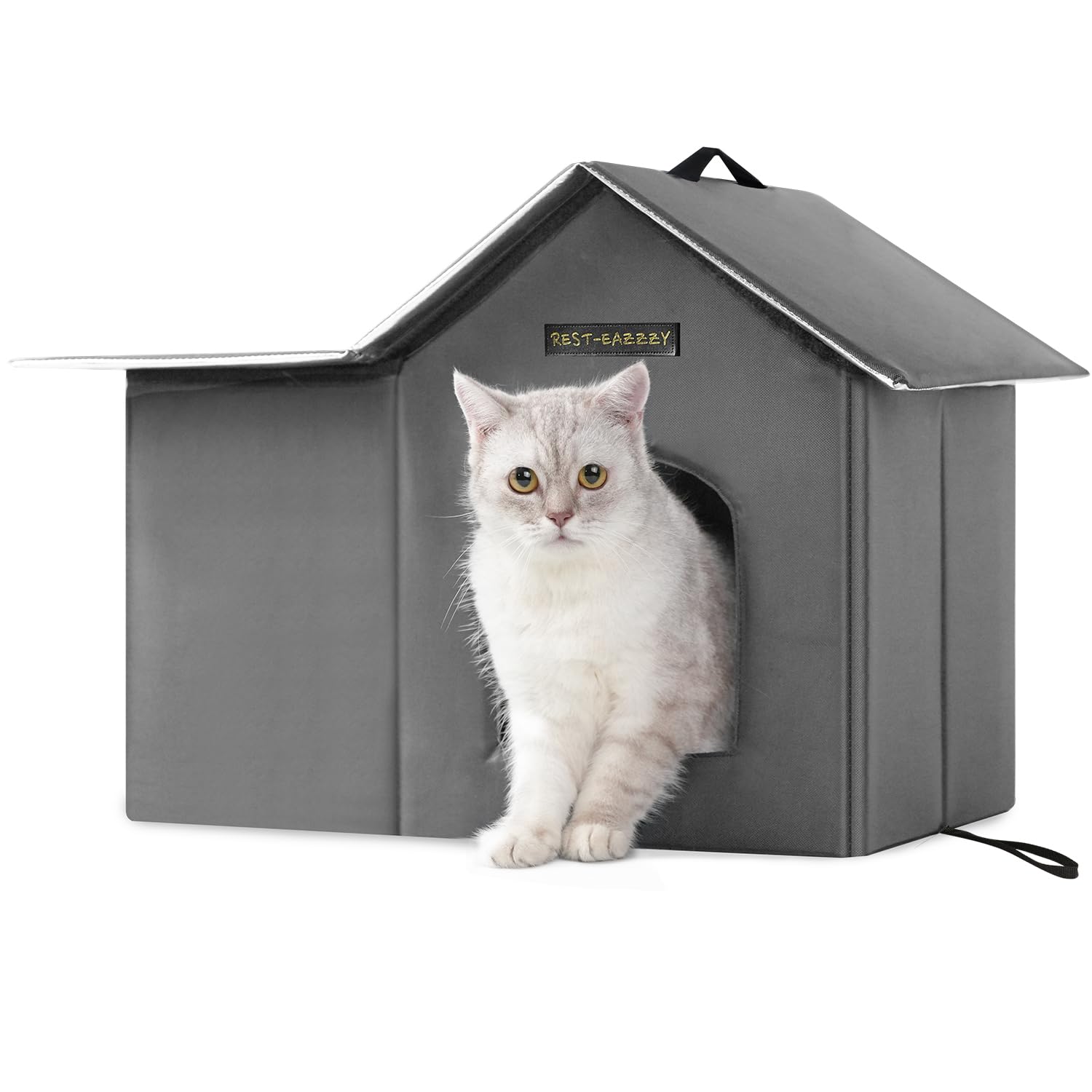
This lightweight shelter uses a sandwich-style insulation layer inside waterproof Oxford fabric, with a foil lining that helps reflect cat body heat back toward the interior. The tent structure assembles almost instantly — one owner described it as needing “nearly no assembly” — and includes a carry ring on the roof for moving it between locations. The medium size (13 inches by 18 inches by 14 inches) fits small to medium cats comfortably, and the included mat adds a layer of cushioning off the ground.
Owners report that cats enjoy the shelter well beyond winter — several reviewers found their feral cats still sleeping inside during spring and summer, indicating the tent-style design offers perceived safety even in mild weather. The fabric walls block wind and light rain effectively, and the price point makes it an accessible option for caregivers managing multiple feeding stations. The sandwich insulation provides some thermal protection, though owners in harsh winters note the need to supplement with straw for warmth.
The primary durability concern is UV degradation — several reviewers observed that the fabric showed sun damage after a single season of direct summer sunlight. The 3.3-pound weight also means this shelter can blow away in exposed locations without being staked or placed inside a windbreak. For colony caregivers who need a portable, low-cost shelter that can be relocated as cats move between feeding areas, this tent offers a practical temporary solution rather than a permanent winter fortress.
Why we love it
- Assembles instantly with no tools, ideal for temporary or rotating placement
- Foil-lined sandwich insulation traps cat body heat effectively for its weight class
- Integrated carry handle makes relocation and seasonal storage simple
Good to know
- Oxford fabric degrades under prolonged direct UV exposure
- Very lightweight, requires staking or sheltering from strong winds
FAQ
Why should a feral shelter have two doors instead of one?
Can I use a heated cat bed in a wooden shelter?
How often should I clean a feral cat shelter?
Will a feral cat use a shelter immediately?
Is a plastic or wood shelter better for cold climates?
Final Thoughts: The Verdict
For most caregivers, the feral cat shelter winner is the FunXplore Insulated Wood Shelter because it combines full foam insulation, dual predator escape doors, and easy roof access at a mid-range price that delivers genuine winter protection. If you need active heating for a single cat in extreme sub-zero conditions, grab the Rolimate Heated Fabric Shelter. And for colony caregivers managing multiple cats in a compact space, nothing beats the TSEHOOHOO Stackable Plastic Shelter for its waterproof durability and modular stacking capability.