
Deciding on a robot vacuum that also mops means weighing suction power against navigation accuracy, battery life against bin capacity, and smart features against long-term maintenance costs. This category has evolved rapidly: self-emptying bases now stretch cleaning cycles to weeks, and mopping systems have moved past simple damp cloths to active scrubbing that tackles dried-on stains. The right choice eliminates daily floor chores without introducing new frustrations.
I’m Mo Mahin — the founder and writer behind Furric. Over the years, I’ve analyzed hundreds of SKUs, cross-referencing motor specifications, mapping algorithms, and dustbin capacities while studying aggregate owner feedback to identify which models deliver genuine value rather than just a low upfront cost.
This guide focuses on models that balance performance and features to help you find the best value robot vacuum and mop for your home without overspending on capabilities you may never use.
How To Choose The Best Value Robot Vacuum And Mop
The market is crowded with models that pitch strong suction or long battery life, but the real differentiators for a value-focused buyer are the features that reduce your hands-on time without inflating the price. Here are the five specifications that separate a smart investment from a short-lived gadget.
Suction Power and Carpet Boost
A robot with 4,000 Pa can handle dust and crumbs on hard floors, but pet hair and embedded dirt on medium-pile carpets require at least 6,000 Pa. Look for automatic carpet boost, which ramps up suction when the sensor detects a rug — this saves battery on hard floors and delivers deep cleaning where you need it most. Models around 10,000 Pa are the sweet spot for mixed-floor homes.
Navigation: LiDAR vs. Gyroscope vs. Camera
LiDAR (laser-based) navigation creates a precise map of your home within minutes, memorizing room boundaries and furniture positions. It enables zone cleaning, no-go areas, and multi-floor maps without bumping into obstacles. Gyroscope-only navigation is cheaper but often leaves gaps and requires more runtime. Avoid camera-based systems if you frequently clean in low light — they struggle with dark rooms.
Self-Emptying Base Capacity
The base’s dust bag size determines how often you empty it. A 2.5L to 3L bag typically lasts 60 to 90 days for a single-pet household. Bagless self-emptying systems save on recurring costs but may require more frequent filter cleaning. If you have shedding pets, prioritize a base with at least a 3L capacity to stretch the interval between changes.
Mopping System Quality
Entry-level models drag a wet cloth across the floor, which works for light dust and footprints but can leave streaks. Better designs use a rotating mop pad with downward pressure, while premium units incorporate sonic vibration or hot water self-cleaning. For value seekers, a pad that lifts automatically when carpets are detected is the most important mopping feature — it prevents soggy rugs without manual intervention.
Battery Life and Recharge-Resume
A 150-minute runtime covers most homes up to 2,000 square feet on a single charge. The recharge-resume feature is critical: the robot returns to its base when power runs low and then continues exactly where it stopped. Without this, larger homes risk incomplete cleaning cycles. Also confirm the battery is lithium-ion — it holds its charge longer than nickel-metal hydride alternatives.
Quick Comparison
On smaller screens, swipe sideways to see the full table.
| Model | Category | Best For | Key Spec | Amazon |
|---|---|---|---|---|
| Tikom L8000 Plus | Mid-Range | First-time owners wanting self-emptying | 6,000 Pa / 3L base | Amazon |
| uninell Self-Empty | Mid-Range | Long runtime on a budget | 7,000 Pa / 180 min runtime | Amazon |
| DREAME D20 Plus | Mid-Range | Homes needing huge dust capacity | 13,000 Pa / 5L base | Amazon |
| roborock Q7 M5+ | Mid-Range | Brand reliability and mapping precision | 10,000 Pa / LiDAR nav | Amazon |
| roborock Q10 S5+ | Premium | Sonic mopping on hard floors | 10,000 Pa / 3,000/min vibration | Amazon |
| eufy Omni C20 | Premium | Auto mop washing and drying | 7,000 Pa / 3.35″ slim height | Amazon |
| Eureka E20 Evo Plus | Premium | Bagless self-emptying enthusiasts | 10,000 Pa / 45-day bagless bin | Amazon |
| eufy E25 | Premium | Deep-cleaning mop performance | 20,000 Pa / HydroJet roller | Amazon |
| MOVA V50 Ultra Complete | Premium | Obstacle climbing and hot water mopping | 24,000 Pa / 176°F warm water | Amazon |
In‑Depth Reviews
1. Tikom Robot Vacuum and Mop L8000 Plus
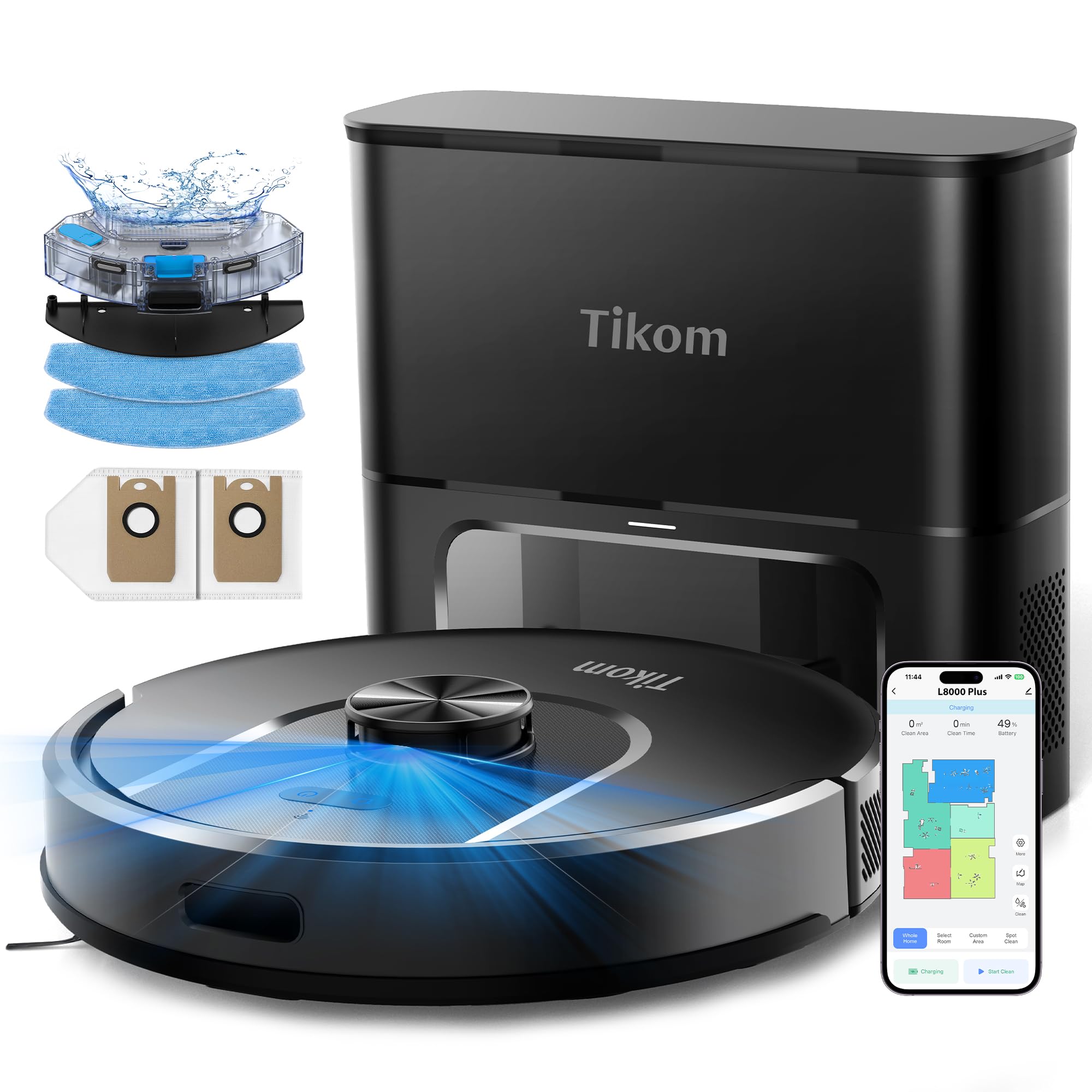
The Tikom L8000 Plus delivers the trinity of value features — a 3-liter self-emptying base, 360° LiDAR navigation, and 6,000 Pa suction — at a price point that undercuts most competitors with similar specs. The 3L dust bag holds up to 90 days of debris, meaning you handle waste four times a year rather than every few days. Owners consistently report that the suction lifts pet hair from medium-pile carpets without requiring multiple passes.
Its 150-minute runtime on gentle mode covers the average 1,500-square-foot home in a single charge. The app supports multi-floor mapping for up to five maps, and you can set no-go zones and no-mop zones independently — critical if you have area rugs that shouldn’t get wet. The cliff sensor reliably prevents stair falls, and the recharge-resume function ensures the robot finishes the job even if the battery depletes mid-cycle.
Some owners note that the mop pad is a damp cloth drag style, not a rotating scrubber, so it handles surface dust and light spills better than dried-on stains. For the price, though, the combination of reliable mapping, strong suction, and a large self-empty bin makes it the most balanced entry point into the category. Buyers looking for a true hands-off experience without leaping to + will find this model hard to beat.
Why we love it
- 3L self-emptying base lasts up to 90 days
- Reliable LiDAR navigation with multi-floor support
- Quiet operation at standard suction levels
Good to know
- Mop pad drags rather than scrubs
- Requires 2.4GHz Wi-Fi only
2. uninell Robot Vacuum and Mop Self-Empty
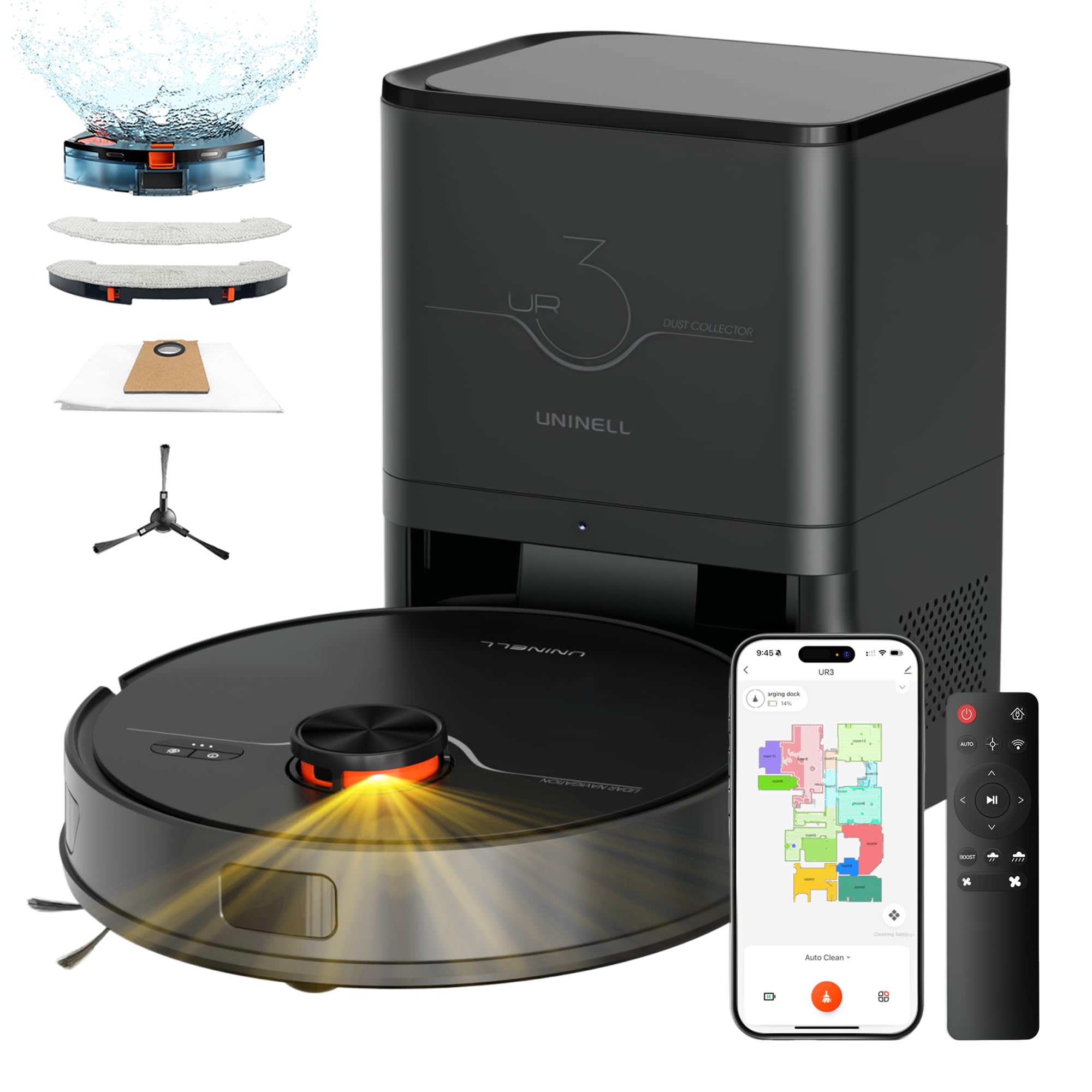
The uninell stands out with a 180-minute marathon runtime, enough to cover 2,000 square feet without needing a mid-session charge. Its 7,000 Pa suction, combined with an auto carpet boost that jumps to maximum power when sensors detect a rug, digs deeply into carpet fibers for pet hair and tracked-in dirt. The 3.5-liter self-emptying base is the largest in this mid-range grouping, pushing the maintenance interval to about 90 days even in homes with heavy-shedding dogs.
Setup is straightforward: the robot performs a 30-minute mapping run to create a floor plan, after which you can define no-go zones and room-specific cleaning settings via the app. The included remote control is a thoughtful addition for users who prefer not to use a smartphone. Owners highlight the quiet operation — comparable to a refrigerator hum — which makes it suitable for scheduling during sleep hours or work calls.
The mop system is a stationary pad, meaning it provides a light wipe rather than a scrub. Carpet detection automatically stops water flow when transitioning onto rugs, but the pad still contacts the carpet unless you set a no-mop zone manually. Overall, if your priority is covering a large floor area on a single charge with minimal base maintenance, this uninell model delivers strong value.
Why we love it
- 180-minute runtime covers large homes
- 3.5L self-emptying base is class-leading
- Voice control via Alexa and Google Assistant
Good to know
- Mop pad is a light wipe, not a scrub
- Can get stuck on low cords and thick rug edges
3. DREAME D20 Plus Robot Vacuum and Mop
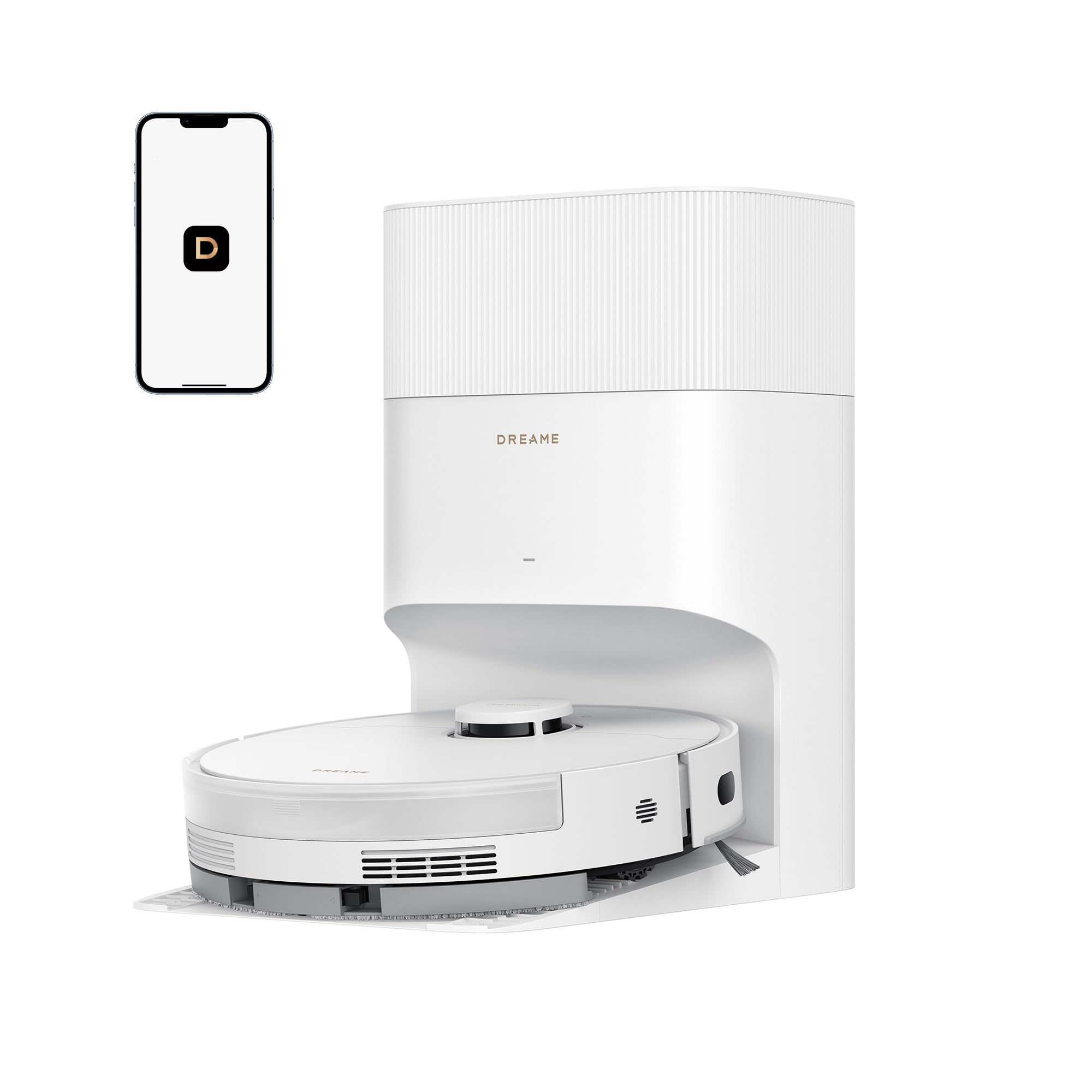
If you want to think about emptying the dust bin less than once per season, the DREAME D20 Plus is the answer. Its 5-liter dust bag stores roughly 150 days of debris, which is nearly twice the capacity of most competitors at this level. The vacuum delivers 13,000 Pa of maximum suction — among the highest in its price tier — and pairs it with a DuoBrush anti-tangle system that handles long hair and pet fur without requiring weekly roller cleanup.
The mopping system offers 32 adjustable water levels, which seems granular, but most owners find that a medium setting provides the right balance for hard floors without leaving puddles. The Pathfinder LiDAR navigation creates editable maps, allowing you to label rooms and send the robot to specific areas through the app. The 500ml dustbin and 350ml water tank give the robot enough capacity for a full-house clean without returning to the base to empty or refill.
A recurring owner complaint involves the initial setup: the app requires a 2.4GHz connection and some users found the onboarding process less intuitive than competitors. A small number reported the robot failing to find its charging dock after the first use, which was resolved after a firmware update. For buyers who prioritize maximum dust capacity and strong suction over app polish, the D20 Plus is a compelling value proposition.
Why we love it
- 5L dust bag lasts up to 150 days
- 13,000 Pa suction handles embedded dirt
- Anti-tangle DuoBrush saves maintenance time
Good to know
- App setup can be finicky
- Struggles with high-nap rugs
4. roborock Q7 M5+ Robot Vacuum and Mop

The roborock Q7 M5+ brings the brand’s well-regarded PreciSense LiDAR navigation to the value segment. It maps rooms faster than most budget models — a typical 1,000-square-foot floor is mapped in under five minutes — and the cleaning pattern is methodical, tracing parallel lines rather than bouncing randomly. With 10,000 Pa of HyperForce suction, it lifts debris from carpets effectively, and the dual anti-tangle system (JawScrapers main brush and a zero-tangle side brush) minimizes hair wrap from long-haired pets.
The self-emptying base uses a 2.7-liter sealed dust bag, which lasts roughly seven weeks for an average household. Owners appreciate that the bag’s seal traps dust and allergens, making emptying less messy than bagless systems. The mopping feature has three adjustable water flow levels, but like many combo units, it’s best for light maintenance rather than deep stain removal. The app allows scheduling, no-go zones, and real-time monitoring from your phone.
Some users noted that the app initially requires disabling cellular data during Wi-Fi pairing, which isn’t documented clearly in the quick-start guide. The mop module is also relatively small — the 350ml water tank may require a refill for larger homes. Overall, the Q7 M5+ provides the reliable mapping and app ecosystem that roborock is known for, making it a safe choice for buyers who value navigation accuracy over raw suction.
Why we love it
- Fast, methodical LiDAR mapping
- Dual anti-tangle reduces brush cleanup
- Sealed dust bag traps allergens
Good to know
- Small water tank for mopping
- App setup has Wi-Fi quirks
5. roborock Q10 S5+ Robot Vacuum and Mop
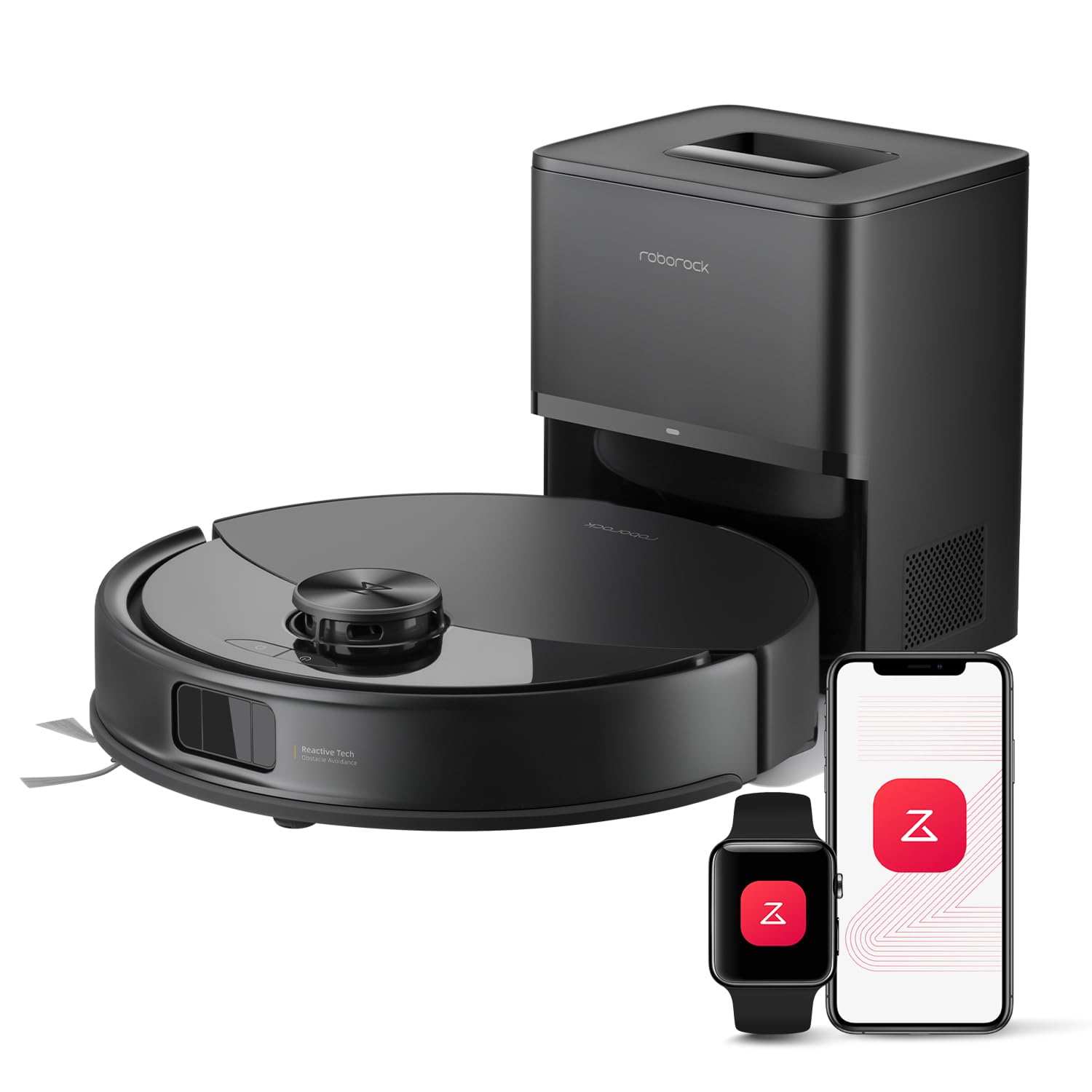
The roborock Q10 S5+ upgrades the mopping game with VibraRise 2.0, a sonic vibration system that scrubs at 3,000 oscillations per minute. This is a genuine step up from passive drag mops: the vibrating pad applies downward pressure to break up dried coffee rings and sauce spills on hard floors. The mop pad lifts 8mm automatically when the ultrasonic sensor detects carpet, preventing wet rugs while boosting vacuum suction simultaneously for deep carpet cleaning.
Its 10,000 Pa suction pairs with the same dual anti-tangle system found in the Q7 M5+, and the self-emptying base uses a 2.7-liter bag with a 70-day capacity. The ReactiveTech obstacle avoidance employs structured light to detect objects like pet bowls and charging cables, navigating around them rather than shoving them aside. The LiDAR system supports up to five stored maps for multi-level homes, automatically switching between floors as you move the robot.
Owners report that the object avoidance is not perfect — low-profile items like dark phone cables can still be run over. The mop tank is small enough that frequent refills are needed for homes over 1,500 square feet. Buyers who already have a roborock ecosystem will appreciate the consistent app experience, but the Q10 S5+’s real draw is the VibraRise mopping for those who want genuinely clean hard floors between deep manual mop sessions.
Why we love it
- Sonic vibration mopping lifts dried stains
- Auto mop lifting avoids wet carpets
- ReactiveTech obstacle avoidance minimizes collisions
Good to know
- Water tank requires frequent refills
- Dark cables can evade object detection
6. eufy Robot Vacuum Omni C20
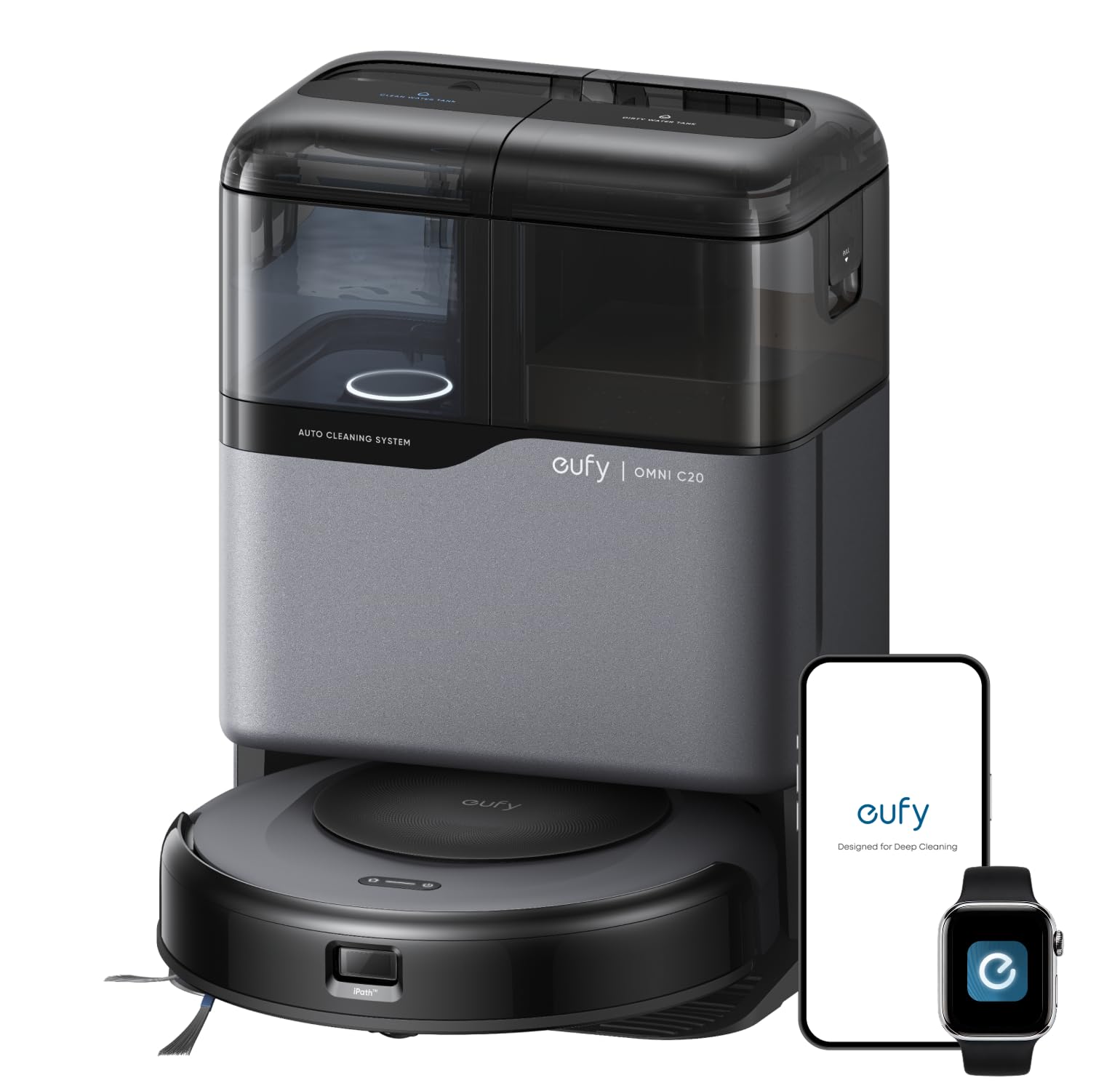
The eufy Omni C20 is the entry point to full-cycle automated cleaning — its base not only empties the dust bin but also washes and hot air-dries the mop pads. At just 3.35 inches tall, this robot slides under most sofas and bed frames that block taller competitors, making it ideal for homes with low clearance furniture. Its 7,000 Pa Boost IQ suction adjusts automatically on carpets to lift embedded dirt, while the Pro-Detangle Comb flips down mid-cycle to loosen hair from the roller.
The Mopping Master system applies 6 Newtons of downward pressure at 180 RPM, which is a significant improvement over passive drag pads. When the robot detects carpet, the mop lifts to keep the rug dry. The transparent water tanks on the base station let you see at a glance when fresh water is low or dirty water needs dumping. The battery runs 132 minutes on standard mode, and iPath Laser Navigation stores up to three floor maps for multi-story homes.
Some owners note that the robot can struggle with dark-colored rugs — the cliff sensors sometimes interpret them as drop-offs and avoid them. The base station is also wider than non-washing stations, requiring more floor space. For buyers who want to avoid handling dirty mop pads entirely, the Omni C20 represents a significant value upgrade over models that require manual mop washing.
Why we love it
- Auto mop washing and drying eliminates pad handling
- Ultra-slim 3.35″ height fits under low furniture
- Rotating mop pad with downward pressure scrubs stains
Good to know
- Dark rugs can confuse cliff sensors
- Base station occupies more floor space
7. Eureka E20 Evo Plus Robot Vacuum and Mop
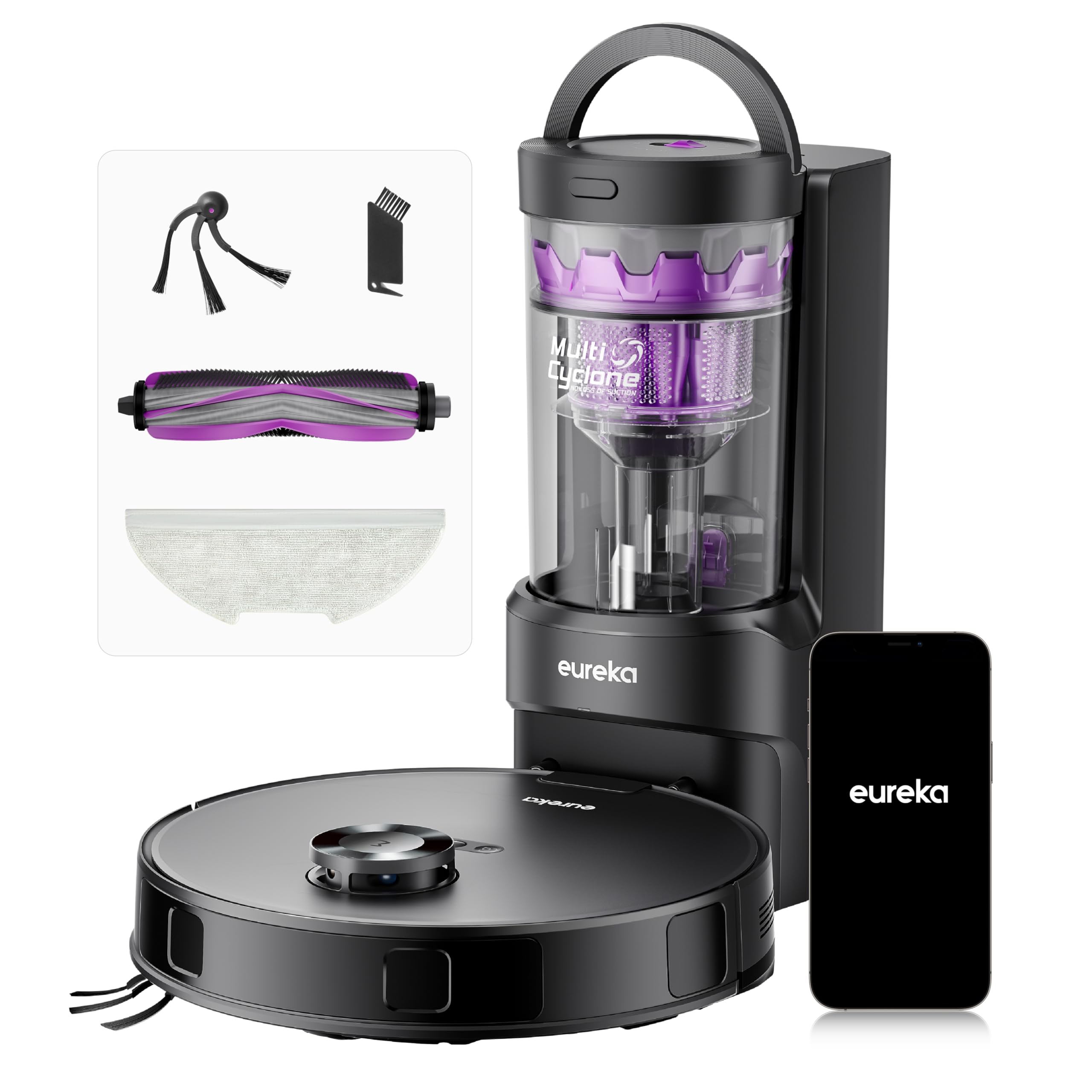
The Eureka E20 Evo Plus takes a different approach to self-emptying: a bagless 45-day capacity bin that saves you the recurring expense of replacement dust bags. The multi-cyclone dust collection system with 13 cones traps 98% of dust before it reaches the filter, maintaining suction over time. Its 10,000 Pa suction, combined with the DragonClaw side brush and anti-tangle roller, removes over 99% of hair wraps, making it a strong contender for pet households.
The smart mop lifting system raises the pad 10mm when carpets are detected, which is sufficient for most low-to-medium pile rugs. The LiDAR navigation creates efficient cleaning paths, and the app allows you to set no-go zones and room-specific schedules. Owners consistently mention the quiet operation — it’s noticeably less noisy at standard suction than some competitors with similar power ratings. The 180-minute battery life comfortably covers homes up to 2,500 square feet.
The bagless base requires periodic cleaning of the cyclone chamber and filter, which some owners find messier than swapping a sealed bag. The mopping is a passive pad system, adequate for dust and light spills but not for dried-on grime. If you want to eliminate the cost of bags and don’t mind occasional filter maintenance, the E20 Evo Plus offers excellent long-term value.
Why we love it
- Bagless self-emptying saves on recurring costs
- Anti-tangle DragonClaw brush handles pet hair well
- 180-minute battery covers large homes
Good to know
- Bagless bin requires periodic cleaning
- Passive mop pad doesn’t scrub stains
8. eufy Robot Vacuum E25
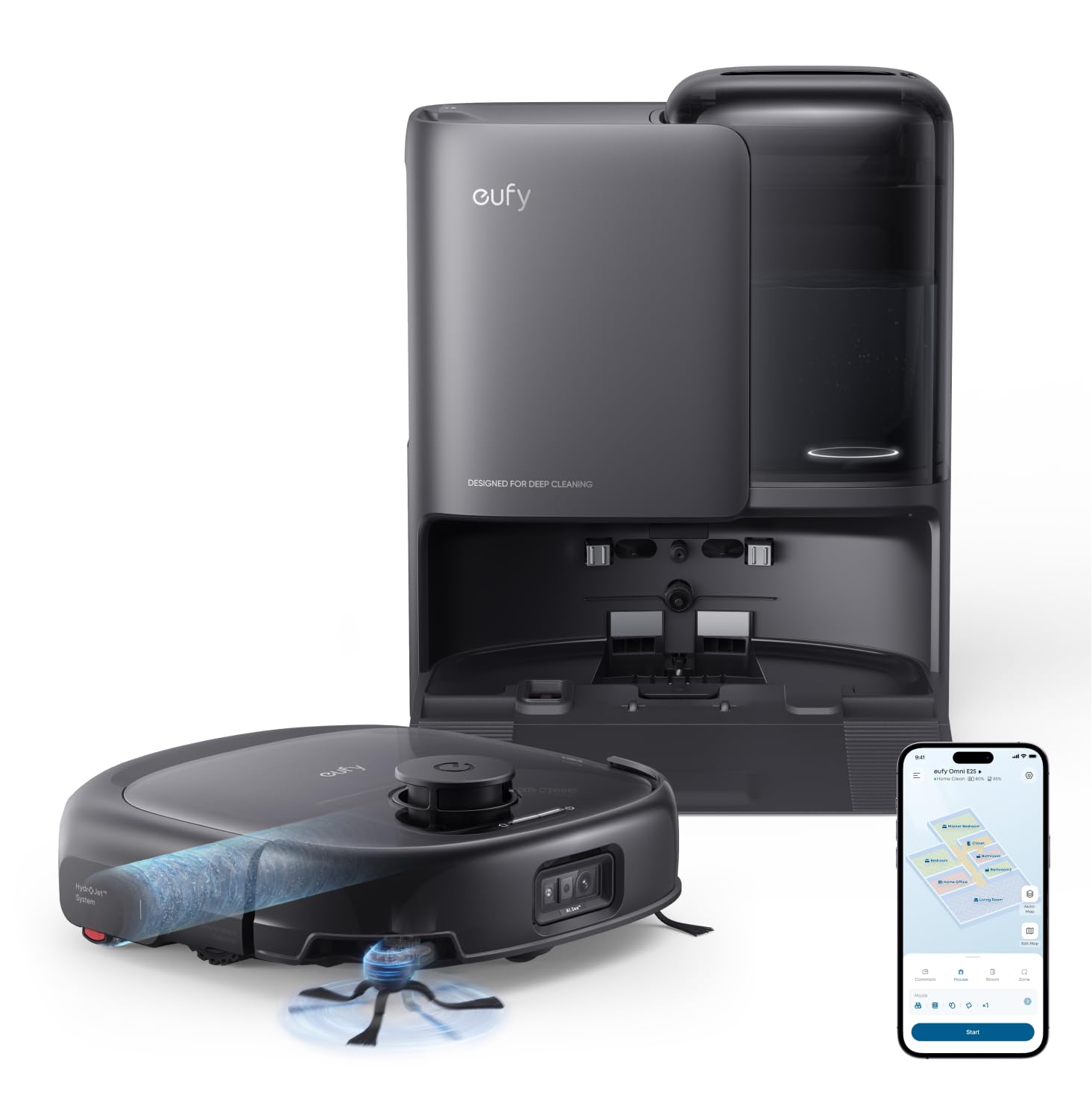
The eufy E25 redefines what mopping means in a robot combo with its HydroJet system, which refreshes the roller mop with clean water twice per second. This prevents the cross-contamination that occurs with standard pads — the same dirty cloth spreading bacteria across your kitchen and living room. The 20,000 Pa suction excels at pulling deeply embedded dirt from carpet fibers and grout lines, making it the most powerful vacuum in this roundup.
The all-in-one base auto-empties dust into a 3L bag (75-day capacity), self-washes the roller mop, hot air dries it at 50°C to prevent mold, and auto-refills the water tank. The CornerRover Arm extends to scrub along baseboards and furniture legs, addressing the edge-cleaning blind spot common to round robots. DuoSpiral anti-tangle brushes handle long hair and pet fur without clogs, and AI obstacle avoidance uses structured light to navigate around shoes, toys, and pet bowls.
At this price point, the expectation is premium performance, and the E25 largely delivers. Some owners report that the roller mop needs replacement every three to six months depending on usage, which adds a consumable cost. The base station is large — it requires a dedicated spot with clearance on both sides. For pet owners and allergy sufferers who want genuinely clean floors without manual pad washing, the E25 is the most complete mopping robot at this price.
Why we love it
- HydroJet roller mop prevents cross-contamination
- 20,000 Pa suction is best-in-class
- CornerRover Arm cleans edges and baseboards
Good to know
- Roller mop is a recurring consumable
- Large base station needs dedicated space
9. MOVA V50 Ultra Complete Robot Vacuum and Mop
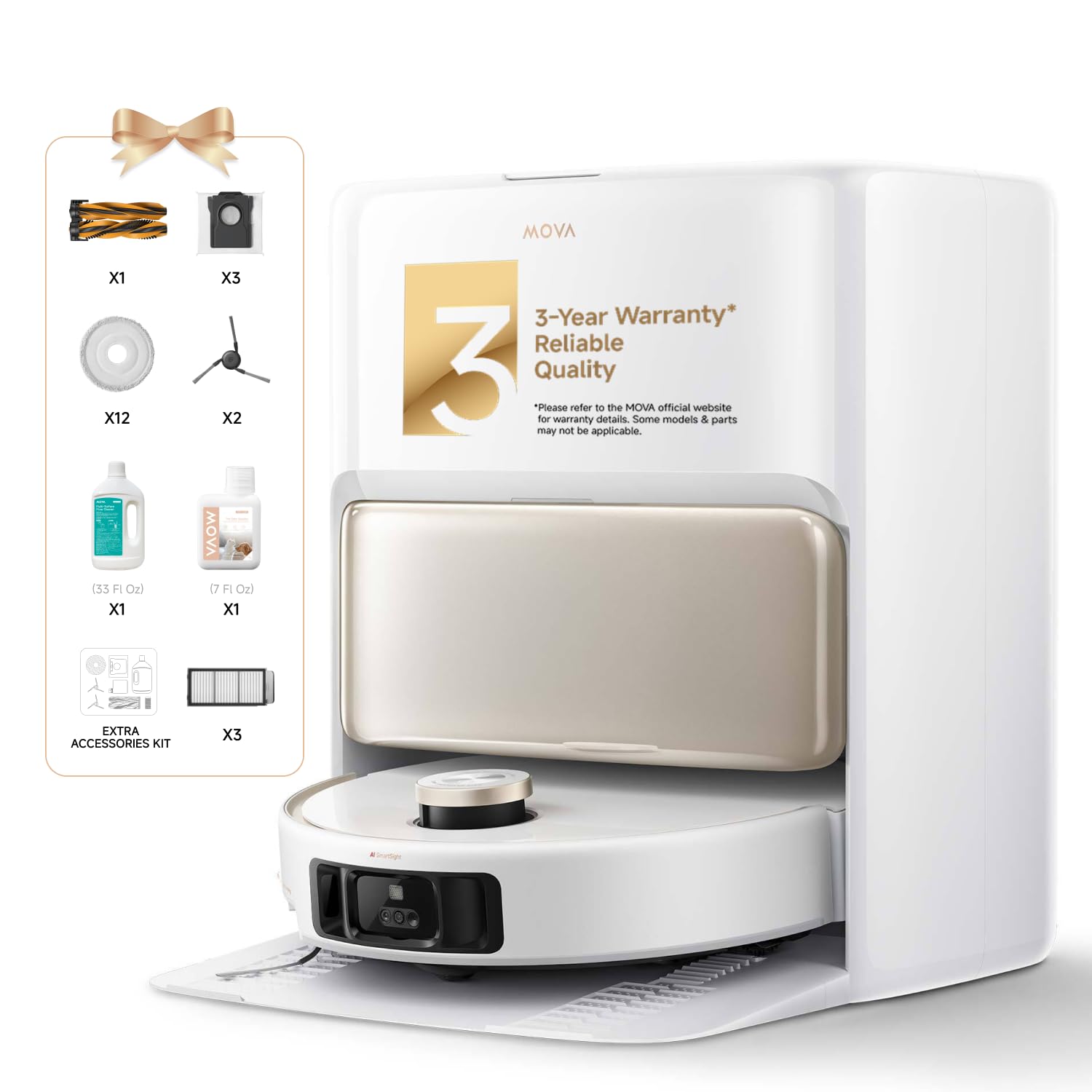
The MOVA V50 Ultra Complete sits at the top of the stack with 24,000 Pa suction — enough to lift debris from deep carpet fibers that weaker vacuums leave behind. Its FlexiRise Navigation retracts the LDS sensor tower when the robot approaches low-clearance furniture, allowing it to slide under sofas and beds, then raises the sensor in open areas for precise mapping. The StepMaster system with extendable wheels lifts the robot to overcome thresholds and obstacles up to 2.36 inches — a unique capability among robot vacuums.
The mopping system uses warm water (176°F) to break down grease and dried stains, which is exceptionally effective on kitchen floors. The DuoSolution system offers separate detergent cartridges for general cleaning and pet odor removal, automatically dispensing onto the mop. The JetSpray washboard uses 20 nozzles to clean the mop pads evenly, and the central filter collects dirt to prevent dirty water from staining the base. The 220-minute battery is the longest in this roundup, allowing it to clean large homes in one uninterrupted session.
Owners universally praise the obstacle overcoming capability — it handles raised thresholds, door edges, and even two-layer sleepers that stop most other robots. The hot water mopping is a genuine advantage for households with sticky kitchen floors. The downside is complexity: the system has multiple consumables (detergent cartridges, dust bags, mop pads, filters) that must be managed. For buyers who want the absolute highest suction, longest battery, and best obstacle climbing, the MOVA V50 Ultra Complete justifies its premium placement.
Why we love it
- 24,000 Pa suction is the highest in the category
- FlexiRise navigation clears low furniture
- Hot water mopping breaks down grease effectively
Good to know
- Multiple consumables increase long-term costs
- On-board filter needs weekly checking for pet owners
FAQ
What suction power is enough for homes with pets and carpets?
Is a self-emptying base worth the extra upfront cost?
How does LiDAR navigation differ from gyroscope or camera navigation?
Can a robot vacuum and mop really replace manual mopping?
What features reduce the need for manual prep before cleaning?
Final Thoughts: The Verdict
For most households seeking a value robot vacuum and mop, the winner is the Tikom L8000 Plus because it combines a large self-emptying base, reliable LiDAR navigation, and 6,000 Pa suction at a starting price that leaves room for regular maintenance costs. If you need marathon runtime for a large home, grab the uninell Self-Empty. And for the best mopping experience without stepping up to the highest price bracket, nothing beats the roborock Q10 S5+ with its sonic vibration scrubbing and auto mop lifting.