
Finding a lawn that stays green through Florida’s heat, humidity, and your dog’s daily routine is a specific challenge — most turfgrass varieties wither under urine nitrogen burn or turn to mud under constant paws. The right grass for this environment must tolerate high traffic, resist urine damage, and thrive in both full sun and the shade of oak canopies. This buyer’s guide cuts through the marketing to identify the turf solutions that actually deliver.
I’m Mo Mahin — the founder and writer behind Furric. I’ve spent years comparing grass seed blends, sod cultivars, and artificial alternatives, studying real owner feedback and horticultural data to find which options genuinely hold up in Florida’s unique growing conditions.
After analyzing dozens of products and hundreds of verified owner reports, I’ve narrowed the field to the five most reliable choices for florida grass for dogs — each selected for its ability to survive urine, foot traffic, and the state’s challenging climate.
How To Choose The Best Florida Grass For Dogs
Selecting a grass for Florida that coexists with dogs requires balancing three hard variables: the grass’s genetic tolerance to urine nitrogen, its ability to recover from foot traffic, and its adaptability to Florida’s sandy, often acidic soils. The wrong choice leads to bare patches, constant reseeding, or a yard that turns brown every time your dog runs through it.
Urine Resistance vs. Urine Recovery
No grass is completely immune to dog urine. The key difference is whether the grass species metabolizes the nitrogen spike without dying. Tall fescue and certain St. Augustine cultivars handle urine better than Bermuda or Centipede because their root structures dilute the concentration. Some products use a coating or biological additive to neutralize urea — but these are temporary fixes. The grass species itself determines long-term resilience.
Traffic Tolerance for Active Yards
Dogs create constant trampling pressure. Zoysia and St. Augustine have dense runners and rhizomes that recover quickly from foot traffic. Centipede is slower-growing and less forgiving of daily wear. Fescue blends can handle moderate traffic but may thin in high-use pathways. Consider your dog’s size and how many hours per day they spend on the lawn before choosing a grass type.
Sun vs. Shade Requirements
Florida yards often mix full sun with shade from live oaks or palms. St. Augustine Seville is the most shade-tolerant warm-season option, requiring only 6–7 hours of partial sun. Zoysia also tolerates moderate shade. Centipede needs more direct sun and struggles under dense canopy. Fescue is a cool-season grass that will go dormant in Florida’s summer heat unless watered aggressively, but it works well in shaded, cooler microclimates during spring and fall.
Seed vs. Sod Plugs vs. Artificial Turf
Seed is the most economical route for large areas, but requires consistent moisture for 2–4 weeks during establishment. Sod plugs cost more per square foot but give you a head start with established roots and runners. Artificial turf is a permanent zero-maintenance solution for small potty zones — it won’t brown from urine, but it requires rinsing and can heat up drastically in Florida sun. Choose based on how much of your yard you want covered and your patience for establishment.
Quick Comparison
On smaller screens, swipe sideways to see the full table.
| Model | Category | Best For | Key Spec | Amazon |
|---|---|---|---|---|
| X-Seed Pet Proof Fescue | Cool-Season Seed Blend | Urine-resistant lawn in shaded, cooler yards | Rhizing Moon & Nightcrawler Fescue + Ryegrass | Amazon |
| GLOBREEN Dog Grass Pee Pad | Artificial Turf | Indoor/patio potty zone, apartment or senior dogs | 1.18” thick, mesh bottom drainage | Amazon |
| Florida Foliage St. Augustine Seville | Warm-Season Sod Plugs | Shade-tolerant, salt/drought-resistant Florida lawn | 9 live plugs (dwarf cultivar) | Amazon |
| Gulf Kist Centipede Grass Seed | Warm-Season Seed Coated | Low-maintenance lawn for sandy, acidic Florida soil | 1 lb coated seeds, no mulch needed | Amazon |
| Florida Foliage Zoysia Sod Plugs | Warm-Season Sod Plugs | High-traffic, drought-resistant lawn | 9 large 3”x3” plugs | Amazon |
In‑Depth Reviews
1. X-Seed Pet Proof Fescue Grass Seed
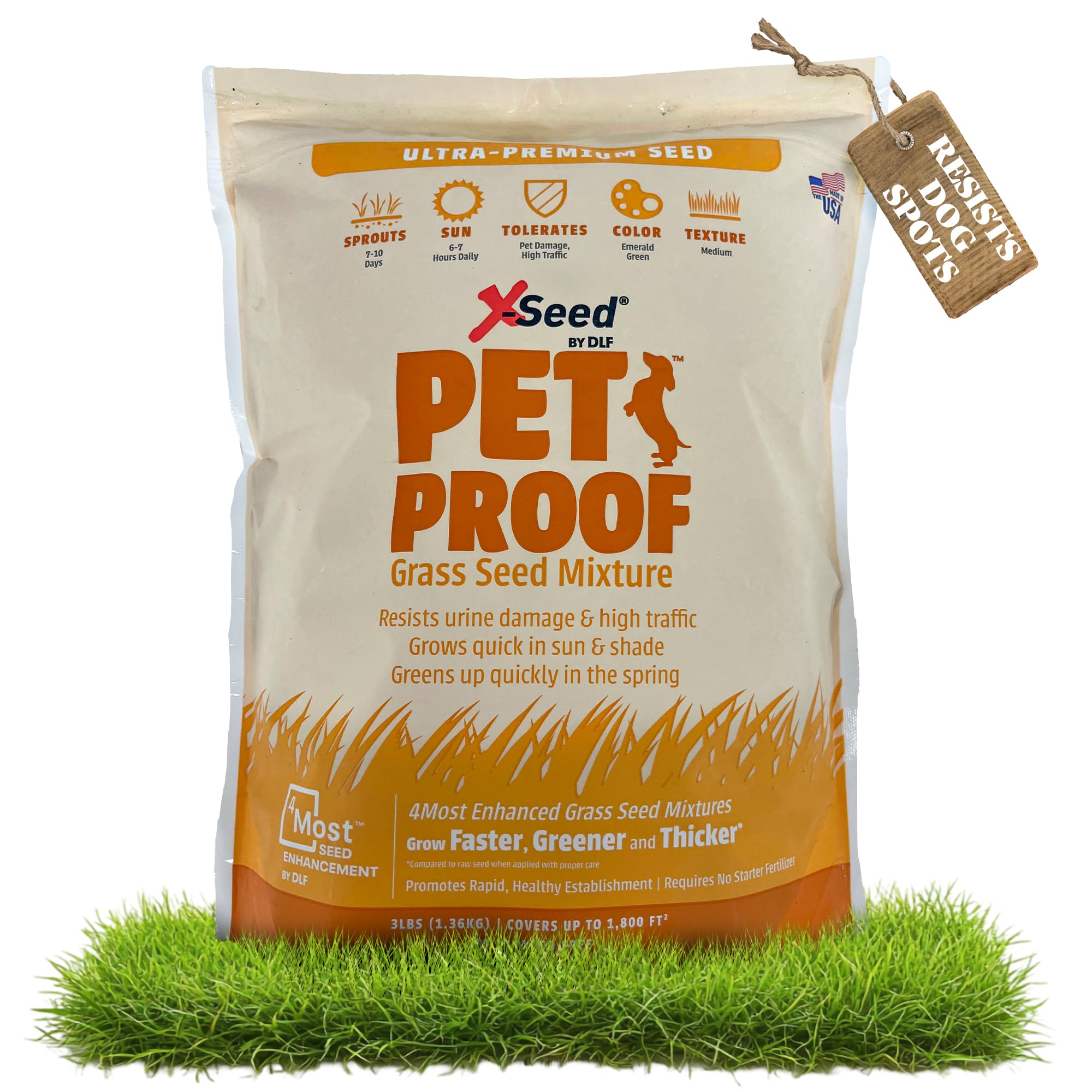
This fescue blend combines Rhizing Moon Tall Fescue, Nightcrawler Tall Fescue, and Tetradark Perennial Ryegrass in a mix engineered specifically for urine resistance and high traffic. The coarse-leaf fescues dilute nitrogen concentration at the root level, reducing the burn spots that plague finer-bladed grasses. The ryegrass component germinates rapidly — verified buyers report visible growth at 2–3 inches within 7–10 days under a thin soil layer — establishing coverage before dogs can trample bare dirt.
This is a cool-season blend, which means it stays green during Florida’s spring and fall but will go dormant during the hottest summer months without supplemental watering. It adapts to sandy, loamy, or clay soils, making it versatile for diverse Florida microclimates. The GMO-free label appeals to owners who want a natural lawn their dogs can roll in without chemical concerns. Multiple reviewers with two or more medium-to-large dogs reported significant yard recovery after switching to this mix.
One caveat: a small number of buyers with very heavy dog density (two medium dogs on a small yard) reported that the urine resistance diminished after several months. This aligns with the reality that no seed is 100 percent pet-proof — but for shaded or transitional areas where warm-season grasses struggle, this is the best-performing option at this price tier.
Why we love it
- Fast germination in sun and partial shade
- Perennial fescue blend provides durable year-round coverage in cool seasons
- Adapts to sandy and clay soils common in Florida
Good to know
- Cool-season grass may go dormant in Florida summer heat
- Urine resistance may fade under very high dog density
- Requires consistent moisture during first 2 weeks
2. GLOBREEN Dog Grass Pee Pad (2-Pack)

This is not a lawn replacement — it is a targeted potty pad solution for dogs who need a designated spot on patios, balconies, or indoors during Florida’s afternoon rainstorms or extreme heat. The 1.18-inch thick polyethylene blades create a realistic texture that dogs generally accept quickly. The mesh bottom is designed for fast drainage, and built-in antimicrobial agents reduce odor buildup between cleanings. Cleaning is straightforward: hose down or soak in warm soapy water.
Verified buyers with senior dogs and those with kidney disease found this pad essential for managing incontinence without damaging real turf. The 23×18-inch size fits standard 20×25-inch potty trays, and the 2-pack allows one to be in use while the other dries. Importantly, the artificial turf won’t brown from urine — a major advantage over seeded lawns for small, concentrated potty zones. However, a small subset of buyers reported that their units lacked the advertised mesh drainage, with water pooling on the surface. This appears to be an occasional manufacturing variance.
For dog owners who want to preserve their main lawn while providing a convenient relief area, this is a practical stopgap. It will not replace an entire yard, but for targeted use — especially during establishment of new grass seed or sod plugs — it reduces urine load on the rest of the lawn.
Why we love it
- Zero urine burn — artificial turf means no dead spots
- Mesh bottom promotes fast drainage and easy rinsing
- Portable design works indoors, on patios, and in balconies
Good to know
- Not a full-yard solution — best as a potty zone
- Some units may have inconsistent drainage mesh
- Can retain heat in direct Florida sun
3. Florida Foliage St. Augustine ‘Seville’ Sod Plugs

St. Augustine Seville is the gold standard for Florida lawns that face shade from live oaks or palm canopies. This dwarf cultivar has a finer, denser texture than the common Floratam variety, and it requires only 6–7 hours of sunlight per day — far less than most warm-season grasses. It also tolerates the wide pH swings found across Florida, from acidic inland soils to alkaline coastal sand. For dog owners with shady yards, this is the cultivar most likely to persist without thinning.
The 9-plug pack gives you a head start over seed, with established runners already visible on healthy plugs. Verified buyers in Louisiana and Florida reported the plugs arrived moist and green, with some already sprouting runners within days of planting. The dwarf growth habit means less mowing, and the dense thatch helps dilute urine concentration at the soil surface. Seville is also more salt-tolerant than many grasses, a critical factor for coastal Florida properties.
Be aware that St. Augustine is a high-water grass — it needs moderate irrigation during dry spells to stay green. The plug format also requires patience: 9 plugs will cover a small area initially, and you will need multiple packs to fill a large yard. A small number of buyers received plugs with some brown or yellow foliage, though most reported recovery after consistent watering.
Why we love it
- Most shade-tolerant warm-season grass for Florida
- Dwarf cultivar means less frequent mowing
- Salt and drought tolerant once established
Good to know
- Requires moderate to high watering during dry periods
- Plug format requires multiple packs for full coverage
- Some plugs may arrive with yellow/brown foliage
4. Gulf Kist Centipede Grass Seed (Coated)

Centipede grass is the low-maintenance workhorse of the Florida lawn world. This coated seed from Gulf Kist eliminates the need for mulch or sprigging — the coating protects the seed during germination while adding nutrients. Centipede thrives in sandy, acidic soils with lower pH, which matches much of central and northern Florida’s native soil. It grows slowly, meaning less mowing, and requires only two fertilizer applications per year once established.
For dog owners, centipede has moderate foot traffic tolerance and no true dormancy in mild Florida winters — it stays green year-round without overseeding. The coated format improved germination rates in verified buyer reports, with sprouts appearing in 7–10 days during 90°F Florida heat. One reviewer used the full 1-pound bag on 900 square feet and achieved thick coverage after 10 days of 4x daily watering. The seed tolerates partial shade better than Bermuda, making it a solid alternative for yards that get morning sun and afternoon shade.
Centipede’s main drawbacks are its narrow pH tolerance (it dislikes alkaline or over-limed soil) and its slower recovery from heavy urine or traffic. If your dog creates high-use paths, centipede will be slower to fill back in than St. Augustine or Zoysia. Some buyers also reported failed germination, which the manufacturer addressed under warranty. Test a small patch before committing to a full lawn.
Why we love it
- Low fertilizer requirements save time and money
- Coated seeds improve germination without extra mulch
- No true dormancy in mild climates for year-round green
Good to know
- Slow to recover from heavy dog traffic or urine
- Prefers acidic soil — alkaline pH causes yellowing
- Slow growth means slow patching of bare spots
5. Florida Foliage Zoysia Sod Plugs (Empire)

Empire Zoysia is arguably the most traffic-tolerant warm-season grass available for Florida. This 9-pack of 3×3-inch sod plugs gives you established Zoysia root systems that spread aggressively through runners, filling in bare areas quickly once established. Zoysia’s dense root structure makes it naturally drought-resistant — it requires less water than St. Augustine while maintaining a thick, soft turf that dogs love to run on. The deep root system also helps dilute urine nitrogen, reducing visible burn compared to Centipede or Bermuda.
Verified buyers in Florida reported that plugs arrived healthy and moist, with some showing runners already sprouting. The seller provides watering guidance on request: 5 minutes daily for the first month, then longer but less frequent intervals. Multiple repeat buyers praised the plug quality, noting that even plugs with some brownish foliage recovered within weeks under proper watering. Zoysia tolerates moderate shade, though it performs best with at least 6 hours of direct sun.
The primary tradeoff is establishment speed — Zoysia is slower to establish than St. Augustine or Fescue seed. Buyers should expect 4–6 weeks before plugs visibly spread, and full coverage of a 5000-square-foot yard requires many packs. Some buyers received plugs with a slightly different shade of green than their existing lawn, though this difference typically fades after a few months of growth.
Why we love it
- Excellent drought resistance — less watering than St. Augustine
- Thick root system reduces urine burn visibility
- Handles high traffic and recovers quickly
Good to know
- Slow establishment — takes weeks to spread
- Needs full sun to partial shade for best growth
- Requires many packs to cover large areas
FAQ
Can I mix St. Augustine and Zoysia in the same yard?
Do artificial turf pads get too hot for dogs in Florida summer?
Will Centipede grass survive if my dog digs in it?
How often should I fertilize Florida grass for dogs?
Final Thoughts: The Verdict
For most Florida dog owners, the florida grass for dogs winner is the Florida Foliage St. Augustine Seville Sod Plugs because its shade tolerance, dense dwarf growth, and salt resistance make it the most adaptable to Florida’s diverse microclimates while surviving moderate dog traffic. If you need instant, permanent protection for a high-use potty zone, grab the GLOBREEN Artificial Turf Pad. And for large, sunny, low-maintenance yards, nothing beats the value of the Gulf Kist Centipede Grass Seed.