
There’s a specific moment when a warbler flits into view and your binoculars deliver every feather detail — that split second of perfect clarity is why we spend hours scanning the canopy. If the view is soft, the colors washed out, or the focus wheel sticky, the magic disappears. That’s why choosing the right pair of 10x42s matters more than any other gear decision for a birder.
I’m Mo Mahin — the founder and writer behind Furric. Over the past few years I’ve pored over hundreds of user reports, examined optical specification sheets from every major brand, and studied how each coating and prism type performs under field conditions — all to separate marketing claims from real birding performance.
As a dedicated birder, finding the right optics is crucial, which is why we’ve curated the best 10×42 binoculars for bird watching to deliver crystal-clear views every time.
How To Choose The Best 10X42 Binoculars For Bird Watching
Not all 10×42 binoculars are created equal. The combination of magnification and objective lens size is a sweet spot for birders, but the real performance comes from the internal components and build quality. Here’s what the specs actually mean in the field.
Prism Type: Roof vs. Porro
Roof prisms (found on most modern 10x42s) allow a straight, compact barrel design — they’re lighter and easier to carry. Porro prisms (like on the Sogries zoom model) offer slightly better depth perception but are bulkier. For birding, a good roof prism with phase-correction coatings delivers the sharpness you need.
Coatings: From FMC to Dielectric
Fully Multi-Coated (FMC) surfaces reduce glare and increase light transmission. Higher-end binoculars add dielectric or phase-correction coatings on prisms, boosting contrast and color accuracy, especially in low dawn/dusk light. If you often bird at sunrise, prioritize dielectric coatings.
Eye Relief & Field of View
Long eye relief (15mm+) is essential if you wear glasses — you’ll see the full field without black rings. Field of view (FOV) determines how much landscape you can scan. For tracking fast-moving warblers, a wider FOV (around 340ft/1000yds) makes a big difference.
Waterproof & Fogproof Standards
IPX7 rating means the binoculars can survive submersion in 1m of water for 30 minutes — ideal for rainy days or misty marshes. Nitrogen purging prevents internal fogging. If you bird in humid climates, never skip this feature.
Weight and Ergonomics
An all-day birding session demands binoculars under 25oz (700g). A rubber armoring gives grip in wet hands, and a smooth central focus wheel is non-negotiable for quickly adjusting to nearby or distant subjects.
Quick Comparison
On smaller screens, swipe sideways to see the full table.
| Model | Type | Best For | Key Feature | Amazon |
|---|---|---|---|---|
| Nikon PROSTAFF P7 10×42 | Roof Prism | Overall birding / travel | Dielectric prism coating + locking diopter | Amazon |
| Celestron Nature DX ED 10×42 | Roof Prism | Budget ED glass / backyard | Extra-low dispersion glass eliminates fringing | Amazon |
| Nikon Monarch M5 10×42 | Roof Prism | Low-light / high clarity | ED glass + dielectric high-reflective coatings | Amazon |
| Nocs Provisions Pro Issue 10×42 | Roof Prism | Adventure / close focus | Phase-coated Bak4P prisms, 6 ft close focus | Amazon |
| Leupold BX-4 Pro Guide HD 10×42 | Roof Prism | Wildlife / durability | Calcium-fluoride HD lenses + locking diopter | Amazon |
| ZEISS Conquest HDX 10×42 | Roof Prism | Professional / all-weather | 90% light transmission + FieldFlattener | Amazon |
| Vortex Copperhead HD 10×42 | Roof Prism | Value / warranty | HD optical system + unlimited VIP warranty | Amazon |
| Bushnell H2O Xtreme 10×42 | Roof Prism | Wet conditions / boating | IPX7 waterproof + fully multi-coated | Amazon |
| Three Triping 10×42 HD | Roof Prism | Kit with phone adapter | Includes tripod, phone mount, and case | Amazon |
| Barska Crush 10×42 | Roof Prism | Travel / everyday use | Lightweight, shockproof design in colors | Amazon |
| Sogries 10-30×50 Zoom | Porro Prism | Variable magnification / events | 10-30x zoom, 50mm objective for low light | Amazon |
In-Depth Reviews
1. Nikon PROSTAFF P7 10×42

The PROSTAFF P7 is Nikon’s flagship in the pro-level under‑ range, and it shows. From the first look through the eyepiece, the image snaps into focus with impressive brightness and zero color bleed. The 17.6 relative brightness rating means even in twilight you can separate a hooded warbler from the leaves.
Under the hood, Nikon uses a dielectric high-reflective multilayer prism coating paired with phase-correction on the roof prisms. The result is edge-to-edge clarity that rivals binoculars costing twice as much. The locking diopter ring is a small but appreciated detail — no more accidental refocusing when you shove them in your pack. The turn-and-slide eyecups offer three positions, making them comfortable even if you wear glasses.
Birders who have taken these on extended trips consistently praise the easy handling and crisp view. Several experienced users mention the optics are nearly as good as older Nikon 50-series models. For a mid‑range price, you get a lightweight, weather‑sealed binocular that handles rain, snow, and everyday abuse without complaint. The only real trade‑off is the lack of a tripod mount socket, but for handheld birding this is rarely an issue.
Why we love it
- Outstanding brightness and color rendering for the price
- Locking diopter maintains your setting
- Lightweight at 21.2 oz, ideal for all-day carry
- Oil- and water-repellent lens coating for easy cleaning
Good to know
- No built-in tripod adapter socket
- Eye relief is adequate (15.7mm) but not class-leading
2. Celestron Nature DX ED 10×42

Celestron’s Nature DX ED is the first binocular that brings Extra-low Dispersion (ED) glass to the budget-friendly category. The difference is immediately visible: zero chromatic aberration on high-contrast edges like a white heron against green foliage. The image stays razor-sharp from center to periphery, exactly what you want when identifying subtle field marks.
The chassis is a rubber-armored polycarbonate that feels robust yet lighter than many competitors at 22.9 oz. Phase-coated BaK-4 prisms with dielectric coatings maximize light transmission, and the nitrogen purging makes it completely fogproof. The center focus wheel is smooth and requires about 1.5 turns from close to infinity — quick enough for moving birds but precise for fine adjustments. The eyecups twist up with distinct click stops; at 14.3mm eye relief they’re comfortable for most users, though glasses-wearers may not see the full field.
Backyard birders and traveling naturalists alike have found these binoculars exceed expectations for the price. One enthusiast noted they are “crisp, bright images with true colors” and called them a “yard/home backup” after using premium brands. If you want genuine ED glass performance without entering the -plus tier, this is the sweet spot.
Why we love it
- ED glass virtually eliminates color fringing
- Solid waterproof/fogproof build for all weather
- Compact and easy to pack for travel
- Backed by Celestron’s limited lifetime warranty
Good to know
- Eye relief may be tight for eyeglass users
- Focus knob could be slightly larger for gloved hands
3. Nikon Monarch M5 10×42
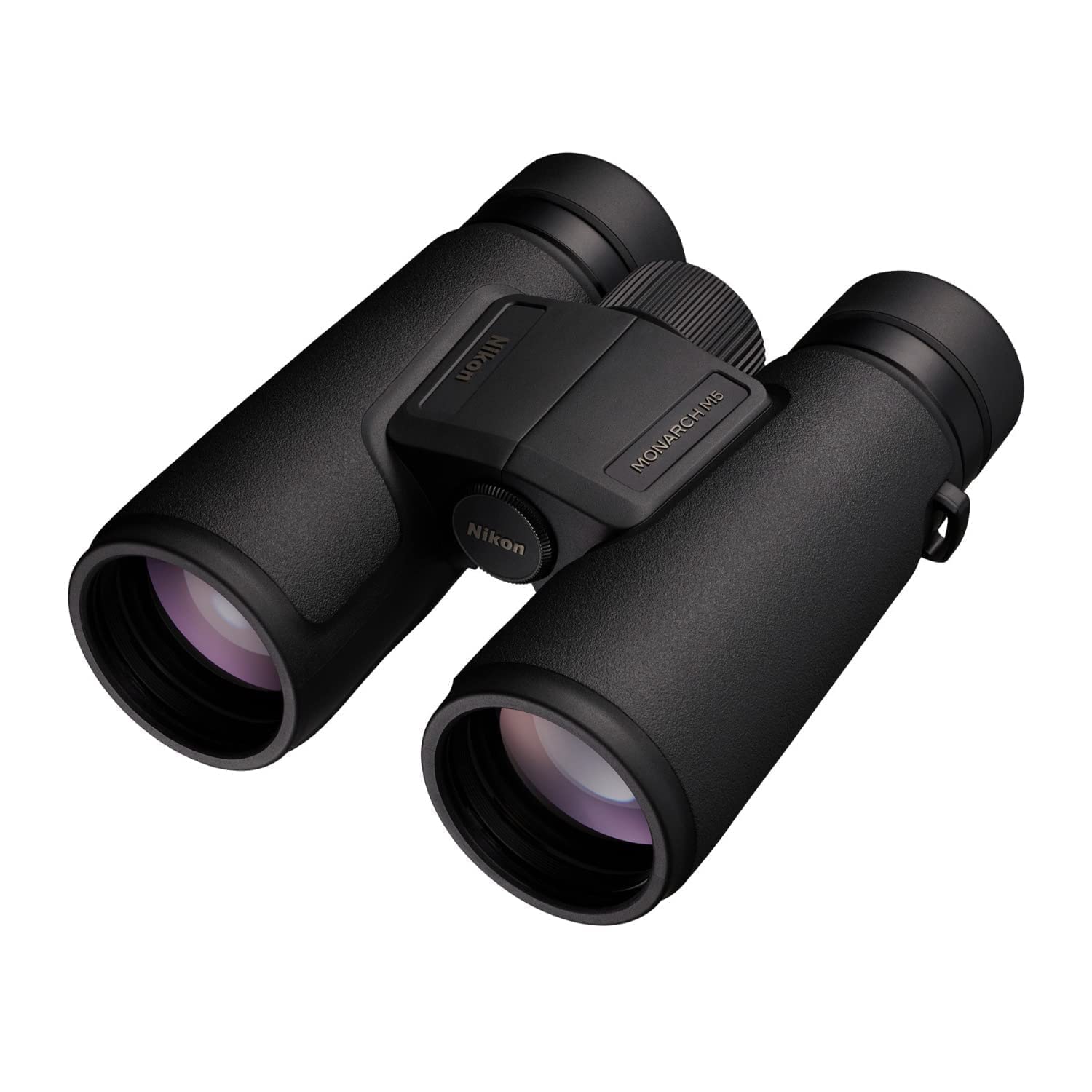
The Monarch M5 sits one step above the PROSTAFF in Nikon’s lineup, and the extra investment buys you ED glass and improved light transmission. In practice, that means the image stays bright and natural even as the sun dips below the canopy — top of the morning and late afternoon become your most productive birding hours.
Nikon applies dielectric high-reflective multilayer coatings on the roof prisms, which push light transmission above 90%. The 18.4mm eye relief is generous, making these comfortable for spectacle wearers to see the entire field without blackouts. The central focus knob is large and silky, with a close focus of just 8.2 feet — perfect for getting a butterfly or a nearby wren in detail. The body is rubber-armored, nitrogen-purged, and O-ring sealed for full waterproofness.
Reviews from travelers are glowing: one user took them to Alaska and saw humpback whales, orcas, and bears with “outstanding quality.” Another upgraded from a 20-year-old pair and was “amazed at the clarity, field of view, and low light capture.” The only weak point is the eyepiece cap, which some owners found flimsy and prone to falling off. Nonetheless, the optical performance punches above its price.
Why we love it
- ED glass delivers sharp, color-accurate images
- Excellent low-light performance for dawn/dusk birding
- Very comfortable for eyeglass wearers (18.4mm eye relief)
- Smooth, precise focus mechanism
Good to know
- Eyepiece caps are not securely attached
- No tripod adapter socket (some models missing)
4. Nocs Provisions Pro Issue 10×42
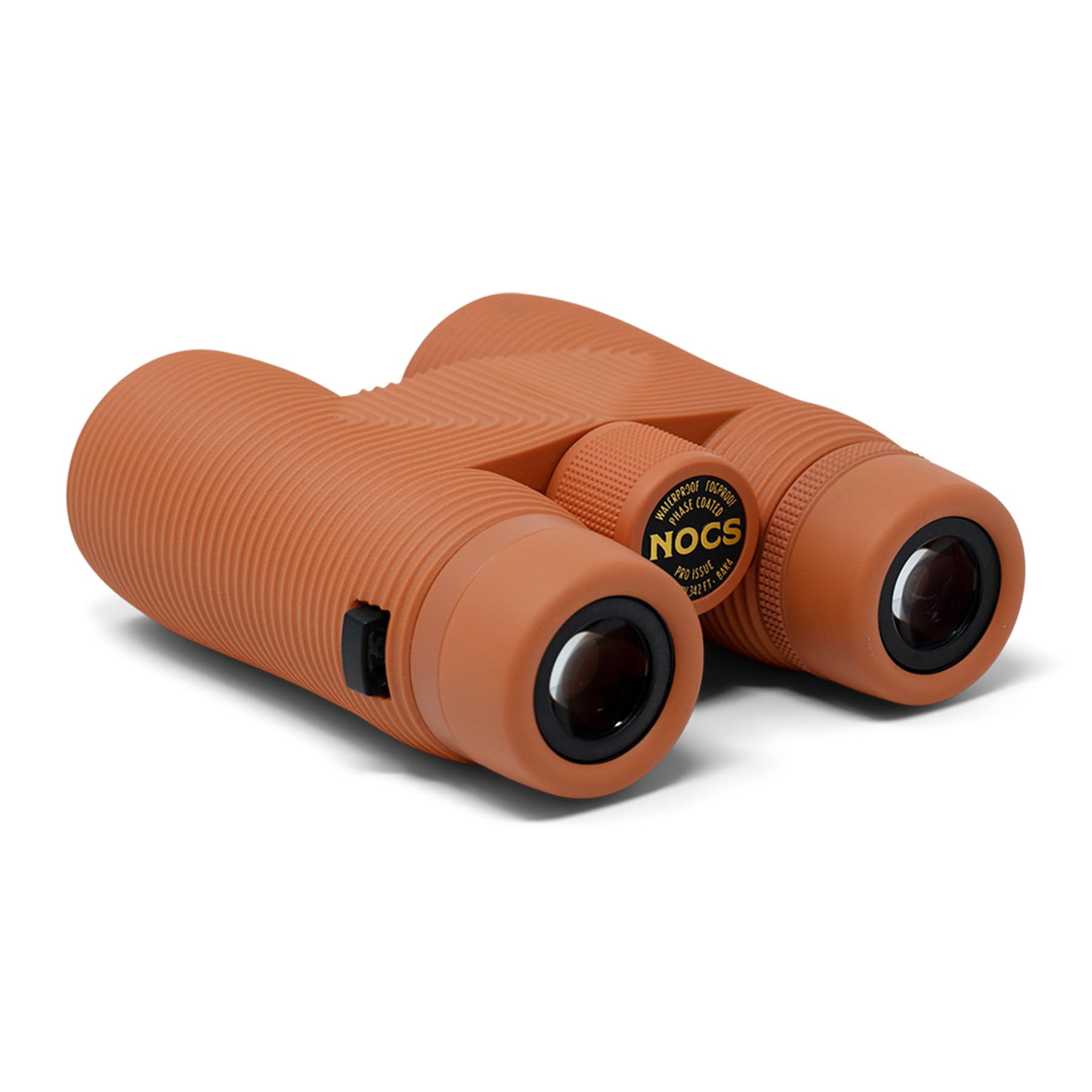
Nocs Provisions designed the Pro Issue for the modern birder who moves fast: it’s compact (25.4 oz), fully waterproof (IPX7), and has a remarkable close focus of under 6 feet. That means you can inspect a dragonfly on a twig or a nearby warbler without stepping back. The field of view is a generous 342ft at 1000 yards, ideal for scanning treelines.
The optical train uses Swiss-designed phase-coated Bak4P prisms and fully multi-coated lenses that produce a distortion-free, vivid image. The twist-up eyecups have three click stops, accommodating glasses-free and spectacle wearers with equal comfort. The “Rugged Wave Grip” rubber armoring is a nice touch — it locks in your palm even when wet. Nocs backs it with a “No-Matter-What” lifetime warranty, which covers everything except loss and theft.
Users who have taken the Pro Issue on African safaris reported that “everyone agreed they were the best set on tour.” Another buyer with a narrow interpupillary distance specifically praised the close-together barrels for fitting their face. If you value portability, near-macro capability, and a design that looks as good as it performs, the Pro Issue is a compelling choice.
Why we love it
- Excellent close focus (under 6 ft) for near subjects
- IPX7 waterproof and fogproof for all conditions
- Phase-coated Bak4P prisms provide crisp, contrasty views
- Lifetime warranty encourages adventure
Good to know
- Premium price sits near
- Not the lightest in its class (25.4 oz)
5. Leupold BX-4 Pro Guide HD 10×42

Leupold’s BX-4 Pro Guide HD is the binocular that serious birders buy when they want near-alpha performance without the alpha price tag. The open-bridge, dual-hinge chassis makes it exceptionally comfortable to hold for hours, and the weight sits at a manageable 23.3 oz. The calcium-fluoride HD lenses deliver incredible edge-to-edge clarity with minimal distortion.
The Bak4 prisms are dielectrically coated to maximize light transmission, and the locking diopter prevents accidental shifts. At 16mm eye relief, it works well for eyewear users. The focus knob is smooth and requires moderate effort — some prefer a faster throw, but it’s precise. The binoculars are 100% waterproof and fogproof, as expected at this level. The included case and neck strap are of high quality.
Several owners have compared the BX-4 directly to models costing hundreds more, often concluding “optics near Swarovski” with the caveat that low-light performance is slightly behind the priciest glass. A birder with a narrow IPD found the Leupold “crystal clear, bright, beautiful color” and said it beat Vortex and Nikon options for their face. If durability and optical fidelity are non-negotiable, this is a superb investment.
Why we love it
- HD calcium-fluoride glass for near-perfect clarity
- Lightweight open-bridge design reduces hand fatigue
- Locking diopter and long eye relief
- Legendary Leupold customer care
Good to know
- Low-light performance not quite at + level
- Focus wheel is a bit stiff for some users
6. ZEISS Conquest HDX 10×42

The Zeiss Conquest HDX sits at the pinnacle of enthusiast-level binoculars. With 90% light transmission, ED glass, aspheric lenses, and FieldFlattener technology, the image is literally edge-to-edge sharp — you can read the script on a bird band at 50 yards across the entire field of view. The colors are neutral and vivid; the contrast makes warblers pop against foliage.
Build quality is exceptional: a magnesium housing wrapped in rubber armoring, fully waterproof/fogproof, and nitrogen purged. The focus wheel requires only 1.3 rotations from close to infinity — lightning fast for tracking flying birds. The LotuTec coating sheds water and dirt, and the T* coating further reduces glare. The removable flip-down lens covers are a thoughtful addition, and the locking diopter ensures your setting is safe.
Reviewers often mention that these binoculars are “bright, sharp, and comfortable” and that the eye fatigue common with 10x is minimal. A few noted that the box may arrive unsealed (inspection by distribution) but the product is new. The price is steep, but for the birder who demands the finest tool and plans to keep it for a decade, the Conquest HDX is worth every penny.
Why we love it
- Incredible edge-to-edge sharpness with FieldFlattener
- Fast focus wheel (1.3 rotations) for active birding
- LotuTec and T* coatings perform in any weather
- Lightweight magnesium chassis (26.5 oz)
Good to know
- Premium investment — not for casual birders
- Some units may arrive in opened packaging
7. Vortex Copperhead HD 10×42

Vortex’s Copperhead HD brings the brand’s famous VIP unconditional lifetime warranty to a price that undercuts most competitors. The HD optical system (fully multi-coated lenses and BaK-4 prisms) delivers excellent color fidelity and brightness for the money. In field tests, the image remains sharp and contrasty, though the extra-low-light edge of pricier glass is absent.
The rubber armor provides a secure grip even in rain, and the binocular is fully waterproof and fogproof. The adjustable eyecups and diopter are smooth. At 17mm eye relief, it’s comfortable for glasses wearers. The bundle includes a GlassPak harness and a comfort neck strap — thoughtful additions. The binoculars are tripod-adaptable.
User feedback is overwhelmingly positive: one hunter used them for a full season in rain and snow “with no issues” and another noted “clarity is amazing for the price — could read letters on water towers miles away.” The only downside mentioned is that the Diamondback series is slightly sharper, but for the same price? The Copperhead HD wins outright. If you need a reliable pair with an unbeatable warranty, this is it.
Why we love it
- Unlimited, unconditional lifetime warranty (VIP)
- Good color fidelity for a mid-range price
- Includes harness and neck strap
- Waterproof and fogproof construction
Good to know
- Low-light performance not on par with ED glass models
- Heavier than some premium rivals (23.5 oz)
8. Bushnell H2O Xtreme 10×42

Bushnell’s H2O Xtreme lives up to its name: it’s built for rain, spray, and accidental dunkings. The fully multi-coated optics and BaK-4 prisms give a bright, clear image that surprised many reviewers accustomed to much pricier glass. The 17mm eye relief is generous, and the twist-up eyecups lock firmly.
The rugged rubber armor provides a non-slip grip when wet, and the O-ring sealed, nitrogen-purged body is 100% waterproof. One important caveat: some users discovered that the specific model (181042C FRP) does not have a tripod adapter socket, so if you plan to mount them, check the version. The attached objective lens caps are convenient, though some find them a bit bulky. The smooth focus knob and diopter are easy to operate with gloves.
Birders who use the H2O Xtreme on kayak trips or coastal marshes appreciate the worry-free waterproofing. “Clear and bright, good value” is a common summary. The lack of a tripod mount is the main drawback for digiscopers, but for handheld wet-weather birding, it’s a reliable companion at a low price.
Why we love it
- Robust IPX7 waterproofing for marine and rain
- Clear optics with good contrast
- Attached lens caps (easy to use)
- Affordable price point
Good to know
- No tripod adapter socket on some models
- Slightly heavier than compact alternatives
9. Three Triping 10×42 HD

Three Triping offers an impressive all-in-one package: binoculars, a tabletop tripod, and a smartphone adapter, all at a very friendly price. The binoculars themselves are no slouch — fully multi-coated lenses, BAK4 prisms, and a 336ft field of view deliver clear, crisp images that hold up well against models costing more. The IPX7 rating means you can use them in rain without worry.
The phone adapter is surprisingly functional and lets you digiscope with minimal fuss — a huge plus for birders who want to document finds. The tripod is light but stable enough for stills. For those who wear glasses, the adjustable eyecups make viewing comfortable. The whole kit comes in a padded case.
Reviews from cruise passengers and casual birders are consistent: “solid, durable, and sharp at long distances” and “comparable to top name brands at a much lower cost.” The entry-level build does show in the plastic-y feel compared to premium models, but for under this kit is unbeatable. If you’re new to birding or want a backup pair that can also shoot photos, buy the Three Triping with confidence.
Why we love it
- Complete kit with tripod and phone adapter
- Good optical clarity for the price
- IPX7 waterproof
- Fast focus and solid build
Good to know
- Accessories are functional but not premium
- Heavier due to kit inclusions
10. Barska Crush 10×42
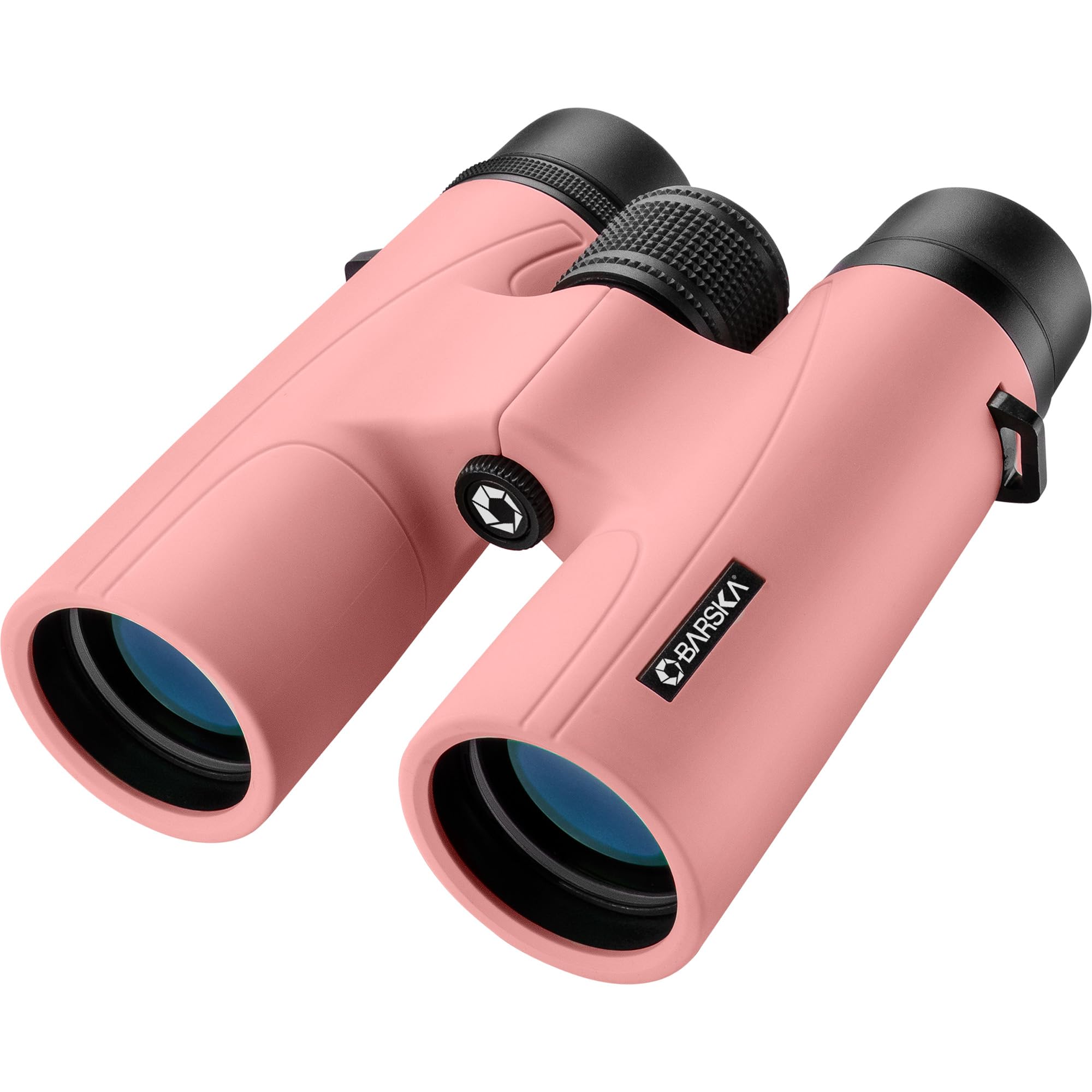
Barska’s Crush is designed for grab-and-go birding trips where weight and pocket-friendliness matter. At just over 20 oz, it’s one of the lighter 10x42s on the market, and the bright color options (green, orange, blue) make it easy to spot in a cluttered bag. The fully multi-coated optics and BaK-4 prisms produce a view sharp enough for most birding needs, though not as bright in twilight as premium glass.
The shock-absorbing rubber armor provides protection against drops — perfect for hiking or letting kids use. The focus knob is smooth, and the eyecups are comfortable. The included corduroy case is durable and stylish. Users have compared it to Vortex Triumph and found it “nearly identical in size and clarity” at a better price.
Several families bought extra pairs for children and teenagers, noting the durability and ease of use. The only downside mentioned is that the lens covers can be a bit loose. For the birder who needs a reliable, lightweight companion for everyday walks, travel, or as a spare, the Barska Crush delivers solid value.
Why we love it
- Lightweight and easy to carry all day
- Shockproof rubber armor for peace of mind
- Fun color options popular with families
- Very affordable price
Good to know
- Not fully waterproof – only water repellent
- Lens covers can feel less secure
11. Sogries 10-30×50 Zoom
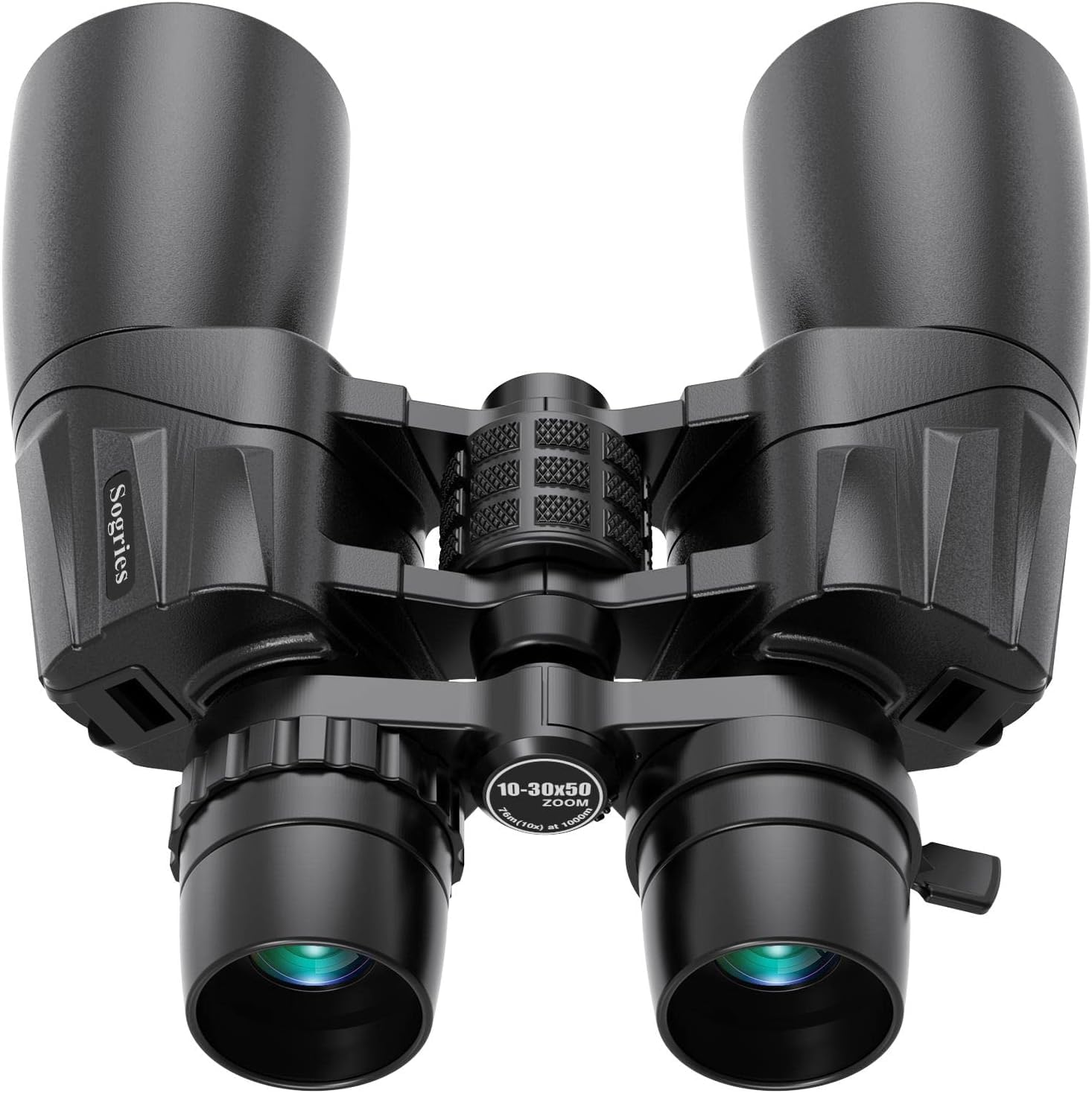
The Sogries zoom binocular is a different animal — it offers variable magnification from 10x to 30x using a 50mm objective lens for excellent light gathering. This is not a typical birding binocular for all-day carry (it’s heavier and needs a tripod for steady use at high zoom), but for specific situations like viewing distant raptors or scanning wide landscapes, it excels.
The optics are surprisingly good: BAK-4 prisms and FMC multi-coated broadband green film achieve 99.5% light transmission, delivering bright, high-contrast images. The 22mm eye relief is generous. The rubber armor has a non-slip fingerprint texture, and O-ring sealing makes it waterproof. The zoom lever is smooth and intuitive. Note that at 30x, a tripod is strongly recommended — the product itself advises tripod use.
Users who bought it for birding and daytime events loved the versatility: “clear at high power and good quality” and “great for casual birding and events.” The cheap lens covers are a common complaint, but the unit’s performance outweighs this quibble. If you want one binocular that can go from wide-field scanning to detailed inspection of a far-away eagle, the Sogries is a clever choice. Just budget for a sturdy tripod.
Why we love it
- Variable 10-30x zoom covers many use cases
- Bright, sharp images with 50mm objectives
- Waterproof build and comfortable grip
- Great value for a zoom binocular
Good to know
- Heavier and requires tripod at high magnification
- Lens covers feel cheap and don’t stay on well
Safety & Care Tips
Keeping Your Optics Clean
Use a blower brush to remove dust and grit before wiping the lenses. Always use a microfiber cloth or lens pen — never your shirt or paper towels. For stubborn smudges, breathe gently on the glass and wipe in a spiral from center outward. Store binoculars in a dry case with silica gel packs to prevent fungus in humid climates.
Extending the Life of Your Binoculars
Never store binoculars in direct sunlight or a hot car for long periods — heat can degrade seals and lubricants. Keep lens caps on when not in use. If your binoculars get wet, dry them with a soft cloth and let them air out open (lens caps off) in a shaded, breezy spot. Check the O-rings annually and have them replaced if signs of cracking appear. For binoculars with a tripod adapter, avoid over-tightening the screw.
FAQ
Why is 10×42 the standard magnification for birding?
What does fully multi-coated mean?
Should I choose roof or porro prism binoculars?
How important is the warranty for binoculars?
Final Thoughts: The Verdict
For most birders, the best 10×42 binoculars for bird watching winner is the Nikon PROSTAFF P7 because it balances price, optical performance, and lightweight construction better than any other. If you want the sharpest ED glass without jumping to , grab the Nikon Monarch M5. And for budget-conscious digiscopers, the Three Triping kit includes everything you need to start capturing bird photos today.