
Basements present a unique air quality challenge — they are typically below grade, poorly ventilated, and prone to trapping humidity, dust, mold spores, and volatile organic compounds from stored chemicals or fuel. A standard living-room purifier often lacks the CADR, filter density, and odor-control capacity to handle the higher contaminant load and larger cubic footage of a finished or unfinished basement.
I’m Mo Mahin — the founder and writer behind Furric. I’ve spent years studying indoor air quality data, comparing CADR ratings against real-world basement conditions, and analyzing thousands of aggregated owner reports to identify which purification technologies actually hold up below ground.
Whether you are combating musty odors, workshop dust, or seasonal allergens seeping through foundation gaps, selecting the right air purifier for basement requires understanding how clean air delivery rate, filter longevity, and noise tolerance intersect in an enclosed, often unfinished space.
How To Choose The Best Air Purifier For Basement
Basements differ from bedrooms and living rooms in three critical ways: they are often larger in cubic feet, they sit at a lower elevation where heavier-than-air contaminants like VOCs and radon byproducts accumulate, and they may lack central HVAC returns. An undersized unit will run constantly without ever achieving clean air. Here are the specs to prioritize.
Prioritize CADR Over Square Footage Claims
Clean Air Delivery Rate (CADR) — measured in cubic feet per minute (CFM) — tells you how quickly a purifier removes smoke, dust, and pollen. A basement with an 8-foot ceiling and 1,000 square feet has 8,000 cubic feet of air. You want a smoke CADR of at least 200 CFM to cycle that volume four times per hour. Ignore marketing that quotes coverage at one air change per hour; aim for four to five changes for effective basement control.
Never Skimp On Activated Carbon
Musty odors, paint fumes, gas vapors, and off-gassing from stored items require adsorption, not just particle capture. Look for a substantial activated carbon layer or separate carbon filter — not a thin, mesh-embedded sheet. The best basement units use either a dense carbon bed or a washable filter system with ozone-removal stages to handle chemical loads without frequent cartridge swaps.
Quiet Operation Matters Below Grade
Unlike a living room where you may turn the unit off at night, a basement purifier often runs 24/7 in a space near sleeping areas or home offices. Look for a sleep or night mode rated at 24 dB or lower. Units with smart auto sensors that ramp up only when pollution spikes allow you to keep the unit on constantly without auditory fatigue.
Quick Comparison
On smaller screens, swipe sideways to see the full table.
| Model | Category | Best For | Key Spec | Amazon |
|---|---|---|---|---|
| LEVOIT Core 400S-P | Mid-Range | Smart basement control | Smoke CADR 231 CFM | Amazon |
| Coway Airmega AP-1512HH | Mid-Range | Reliable auto sensing | Smoke CADR 233 CFM | Amazon |
| PuroAir 400 | Mid-Range | Large room coverage | 2,000 sq ft coverage | Amazon |
| Dhyala KJ02 | Mid-Range | Pet-friendly basement | CADR 271 CFM | Amazon |
| LEVOIT Core 300-P | Budget | Small basement spaces | Smoke CADR 143 CFM | Amazon |
| Sans HEPA 13 | Premium | UV-C supplemental treatment | HEPA 13 + UV-C layer | Amazon |
| Nuwave Forever | Premium | Zero filter waste | Washable 7-stage system | Amazon |
| Nuwave Forever Plus | Premium | Massive basement coverage | 3,210 sq ft coverage | Amazon |
| AirDoctor AD4000 | Premium | Hospital-grade filtration | UltraHEPA 0.003 microns | Amazon |
In‑Depth Reviews
1. LEVOIT Core 400S-P

The LEVOIT Core 400S-P strikes the optimal balance for basement use: a smoke CADR of 231 CFM lets it cycle a 1,000-square-foot basement roughly five times per hour, while the built-in laser PM2.5 sensor continuously adjusts fan speed as pollutant levels shift. The 3-in-1 HEPA-grade filter captures 99.97% of particles down to 0.3 microns, and the activated carbon layer handles the VOCs and odors common in below-grade spaces — paint fumes, cleaning agents, and musty smells from concrete walls.
AHAM Verifide certification provides independent validation of the CADR numbers, so you are not relying on inflated marketing claims. The 24 dB sleep mode keeps the unit unobtrusive during overnight operation, and the display can be dimmed completely. The Votexair technology and ARC Formula specifically target odors from VOCs, which matters when you store solvents or fuel in the basement.
The VeSync app enables remote monitoring and scheduling, which is helpful when the unit lives in an unfinished area you do not visit daily. Filter replacement is straightforward, though proprietary filters add recurring cost — plan for a swap every six to eight months depending on contaminant load.
Why we love it
- Proven CADR numbers backed by AHAM Verifide
- Auto mode with real-time PM2.5 display adjusts to basement conditions
- App and voice control for convenience in unfinished spaces
Good to know
- Proprietary replacement filters add recurring expense
- WiFi setup can be finicky on first pairing
2. Coway Airmega AP-1512HH
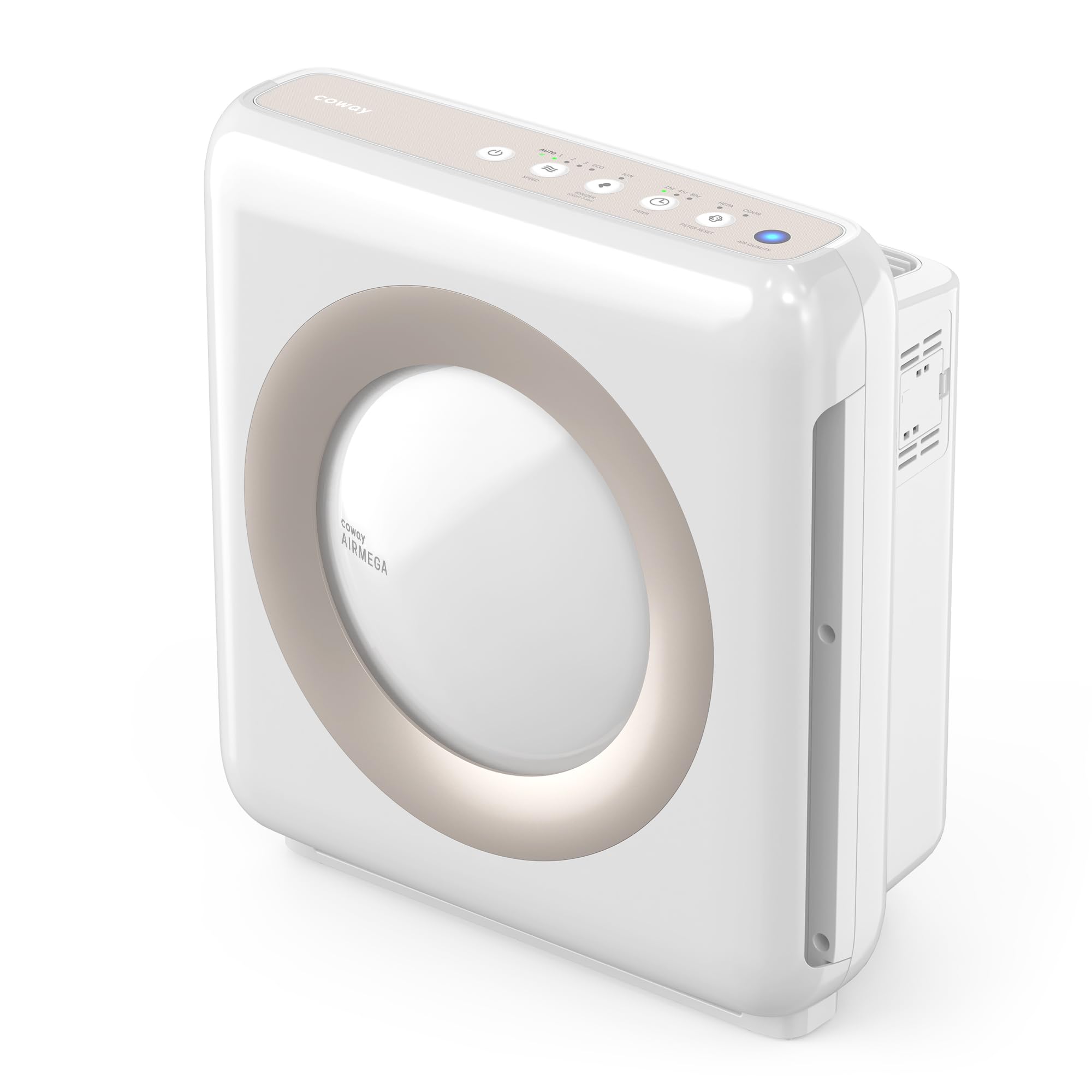
The Coway Airmega AP-1512HH has earned its reputation as a Wirecutter top pick for good reason. With a smoke CADR of 233 CFM, it slightly edges out the LEVOIT in raw particle removal speed while covering a more modest room size of 361 square feet per the standard. In a basement context, that means positioning it centrally in a smaller finished basement or running it in a partitioned utility room for targeted cleaning.
The four-stage filtration includes a washable pre-filter, a deodorization carbon layer, a True HEPA filter, and a Vital Ion option. The pollution sensor communicates air quality through a brightly colored LED ring, so you can glance at it from across the room. After 30 minutes without detecting pollution, the unit automatically switches to Eco mode, which saves energy when the basement is unoccupied.
Noise levels range from 24.4 dB on low to 53.8 dB on high, making it one of the quieter options at the lower end. The timer function (1/4/8 hours) allows you to run it during peak activity periods. Filter replacement indicators check both the pre-filter and HEPA separately, so you know exactly when to wash versus replace.
Why we love it
- Independent sensor reliably detects real-time air quality changes
- Eco mode saves energy when the basement is empty
- Washable pre-filter reduces replacement frequency
Good to know
- Coverage is limited to 361 sq ft — less suited for large open basements
- Auto mode cannot be set to default to medium speed
3. PuroAir 400
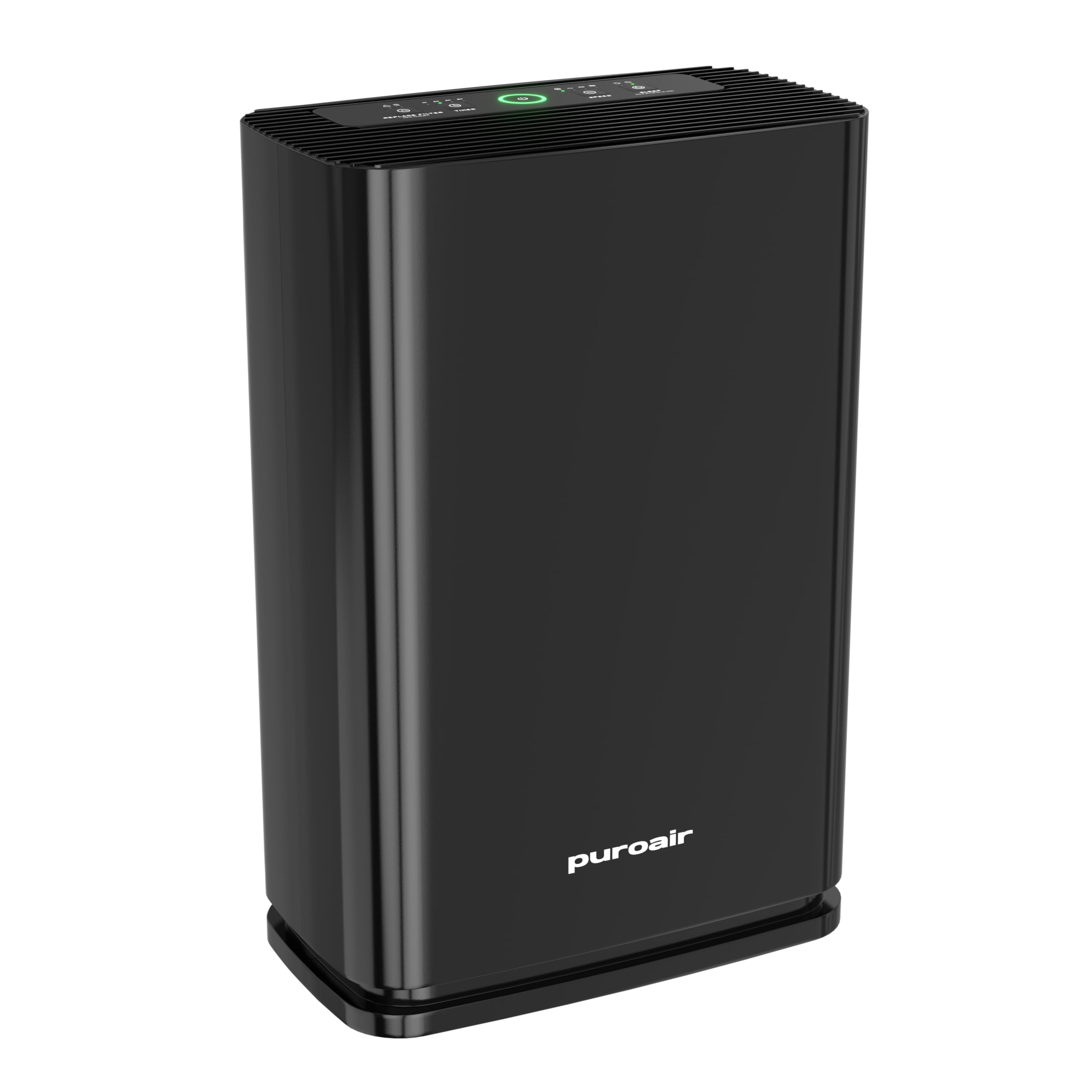
The PuroAir 400 positions itself as a large-room solution with a 2,000-square-foot one-hour coverage claim. For a basement that spans the entire footprint of the house — especially an open-concept finished basement — this gives you flexibility to place the unit in a central location and trust that air movement will reach the corners. The three-layer filtration system (pre-filter, HEPA, activated carbon) filters particles down to 0.3 microns and includes a smart particle sensor that automatically increases fan speed when pollution spikes.
At low speed, the unit operates at a near-silent level, which is ideal when the basement doubles as a guest suite or home theater. The sleep mode dims the display and further reduces acoustic output. The PuroAir app shows filter life percentage and allows manual speed selection, though the auto mode works well enough that you can largely set it and forget it.
Owner reports highlight its effectiveness against mold allergy symptoms — runny nose and congestion decreased noticeably within three weeks of continuous operation. The compact footprint (17.5 x 10.6 x 12.5 inches) means it tucks into corners without dominating the space. Filter replacements are the primary ongoing cost, and aftermarket filters may provide shorter service life than the genuine units.
Why we love it
- Broad coverage ideal for large, open basements
- Smart sensor auto-adjusts to pollution spikes
- Near-silent low speed for 24/7 operation
Good to know
- Replacement filters are relatively expensive
- Sensor may not detect very fine particles below 0.3 microns
4. Dhyala KJ02
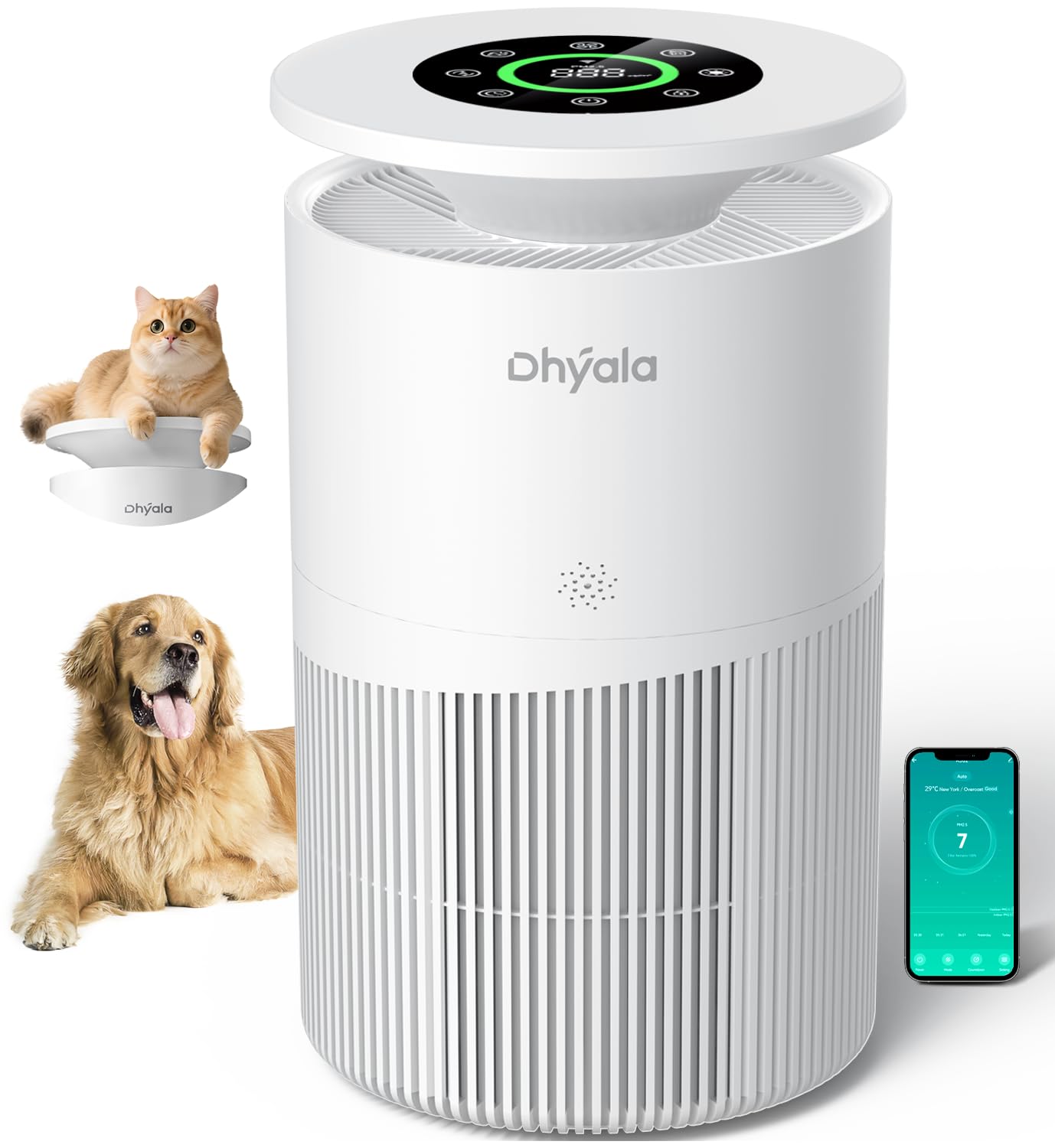
The Dhyala KJ02 brings a CADR of 271 CFM — the highest among the mid-range options here — and a 360-degree air intake that pulls contaminated air from every direction. In a basement with utility shelves, storage bins, or HVAC equipment that disrupts airflow, the omnidirectional intake ensures more consistent coverage than a unit with a single-sided intake. The five-stage filtration includes an electrostatic pre-filter that captures 40% more pet dander than standard pre-filters, which matters if your basement doubles as a pet zone or if pet hair migrates downstairs.
A unique feature is the lying platform designed for pets to rest on the unit, along with a bite-proof power cord and a child/pet safety lock. For basement use, the safety lock is equally valuable for preventing accidental setting changes when the unit is placed near play areas or workshop spaces. The smart app and voice control via Alexa or Google Assistant let you adjust settings without walking to the basement.
Owner feedback confirms the auto mode works well — sensors pick up cooking odors even from 20 feet away and ramp up fan speed accordingly. The 22 dB sleep mode is genuinely quiet, and the display can be turned off entirely. The compact 9.84-inch square footprint minimizes floor space consumption.
Why we love it
- Highest CADR in its price tier at 271 CFM
- 360-degree intake improves coverage in cluttered basements
- Pet lock and bite-proof cord add durability
Good to know
- Brand is newer with less long-term reliability data
- App may not be as polished as established competitors
5. LEVOIT Core 300-P

The LEVOIT Core 300-P is the most affordable option in this lineup, with a smoke CADR of 143 CFM that suits a smaller basement or a partitioned section of a larger one. Its AHAM Verifide certification confirms the CADR numbers are independently tested — a rarity at this price point. The 56W high-torque motor moves air quietly, with sleep mode dropping to a near-silent 24 dB that lets the unit run all night without disturbing adjacent sleeping areas.
The 3-in-1 filter captures 99.97% of particles down to 0.3 microns, and the multiple filter choices — Toxin Absorber, Smoke Remover, Pet Allergy — allow you to customize the filtration medium to the specific contaminant profile of your basement. If the predominant issue is musty odors and VOCs from stored chemicals, the Toxin Absorber filter is the better choice; for smoke or pet dander, the dedicated variants perform better.
At just 7.9 pounds and a compact 8.7-inch diameter, the Core 300-P is easy to move between rooms or reposition within the basement. The timer (2/4/6/8 hours) and display-off option make it flexible for intermittent use. The downsides are the smaller filter size — expect replacement every four to six months rather than annually — and the limited coverage of roughly 222 square feet at 4.8 air changes per hour.
Why we love it
- AHAM Verifide certification at an approachable price
- Interchangeable filter media for specific basement contaminants
- Very quiet sleep mode for overnight basement use
Good to know
- Smaller coverage area limits use to compact basements
- Filters need more frequent replacement than larger units
6. Sans HEPA 13

The Sans HEPA 13 adds a UV-C light layer to the standard HEPA and carbon filtration, offering supplemental biological control for mold spores and bacteria that may accumulate in damp basements. The True HEPA 3-in-1 system captures 99.9% of particles down to 0.1 microns, and the heavy-duty activated carbon layer handles stubborn odors — including the musty smell that often originates from concrete and carpet in below-grade spaces.
The 1,560-square-foot coverage is realistic for a mid-size finished basement, and the smart auto mode adjusts fan speeds based on real-time air quality readings. The sleep mode drops noise to a whisper and dims all display lights, making it suitable for a basement guest room. Filter replacement is straightforward, with an onboard indicator that alerts you when it is time — typically every six to twelve months depending on use.
Owner reports note that the unit effectively reduced dust accumulation in connected spaces like bathrooms and laundry areas, and one user observed fading black mold in the shower, suggesting the UV-C component may provide an added layer of suppression. The 5-year warranty (register with Sans) is a strong indicator of build confidence, though the upfront investment is higher than mid-range alternatives.
Why we love it
- UV-C layer adds biological suppression for mold spores
- 5-year warranty signals long-term durability
- Heavy carbon layer adsorbs musty basement odors well
Good to know
- Premium price places it above most mid-range options
- UV-C bulb may need periodic replacement
7. Nuwave Forever

The Nuwave Forever eliminates the single biggest ongoing cost of basement air purification: filter replacements. The seven-stage system uses stainless-steel pre-filters, Bio-Guard filters, and ozone removal filters that are all washable and reusable, which is particularly valuable in a basement setting where you may want to let the unit run 24/7 without worrying about a monthly filter budget. The system covers 2,002 square feet and captures particles down to 0.1 microns.
The adjustable flow panel lets you direct clean air at 30°, 60°, or 90° increments — a practical feature for positioning the unit against a wall or under low basement ceilings while still aiming airflow toward the center of the room. Auto mode uses both particle and odor sensors to adjust fan speed, and the six manual speeds give you granular control. The Energy Star certification keeps electricity costs low even with continuous operation.
Owner feedback from pet owners with multiple large dogs is overwhelmingly positive — washable filters capture heavy dander loads without clogging, and a weekly rinse in hot water restores performance. The higher upfront cost is offset by the elimination of recurring filter purchases, making it a more economical choice over a three-to-five-year horizon. The unit is heavier at 21.85 pounds, so plan for a semi-permanent placement rather than frequent relocation.
Why we love it
- Zero filter replacement cost over the life of the unit
- Adjustable flow panel directs air where needed
- Energy Star rated for low continuous power draw
Good to know
- Higher initial investment compared to disposable-filter units
- Washable filters require 24-hour drying time after cleaning
8. Nuwave Forever Plus
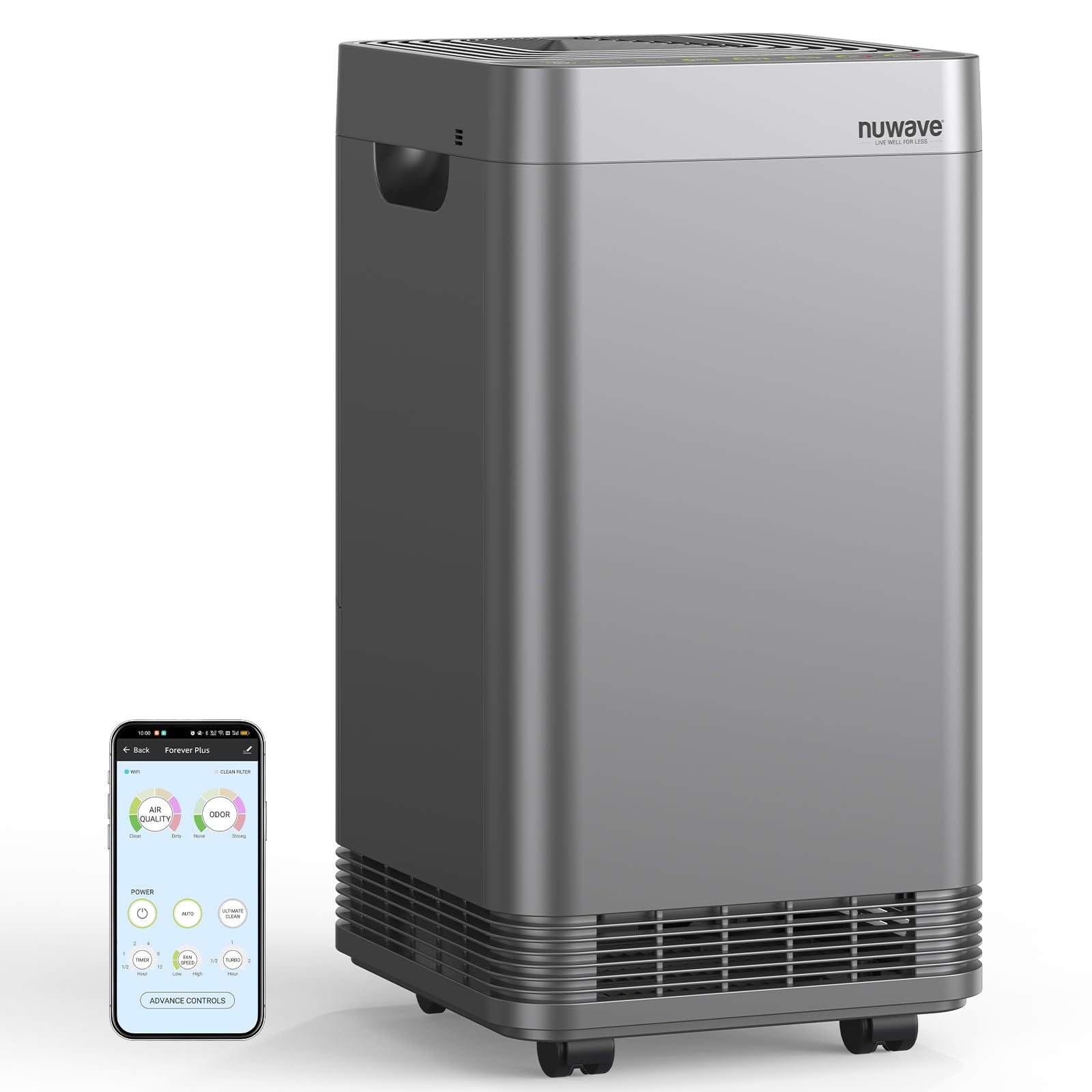
The Nuwave Forever Plus scales up the washable-filter concept to cover 3,210 square feet — enough for a full basement spanning the entire footprint of a large home. The four-stage ultra filtration includes a stainless-steel pre-filter, an ozone emission removal filter, and two Bio-Guard filters, all of which are washable and reusable. The Turbo Mode runs at maximum speed for 30 minutes, 1 hour, or 2 hours to rapidly clear heavy contamination after renovation work, painting, or flooding remediation.
The nighttime mode drops to 18 dB — the quietest rating in this entire lineup — and turns off all indicator lights, making it suitable for a basement that doubles as a bedroom or nursery. Auto Mode continuously monitors air quality and adjusts fan speed with precision, and the app can sync up to 100 units for large commercial or multi-unit residential basements. The unit weighs 28.6 pounds and stands 26.25 inches tall, so it is a permanent fixture rather than a portable device.
Owner reports confirm significant dust reduction across large homes, with the unit running mostly in dead-quiet auto mode and only briefly ramping up when sensors detect dust or odor spikes. The ozone-safe design is CARB certified, which is relevant for enclosed basements where ozone accumulation could be problematic. The app has received criticism for security flagging by some antivirus tools, so weigh that against the unit’s hardware performance.
Why we love it
- Enormous coverage for whole-basement purification
- 18 dB sleep mode is the quietest available
- Washable filters eliminate recurring costs
Good to know
- Very heavy and large — not for frequent repositioning
- Companion app has raised security concerns
9. AirDoctor AD4000
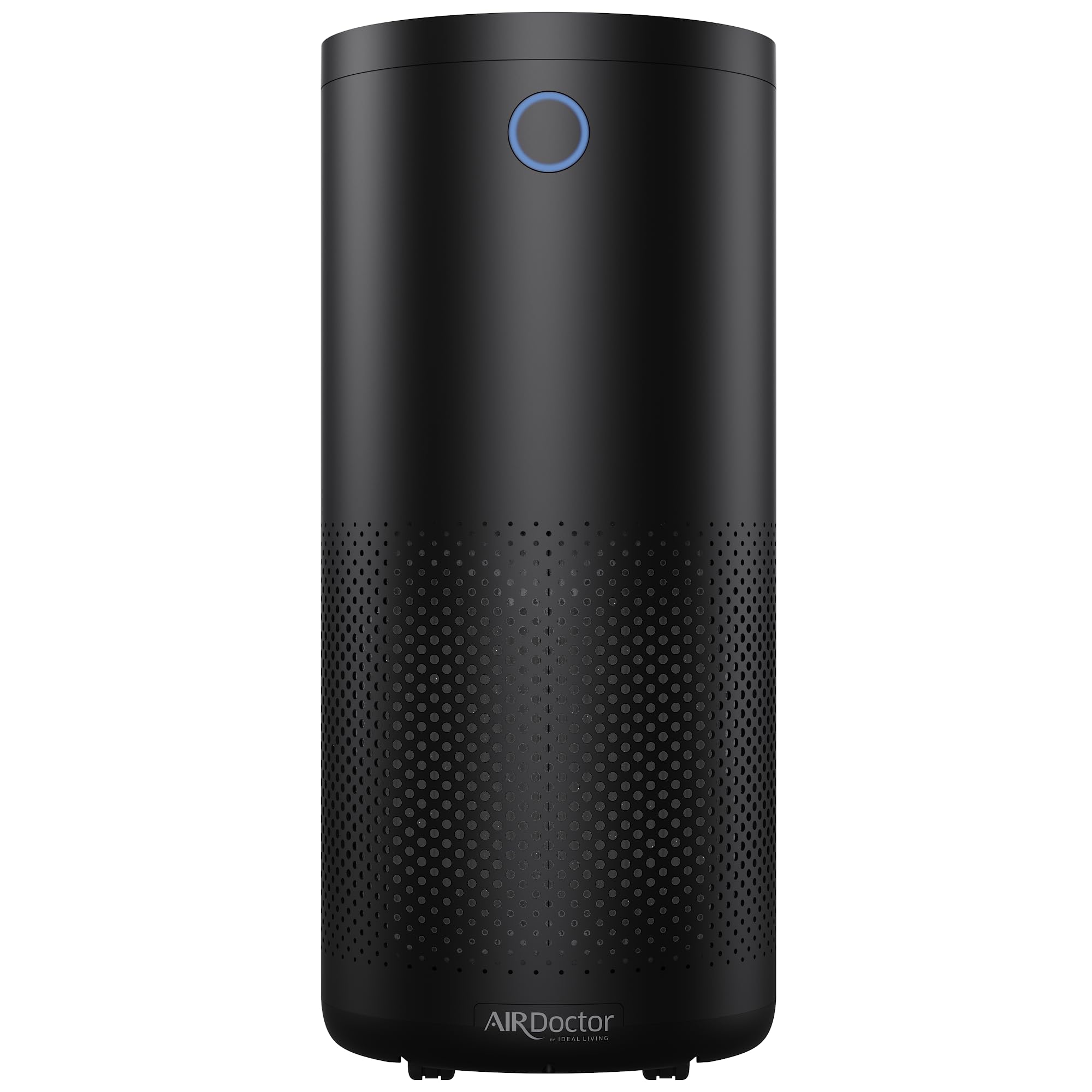
The AirDoctor AD4000 represents the peak of consumer air purification performance for basement use, employing UltraHEPA filtration that captures 99.99% of particles at 0.003 microns — 100 times smaller than the standard HEPA threshold. For a basement where mold spores, bacteria, and ultrafine particulate from gas appliances or workshop processes are concerns, this level of filtration provides a measurable safety margin that standard HEPA units cannot match.
The three-stage system includes a pre-filter, a premium activated carbon and potassium permanganate filter for gases and odors, and the UltraHEPA filter. The carbon-plus-potassium permanganate blend is particularly effective at breaking down VOCs, which is the chemical cocktail that often causes that “basement smell.” The unit covers 630 square feet in 15 minutes and up to 2,520 square feet in one hour, with a ceiling of 2,776 square feet.
The AirDoctor Halo displays color-coded air quality levels, and auto mode adjusts fan speed based on real-time readings from the PM2.5 sensor. The six fan speeds and timer provide flexibility, and the unit rolls on wheels for repositioning despite its 20-pound weight. Owner feedback emphasizes its effectiveness for allergy households — reduced sneezing and congestion were reported within weeks. The trade-off is a high upfront price and filter replacements that cost roughly annually.
Why we love it
- UltraHEPA captures particles as small as 0.003 microns
- Carbon + potassium permanganate handles VOCs effectively
- Wheels allow repositioning despite the size
Good to know
- Highest upfront cost in this lineup
- Annual filter replacement runs about
FAQ
What CADR rating do I need for a 1,500-square-foot basement with 8-foot ceilings?
Should I choose a unit with a washable or disposable filter for a basement?
Does a purifier help with high humidity or mold growth in the basement?
Can I use a basement purifier in an unfinished space with exposed insulation and concrete floors?
Is an ozone-generating purifier safe for basement use?
Final Thoughts: The Verdict
For most homeowners, the air purifier for basement winner is the LEVOIT Core 400S-P because it delivers the highest independently verified CADR in its price tier, smart auto mode that responds to real-time conditions, and a 24 dB sleep mode that runs unobtrusively overnight. If you want zero recurring filter costs and the ability to direct airflow, grab the Nuwave Forever. And for hospital-grade protection against ultrafine particles and VOCs in a large basement, nothing beats the AirDoctor AD4000.