
Whether you’re battling string algae in a backyard pond or cyanobacteria blooms in a reef tank, the right chemical intervention can restore clarity without nuking your biological filter.
I’m Mo Mahin — the founder and writer behind Furric. I spend my days cross-referencing aquatic chemistry data, parsing manufacturer spec sheets for concentration ratios and active ingredients, and analyzing thousands of verified owner reports to separate the formulas that actually work from those that simply cloud the issue.
After reviewing the top-selling liquid algaecides, tablet inhibitors, and reef-safe oxidizers on the market, I’ve narrowed the field to the five most effective treatments. This guide covers the best algae remover for aquarium across pond, freshwater, and saltwater applications.
How To Choose The Best Algae Remover For Aquarium
Algae treatments are not one-size-fits-all. The formula that clears a green-water pond can nuke the invertebrates in a reef tank. Before you pour anything into your water column, match the active chemistry to your specific setup.
Match the chemistry to your algae type
String algae and blanketweed respond to polyquaternary ammonium compounds (polyquats) and sodium carbonate peroxyhydrate. Planktonic green water requires a copper-based algaecide or a strong oxidizer. Cyanobacteria (red slime) in saltwater tanks demands an erythromycin-based or percarbonate-based treatment that won’t crater your pH. Read the label’s target algae list — if your species isn’t mentioned, the product likely won’t work.
Calculate your exact water volume
Every algaecide lists dosing per gallon. Overdosing is the fastest way to kill fish — the margin between effective concentration and toxic concentration is often just 2x. Measure your tank or pond’s true volume (length × width × average depth in inches ÷ 231 for gallons). Subtract displacement from rocks and decorations. A 10% error on a 3000-gallon pond can waste treatment or nuke your stock.
Check livestock compatibility
Most liquid algaecides are safe for fish and plants when used at label rates. But snails, shrimp, clams, crustaceans, and mollusks are extremely sensitive to copper and polyquats. Reef tanks with invertebrates require oxidizer-based removers that break down into oxygen and water. If you keep ornamental shrimp, look for “invertebrate safe” or “reef safe” on the bottle — never assume.
Quick Comparison
On smaller screens, swipe sideways to see the full table.
| Model | Category | Best For | Key Spec | Amazon |
|---|---|---|---|---|
| Ultralife Red Slime Stain Remover | Oxidizer | Saltwater reef cyano outbreaks | 0.71 oz treats 150 gallons | Amazon |
| Microbe-Lift XTA16 Xtreme | Water Conditioner | Freshwater planted tanks | 16 oz treats 2,400 gallons | Amazon |
| Tetra No More Algae Tablets | Tablet Inhibitor | Glass & acrylic maintenance | 24 tablets / 8 per pack | Amazon |
| The Pond Guy InstaFix | Liquid Algaecide | Small ponds & birdbaths | 16 oz / 473 mL bottle | Amazon |
| Tetra Pond AlgaeControl | Liquid Algaecide | Large ornamental ponds | 10 mL per 120 gallons | Amazon |
In‑Depth Reviews
1. Ultralife Red Slime Stain Remover

This is the go-to weapon for cyanobacteria outbreaks in reef aquariums. The 20 mL vial treats up to 150 gallons, and the sodium percarbonate chemistry breaks down into oxygen and soda ash — meaning zero residual toxicity for corals, anemones, and inverts when instructions are followed. Users consistently report visible clearing of red slime within 24 hours after the first dose.
The powder dissolves reluctantly; you must mix it thoroughly in a cup of tank water before adding. Airstone operation 24 hours before and during the 96-hour treatment window is non-negotiable — the oxidizer consumes dissolved oxygen. Skimmers will over-foam for 2–3 days, so adjust the collection cup or turn off the skimmer temporarily to avoid overflow.
Two doses back-to-back eliminate stubborn cyano that a single treatment only knocks back 80%. The included spoon measures approximately 0.7 grams per scoop, making repeat dosing consistent. Keep the lights on during dosing hours to maximize oxygen production from photosynthesis — adding at night risks hypoxia.
Why we love it
- Eliminates cyano in 24 hours without harming corals or inverts
- Breaks down into oxygen and water — no chemical residue
- Cost-effective at one vial per 150 gallons
Good to know
- Requires airstone 24h before and during treatment
- Skimmer over-foams for days after dosing
- Not effective against green hair or string algae
2. Microbe-Lift XTA16 Xtreme Water Conditioner
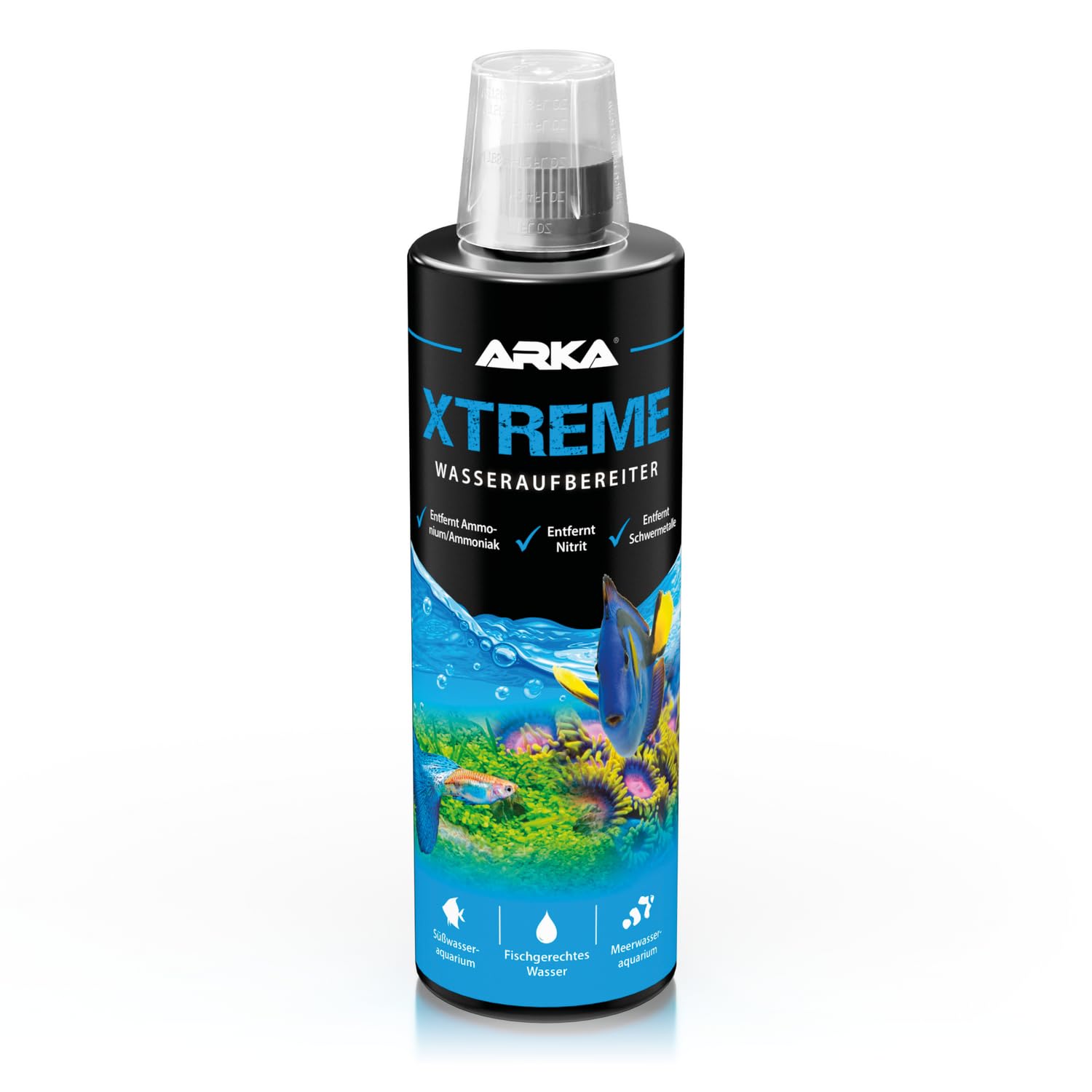
This isn’t a spot-treatment algaecide — it’s a full-spectrum water conditioner that attacks algae at its nutritional root by detoxifying ammonia, nitrite, chloramines, and chlorine simultaneously. The thick, viscous formula pours noticeably heavier than runny competitors, and the multi-part skin-slime replacer reduces fish stress during water changes. In a 40-gallon planted freshwater tank, half the recommended dose keeps water crystal clear for weeks.
Users with shrimp and algae-eating fish report months without needing a water change while water parameters stay stable. The biological filter doesn’t crash because the product works chemically, not biologically. For planted tanks, the ammonia removal prevents the nitrogen spikes that feed algae blooms in the first place — making it a preventive solution rather than a reactive shock treatment.
One 16-ounce bottle treats up to 2,400 gallons, which is exceptional for the price tier. It’s hard to find in big-box pet stores, so online ordering is the primary channel. Best for aquarists who want a single product that handles water conditioning and algae prevention without juggling multiple bottles.
Why we love it
- Prevents algae by removing ammonia and nitrite at the source
- Extremely concentrated — 2,400 gallons per bottle
- Thick formula contains skin-slime replacer for fish health
Good to know
- Does not directly kill existing algae blooms
- Hard to find in local pet stores
- Not designed for pond use — freshwater tanks only
3. Tetra No More Algae Tablets

These tablets are the most convenient option for beginners who want drop-and-forget algae control. A half-tablet treats a 10-gallon tank; one tablet handles up to 20 gallons. The active ingredient inhibits algae growth at the cellular level rather than shocking the system, so you don’t get the oxygen crash that liquid algaecides sometimes cause. Users report visible reduction in wall algae within 48 hours.
A critical distinction: these tablets are inhibitors, not shock removers. They work best after you manually scrub the glass and gravel — the tablet then prevents regrowth and slowly dissolves any leftover biofilm through the filter. Owners who expect the tablets alone to clear a heavily infested tank are often disappointed. Pair with a good mechanical filter and a regular water change schedule.
The three-pack provides 24 tablets total, which for a 10-gallon tank means nearly a year of maintenance at a half-tablet per week. Acrylic-safe and glass-safe, with no risk of scratching. Fish, snails, and shrimp show no stress symptoms when used at the recommended dose.
Why we love it
- Simple drop-in dosing — no measuring cups or syringes
- Safe for glass and acrylic tanks
- Lasts nearly a year for small tanks
Good to know
- Requires manual cleaning before use — not a standalone cure
- Each tablet only covers up to 20 gallons
- Not effective on string algae or cyanobacteria
4. The Pond Guy InstaFix Algae Control

This EPA-registered liquid algaecide targets both planktonic green water and filamentous string algae in outdoor water features up to roughly 500 gallons. The polyquat-based formulation is fast-acting — owners report clearing green water within three to four days, though string algae may require a second application at the 7-day mark. The included measuring cup takes the guesswork out of dosing.
Fish and plants are safe at label rates, but snails, shrimp, clams, and crustaceans are not tolerant of polyquat chemistry. If your pond has ornamental invertebrates, avoid this product. Aeration is essential: the label explicitly recommends use with a fountain, waterfall, or aerator. Without sufficient oxygen, the chemical action can stress fish, especially in warm weather when dissolved oxygen is already low.
Some users report needing reapplication every 4–5 days in hot, sunny conditions (85°F+), so this works better as a maintenance algaecide than a one-shot cure. The 16-ounce bottle is priced well below most pond-specific treatments, making it a solid entry-level option for small water gardens and birdbaths.
Why we love it
- Controls both green water and string algae in one formula
- Comes with a dosing cup for accurate measurement
- Safe for fish, plants, and birds
Good to know
- Not safe for snails, shrimp, or crustaceans
- Requires strong aeration during treatment
- May need weekly reapplication in hot weather
5. Tetra Pond AlgaeControl 16.9 oz

Designed for established ornamental ponds with synthetic liners, this liquid formula uses 10 mL per 120 gallons to combat green water, string algae, hair algae, and blanketweed. The concentrated dosing means a single 16.9-ounce bottle treats roughly 6,000 gallons — the highest coverage in this lineup. Owners of 3,000-gallon koi ponds report complete water clearing within 10 days when following a graduated 6-day dosing schedule.
Overdosing is the primary risk: multiple verified reports of fish kills trace back to exceeding the label rate. The margin between effective and toxic is narrow, especially in ponds without strong waterfalls or pumps. Ensure maximum oxygenation before and during treatment. A staged approach — 3 caps at sunrise day 1, 2 caps day 2, 1 cap days 3–6 — keeps concentration safe while building effectiveness.
This product works best as part of a system: combine with beneficial bacteria supplements and manual removal (pull visible string algae by hand before dosing). Water lettuce and other floating plants also help compete for nutrients after the chemical clears the bloom. Some users with severe infestations report no results — those cases typically involve unmeasured dosing or pond volumes that exceed the treatment’s effective range.
Why we love it
- High-yield dosing — one bottle treats up to 6,000 gallons
- Effective against green water and multiple algae species
- Fish and plant safe at label rates
Good to know
- Overdosing can kill fish quickly — measure carefully
- Not effective for all users on stubborn string algae
- Only for ornamental ponds with synthetic liners
FAQ
Can I use pond algaecide in my glass aquarium?
How long does it take for algaecide to clear the water?
Will algae removers harm my filter bacteria?
What is the difference between an algicide and an algaestat?
Can I use algaecide with shrimp and snails in the tank?
Final Thoughts: The Verdict
For most aquarists, the best algae remover for aquarium winner is the Microbe-Lift XTA16 Xtreme because it prevents algae by eliminating the nutrients that feed it — ammonia, nitrite, and chloramines — while protecting fish with a skin-slime replacer. If you need to nuke an active cyanobacteria bloom in a reef tank, grab the Ultralife Red Slime Stain Remover. And for simple drop-in maintenance in small glass tanks, nothing beats the Tetra No More Algae Tablets.