
A kid stares at a few grains of sand shifting inside a plastic box. That first tunnel breaking through the transparent wall flips a switch — suddenly biology is real, not a page in a textbook. The wrong ant farm kills that moment fast. Sand that doesn’t hold structure. A habitat too small for the colony to express itself. Instructions that forget to mention the ants need a queen and consistent moisture. The difference between a drawn-out death and a thriving observation lab comes down to design choices that serious buyers check before they open the box.
I’m Mo Mahin — the founder and writer behind Furric. I’ve spent over a decade analyzing product specs, digging into horticultural and entomological data, and cross-referencing thousands of owner experiences to separate the kits that actually sustain a colony from the ones that let you down.
Whether you’re setting up a classroom station or a home science project for your child, choosing the right ant farm comes down to sand quality, habitat depth, and long-term colony support features that most buyers overlook on their first purchase.
How To Choose The Best Ant Farm
An ant farm is a live habitat, not a toy. The wrong pick leads to mold, ant die-offs, and a disappointed kid. Focus on these three criteria to get a setup that keeps a worker colony active for months rather than weeks.
Sand Quality and Moisture Management
Standard play sand compacts into cement when wet and collapses tunnels when dry. The best ant farms use clean, fine-grain sand that holds a tunnel shape at 15-20% moisture content. Look for kits that include pre-washed sand or explicitly recommend a specific grain size — this prevents the tunnels from caving in overnight. An automatic water supply system (like the refill hole on premium acrylic models) lets you hydrate the habitat without flooding the nest.
Habitat Volume and Observation Features
A narrow farm under 1 inch deep restricts colony movement and makes it hard to watch ants drag food or tend brood. Aim for a viewing area at least 1.5 inches wide and 8 inches tall. Built-in magnifying lenses or a plug-in light source dramatically improve visibility, especially for smaller ant species. Gel-based habitats offer zero digging satisfaction — sand is the only medium that triggers the natural tunneling behavior kids pay to see.
Ant Source and Escape Prevention
Most kits ship without ants. The included mail-in certificate typically works only for harvester ants, which deliver impressive tunnels but also painful bites. A sealed lid with a tight gasket or a silicone-sealed feeding port prevents escapes. If the farm uses a connector tube for expansion, verify the tube diameter is small enough that ants can’t climb the outer wall when the tube is detached.
Quick Comparison
On smaller screens, swipe sideways to see the full table.
| Model | Category | Best For | Key Spec | Amazon |
|---|---|---|---|---|
| ELNMLHT Ant Farm Castle | Acrylic Sand Kit | Long-term colony observation | 10.8 x 5.8 x 1.6 in viewing area | Amazon |
| Educational Insights GeoSafari Ant Factory | Sand Kit with Ant Voucher | Classroom STEM setups | Includes mail-in ant certificate | Amazon |
| National Geographic Ant Habitat Kit | Light-Up Gel Habitat | Night viewing with magnifiers | Built-in magnifying glasses, plug-in light | Amazon |
| Tigerific Ant Farm with Real Sand | Plastic Sand Kit | Starter kit for young kids | 9 x 2 x 7 in, includes booklet | Amazon |
| Uncle Milton Ant Farm | Classic Sand Habitat | Expandable multi-habitat system | 4 Antports for tube connections | Amazon |
In‑Depth Reviews
1. ELNMLHT Ant Farm Castle
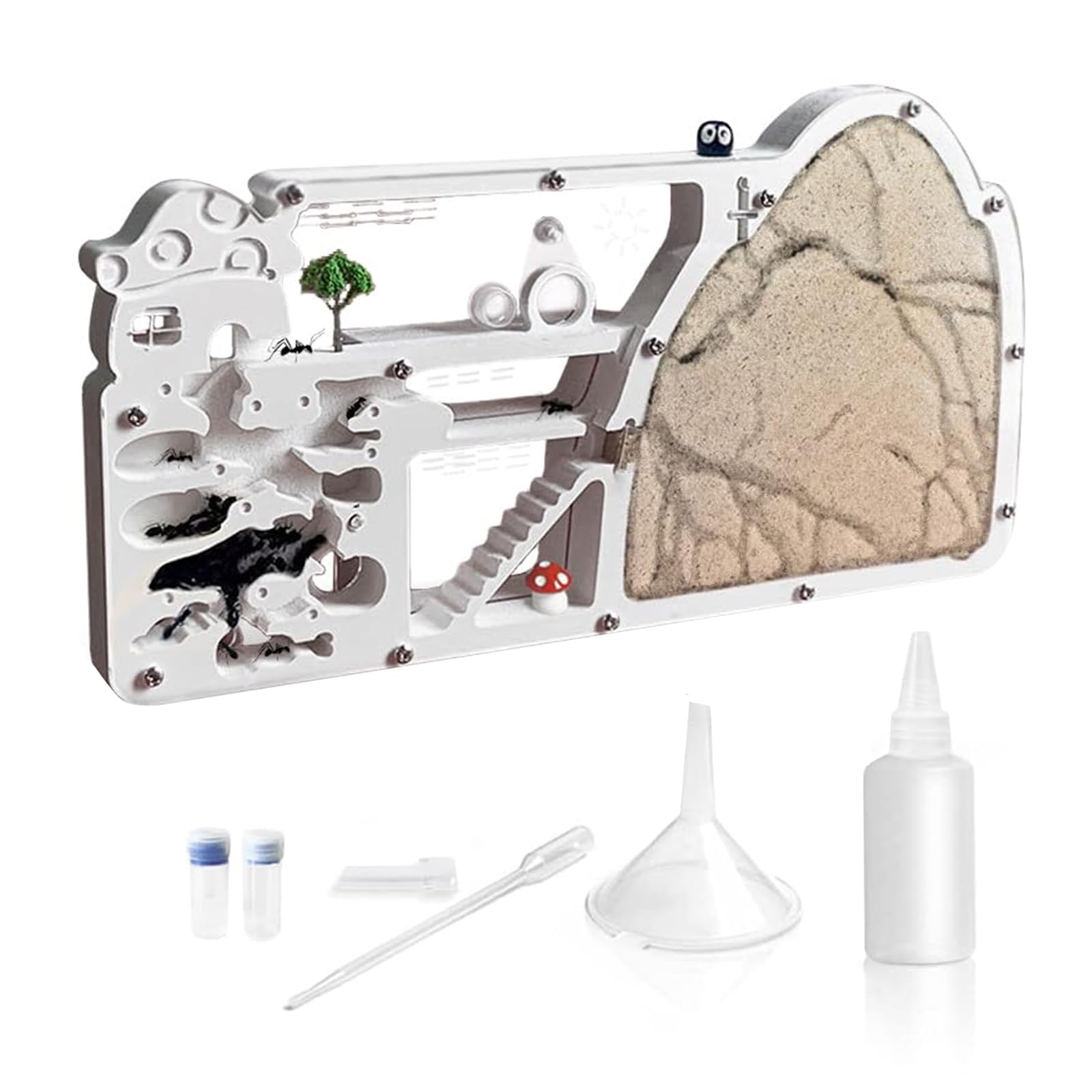
The ELNMLHT Ant Farm Castle stands out with its double-sided acrylic viewing panel that measures 10.8 x 5.8 x 1.6 inches — the widest tunnel depth in this roundup. Its automatic water supply system lets you add water through a refill hole every 10 days, keeping the sand at a consistent moisture level without flooding the nest. The included yellow sand is fine-grained and pre-sifted, so tunnels hold their shape better than with generic play sand.
The colony roles become visible quickly: the designated egg-laying area and the excavation dump zone let ants organize their work, and the clear acrylic gives you a front-row seat to their division of labor. Owners report that backyard worker ants thrive for over two months even without a queen, which is rare for a kit in this price bracket. The slim footprint (1.6 inches deep) is a double-edged sword — it sits flat against a desk but can tip if bumped hard.
Setup instructions are brief and skip crucial details like ideal water volume and how to introduce ants safely. New owners should humidify the sand to a crumbly texture (not soggy) before releasing the ants. The kit includes a drip bottle, funnel, and dropper, but you’ll need to source live ants locally — no mail-in voucher is included.
Why we love it
- Double-sided acrylic provides the widest viewing angle in the category
- Auto water system reduces mold risk and keeps tunnels stable
- Dedicated egg-laying and dump zones encourage natural colony behavior
Good to know
- Assembly instructions are vague about water volume and ant introduction
- Narrow 1.6-inch depth makes the habitat prone to tipping without a stabilizing base
- Live ants not included and no mail-in certificate provided
2. Educational Insights GeoSafari Ant Factory
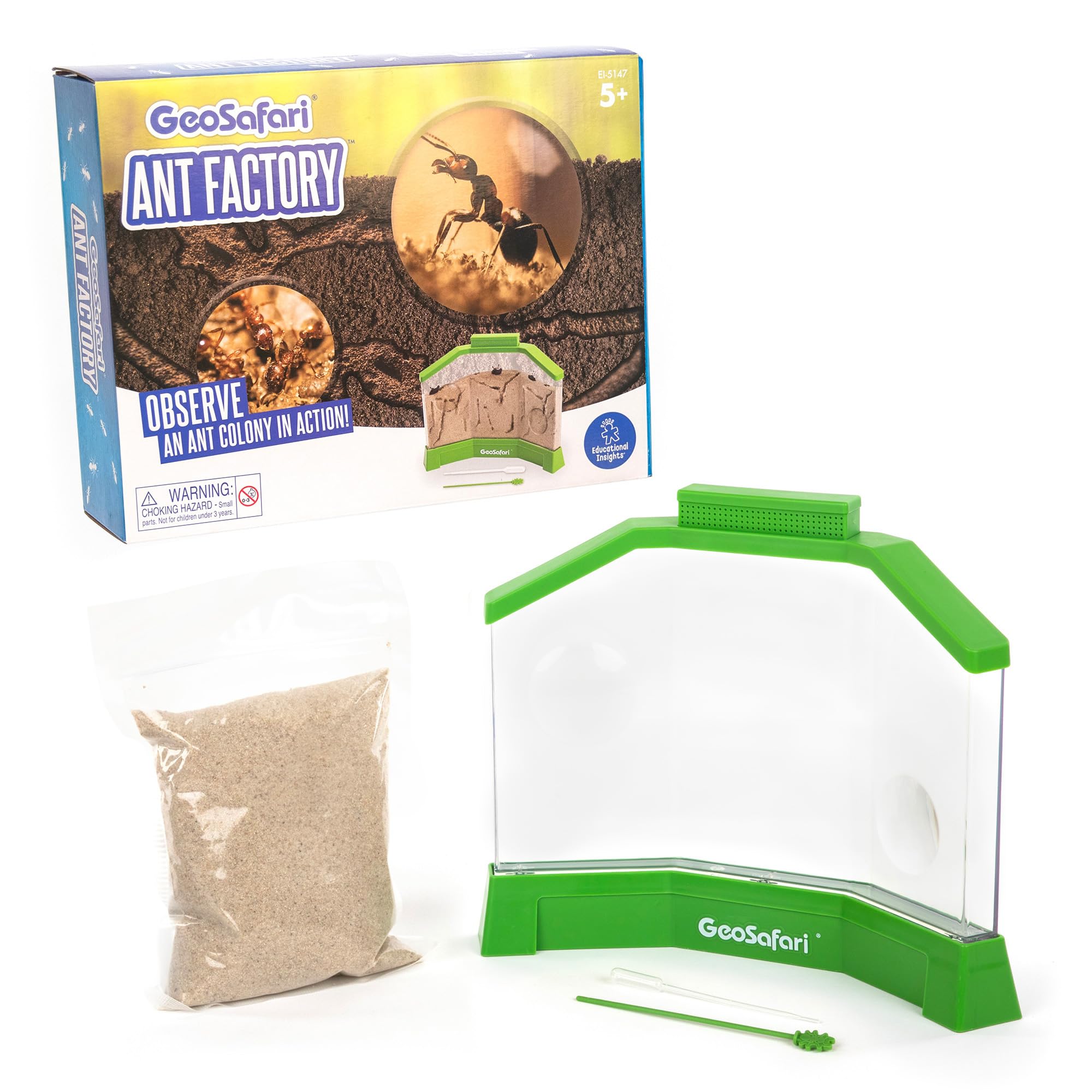
Educational Insights brings decades of STEM credibility to this ant factory, and it shows in the details. The habitat ships with special tunneling sand that holds vertical structure remarkably well — multiple owners report tunnels staying intact even when the unit is carried to a different room. The weighted base prevents tipping, a common failure point in lighter plastic farms. The viewing area includes magnification spots integrated into the lid, giving kids a close-up of mandible action without a separate loupe.
The included mail-in certificate lets you order harvester ants (continental U.S. and Canada only; no shipments to Hawaii, Oregon, or during winter months). The voucher system worked smoothly for most users, though a small number received dead ants — a risk with any live-shipping program. The alternative is collecting local ants from your backyard, which the sand medium supports well. The feeding tool and activity guide add educational structure, with prompts that turn casual watching into a proper biology lesson.
Assembly requires a few minutes of sand pouring and tube attachment. The escape-proof design relies on a secure lid seal — keep the feeding port closed when not in use. Some owners note that the viewing magnification spots are small; younger children will still lean in close. The overall volume is generous at roughly 12 x 9 x 5 inches, giving a dozen worker ants room to build a visible network.
Why we love it
- Weighted base provides excellent stability for classroom or desk use
- Mail-in ant certificate simplifies ordering for first-time buyers
- Activity guide turns observation into a structured STEM lesson
Good to know
- Magnification spots are small and require close positioning
- Ants cannot ship during winter months, limiting year-round ordering
- Some shipped ants arrive dead; local foraging is a more reliable backup
3. National Geographic Ant Habitat Kit
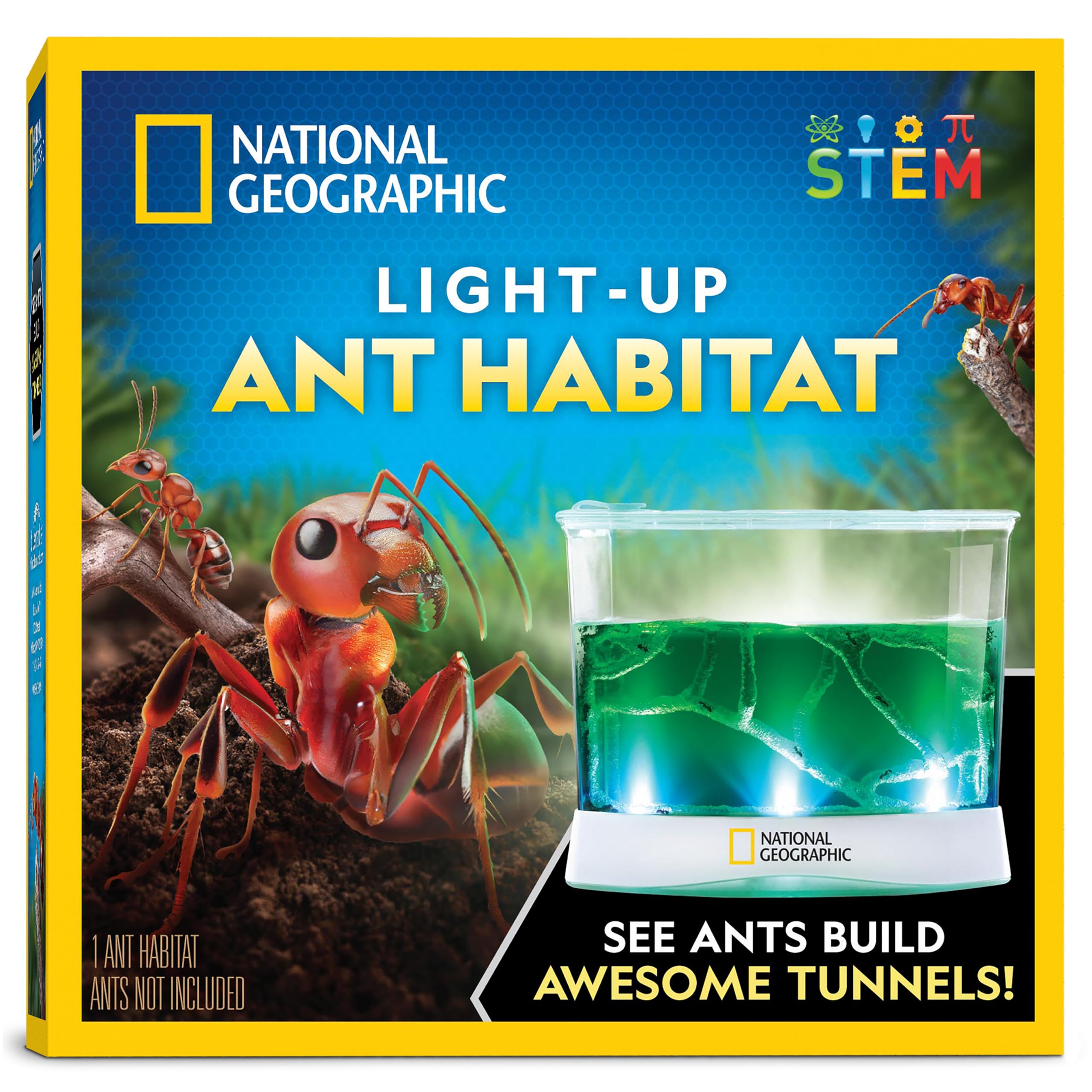
National Geographic takes a gel-based approach with this light-up terrarium, and the translucent nutrient gel serves a dual purpose: it feeds the ants and provides a clear medium for tunnel viewing. The plug-in light illuminates the entire habitat, making nighttime observation spectacular — the glow reveals every chamber and passageway without the glare of external flashlights. Two magnifying glasses built into the lid plus a separate handheld magnifier eliminate the need for extra optics.
The gel eliminates sand mess and watering worries, but it cannot replicate the structural complexity of sand tunnels. Harvester ants will dig through the gel, but the tunnels are slower to form and less intricate than in sand. Owners who used harvester ants with this kit reported extremely painful bites for anyone near the habitat — the gel doesn’t trap the ants the way sand does, increasing escape risk during feeding. The tunnel starter tool included in the box creates the first hole, but the ants handle the rest.
Compatibility with ants from Ants Alive is confirmed by the manufacturer. The unit measures 8.46 x 7.4 x 2.83 inches, making it the most compact option here. The light was dim on a small percentage of units, so test the LED immediately upon arrival. The educational booklet is thin compared to sand-based kits, focusing more on general ant trivia than hands-on care.
Why we love it
- Built-in LED creates a stunning nighttime viewing experience
- Dual magnifying glasses in lid provide close-up access without separate tools
- Gel medium eliminates sand mess and reduces watering frequency
Good to know
- Gel tunnels are slower to form and less complex than sand tunnels
- Harvester ant bites become a greater risk with gel open-top design
- Some units ship with a dim LED that cannot be brightened or replaced
4. Tigerific Ant Farm with Real Sand

Tigerific’s ant farm focuses on the fundamentals: real sand that triggers natural digging behavior, a fully transparent colony with multiple viewing angles, and an extensive color booklet that packs more ant facts than any competitor’s guide. The 9 x 2 x 7 inch dimensions give ants enough vertical space to build a visible tunnel network, and the AntWay Connector Tube lets you attach additional habitats (sold separately) as the colony grows.
The kit includes two bags of sand, a water dropper, a coupon to order live harvester ants at a discount, and a documentary video production that covers ant anatomy, colony structure, and foraging behavior. The sand compresses well under the ants, and most owners report that tunnels appear within hours of introduction. The plastic construction feels less substantial than acrylic alternatives, but at this entry-level price point, the durability is acceptable for supervised use with children ages 4 and up.
The main drawbacks are sand mold and feeding access. Ants store food at the bottom of the habitat, where moisture collects, and without a way to remove uneaten food, mold becomes inevitable after 3-4 weeks. The feeding tube doubles as an escape route if left open — many owners recommend plugging it between feedings. A few units arrived with a badly bent tube, so check the connector before introducing ants.
Why we love it
- Real sand triggers immediate tunneling behavior within hours of introduction
- Included learning booklet and documentary add serious educational depth
- Connector tube allows expansion into a multi-habitat setup
Good to know
- Mold forms in the sand after 3-4 weeks without proper food removal
- Feeding tube can become an escape route if not sealed between uses
- Plastic construction feels less durable than acrylic competitors
5. Uncle Milton Ant Farm

The Uncle Milton Ant Farm is the closest thing to a category icon — generations of kids have watched ants dig through its clean tunneling sand. The standout feature is the four Antports on the sides, which allow you to connect additional Uncle Milton habitats with the included Antway Connector Tubing. This modular approach lets you scale the colony’s living space as it grows, something no other kit in this price range offers.
The tip-proof stand keeps the 6 x 9 x 1 inch habitat stable on a desk, and the sand pours cleanly through the narrow opening when you use the paper cone trick described in the instruction manual. Owners consistently report that ants start tunneling within hours of introduction. The habitat is not intended for long-term colony maintenance — without a queen, the workers will eventually die off after 1-3 months. The Ant Watcher’s Manual provides basic care instructions but lacks the depth of the Tigerific booklet.
The narrow opening (roughly 1 inch wide) makes it difficult to clean moldy food or introduce new ants once the colony is established. Tweezers barely fit through the gap, so plan to release the ants into a backyard if the colony shows signs of decline. The plastic feels a step below the acrylic of premium models but remains sturdy enough for repeated use. Ants are not included; the kit works best with backyard foragers rather than ordered harvester ants.
Why we love it
- Four Antports enable modular expansion with additional habitats
- Tip-proof stand provides rock-solid stability on any flat surface
- Sand quality supports rapid tunnel formation within hours
Good to know
- Narrow opening makes cleaning moldy food and replacing ants difficult
- Plastic construction is less durable than older Uncle Milton models
- No mail-in ant certificate; requires local ant foraging
FAQ
Will the ants die without a queen in my ant farm?
What type of sand should I avoid for my ant farm?
Can I catch ants from my backyard instead of ordering them online?
Why is there white mold on the sand in my ant farm?
Final Thoughts: The Verdict
For most gardeners and parents, the best ant farm winner is the ELNMLHT Ant Farm Castle because its acrylic build, auto-water system, and wide viewing area sustain a colony longer than any other kit at this level. If you want a classroom-ready unit with a mail-in ant certificate and a weighted base, grab the Educational Insights GeoSafari Ant Factory. And for an entry-level kit that lets you watch tunnels form within hours without breaking the budget, nothing beats the Tigerific Ant Farm with Real Sand.