
The real fear isn’t the ant trail on your counter — it’s the bait you set down to stop them. Standard ant poison works by lacing attractants with insecticides like borax or fipronil, and a curious pup or feline pawing at a station can ingest a dose meant for an insect colony. Pet owners searching for a genuinely pet-safe solution need traps that use non-toxic active ingredients, physical barriers that prevent access, or bait formulations that break down harmlessly if consumed.
I’m Mo Mahin — the founder and writer behind Furric. I’ve spent years dissecting pest-control chemistry and studying real-world owner feedback to identify which products deliver colony elimination without putting your dog, cat, or other household pets at risk.
Whether you’re dealing with pavement ants in the kitchen or pharaoh ants in the basement, finding the best ant traps safe for pets means knowing exactly which bait matrix, active compound, and station design actually work without inviting a trip to the emergency vet.
How To Choose The Best Ant Traps Safe For Pets
Pet-safe ant traps differ from standard insecticide stations in three core ways: the physical enclosure, the active ingredient, and the bait’s palatability to non-target animals. Choosing wrong can mean a station that leaks, a poison your pet finds tasty, or a product that’s just rebranded conventional insecticide. Focus on these three areas to get a solution that works on ants and nothing else.
Station Design and Entry Point Size
The safest trap is the one a pet can’t reach the inside of. Look for stations with a completely sealed reservoir that only ants can access. The best designs use a small raised entry hole — usually 3-5 mm in diameter — paired with a baffle system that prevents a dog’s nose, tongue, or paw from reaching the liquid or gel bait. Avoid open bait trays or stations with large holes that a cat could easily pry open with a claw.
Active Ingredient Chemistry
Not all “natural” ingredients are pet safe. Borax (sodium tetraborate) is toxic to pets in ingested doses above roughly 20 grams for a medium-sized dog. Spinosad and abamectin are acutely toxic to birds and fish. The safest active ingredients for pet-occupied homes include: diatomaceous earth (food grade — physically desiccates insects without chemical toxicity), boric acid (low mammalian toxicity in bait concentrations), and essential oils (lemongrass, geraniol, peppermint — these repel or kill on contact but are volatile and non-persistent). Avoid products listing “imidacloprid” or “hydramethylnon” if a pet has access to the trap.
Bait Matrix and Palatability
Many ant baits use sweet attractants like sugar water or protein-based lures. A dog that loves sugary treats will find a sweet bait station far more interesting. Opt for baits that use bittering agents (denatonium benzoate) added to the bait to discourage mammals, or choose gels and powders that are unappealing to dogs and cats. Check the label for “bittering agent added” — a reliable indicator the manufacturer considered non-target safety.
Quick Comparison
On smaller screens, swipe sideways to see the full table.
| Model | Category | Best For | Key Spec | Amazon |
|---|---|---|---|---|
| Wondercide Ant & Roach Aerosol Spray | Spray | Kitchen & baseboard spot treatment | Essential oils: lemongrass & geraniol | Amazon |
| TERRO T300-3SR Liquid Ant Killer | Bait Station | Indoor trail elimination | Bait station with bittering agent | Amazon |
| Zevo Ant, Roach, Spider Insect Killer | Spray | On-contact wall & floor killing | Plant-derived active ingredient | Amazon |
| Diatomaceous Earth Food Grade + Peppermint | Powder | Perimeter & crevice dusting | Food-grade DE + 0% chemical additives | Amazon |
| Pic HomePlus Ant Killer 6-Pack | Bait Station | Budget multi-room placement | No top 7 allergens; child-resistant | Amazon |
In‑Depth Reviews
1. Wondercide – Ant & Roach Aerosol Spray

Wondercide’s aerosol formulation uses lemongrass and geraniol as its active ingredients — both classified as minimal-risk pesticides by the EPA. The spray kills ants on contact, leaving a light botanical scent that fades within minutes. Because it’s a contact killer rather than a bait, there’s no attractant for a pet to sniff out; the spray simply dries on treated surfaces. The 10-ounce can is small enough to keep under a kitchen sink, and it’s also proven effective against roaches, spiders, and fleas — making it a solid multi-pest tool for pet households.
The key limitation here is that it’s a repellent-contact spray, not a colony killer. Workers that don’t get sprayed directly won’t carry poison back to the nest. This means you’ll need to reapply every few days until the visible trail breaks, and it won’t eliminate a queen in a hidden cavity. That said, for pet owners who want immediate knockdown of visible ants without leaving slow-acting bait where a curious dog could investigate, this is the safest option at retail.
Owner reports consistently highlight that dogs and cats show zero interest in the dried spray. The plant-based formulation also means you can spray near food prep areas — just avoid direct application on dishes or cutting boards. Stick to baseboards, cabinet hinges, and window sills for best results.
Why we love it
- No residual poison — dries to inert state quickly
- Kills over 20 bug types on contact
- Pet and family safe when used as directed
Good to know
- Does not eliminate the colony’s queen
- Small can requires frequent reapplication for heavy infestations
2. TERRO T300-3SR Liquid Ant Killer – 3 Pack
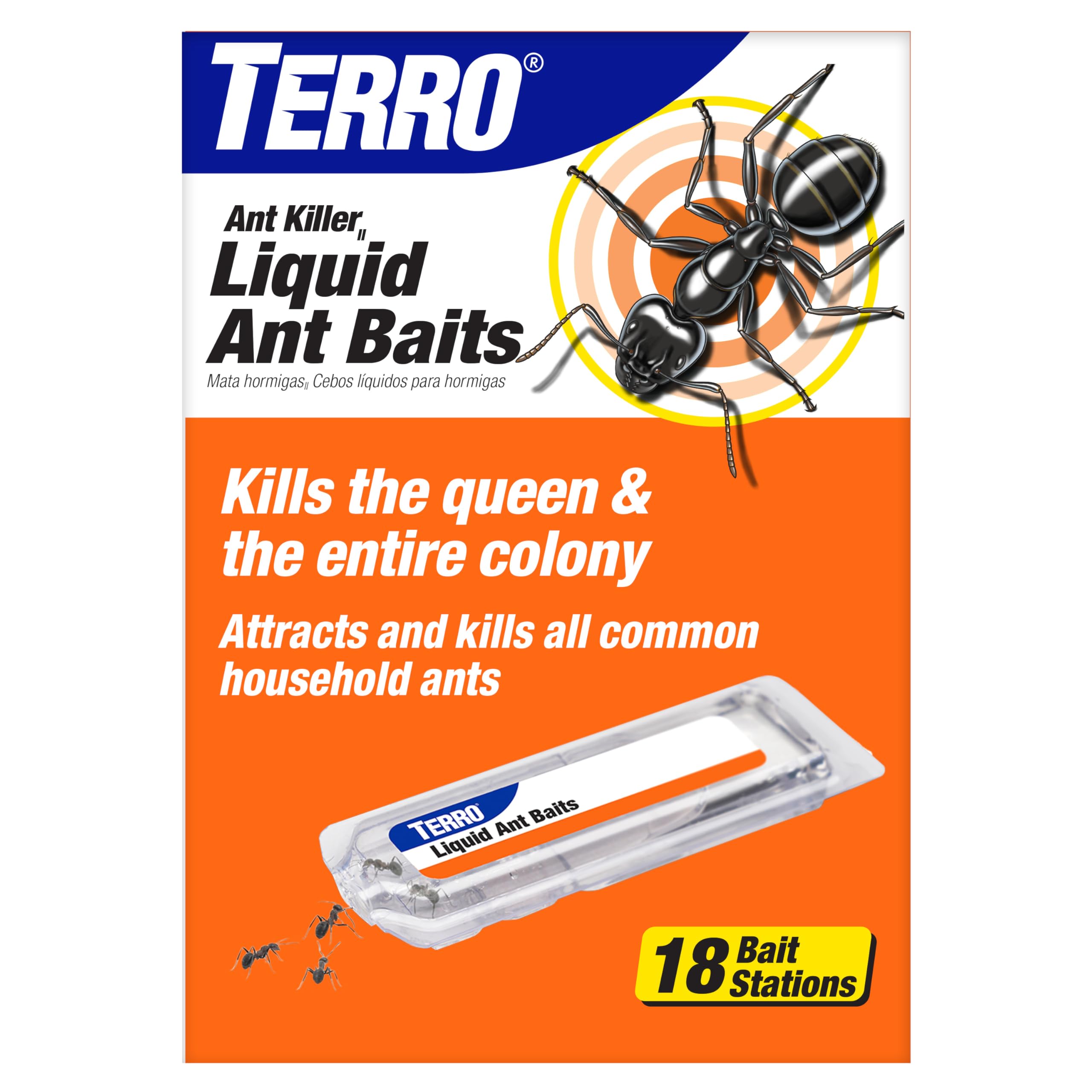
The TERRO T300-3SR is the pet-safe variant of the classic T300 liquid bait. The critical difference versus the standard formula: this version adds denatonium benzoate, an intensely bitter compound that mammals find revolting but does not deter insects. A dog that sniffs or licks the station will immediately recoil rather than consume the bait. The station itself is a sealed plastic unit with a single raised entry port about 4 mm wide — too small for a cat’s tongue to penetrate.
The active ingredient remains sodium tetraborate (borax) — the same low-toxicity compound that’s been used for decades. Borax in the concentration found in these bait stations (roughly 5% by weight) causes vomiting and abdominal pain only if a pet consumes multiple entire stations. With the bittering agent and locked design, that’s virtually impossible in a home with moderate supervision. For colony elimination, the liquid bait is exceptionally effective: worker ants feed, return to the nest, and share the liquid through trophallaxis, wiping out the colony within 1-2 weeks.
One drawback: the stations are small (about 2 inches square), so for large infestations you may need all three in the pack placed at 6-8 foot intervals along the ant trail. Also consider that the liquid can leak if the station is dropped from a height onto concrete. Keep stations in locations where they won’t be knocked off countertops.
Why we love it
- Bittering agent actively deters mammal ingestion
- Sealed station prevents pet access to liquid
- Reliable colony elimination in 1-2 weeks
Good to know
- Borax is still toxic if multiple units consumed
- Liquid can leak if station is cracked
3. Zevo Ant, Roach, Spider Insect Killer

Zevo’s formula is built around a plant-derived active ingredient that disrupts insect nervous systems without affecting mammals — think of it as a molecular key that only fits insect receptors. The spray delivers a residual barrier that kills ants and roaches for up to two weeks on hard surfaces. Unlike essential oil sprays that require direct contact, Zevo’s active continues working after it dries, creating a treated zone that kills insects that cross it hours after application.
The real advantage for pet owners: the active has zero mammalian toxicity at any realistic exposure level. A dog that licks a treated surface will experience no ill effects beyond possibly a mildly revolting taste from the spray’s carrier fluid. The brand’s positioning as “safe for use around people and pets” is backed by EPA minimum-risk exclusion — the active is on the 25(b) list of exempt active ingredients, meaning it passed the most stringent safety review before being allowed onto shelves without conventional pesticide registration.
The trade-off: it’s less effective on deep colonies than a bait. It stops the workers you see but won’t kill the queen in a wall void. For a multi-pronged approach, use Zevo as a barrier spray along baseboards while placing a bait station (like the TERRO above) near the nest entry — that way you get both contact kill and colony elimination.
Why we love it
- Zero mammalian toxicity on label
- Provides a residual barrier for continuous control
- EPA 25(b) exempt — minimal-risk pesticide
Good to know
- Does not eliminate the nest or queen
- Residual lasts 2 weeks tops, needs reapplication
4. Diatomaceous Earth Food Grade & Peppermint Powder
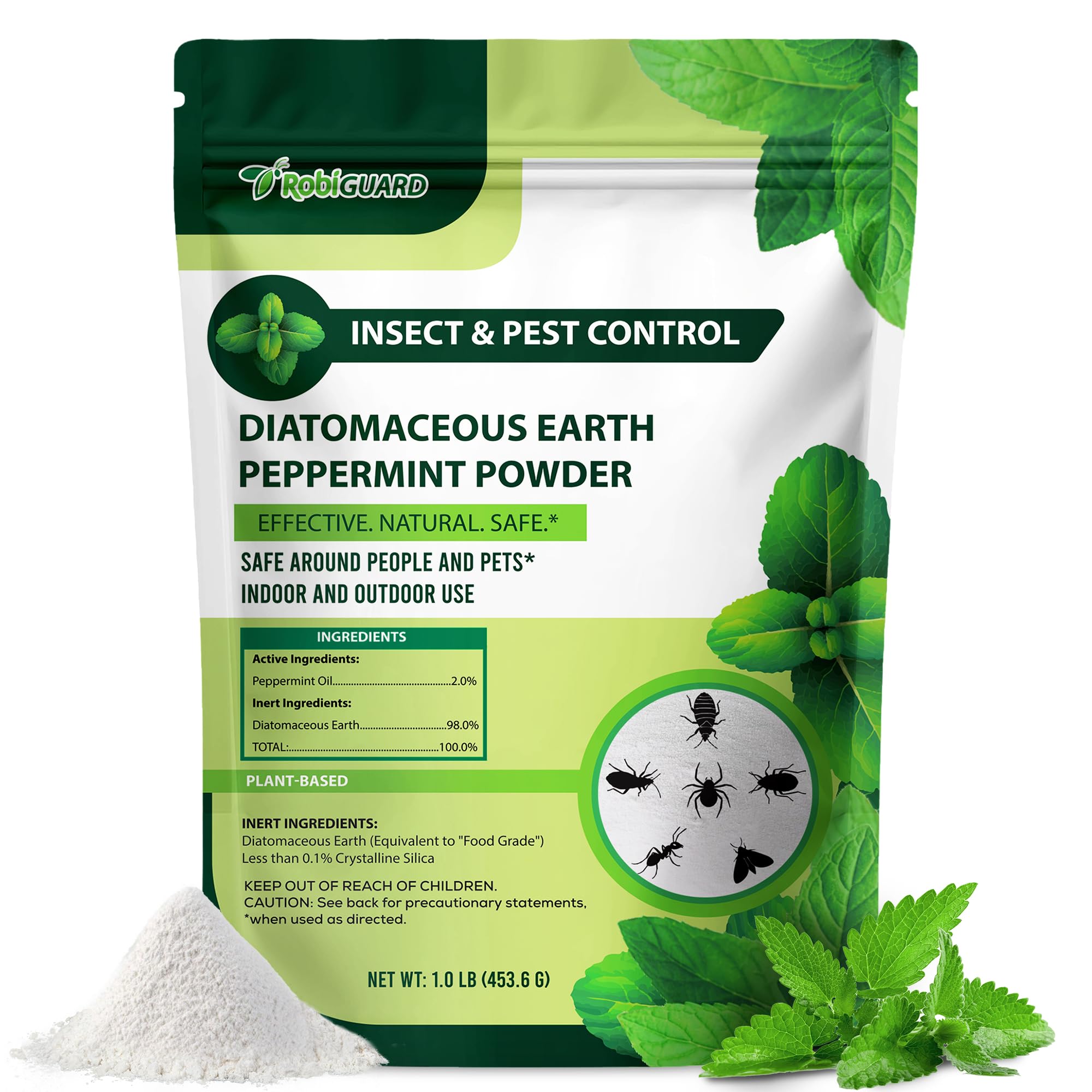
Diatomaceous earth (DE) is the fossilized remains of diatoms — microscopic algae with sharp silica shells that cut through insect exoskeletons on contact, causing them to dehydrate and die. The food-grade version is safe enough for human consumption (it’s used as an anti-caking agent in grains) yet lethal to crawling insects. This particular product adds peppermint powder to the mix, which acts as a repellent to discourage ants from crossing treated areas. The combination gives you both a killing agent (DE) and a deterrent (peppermint).
From a pet-safety standpoint, food-grade DE is a Category 4 substance — practically non-toxic under FIFRA guidelines. A dog that ingests a moderate amount of food-grade DE may experience mild stomach irritation or loose stool due to the abrasive texture, but no systemic toxicity. That said, the peppermint powder additive is a minor concern: peppermint oil is toxic to dogs in very high concentrated doses (more than 5-10 mL of pure oil), but the amount in a powder formulation is negligible. The bigger risk is inhalation — dry DE dust can irritate a pet’s lungs if they stick their nose into a pile. Apply it in thin dustings in cracks and crevices, not mounds.
The one-pound bag is a generous amount for covering baseboards, under sinks, and along window sills. Reapply after any moisture exposure — DE is only effective when dry. For heavy infestations, you’ll want to supplement with a bait, since DE kills only the insects that physically crawl through it.
Why we love it
- Food-grade DE — safe if ingested by pets
- Peppermint adds a pleasant scent and repels ants
- One pound covers a large area for extended use
Good to know
- Only kills on direct contact — no colony elimination
- Dry DE irritates lungs if inhaled by pet or human
5. Pic HomePlus Ant Killer 6-Pack

Pic’s HomePlus Ant Killer stations are the budget-conscious option that still respects pet safety. The bait uses four different food sources to attract ants — mimicking the variety ants encounter in nature — and includes a child-resistant cap on each station. The stations are designed with a snap-lock mechanism that requires significant force to open, making them difficult for a curious dog’s jaws to crack. The active ingredient in Pic baits is typically a low-toxicity compound like boric acid or sodium tetraborate (boric acid’s salt form), both of which are low on the mammalian toxicity scale relative to organophosphates or carbamates.
What makes these stations notably safer than many generics: the bait is formulated with a bittering agent. While the product label doesn’t explicitly name the compound, the “child-resistant station” feature combined with the bitter additive reduces the risk of accidental ingestion to near zero for most household pets. The 6-pack gives you enough stations to cover multiple entry points — place one every 8-12 feet along ant trails. User reports indicate visible reduction in ant activity within 24 hours, with full colony elimination taking 3-7 days.
The main downside: the instructions state that the bait is toxic to cats if ingested, so place these stations in locations where a cat cannot access them — inside cabinets with magnetic latches, under refrigerators, or behind heavy furniture that a cat can’t move. For multi-pet households with both dogs and cats, this is less ideal than a spray or DE option, but with careful placement it remains a functional solution.
Why we love it
- Starts killing worker ants within 24 hours
- 6-pack covers multiple rooms at once
- Child-resistant lock and bittering agent added
Good to know
- Bait is toxic to cats — station placement is critical
- Not as effective on large infestations as liquid baits
FAQ
What active ingredient is safest for dogs and cats in an ant trap?
Can a dog get sick from licking a treated surface?
How long does it take for a pet-safe ant bait to kill a colony?
Final Thoughts: The Verdict
For most gardeners and pet owners, the best ant traps safe for pets winner is the TERRO T300-3SR Liquid Ant Killer because its bittering agent and sealed station design offer colony elimination with genuine mammal deterrence. If you want a contact-kill spray with zero toxicity profile, grab the Wondercide Ant & Roach Aerosol Spray. And for permanent, non-toxic perimeter defense that costs pennies per application, nothing beats Diatomaceous Earth Food Grade with Peppermint.