
Aquatic turtles spend nearly every waking minute in water, which makes finding a food that delivers complete nutrition without instantly turning their habitat into a murky soup the central challenge of responsible ownership. A diet built around the right balance of protein, calcium, and digestible fiber determines whether a turtle develops a smooth shell and active behavior or struggles with pyramiding and lethargy.
I’m Mo Mahin — the founder and writer behind Furric. I specialize in analyzing pet nutrition formulations, comparing ingredient density across brands, and studying owner-reported feeding outcomes to identify which products actually deliver measurable health improvements.
After examining feeding trials, ingredient labels, and years of owner feedback, this guide narrows the market to the five meals that earn a spot in your search for the best aquatic turtle food for shell health, water clarity, and daily nutrition.
How To Choose The Best Aquatic Turtle Food
Aquatic turtle nutrition differs from terrestrial reptile diets because turtles digest food in water and require a higher calcium intake for shell mineralization. Picking the wrong formula leads to soft shells, excessive waste that fouls the tank, or a picky eater that refuses balanced meals.
Protein Source and Concentration
Juvenile turtles need protein levels around 35–40% for growth, while adults thrive on 25–30% to prevent obesity and kidney strain. The source matters — fish meal and krill provide digestible animal protein, while plant-based fillers like corn or soybean meal reduce biological value. Look for named proteins like whole fish, shrimp, or poultry meal as the first ingredient.
Calcium Content and Shell Health
Shell pyramiding and soft spots indicate insufficient calcium or a skewed calcium-to-phosphorus ratio. A ratio of at least 2:1 calcium to phosphorus is ideal. Calcium-block formulations offer the dual benefit of trimming the beak as the turtle gnaws, which prevents overgrowth that can impair feeding in older turtles.
Water Quality Impact
Foods that disintegrate quickly or contain high-starch binders cloud the water, spike ammonia, and force more frequent filtration maintenance. Floating sticks or dense pellets that hold their shape for several minutes reduce waste. Freeze-dried options produce minimal dissolved solids but should be rehydrated before feeding to prevent internal expansion in the turtle’s gut.
Quick Comparison
On smaller screens, swipe sideways to see the full table.
| Model | Category | Best For | Key Spec | Amazon |
|---|---|---|---|---|
| Hikari Saki-Turtle Sticks | Floating Sticks | Water clarity & digestion | 20 oz bag, 25% protein | Amazon |
| Zoo Med Block Value Pack | Calcium Block | Beak trimming & enrichment | 2-pack, solid calcium base | Amazon |
| Fluker’s Aquatic Diet Pellets | Floating Pellets | Daily staple for all stages | 15 oz bag, floating formula | Amazon |
| BNYEE 3 in 1 Meat Treats | Freeze-Dried Raw | High-protein treats | 3 oz can, 3 meat sources | Amazon |
| Toyuto Freeze-Dried Krill & Shrimp | Freeze-Dried Mix | Color enhancement & variety | 1000 ml can, wild-caught | Amazon |
In‑Depth Reviews
1. Hikari Saki-Turtle Sticks
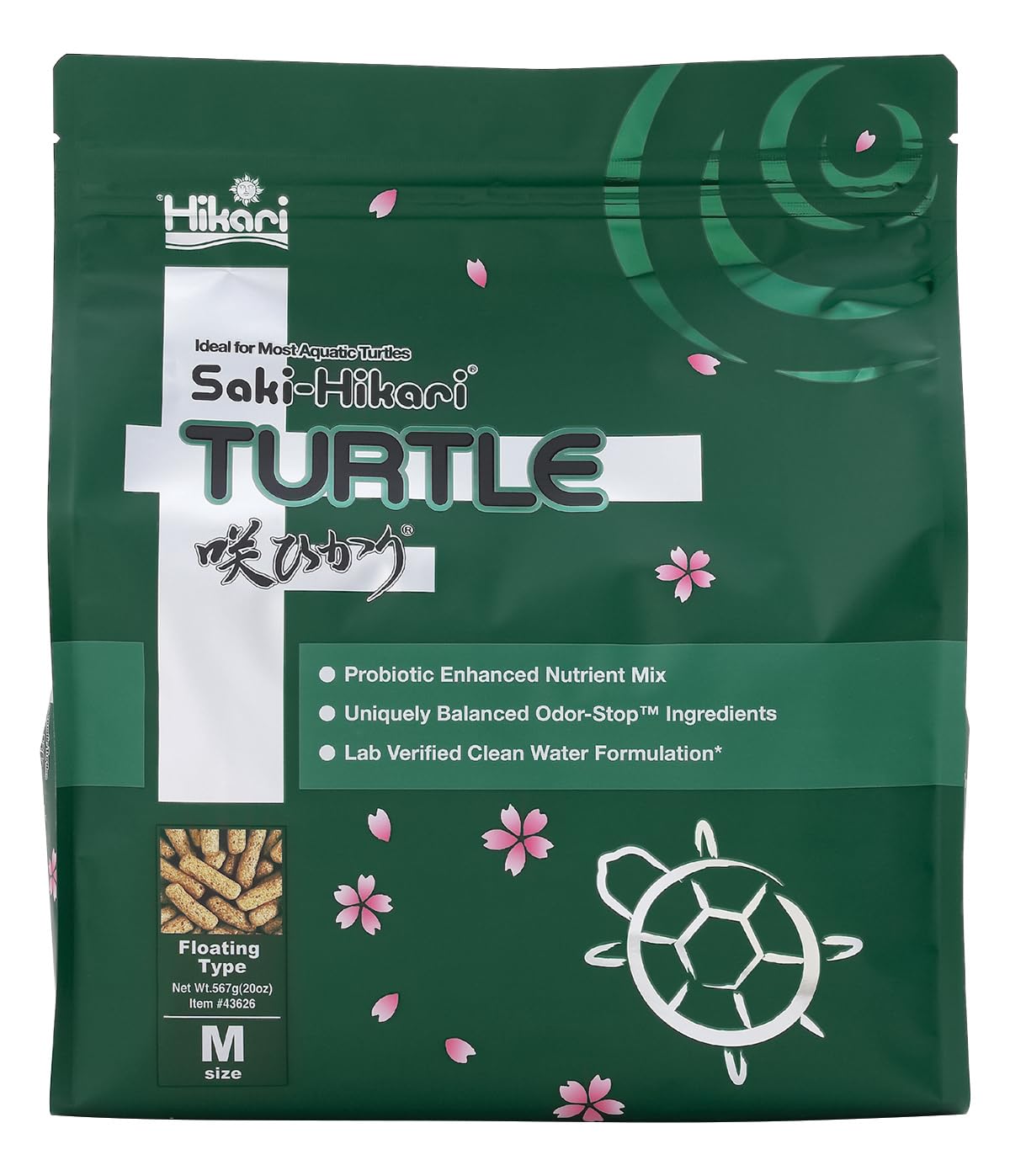
The Hikari Saki-Turtle Sticks consistently earn top marks from owners who have kept turtles for decades — one reported a 52-year-old Florida cooter thriving on this diet. The floating stick format holds its shape longer than most pellets, reducing dissolved solids that foul tank water. Owners note that filter cleaning frequency drops from five cycles to two after switching to this formula.
The ingredient profile prioritizes fish meal and Hikari Germ, a proprietary blend of probiotics and nucleotides that supports gut health and nutrient absorption. Crude protein sits in the optimal adult range around 25%, minimizing waste output compared to higher-protein juvenile formulas. The sticks float long enough for surface feeders to snatch them before they sink into substrate crevices.
Some picky eaters who refuse all other brands immediately accept Saki-Turtle Sticks, according to multiple verified reviews. The bag size offers good value for single-turtle households, and the resealable packaging maintains freshness over several weeks of daily feeding. This is the benchmark against which other aquatic turtle foods should be measured.
Why we love it
- Dramatically improves water clarity and reduces tank cleaning frequency
- Accepted by even the pickiest adult turtles across multiple species
- Probiotic blend supports digestion and lowers ammonia production
Good to know
- Premium-tier pricing compared to standard pellet diets
- Stick size may be too large for very small juvenile turtles
2. Zoo Med Block Value Pack

Zoo Med’s Banquet Blocks solve two problems with one product: they deliver a calcium-rich food source while the turtle gnaws through the solid base, naturally filing down the beak. Owners of older red-eared sliders report that this mechanical action prevents the beak overgrowth that makes eating painful for senior turtles. The blocks contain embedded pellets that the turtle must work to extract, turning feeding into active foraging.
The solid calcium base provides a steady mineral release as the turtle chips away over several days. Smaller turtles finish a block in one to two days, while larger specimens may consume it within 24 hours. The blocks are made in the USA and work as both a nutritional supplement and an enrichment tool — turtles are observed chasing and wrestling the blocks before settling in to nibble.
Some turtles, particularly juveniles accustomed to soft pellets, may ignore the blocks at first and require a transition period with their regular food offered alongside. The blocks also serve as vacation feeders: leaving one block in the tank provides days of nutrition without the risk of overfeeding or rapid water fouling. A smart addition for any keeper concerned about beak management.
Why we love it
- Dual function — complete nutrition plus natural beak trimming
- Provides enrichment and foraging stimulation for active turtles
- Ideal for short vacations; one block lasts several days
Good to know
- Some turtles prefer traditional pellets and may refuse the block
- Larger turtles can consume a block quickly, requiring frequent replacement
3. Fluker’s Aquatic Turtle Diet Pellets

Fluker’s has been a staple in turtle care for decades, and their Aquatic Turtle Diet pellets remain a reliable daily feeder that works across all life stages. The floating pellet formulation stays intact longer than cheaper alternatives, which means less immediate clouding of the water column. Multiple generations of turtle keepers report feeding this formula exclusively for years with consistent shell growth and activity levels.
The ingredient list includes fish meal, wheat germ, and added calcium to support shell health. The pellet size suits both juvenile and adult turtles, and the limited-ingredient profile appeals to keepers managing turtles with sensitive digestive systems. Owners report that neighborhood pond turtles recognize the bag and swim over immediately, a testament to the palatability of the formula.
The 15-ounce bag provides a two- to three-month supply for a single adult turtle at standard feeding rates. Some turtles reject pellets that disintegrate rapidly; Fluker’s holds its shape well, reducing uneaten food that decomposes in the filter. For keepers who want a proven, no-fuss daily diet without premium pricing, this is the obvious choice.
Why we love it
- Proven formula trusted by keepers for decades across multiple species
- Pellets hold shape in water, minimizing waste and ammonia spikes
- Limited-ingredient, gluten-free formula suits sensitive turtles
Good to know
- Protein level is moderate; high-activity turtles may need supplementation
- Bag lacks a resealable closure, so transfer to an airtight container is recommended
4. BNYEE 3 in 1 Meat Turtle Food

The BNYEE 3 in 1 Meat Turtle Food provides freeze-dried cubes of chicken, duck, and fish that offer a protein-dense supplement to a pellet-based staple diet. The freeze-drying process preserves the natural aroma and texture, which triggers an aggressive feeding response — owners report turtles swimming to the surface instantly when they smell the cubes being rehydrated. Rehydration in water for five minutes before feeding is critical, as the raw cubes are extremely hard and could cause internal expansion if swallowed dry.
Each 3-ounce can delivers a concentrated protein source with minimal fat content, making it suitable for adult turtles that need muscle maintenance without excess calories. The three-meat variety provides a broader amino acid profile than single-protein treats. Some owners report that their turtles become selective and refuse pellet food after tasting these cubes, so it is best used as a two- to three-times-per-week supplement rather than a daily replacement.
The can packaging preserves freshness but limits visibility of contents, and the cubes may crumble during shipping if the package is compressed. Despite the small volume, a single can lasts several weeks when used as a supplement. For keepers whose turtles need a protein boost for shell repair, injury recovery, or breeding condition, this product delivers concentrated nutrition.
Why we love it
- Freeze-dried raw process locks in natural aroma and nutritional density
- Three distinct protein sources provide varied amino acid profiles
- Low fat content supports healthy weight maintenance in adult turtles
Good to know
- Must be rehydrated before feeding to prevent digestive issues
- Some turtles may refuse pellets after developing a taste for these treats
5. Toyuto Freeze-Dried Krill & Shrimp Mix

The Toyuto Freeze-Dried Krill & Shrimp Mix offers a whole-prey approach to turtle feeding, delivering intact krill and full-sized shrimp that trigger natural hunting behaviors. The freeze-dried format preserves omega-3 fatty acids and astaxanthin, a carotenoid that enhances shell and skin color vibrancy in turtles. Owners report that their turtles engage in active pursuit, requiring multiple bites to consume each shrimp, which provides both exercise and mental stimulation.
The wild-caught sourcing means no artificial colors or preservatives are added, and the 1000 ml can provides a substantial volume that outlasts smaller treat containers. The mix works equally well as a treat for turtles, arowana, koi, and large cichlids, which makes it a versatile addition for multi-species aquatic setups. Rehydration is not strictly necessary for turtles that chew thoroughly, but soaking for a few minutes softens the pieces for smaller or older turtles.
Some owners note that the plastic lid on the can is fragile and may crack if dropped, though it remains reattachable. The shrimp size may surprise keepers expecting tiny pieces — each shrimp is large enough that small turtles need to tear it apart. For owners seeking a natural, high-omega-3 supplement that mimics the turtle’s wild diet, this mix delivers variety and nutritional density in one container.
Why we love it
- Whole krill and shrimp preserve natural feeding behaviors and enrichment
- Wild-caught with no additives, offering a clean nutritional profile
- High omega-3 and astaxanthin content supports shell color and health
Good to know
- Plastic lid is delicate and may crack under pressure during shipping
- Shrimp size is large; smaller turtles may struggle without pre-soaking
FAQ
Can I feed my turtle only freeze-dried treats instead of pellets?
How do I know if my turtle’s calcium block is working?
Why does my turtle ignore floating pellets and only eat sinking food?
Final Thoughts: The Verdict
For most keepers, the best aquatic turtle food winner is the Hikari Saki-Turtle Sticks because it combines superior water clarity, probiotic digestive support, and broad acceptance across species. If you want active enrichment and beak maintenance in a single product, grab the Zoo Med Block Value Pack. And for a budget-friendly daily staple that has proven itself over decades, nothing beats the Fluker’s Aquatic Turtle Diet Pellets.