
Dealing with fleas in your home means every corner, every carpet fiber, and every pet bed needs a plan of attack. The right product must balance immediate knockdown with residual protection, all while staying safe for the animals and people who live in your space. Choosing incorrectly means weeks of re-treatment and a persistent cycle of pests.
I’m Mo Mahin — the founder and writer behind Furric. I spend my time analyzing market data, reading technical specs, and sifting through thousands of owner reports to understand which chemical profiles and application methods actually break the flea life cycle inside real homes.
This guide is built around five targeted products so you can pick the right at home flea treatment without the guesswork or wasted money.
How To Choose The Best At Home Flea Treatment
Not all sprays and foggers are built the same. The choice comes down to how fast you need results, whether you need to treat pets directly, and how long you want the protection to last. Focus on these three factors first.
Active Ingredient Profile
Check the active ingredients before buying. Dinotefuran and pyrethrins deliver fast knockdown on contact but have shorter residual periods. Pyriproxyfen, an insect growth regulator (IGR), stops eggs and larvae from maturing — crucial for breaking the life cycle. Natural oils like cedarwood and lemongrass repel and kill on contact but require more frequent reapplication, especially in heavy infestations.
Application Method and Coverage
Total coverage area matters. A small 14-ounce aerosol may treat a single room efficiently but runs out fast in a multi-room house. A full gallon of concentrate covers more square footage and allows repeat treatments. Foggers blanket an entire room at once but can leave an oily residue and require you to vacate the area for hours. Direct sprays give you targeted control over baseboards, furniture seams, and pet bedding.
Pet and Family Safety
If you plan to spray directly on cats or dogs, check the age minimum (usually 12 weeks) and the ingredient list. Essential oil-based formulas are gentler but can still cause drooling or aversion in sensitive pets. Chemical sprays should not be applied to animal fur unless the label explicitly says so. Always allow treated surfaces to dry completely before letting pets or children re-enter the room.
Quick Comparison
On smaller screens, swipe sideways to see the full table.
| Model | Category | Best For | Key Spec | Amazon |
|---|---|---|---|---|
| BASF PT Alpine Flea & Bed Bug Killer | Aerosol Spray | Fast knockdown with IGR | 0.25% Dinotefuran + 0.10% Pyriproxyfen | Amazon |
| Harris Flea and Tick Killer Liquid Spray | Liquid Concentrate | Budget-friendly total coverage | 1 Gallon ready-to-use sprayer | Amazon |
| BugMD Pet Safe Flea Spray | Natural Essential Oil | Direct pet application | Cedarwood & Lemongrass oil blend | Amazon |
| FMC Pyrethrin Fogger | Total Release Fogger | Whole-room fumigation | 5 oz oil-based pyrethrin | Amazon |
| Wondercide Rose Flea & Tick Spray | Natural Multi-Surface | Gentle for all pet life stages | 4.2% Cedar Oil + Rosemary Oil | Amazon |
In‑Depth Reviews
1. BASF PT Alpine Flea & Bed Bug Killer
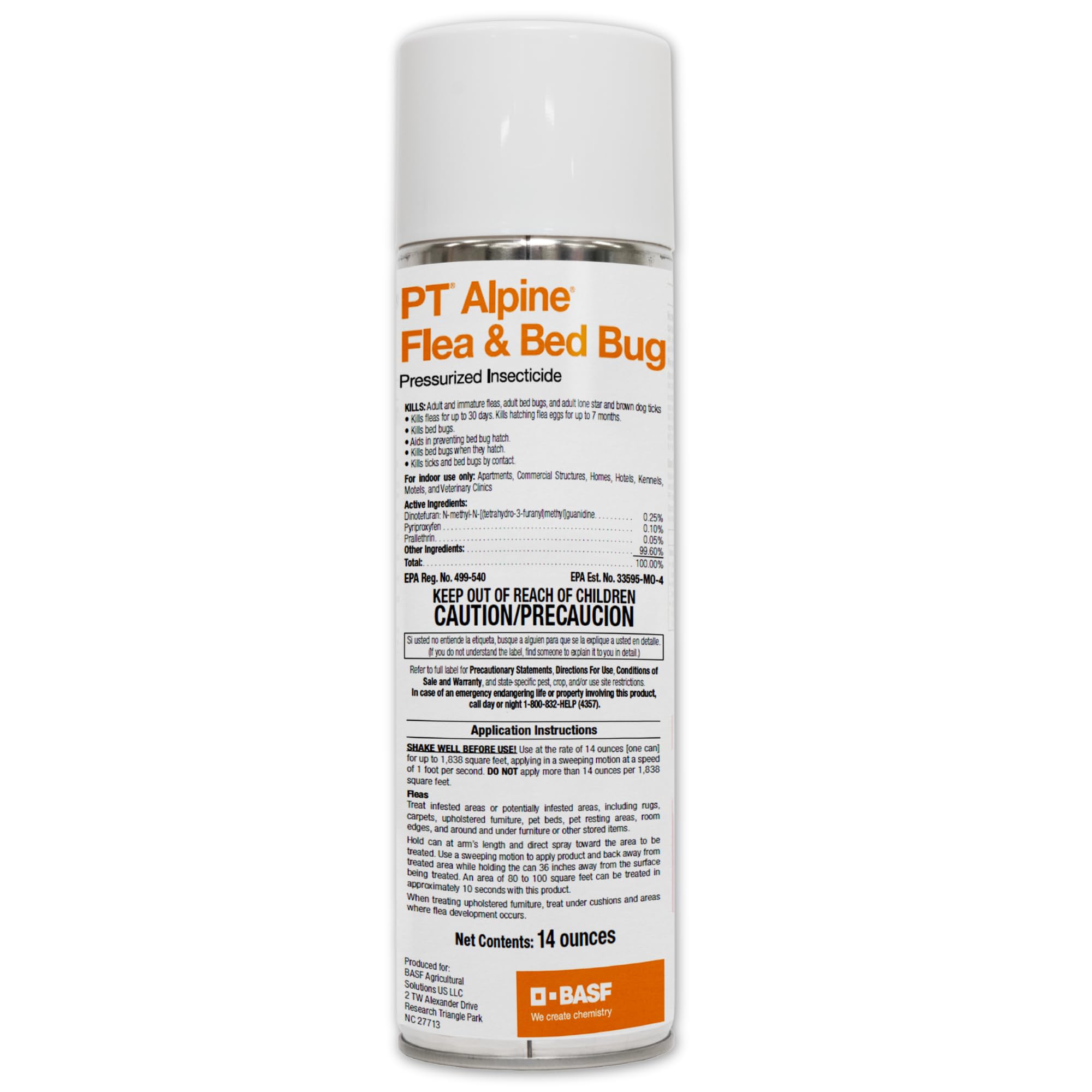
This BASF aerosol is a powerful combination of dinotefuran for fast knockdown and pyriproxyfen as an insect growth regulator to stop eggs from hatching. The 14-ounce can covers up to 2,625 square feet, making it a single-room solution rather than a whole-house treatment. Owners report seeing fleas die on contact within minutes during a single pass.
The dual-active formula provides residual protection for up to three weeks on surfaces, and the IGR component prevents maturing eggs for up to seven months. However, the chemical smell is strong — reviewers consistently recommend wearing a mask, opening windows, and keeping pets and children out of the room until the spray dries completely.
It is labeled for use on mattresses, carpets, furniture seams, and luggage, and is EPA-approved for food-handling environments. Best results come from combining this with pet flea medication and a second application two weeks later, since it does not kill eggs immediately.
Why we love it
- Fast knockdown with dual active ingredients
- IGR prevents egg hatching for months
- Safe for use on mattresses and furniture
Good to know
- Strong chemical odor requires ventilation
- Not effective for direct pet application
- Only works upright; can stand awkwardly
2. Harris Flea and Tick Killer Liquid Spray (Gallon)

The Harris gallon is a no-frills liquid concentrate that delivers consistent results for a very low per-ounce cost. The formula is odorless and non-staining, meaning you can treat carpets, baseboards, and furniture without lingering chemical smells. The extended trigger sprayer helps reach under couches and behind baseboards where fleas hide.
Reviewers consistently praise its ability to knock down heavy flea populations within an hour of drying. One verified owner from Texas reported seeing fleas die within 45 minutes after treating a house with multiple dogs. The gallon volume allows for repeated weekly applications, which is essential when dealing with a stubborn infestation.
The major drawback is the included spray nozzle — multiple reviewers report it failing after a few uses, requiring a separate sprayer bottle. The formula is EPA-registered for homes with people and pets, but it does not contain an IGR, so combining it with a pet oral flea preventive is recommended for complete life cycle control.
Why we love it
- Odorless and non-staining formula
- Excellent value per gallon for large homes
- Fast knockdown within one hour of drying
Good to know
- Spray nozzle often fails quickly
- No insect growth regulator included
- Not for direct application on pets
3. BugMD Pet Safe Flea Spray for Cats & Home
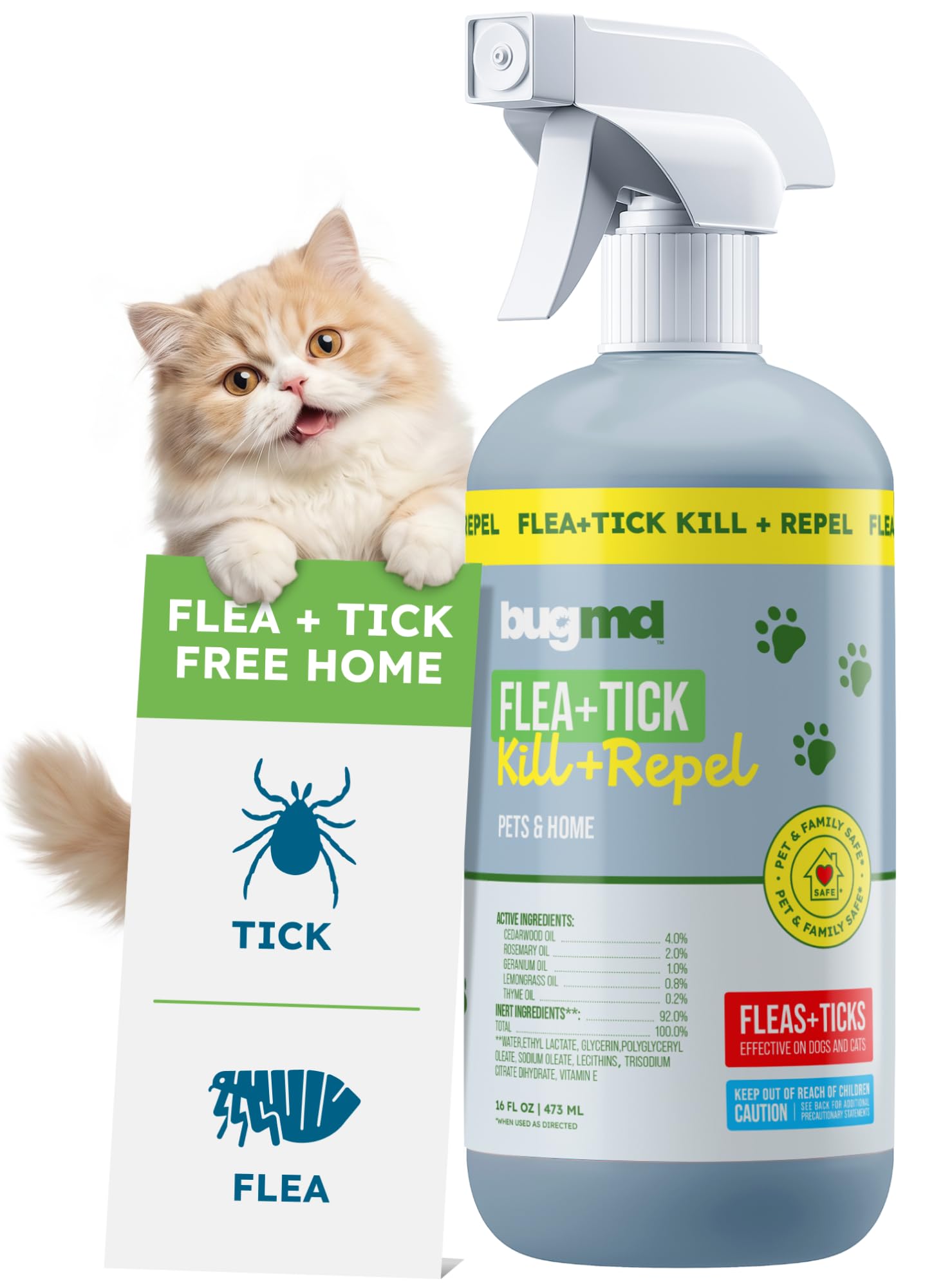
BugMD uses a blend of cedarwood, lemongrass, rosemary, and geranium oils to kill fleas and ticks on contact while remaining gentle enough for kittens and cats twelve weeks and older. The adjustable nozzle switches between a fine mist for pets and a targeted stream for furniture and carpet. Owners report being able to spray directly on a cat’s neck with a Q-tip and seeing fleas die on the spot.
The natural formula leaves a pleasant lemongrass scent instead of chemical odor, and it also deodorizes pet bedding and litter areas. For light to moderate infestations, weekly application keeps flea numbers low without exposing the household to synthetic pesticides. A reviewer with a six-month infestation noted their cat regained weight after switching to this spray.
It is important to note that the residual strength fades faster than chemical alternatives — reviewers recommend applying once a week to maintain control. Some cats show aversion to the smell when sprayed directly, though reactions are mild. This product is best suited as a maintenance or prevention tool rather than a total elimination solution for severe outbreaks.
Why we love it
- Safe for direct use on cats and kittens
- Pleasant natural scent, no harsh chemicals
- Adjustable nozzle for pets or home surfaces
Good to know
- Requires weekly reapplication for best results
- Some cats dislike the smell when sprayed
- Less effective for severe multi-pet infestations
4. FMC Pyrethrin Fogger

The FMC fogger uses pyrethrin, a plant-derived insecticide, to blanket an entire room with insect-killing fog. One 5-ounce can covers a single room up to 5 feet by 5 feet, and the manufacturer explicitly warns against using more than one fogger per room or using it in small enclosed spaces like closets. This is a total-release product — you activate it, leave the room, and return after the settling period.
Reviewers report that the fogger kills insects in garages and unattached spaces effectively, with one owner saying it cleared out everything in their garage. The oil-based formula can leave a slight residue on surfaces, which is common with foggers. It is not intended for use on pets or bedding directly.
However, the fogger has a polarizing reputation — some owners experienced no insect reduction, with the can apparently failing to dispense properly. The product works best as a supplement to surface spraying, especially in areas you cannot reach manually. It is a single-use device, so you will need a separate can for each room regardless of size.
Why we love it
- Easy total-room coverage with one activation
- Plant-derived pyrethrin active ingredient
- Good for hard-to-reach spaces like garages
Good to know
- Only one can per room; small rooms only
- Oil-based residue on surfaces
- Inconsistent results in some user reports
5. Wondercide Rose Flea & Tick Spray for Pets Plus Home

Wondercide markets this as a 3-in-1 solution for dogs, cats, and home surfaces, using 4.2% cedar oil combined with rosemary oil and sodium lauryl sulfate. It kills fleas, ticks, and mosquitoes on contact and is gentle enough for puppies, kittens, and senior pets when used as directed. The rosemary scent is described by many owners as strong but pleasant, and the formula is designed to break the flea life cycle by eliminating eggs and larvae.
In light to moderate infestations, users report a significant speed-up in recovery when pairing this spray with daily vacuuming, bedding washing, and oral pet medication. One reviewer with a severe flea problem said the spray “sped up the process significantly” and noted that their cat drooled after application, which is a normal reaction. For tick prevention specifically, however, one long-term user reported that their dog still contracted Lyme disease despite daily spraying, indicating that this product may be better as a flea repellent than a primary tick defense.
The strongest complaint across reviews is the scent intensity — the lemongrass and rosemary versions can be overpowering, with one owner describing nausea and sinus burning. The price per ounce is higher than synthetic chemical competitors, making it less economical for large homes or frequent reapplication. Wondercide works best as a daily preventive spray for outdoor adventures rather than a heavy-duty indoor eradication tool.
Why we love it
- Safe for all life stages from kittens to seniors
- Triple action for pets, home, and bedding
- Breaks flea life cycle by targeting eggs
Good to know
- Strong scent can be overpowering indoors
- Higher cost per ounce than chemical sprays
- Less reliable for tick prevention in wooded areas
FAQ
Can I spray flea treatment directly on my cat or dog?
How often should I reapply a home flea spray?
What is the difference between a fogger and a spray?
Do natural essential oil treatments actually kill fleas?
Final Thoughts: The Verdict
For most homeowners facing a real flea problem, the at home flea treatment winner is the BASF PT Alpine Flea & Bed Bug Killer because its dinotefuran-pyrethrin-IGR combination delivers fast knockdown and long-term egg prevention in a single aerosol. If you want a budget-friendly gallon that treats your whole house without the chemical smell, grab the Harris Flea and Tick Killer Liquid Spray. And for a gentle, plant-based option you can spray directly on your cat or dog, nothing beats the BugMD Pet Safe Flea Spray.