
You walk through your living room and see fine dust settled on the baseboards, pet hair clinging to the rug fibers, and yesterday’s crumbs still stuck between the kitchen tiles. The thought of dragging out a full-size vacuum after a long day drains your energy before you even start. That is the exact frustration an automatic vacuum is designed to erase — not by working harder, but by working while you do anything else.
I’m Mo Mahin — the founder and writer behind Furric. I spend my time analyzing market trends, comparing suction specifications, mapping navigation algorithms, and studying thousands of owner experiences across the automatic vacuum category to identify which models truly deliver on their promises without the hidden compromises.
This guide breaks down every critical factor — from LiDAR accuracy and self-emptying capacities to real-world pet hair handling — so you can confidently pick the best automatic vacuum for your home’s specific floor plan and mess level.
How To Choose The Best Automatic Vacuum
Picking the right automatic vacuum comes down to understanding how your home’s layout, floor types, and debris volume translate into specific hardware requirements. A model that excels on bare hardwood often struggles with medium-pile carpet, and a unit with stellar self-emptying may lack the navigation finesse for homes with many obstacles. Focus on the four pillars below to avoid wasting money on features you don’t need.
Navigation & Mapping Precision
The difference between a vacuum that cleans methodically and one that bounces around like a confused insect comes down to the navigation system. LiDAR (laser-based) sensors create precise floor plans, remember multiple levels, and allow you to set no-go zones down to the inch. Infrared or camera-based systems can struggle in low light and often miss corners. If your home has an open floor plan with defined rooms and rugs, LiDAR navigation should be non-negotiable.
Suction Power and Floor Type Compatibility
Measured in Pascals (Pa), suction power directly determines how deeply a vacuum cleans carpet fibers and how effectively it lifts fine dust from grout lines. Entry-level models with 2,000-4,000 Pa handle hard floors fine but leave pet hair embedded in rugs. Mid-range units around 6,000-10,000 Pa tackle most carpets. Premium options exceeding 19,000 Pa pull deeply embedded debris from high-pile carpets and can even manage larger food crumbs. Match the suction to your dominant floor type — don’t overpay for extreme power if you have mostly tile or hardwood.
Self-Emptying Station Capacity
An automatic vacuum’s convenience is directly tied to how often you must empty its bin. Models without a self-emptying base require manual dumping every 1-2 cleanings. Self-emptying stations range from 30-day bags to 90-day capacities (2.7L to 3.5L). Larger bags mean fewer replacements but also bigger base stations. For pet owners, a bagless self-emptying system avoids the recurring cost of disposal bags — but bagged systems trap dust more hygienically for allergy sufferers.
Mopping Integration and Carpet Handling
Many automatic vacuums now include mopping, but implementation varies drastically. Basic models drag a damp cloth across the floor — fine for light dust, useless for dried stains. Premium units use rotating roller mops with constant water rinsing and 8-10N downward pressure for actual scrubbing. The critical factor is carpet handling: can the mop lift when transitioning to carpet? Can you set no-mop zones for rugs? If you have wall-to-wall carpet, a mopping vacuum may be unnecessary; if you have mixed floors, mop-lifting capability is essential.
Quick Comparison
On smaller screens, swipe sideways to see the full table.
| Model | Category | Best For | Key Spec | Amazon |
|---|---|---|---|---|
| roborock Qrevo Edge 2 | Premium | Deep carpet + corner cleaning | 25,000 Pa suction | Amazon |
| MOVA V50 Ultra Complete | Premium | Pet odor + hot water mopping | 24,000 Pa suction | Amazon |
| DREAME L50 Ultra | Premium | AI obstacle avoidance + auto-cleaning | 19,500 Pa suction | Amazon |
| eufy Robot Vacuum E25 | Mid-Range | Self-refilling mop + corner edge arm | 20,000 Pa suction | Amazon |
| Shark Navigator RV2120AE | Mid-Range | Bagless 60-day auto-empty | Spot LiDAR navigation | Amazon |
| roborock Q7 M5+ | Mid-Range | Multi-floor + dual anti-tangle | 10,000 Pa suction | Amazon |
| Shark Navigator AV2110S | Mid-Range | Hard floors + pet hair avoidance | 30-day self-empty capacity | Amazon |
| uninell UR3 | Budget | Long runtime + 5-map storage | 7,000 Pa suction | Amazon |
| Tikom L8000 Plus | Budget | Self-emptying on a tight budget | 6,000 Pa suction | Amazon |
In‑Depth Reviews
1. roborock Qrevo Edge 2
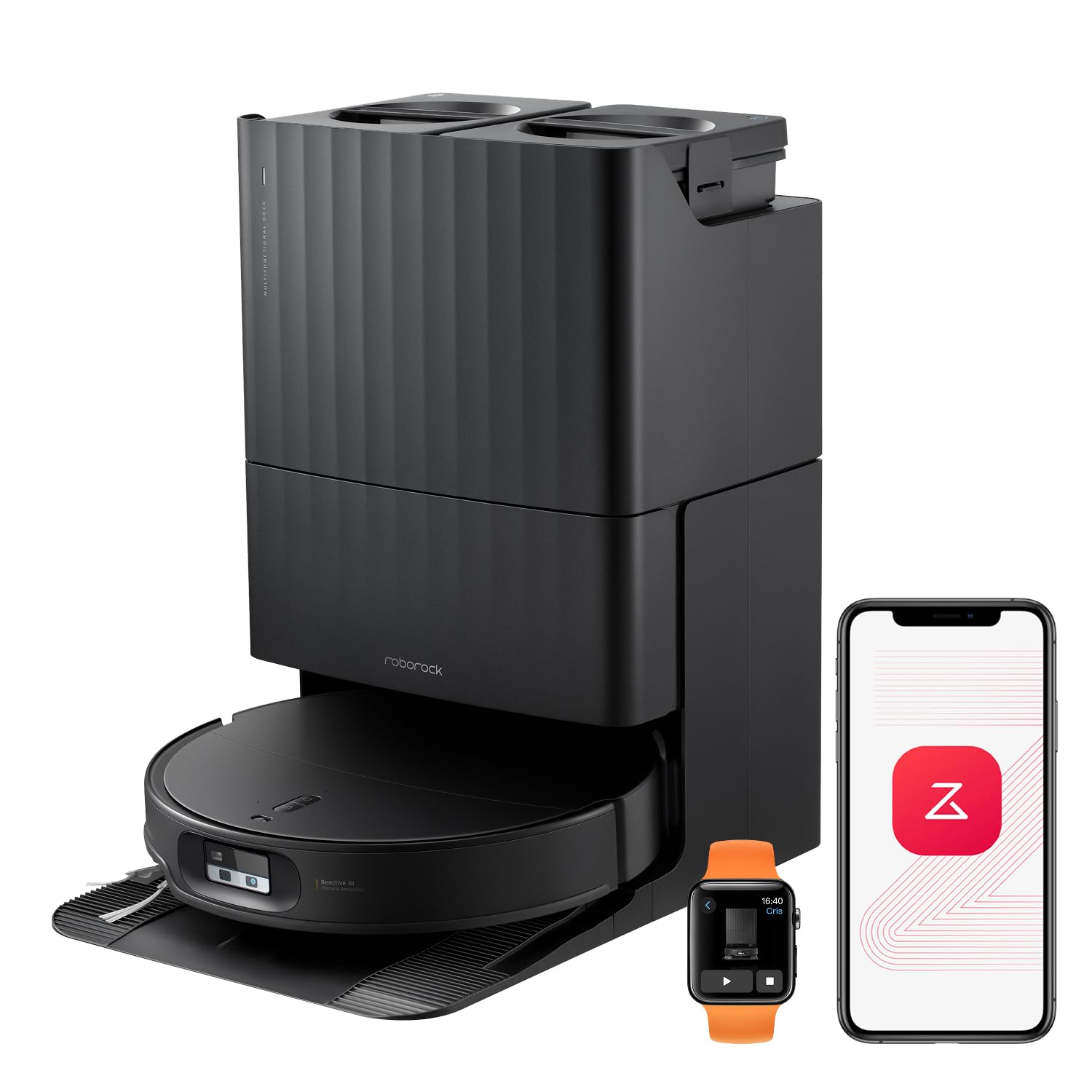
The roborock Qrevo Edge 2 sets the benchmark for what a premium automatic vacuum should deliver. Its 25,000 Pa suction literally pulls embedded dirt out of medium-pile carpets that cheaper units leave behind. The RetractSense Navigation system drops the LDS turret to squeeze under beds and sofas with only 3.14 inches of clearance — a critical trick for homes with low-profile furniture. The FlexiArm Arc side brush extends to sweep debris from toe-kick areas and walls, solving the corner-dust problem that plagues virtually every other robot.
Mopping here is genuinely effective, not a token damp pad. The dock washes the mop at 176°F hot water and dries it at 131°F, eliminating the mildew smell that haunts most self-cleaning stations. The Reactive AI camera recognizes over 280 object types — pet toys, cables, shoes — and avoids them without bumping. The 3L sealed dust bag lasts about 65 days, but plan to refill the clean water tank every 2 to 3 full-cleaning cycles depending on your home’s square footage. The app’s SmartPlan 3.0 learns your room usage patterns and adjusts suction and mopping schedules automatically.
Where the Qrevo Edge 2 stumbles is price — it is a serious investment. The camera-based obstacle avoidance occasionally misidentifies dark furniture legs as shadows, causing brief hesitation. Owners of homes with mostly hard floors may find the 25,000 Pa overkill, though the variable suction settings let you tone it down. For multi-floor homes with a mix of thick carpets, tile, and wood, this is the most complete hands-free solution available right now.
Why we love it
- Retractable LDS for cleaning under low furniture that other robots cannot reach
- 176°F hot water mop washing prevents odor and bacterial buildup on the pad
- FlexiArm side brush sweeps wall edges and corners with 100% coverage
Good to know
- Premium price point makes it a serious budget commitment
- Camera-based obstacle avoidance can hesitate near dark furniture legs
- Clean/dirty water tanks require manual refill and empty every 2-3 runs
2. MOVA V50 Ultra Complete

The MOVA V50 Ultra Complete brings two unique weapons to the automatic vacuum fight: warm-water mopping with a dedicated solution system and a FlexiRise navigation that retracts the LDS sensor to clean under sofas. The 24,000 Pa suction is aggressive on carpets — owners report it lifts decades-old embedded dust from carpet nap that manual vacuums missed. The TroboWave DuoBrush actively prevents hair tangling, and in practice, it sheds long pet fur without requiring weekly brush-roller removal.
The DuoSolution system is genuinely different from competitors. You can load an all-purpose cleaning solution or a pet odor removal agent into the auto-dispenser, and the robot sprays it directly onto the mop before scrubbing. The JetSpray washboard uses 20 nozzles to rinse the mop pad clean after every run, then hot air dries it. Owners of multi-pet households report a noticeable reduction in “wet dog” smell after the robot finishes a full mopping cycle. The 220-minute battery (on low suction) covers roughly 1,300 square feet in one pass, though the deep-clean mop cycle takes closer to 3 hours.
The downside: the onboard dustbin filter needs weekly manual inspection because pet dander can clog it quickly — the app does not send a reminder for this. The mopping function uses more water than expected, so you will refill the tank every 1.5 full-home cleans. At 14.2 kg (31 pounds) for the whole box, delivery weight is substantial. The 3-year warranty provides peace of mind, but owners with physical disabilities note the heavy base station is hard to reposition once placed.
Why we love it
- Warm-water mopping with separate pet odor solution dispenser reduces smell in pet households
- 220-minute runtime cleans large homes without needing a recharge mid-run
- FlexiRise navigation retracts LDS to access low furniture clearance
Good to know
- Onboard filter needs weekly manual check for pet hair clogs
- Heavy base station is difficult to relocate once placed
- High water consumption requires frequent tank refills
3. DREAME L50 Ultra
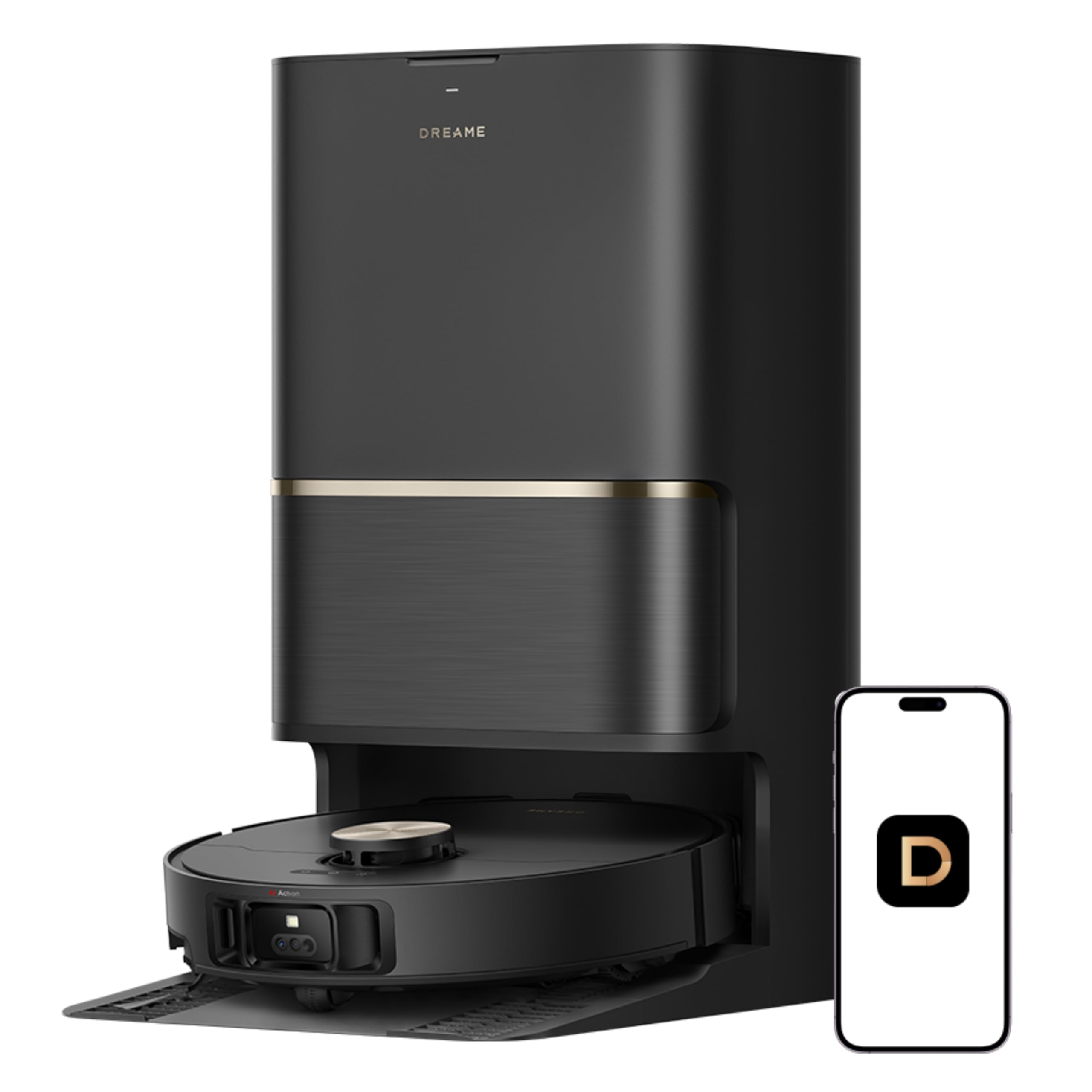
The DREAME L50 Ultra focuses on intelligence and automation density. Its ProLeap system uses retractable legs that lift the robot 6 cm to clear door thresholds and thick rug edges that stop most competitors cold. The HyperStream DuoBrush combines a bristled rubber brush with a TPU rubber brush, which together capture hair from both hard floors and carpets without tangling. The 19,500 Pa suction is quieter than many 10,000 Pa units thanks to the sixth-generation TurboForce motor design.
Obstacle avoidance here is among the most sophisticated in the mid-premium tier. The 3D structured light plus AI action detects and navigates around 180+ obstacle types, including cables and pet bowls, with minimal bumping. The Dual Flex Arm technology extends both side brush and mop simultaneously to reach tight corners and narrow furniture gaps — a design that cleans areas the main body cannot physically drive into. The dock auto-empties for up to 100 days, washes the mop with hot water, and dries with warm air. Owners consistently report the robot rarely gets stuck on chair legs or children’s toys.
Two practical complaints: the app occasionally requires a 2.4 GHz Wi-Fi reconnection after firmware updates, and the mop scrubbing, while good, does not match the downward pressure of the roborock Edge 2 on dried stains. Carpet owners must select the right mode from five options in the app — if you leave it on the default setting, the mop will not lift properly on high-pile rugs, causing damp spots. The 19,500 Pa suction is excellent for maintenance cleaning but may need a second pass on heavy debris like crushed cereal.
Why we love it
- ProLeap retractable legs clear thresholds up to 6 cm high
- Dual Flex Arm extends side brush and mop for true corner cleaning
- 100-day auto-empty capacity reduces maintenance frequency significantly
Good to know
- App occasionally requires 2.4 GHz reconnection after firmware updates
- Default carpet setting does not lift mop properly on high-pile rugs until manually adjusted
- Mop scrubbing pressure is lower than premium competitors for dried stains
4. eufy Robot Vacuum E25
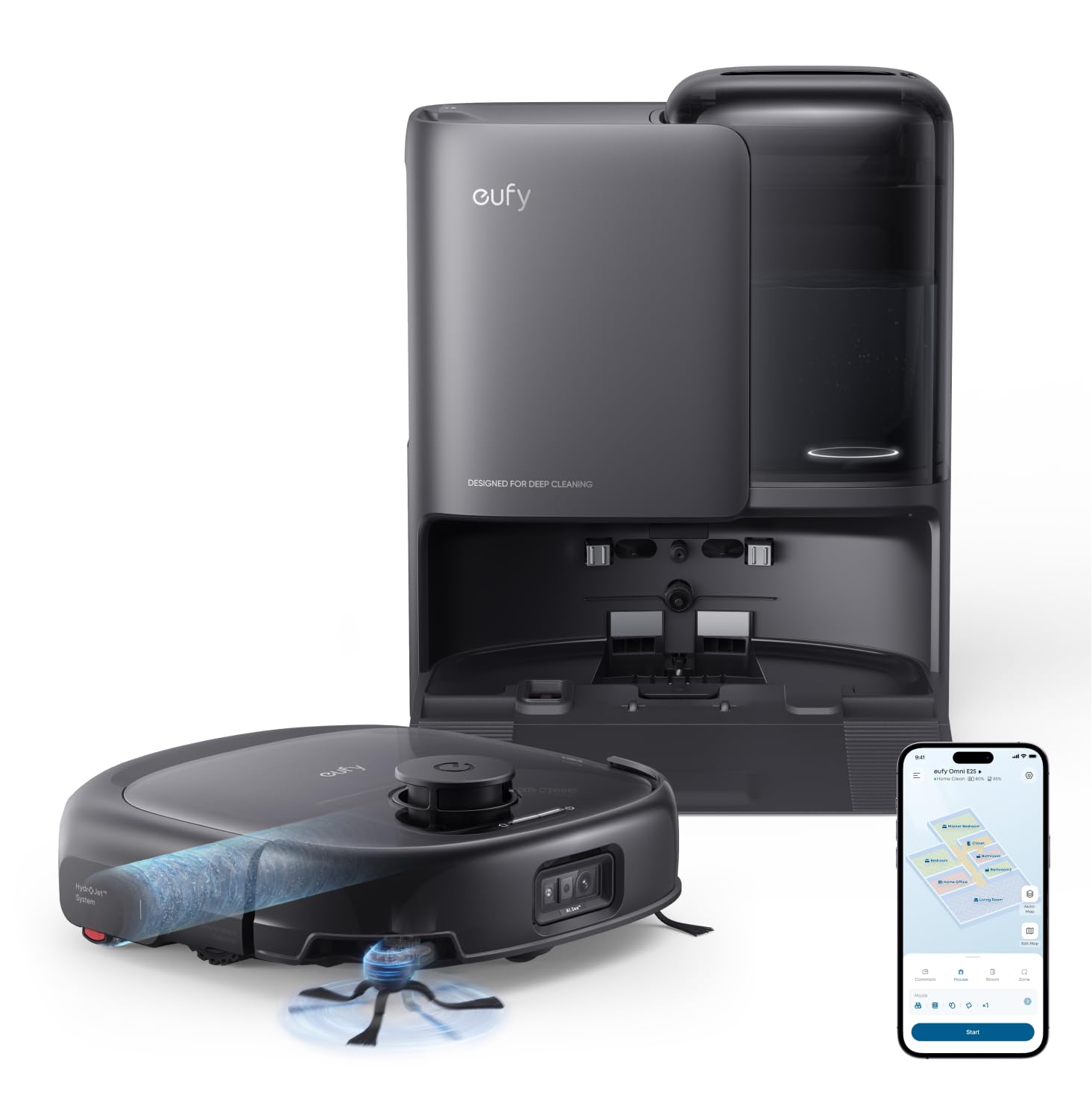
The eufy E25 brings features typically found in + flagships down to a more accessible tier. Its HydroJet system refreshes the roller mop twice per second with clean water, preventing the cross-contamination that occurs when a pad spreads dirty water from room to room. The CornerRover Arm extends to scrub baseboards and furniture legs — a feature that most mid-range automatic vacuums omit entirely. At 20,000 Pa suction, it lifts deeply embedded pet hair from carpets and fine dust from grout lines.
The all-in-one station handles the entire cycle: it auto-empties dust into a 3L bag lasting roughly 75 days, self-washes the roller mop, hot air dries at 50°C, and auto-refills water for the next mopping session. Setup takes about five minutes with no drilling required. The DuoSpiral anti-tangle brushes prevent hair wrap effectively — owners of long-haired households report near-zero brush cleaning. The 125-minute runtime in standard mode covers most homes under 2,000 square feet in one go, and the ≤61dB sound level means it runs unnoticed during phone calls.
The main trade-offs: the eufy app historically rejected network passwords containing spaces (a firmware update fixed this, but legacy reviews still flag it). The 2.4 GHz Wi-Fi requirement can frustrate users with mesh networks. The CornerRover Arm works well on hard floors but struggles on thick carpet edges. The mopping system, while superior to pad-drag designs, leaves a thin water layer that takes longer to dry on humid days. For anyone wanting genuinely good mopping plus strong vacuum suction without paying premium flagship prices, the E25 delivers an outstanding ratio of performance to cost.
Why we love it
- HydroJet mop refreshes roller with clean water twice per second, preventing cross-contamination
- CornerRover Arm extends to scrub baseboards and tight corners on hard floors
- Self-refilling station handles dust emptying, mop washing, and water refill automatically
Good to know
- Mop leaves a thin water layer that takes longer to dry in humid conditions
- CornerRover effectiveness drops on thick carpet edges
- Requires 2.4 GHz Wi-Fi with no 5 GHz fallback for setup
5. Shark Navigator RV2120AE

The Shark Navigator RV2120AE takes a firm stance against recurring costs: the self-emptying base is fully bagless, holding up to 60 days of dirt with zero disposable bag purchases over the product’s lifetime. This alone saves owners roughly – per year compared to bagged systems. The SmartPath navigation uses spot LiDAR to create detailed home maps and cleans in methodical row-by-row patterns — owners report 98-99% coverage with rare missed spots. The self-cleaning brushroll digs into carpets while actively preventing hair wrap, which is a genuine relief for households with multiple shedding pets.
The 120-minute battery covers an average home in one session, and the recharge-and-resume function ensures unfinished rooms get cleaned even after a low-battery return to base. Obstacle detection works well for everyday items like shoes and furniture legs, though it can miss low-profile cables. The app provides scheduling, room-specific cleaning, and no-go zones. Owners moving from Roomba report dramatically fewer “stuck” errors — the Shark’s sensors handle transitions between tile and area rugs more gracefully.
The known limitation: the Navigator series struggles on all carpet types, from low-pile to shag. On hard floors, it excels — quiet, thorough, and efficient — but homeowners with wall-to-wall carpeting will find it leaves visible debris behind on anything thicker than a low-pile berber. The bin capacity on the robot itself (0.22 quarts) fills quickly during heavy pet hair shedding, so the self-empty base becomes essential. Replacement side brushes can be tricky to source from third-party sellers. If your home is predominantly hard floors with a few small rugs, the bagless base alone makes this a smart long-term value.
Why we love it
- Fully bagless self-emptying base eliminates recurring disposal bag costs
- Row-by-row LiDAR navigation achieves 98-99% coverage with minimal stuck events
- Self-cleaning brushroll prevents hair wrap on pet hair and long human hair
Good to know
- Struggles significantly on all carpet types including low-pile and shag
- Onboard robot bin fills quickly during heavy pet shedding periods
- Replacement parts like side brushes are harder to find than competing brands
6. roborock Q7 M5+
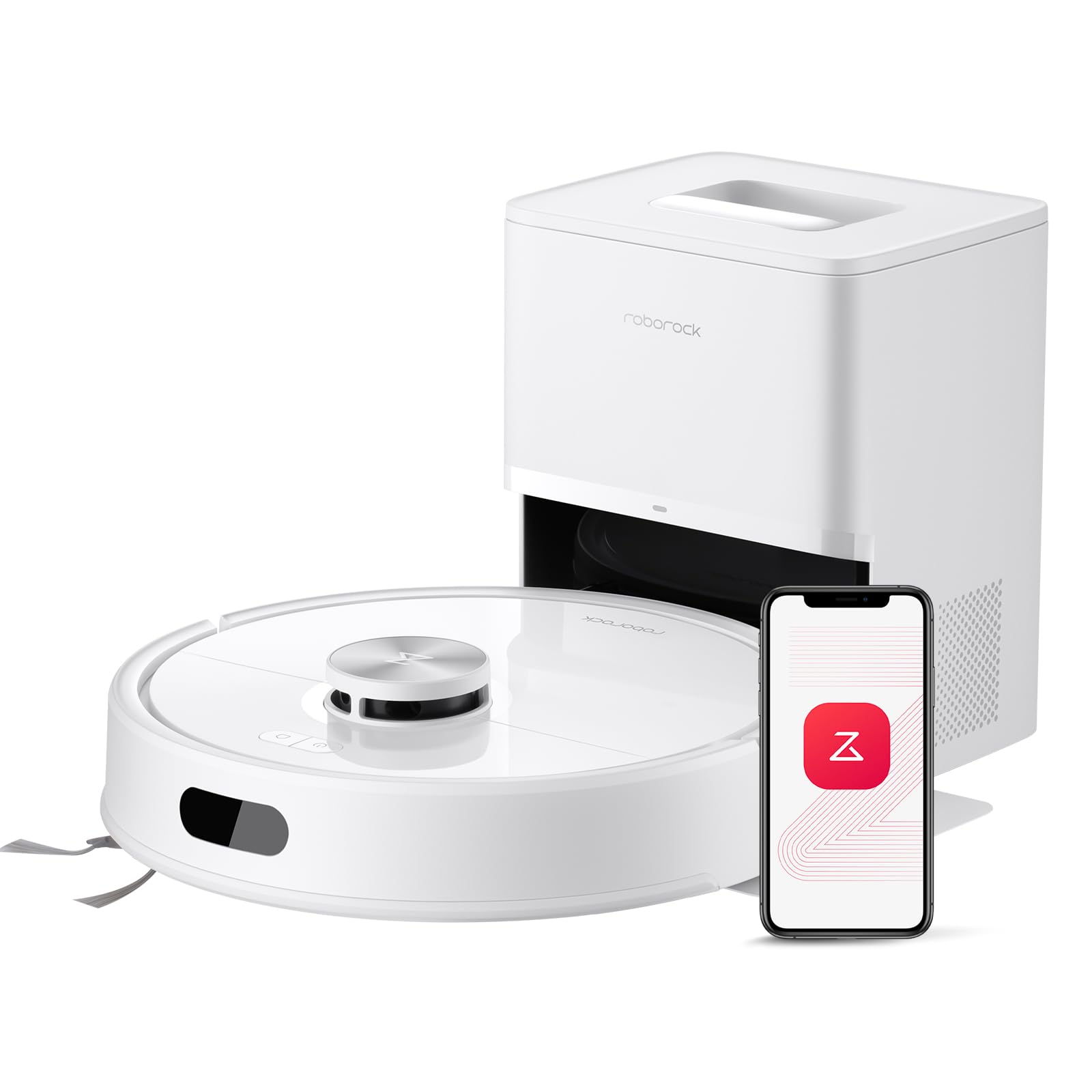
The roborock Q7 M5+ is the brand’s mid-range workhorse designed to deliver the core roborock experience — LiDAR mapping, strong suction, and a self-emptying dock — without the flagship price tag. The PreciSense LiDAR maps homes quickly and stores up to five floor plans, making it ideal for multi-level houses. The dual anti-tangle system uses a JawScrapers main brush and a zero-hair-tangling side brush to reduce brush cleaning frequency — owners of long-haired breeds report significantly less wrap than earlier roborock models.
The 10,000 Pa HyperForce suction handles hard floors and low-pile carpets effectively, pulling up embedded pet hair and fine dust. The RockDock Plus base holds 2.7 liters (about 7-9 weeks of debris), and the sealed dust bag traps allergens hygienically. Mopping is basic — a pad-drag system with three water flow settings — adequate for light dust but not for dried stains or sticky spills. The app provides granular control: room-specific cleaning, no-go zones down to 1-foot precision, and real-time battery monitoring. Owners praise the reliable return-to-base behavior and the quiet operation at standard suction levels.
The main compromise is suction power: 10,000 Pa is respectable but falls behind the 19,000-25,000 Pa units for deep carpet cleaning. The mopping system lacks the mop-lifting capability needed for homes with mixed flooring — if the robot transitions from tile to carpet with the mop attached, it will wet the rug. The app requires 2.4 GHz Wi-Fi and some users report initial connection hiccups with Comcast/Xfinity modems that need WPA2 and no special characters in passwords. For homes with mostly hard floors or low-pile carpets, the Q7 M5+ offers exceptional battery life and build quality at a reasonable mid-range entry point.
Why we love it
- Stores up to five floor plans for seamless multi-level home cleaning
- Dual anti-tangle brushes reduce hair wrap maintenance significantly
- Reliable LiDAR navigation with consistent return-to-base behavior
Good to know
- 10,000 Pa suction is adequate for hard floors but less effective on thick carpets
- Mop pad does not lift when transitioning to carpet, risking rug wetting
- App connection can be finicky with certain modem/router configurations
7. Shark Navigator AV2110S
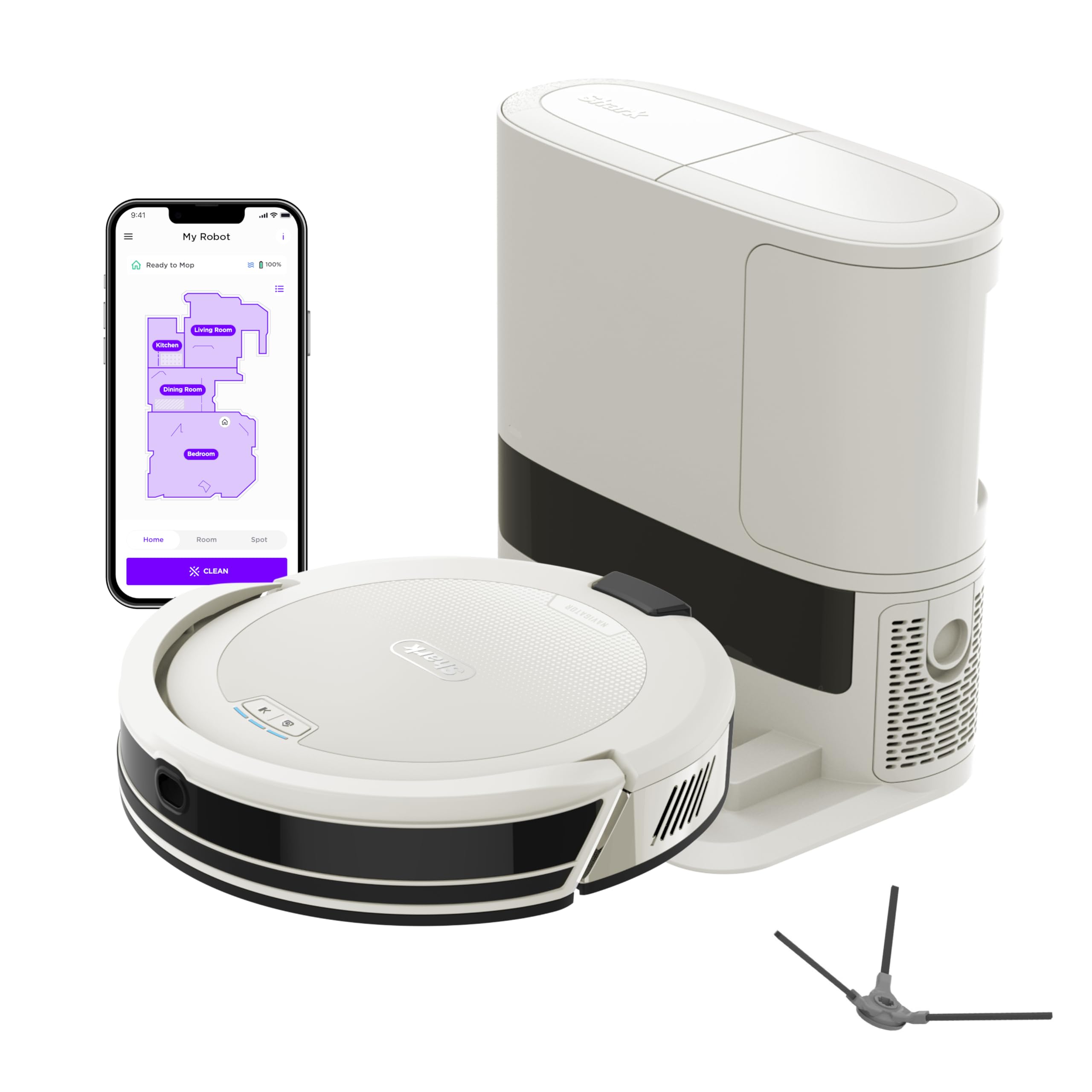
The Shark Navigator AV2110S distills everything that works in the Navigator series into a lower-cost package. The self-emptying base holds 30 days of debris (bagless, same as the RV2120AE), and the SmartPath LiDAR navigation delivers the same methodical row-by-row cleaning pattern that owners consistently rank above Roomba for coverage. The anti-hair wrap brushroll prevents long hair and pet fur from winding around the roller, reducing the need for weekly brush cleaning. The 120-minute battery covers typical homes, and recharge-and-resume ensures complete coverage.
Where the AV2110S shines is on hard floors. Owners describe it as exceptionally quiet compared to competitors, with advanced sensors that detect and navigate around everyday objects — shoes, pet bowls, furniture legs — without getting stuck. The SharkClean app provides scheduling, home mapping, no-go zones, and suction control. The white finish blends into most interiors, and the base station footprint is smaller than Shark’s premium models. For pet owners with hardwood or tile floors, it captures pet hair and dander thoroughly on the first pass.
The same carpet limitation applies across the Navigator line: performance on any carpet type is weak. Low-pile carpets show visible debris after cleaning, shag rugs remain largely untouched, and the robot can struggle with darker carpet colors confusing its cliff sensors. The onboard bin is small (0.21 quarts), so the self-emptying base is essential rather than optional. Replacement parts for the AV2110S are still scarce on the aftermarket. This is an outstanding automatic vacuum for hard-floor homes looking for reliable, quiet, bagless self-emptying without paying for superfluous mopping features they will never use.
Why we love it
- Bagless 30-day self-emptying base removes recurring bag purchase costs
- Exceptionally quiet operation on hard floors, suitable for use during calls or sleep
- SmartPath LiDAR delivers methodical row-by-row cleaning with rare missed spots
Good to know
- Weak performance on all carpet types from low-pile to shag
- Small onboard bin makes the self-emptying base essential for pet households
- Replacement side brushes and filters are still scarce on the aftermarket
8. uninell UR3
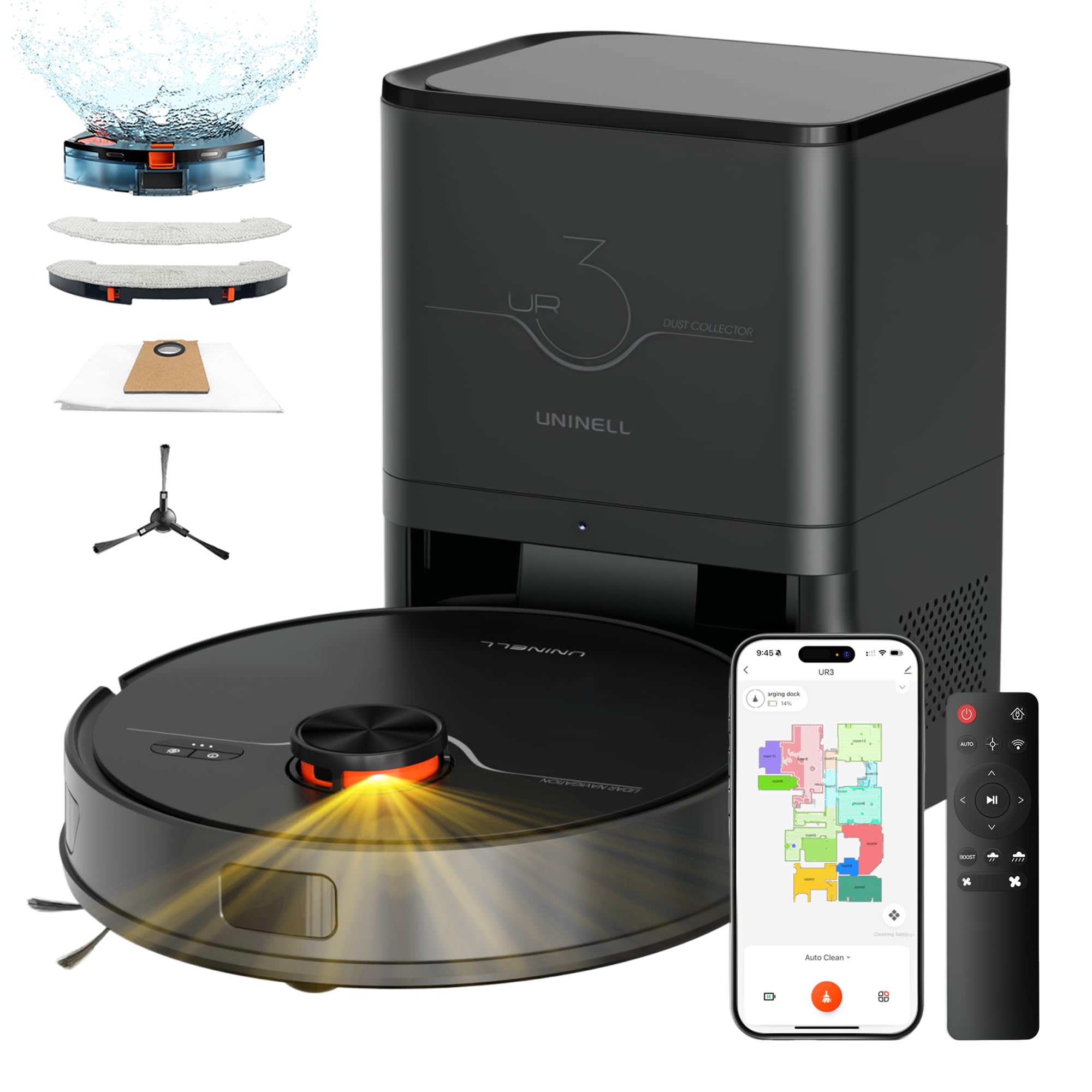
The uninell UR3 proves you do not need to spend a premium to get LiDAR mapping, self-emptying, and decent suction. The 3.5L self-emptying station holds up to 90 days of debris — the largest capacity in this entire list relative to its price tier. The 7,000 Pa suction with Auto-Carpet Boost ramps up power when it detects a rug transition, digging out pet hair and crumbs from low-pile carpets. The tangle-free brush design actively reduces hair wrap, which is rare at this price point and saves owners from weekly brush-roller maintenance.
The 360° LiDAR maps homes quickly and stores up to five floor plans for multi-level houses. The 180-minute runtime on a single charge covers up to 2,000 square feet, and the quiet operation (comparable to a refrigerator hum) lets it run overnight. The app allows custom cleaning schedules, suction adjustment, water flow control, and no-go zone creation. The included remote control provides a Wi-Fi-free option for less tech-savvy users — a thoughtful inclusion that most budget models skip. Owners consistently praise the setup speed and the reliable obstacle avoidance that navigates around furniture and pet bowls without constant bumping.
The compromises are predictable at this tier. The mopping function is a stationary damp pad — it lightly wipes the floor to pick up dust but does not scrub dried stains. The 7,000 Pa suction works well on hard surfaces and low-pile carpets but struggles on medium to high-pile carpeting. The foam and sponge filter requires regular rinsing to maintain airflow, and the self-emptying station can be loud during the evacuation cycle. The uninell UR3 is the smart budget entry for first-time automatic vacuum buyers who prioritize LiDAR mapping and large self-emptying capacity over maximum suction power.
Why we love it
- 3.5L self-emptying station holds up to 90 days of debris, the largest capacity at this price
- 180-minute runtime covers large homes up to 2,000 square feet on one charge
- Included remote control offers Wi-Fi-free operation for less tech-savvy users
Good to know
- Mopping is a stationary damp pad only effective for light dust pickup
- 7,000 Pa suction struggles on medium to high-pile carpeting
- Self-emptying station evacuation cycle is audibly louder than premium competitors
9. Tikom L8000 Plus
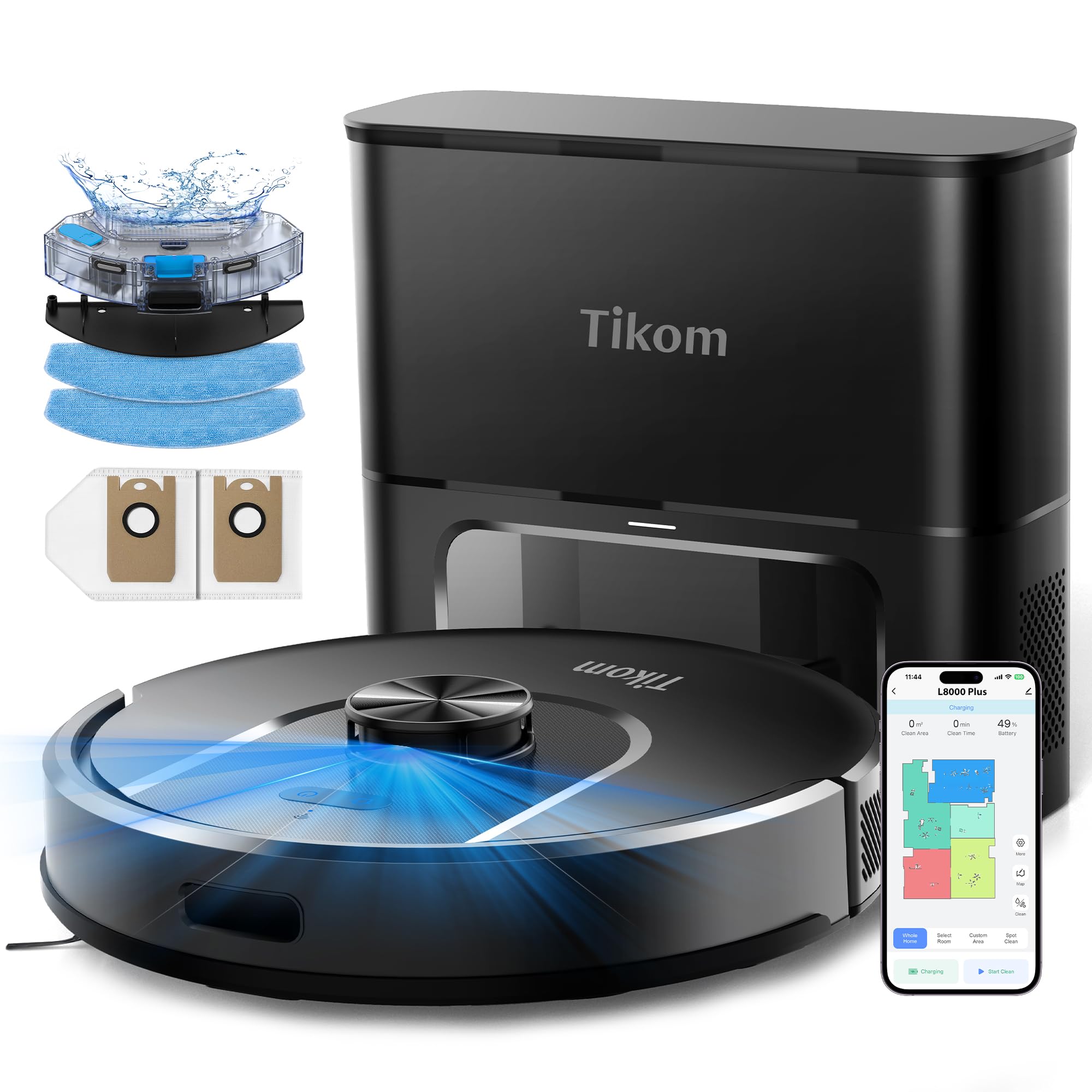
The Tikom L8000 Plus delivers the self-emptying experience at the most accessible price point in this guide. The 3-liter dustbag holds weeks of debris, and the 6,000 Pa suction automatically boosts to maximum on carpet to lift pet hair and fine dust. The 360° LiDAR navigation scans rooms quickly and creates accurate maps with the ability to set no-go zones and virtual walls through the app. For first-time buyers who want the core benefit of an automatic vacuum — not having to think about it — this is the most budget-friendly on-ramp.
The 150-minute runtime in gentle suction mode covers most homes under 1,500 square feet. The app supports both 2.4 GHz and 5 GHz Wi-Fi networks, which eliminates a common frustration found in many competing models that only support 2.4 GHz. Voice control via Alexa works reliably, and the multi-floor map storage saves up to five layouts. Owners consistently describe the setup as straightforward and the navigation as surprisingly good for the price, with the cliff sensor preventing falls on stairs. The self-emptying base means you can go weeks without touching the debris, which is the primary reason most buyers upgrade from a basic robot vacuum.
The Tikom trades suction power and mopping quality to hit its price point. The 6,000 Pa suction handles hard floors and low-pile carpets competently but will not deep-clean thick carpets the way 10,000+ Pa units do. The mopping pad is a basic damp cloth — useful for light dust pickup but not for scrubbing dried-on messes. The self-emptying base dustbag is a proprietary size, so replacement bags must come from Tikom rather than standard bag suppliers. Some owners report that the mapping occasionally fails to save correctly after power outages. If your primary need is reliable self-emptying on hard floors and low-pile rugs without spending more than necessary, the L8000 Plus delivers real value.
Why we love it
- Self-emptying base with 3L capacity at the most accessible price point
- Supports both 2.4 GHz and 5 GHz Wi-Fi, avoiding a common connection headache
- LiDAR navigation with multi-floor map storage for up to five floor plans
Good to know
- 6,000 Pa suction is effective on hard floors but limited on thick carpets
- Mopping pad is a basic damp cloth, not suitable for scrubbing dried stains
- Proprietary dustbag size requires replacement bags from Tikom specifically
FAQ
Can an automatic vacuum replace a traditional upright vacuum entirely?
How important is LiDAR navigation vs camera-based systems?
What suction power do I need for pet hair on carpets?
Is mopping on an automatic vacuum actually useful or a gimmick?
How often do I actually need to interact with a self-emptying automatic vacuum?
Final Thoughts: The Verdict
For most homes, the best automatic vacuum winner is the roborock Qrevo Edge 2 because it combines the highest suction power, the most advanced mopping system, and the retractable LDS design that cleans under low furniture where dust accumulates — all without requiring weekly hands-on maintenance. If you live in a hard-floor home and want to avoid bag costs forever, grab the Shark Navigator RV2120AE for its bagless 60-day self-emptying base. And for the budget buyer who refuses to compromise on LiDAR mapping and self-emptying capacity, nothing beats the uninell UR3 for the sheer value packed under the price ceiling.