
Finding axolotl tank decor that won’t snag delicate gills or leach harmful substances into cool, filtered water is a surprisingly tall order. Unlike robust tropical fish, axolotls have sensitive porous skin and external gills that require smooth, chemically inert materials without sharp edges or protruding seams.
I’m Mo Mahin — the founder and writer behind Furric. I’ve spent years combing through aquatic species requirements, cross-referencing material safety data sheets, and analyzing thousands of owner reviews to separate genuinely safe decor from risky lookalikes.
Whether you need a spacious ceramic cave or a naturalistic resin hide, this guide evaluates the top contenders to help you choose the safest axolotl tank decor for your setup.
How To Choose The Best Axolotl Tank Decor
Axolotls are not ordinary fish — they regenerate limbs, breathe through feathery external gills, and have skin that absorbs anything leached into the water. Their decor must pass a much stricter safety check than standard aquarium ornaments. Here are three criteria every piece must meet.
Material Safety and Water Chemistry
Ceramic with a double-sided glaze is the gold standard because the vitrified surface prevents leaching and resists chipping. Single-glazed ceramic may leave raw clay exposed, which can cloud water or release particulates. Resin pieces should be labeled non-toxic and BPA-free, but cheaper resins may degrade over time in cool water. Plastic is lightweight and usually inert, but thin plastics can develop sharp cracks. Always check that the material has no paint or surface coating that could peel under water.
Interior Smoothness and Gill-Friendly Design
An axolotl’s gills are fragile and easily torn by any protrusion, rough seam, or unpolished edge. Run your finger — or a piece of pantyhose — along every interior surface of a hide before introducing it to the tank. The cave entrance should be wide enough for your axolotl to enter and turn around without scraping its gills. For a full-grown adult, that means an opening of at least three to four inches in diameter.
Stability and Footprint
Axolotls are bottom-dwellers that like to wedge themselves under hides. A cave that is too light or has a narrow base can tip over, pinning your pet or creating a sudden noise that stresses them. Look for decor with a wide, flat footprint and substantial weight — ceramic and dense resin pieces around one to three pounds generally stay planted. For corner placements, triangular or quarter-circle shapes maximize usable floor space without crowding the axolotl’s swimming area.
Quick Comparison
On smaller screens, swipe sideways to see the full table.
| Model | Category | Best For | Key Spec | Amazon |
|---|---|---|---|---|
| Axolotl Hide Shell — Ceramic | Ceramic | Gill-sensitive axolotls | 6.49″ L x 5.31″ W x 5.11″ H | Amazon |
| MM PET SUPPLIES Hide Cave | Resin | Large active setups | 8.6″ L x 6.2″ W x 4.7″ H | Amazon |
| REPTIZOO Magnetic Hide | Resin | Vertical tank walls | 6.22″ W x 3.54″ D x 2.99″ H | Amazon |
| FISHNOSH Corner Cave | Clay | Small corner tanks | 5.1″ L x 2″ W x 2.7″ H | Amazon |
| FEDOUR Rock Cave | Plastic | Budget starter tanks | 5.7″ L x 5.7″ W x 5″ H | Amazon |
In‑Depth Reviews
1. Axolotl Hide Shell Shape Ceramic Fish Tank Cave
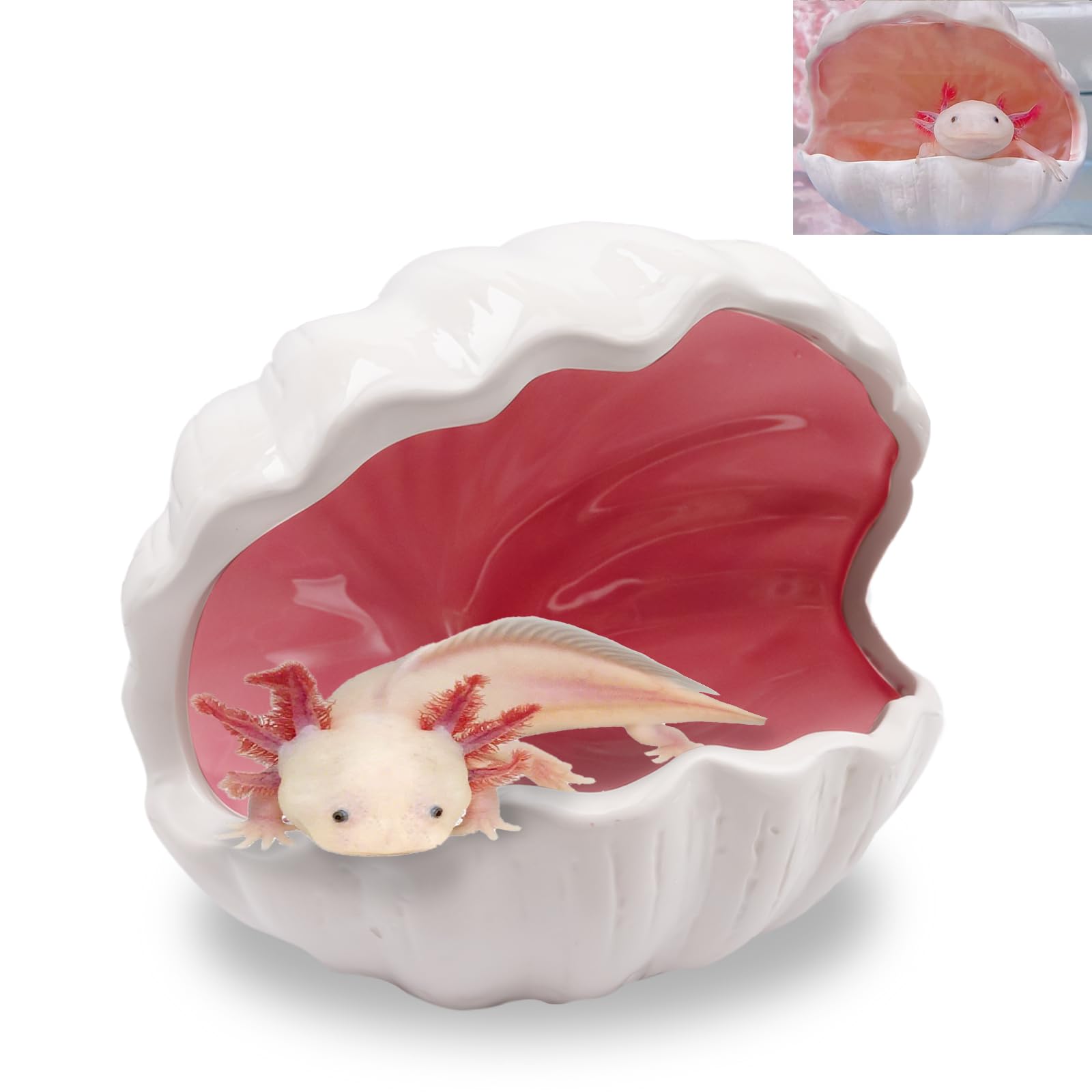
This ceramic hide is the safest option for axolotls because of its double-sided glaze — a complete vitrified coating that eliminates raw clay exposure on both the interior and exterior. Measuring 6.49 inches long by 5.31 inches wide and 5.11 inches high, the extra-large cavity gives an adult axolotl enough room to fully turn around without scraping its gills against the walls. The pink and white finish is purely decorative but does not chip or fade in cool freshwater.
At 1.2 pounds, the ceramic body stays planted on the tank floor even when your axolotl climbs onto the roof. Owners consistently report that their axolotls found the cave within minutes and use it both as a hiding spot and a perching ledge. The polished surface makes cleaning simple — a quick rinse removes slime coat residues without scratching the glaze.
One caveat: the shell shape, while charming, has a relatively narrow entrance compared to the interior. Larger axolotls over nine inches may need to angle themselves slightly to enter. Still, for gill protection and water-quality safety, this piece sets the standard for ceramic axolotl tank decor.
Why we love it
- Double-sided glaze prevents leaching and raw edges
- Ample interior volume for adult axolotls
- Quick location acceptance reported by most owners
- Easy to clean without damaging the finish
Good to know
- Entrance may be snug for axolotls over nine inches
- Pink color may not suit naturalistic biotope themes
2. MM PET SUPPLIES Hide Cave

If you need the largest single-piece hide available, this resin cave delivers an impressive 8.6 inches by 6.2 inches by 4.7 inches of interior space — enough room for two adult axolotls to share comfortably. The realistic moss-covered rock appearance blends well in planted tanks, and the textured exterior provides grip for axolotls that like to climb onto the roof. Despite being made from resin, the piece weighs three pounds, giving it excellent bottom-weight stability.
Owners praise the smooth interior finish, which lacks the sharp seams or rough patches that can damage gill filaments. The cave is tall enough that axolotls can sit upright inside without their dorsal fin pressing against the ceiling. For 40-gallon and larger tanks, this hide fills a corner convincingly without looking like a toy.
The only reported issue is paint chipping on the top edge of some units. While the base material is non-toxic resin, any exposed unpainted surface could theoretically raise concerns in a sensitive axolotl tank. If you choose this piece, check the top rim carefully before submerging, and consider whether an all-ceramic option would offer longer-term peace of mind.
Why we love it
- Generous interior accommodates two adults
- Heavy three-pound weight resists tipping
- Realistic rock texture blends into planted tanks
- Smooth interior protects gill health
Good to know
- Paint may chip on top edges over time
- Resin material not as chemically inert as ceramic
3. REPTIZOO Magnetic Reptile Hide Cave

This resin tree trunk hide attaches to the glass wall via strong magnets rated to hold 1.8 pounds, freeing up floor space in smaller tanks. The hollow interior and tree-hole entrance allow axolotls to swim in and out, while the natural wood-look finish integrates well with most aquascapes. Measuring only 6.22 inches wide by 2.99 inches high, it is compact enough for 10-gallon setups without crowding the swimming lane.
The magnetic mounting system is a clever alternative for axolotl owners who want to create a mid-water or high-perch hiding spot. However, axolotls are primarily bottom-dwellers and may not instinctively seek out an elevated cave. Owners of tree frogs and geckos report immediate use, but axolotl keepers should place the hide low — near the substrate — for best acceptance. The smooth resin surface is easy to wipe clean and does not leach, but the interior is relatively shallow at 2.99 inches, limiting use to juvenile axolotls.
Be aware that the hollow cavity is not fully enclosed on all sides — the back is open against the glass. Axolotls may wedge themselves between the hide and the tank wall, which can stress them if the gap is too tight. Use the included magnets to slide the hide into position slowly to avoid cracking the tank glass, and monitor your axolotl’s comfort for the first few days.
Why we love it
- Magnets free up floor space in small tanks
- Smooth resin interior with no sharp edges
- Easy to reposition without tools
- Natural wood look blends into aquascapes
Good to know
- Shallow interior best for juvenile axolotls
- Open back against glass can trap debris
4. FISHNOSH Aquarium Corner Cave
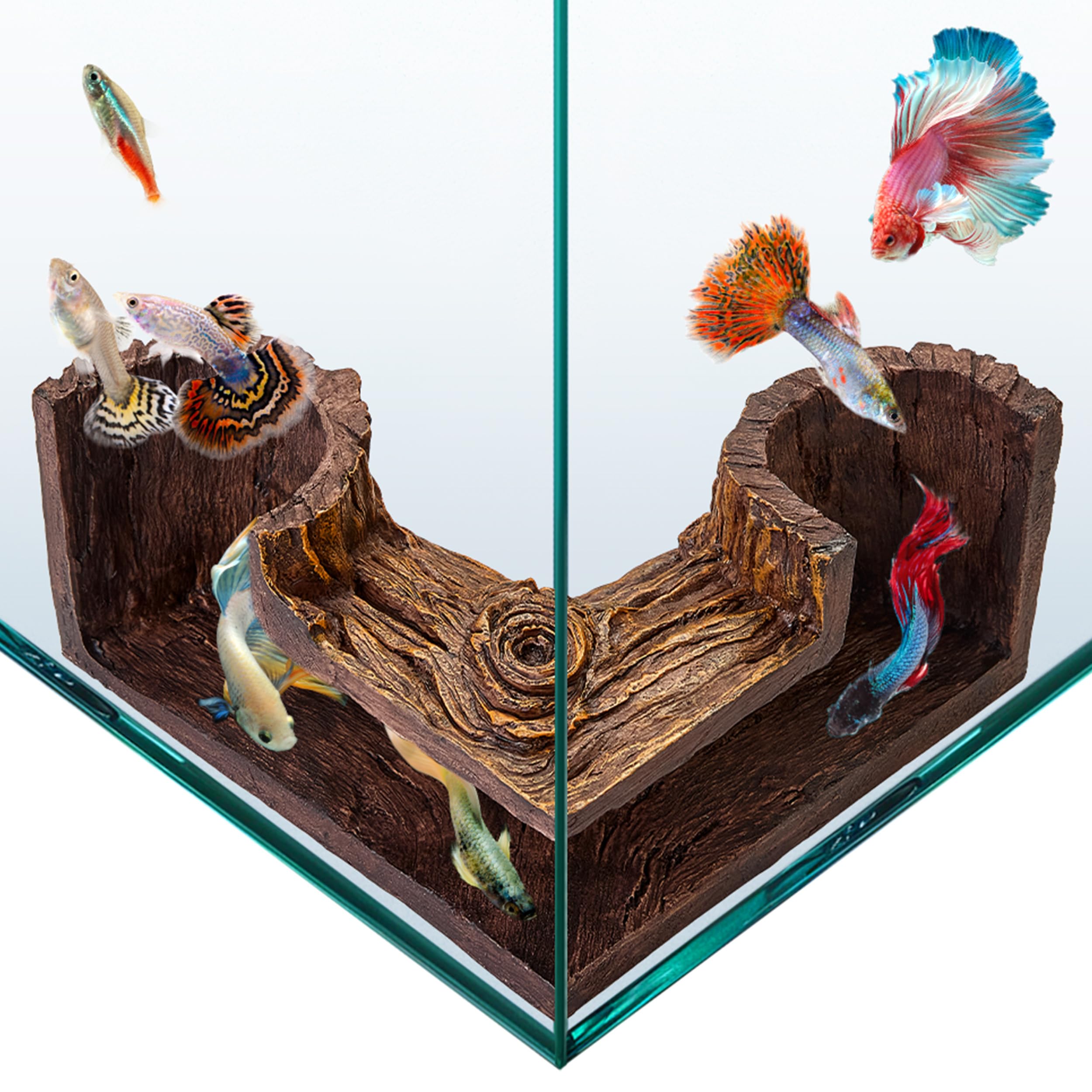
This corner-specific clay hide measures 5.1 inches by just 2 inches wide, making it ideal for the tight triangular space in rectangular tanks where axolotls often like to wedge themselves. The textured driftwood-look finish is individually hand-painted, and the BPA-free clay construction is heavier than it looks — the 1.2-pound weight keeps it from shifting when your axolotl brushes against it. The two tunnel openings create a through-pass that some axolotls enjoy exploring.
Owner reports indicate that bottom-dwelling species like corydoras and plecos accept this cave immediately, but axolotls may be more hesitant due to the narrow 2-inch height. A full-grown axolotl needs at least three inches of vertical clearance to enter comfortably without scraping its dorsal fin. Consider this piece for juvenile axolotls or as a supplementary hide in a larger tank where the main cave is the primary shelter.
Some owners noted that the interior texture, while smooth to the touch, has a slightly porous clay surface that could trap biofilm more readily than glazed ceramic. Regular cleaning with a soft brush will prevent buildup, and submerging the cave for 24 hours before use ensures any loose clay dust is flushed away. For the price point, it is a visually striking addition to a corner layout.
Why we love it
- Corner shape maximizes usable tank space
- Hand-painted finish looks realistic
- Heavy clay body stays in place
- BPA-free non-toxic material
Good to know
- 2-inch height too low for adult axolotls
- Porous clay requires regular biofilm scrubbing
5. FEDOUR Aquarium Rock Stone Cave

For budget-conscious keepers setting up a quarantine tank or starter enclosure, this plastic rock cave offers a functional hide for under . The 5.7-inch cube shape includes a stepped climbing ledge on top, which turtles and reptiles use, but the design is equally suitable for axolotls that enjoy resting on flat surfaces. The set includes ten small plastic plants that can be arranged around the cave to create a more natural feel.
The plastic material is lightweight at just under a pound, which means you may need to weigh it down with decor or gravel to prevent floating. Some owners reported flooding the interior and covering the base with sand to keep the cave stationary. The matte finish looks like real slate, but the plastic surface can develop micro-scratches over time that trap algae. Sharp edges were reported by a few buyers, requiring light sanding before use with long-finned or delicate species.
For an axolotl tank, this cave is best used as a supplemental hide rather than the primary shelter. The 5-inch interior height is adequate for most axolotls, but the thin plastic walls offer less temperature stability than ceramic or resin. If your priority is absolute safety and longevity, stepping up to a ceramic option is worth the small premium. For a temporary setup or a breeding tank divider, this gets the job done without breaking the budget.
Why we love it
- Low cost suitable for starter or quarantine tanks
- Includes 10 small plastic plants for aquascaping
- Stepped top ledge provides climbing enrichment
- Non-toxic plastic safe for freshwater
Good to know
- Lightweight body may float without weighing down
- Some units arrive with sharp edges requiring sanding
FAQ
Can I use any aquarium decoration for an axolotl tank?
How big should a hide be for a full-grown axolotl?
Is ceramic safer than resin for axolotl tank decor?
Final Thoughts: The Verdict
For most keepers, the axolotl tank decor winner is the ceramic shell hide because its double-sided glaze eliminates raw edges and leaching risk while offering ample space for an adult axolotl. If you need the largest possible hide for a 40-gallon or bigger tank, grab the MM PET SUPPLIES resin cave with its 8.6-inch interior. And for a tiny quarantine setup or a juvenile axolotl, nothing beats the space-saving utility of the FISHNOSH corner cave.