
The right bareback pad delivers stability, comfort, and a secure connection without the weight of a saddle. A thin, slippery design that shifts at a canter is the fastest way to wreck a relaxing trail ride or a focused arena session. The specific challenge is finding a pad with enough grip to stay put, enough padding to protect the horse’s spine, and a fit that accommodates different wither shapes without creating pressure points.
I’m Mo Mahin — the founder and writer behind Furric. I spend my time comparing material densities, analyzing shim placement systems, studying fleece and suede wear patterns, and cross-referencing owner feedback on girth compatibility and spine relief across dozens of bareback pad models.
This guide breaks down the construction and real-world performance of the best options on the market to help you find the best bareback pad for your horse’s build and your riding style.
How To Choose The Best Bareback Pad
A bareback pad must balance rider grip, horse comfort, and spinal clearance. The wrong choice leads to slipping, soreness, or an unstable seat. Focus on these three factors before buying.
Spine Clearance and Wither Contour
Flatter pads press directly on the spinal processes during movement. Look for a pad with a defined spine channel or raised wither relief. A contoured shape follows the natural curve of the horse’s back and prevents the pad from bridging over the shoulders. Measure your horse’s wither height and back length before ordering.
Top Material and Rider Grip
Microsuede tops offer the highest friction for the rider, especially at faster gaits. Synthetic suede is a close second with good durability. Traditional fleece tops provide less grip but more cushion. Avoid smooth nylon or cotton tops on bareback-specific pads because they encourage sliding during turns and transitions.
Girth System and Strap Security
Single-billet straps shift under load. Double-billet or contoured girths with fleece lining distribute pressure more evenly and reduce the risk of the pad rotating. Elasticized girth sections allow for easier adjustment, but check the buckle quality — thin metal hardware is a common failure point on entry-level pads.
Quick Comparison
On smaller screens, swipe sideways to see the full table.
| Model | Category | Best For | Key Spec | Amazon |
|---|---|---|---|---|
| Best Friend Western Style | Premium | Grippy all-day trail rides | High-density foam, 2.8 lb | Amazon |
| Kensington Fleece Pad | Premium | Plush comfort with storage | 1” foam center, 36×29” | Amazon |
| Intrepid International Comfort Plus | Premium | Western trail and leisurely rides | 21.75” length, suede top | Amazon |
| Harrison Howard Microsuede Set | Mid-Range | Close-contact leisure riding | Berber fleece underside | Amazon |
| Mustang Microsuede Pad | Mid-Range | Budget-friendly daily riding | Felt center, fleece bottom | Amazon |
| ECP Memory Foam Half Pad | Mid-Range | Corrective saddle fit under a saddle | 12 shim inserts, 4 pockets | Amazon |
| ECP Thermoregulating Western Pad | Mid-Range | Summer riding with cooling fabric | 31×16”, 12 contoured shims | Amazon |
In‑Depth Reviews
1. Best Friend Western Style Bareback Saddle Pad

The Best Friend Western pad uses high-density foam throughout the body without any loose fiberfill that can bunch under pressure. The synthetic suede top provides excellent grip during transitions and extended canters, and riders consistently report zero slippage even on horses with round barrels or high withers. The contoured shape matches the natural backline closely, which reduces the need for additional shims.
Pockets on both sides and a water bottle holder make this pad practical for long trail rides. The non-slip girth material mirrors the pad’s base fabric, so the entire system stays centered. Riders note the padding is firm enough to prevent the rider’s seat bones from sinking through but soft enough to avoid pressure on the horse’s spine.
Some owners found the girth too long for ponies under 12 hands, though the billet straps offer generous adjustment range. The suede surface can show wear after heavy use in dusty conditions, but regular brushing restores the nap. This pad suits riders who want a locked-in feel at faster gaits without adding bulk.
Why we love it
- High-density foam maintains shape ride after ride
- No-slip base and girth keep the pad centered
- Built-in pockets and bottle holder for trail use
Good to know
- Girth may be too long for very small ponies
- Suede surface needs periodic brushing for best grip
2. Kensington Fleece Bareback Pad
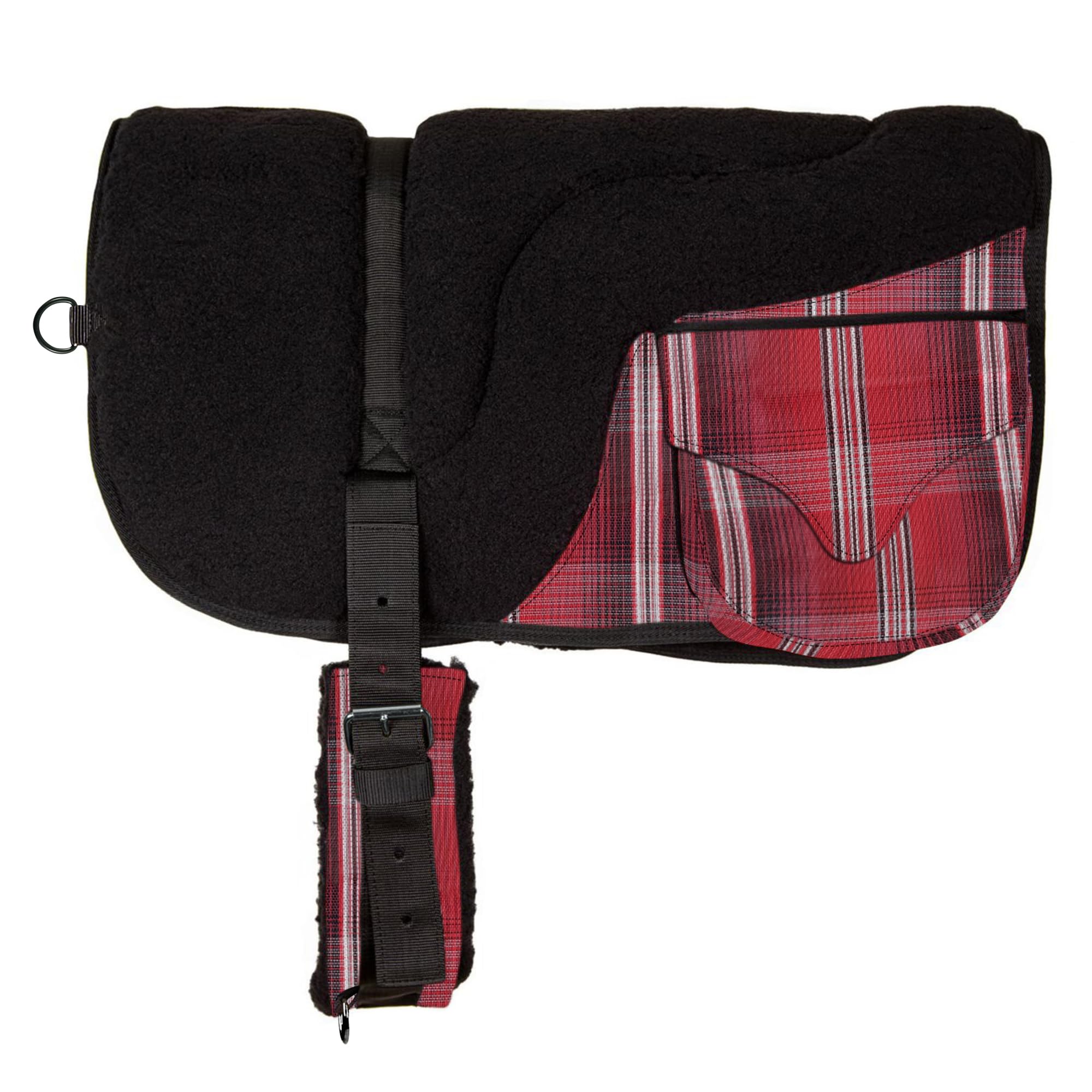
Kensington’s fleece pad uses a full 1-inch foam core under a heavy-duty synthetic fleece shell, creating a thick cushion that works well for riders who prefer a softer seat. The double billet straps are sewn into reinforced webbing that runs the length of the pad, preventing the girth from tearing out under load. The 36-by-29-inch dimensions cover longer-backed horses completely.
Large hook-and-loop pockets on each side securely hold a standard water bottle and a phone or small pouch, which owners praise for longer arena sessions and trail work. The easy-mount center handle is reinforced with an extra layer of rip-stop nylon, giving riders a secure handhold while mounting. The fleece underside resists matting after machine washing better than comparable wool-mix pads.
The pad stays in place during trot and canter work without shifting, though the fleece top offers less rider grip than suede alternatives — riders may need to grip with their legs more actively. The padding is relatively thick, so riders with very short legs may feel slightly elevated. For comfort-focused riders who prioritize cushion and storage over maximum stickiness, this pad delivers.
Why we love it
- 1-inch foam core provides lasting plush cushion
- Double billet straps prevent girth tear-out
- Large velcro pockets are securely sewn
Good to know
- Fleece top has less rider grip than suede
- Thick profile may feel elevated for shorter riders
3. Intrepid International Comfort Plus Western Bareback Pad

The Intrepid Comfort Plus combines a breathable suede top with a short-nap fleece overlay and an open-weave non-slip bottom for a secure fit across multiple horse shapes. The contoured wither relief channel is cut deeper than many competitors, which helps horses with prominent withers avoid rubbing. Dee rings at both pommel and cantle give riders a solid attachment point for a breast collar or a simple phone holder.
The elasticized girth adjusts smoothly and has held up under repeated use without losing tension — owners report using it on horses ranging from 14.2 to 17 hands. The 16-inch drop covers the barrel well, and the fleece underside wicks moisture without trapping heat. Riders note the padding absorbs significant shock from trotting over uneven ground.
A small number of owners found the girth buckle has a tendency to slip slightly under the strap during active riding, though this did not affect the pad’s overall security for leisurely trail work. The fleece overlay on top can collect hay and debris more than suede-only tops. For Western riders wanting a dedicated bareback pad with good wither clearance, this is a strong choice.
Why we love it
- Deep wither relief channel prevents spine pressure
- Dee rings add attachment options for accessories
- Elasticized girth holds shape over time
Good to know
- Fleece top catches hay and debris easily
- Girth buckle can shift slightly under active riding
4. Harrison Howard Equestrian Microsuede Bareback Pad

Harrison Howard’s set includes both the pad and a matching Berber fleece-covered girth, making it a ready-to-ride package. The microsuede top offers strong rider grip without the roughness of some synthetic suede materials, and the plush fleece underside provides a soft contact layer that reduces pressure along the spine. The universal fit accommodates most horses between 14.3 and 17 hands without overhang.
Owners consistently highlight the convenience of the full set — no need to find a separate girth that matches the pad’s width. The double off billets allow for symmetrical adjustment, and the fleece cover on the girth prevents chafing behind the elbow. The pad is light enough at under a kilogram for easy carrying to the pasture or trailer.
The buckle straps are somewhat thin and a few owners replaced the included girth with a neoprene cinch after the original showed wear. The pad does not include any shims or correction features, so it works best on horses whose back shape has not changed recently. For riders who want a simple, comfortable, all-in-one bareback setup, this delivers good value.
Why we love it
- Complete set includes matching fleece-covered girth
- Microsuede top offers strong rider grip
- Lightweight and easy to carry
Good to know
- Buckle straps are thin and may wear faster
- No shim system for correction fitting
5. Mustang Microsuede Bare Back Pad
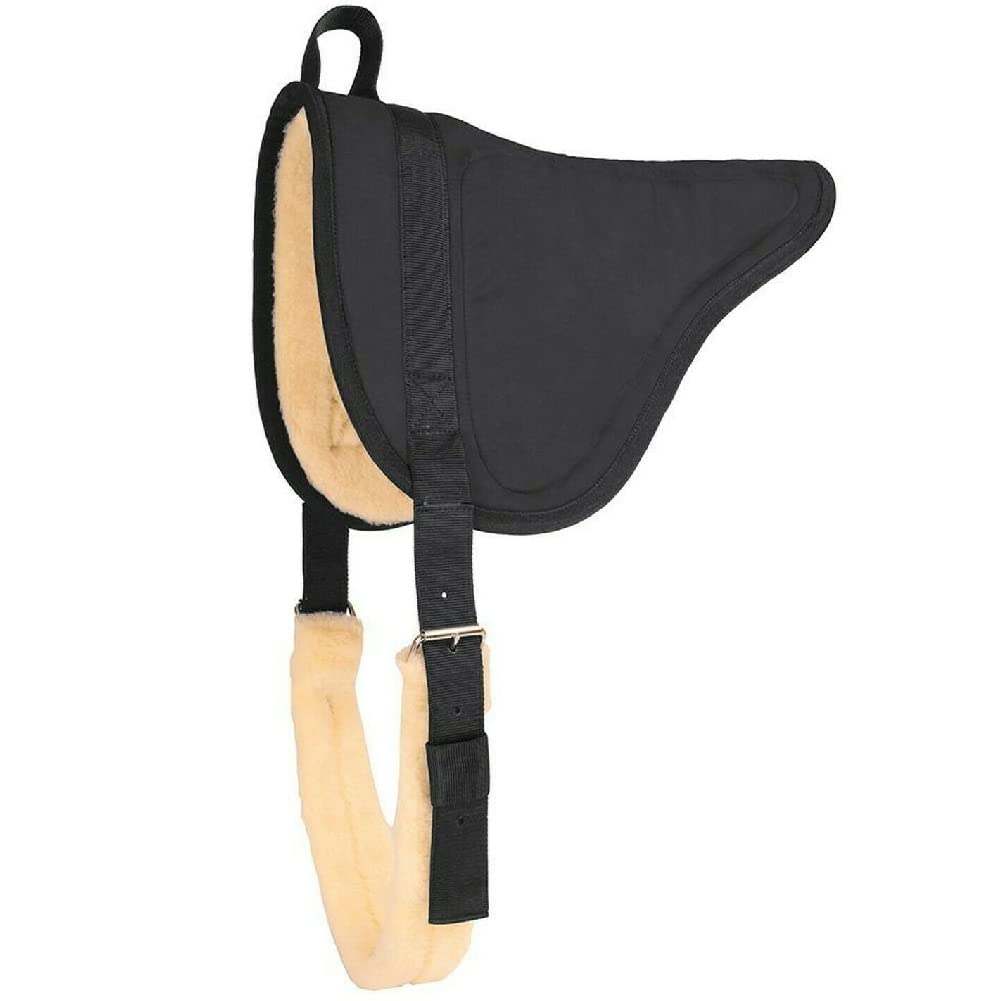
The Mustang bareback pad uses a felt center layer sandwiched between a microsuede top and fleece bottom, creating a medium-density pad that doesn’t collapse under weight. The fleece-lined adjustable girth strap provides a secure fit on standard horse builds. Riders praise the microsuede surface for staying grippy even during sweaty summer rides and cantering circles.
Owners of Morgans, Quarter Horses, and Thoroughbreds report the pad stays in place well through transitions and trail obstacles. The girth adjusts to accommodate horses up to approximately 15.3 hands, though smaller breeds like Icelandic horses may find the girth too loose even at the tightest setting. The nylon handle at the pommel is functional but somewhat floppy — riders who mount from the ground may prefer a stiffer handle.
This pad lacks shim pockets and specialist correction features, so it works best as a straightforward bareback option for horses with standard conformation. A few owners noted the fleece underside can compress over time with heavy daily use. For riders seeking a reliable, no-frills pad at a reasonable cost, this Mustang model is a solid entry.
Why we love it
- Felt center provides durable medium-density padding
- Microsuede top stays grippy during sweaty rides
- Fleece lining on girth prevents chafing
Good to know
- Girth may be too loose for smaller or girthy horses
- Nylon handle is flexible, not rigid for mounting
6. ECP Equine Comfort Products Adjustable Memory Foam Half Saddle Pad

ECP’s half pad works as both a bareback pad and a shimmable correction pad to go under a saddle. The four shim pockets accept twelve contoured memory foam inserts that can be trimmed, stacked, or removed to fine-tune balance for horses with asymmetric or changing backs. The quilted poly cotton top is low-profile and lacks a rolled edge, which owners of dressage and jumping saddles prefer for a clean fit.
The 8.5-by-22-inch size fits saddles up to 17.5 inches. Riders with high-withered or post-lay-up horses report that targeted shim placement instantly corrected saddle tilt and reduced stumbling. The brushed cotton underside absorbs sweat without trapping heat, and the pad can be hand-washed. The adjustable approach allows riders to remove shims entirely if the horse’s condition improves.
The shims are firm rather than plush — they provide structural correction rather than soft cushion. Some owners note the shim foam may degrade after a year of frequent use and need replacement. This pad is best for riders who need a correction solution or want the flexibility to transition between bareback and saddled riding with one pad.
Why we love it
- 12 adjustable shims allow precise fit correction
- Low-profile design fits well under saddles
- Quilted cotton top breathes well during work
Good to know
- Shims are firm, not plush cushioning
- Shim foam may need replacement after heavy use
7. ECP Equine Comfort Products Thermoregulating Western Saddle Pad

This ECP Western pad uses thermoregulating fabric in the top layer to actively wick sweat and promote airflow under the saddle. The 31-by-16-inch shape is contoured to mirror the horse’s natural backline, with 12 shim pockets that accept contoured memory foam inserts for targeted pressure relief. The diamond-quilted cotton top resists abrasion from stirrup leathers and cinch hardware.
Owners with Thoroughbred crosses and other high-withered horses report the cut provides excellent clearance without pinching. The pad is machine-washable on a gentle cycle, and the shims can be removed beforehand. Riders note the pad is noticeably lighter than traditional western felt pads, which makes a difference during hot weather or long rides. The flannel underside offers breathable cushioned contact without trapping moisture.
The shims are functional but not as durable as higher-end memory foam alternatives — some owners plan to replace them after a season. The white logo tape down the spine is visually prominent and may not suit all tastes. For riders who prioritize temperature regulation and need adjustable shim support in a Western cut, this pad fills a specific gap.
Why we love it
- Thermoregulating fabric helps keep horses cool
- Lightweight contoured design fits high-withered horses
- Machine washable for easy maintenance
Good to know
- Shim foam may not last multiple seasons
- Prominent logo tape on spine may not suit all riders
FAQ
Should I use a bareback pad on a horse with kissing spine?
How often should I replace the foam in a shimmable bareback pad?
Can I use a bareback pad with a western saddle for extra correction?
Final Thoughts: The Verdict
For most riders, the best bareback pad overall is the Best Friend Western Style because its high-density foam and non-slip base keep everything locked in place during active riding. If you want plush cushioning with storage for long trail days, grab the Kensington Fleece Pad. And for riders needing adjustable shim correction on a budget, nothing beats the ECP Memory Foam Half Pad.