
Your mattress traps dead skin cells, dust mites, and microscopic debris you never see — and every night, you breathe it all in. Standard vacuums skim the surface, leaving the deep layers untouched. Stripping the bed weekly helps, but the real problem lives inside the fibers, not on top of the sheets.
I’m Mo Mahin — the founder and writer behind Furric. I spend my days comparing the measurable specs of niche home-care appliances, cross-referencing motor wattage against UV wavelength data, and studying owner feedback to identify which units actually sanitize versus those that merely agitate dust.
To cut through the noise, I analyzed seven models side by side, focusing on the combination of suction power, UV-C wavelength precision, and heat output. This guide breaks down the strongest contenders among the best bed vacuum cleaner with uv light options available right now.
How To Choose The Best Bed Vacuum Cleaner With UV Light
Not every UV bed vacuum cleans the same way. Three physical mechanisms — suction power, UV wavelength, and heated airflow — work together to sanitize fabric. A unit strong in one area but weak in another leaves gaps in the cleaning cycle.
Motor Wattage & Suction Rating
Motor power directly drives how deep into the mattress fibers the vacuum can reach. Units below 500W typically produce less than 13kPa of suction, which is sufficient for surface dust but fails to pull particles lodged 2–3mm inside fabric. Look for 500W or 550W motors that sustain 16kPa suction — the range where the vacuum can extract fine debris from the core of a pillow or mattress topper.
UV-C Wavelength Precision
Not all UV light is effective. The wavelength band between 245nm and 253.7nm coincides with the peak absorption range of microbial DNA. Units that specify 253.7nm UV-C deliver actual germicidal exposure. Vague marketing like “UV light” without a nanometer spec often means a cheap LED that produces blue light with negligible sanitizing effect. Always check the wavelength number in the technical data.
Heated Airflow Temperature
Heat serves two functions in these machines: moisture removal and particle suppression. Airflow that reaches 140°F (60°C) reduces the humidity trapped in mattress foam and cushions, making the environment less hospitable to dust mite survival. Models that claim heat without a temperature figure typically produce only ambient motor warmth (90–100°F), which offers no measurable benefit.
Filtration & Cup Design
A single-chamber dust cup clogs quickly with hair and lint, causing suction to drop within minutes. Dual-cup cyclone systems separate large debris in a pre-chamber before the air hits the HEPA filter. This prevents the filter from clogging and maintains consistent suction across an entire king-size bed. Choose washable HEPA filters rated for 99.97% capture at 0.3 microns.
Quick Comparison
On smaller screens, swipe sideways to see the full table.
| Model | Category | Best For | Key Spec | Amazon |
|---|---|---|---|---|
| FEPPO Pro C026 PRO | High-End | Maximum deep cleaning power | 550W / 16kPa / 253.7nm UV-C | Amazon |
| Xlife C026 PRO | Premium | Dual roller brush versatility | 550W / 16kPa / 149°F airflow | Amazon |
| Gxzsk Bluish Purple | Mid-Range | Best overall value with full feature set | 500W / 16kPa / 8.7″ suction port | Amazon |
| CFBF Dark Cyan | Mid-Range | Overheat protection and reliability | 500W / 16kPa / 0.6L dust cup | Amazon |
| UZK MV12 | Mid-Range | Quiet operation and foam filtration | 500W / 16kPa / 5-second heating | Amazon |
| JIGOO J300 | Premium Sensor | Smart dust sensor with LED feedback | 500W / 13kPa / 245nm UV | Amazon |
| Jimmy WB73 | Budget Entry | Lightweight daily maintenance | 420W / 240mm cleaning path | Amazon |
In‑Depth Reviews
1. FEPPO Pro C026 PRO
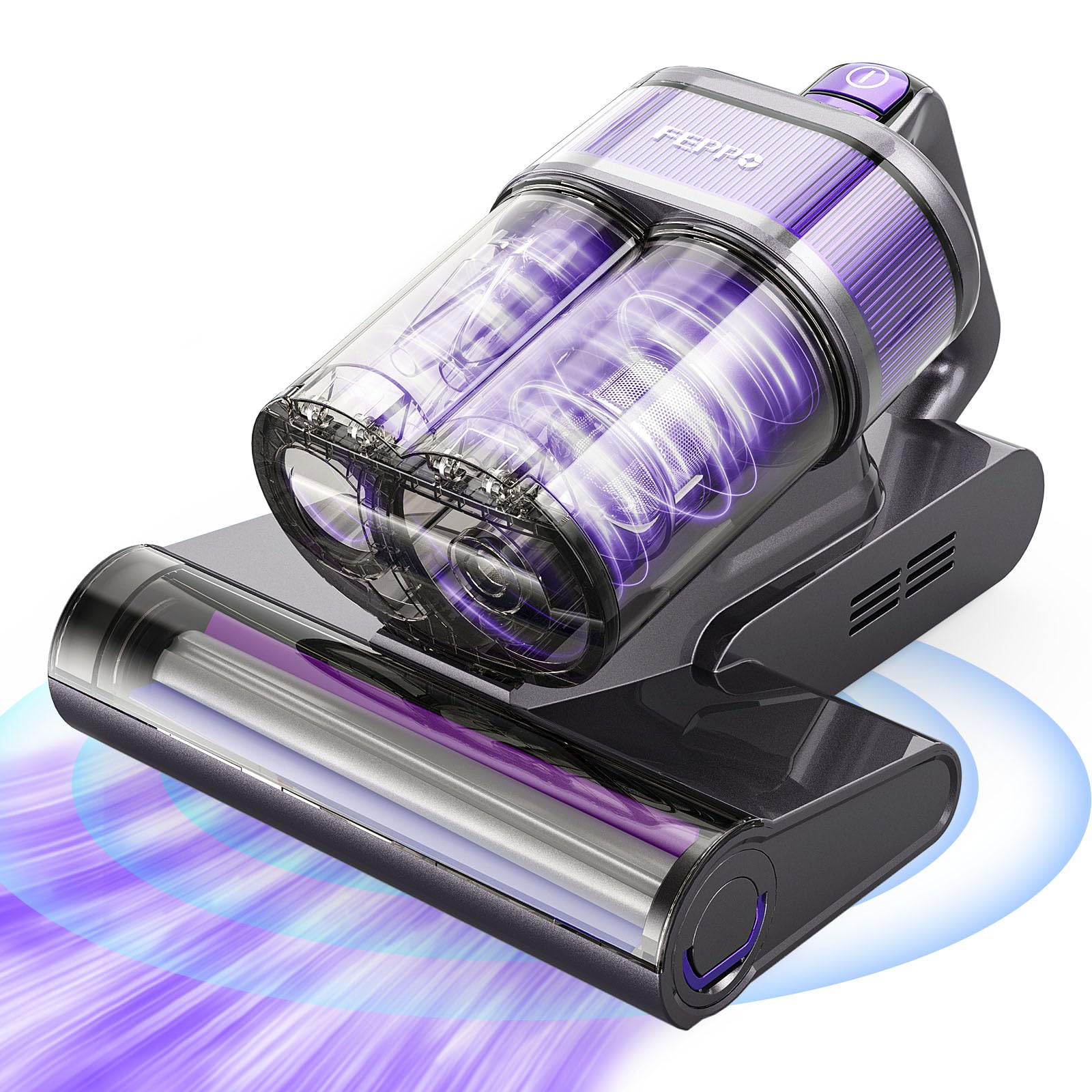
The FEPPO Pro C026 PRO leads this list because it combines the highest motor wattage in the pool — 550W — with a confirmed 253.7nm UV-C wavelength and 40,000 beats per minute tapping action. That trifecta means the unit doesn’t just blow air across the mattress; it mechanically vibrates embedded particles free while the UV-C penetrates fiber layers at the correct germicidal wavelength. The 16kPa suction then extracts what the tapping and UV loosened.
The dual LED display gives real-time feedback on cleaning performance, and the side-opening 20oz dust cup empties without tilting the entire unit. The magnetic roller brush simplifies hair removal — a detail that matters for pet owners. The multi-layer HEPA filtration captures 99.97% of particles down to 0.3 microns, so exhaust air doesn’t recirculate the fine dust you just extracted.
One trade-off: the unit is heavier at 5.4 pounds, and the motor may trigger overheat protection during extended continuous use. The manufacturer advises letting it cool for a few minutes if the auto-shutoff kicks in. That’s a reasonable accommodation for the power output it delivers.
Why we love it
- Strongest motor in the comparison at 550W
- 253.7nm UV-C with gravity sensor safety shutoff
- Side-opening dust cup and magnetic brush release
Good to know
- Heavier than most at 5.4 pounds
- May trigger overheat protection during long sessions
2. Xlife C026 PRO
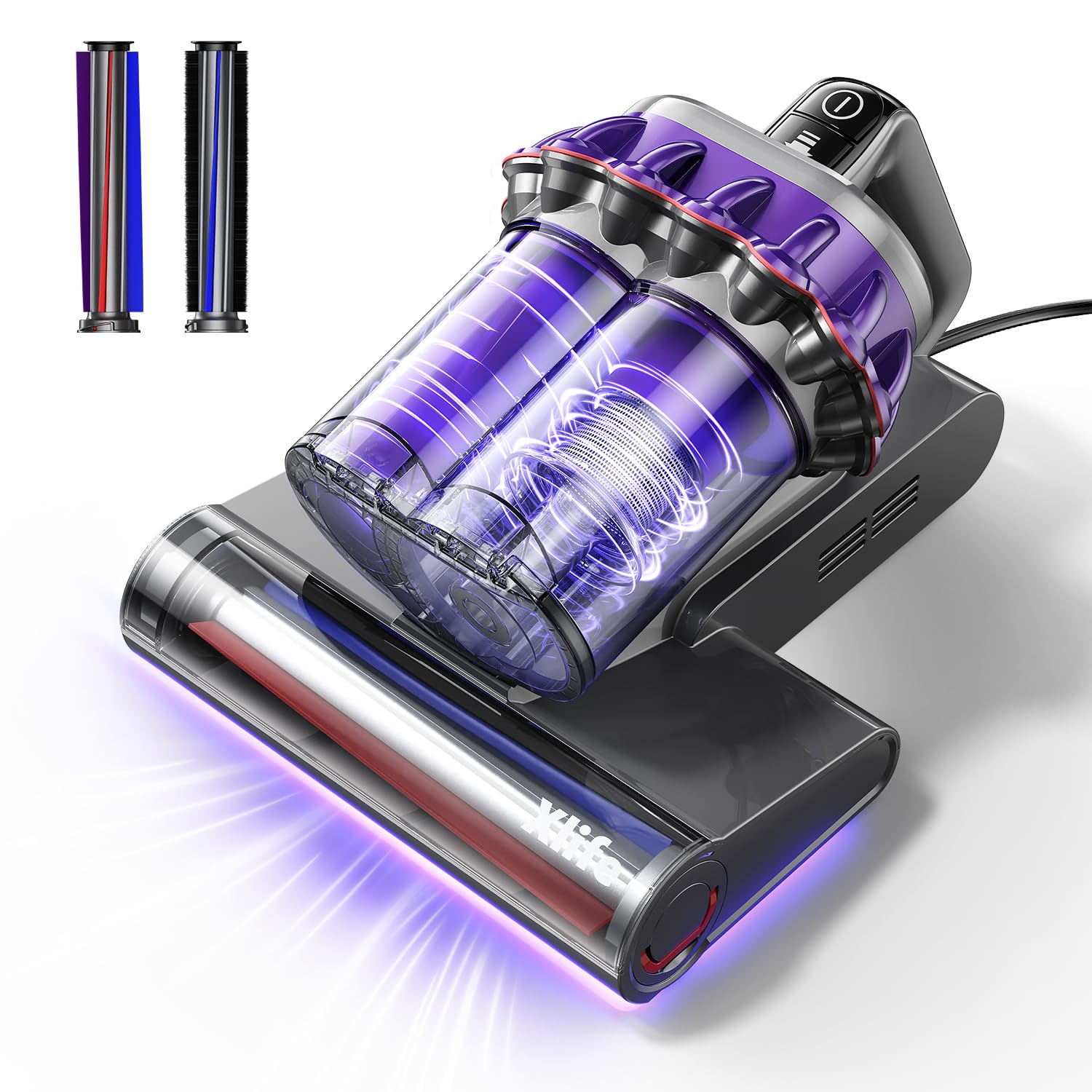
The Xlife C026 PRO differentiates itself with an exclusive dual-roller system. Most UV bed vacuums ship one alloy rubber roller. Xlife includes a second stiff-bristle silicone roller designed specifically to extract hair from upholstered furniture, where standard rollers tend to push strands sideways. That makes this unit more versatile for households with shedding pets, because the vacuum handles both deep mattress debris and couch surface hair with a three-second magnetic swap.
The three-stage cleaning sequence — dual ultrasonic vibration at 40,000Hz, 253.7nm UV-C, and 149°F warm airflow — runs simultaneously in one slow pass. The heated airflow reaches 149°F, which is 9°F higher than the 140°F standard across the category. The difference matters for moisture reduction in thick mattress toppers. The dual-canister cyclone system separates hair in the debris cup before air reaches the HEPA chamber, preventing suction loss during long cleaning sessions.
The unit includes a fragrance disc that releases a light scent during operation. It’s purely cosmetic — no sanitizing benefit — but users who prefer their bedding to smell fresh after cleaning will appreciate the option. The 16.4-foot cord is identical to most competitors, providing full-room reach from a single outlet.
Why we love it
- Two roller brushes for mattress vs. upholstery cleaning
- 149°F hot air — highest temperature in the group
- Magnetic quick-swap brush system under 3 seconds
Good to know
- Fragrance disc is scent-based only, no antimicrobial function
- Heavy side at 10.14 oz capacity cup limits debris volume
3. Gxzsk Bluish Purple
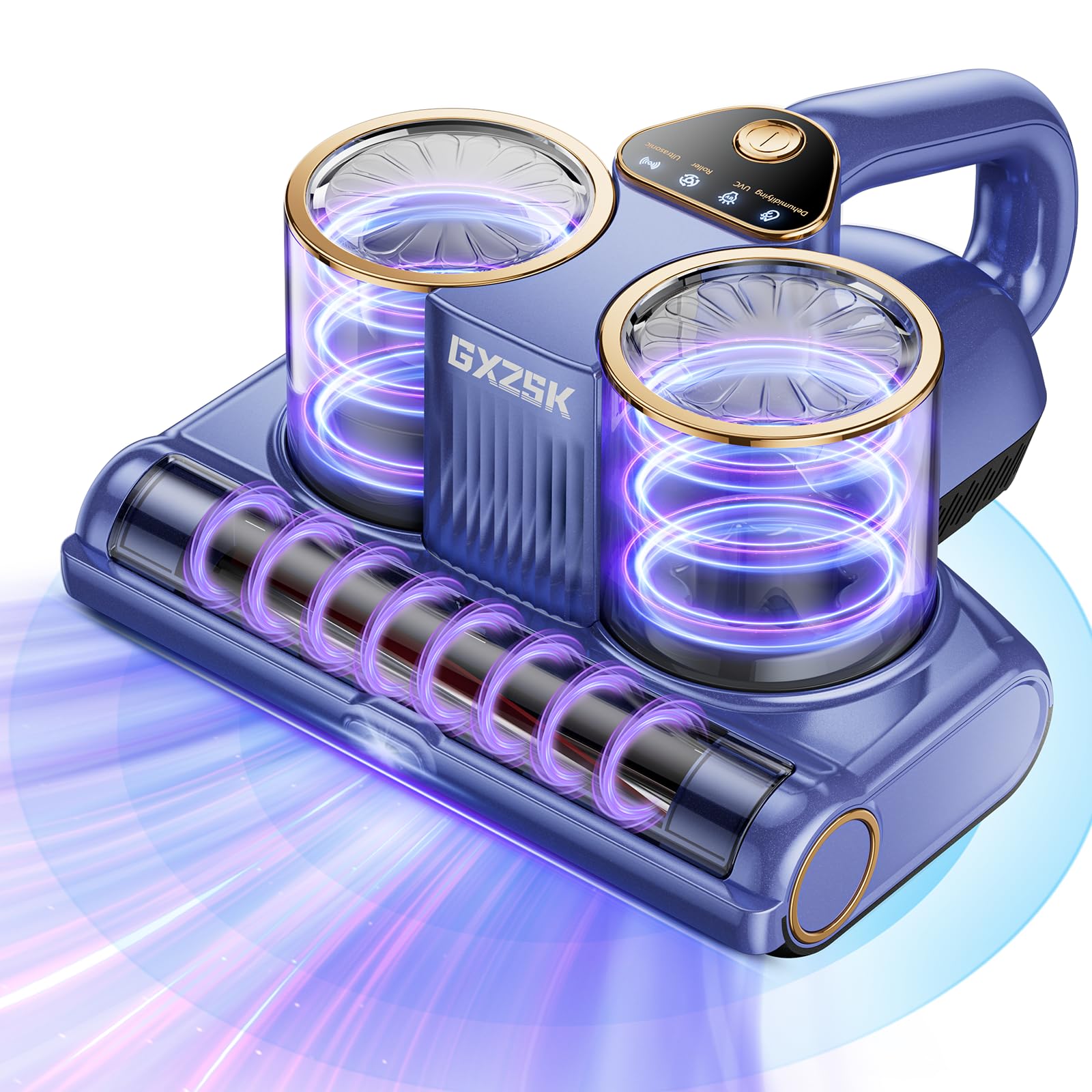
The Gxzsk unit punches above its position with a 500W motor producing 16kPa suction, 253.7nm UV-C light, 40,000Hz ultrasonic vibration, and 140°F hot air — a complete four-function system at a mid-range price. The 8.7-inch widened suction port is notably larger than standard openings, allowing the vacuum to cover a full-size bed in about three minutes. That 16.4-foot power cord is standard for the category, but the port width actually reduces the number of passes needed.
The dual-cup filtration system includes a 0.2L separating cup for hair and fibers and a 0.4L collecting cup for debris. The separation prevents the larger particles from reaching the HEPA filter, extending filter life and maintaining suction. The intelligent green light dust display system illuminates visible dust during cleaning, giving the user real-time visual confirmation of how much debris the vacuum is extracting.
A potential downside: the 4-pound weight makes it one of the lighter units in the pool, which is generally positive for handheld maneuvering, but the plastic build feels less dense than the premium options. The touch control method is responsive but occasionally registers accidental presses during rapid maneuvering.
Why we love it
- 8.7-inch wide suction port cleans faster
- Complete four-function cleaning (suction/UV/ultrasonic/heat)
- Dual-cup filtration with pre-separation chamber
Good to know
- Plastic build feels lighter than premium rivals
- Touch controls can trigger accidentally during moves
4. CFBF Dark Cyan
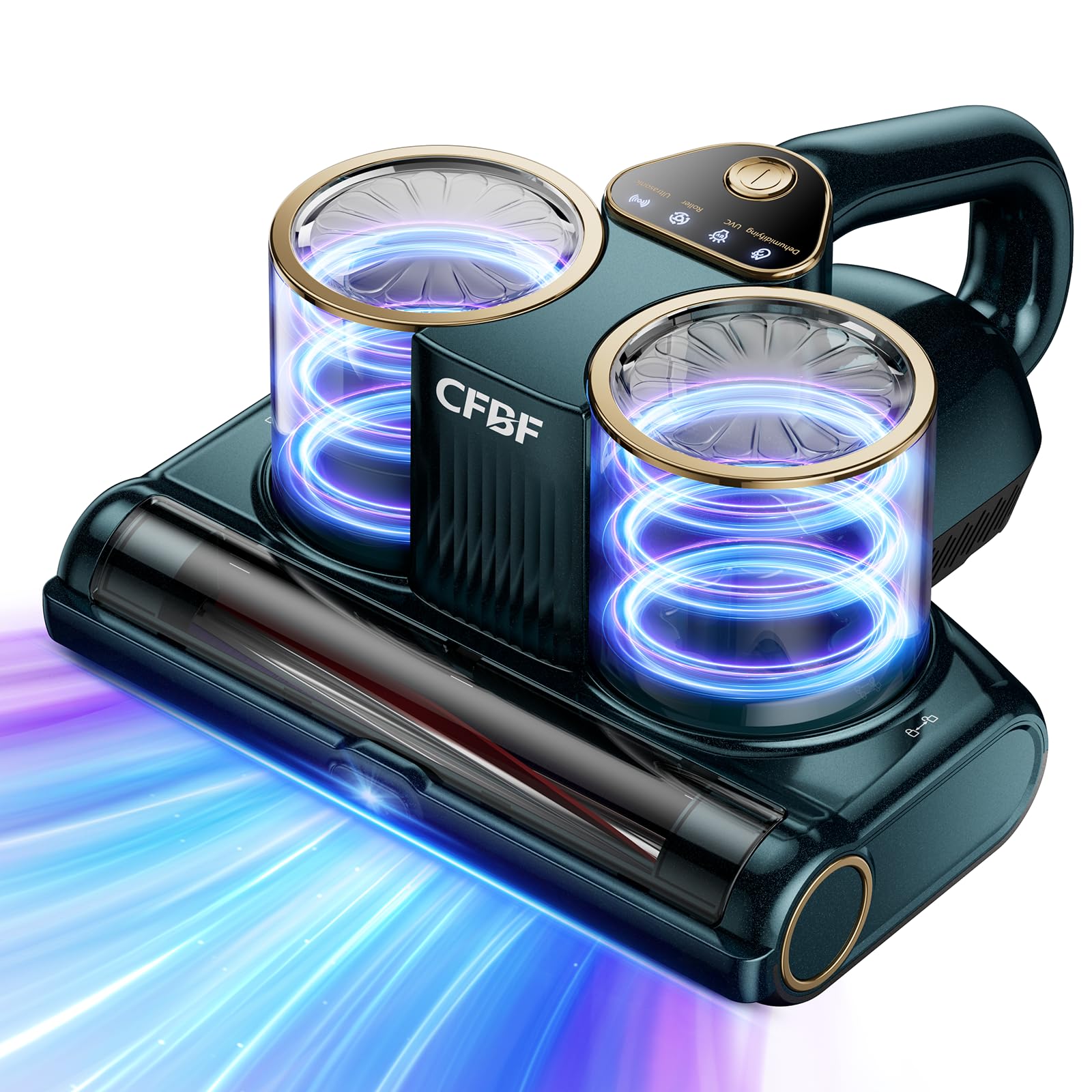
The CFBF dark cyan unit mirrors the Gxzsk in core specs — 500W motor, 16kPa suction, 253.7nm UV-C, 140°F heat, and 30,000RPM metal rubber roller brush. The key differentiator is the overheating auto-stop protection system. The manufacturer explicitly warns that the motor may stop if the roller brush is clogged or excessive downward pressure is applied. The reset process is simple — turn off, wait for cooldown, restart — but the frequency of this event depends on how clean you keep the roller and filter.
The 0.6L dust cup is larger than the Gxzsk’s combined capacity, allowing longer cleaning sessions before emptying. The 16.4-foot cord provides sufficient reach for a master bedroom with a king bed. The green LED dust display illuminates debris during cleaning, helping the user track progress across the mattress surface.
The unit weighs 3.9 pounds, 0.1 pounds lighter than the Gxzsk, making it comfortable for extended handheld use. The included cleaning brush and washable HEPA filter reduce ongoing consumable costs. The push-button control interface is more reliable than the touch panel on some alternatives, with no accidental activation risk.
Why we love it
- Larger 0.6L dust cup reduces emptying frequency
- Overheat auto-stop protects motor from damage
- Push-button controls are more reliable than touch panels
Good to know
- Auto-stop may activate if roller brush gets clogged
- Excessive downward pressure stops roller rotation
5. UZK MV12 Porcelain White
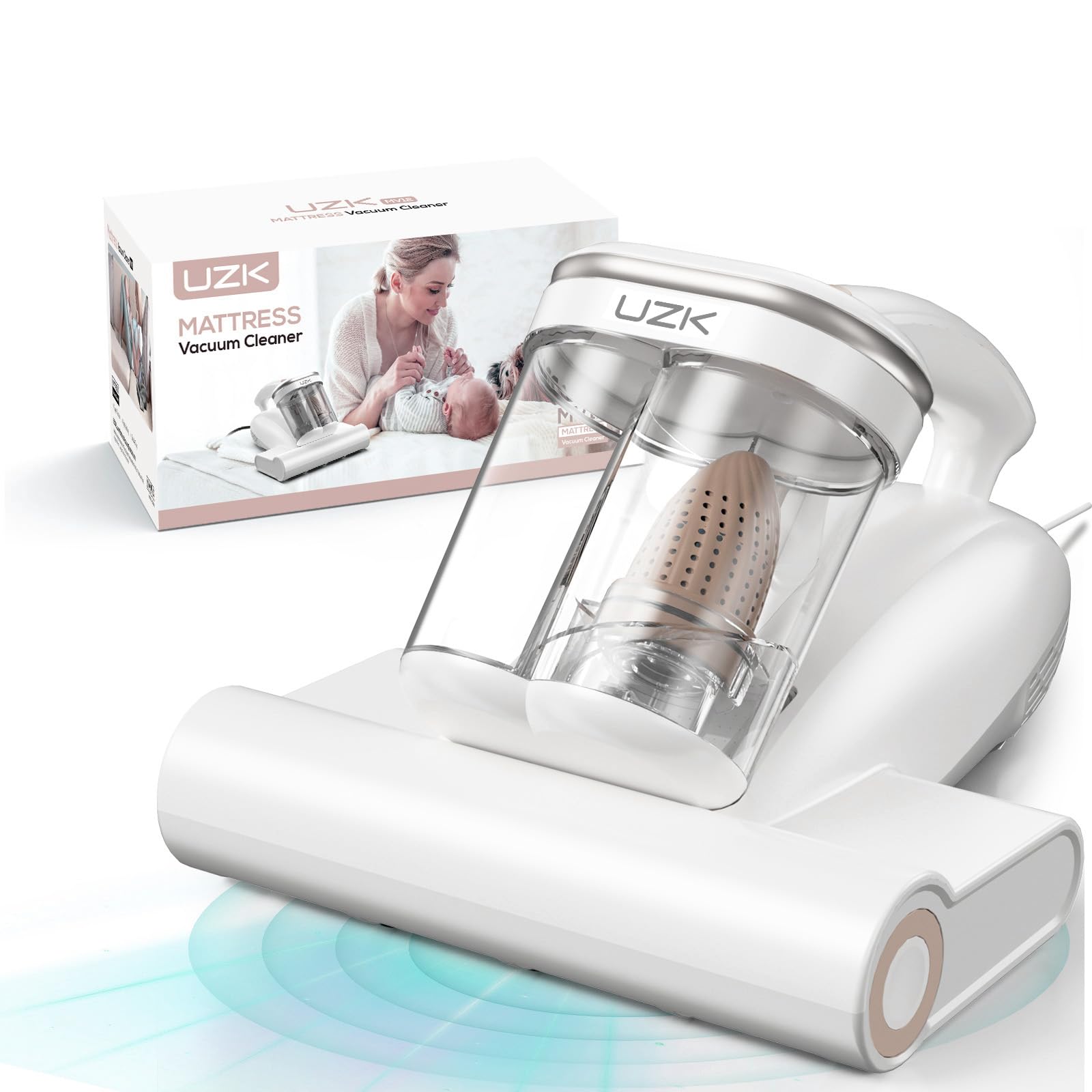
The UZK MV12 adopts a different filtration approach than its peers. Instead of a HEPA filter, it uses a washable foam filter. Foam filters are less efficient at capturing sub-micron particles — typically capturing only larger debris — but they offer easier maintenance and lower replacement costs. This design choice trades maximum air purity for convenience and lower long-term ownership expenses.
The unit delivers 16kPa suction from its 500W motor and reaches 140°F in about five seconds of operation. The metal strip roller brush resists scratching sheets and prevents hair tangling. The 16.4-foot power cord matches the category standard. The gravity sensor switch for the UV-C light ensures the bulb only activates when the machine is pressed flat, preventing accidental exposure.
The porcelain white color and compact dimensions (9.5 x 7.5 x 11.4 inches) make it one of the more visually unobtrusive units in the comparison. The double dust cup design (0.5L total) provides adequate capacity for a full bed session, though the cyclonic separation chamber is less effective than the dual-cup systems on higher-end units.
Why we love it
- Washable foam filter reduces consumable costs
- Quick 5-second heat-up to 140°F
- Compact footprint and clean white aesthetic
Good to know
- Foam filter traps fewer fine particles than HEPA
- Cyclonic separation less efficient than true dual-cup
6. JIGOO J300
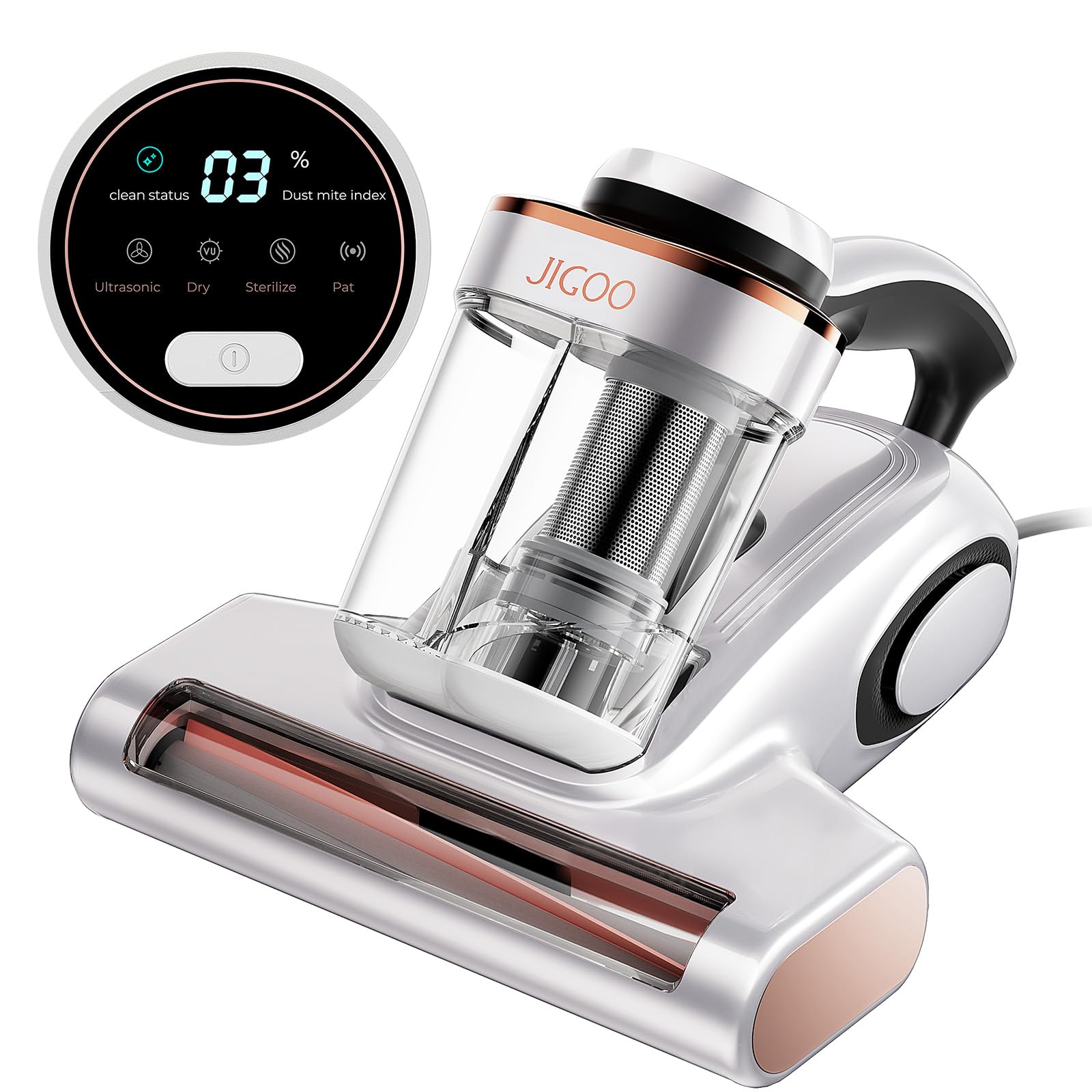
The JIGOO J300 introduces a smart dust sensor that automatically calculates debris density and displays a cleaning status index on an LED panel. When the light turns green, the surface is clean — no more guesswork about whether the vacuum is still pulling debris or just running over clean fabric. This feature is genuinely useful for allergy sufferers who want a defined endpoint for cleaning each section.
The motor produces 13kPa suction from its 500W power plant — the lowest suction rating among the 16kPa competitors. The 245nm UV wavelength is technically within the germicidal range but slightly shorter than the 253.7nm standard used by most competitors. The 130°F heated airflow reaches 55°C — adequate for light moisture reduction but unlikely to penetrate thick mattress layers as effectively as a 140°F unit.
The 5-pound weight and 13.78 x 11.02 x 10.24 inch dimensions make it larger and heavier than several alternatives. The filter sponge construction is basic compared to HEPA filters, though the manufacturer provides two replacement sponges in the box. The 16-foot power cable is standard for the class.
Why we love it
- Smart dust sensor with green light clean indicator
- 13,000 RPM main brush rotates at high speed
- Includes two filter sponges out of the box
Good to know
- 13kPa suction is lower than the 16kPa standard
- 130°F heat is less effective than 140°F competitors
- Heavier and larger than many alternatives
7. Jimmy WB73

The Jimmy WB73 operates at 420W and produces no advertised kPa rating — the specs list “powerful suction power (420W)” without a vacuum measurement. The 240mm cleaning path is wide, covering ground quickly, but the absence of a suction figure makes it difficult to compare against the 16kPa standard. For light daily maintenance on already-clean bedding, it’s adequate; for extracting deep debris from neglected mattresses, the lower power is noticeable.
The patented composite brush roll uses soft rubber strips paired with soft hair strips, driven by an independent motor. This design prevents fabric damage while lifting fine dust from deep in the mattress. The dual sensor technology mirrors the JIGOO J300 approach — red LED for dirty surface, green LED for clean — providing visual feedback during operation. The HEPA filtration with dual cyclonic system separates air from dust to maintain power.
At 420W, this unit consumes about 16% less power than the 500W competitors. The 0.5L dust cup capacity is adequate for a single bed. The ultra-wide cleaning path helps compensate for the lower power, as more surface area is covered per pass. This is a reasonable entry-level tool for apartment dwellers or those cleaning one bed, but underpowered for deep cleaning or large homes.
Why we love it
- Ultra-wide 240mm cleaning path covers ground fast
- Patented composite brush roll protects fabric
- Dual sensor LED gives real-time clean/dirty feedback
Good to know
- 420W motor delivers less suction than competitors
- No kPa suction rating provided for comparison
- Lower power limits deep cleaning on neglected mattresses
FAQ
Does the UV-C light actually kill dust mites or just agitate them?
Why do some bed vacuums have 16kPa suction and others only 13kPa?
Can I use a bed UV vacuum on my couch or car seats?
How often should I replace the HEPA filter in a bed vacuum?
Is 140°F hot air safe for memory foam and latex mattresses?
Final Thoughts: The Verdict
For most households, the best bed vacuum cleaner with uv light is the FEPPO Pro C026 PRO because its 550W motor, confirmed 253.7nm UV-C wavelength, and 40,000 beats-per-minute tapping provide the most complete deep-cleaning cycle in the comparison. If you need a dual-roller system for both mattress and upholstery hair removal, grab the Xlife C026 PRO. And for budget-conscious shoppers who still want four-function performance — suction, UV, ultrasonic, and heat — the Gxzsk Bluish Purple delivers the best ratio of features to cost.