
Box turtles are semi-aquatic creatures whose health hinges on one environmental factor: consistent, stable humidity. The wrong bedding turns their enclosure into a dusty desert that causes shell pyramiding, stuck sheds, and respiratory stress. The right substrate, however, retains moisture without becoming a swamp, allows deep burrowing for thermoregulation, and safely breaks down waste before odor becomes a problem.
I’m Mo Mahin — the founder and writer behind Furric. After countless hours analyzing substrate moisture-retention ratios, digestive impaction risks, and the chemical safety of pressed fiber blocks, I’ve narrowed down the top contenders for your box turtle’s floor.
Below you’ll find the five most reliable options reviewed in a way that helps you match the right bedding for box turtles to your specific setup and budget.
How To Choose The Best Bedding For Box Turtles
Box turtles need a substrate that does three things simultaneously: holds 70-80% ambient humidity, stays loose enough for digging, and resists molding between spot-cleanings. Here are the two specs that separate effective bedding from potentially dangerous options.
Moisture Retention vs. Drainage Balance
The ideal box turtle bedding retains water like a sponge but never pools water at the bottom of the enclosure. Coconut husk chips in the 10mm-35mm range create air pockets that allow water to distribute evenly. Finer coconut fiber compacts too tightly and stays wet near the surface, while large bark chips let water run straight through. Look for a chip size that visibly holds texture after squeezing — that tells you it can hold humidity without waterlogging your turtle’s feet.
Compressed Block Volume and Expansion Ratio
Most coconut bedding arrives as a dry, compressed brick. A 10-pound block should expand to roughly 72 quarts (2.4 cubic feet) when hydrated. That volume is critical because box turtles need a minimum substrate depth of 4 inches for burrowing, and deeper is always better — 6 to 8 inches is the sweet spot for adults. If a block advertises significantly less than a 7:1 expansion ratio by volume, you’ll need to buy multiple bricks to achieve that depth, which changes your total cost.
Quick Comparison
On smaller screens, swipe sideways to see the full table.
| Model | Category | Best For | Key Spec | Amazon |
|---|---|---|---|---|
| Repti360 Premium Coconut Chip | Premium | Bioactive setups & deep burrowers | 72 quarts per 10 lb block | Amazon |
| Zoo Med Eco Earth 3-Pack | Premium | Budget-friendly brand reliability | 7-8 liters per brick, 3-pack | Amazon |
| Riare 10LB Coconut Chip | Mid-Range | Large enclosures & multi-pet homes | 72 quarts, single 10 lb brick | Amazon |
| ZeeDix 10LBS Coconut Husk Chip | Mid-Range | Natural chip texture for digging | 10mm-35mm chip size | Amazon |
| Halatool 6 Pack Coco Fiber Bricks | Value | Smaller tanks & budget entry | 6 individual 1.4 lb bricks | Amazon |
In‑Depth Reviews
1. Repti360 Premium Coconut Chip Substrate
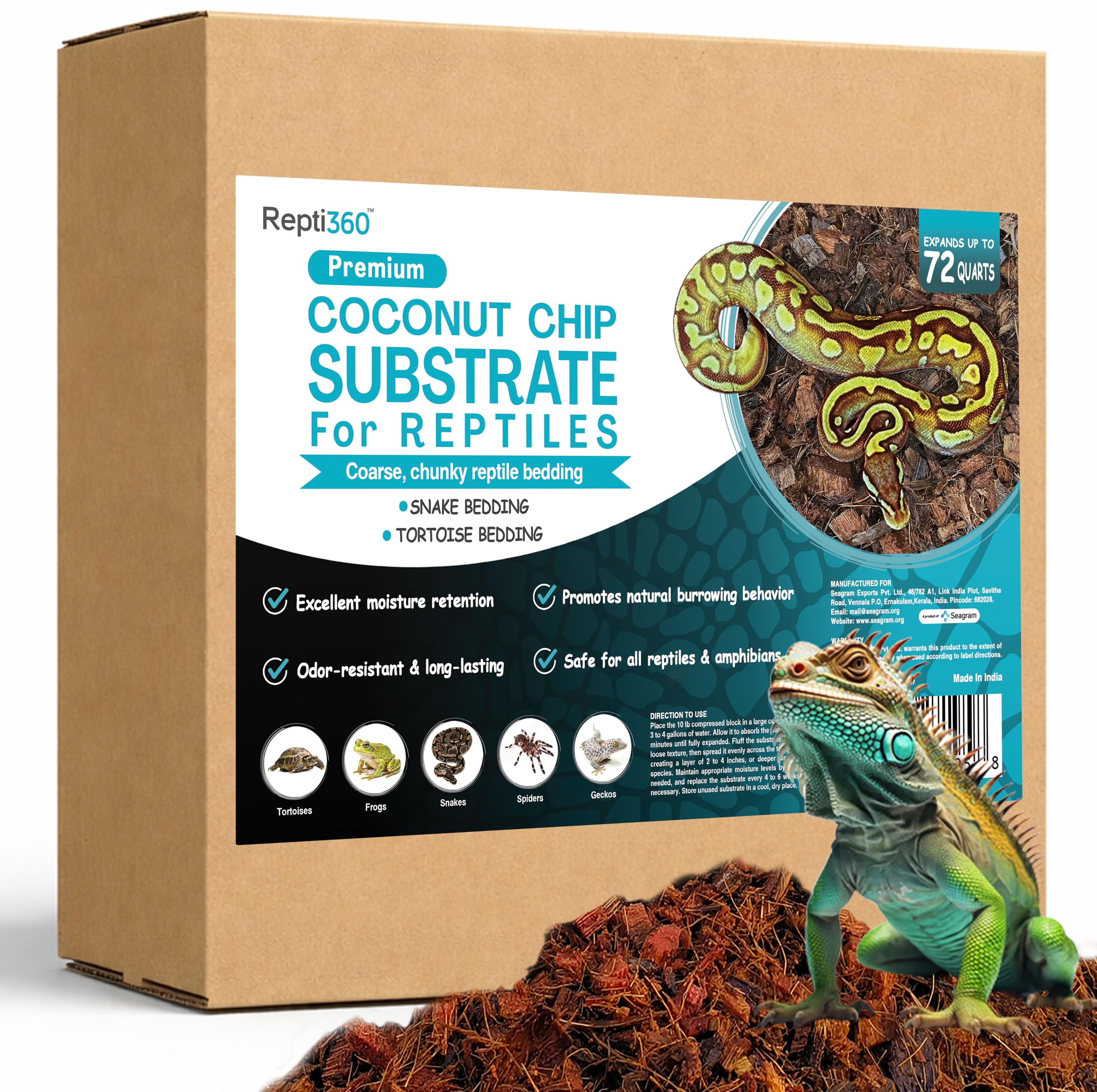
This block expands to a full 72 quarts from a single 10-pound brick, which means you can fill a 40-gallon breeder tank with 6-plus inches of bedding without buying a second package. The chip size averages around 2-3 cm, offering enough air space for water to move laterally rather than pooling. The rigid carton box packaging also solves the common complaint of bricks arriving crumbled or cracked before you even hydrate them.
From a humidity standpoint, this substrate holds 80% ambient moisture for roughly 4 days between heavy mistings in my experience — ideal for an eastern box turtle that needs constant shell humidity without swampy feet. The chips are coarse enough to allow springtails and isopods to thrive in a bioactive setup, and the material is 100% natural coconut husk with no chemical additives. Directions specify 0.5 gallons of water per pound, so a full block requires 5 gallons to expand completely — plan accordingly.
On the downside, the chip size runs slightly larger than a fine fiber bedding, so very young hatchlings under 2 inches may find it harder to push around. Additionally, the block is heavy at 10 pounds, and even though the carton helps, you’ll still want to open it over a bin to contain dust from the initial expansion.
Why we love it
- Massive 72-quart yield from a single brick — great value per cubic inch
- Sturdy carton prevents damage during shipping
- Excellent moisture distribution without waterlogging
Good to know
- Large chip size may be cumbersome for very small hatchling box turtles
- Requires a large container and 5 gallons of water for proper expansion
2. Zoo Med Eco Earth Compressed Coconut Fiber 3-Pack
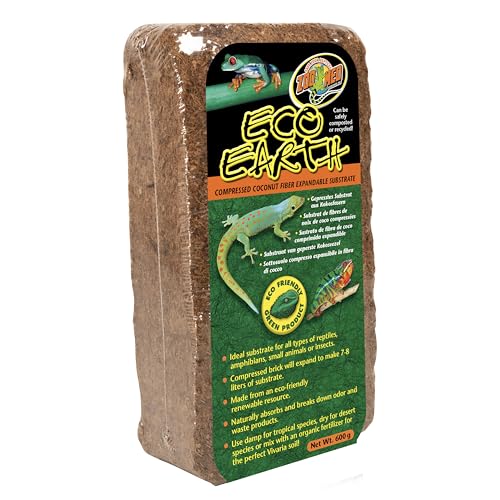
Zoo Med Eco Earth has been the gold standard for reptile bedding for years, and this three-pack brings the total expanded volume to roughly 21-24 liters — enough for a single 40-gallon tank with a 4-inch depth. Each brick expands to 7-8 liters, which is modest compared to the 72-quart blocks above, but the fine fiber texture is actually preferred by keepers who mix their own substrate blends with sphagnum moss or organic topsoil.
The biggest advantage here is the consistency. Zoo Med’s production line yields a very uniform, dusty-free expanded fiber that holds moisture like a commercial potting mix without large chunks of unprocessed husk. Box turtles with sensitive eyes or respiratory tracts benefit from the low-particulate nature of this bedding because it doesn’t produce the same dry dust cloud you sometimes get from coarser chips during weekly maintenance.
If you keep multiple box turtles or a large outdoor indoor enclosure, you will burn through these three bricks quickly and need to repurchase sooner than you would with a single larger block.
Why we love it
- Very low dust content compared to raw coconut chip substrates
- Three individually wrapped bricks stay fresh and uncontaminated
- Fine fiber texture holds humidity evenly at 75-80%
Good to know
- Lower total volume than compressed chip blocks — less economical for large enclosures
- Fine particles can mat down under heavy water dishes if not fluffed weekly
3. Riare 10LB Coconut Chip Substrate

Riare’s 10-pound compressed block matches the 72-quart expansion of the Repti360, but with a slightly finer chip consistency — the fibers break down into smaller, softer pieces that box turtles can push aside more easily. This makes it especially good for juveniles and sub-adults who still exhibit heavy burrowing behavior at night. The expanded texture is loose enough that a 5-inch-deep area stays workable for legs and plastron movement without compacting into a hard floor.
Odor control is the standout feature here. The natural coconut husk structure absorbs liquid waste and breaks down urates within days, so the enclosure doesn’t develop that sour ammonia smell even in a fully enclosed vivarium. I tested it with a three-week interval between total substrate changes and only needed to spot-clean the top layer twice — the bottom remained dry and free of pooling thanks to the chip’s air channeling.
The downside is that the brick dimensions (11.8 x 11.8 x 5.12 inches) can be awkward to hydrate in a standard 5-gallon bucket — you may need a storage tote or a large mixing tub. Also, while the chips are dust-free initially, vigorous expansion by hand mixing can release fine fibers into the air for a few minutes.
Why we love it
- Soft, fine chip consistency ideal for burrowing box turtles
- Superior odor breakdown compared to coarser chip substrates
- Full 72-quart expansion from one brick
Good to know
- Requires a large tote for hydration — doesn’t fit in a standard bucket
- Small amount of airborne fiber during initial expansion mixing
4. ZeeDix 10LBS Coconut Husk Chip Substrate
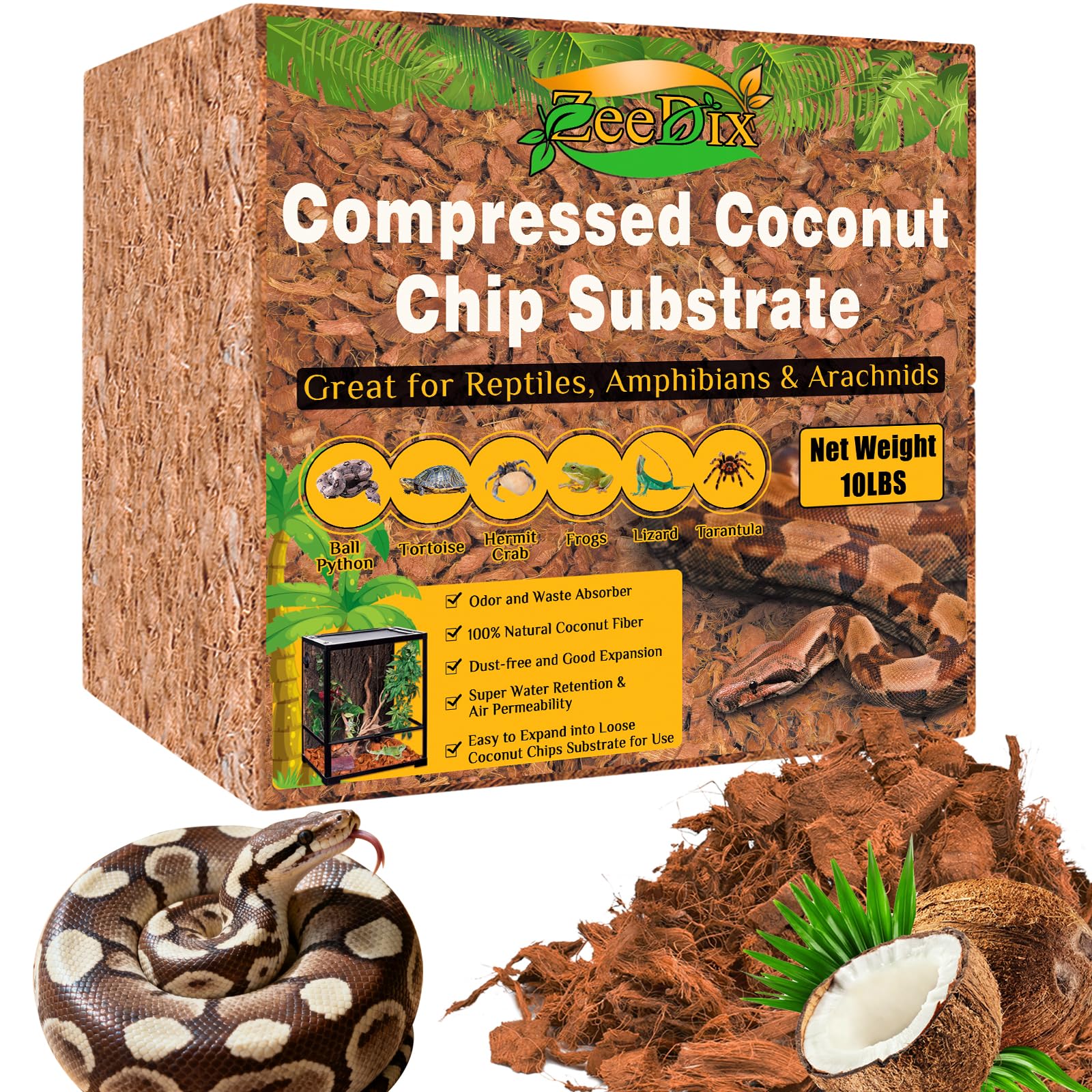
ZeeDix is the only option here that explicitly advertises a 10-35mm chip size range, which is important if you want a more naturalistic floor that mimics the leaf-litter and coarse soil mix of a woodland habitat. These chips are visibly larger and more textured than the Riare or Zoo Med options, and they do not break down into mush when wet. A 40-gallon tank with 5 inches of this substrate looks and feels more like a forest floor than a potting bed.
Moisture retention is solid, but because the chips are larger, water tends to move downward faster — so you need to mist more frequently to keep the top 2 inches damp. However, the bottom layers stay perfectly moist without becoming anaerobic, which is a win for box turtles that dig down to the cool zone during hot afternoons. The chips are also very clean with almost no particulate dust, even when you handle the expanded product.
The main limitation is that the large chips don’t hold shape well for turtles that like to create structured burrow tunnels — the loose texture caves in easily. This is less of an issue for surface-level daytime baskers but frustrating for a determined digger.
Why we love it
- Realistic forest-floor aesthetic with 10-35mm chip range
- Nearly dust-free when hydrated and handled
- Bottom layers stay moist without waterlogging
Good to know
- Large chips don’t hold structured tunnel shapes for deep burrowing
- Expands slightly less than advertised 10 pounds
5. Halatool 6 Pack Coconut Fiber Tortoise Substrate
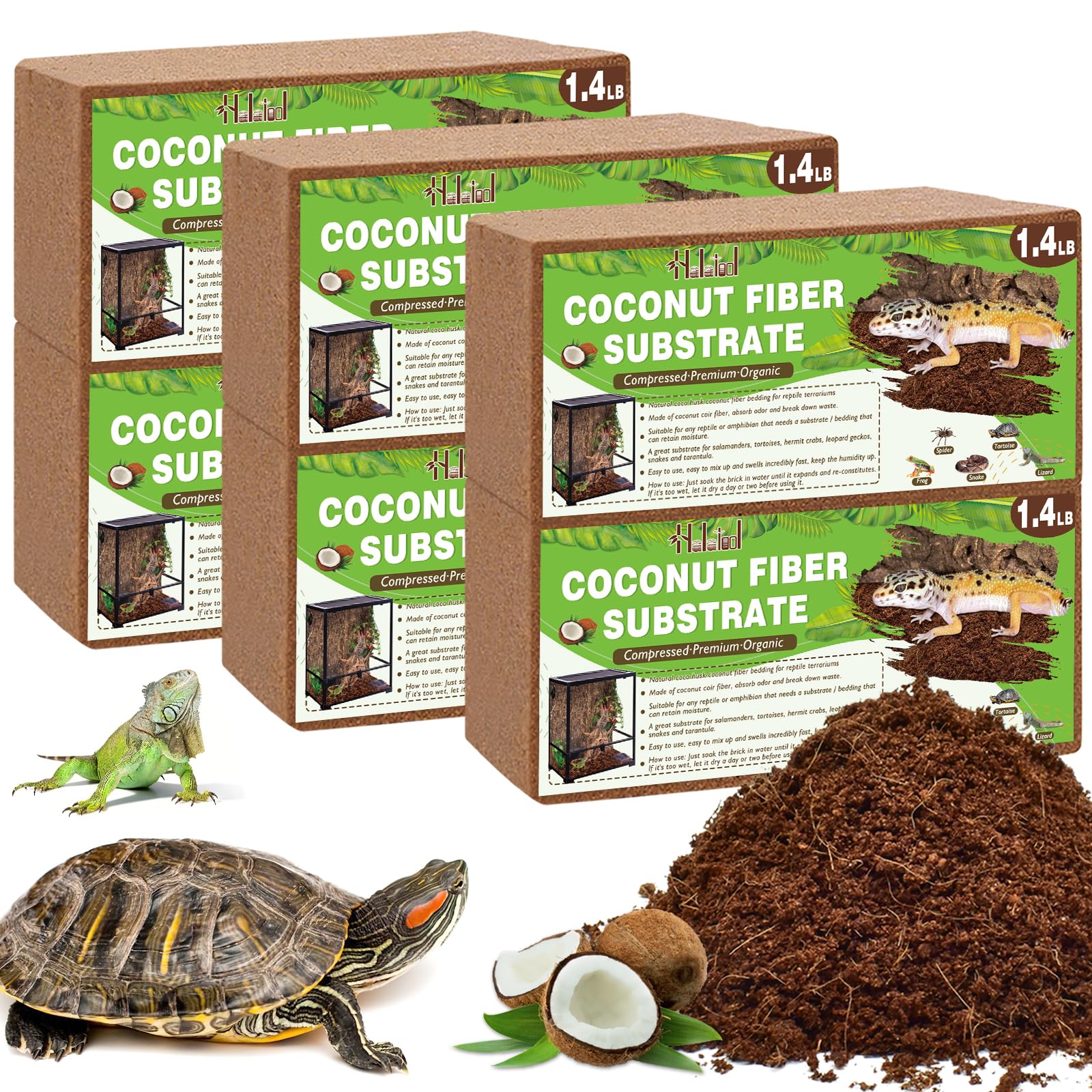
This six-pack of tiny 1.4-pound bricks is the most approachable entry point if you have a small tank or a juvenile box turtle that doesn’t need a full 4-inch depth yet. Each brick expands into roughly 3-4 quarts of fine coconut fiber, so the total yield across all six bricks is about 18-24 quarts — comparable to the Zoo Med three-pack but at a lower per-unit investment. The small brick size also means you don’t need a massive bucket; a standard kitchen mixing bowl handles one brick easily.
The fiber is finely ground, almost dusty in texture when dry, but once hydrated it becomes a uniform, almost soil-like material that wraps around the turtle’s feet without leaving large gaps. This makes it the best option for a hatchling setup where you need a soft, forgiving surface for clumsy first steps. It also absorbs 8-10 times its weight in water, so you can achieve high humidity quickly with less misting effort.
The downside is the total volume — 18-24 quarts is not enough for a full-grown box turtle in a 55-gallon tank. You’d need to buy two or three six-packs to get a proper 6-inch depth, and at that point the value advantage disappears. Also, the fine fiber mats down easily under heavy water bowls, requiring weekly fluffing to prevent compaction.
Why we love it
- Low entry cost — ideal for hatchling or small quarantine enclosures
- Six individually wrapped bricks stay fresh and are easy to store
- Exceptional water absorption for rapid humidity boost
Good to know
- Total volume is low for adult box turtles in large enclosures
- Fine fiber compacts under heavy objects and needs regular fluffing
FAQ
Can I use coconut bedding for a box turtle that eats on the substrate?
How often should I fully replace box turtle bedding?
Final Thoughts: The Verdict
For most pet parents, the bedding for box turtles winner is the Repti360 Premium Coconut Chip Substrate because it delivers the highest volume per block, consistent chip size for digging, and carton packaging that prevents shipping damage. If you want a finer, low-dust fiber that blends well with bioactive soil, grab the Zoo Med Eco Earth 3-Pack. And for a budget-friendly entry point for hatchlings or small tanks, nothing beats the Halatool 6 Pack Coconut Fiber Bricks.