
Picking the wrong bedding for your nesting boxes means cracked eggs, dusty coops, and daily cleaning battles. The right substrate absorbs moisture, cushions eggs, and keeps your hens content enough to lay consistently.
I’m Mo Mahin — the founder and writer behind Furric. I study market trends, compare material science across dozens of bedding types, and cross-reference thousands of verified owner reports to find what actually holds up inside a chicken coop.
Whether you prioritize washable durability or natural compostability, the best bedding for nesting boxes balances absorbency, comfort, and easy maintenance without introducing dust that threatens your flock’s respiratory health.
How To Choose The Best Bedding For Nesting Boxes
Not all bedding materials handle hen activity or moisture the same way. Straw holds dampness against eggs, pine shavings produce dust that aggravates bird lungs, and shredded paper clumps fast. Focus on these criteria to match your coop setup.
Absorbency & Odor Control
A bedding that wicks moisture away from eggs keeps shells clean and reduces bacterial growth. Hemp absorbs roughly twice as much liquid as wood shavings and dries faster, which matters when you practice deep-litter methods. Excelsior aspen fibers allow droppings to sink away from the laying surface rather than pooling on top.
Dust Level & Respiratory Health
Chickens have sensitive respiratory systems. Pine and cedar shavings release aromatic oils and fine particles that can irritate airways over time. Low-dust options like hemp flakes or aspen excelsior pads minimize airborne debris, especially inside enclosed coops where ventilation may be limited.
Reusability & Cleaning Effort
Disposable pads simplify weekly turnover — pull the soiled pad and drop in a fresh one. Washable plastic liners cost more upfront but eliminate recurring purchases. For deep-litter keepers, loose hemp holds its structure for months before full replacement, needing only top-dressing of fresh material between cleanouts.
Quick Comparison
On smaller screens, swipe sideways to see the full table.
| Model | Category | Best For | Key Spec | Amazon |
|---|---|---|---|---|
| Pecking Order Nest Box Pads | Excelsior Pad | Quick no-mess swaps | 13″ x 13″ — 9.6 oz each | Amazon |
| Lil’Clucker Washable Pads | Reusable Plastic | Long-term cost savings | 12″ x 12″ x 0.5″ thick | Amazon |
| Eaton Hemp Bedding | Loose Hemp | Deep-litter composting | 28-liter bag — 6.3 lbs | Amazon |
| HoazHoald Herbs Mix | Herb Blend | Aroma & mite control | 35 oz — 8 dried herbs | Amazon |
| Rural365 Nest Liners | Aspen Liner | Bulk value refills | 13″ x 13″ — 12-pack | Amazon |
In‑Depth Reviews
1. Pecking Order Nest Box Pads

The 13×13-inch excelsior pads from Pecking Order hit the sweet spot between convenience and performance. Each 9.6-ounce pad uses sustainably sourced aspen fibers bonded to a kraft paper backing that keeps the structure intact during removal. Owners report that the fibrous mat elevates eggs above droppings, which cuts down on shell staining and reduces the need to scrub before selling or cooking.
Multiple verified buyers describe the pads as “nice and thick” and note that chickens take to them immediately. The aspen fibers allow air circulation around the nest, keeping the box drier than straw or pine shavings. One consistent observation is that the pads shed slightly when hens scratch aggressively, but they retain their shape better than loose fill materials.
For keepers who want a fast turnover system without measuring or fluffing, this five-pack simplifies the weekly routine. Simply pull the soiled pad, drop in a fresh one, and move on. The main trade-off is that each pad is single-use, so heavy-duty operations with many hens will cycle through the pack faster than loose bedding alternatives.
Why we love it
- Zero dust compared to pine shavings
- Paper backing makes swap-out seconds fast
- Fibers keep eggs elevated away from moisture
Good to know
- Single-use design means recurring purchases
- Scratching hens can loosen fibers on edges
2. Lil’Clucker Washable Chicken Nesting Pads
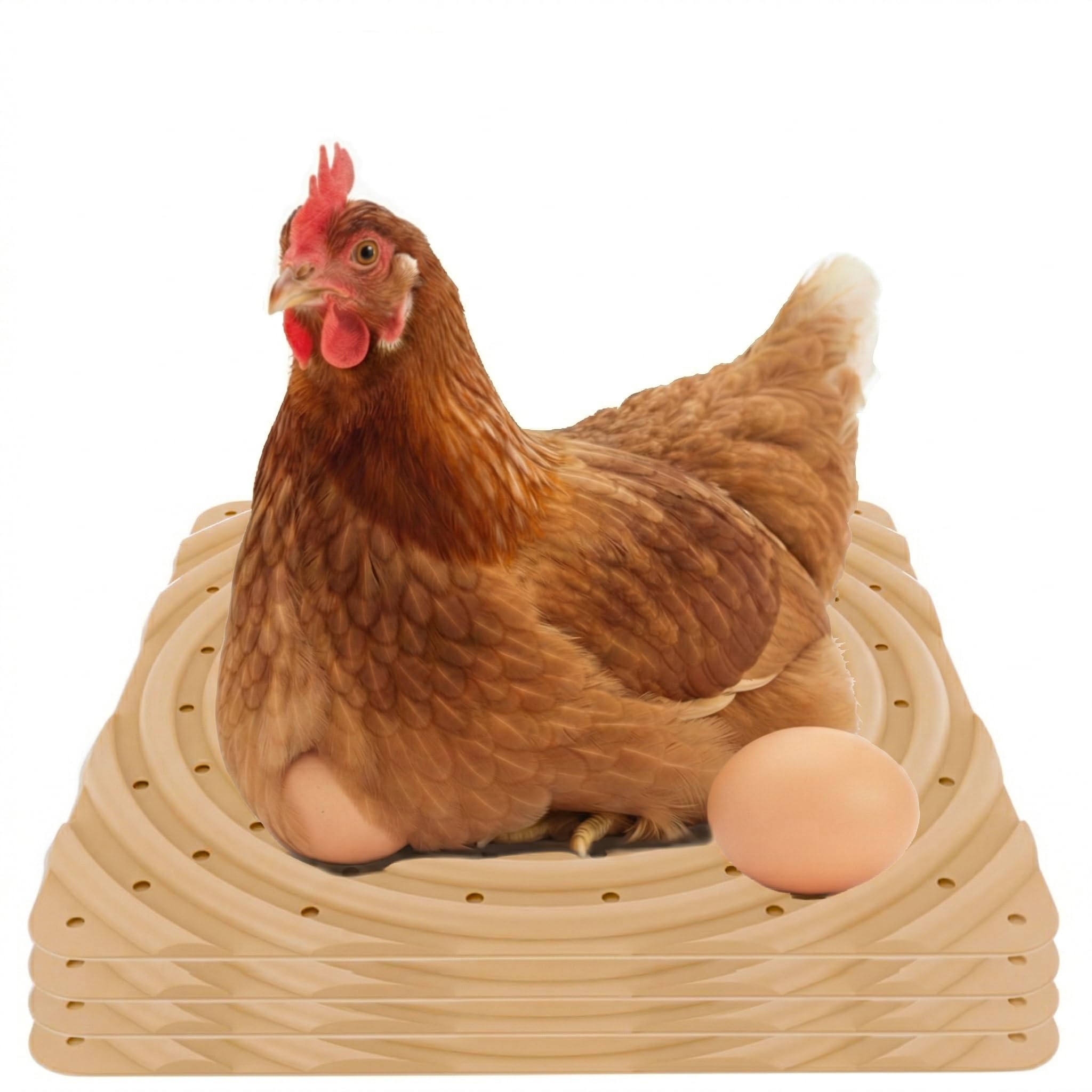
The Lil’Clucker pads shift the value equation by replacing consumables with a one-time purchase. Each 12×12-inch square is made from flexible plastic with a dimpled surface that cushions eggs and allows droppings to fall through or rinse off. Owners report that a quick hose-down and wipe restores the pad to near-new condition, eliminating the need to buy replacement bedding every few weeks.
Buyers consistently note that hens are “unbothered” by the plastic surface and that eggs do not roll away or crack — the soft plastic has enough give to absorb impact from taller-standing breeds. The pads sit flat inside standard nest boxes and can be trimmed with scissors if the fit is slightly oversized. Some users place a thin layer of pine pellets or shavings on top for added absorbency while keeping the plastic pad as the base.
The one clear limitation is that the plastic surface does not absorb moisture the way aspen or hemp does. If your coop has high humidity or your hens produce wet droppings, you may need to wipe the pad daily rather than weekly. Still, for anyone tired of bagging soiled straw every weekend, this four-pack pays for itself within a couple of months.
Why we love it
- Reusable design eliminates ongoing bedding costs
- Rinses clean in seconds with a hose
- Soft enough to prevent cracked eggs from tall hens
Good to know
- Does not absorb liquid — requires manual drying
- Flat surface may need extra bedding for deep-litter fans
3. Eaton Pet and Pasture Hemp Bedding

Eaton’s farmer-owned hemp bedding delivers the highest absorbency-to-weight ratio in this lineup. The hemp flakes expand when wet, trapping moisture inside each fiber while leaving the top layer dry to the touch. Multiple owners who practice the deep-litter method report zero ammonia smell after six months of use, which is a strong testament to the material’s odor-binding capacity.
The dust level is noticeably lower than pine shavings — several buyers switched specifically because their flock showed respiratory irritation with wood products. The flakes are soft enough for chicks to forage through without abrasion, and the earthy scent is mild and pleasant, not chemical. The main drawback is the bag size; at 28 liters, it disappears faster than bulk pine bales, making it less cost-effective for large coops with dozens of birds.
Composting is straightforward because hemp breaks down quickly in a hot pile without leaving woody splinters. For backyard keepers with fewer than ten hens who prioritize air quality and long intervals between full cleanouts, this is the strongest loose-bedding option available.
Why we love it
- Absorbs roughly double the moisture of wood shavings
- Near-zero dust protects bird respiratory health
- Composts fast without woody residue
Good to know
- Small bag volume — less economical for large flocks
- Shipping can be slow depending on warehouse stock
4. HoazHoald Chicken Nesting Herbs Blend
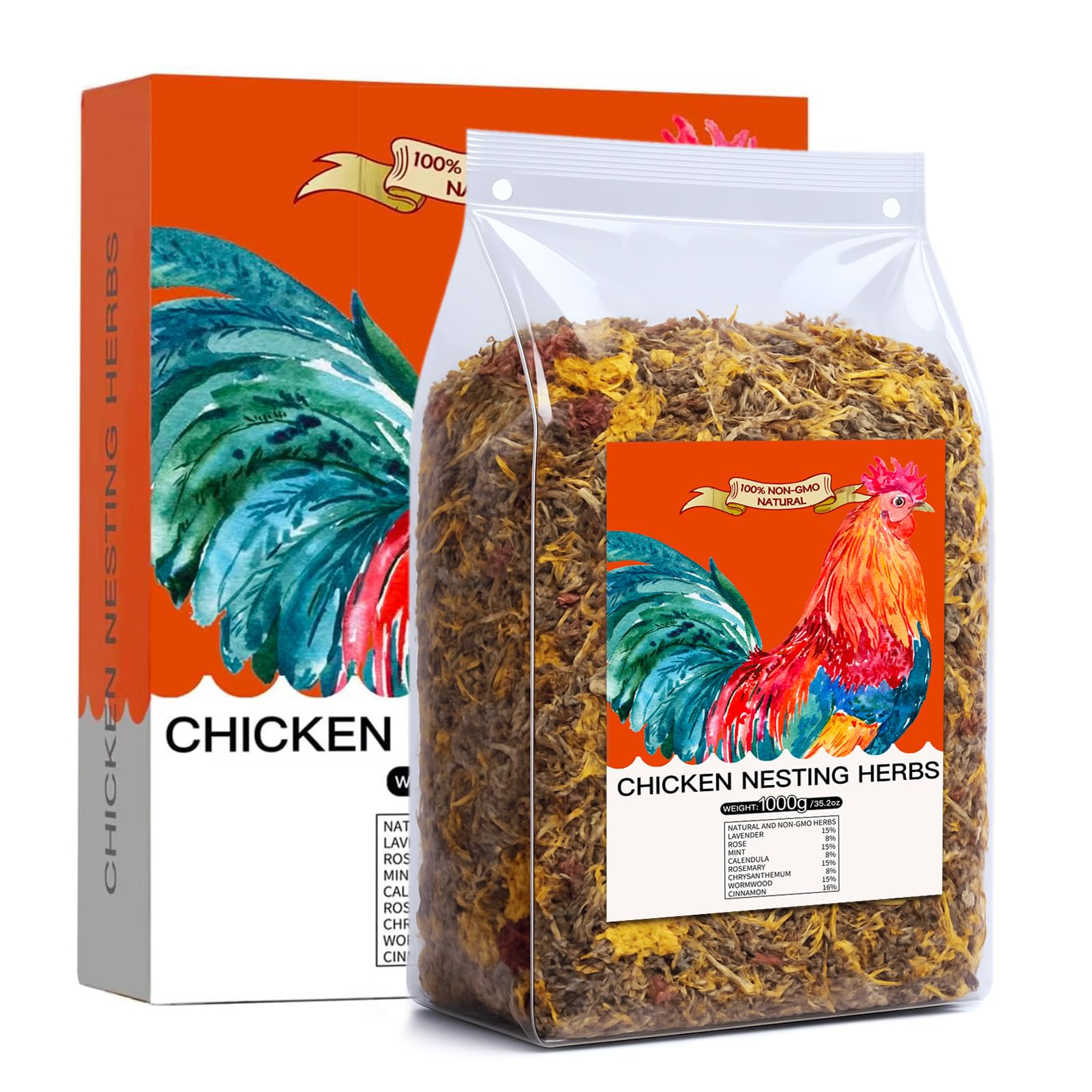
The HoazHoald mix is not a standalone bedding — it is a 35-ounce herb blend designed to be sprinkled over your base bedding material. Lavender, rose, mint, calendula, rosemary, chrysanthemum, wormwood, and cinnamon create a layered aroma that owners say noticeably freshens the coop environment while providing natural pest deterrence against mites.
Verified buyers consistently mention that the pleasant scent makes the nesting boxes feel “cozier” and that hens appear more focused on laying rather than pacing. Some owners mix the herbs into the dust bath area as a supplement, and the edible ingredients mean chickens can safely peck at the blend without risk. The dried flowers add visual texture that keeps the nest looking maintained between cleanouts.
The primary consideration is that herbs alone do not provide cushioning or absorbency. You still need a base layer — excelsior pads, hemp flakes, or shavings — underneath. For keepers who want to upgrade a functional bedding setup with aromatherapy and mite prevention, this bag lasts several months when used as a light top-dressing.
Why we love it
- Natural herbal oils help repel mites and pests
- Edible blend doubles as a nutritional supplement
- Strong, pleasant aroma masks coop odors
Good to know
- Not a standalone bedding — requires absorbent base layer
- Some herbs may lose potency in high humidity coops
5. Rural365 Chicken Nest Box Liners

The Rural365 liners bring the same excelsior concept as the Pecking Order pads but in a bulk 12-pack that lowers per-unit cost. Each 13×13-inch square uses lightweight aspen wood shavings bonded to a paper backing, and the manufacturer advises keeping the backing attached to maintain structural integrity. Multiple owners confirm these liners hold together better than unbranded alternatives, with the paper base preventing shavings from scattering across the coop floor.
Users appreciate that a quick shake removes most droppings, extending the usable life of each liner before replacement. The aspen fibers do a solid job of absorbing moisture and keeping eggs clean, though some buyers note that broody hens can tear through a liner faster than standard layers. Pre-fluffing the pad before placing it in the box helps the fibers settle into a natural nest shape that hens accept quickly.
The 12-count package covers a multi-box coop for several weeks, making it a practical choice for keepers who want the convenience of disposable pads without the premium price tag. The main difference from the Pecking Order pads is the slightly lighter fiber density; owners with heavy-scratching breeds may find these wear out sooner.
Why we love it
- Bulk 12-pack brings per-pad cost down significantly
- Paper backing prevents shavings from migrating
- Shake-off cleaning extends each liner’s lifespan
Good to know
- Lighter fiber density may wear faster with scratchers
- Broody hens can tear through paper backing
FAQ
How often should I replace nesting box bedding?
Can I use pine shavings in nesting boxes?
Do washable plastic pads really prevent egg breakage?
Final Thoughts: The Verdict
For most gardeners, the best bedding for nesting boxes winner is the Pecking Order Nest Box Pads because the aspen excelsior fibers and kraft paper backing deliver zero dust, fast swaps, and eggs that stay cleaner than any loose material. If you want a reusable system that eliminates recurring purchases, grab the Lil’Clucker Washable Pads. And for deep-litter composting with top-tier absorbency, nothing beats the Eaton Hemp Bedding.