
You love your snake and want to give it a habitat that feels like home. But with so many bag options lining the pet store shelves, picking the right ground cover can feel overwhelming. The wrong choice risks respiratory issues, poor shedding, or even impaction. That’s why understanding what goes beneath your snake matters just as much as the warm side and hide boxes.
I’m Mo Mahin — the founder and writer behind Furric. Over the years, I’ve spent hundreds of hours digging into veterinary safety guidelines, analyzing material composition, and reading thousands of real owner reviews to separate marketing fluff from what truly keeps snakes healthy and happy.
From aspen shavings to coconut chips, each substrate serves a different purpose. I’m confident that selecting the best bedding for snakes requires carefully balancing humidity, burrowing needs, and safety for your specific species.
How To Choose The Best Bedding For Snakes
Every snake has unique habitat needs. A ball python from West Africa requires high humidity and a snug hide, while a corn snake from the southeastern US thrives in a drier, burrow‑friendly environment. The substrate you choose directly affects their ability to thermoregulate, shed, and stay free of respiratory problems.
Humidity & Moisture Control
Snakes that need 60–80% humidity — such as ball pythons, green tree pythons, and Amazon tree boas — benefit from materials like coconut husk, sphagnum moss, or cypress mulch. These hold water without becoming waterlogged. For arid‑species like sand boas or rosy boas, avoid moisture‑holding substrates to prevent scale rot and bacterial growth. Aspen shavings work well for species that need moderate to low humidity.
Burrowing & Safety
Many snakes love to tunnel. Aspen and coconut chip substrates allow natural digging without collapsing. Always avoid cedar and pine — the volatile oils can cause severe respiratory damage and even death. Also steer clear of substrates with large, sharp pieces that could cause abrasions or impaction if accidentally swallowed during feeding.
Dust & Chemicals
Dusty bedding irritates a snake’s sensitive respiratory system. Look for “99.9% dust‑free” labels, especially for aspen. Products that are kiln‑dried and sifted remove fine particles. Organic, chemical‑free substrates (coconut coir, untreated aspen, or bioactive mixes) give peace of mind that no fertilisers or pesticides will harm your pet.
Quick Comparison
On smaller screens, swipe sideways to see the full table.
| Model | Type | Best For | Key Feature | Amazon |
|---|---|---|---|---|
| Zoo Med Aspen Snake Bedding | Aspen | Corn & king snakes | 99.9% dust‑free, 191% absorbency | Amazon |
| Galápagos Aspen Digs | Aspen | Burrowing species | 100% natural, low dust | Amazon |
| Halatool Coconut Fiber | Coco Fiber | High‑humidity snakes | Optimal 60–80% humidity retention | Amazon |
| The Bio Dude Terra Sahara | Bioactive | Desert species | Supports live plants & microfauna | Amazon |
| RediChip Coconut Chip | Coco Chip | Ball pythons & tropical snakes | Medium chips, excess dust removed | Amazon |
| Legigo 10 lb Coconut Chip | Coco Chip | Large enclosures | Expands to 72 quarts, great value | Amazon |
| Live Moss Variety Pack | Live Moss | Humidity accents & décor | Real living moss, revives with mist | Amazon |
| Riare Sphagnum Moss | Sphagnum Moss | Humid hides & incubation | Expands greatly, odorless | Amazon |
| Riare Coco Coir Bricks | Coco Coir | Mix‑it‑yourself substrate | 2 bricks, low EC & balanced pH | Amazon |
| Legigo 2‑Pack Coco Fiber | Coco Fiber | Small to medium tanks | Expands 3×, easy to store | Amazon |
| Galápagos Cypress Mulch | Cypress | Tropical humidity species | High moisture retention, natural | Amazon |
In‑Depth Reviews
1. Zoo Med Aspen Snake Bedding
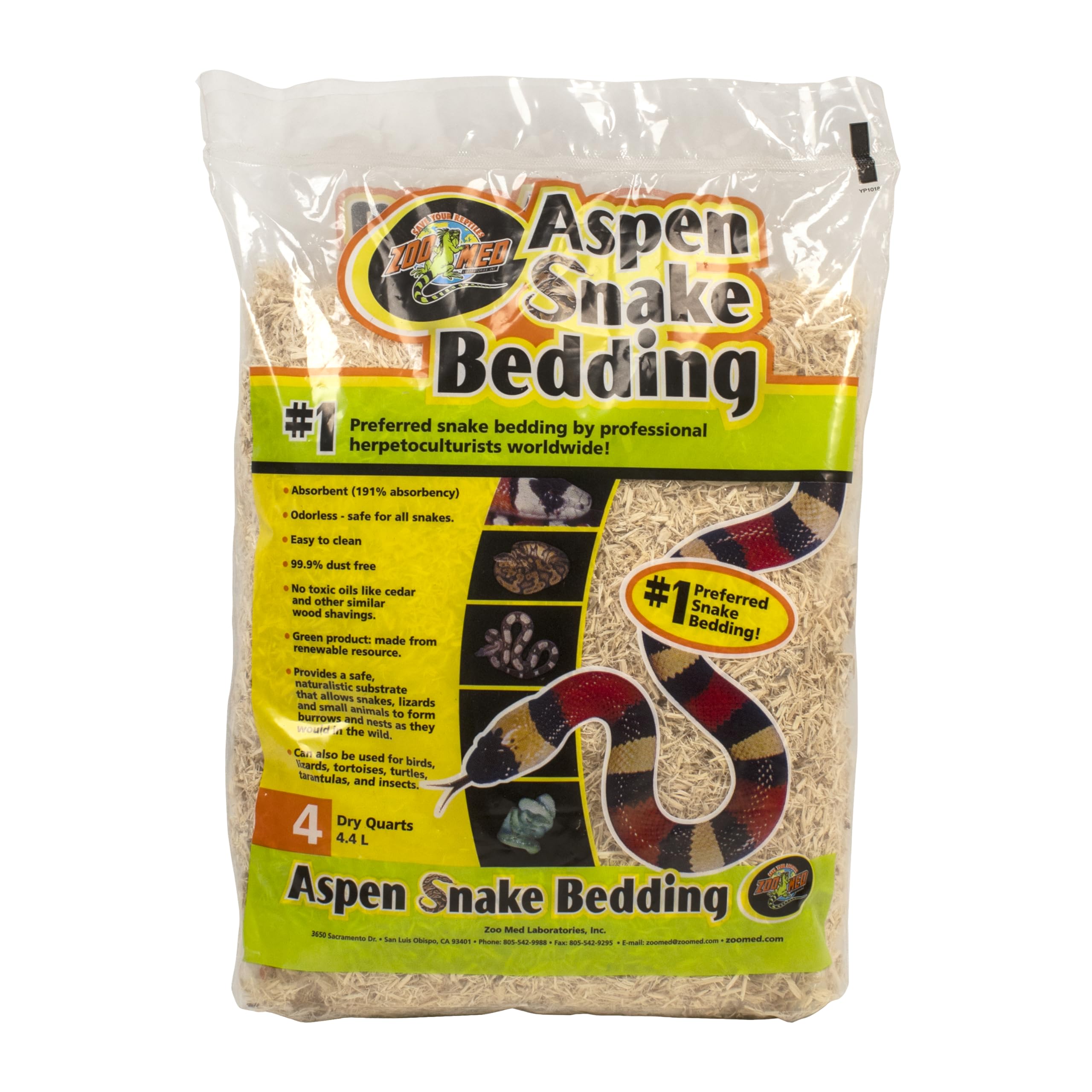
Zoo Med’s aspen bedding has been a staple in reptile circles for years, and for good reason. It’s made from kiln‑dried aspen wood with a 191% absorbency rating — meaning it soaks up urine and spills without getting soggy. The fine shavings are soft enough for burrowing but sturdy enough to hold tunnels, making it a top pick for active snakes like corn snakes, kingsnakes, and milk snakes.
What sets this bedding apart is the rigorous dust‑control process. Labeled 99.9% dust‑free, it helps keep your snake’s respiratory system clear. It also contains no toxic oils — a major advantage over pine or cedar products. Each 4‑quart bag (which expands when fluffed) covers a 20‑gallon tank with a couple of inches of depth. Cleanup is quick because clumps are easy to spot and remove.
Verdict: If you have a low‑ to moderate‑humidity species and want a reliable, widely‑tested substrate, Zoo Med Aspen is the safe, affordable choice that thousands of owners trust. It’s not ideal for high‑humidity snakes, but for everything else it sets the standard.
Why we love it
- Extremely low dust compared to similar aspen products
- High absorbency keeps the cage fresh for longer
- Natural burrowing medium — tunnels hold well
Good to know
- Does not retain humidity — unsuitable for ball pythons or other tropical species
- Bag size is small for larger enclosures; may need multiple bags
2. Galápagos Aspen Digs Shavings

Galápagos calls this “Aspen Digs” because it’s cut specifically for species that love to tunnel. The shavings are slightly chunkier than Zoo Med’s, which actually helps maintain tunnel shape better. It’s made from pure aspen wood — no chemicals, no oils, no harmful resins — making it safe for snakes, lizards, hamsters, and even rabbits.
Owners of burrowing snakes (like hognose, sand boas, and some colubrids) praise how easy it is for the animal to move through the material. The 8‑quart bag provides decent coverage for a standard 40‑gallon breeder tank. Dust is low but not nonexistent — a few buyers noted a fine dust at the bottom of the bag, though far less than generic brands. It also dries quickly, which helps prevent mould in drier setups.
Verdict: If your snake spends half its time underground, Galápagos Aspen Digs is the most cost‑effective and natural option for encouraging that instinct. Just be aware it’s not for humidity‑loving species.
Why we love it
- Excellent structure for burrowing — tunnels don’t collapse
- Sustainably sourced timber by‑product
- No harmful oils or chemicals
Good to know
- Some dust settles at the bottom; sifting helps
- Not moisture‑retentive — avoid for tropical snakes
3. Halatool Coconut Fiber Substrate (2‑Pack)
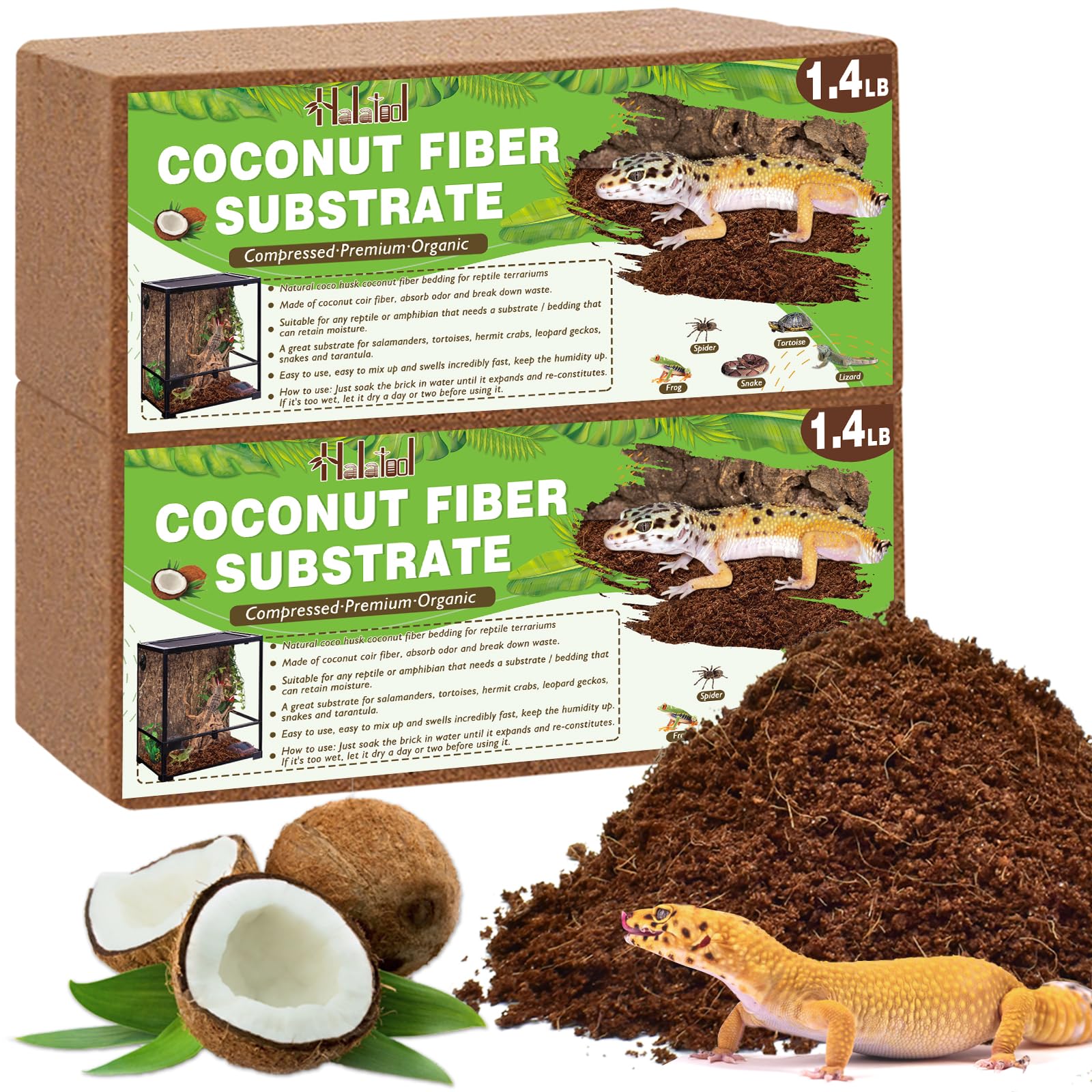
Halatool delivers two compressed bricks of 100% organic coconut husk fibre that expand to roughly 4‑gallons each. This substrate is a favourite among ball python, crested gecko, and hermit crab keepers because it maintains a stable 60–80% humidity range without becoming soggy. The fibrous texture is soft on belly scales and encourages natural digging.
What makes Halatool stand out is the quality control: no dirt, no foreign matter, and very little dust. Multiple customer reviews mention it “smells fresh” and “expands beautifully”. The bricks are easy to hydrate — just add warm water and break apart after a few minutes. It also works as a base for bioactive enclosures. One brick is enough for a 20‑gallon tank; the 2‑pack gives you a spare or allows deeper substrate layers.
Verdict: For snake owners who need reliable humidity without constant misting, Halatool offers premium performance at a fair price. It’s especially good for hatchlings and sensitive tropical species.
Why we love it
- Excellent humidity retention — perfect for ball pythons
- Organic and chemical‑free
- Expands well; low dust
Good to know
- Can be tricky to break up completely without a blender or sifting
- No instructions included in the package
4. The Bio Dude Terra Sahara Bioactive Substrate

The Bio Dude Terra Sahara is a ready‑to‑use bioactive substrate designed for desert reptiles like bearded dragons, leopard geckos, uromastyx, and sand boas. It’s a precise mix of sand, soil, clay, and organic matter that supports live plants, microfauna (isopods, springtails), and natural burrowing. The formula is proven to hold burrows without collapsing while allowing proper aeration and drainage.
Owners of Western hognose and sand boas report that their snakes dig readily and that the substrate helps with shedding and hydration. The 8‑pound bag covers a 20‑gallon tank with a 2–3 inch layer. One caution: larger rock or twig pieces inside the mix can pose an impaction risk for small snakes, so sifting or feeding on a dish is recommended. Customer support from The Bio Dude is frequently praised as excellent.
Verdict: If you want a fully self‑sustaining desert terrarium with live plants and cleaning crew, Terra Sahara is the gold standard. For dry‑climate snakes, it delivers unmatched natural appeal.
Why we love it
- Designed for bioactive setups — promotes a balanced ecosystem
- Holds tunnels and burrows effectively
- Does not elevate humidity — ideal for arid species
Good to know
- Contains some larger debris – sift for small snakes
- Higher price point; not budget‑friendly for large tanks
5. RediChip Reptile Bedding Medium Coconut Chip

RediChip is a medium‑grade coconut chip substrate that strikes a perfect balance between moisture retention and drainage. The chips are larger than coco coir but smaller than bark nuggets, making them suitable for snakes that like to burrow as well as those that need high humidity. It’s cleaned and sifted in the USA to remove dust and debris — a standout feature for owners concerned about respiratory health.
Ball python keepers frequently report that RediChip holds humidity well without staying wet, reducing the risk of scale rot. It can be used dry for arid species or misted for tropical ones. The bag is smaller than it looks (12 quarts), so for a 40‑gallon enclosure you’ll want two bags. Many buyers use it mixed with orchid bark or sphagnum moss for a custom blend.
Verdict: RediChip is a fantastic middle‑ground for snake owners who want the benefits of coconut husk but prefer a chunkier texture. It’s versatile, clean, and effective.
Why we love it
- Very low dust — refined in the USA
- Holds humidity without waterlogging
- Works for both arid and tropical species with added water
Good to know
- Bag size is smaller than expected for the price
- Some customers noted shipping delays when ordering via Amazon
6. Legigo 10 lb Coconut Chip Substrate
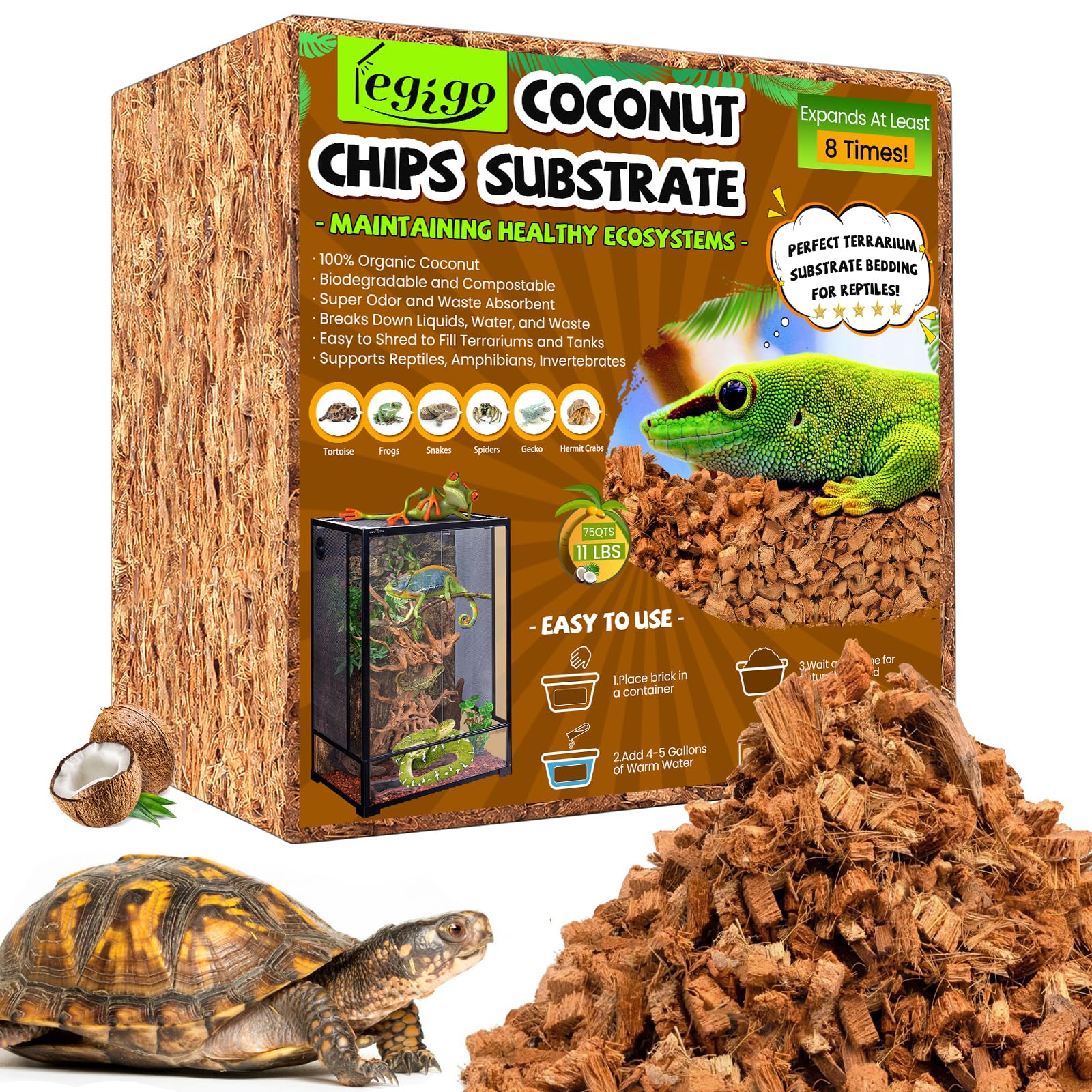
If you have multiple snake enclosures or a very large tank, Legigo’s 10‑pound compressed brick offers massive value. Once hydrated, it expands to roughly 72 quarts — enough to fill a 4×2 foot enclosure with a 2‑inch layer. The coconut husk chips are medium‑sized, fluffy, and excellent at trapping humidity while draining excess moisture.
Judging by owner feedback, this substrate works wonderfully for ball pythons, tortoises, and even house plants (many use the leftovers as soil amendment). The bricks are easier to break up than some competitors — just add hot water and let them sit for 20 minutes. Dust is minimal, and the natural wood scent is pleasant rather than chemical. A few buyers warned that the packaging can tear during shipping, so double‑bag it when storing.
Verdict: For keepers who go through substrate quickly, Legigo’s 10‑pound brick is the most economical way to keep multiple snakes in clean, humid environments without constant reordering.
Why we love it
- Incredible value per quart compared to bagged substrates
- Retains moisture without becoming soggy
- Versatile — great for snakes, tortoises, and plants
Good to know
- Compressed brick requires pre‑soaking and breaking apart
- Shipping can cause bags to rip; transfer to a tub
7. Live Moss Variety Pack (LUCKYRUNES)
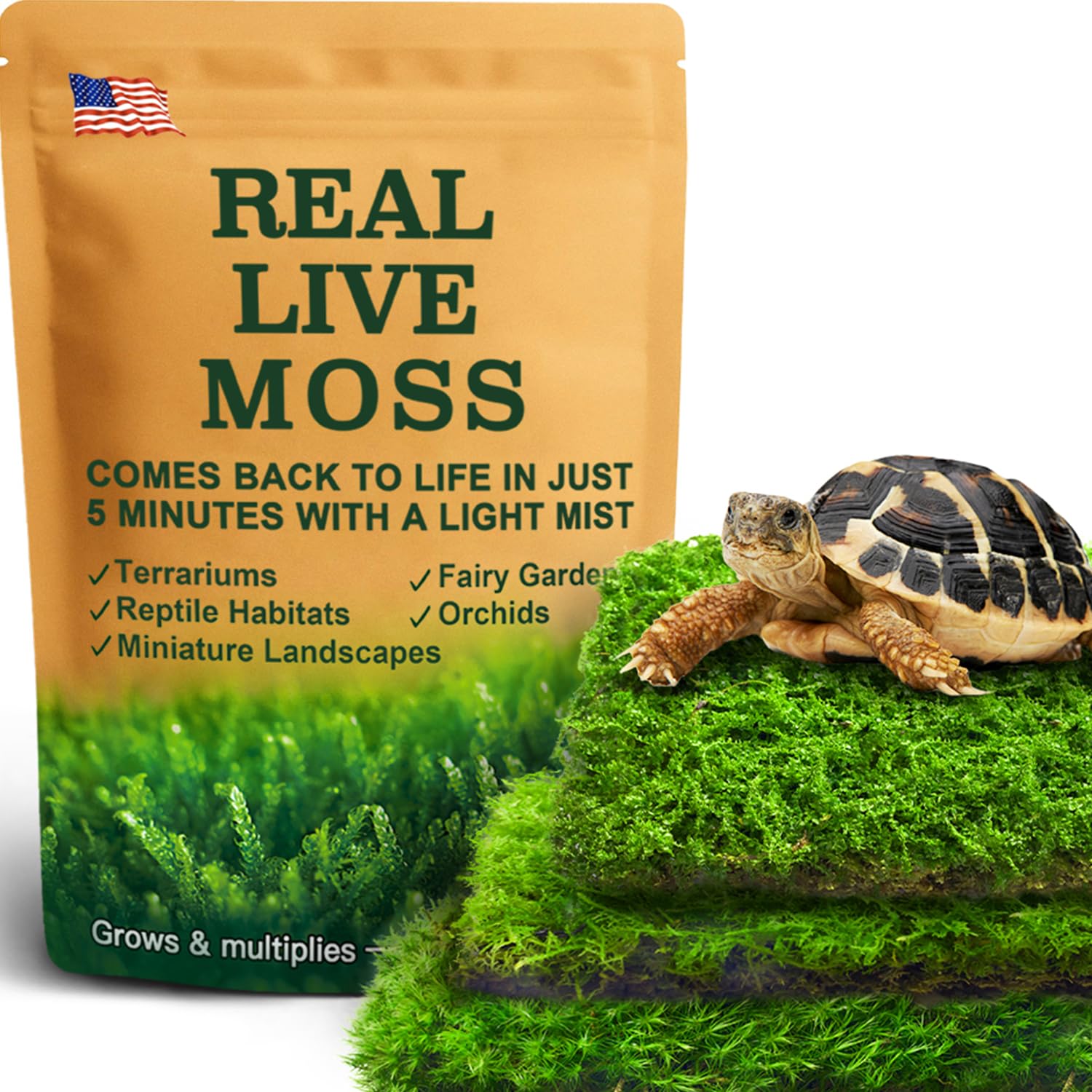
This isn’t your standard dry moss — it’s living, breathing greenery that comes back to life with a simple misting. The pack includes three different moss species (sheet moss and sphagnum types), each 3.5×7 inches, ideal for humid hide boxes, incubation chambers, or as a natural accent in bioactive terrariums. Live moss helps stabilise humidity and gives the enclosure a lush, forest‑floor aesthetic that many snakes appreciate during sheds.
Customer feedback is overwhelmingly positive: the moss arrives dormant but revives within hours after soaking. One dart frog keeper said it rooted and spread across the background. A few people noted that one of the three pieces didn’t survive, but replacements were handled smoothly. The moss should be kept moist and away from direct heat to thrive.
Verdict: Live moss is a wonderful supplement to your main substrate, not a replacement. Use it inside humid hides or on top of coco coir to create microclimates that support perfect sheds.
Why we love it
- Real living moss — adds natural humidity and beauty
- Comes back to life quickly after misting
- Encourages natural nesting and hiding behaviours
Good to know
- Requires regular misting and cool storage
- Not all pieces always survive shipping; order a backup
8. Riare Premium Sphagnum Moss

Riare’s sphagnum moss comes in a compact 5.3‑ounce bag that expands dramatically once hydrated. It’s pure, natural sphagnum — no dyes, no additives — with a pleasant earthy smell. This moss is a staple for humid hides, egg incubation, and as a booster for substrate mixes. It retains moisture far better than aspen or paper products, making it a must‑have for breeders and keepers of tropical species.
Experienced reptile owners love that it’s free of impurities and doesn’t rot quickly. A leopard gecko keeper reported using it in a moist hide for months without mould. The only downside: the initial package looks tiny, but after soaking it fluffs up to several times its dry volume. Some bearded dragon owners caution that their lizards tried to eat it — so monitor ingestion risks with insectivorous species.
Verdict: For spot‑treating humidity or creating a perfect lay box, Riare Sphagnum is the budget‑friendly answer. Keep a bag on hand for sheds and egg‑laying.
Why we love it
- Excellent moisture retention — ideal for humid hides
- Expands well; a little goes a long way
- No chemicals, no artificial scents
Good to know
- Package looks small; don’t judge by dry size
- Some reptiles may try to eat it — use in hides only
9. Riare Organic Coco Coir Bricks (2‑Pack)
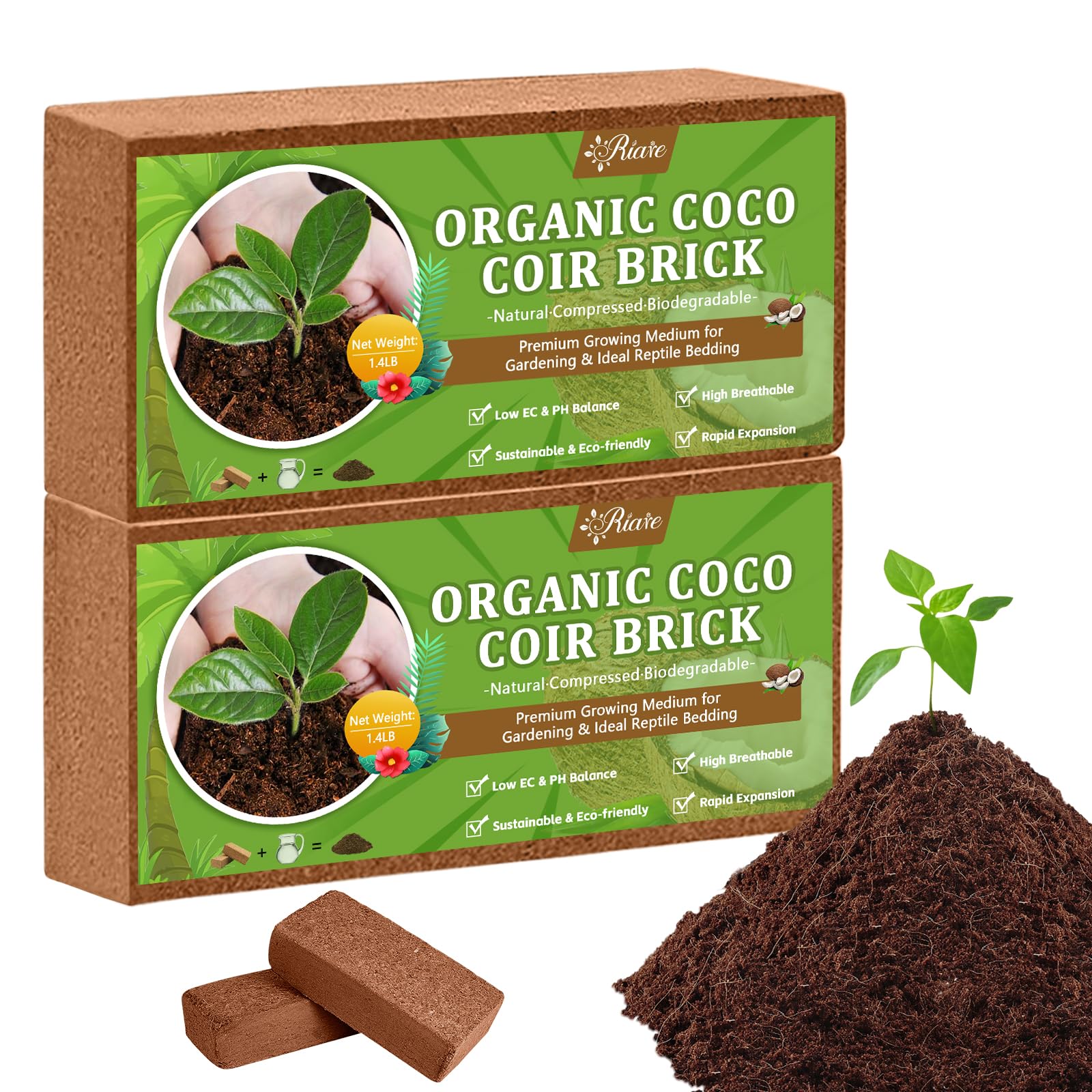
Riare’s coconut coir bricks are a gardener’s secret that works just as well in a snake tank. Each compressed brick (8×4×2 inches) expands to about 4 gallons when soaked, yielding fluffy, low‑EC coco coir with a balanced pH. It’s 100% organic — no trash, rocks, or chemicals — and excellent for species that require a soft, moisture‑holding substrate like ball pythons, corn snakes, or tropical geckos.
Users appreciate the versatility: mix with sand or sphagnum to adjust texture and drainage. The bricks store compactly and are half the price of pre‑expanded bagged products. A few buyers found that the first brick didn’t expand fully, but after scraping the outer layer and re‑soaking it worked fine. The coir also works as a planting medium for bioactive setups.
Verdict: If you don’t mind a little prep work, Riare’s coir bricks offer the best per‑gallon savings. They’re especially useful for keepers who need deep substrate layers for burrowing snakes.
Why we love it
- Incredibly economical — expands to 4+ gallons per brick
- Organic and pH‑balanced
- Can be mixed to create custom substrates
Good to know
- Requires soaking and breaking apart; not instant
- Some bricks may expand unevenly
10. Legigo 2‑Pack Compressed Coconut Fiber Substrate

Legigo’s 2‑pack of compressed coconut fibre bricks is nearly identical to Riare’s offering but comes with a slightly higher average rating (4.6 stars from 520 reviews). Each brick weighs 1.4 lb and expands to about 4 gallons of fluffy, odour‑absorbing substrate. It’s 100% natural coconut husk — no chemicals, no dirt — and works beautifully for snakes, frogs, and tortoises.
Busy reptile moms and breeders praise how easy these are to prep: add hot water, wait 20 minutes, break apart, and you’re done. The fibre holds burrows decently and decomposes waste smell. One user found a small foreign object in a brick, but that seems rare. Overall, it’s a reliable, no‑fuss choice for keepers who want a humidity‑holding substrate without paying for pre‑expanded bags.
Verdict: Legigo’s 2‑pack is a safe, budget‑friendly entry point for anyone setting up a tropical snake enclosure. Grab it if you want good performance without overspending.
Why we love it
- Easy to hydrate and break apart
- Great moisture and odour control
- Compact storage; takes up minimal space
Good to know
- Packaging doesn’t include instructions
- Occasional inclusion of foreign debris
11. Galapagos Cypress Mulch Forest Floor Bedding

Galapagos Cypress Mulch is made from 100% natural cypress wood — a renewable by‑product that’s been washed and sieved to remove fine dust and splinters. It’s the go‑to substrate for ball pythons, red‑tailed boas, and other tropical snakes that need elevated humidity levels. The bark pieces are small enough to allow burrowing but large enough to prevent easy ingestion.
Owners report that this mulch retains warmth and moisture exceptionally well, creating a perfect microclimate for snakes that require 70–80% humidity during sheds. It’s also low in dust and has a pleasant natural scent. The 8‑quart bag covers about 1‑inch depth in a 40‑gallon tank, so you’ll likely need two bags. Compared to Zoo Med’s forest floor, many say Galapagos is less dusty and more durable.
Verdict: For keepers who want a classic, time‑tested humidity substrate without the mess of coconut coir, Galapagos Cypress is a solid, natural choice that your snake will love to slither and dig through.
Why we love it
- Excellent at holding humidity for tropical species
- Low dust — less than many competitive brands
- Natural material, no added chemicals
Good to know
- One bag only provides a thin layer; buy extra for deep bedding
- Urine can be harder to spot and clean compared to aspen
Safety & Care Tips
Choosing Species‑Specific Substrate
Not all snakes share the same environmental needs. A ball python from the humid forests of West Africa thrives in coconut husk or cypress mulch, while a desert‑dwelling rosy boa does best in aspen or a bioactive sand‑clay mix. Research your snake’s natural habitat and match the substrate to the humidity and burrowing requirements. Using the wrong type can lead to respiratory infections, stuck sheds, or stress.
Maintaining Proper Cleanliness
Spot‑clean urine and faeces immediately to prevent ammonia buildup and bacterial growth. Replace the entire substrate every 4–6 weeks, or more often if you notice odour or mould. Always wash hands before and after handling the enclosure. For humidity‑holding substrates like coco coir or cypress, allow the surface to dry slightly between mistings to avoid scale rot.
FAQ
Can I use pine or cedar shavings for snakes?
How often should I change snake bedding?
Final Thoughts: The Verdict
For most pet parents, the bedding for snakes winner is the Zoo Med Aspen Snake Bedding because it’s proven, low‑dust, and perfect for the majority of common snake species. If you need premium humidity control for a ball python or other tropical snake, grab the Halatool Coconut Fiber Substrate. And for those building a bioactive desert enclosure, nothing beats the The Bio Dude Terra Sahara.