
A tortoise’s shell and respiratory system are directly affected by the bedding you choose. The wrong substrate can cause shell rot from excess moisture or chronic respiratory irritation from aromatic oils found in pine and cedar. The ideal bedding balances humidity retention for burrowing with a dry top layer to prevent bacterial growth.
I’m Mo Mahin — the founder and writer behind Furric. I’ve spent years examining substrate particle sizes, moisture retention curves, and organic certifications to separate marketing claims from what actually keeps a tortoise healthy.
After analyzing dozens of substrates against the specific needs of Mediterranean and tropical tortoise species, I’ve narrowed down the top five options to help you find the perfect bedding for tortoise enclosures that supports natural behavior without compromising health.
How To Choose The Best Bedding For Tortoise
Selecting the right substrate means weighing humidity needs, burrowing depth, and the specific species you keep. Desert species like the Sulcata require arid, loose substrate, while forest tortoises like the Red-foot need high-moisture options. Here are the critical specs to check.
Particle Size and Impaction Risk
Fine particles can clump inside a tortoise’s digestive tract if ingested during feeding. Avoid very fine sand or dusty coco coir. Look for substrates with chip sizes between ½-inch and 1-inch, which pass through the gut more safely if accidentally eaten.
Moisture Retention vs. Surface Dryness
A good bedding holds enough moisture at the bottom layer for burrowing and humidity, but dries out on top to prevent shell rot. Cypress mulch and coconut husk chips provide this gradient naturally better than aspen or compressed coir bricks.
Organic and Chemical-Free Certification
Any additive, pesticide, or dye can leach into your tortoise’s skin or food. Prioritize substrates labeled 100% organic, sustainably sourced, and free from pine, cedar, and artificial fragrances.
Quick Comparison
On smaller screens, swipe sideways to see the full table.
| Model | Category | Best For | Key Spec | Amazon |
|---|---|---|---|---|
| Josh’s Frogs Cypress Mulch | Cypress Mulch | Humidity control & mold resistance | Double-milled, 10-quart size | Amazon |
| Legigo Coconut Chip | Coconut Husk Chip | Bulk value & deep burrowing | 10 lbs compressed, expands to 72 qt | Amazon |
| Exo Terra Volcanic Substrate | Volcanic Soil | Bioactive planted enclosures | 4.4 lb, natural Andisol | Amazon |
| BabiChip Coconut Husk | Coco Chip | Small species & low-dust setups | 12-quart loose chips | Amazon |
| Halatool Coco Fiber 8-Pack | Compressed Coir | Budget-friendly & multi-use | 8 compressed bricks, 10.21 lbs total | Amazon |
In‑Depth Reviews
1. Josh’s Frogs Super Cypress Reptile Mulch (10 Quarts)

Pure cypress mulch with no cedar or pine means zero toxic phenols that cause respiratory distress in tortoises. The double-milled fibers create a fluffy, soft texture that supports deep burrowing without compacting into a hard layer that traps moisture against the shell.
Maintains humidity far better than aspen, reducing the stressful humidity fluctuations that lead to incomplete sheds and dehydration. The mold-resistant properties are crucial for higher-humidity species like Red-footed tortoises that need consistent ambient moisture.
Longtime tortoise keepers note that finding pure cypress has become harder in recent years, making this consistent source from Josh’s Frogs a reliable staple. The 10-quart bag covers a 30-inch enclosure with a few inches of depth, though larger setups will need multiple bags.
Why we love it
- Zero pine or cedar — safe for sensitive lungs
- Excellent humidity retention without surface wetness
- Mold resistant even in high-moisture setups
Good to know
- Some large pieces present — monitor ingestion risk for very small tortoises
- Price per quart is higher than bulk coir options
2. Legigo 10LBS Coconut Chip Substrate
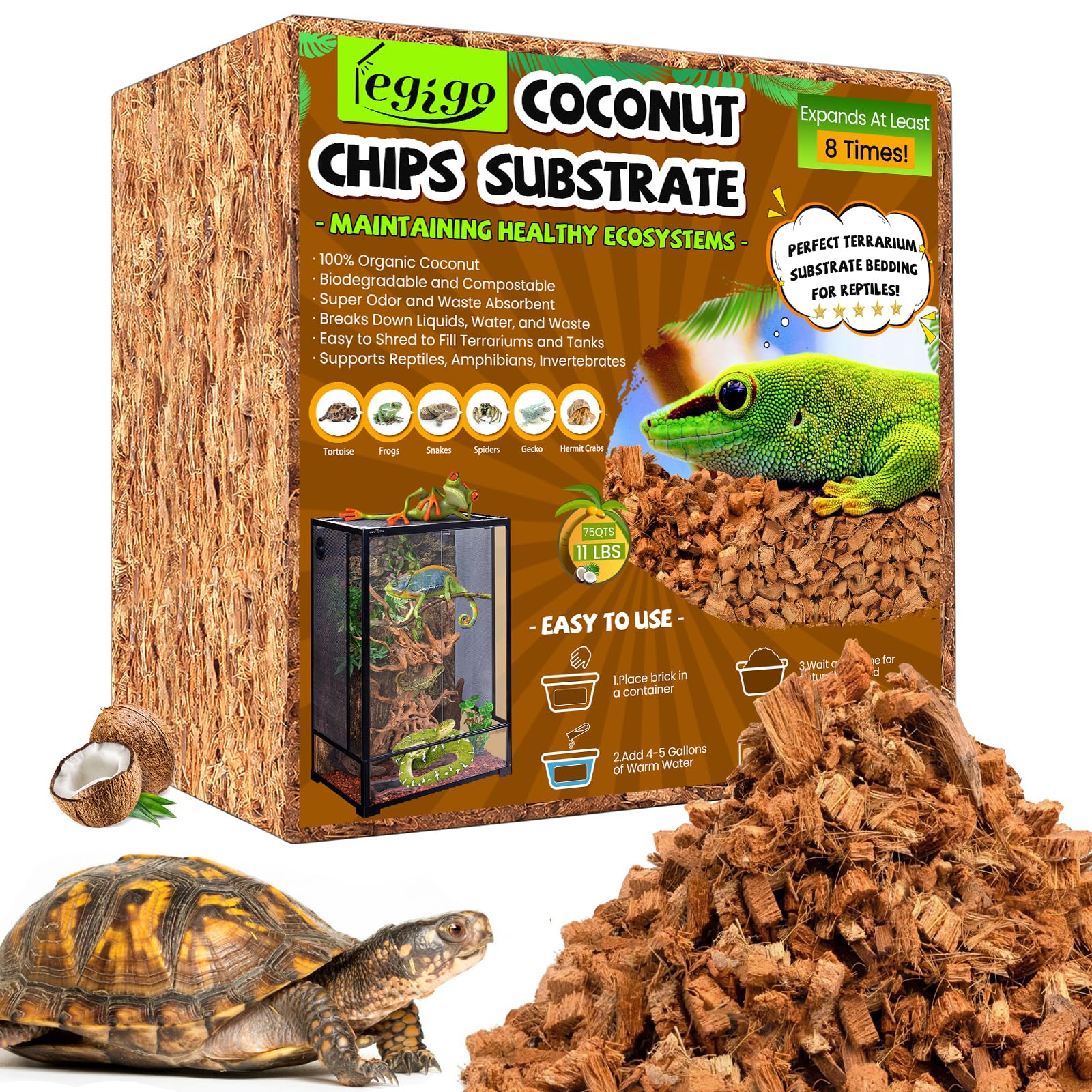
A 10-pound compressed brick that expands to roughly 72 quarts of coconut husk chips — enough to create a deep burrowing substrate for a large tortoise table. The texture is fluffy and non-sharp, so it passes safely through the digestive system if ingested accidentally.
Waste absorption is impressive, encapsulating urine and feces to minimize odors between full substrate changes. The chips rehydrate quickly when sprayed, making it easy to spot-clean the top layer while maintaining humidity at the bottom.
Users report that this bulk-friendly format lasts months in larger enclosures, and the compressed brick stores easily compared to multiple bags of loose mulch. A few owners note the brick requires thorough soaking and breaking apart before use — plan ahead for setup day.
Why we love it
- Massive expansion — one brick covers large tables
- Soft chip texture reduces impaction risk
- Absorbs and locks in odors effectively
Good to know
- Compressed brick needs thorough soaking before use
- Not mold-resistant at same level as pure cypress
3. Exo Terra Sub Stratum, Bioactive Volcanic Substrate

This natural Andisol volcanic soil is designed specifically for bioactive planted terrariums. It provides an ideal drainage layer that prevents waterlogging, crucial for live plant roots and microfauna like isopods that help break down waste.
The volcanic composition actively neutralizes ammonia and odors, keeping the enclosure fresh even when spot-cleaning isn’t immediate. It’s a better choice for keepers building a self-sustaining bioactive setup with springtails and clean-up crews.
The 4.4-pound bag is relatively small — serious bioactive builds will need multiple bags. Some tortoise keepers find the particle size a bit small for deep burrowing, making this a better top-layer or drainage substrate rather than a standalone bedding for large tortoises.
Why we love it
- Exceptional drainage — prevents root rot and shell rot
- Natural ammonia and odor elimination
- Supports live plants and microfauna
Good to know
- Small bag size — not cost-effective for deep fill
- Particles may be too fine for heavy burrowing species
4. BabiChip Coconut Chip Substrate (12 Quart)

BabiChip stands out for its exceptionally clean, low-dust composition. Each 12-quart bag is sorted and refined in the US to remove fines and debris, making it one of the safest options for tortoises prone to respiratory irritation from dusty bedding.
The loose chip format works straight out of the bag for arid species — no soaking or expansion required. For tropical tortoises, simply add water and the chips absorb moisture evenly, releasing it slowly to maintain consistent humidity without becoming waterlogged.
Chip size is notably smaller than cypress mulch, making it ideal for hatchlings and smaller species like Russian tortoises that need fine-textured bedding for exploration. The small chip size also mixes well into bioactive setups as a secondary substrate layer.
Why we love it
- Minimal dust — ideal for sensitive respiratory systems
- Ready to use without soaking for arid setups
- Consistent, clean quality from a trusted brand
Good to know
- Small chips may be too sharp for very thin-skinned snakes (less relevant for tortoises)
- 12-quart bag goes fast in larger enclosures
5. Halatool 8 Pack Compressed Coconut Fiber Substrate
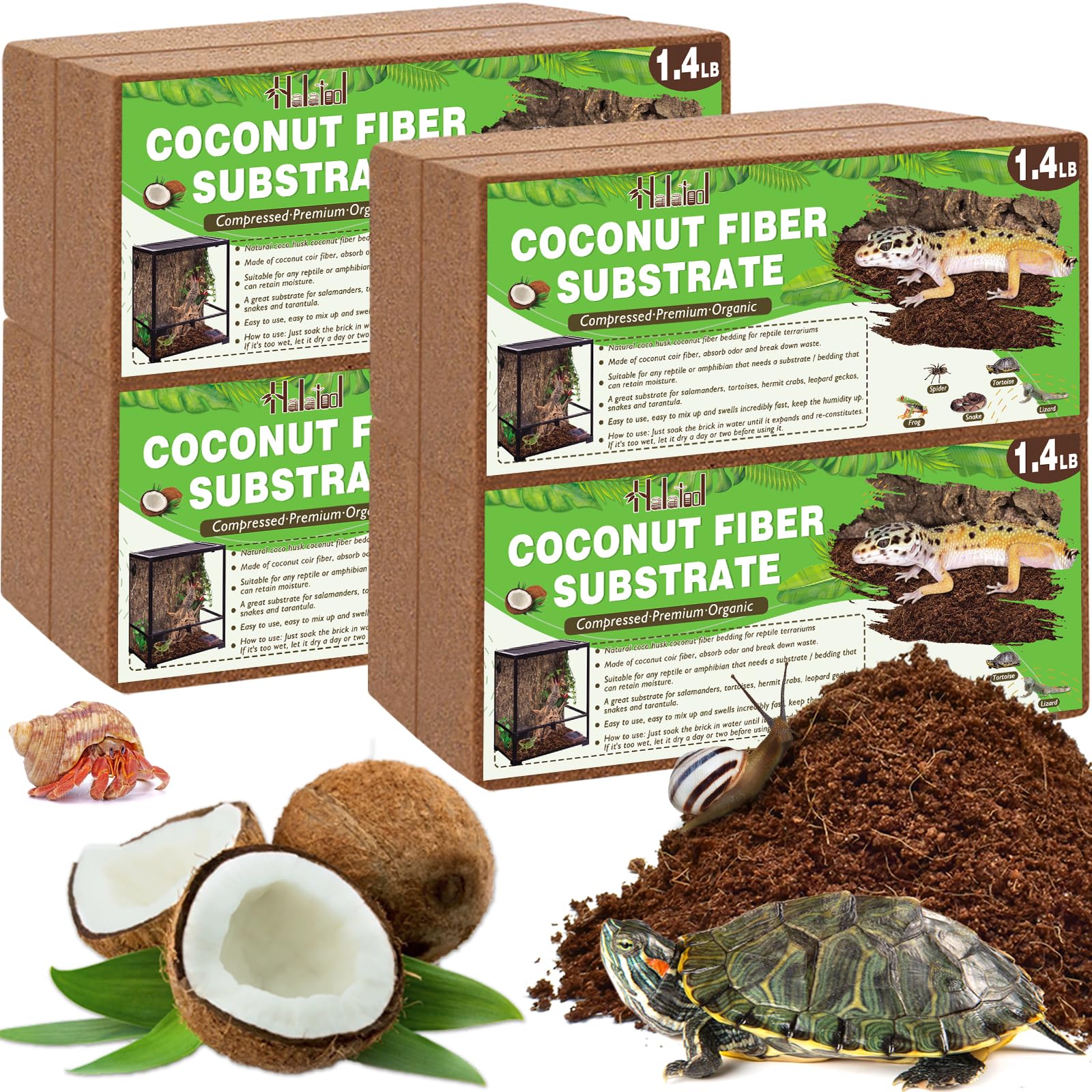
Eight compressed coco coir bricks provide a massive volume of substrate at an entry-level price point. Each brick expands to roughly 8-10 times its dry weight when hydrated, giving you plenty of material to fill and refresh multiple enclosures.
The sponge-like water absorption makes this an excellent choice for high-humidity species like Red-footed tortoises. The coir breaks down waste effectively and minimizes odors, though the fine fibrous texture can be messier than chip-based substrates.
Some users report the bricks are extremely compressed — breaking them apart requires patience and plenty of water. The fine coir dust can also be an issue for species with sensitive lungs. Pair with a feeding station to minimize substrate ingestion during meals.
Why we love it
- Excellent value — huge volume for the price
- Absorbs 8-10x its weight in water for humidity control
- Suitable for bioactive setups, plants, and multiple pets
Good to know
- Fine coir dust can irritate sensitive respiratory tracts
- Bricks require significant soaking and manual breaking
FAQ
How deep should bedding be for a tortoise enclosure?
Can I mix cypress mulch and coconut coir together?
Final Thoughts: The Verdict
For most keepers, the bedding for tortoise winner is the Josh’s Frogs Cypress Mulch because it delivers the ideal balance of humidity control, mold resistance, and safety with zero toxic woods. If you need maximum bulk for a large enclosure, grab the Legigo Coconut Chip for its impressive 72-quart expansion. And for a bioactive planted setup with springtails and isopods, nothing beats the Exo Terra Volcanic Substrate as a drainage base layer.