
Guinea pigs spend most of their lives close to the floor, so the surface they rest on directly affects their comfort, hygiene, and health. A good liner or bed absorbs moisture quickly, traps odors, and gives your cavy a warm, stable place to lounge without soaking through to the cage floor.
I’m Mo Mahin — the founder and writer behind Furric. I’ve spent years analyzing small-pet accessories, comparing absorbent-layer constructions, and studying owner feedback to identify which liners actually hold up after repeated washing and which ones develop leaks or shrink over time.
After close evaluation of construction layers, non-slip backing, and reusability, I’ve narrowed the list to the five most reliable options in the beds for guinea pigs category, balancing leak protection, ease of cleaning, and long-term durability.
How To Choose The Best Beds For Guinea Pigs
Guinea pig beds are not all the same — differences in core materials, backing technology, and size accuracy make or break the user experience. The three factors below separate a liner that lasts a year from one that unravels after two washes.
Layer count and waterproof barrier
Most guinea pig liners claim to be waterproof, but only those with a continuous TPU or TPR layer between the absorbent core and the bottom backing actually prevent urine from seeping onto the cage tray. Fleece-only designs without a sealed barrier will eventually wick through. Five-layer pads with a solid polyurethane membrane outperform three-layer fleece stacks during extended use, especially if you have multiple pigs sharing the same cage.
Washability and shrinkage resistance
Reusable liners that shrink after the first machine cycle become a nuisance — a 47-inch pad that loses two inches in length leaves gaps where pigs can burrow underneath and soil the tray directly. Owner reviews consistently flag shrinkage as a problem across budget-friendly pads. Look for liners labeled “pre-shrunk” or those with a high polyester content that resists dimensional change. Disposable pads, on the other hand, require no washing but add ongoing replacement cost and waste.
Non-slip backing stability
Cavies kick bedding around as they move. Without a textured bottom layer, the liner bunches up, exposing the cage floor and defeating the purpose of full coverage. Plastic dot grips and rubberized TPU backings hold the mat in place even when a pig runs across it. For double-level cages, a fully non-slip bottom is essential to prevent the liner from sliding during cleaning or when the pig jumps down from a ramp.
Quick Comparison
On smaller screens, swipe sideways to see the full table.
| Model | Category | Best For | Key Spec | Amazon |
|---|---|---|---|---|
| Oncpcare 47×24 Fleece Liner | Reusable Fleece | All-around warmth & softness | 3-layer (chenille + absorbent + TPR Latex) | Amazon |
| Mooydee 2-Pack Cage Liners | Reusable Multi-layer | Budget-friendly backup option | 4-layer with TPU waterproof barrier | Amazon |
| cimiycob 5-Layer Fleece Liner | Premium Reusable | Maximum odor control & absorption | 5 layers with non-slip rubber backing | Amazon |
| Bissap 2-Pack Pee Pads | Reusable Mesh | Multi-pet use & durability | 4-layer (mesh + cotton + TPU + plastic bottom) | Amazon |
| GINIDEAR Disposable Pads | Disposable | Quick change & zero laundry | 6-layer with charcoal odor control | Amazon |
In‑Depth Reviews
1. Oncpcare 47×24 Guinea Pig Cage Liner

The Oncpcare liner stands out because of its long chenille fleece surface — a texture that guinea pigs actively burrow into. At 47 by 24 inches, it lines a standard Midwest cage without overhang, and the three-layer construction pairs a plush top with a high-density absorbent middle and a TPR latex bottom that stays put on the cage tray. Owners report that the soft top layer keeps pigs warm during winter months without trapping humidity underneath.
Absorption performance is reliable for daily use; the pad locks moisture into the middle layer rather than letting it pool on the surface. Users switching from wood shavings to this fleece liner note that cage cleaning becomes faster because solid waste sits on top and lifts away. The pink color, though cosmetic, avoids showing stains as aggressively as lighter fabrics after repeated washing.
Durability is the main watchpoint here. Several long-term reviews mention that the TPR bottom can delaminate from the fleece after many cycles in a hot dryer, reducing the pad’s non-slip properties. Washing on a gentle cycle and air-drying extends the usable life noticeably. For single-cavy households or pairs that stay in one level, this liner delivers comfort and leak protection at a very reasonable investment.
Why we love it
- Soft chenille surface pigs burrow into immediately
- TPR latex bottom grips the cage tray securely
- Absorbent enough for overnight use without surface wetness
Good to know
- Bottom layer can peel after repeated high-heat drying
- Some owners note shrinkage after the first wash
2. Mooydee 2 Pack Guinea Pig Cage Liners

The Mooydee 2-pack gives you two 48-by-24-inch liners for the price of a single premium pad, making rotation between washes effortless. The four-layer design uses a soft mesh surface on top, followed by a polyester absorbent core, a TPU waterproof membrane, and a plastic dot bottom that prevents sliding. Owners switching from disposable bedding appreciate that one liner stays in the cage while the other is in the laundry, eliminating downtime entirely.
Leak protection is the strong suit here. The TPU layer does not rely on chemical coatings that degrade over time; it forms a continuous physical barrier that holds liquid even when the pad is fully saturated. The mesh top wicks moisture downward quickly, so the surface stays dry to the touch — a critical factor for preventing urine scald on guinea pigs’ feet. The dark grey color hides soiling between cleanings better than lighter alternatives.
One common frustration is that the plastic dot backing can become less grippy after several washes, especially if fabric softener is used during the cycle. The 2-pack design helps mitigate wear since each liner sees fewer loads per month. For budget-conscious owners who need two liners right away, this set offers the best functional overlap of coverage and cost efficiency.
Why we love it
- Two liners included for immediate rotation
- Reliable four-layer waterproof construction
- Mesh surface stays dry even after heavy use
Good to know
- Non-slip bottom may require a rinse of plastic dots to restore grip
- Size is slightly narrower than some Midwest cages, leaving a small gap
3. Cimiycob 5-Layer Guinea Pig Cage Liner
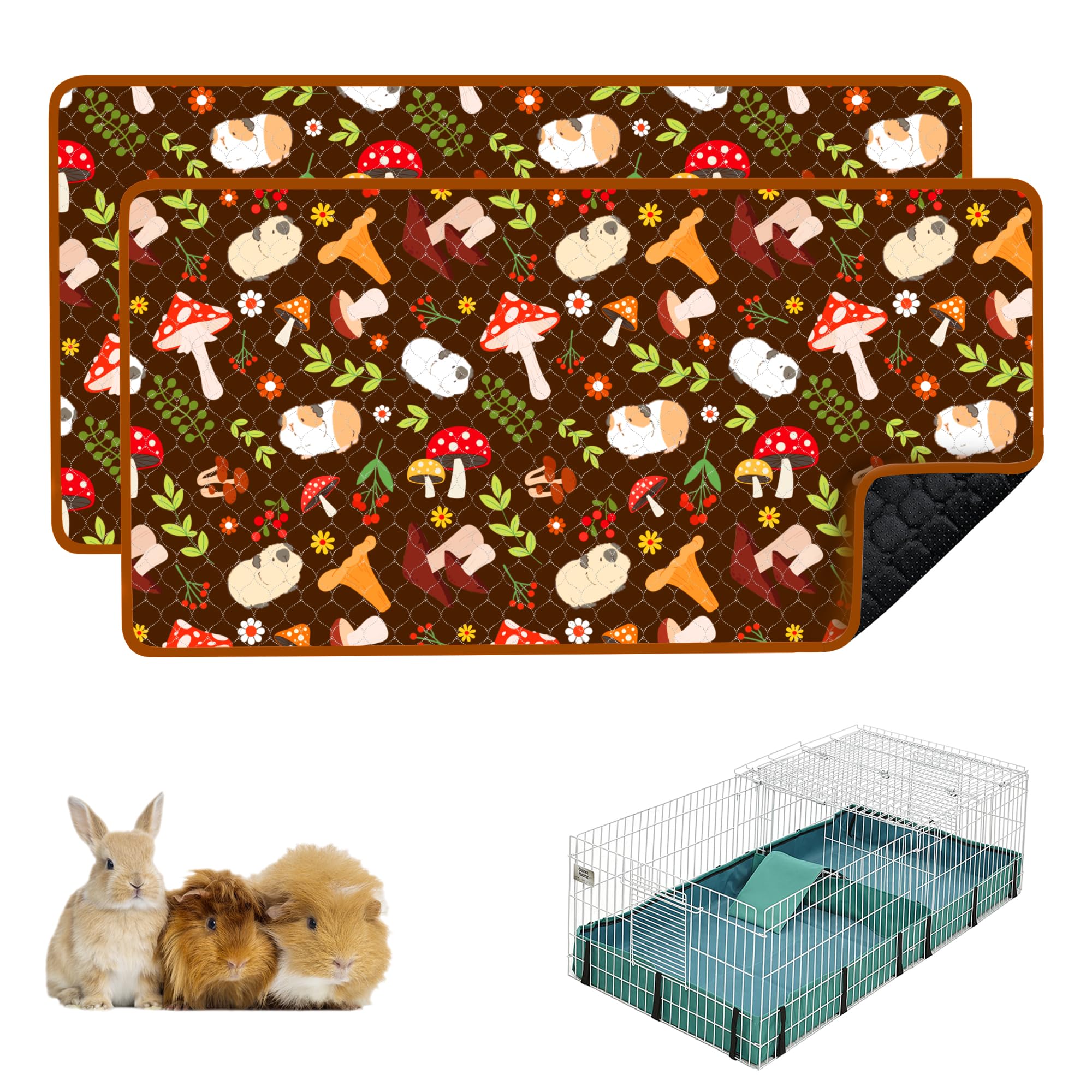
The cimiycob liner pushes into premium territory with five distinct layers: a soft fleece top, two absorbent cores, a TPU waterproof membrane, and a rubberized non-slip backing. This extra layering translates to noticeably better odor control — the additional absorbent mass traps ammonia smells before they reach the room. The brown mushroom color pattern adds a natural aesthetic that blends with cage décor better than solid-colored options.
Thermal comfort is another differentiator. The thicker padding provides insulation that keeps guinea pigs warm in unheated rooms during cooler months, while still allowing enough airflow to prevent moisture condensation underneath. The 49-by-24-inch dimensions leave a slight overhang in standard 47-inch cages, which some owners use to tuck edges around the tray corners for a snug fit. This design detail helps prevent pigs from lifting the liner with their noses.
Shrinkage is minimal compared to thinner pads, thanks to the dense polyester fill. However, the added bulk means drying takes longer in the machine — a high-spin cycle is necessary to extract excess water. The 6-month warranty from cimiycob gives buyers peace of mind that the layered construction will hold together through regular washing. For owners who prioritize odor suppression and a full-coverage fit, this liner earns the premium price tag.
Why we love it
- Five-layer design provides superior odor absorption
- Thick padding offers thermal insulation for colder rooms
- Upgraded rubber backing stays flat during active pig movement
Good to know
- Requires a longer spin cycle to dry fully
- Dimensions may be slightly oversized for some standard trays
4. Bissap 2 Pack Guinea Pig Cage Liners
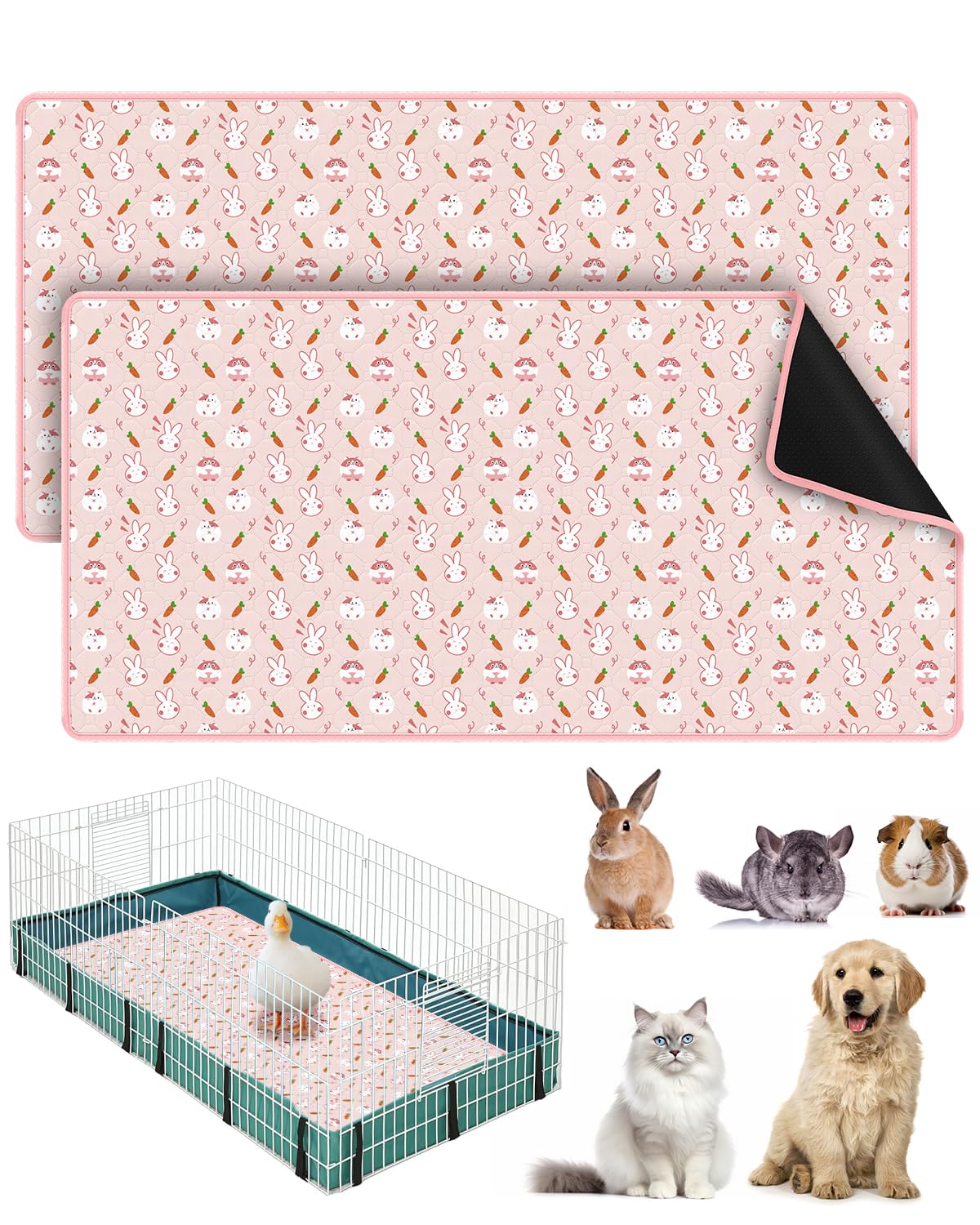
The Bissap liners earn strong owner reviews for build quality — the combination of a breathable mesh surface, absorbent cotton layer, sealed TPU membrane, and plastic bottom sheet creates a pad that holds up to heavy daily use without tearing or delaminating. At 47 by 24 inches, the fit aligns with the majority of commercial guinea pig cages, and the two-pack provides a backup for quick swaps during weekly deep cleans.
Absorbency is the headline feature. The cotton core absorbs urine quickly, while the TPU layer beneath prevents any seepage onto the floor. Owners of multiple pigs report that the liner can handle two to three days without replacement, provided it is paired with regular spot cleaning. The pink color is not just cosmetic — the bright shade makes it easier to spot soiled areas at a glance, speeding up daily maintenance.
The trade-off is that the cotton layer, while effective, is slower to dry than synthetic alternatives. If the liner is washed and dried in a high-heat cycle, some owners observe shrinkage of roughly 1 to 2 inches along the length and width. The solution is to wash on cold and tumble dry on low. For owners who prefer a slightly textured surface that lets pigs dig without pulling loose fibers, these Bissap pads are a smart durable investment.
Why we love it
- Cotton inner layer provides excellent moisture absorption
- Bright pink color reveals soiling spots instantly
- Two-pack design supports rotation without laundry delays
Good to know
- Cotton core takes longer to dry than polyester alternatives
- May shrink slightly after repeated high-heat washing
5. GINIDEAR Disposable Guinea Pig Cage Liners

The GINIDEAR disposable pads take a completely different approach from fleece liners — they use a six-layer construction built around a charcoal-infused fiber layer that neutralizes odors chemically rather than trapping them. Each pad measures 17.7 by 23.6 inches, making them ideal for kitchen areas, potty zones, or small quarantine cages. The 50-count package supplies daily changes for over seven weeks, eliminating laundry entirely.
The absorption mechanism is engineered for speed: the top sheet wicks moisture into a wood pulp layer that feeds liquid into a polymer core, turning it into gel almost instantly. This gel lock keeps the surface dry even when the pad is heavily saturated, and the waterproof polyethylene bottom protects the cage tray from staining. Owners who combine these pads under fleece liners report that the double-layer system extends cleaning intervals significantly.
The main limitation is the size — because these pads are smaller than full-cage liners, they work best as targeted absorption zones rather than complete floor coverage. The adhesive corner tabs help hold the pad in place, but some users find the tape strip insufficient for active pigs that kick bedding. For owners who hate washing fleece or need an efficient solution for travel and temporary housing, the GINIDEAR disposable pads are a practical, mess-free alternative.
Why we love it
- Charcoal layer neutralizes ammonia odors at the source
- Polymer core turns urine into gel for zero leakage
- 50-count supply means over a month of daily changes
Good to know
- Smaller size requires multiple pads for full-cage coverage
- Adhesive tabs may not hold against bedding-kicking pigs
FAQ
How often should I change a guinea pig cage liner?
Can I use a regular towel instead of a guinea pig liner?
Why does my guinea pig liner smell after washing?
Final Thoughts: The Verdict
For most owners, the beds for guinea pigs category winner is the Oncpcare 47×24 Fleece Liner because it combines soft chenille texture with reliable leak protection and a non-slip base at a very accessible price. If you want maximum odor absorption and a full-coverage fit that handles colder rooms, grab the cimiycob 5-Layer Liner. And for owners who prefer zero laundry and quick swaps, nothing beats the GINIDEAR Disposable Pads for sheer convenience.