
The difference between seeing a bird and correctly identifying a warbler by its subtle wing-bar often comes down to one thing: the clarity of your binocular’s glass. After analyzing hundreds of owner reports across nine distinct models, the pattern is clear—optical coatings and phase-corrected prisms matter far more than magnification number alone. This guide breaks down the specific optical specifications, waterproofing standards, and ergonomic trade-offs that real birders encounter in the field.
I’m Mo Mahin — the founder and writer behind Furric. My research focuses on dissecting manufacturer specifications, studying owner feedback across thousands of reviews, and comparing hard optical data to identify which models actually deliver on their promises for dedicated bird watchers.
Whether you’re scanning a dense canopy for a tanager or glassing across a marsh for herons, the right pair transforms the experience. This guide covers the most reliable binoculars for bird watching across every serious price tier.
How To Choose The Best Binoculars For Bird Watching
Bird watching demands a specific set of optical priorities that casual hiking binoculars often lack. The three pillars of a great birding binocular are glass quality, ergonomic balance, and environmental sealing. Understanding these elements helps you avoid buying a model that works fine at the store but frustrates you in the field at dawn, in fog, or during a sudden rain shower.
ED Glass and Chromatic Aberration
Extra-Low Dispersion (ED) glass is the single most important upgrade for birders because birds are detailed, high-contrast subjects. Without ED glass, you will see purple or green fringing along the edges of a white egret or a dark wing against a bright sky. ED glass corrects this color fringing, delivering true-to-life color fidelity that lets you distinguish between similar species like a Downy and a Hairy Woodpecker.
8x vs 10x Magnification
The 8×42 format is the gold standard for bird watching because it offers a wider field of view, a larger exit pupil (5.25mm), and a steadier image than a 10x model. The wider field of view helps you acquire birds quickly in thick brush or on the wing. A 10x model offers more reach for open marsh or shorebird viewing, but the narrower field requires steadier hands or a monopod.
Prism Type and Coatings
Roof prism binoculars dominate the modern birding market because they are more compact than porro prism designs. The key spec here is BaK-4 glass with phase-correction coating. Without phase-coating, roof prisms produce a dim, low-contrast image. Dielectric coatings on the prism surfaces further increase light transmission, pushing brightness and color accuracy to alpha-level performance.
Quick Comparison
On smaller screens, swipe sideways to see the full table.
| Model | Category | Best For | Key Spec | Amazon |
|---|---|---|---|---|
| Nikon Monarch 7 8×42 | Premium | Wide field canopy scanning | 420 ft field of view, ED glass | Amazon |
| Nikon Monarch M5 10×42 | Premium | Long-range detail viewing | 18.4mm eye relief, ED glass | Amazon |
| ZEISS Terra ED 10×42 | Premium | Premium build, all‑weather | 88% light transmission, hydrophobic coating | Amazon |
| Vortex Diamondback HD 10×42 | Mid-Range | Lifetime warranty, rugged use | Argon purging, Armortek coating | Amazon |
| Celestron Nature DX ED 8×42 | Mid-Range | Entry-level ED glass performance | 5.25mm exit pupil, BaK-4 prisms | Amazon |
| Vortex Crossfire HD 8×42 | Mid-Range | Versatile all‑around birding | Fully multi-coated, tripod adaptable | Amazon |
| Timorn HD 8×42 | Value | Budget kit with accessories | 430 ft field of view, phone adapter included | Amazon |
| Bushnell H2O Xtreme 10×42 | Value | Wet‑weather durability | IPX7 waterproof, BaK-4 prisms | Amazon |
| Nocs Provisions Standard Issue 10×25 | Compact | Ultraportable / purse or pack | 315 ft field of view, IPX7 waterproof | Amazon |
In‑Depth Reviews
1. Nikon Monarch 7 8×42 Binocular

The Nikon Monarch 7 8×42 delivers one of the widest apparent fields of view (58.4 degrees) found in a mid-to-premium birding binocular, translating to 420 feet at 1000 yards. This expansive window makes it the best choice for tracking warblers flitting through dense foliage or scanning a large treeline. The ED glass virtually eliminates chromatic aberration, rendering crisp, true-color images even in harsh midday contrast.
Dielectric high-reflective multilayer prism coatings combine with phase-correction to maximize light transmission, producing bright images that hold up well during the low-light hours of dawn and dusk—prime birding windows. The rubber-armored body feels balanced in hand, and the 17.1mm eye relief accommodates eyeglass wearers without vignetting. Some users do note a “rolling ball” distortion effect when panning quickly, which can cause discomfort for motion-sensitive individuals.
This model represents a significant step up from entry-level optics, offering glass quality that rivals more expensive competitors. For birders who prioritize a huge field of view and spend most of their time glassing in wooded environments, this is a strong contender.
Why we love it
- Exceptionally wide field of view simplifies bird acquisition
- ED glass delivers sharp, color-true images
- Excellent low-light performance from dielectric coatings
Good to know
- Rolling ball effect can cause discomfort during panning
- Premium price point places it above mid-range options
2. Nikon Monarch M5 10×42 Binocular
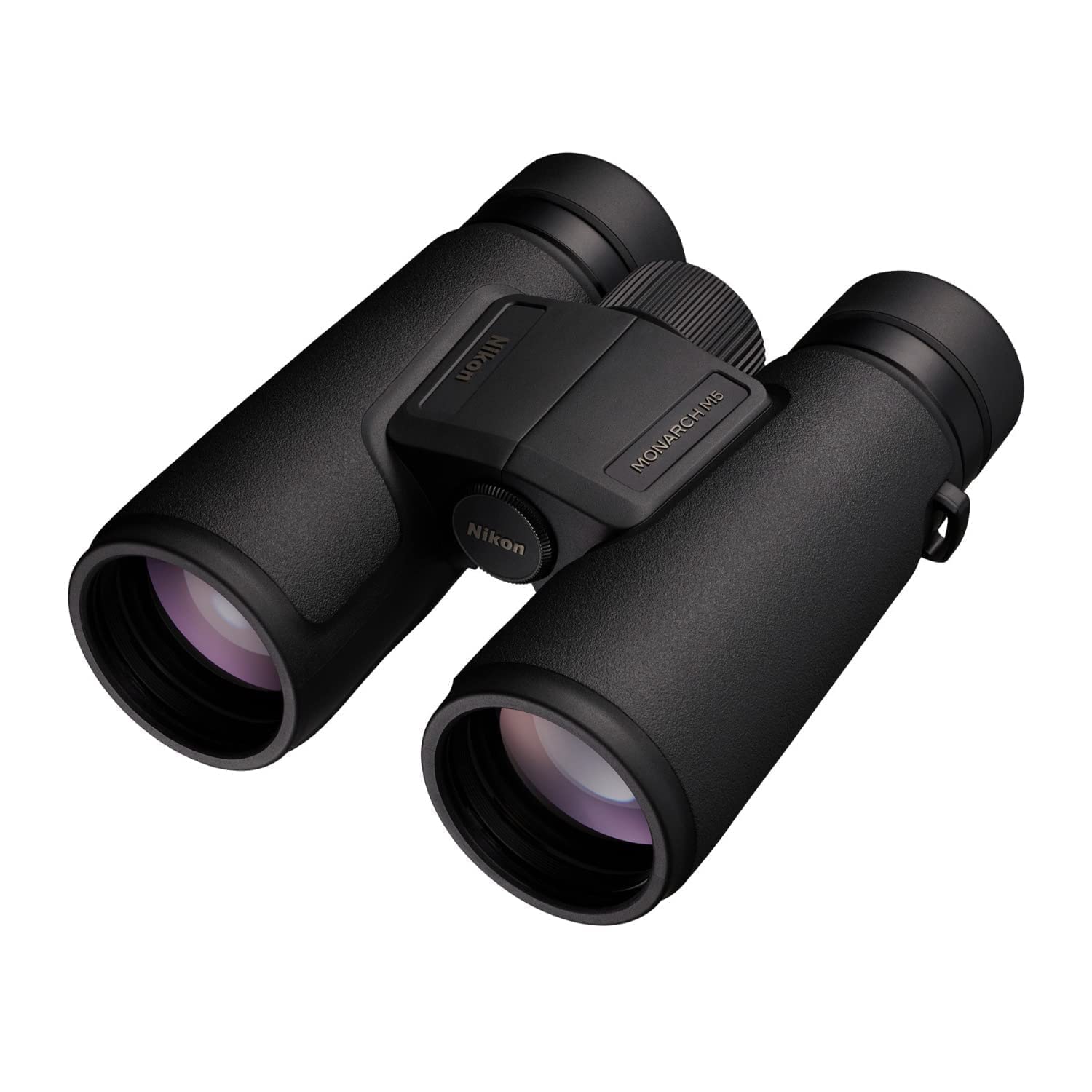
The Nikon Monarch M5 10×42 bridges the gap between the Monarch 7’s wide-field design and a more affordable ED-glass package. With 10x magnification and a 293-foot field of view, this model is built for birders who need to resolve fine details on distant birds—perfect for open marshland or shorebird viewing. The 18.4mm of eye relief is generous, making long viewing sessions comfortable, especially for those who wear glasses.
The dielectric high-reflective prism coatings ensure excellent light transmission, producing bright, natural colors even in shaded forest or overcast conditions. The ED glass effectively cuts color fringing, and the close-focus distance of 8.2 feet allows for surprising detail on nearby subjects—useful for checking a bird’s eye-ring or bill markings. The housing is nitrogen-purged, waterproof, and fogproof, with a rugged rubber armor that provides a secure hold in wet conditions.
The eyepiece cap fits loosely on some units, which is a minor but annoying design flaw. Overall, the Monarch M5 offers optical performance that punches above its price bracket, making it a serious option for the birder who wants reach without sacrificing clarity.
Why we love it
- ED glass eliminates color fringing for sharp detail
- Long 18.4mm eye relief is excellent for eyeglass wearers
- Close-focus distance of 8.2 feet adds versatility
Good to know
- Eyepiece cap is loose and may fall off easily
- 10x magnification narrows the field of view compared to 8x models
3. ZEISS Terra ED 10×42 Binocular
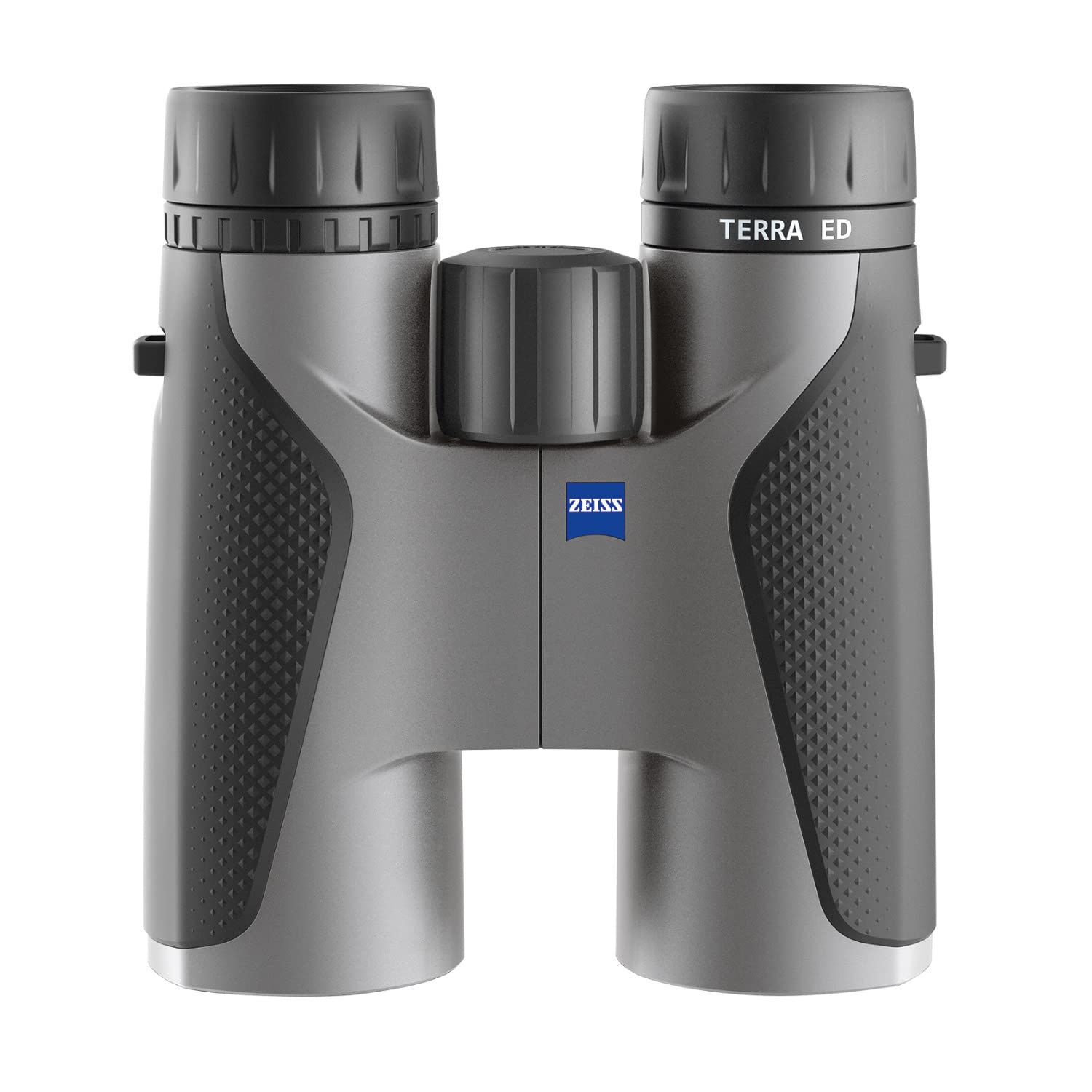
The ZEISS Terra ED 10×42 brings the legendary Carl Zeiss optical pedigree to a more accessible price tier without sacrificing core performance. The 10×42 configuration delivers 88% light transmission through its Schmidt-Pechan ED glass, which is phase-corrected and features a hydrophobic multi-coating that repels water and dirt. This ensures clear, high-contrast images even during wet weather—a common scenario for dedicated birders.
The fiberglass-reinforced polycarbonate housing is lightweight yet nearly indestructible, and the large focus wheel offers a fast, precise throw that your index finger naturally finds. With 18mm of eye relief and a 60-degree apparent field of view, the viewing experience is immersive and comfortable, even during extended scanning sessions. The hydrophobic coating is a standout feature—water beads up and rolls off the lenses, maintaining clarity in drizzle or fog.
While the Terra ED sits at a premium price point, it competes directly with models costing hundreds more. The build quality and optical performance justify the investment for serious birders who need a rugged, high-performing tool that works in harsh weather without hesitation.
Why we love it
- ZEISS hydrophobic coating maintains clarity in wet weather
- 88% light transmission delivers bright, high-contrast images
- Fast-focus wheel is intuitive and precise
Good to know
- Premium price may be too high for casual birders
- 10x magnification has a narrower field than 8x alternatives
4. Vortex Diamondback HD 10×42 Binocular

The Vortex Diamondback HD 10×42 is a workhorse of the mid-range birding market, known for its robust build and the industry’s best warranty: unlimited, unconditional, and fully transferable. The 10x magnification and 42mm objectives are paired with select HD glass elements that cut chromatic aberration, while the fully multi-coated lenses and dielectric prism coatings boost brightness and color accuracy.
Argon purging and O-ring seals provide waterproof and fogproof performance that exceeds standard nitrogen purging—argon is a larger molecule that retains pressure longer. The Armortek coating protects the external lenses from scratches, oil, and dirt, which is invaluable during fieldwork where wiping lenses on a dusty shirt is inevitable. The rubber armor provides a non-slip grip even in rain, and the included GlassPak harness distributes weight comfortably for all-day carry.
The diamondback HD has a 330-foot field of view at 1000 yards, which is standard for a 10×42. The focus wheel is smooth but can feel slightly stiff on some units. For birders who value a worry-free ownership experience and reliable optical performance, this is a safe choice that will last a lifetime.
Why we love it
- Unconditional lifetime warranty provides complete peace of mind
- Argon purging offers superior fogproof performance
- Armortek coating protects lenses from scratches and grime
Good to know
- Focus wheel may feel slightly stiff out of the box
- Heavier than some 10×42 competitors
5. Celestron Nature DX ED 8×42 Binocular

The Celestron Nature DX ED 8×42 is one of the most affordable ways to get Extra-Low Dispersion glass in a birding binocular. ED glass virtually eliminates the purple or green fringing that plagues lower-cost optics, giving you sharp, true-to-color images that help distinguish subtle plumage details between similar species. The 8×42 format yields a 5.25mm exit pupil, which is ideal for the variable light conditions of dawn and dusk birding.
The BaK-4 prisms are phase-coated to preserve contrast and brightness, and the fully multi-coated lenses maximize light transmission. The rubber-armored polycarbonate housing is lightweight, and the binocular is nitrogen-purged for waterproof and fogproof performance. A built-in tripod adapter thread allows you to mount it for shake-free viewing during long sessions, though the adapter is sold separately.
The focus wheel is smooth, and the twist-up eyecups offer 17.8mm of eye relief, which accommodates most eyeglass wearers. The included carrying case, rainguard, and neck strap are functional but basic. For the birder who wants ED glass performance without a premium price tag, this is the entry point.
Why we love it
- ED glass at a price point that undercuts most competitors
- Phase-coated BaK-4 prisms deliver bright, high-contrast views
- 5.25mm exit pupil is excellent for low-light conditions
Good to know
- Tripod adapter not included in the package
- Accessories are basic compared to higher-end models
6. Vortex Crossfire HD 8×42 Binocular

The Vortex Crossfire HD 8×42 is the entry point into the Vortex HD lineup, offering select ED glass elements that cut chromatic aberration while maintaining the brand’s legendary unlimited warranty. The 8×42 configuration provides a solid balance of brightness and stability, with a 390-foot field of view that makes tracking birds through brush intuitive. The fully multi-coated lenses and roof prism design enhance light transmission without adding bulk.
Nitrogen purging and O-ring seals ensure the binocular is both waterproof and fogproof, while the rubber armor provides a secure, non-slip hold. At 14mm of eye relief, it works for most eyeglass wearers, though those with thicker frames may find it slightly less forgiving. The binocular is tripod adaptable, which is useful for extended spotting sessions.
The weight is moderate—some users note it feels slightly heavy for its size. The included GlassPak case is a nice touch for carrying comfort. For birders who want HD-quality optics at a mid-range price with a warranty that covers any damage, the Crossfire HD 8×42 is a dependable choice.
Why we love it
- HD glass elements reduce chromatic aberration effectively
- Vortex unlimited lifetime warranty offers risk-free ownership
- 390-foot field of view is good for 8×42 binoculars
Good to know
- Eye relief is shorter than some competitors at 14mm
- Weight is on the heavier side for its class
7. Timorn HD 8×42 Binocular Kit

The Timorn HD 8×42 is a budget-friendly all-in-one kit that includes a smartphone adapter and a compact tripod, making it an attractive option for birders who want to document their sightings. The 8×42 configuration delivers a wide 430-foot field of view, which is excellent for scanning tree canopies. The fully multi-coated green film coating and BaK-4 roof prisms produce surprisingly bright, clear images for the price point.
The binocular is nitrogen-purged and waterproof up to 1 meter for 30 minutes, so it can handle light rain without issue. The twist-up eyecups provide 15mm of eye relief, which works for most users. The ergonomic rubber-armored body offers a comfortable grip, and the center focus wheel is smooth, though the diopter adjustment ring can be accidentally bumped during use.
The included smartphone adapter is a clear differentiator—it allows quick digiscoping for sharing field sightings on social media. The tripod is small and basic but functional. For the birder on a strict budget who wants a complete starter package, this kit provides excellent value and a wide field of view.
- Very wide 430-foot field of view for the price
- Smartphone adapter and tripod included for digiscoping
- Waterproof and fogproof performance at a low price
Good to know
- Diopter adjustment ring can be accidentally bumped during focusing
- Build quality does not match premium competitors
8. Bushnell H2O Xtreme 10×42 Binocular

The Bushnell H2O Xtreme 10×42 is purpose-built for wet environments, featuring IPX7 waterproofing and nitrogen purging that prevents internal fogging. The 10×42 configuration offers 340-foot field of view, and the BaK-4 prisms combined with fully multi-coated glass surfaces deliver clear, bright images that hold up well against glare from water. The rugged rubber design includes soft grips that provide excellent traction even in wet hands.
This model has been a reliable choice for coastal birding, kayak-based observation, and rainy-day field trips. The 17mm of eye relief is good for eyeglass wearers, and the center focus wheel is smooth and well-damped. The included carrying case, strap, and lens covers are functional but basic. Note that the H2O Xtreme does not have a tripod adapter socket.
Some users report that the focus wheel feels slightly looser than premium models, but for the price, the optics and build quality are solid. For the birder who frequently faces rain, fog, or spray, this is a reliable, budget-friendly pick that prioritizes weather sealing above all else.
Why we love it
- IPX7 waterproofing provides confidence in wet conditions
- BaK-4 prisms and multi-coated lenses deliver clear images
- Rugged rubber grip works well in rain
Good to know
- No tripod adapter socket for stable long sessions
- Focus wheel feels slightly looser than premium models
9. Nocs Provisions Standard Issue 10×25 Binocular

The Nocs Provisions Standard Issue 10×25 is a compact, pocketable binocular designed for birders who prioritize portability above all else. Weighing just 11.85 ounces, it fits easily into a purse or jacket pocket, making it perfect for spontaneous birding trips or as a backup pair. Despite the small 25mm objective lenses, the fully multi-coated optics and BaK-4 prisms produce a bright, crisp image with a 315-foot field of view at 1000 yards.
The IPX7 waterproof rating is notable for a binocular this small, allowing submersion up to 3 feet for 30 minutes. The rubber wave-grip design provides a secure hold, and the twist-up eyecups offer three positions that accommodate eyeglass wearers and naked-eye users alike. The Nocs “No-Matter-What” lifetime warranty adds significant value for a compact model.
The 10mm eye relief is tight for some eyeglass wearers, and the 10×25 format inherently produces a dimmer image in low light compared to a 42mm objective. This is not a dawn/dusk binocular—it is a mid-day field companion. For the birder who wants a lightweight, durable, and stylish backup optic, this is a solid choice.
Why we love it
- Extremely lightweight and pocketable at 11.85 oz
- IPX7 waterproof rating is excellent for a compact binocular
- Lifetime warranty adds peace of mind
Good to know
- 10mm eye relief may be tight for some eyeglass wearers
- Small 25mm objectives limit low-light performance
FAQ
What does phase-coating on roof prism binoculars do for birding?
Why do many birders prefer 8×42 over 10×42 binoculars?
How often should I service or maintenance a birding binocular?
Final Thoughts: The Verdict
For most gardeners, the binoculars for bird watching winner is the Nikon Monarch 7 8×42 because its massive field of view and ED glass make tracking and identifying birds effortless in the dense habitats where most birding happens. If you want a binocular you can mount for steady long-range observation, grab the Vortex Crossfire HD 8×42. And for waterproof, pocket-ready convenience, nothing beats the Nocs Provisions Standard Issue 10×25.