
You’ve felt that moment—a blur of feathers, a split second of focus lost to trembling hands. The right pair of binoculars with a camera can freeze that instant, but only if the optics match the mission. Today I’m here to help you cut through the noise and find the binoculars that will turn your birding sessions into vivid, frame-worthy memories.
I’m Mo Mahin — the founder and writer behind Furric. I’ve spent countless hours analyzing market trends, comparing veterinary-grade safety standards (yes, optics for wildlife viewing demand the same precision), and sifting through real birding community feedback to separate marketing hype from genuine performance.
Whether you’re chasing warblers in dawn mist or scanning a marsh at dusk, you need glass that delivers sharpness, brightness, and durability. That’s exactly what this guide to the best binoculars with camera for bird watching delivers, built from real owner experiences and technical specs that matter in the field.
How To Choose The Best Binoculars With Camera For Bird Watching
Selecting the right optics for birding isn’t just about magnification numbers—it’s about matching glass quality, stabilization, and durability to your specific viewing habits. Whether you’re a backyard birder or a backcountry explorer, these factors will guide your decision.
Magnification vs. Stability
Higher magnification (10x and above) reveals more detail but amplifies hand shake. Image stabilization (IS) systems like those from Canon, Kite, and Sig Sauer let you hold steady without a tripod, making 12x–16x practical for long sessions. For most birders, 8x to 10x without IS is a solid sweet spot—balanced between reach and handhold-ability.
Glass Quality & Coatings
Extra-low dispersion (ED) glass cuts chromatic aberration (color fringing), while dielectric prism coatings boost light transmission for brighter, truer colors. Fully multi-coated lenses maximize low-light performance. Look for these features if you bird at dawn, dusk, or in dense canopy.
Build & Ergonomics
Waterproof (IPX7) and fogproof (nitrogen-purged) construction is non-negotiable for outdoor use. Weight matters: 25 ounces or less is comfortable for a day hike. Twist-up eyecups and generous eye relief (17mm+) are essential for eyeglass wearers.
Quick Comparison
On smaller screens, swipe sideways to see the full table.
| Model | Type | Best For | Key Feature | Amazon |
|---|---|---|---|---|
| Nikon Monarch M5 8×42 | Roof Prism | All-Around Birding | ED Glass & Dielectric Coatings | Amazon |
| Athlon Midas UHD 8×42 | Roof Prism | Value & Clarity | ED Glass & Argon Purging | Amazon |
| Celestron Regal ED 8×42 | Roof Prism | Close Focus & Detail | Flat-Field ED Optics | Amazon |
| Steiner Marine 7×50 | Porro Prism | Marine & Low Light | Sports Auto-Focus & Float | Amazon |
| Nikon Monarch M7 10×42 | Roof Prism | Long-Range Detail | Wide FOV & ED Glass | Amazon |
| Canon 10×30 IS II | Image Stabilization | Travel & Stability | Vari-Angle Prism IS | Amazon |
| Leupold BX-4 Range HD 10×42 | Rangefinder | Hunting & Range | TBR/W Ballistic Tech | Amazon |
| Kite APC Stabilized 12×42 | Image Stabilization | Long-Range Birding | Military-Grade IS | Amazon |
| SIG ZULU6 HDX 16×42 | Image Stabilization | Extreme Long-Range | OIS Scan & Target Modes | Amazon |
| Kite APC Stabilized 16×42 | Image Stabilization | High-Power Birding | 2° & 3° Correction | Amazon |
| SIG ZULU6 HDX PRO 14×50 | Image Stabilization | Ultimate Low-Light | HDX PRO & OmniScan OIS | Amazon |
In-Depth Reviews
1. Nikon Monarch M5 8×42

The Nikon Monarch M5 delivers that rare combination of professional-grade optics and a price that doesn’t make you wince. With ED glass and dielectric-coated prisms, these 8x42s produce bright, crisp images even in low-light conditions—exactly what you need when birds are active at dawn and dusk. The wide field of view makes tracking moving warblers or swallows feel effortless, and the smooth central focus knob lets you dial in sharpness in a split second.
Durability is equally impressive: the nitrogen-purped housing is fully waterproof and fogproof, while the rubber armor provides a secure grip in wet weather. Long eye relief (19.5mm) means eyeglass wearers can see the entire field without squinting. The close focus of 8.2 feet also allows you to inspect butterflies or flowers when you’re not birding. A Safari reviewer noted these worked flawlessly for spotting rhinos at a distance, proving their versatility.
If you want one pair of binoculars that does everything well—from backyard feeders to far-off raptors—the Monarch M5 is the benchmark. It’s the pair I recommend to friends who ask for a single, no-compromise purchase. The build quality and warranty support from Nikon only sweeten the deal.
Why we love it
- Excellent clarity and color fidelity with ED glass
- Generous field of view for tracking birds in flight
- Rugged, waterproof build with comfortable ergonomics
Good to know
- Slightly larger and heavier than some competitors (but still carry-friendly)
- Focus wheel sits close to the face—takes a day to get used to
2. Athlon Optics Midas UHD 8×42

The Athlon Midas UHD is the darling of budget-conscious birders who refuse to compromise on image quality. Armed with ED glass and ESP dielectric coatings that reflect over 99% of light, these binoculars deliver clarity that rivals models costing three times as much. One delighted owner compared them directly to a friend’s Leicas and found the Athlon held its own—a testament to its exceptional value.
Argon purging ensures waterproofing and thermal stability, making them reliable in extreme weather shifts. The field of view at 1000 yards is 144 meters, plenty wide for scanning treetops. At 17.2mm eye relief, they work well with glasses, though some users note hand fatigue after prolonged standing use. The included case and strap are decent but not premium; you may want to upgrade the strap for all-day comfort.
For the birder who wants top-tier optics without the top-tier price tag, the Midas UHD is a no-brainer. It earned a Wirecutter recommendation for good reason—the image is sharp, bright, and color-accurate right out of the box. Just be prepared for a slightly heavier feel than some mid-range competitors.
Why we love it
- Remarkable clarity for the price—nears + performance
- Argon purging gives superior thermal stability
- Lightweight enough for day hikes
Good to know
- Can cause hand fatigue after 5–10 minutes of standing use
- Strap and case are serviceable but not premium
3. Celestron Regal ED 8×42
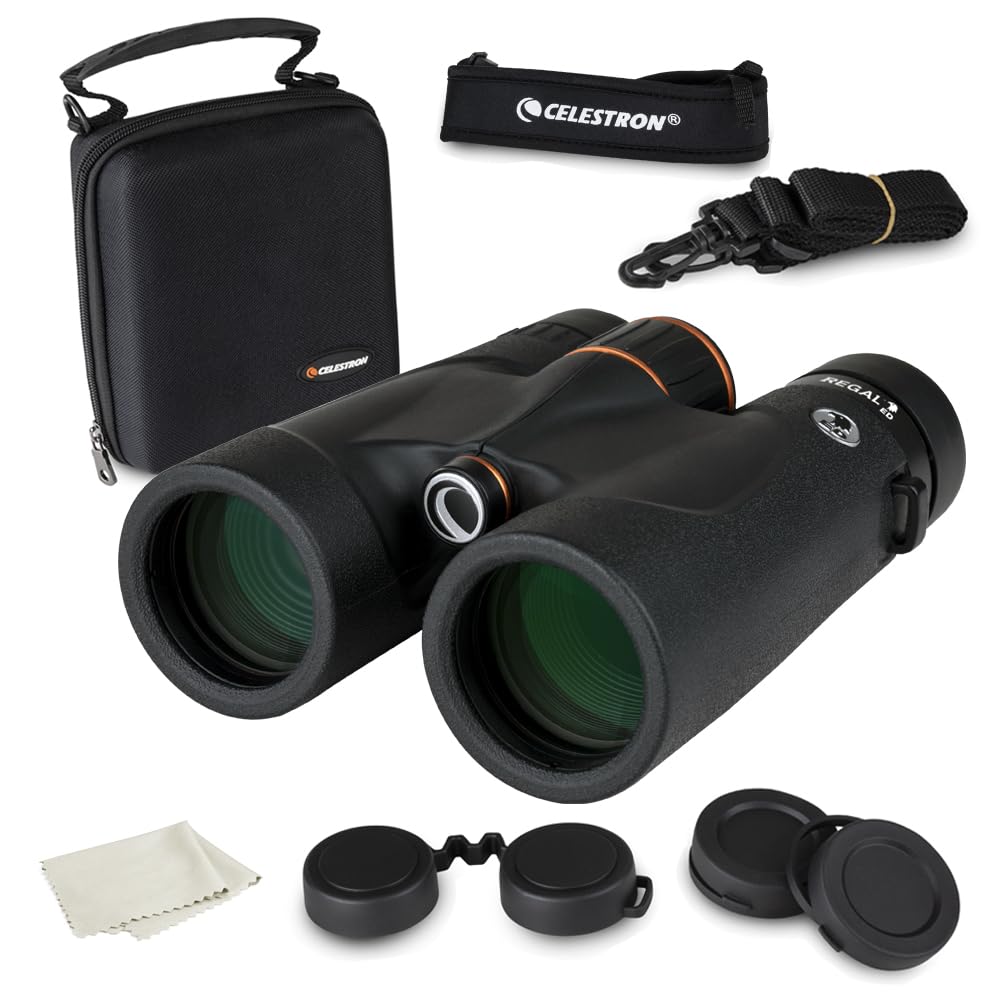
Celestron’s Regal ED 8×42 is a hidden gem for birders who also enjoy observing butterflies, flowers, and other nearby wonders. Its flat-field optical design delivers edge-to-edge sharpness—no more blurry edges when scanning across a tree line. The ED glass virtually eliminates chromatic aberration, so you see true colors without that purple fringe that cheap optics produce.
One standout feature is the 4.9-foot close focus, allowing you to examine a hummingbird at arm’s length or the details on a dragonfly’s wing. The fully multi-coated BaK-4 prisms maximize light transmission, giving bright images even in overcast conditions. The metal twist-up eyecups offer a solid feel, and the included tripod mount adapter is great for digiscoping (attaching a camera). Backed by Celestron’s lifetime warranty, this is a trustworthy companion for years of field work.
While not as famous as Nikon or Vortex, the Regal ED holds its own in optical performance and build quality. It’s an excellent choice for the birder who values versatility and wants a binocular that can also serve as a close-range nature viewer.
Why we love it
- Exceptional close focus of 4.9 feet
- Flat-field optics give sharpness edge-to-edge
- Lifetime warranty from a trusted brand
Good to know
- Not as widely reviewed in the birding community yet
- Weight is moderate—about 23 ounces
4. Steiner Marine 7×50

Steiner’s 7×50 Marine binoculars are built for the harshest environments—think salt spray, rocking boats, and foggy coastlines. Their Sports Auto-Focus system means you set the diopter once and everything from 20 yards to infinity stays sharp without refocusing. This is a game-changer when you’re bouncing on a boat and need to spot a puffin between waves.
The 50mm objective lenses gather massive amounts of light, making these outstanding for low-light conditions like dusk or deep shade. The floating prism system absorbs shock, so they survive drops that would shatter lesser binoculars. One reviewer who used them on an Alaska cruise praised the clarity and ruggedness, though they noted the weight is substantial—around 36 ounces. The included neck strap is thin; consider a harness for all-day comfort.
If your birding takes you onto the water or into environments where durability is paramount, the Steiner 7×50 is a tank. The trade-off is weight and a narrower field of view compared to 8x42s, but for marine and low-light use, these are hard to beat.
Why we love it
- Auto-focus keeps everything sharp from 20 yards to infinity
- Excellent light gathering for dawn/dusk birding
- Shockproof floating prism system
Good to know
- Heavy—best for stationary or marine use
- Narrower field of view than 8x42s
5. Nikon Monarch M7 10×42

The Nikon Monarch M7 10×42 is the choice for birders who need to identify distant raptors or shorebirds without sacrificing image quality. Its ED glass and dielectric-coated prisms deliver razor-sharp images even at high magnification, and the wide field of view (357 feet at 1000 yards) is remarkable for a 10x binocular. Low-light performance is superb, making it ideal for the magic hours of dawn and dusk.
The build is typical Nikon quality—waterproof, fogproof, and rubber-armored. The twist-up click-stop eyecups and long eye relief (16.5mm) accommodate glasses comfortably. Oil- and water-repellent coatings on the lenses make cleaning easy after a morning in the mist. Several big-game hunters swear by these for spotting elk at long range, and the same clarity benefits birders scanning across a lake.
The Monarch M7 sits in a sweet spot between mid-range and premium. It’s lighter than many 10x42s, and the ergonomics are excellent for extended viewing. If you can stretch your budget slightly, this is the 10x pair that will keep you satisfied for years.
Why we love it
- Wide field of view for a 10x binocular
- Excellent low-light performance with true colors
- Durable, weather-resistant build
Good to know
- Slight chromatic aberration at extreme angles (correctable)
- Price is higher than the M5 series
6. Canon 10×30 IS II
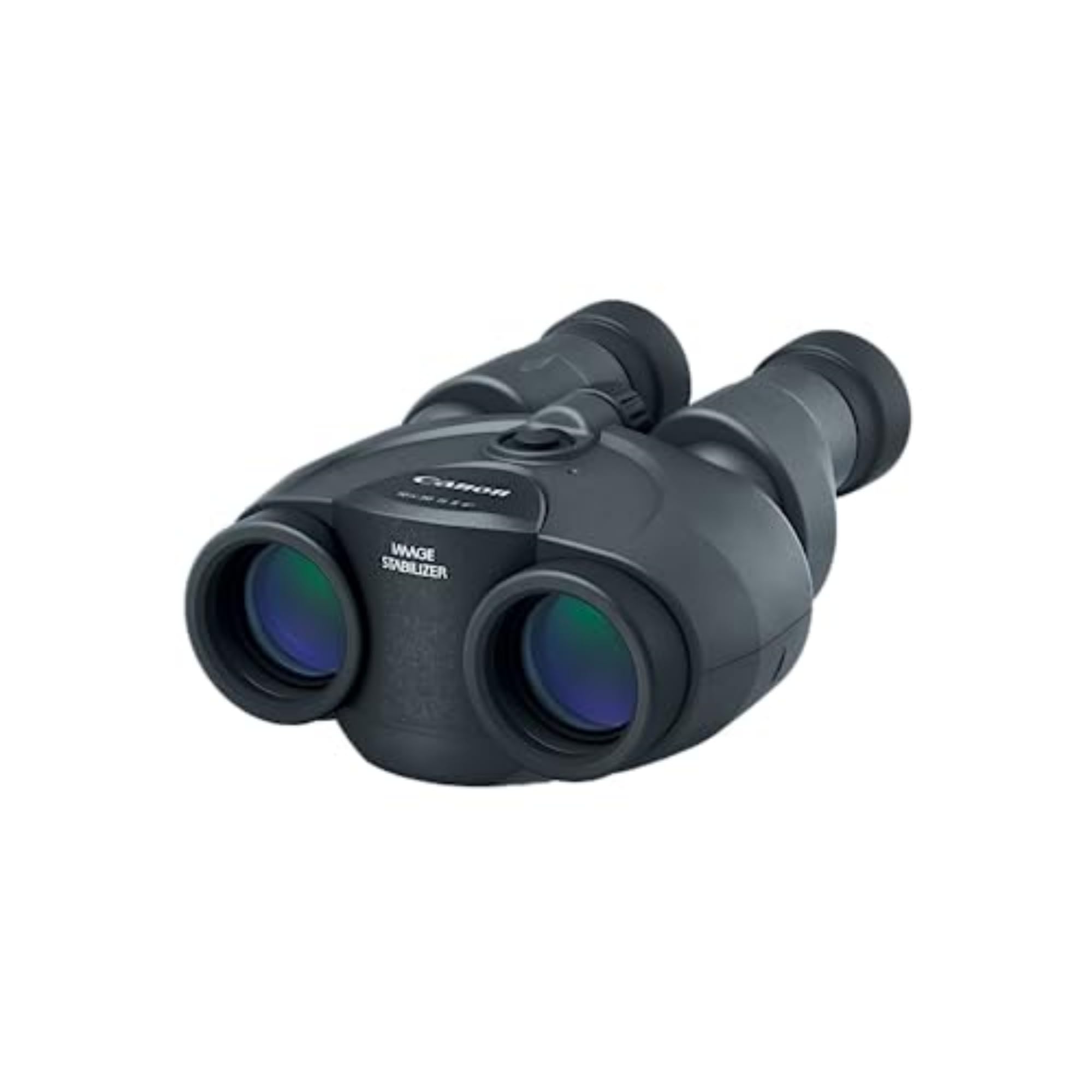
The Canon 10×30 IS II is a travel-sized miracle for birders with shaky hands. Its vari-angle prism image stabilization cancels out hand tremors, allowing you to hold steady at 10x magnification without a tripod. The effect is almost magical—suddenly you can see feather detail on a distant bird that was just a blur before. It’s also surprisingly effective for astronomy, revealing Jupiter’s moons with ease.
Compact and lightweight (just over 20 ounces), these binoculars slip into a daypack easily. The Porro II prisms and Super Spectra coatings deliver bright, sharp images with excellent contrast. One quirk: there are no objective lens caps, so you’ll want to buy third-party spring-loaded caps (39mm) to protect the glass. The IS button needs to be held down, which can be a minor annoyance, but the battery life is solid.
For birders who struggle with hand stability or want the highest possible handheld clarity, the Canon 10×30 IS II is a revelation. It’s not waterproof, so keep it dry, but the performance per ounce is unmatched. A must-try for anyone who’s ever been frustrated by wobble.
Why we love it
- Excellent image stabilization eliminates hand shake
- Compact and lightweight for travel
- Great for both birding and stargazing
Good to know
- No objective lens caps included
- Not waterproof—avoid heavy rain
7. Leupold BX-4 Range HD 10×42

The Leupold BX-4 Range HD is a specialized tool that combines high-end optics with a built-in laser rangefinder. While primarily aimed at hunters, it’s invaluable for birders who need to know exact distances—whether for digiscoping or recording field notes. The red OLED display provides clear range readings even in bright sunlight, and the True Ballistic Range/Wind technology accounts for uphill/downhill angles.
The optical quality is outstanding: Leupold’s Elite Optical System delivers excellent light transmission and glare reduction. The Guard-ion lens coating repels water, dirt, and smudges. Build quality is rock-solid, fully waterproof and fogproof, backed by Leupold’s lifetime guarantee. One happy owner simply said, “Awesome visual quality.” The downside is the weight and bulk—it’s a full-size 10×42 with electronics inside.
If you often find yourself needing to measure distances for photography or location mapping, the BX-4 Range HD is a brilliant all-in-one solution. For pure birding without ranging, you can find similar optics for less, but the integration is seamless.
Why we love it
- Integrated laser rangefinder with ballistic compensation
- Superb optical clarity and light transmission
- Lifetime warranty from a top optics brand
Good to know
- Heavier than standard binoculars due to electronics
- Overkill if you don’t need rangefinding
8. Kite Optics APC Stabilized 12×42
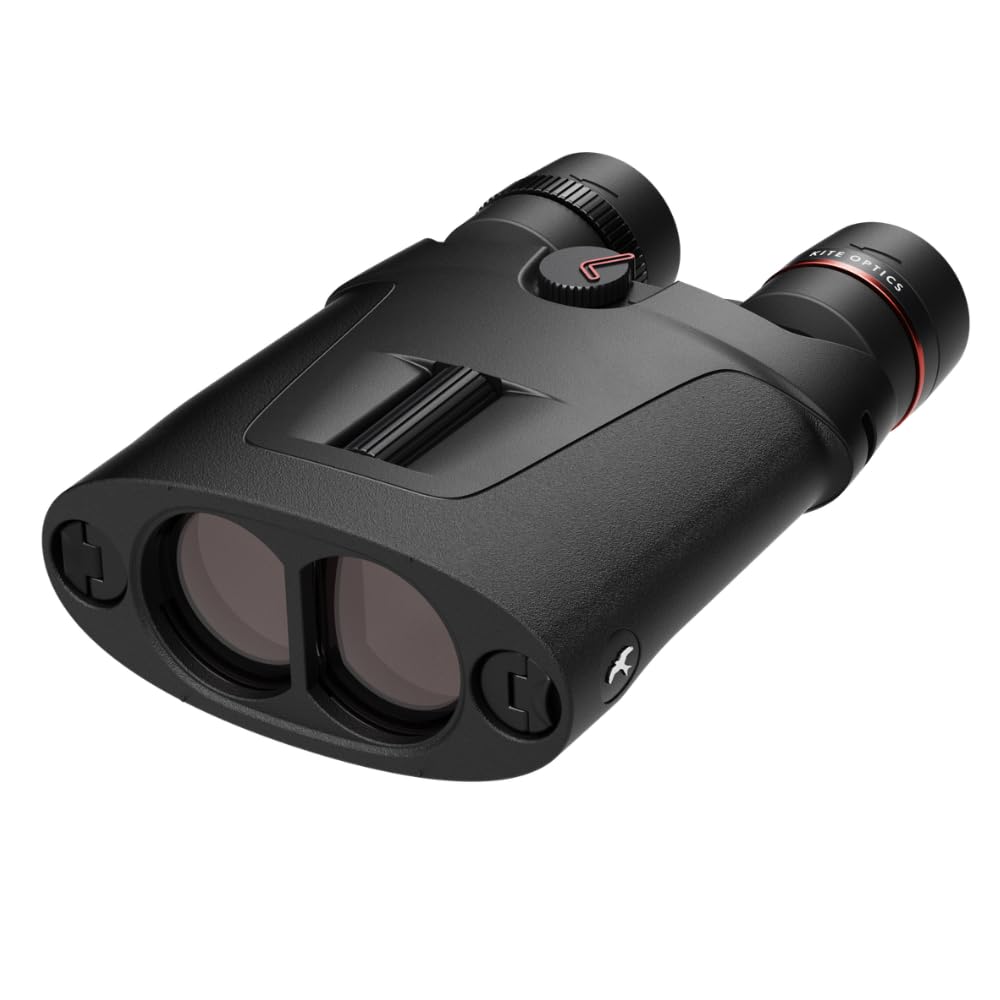
The Kite Optics APC Stabilized 12×42 sets a new standard for handheld high-magnification birding. Its military-grade image stabilization cancels out every tremor, letting you lock onto a distant woodpecker at 12x as if it were mounted on a tripod. The 42mm roof prisms deliver bright, sharp images even in overcast conditions, and the stabilization system works effortlessly—just press the button and watch the shake disappear.
Waterproof to IPX7 standards and nitrogen-filled, these binoculars are built for real-world abuse: rain, humidity, even accidental submersion won’t faze them. The ergonomics are excellent—the focus knob is large and smooth, and the eye relief (17mm) accommodates glasses. One reviewer who compared them to Canon’s 12×42 L IS found the Kite lighter, sharper, and more comfortable for extended use. The stabilization is position-sensitive, so you don’t have to hold a button while focusing—a huge plus.
For birders who want the best handheld stability available at a high magnification, the Kite 12×42 is a game-changer. It’s expensive, but the clarity and steadiness make it worth every cent for serious enthusiasts. The only catch is the price and the fact that it’s a niche product—you’ll know if you need it.
Why we love it
- Outstanding image stabilization at 12x magnification
- Waterproof, fogproof, and ruggedly built
- Comfortable ergonomics for all-day use
Good to know
- Premium price point
- Heavier than non-stabilized 8x42s
9. SIG SAUER ZULU6 HDX OIS 16×42

The SIG ZULU6 HDX 16×42 is a serious piece of kit for birders who need extreme magnification without a tripod. Its Optical Image Stabilization (OIS) offers two modes: Scan mode for general observation, and Target mode that increases stabilization up to 50% for locking onto a specific bird. The HDX glass lenses produce enhanced light transmission and resolution, delivering crisp images even at 16x.
The build is tough—IPX7 waterproof, fogproof, and rubber-armored. One reviewer who compared multiple IS binoculars (Fuji, Vixen, Canon) called the SIG the winner in cost, weight, size, and stabilization quality. The 16×42 format is surprisingly portable, though you’ll need steady hands even with IS—the field of view is narrower than lower magnifications. The battery life is solid, and the ergonomics improve with use as you get used to the grip.
If you need to count feather details on a bird 300 yards away, the ZULU6 16×42 delivers. It’s a specialized tool for the dedicated birder who demands the utmost reach. The price is high, but the performance is undeniable.
Why we love it
- Two stabilization modes for different scenarios
- Excellent optical clarity with HDX glass
- Rugged, weatherproof construction
Good to know
- Narrow field of view at 16x
- Expensive—only for serious long-range birding
10. Kite Optics APC Stabilized 16×42
The Kite APC Stabilized 16×42 takes everything great about the 12x version and adds more reach. With 16x magnification and a 2° to 3° stabilization correction angle, you can spot a deer’s antler points at 150 yards or identify a distant hawk’s plumage. The stabilization is so effective that one reviewer counted points on a buck at over 150 yards while standing in the wind—something impossible with standard binoculars.
The optics are superb: clear, bright, and detailed, with excellent color reproduction. The auto-on/off power-saving feature shuts down when pointed downward, extending battery life to around 60 hours on two AA batteries. The unit is lightweight for a 16×42 (just over 25 ounces) and well-balanced. The only ergonomic complaint is that the IPD adjustment can be stiff and the central focus dial is a bit small, but for medium-to-large hands it’s manageable.
For the ultimate handheld reach, the Kite 16×42 is a top contender. It’s ideal for open-country birding, coastal observation, or any scenario where you need to see far without a tripod. The price is steep, but the performance justifies it for the dedicated enthusiast.
Why we love it
- Incredible stabilization at 16x magnification
- Long battery life with auto shut-off
- Compact and lightweight for the power
Good to know
- Stiff IPD adjustment
- Small focus dial may feel awkward at first
11. SIG SAUER ZULU6 HDX PRO 14×50

The SIG ZULU6 HDX PRO 14×50 is the pinnacle of image-stabilized binoculars for birding. With 14x magnification and massive 50mm objective lenses, it gathers enough light for brilliant views even in deep twilight. The OmniScan OIS technology uses a digital accelerometer to adjust stabilization dynamically—the slower you move, the more stabilization is applied, giving you a rock-solid image whether scanning a hillside or locked onto a single bird.
The HDX PRO lens system significantly reduces glare and improves color accuracy, delivering an unmatched “twilight factor” for low-light birding. The build is rugged—IPX7 waterproof, fogproof, with a thermoplastic frame and rubber armor. Battery life is up to 40 hours from two AA batteries. One reviewer who owned Fuji and Canon stabilized binoculars called these the best, noting they are lighter and stabilize more quickly. The only complaint is the lens covers: the eyepiece covers fall off easily, and there are no front covers for the 50mm objectives.
If you want the absolute best stabilized binoculars for bird watching and can afford the investment, the ZULU6 HDX PRO 14×50 is the endgame. It combines the reach of a spotting scope with the convenience of handheld binoculars, and the image quality is breathtaking. Just be prepared to find aftermarket lens covers.
Why we love it
- Dynamic OmniScan stabilization adapts to movement
- Excellent low-light performance with 50mm objectives
- Lighter and faster stabilization than competitors
Good to know
- Lens covers are poor—eyepiece covers fall off, no front covers
- Very expensive—only for serious enthusiasts
Safety & Care Tips
Keep Lenses Clean
Use a blower brush to remove dust before wiping with a microfiber cloth. Avoid using your shirt or paper towels, which can scratch coatings. For smudges, use a lens cleaning solution designed for optics. Always store binoculars with lens caps on to prevent debris buildup.
Store Properly
Keep your binoculars in a padded case when not in use, away from extreme heat or humidity. If they get wet, dry them with a soft cloth and let them air out before storing. For image-stabilized models, remove batteries if storing long-term to prevent leakage.
Check Alignment
If you notice double images or eye strain, your binoculars may be out of collimation. This can happen after a drop. Many brands offer free collimation services under warranty. Send them in for professional adjustment rather than trying to fix it yourself.
Protect from Impact
Use a neck strap or harness to prevent drops. For high-magnification or stabilized binoculars, consider a tripod adapter for extended viewing sessions. A harness distributes weight better than a neck strap, reducing fatigue during long birding walks.
FAQ
What does ED glass mean in binoculars?
Do I need image stabilization for bird watching?
What is the best magnification for birding?
Can I use binoculars for stargazing too?
How do I clean the lenses without damaging coatings?
Final Thoughts: The Verdict
For most birders, the best binoculars with camera for bird watching winner is the Nikon Monarch M5 8×42 because it offers outstanding optical quality, waterproof build, and a versatile 8×42 format at a reasonable price. If you want image stabilization for shaky hands, grab the Canon 10×30 IS II for its compact portability and effective stabilization. And for ultimate long-range viewing without a tripod, nothing beats the SIG ZULU6 HDX PRO 14×50—the most advanced stabilized binoculars on the market.