
You buy a thistle feeder expecting a flurry of goldfinches, only to watch it become a hangout for mourning doves and house sparrows that muscle out the little guys. The problem isn’t the birds — it’s the perch spacing and port design that let any bird with a 3-inch foot span treat your finch feeder like a buffet.
I’m Mo Mahin — the founder and writer behind Furric. I’ve spent years comparing the port diameters, perch lengths, and seed-tube drainage of finch-specific feeders, analyzing the engineering choices that either attract finches or drive them away, and aggregating owner feedback to find what actually works.
Whether you feed Nyjer, thistle, or a finch blend, this guide breaks down the mesh-metal tubes, plastic thistle cylinders, and anti-squirrel cages that make up the best bird feeder for finches your yard will ever host.
How To Choose The Best Bird Feeder For Finches
Finches — goldfinches, house finches, purple finches, pine siskins, and redpolls — are cling-feeding acrobats. They prefer to hang upside-down or sideways on mesh or small perches while they pick tiny Nyjer or thistle seeds. A feeder designed for cardinals or jays is functionally useless to them. Here is what matters.
Perch Length: 1.5 Inches or Less
Perch length is the hard cutoff. A perch over 2 inches allows doves, grackles, and starlings to land and feed, draining your seed and scaring off finches. The best finch feeders use perches measuring 1.5 inches or shorter — just enough for a finch’s small feet, too short for a dove’s grip.
Port Diameter and Seed Type Compatibility
Nyjer seed is tiny and oil-rich. Port openings designed for sunflower seed will let Nyjer spill right through. Ports between 3/16 inch and 1/4 inch hold Nyjer in place while allowing finches to extract a seed at a time. Metal ports with slotted openings are ideal — plastic ports can warp and widen over time, turning your finch feeder into a waste dispenser.
Drainage and Moisture Management
Nyjer seed goes rancid quickly when wet. The feeder must have drainage holes at the base (at least four) and some form of rain cover over the ports. Mesh metal tubes naturally shed water better than solid plastic tubes because air circulates through the mesh, drying seeds between rain events. A feeder with a solid bottom that traps water is a finch feeder that grows mold.
Material Durability: Metal vs. Plastic
Squirrels chew through plastic tube feeders in one season. Powder-coated metal tops, bases, and perches resist both squirrel damage and rust. Polycarbonate plastic tubes (not acrylic) are UV-stable and harder than soda-bottle plastic, but any plastic tube will eventually cloud, crack, or be gnawed. All-metal construction is the most durable choice for year-round outdoor hanging.
Capacity and Refill Frequency
A flock of goldfinches can empty a 1-pound feeder in two days during peak summer. Larger capacities (2 pounds and up) reduce refill frequency but add weight. If you hang your feeder from a thin branch, a heavy 2.5-pound capacity feeder may swing excessively, making finches nervous. Match capacity to your hanger’s strength and your refill tolerance.
Hanger Stability
Finches are nervous feeders. A feeder that swings wildly in the wind or wobbles every time a bird lands will drive them away. Fixed metal hooks or reinforced S-hooks provide far more stability than flimsy plastic string or thin wire hangers. Some feeders include a metal ring that attaches tightly to the hanger, minimizing wind-swing.
Quick Comparison
On smaller screens, swipe sideways to see the full table.
| Model | Category | Best For | Key Spec | Amazon |
|---|---|---|---|---|
| Gtongoko 2.5 lb Mesh | Mesh Tube | High-volume finch feeding | 2.5 lb capacity, all-metal, 6″ tray | Amazon |
| Kingsyard Metal Tube | Metal Thistle | Dove-proof perch control | 1.5″ perches, 6 ports, 2 lb capacity | Amazon |
| iBorn 14-Inch Tube | Metal Port | Wind stability and multi-bird access | 12 ports, 8 perches, fixed metal hook | Amazon |
| Stokes Select Thistle Tube | Polycarbonate Tube | Budget-friendly reliable plastic feeder | 6 ports, roof-top port cover, 1.6 lb | Amazon |
| Woodlink Coppertop Mini | Mini Tube | Small-space or low-traffic feeding | Mini tube, coppertop cap, 1 port | Amazon |
In‑Depth Reviews
1. Gtongoko 2.5 lb Metal Mesh Finch Feeder
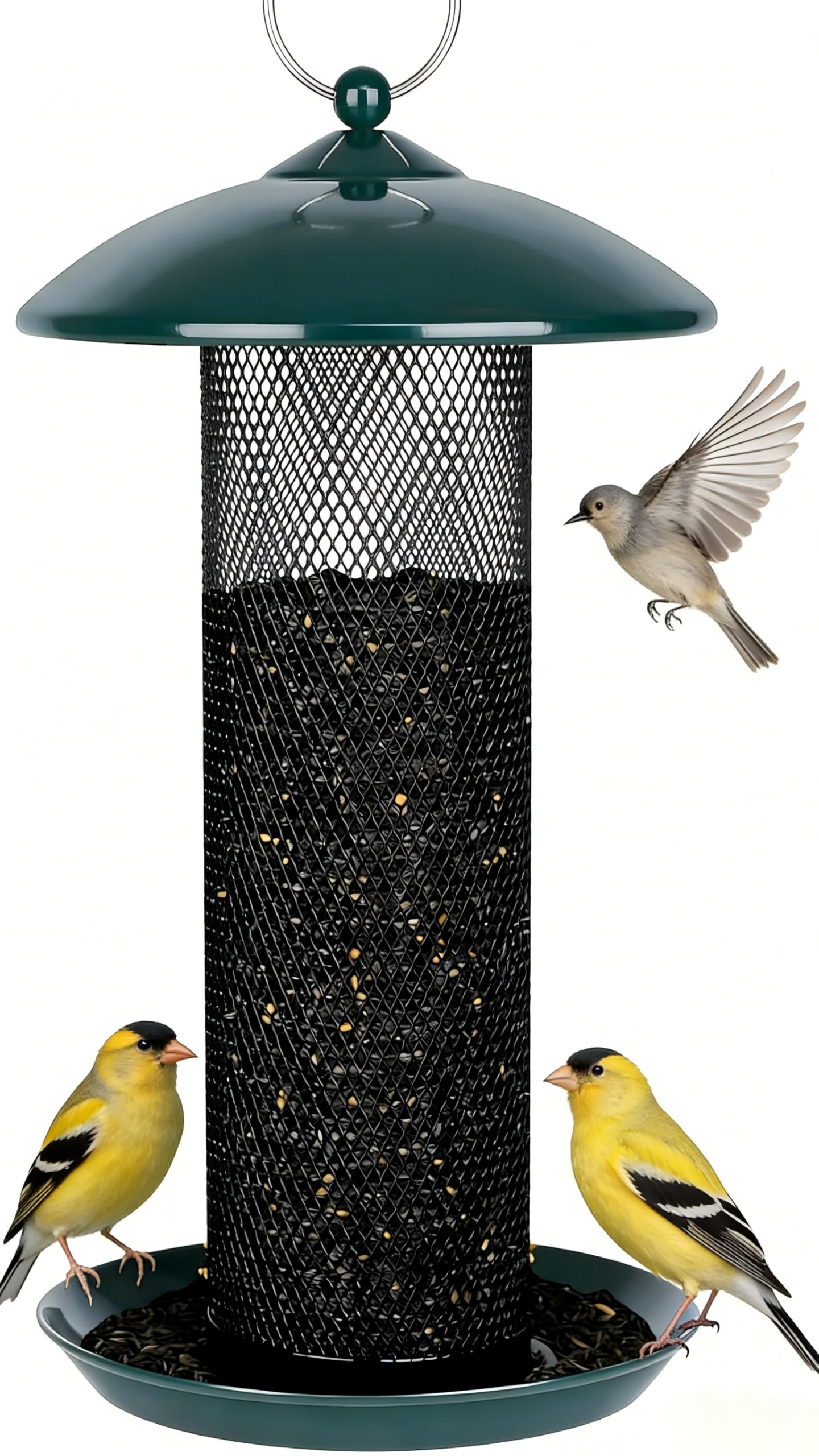
The Gtongoko mesh tube solves the two biggest finch-feeder frustrations at once: capacity and squirrel damage. With a 2.5-pound seed capacity, this feeder can handle a flock of goldfinches for several days without needing a refill. The all-metal construction — no wood or plastic panels — means squirrels can gnaw all day without doing structural damage, and the powder-coated green finish resists rust through rain and snow.
The 6-inch round base tray gives finches a stable landing platform while the mesh surface above lets them cling and feed naturally. Twelve drain holes in the tray prevent water pooling, which is critical for keeping Nyjer seed from turning rancid. The wide-mouth tube opens by twisting off the top or the tray, making refills quick and allowing you to reach inside for a full scrub when cleaning.
This feeder does not have perch-length restricting ports — instead, it relies on the mesh-cling design that naturally favors finch feeding behavior over perching birds. Larger birds find it difficult to balance on the mesh, so you will see primarily goldfinches, siskins, and chickadees. The 360-degree perch capability means more birds can feed simultaneously without crowding.
Why we love it
- 2.5 lb capacity means fewer refills
- Full metal construction resists squirrels
- 12 drain holes keep seed dry and fresh
Good to know
- Mesh design can be slightly harder to clean than a smooth plastic tube
- 6-inch base tray adds weight when fully filled
2. Kingsyard Metal Finch Feeder
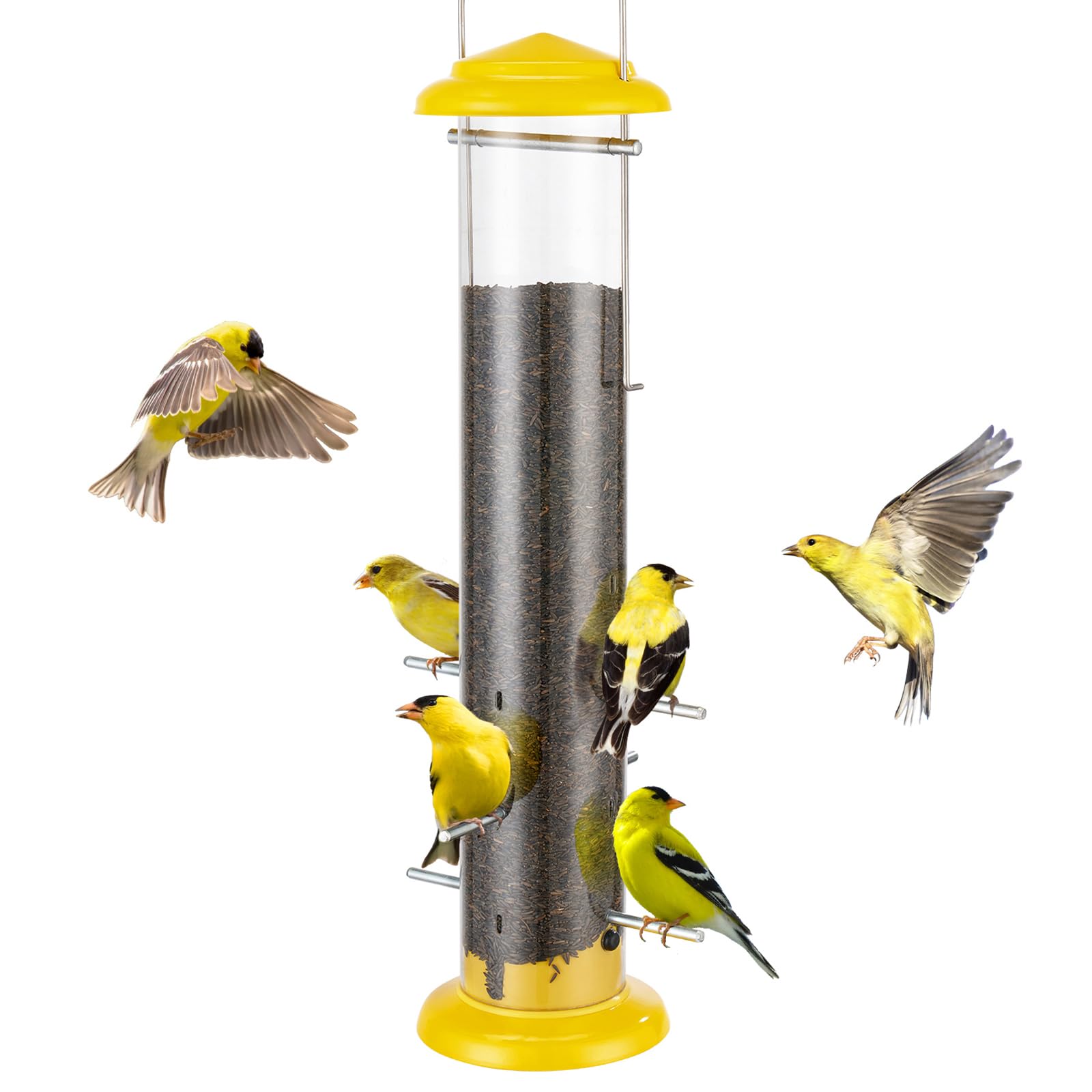
Kingsyard designed this feeder around a single insight: perch length is the on-off switch for finch exclusivity. The 1.5-inch perches are deliberately short — long enough for a goldfinch or house finch to grip comfortably, too short for a mourning dove or grackle to balance. The result is a feeder that actually delivers on the promise of being a finch-only feeding station, even in yards with high dove traffic.
The six feeding ports are enclosed with narrow openings that prevent rainwater from entering the seed compartment, and drainage holes in the base handle any condensation that does form. The metal lid, base, and perches are powder-coated yellow for rust resistance and will withstand squirrel chewing attempts. The clear tube lets you check seed levels without opening the feeder.
Refilling is straightforward: lift the top lid to pour seed in, and when cleaning time comes, press the button to release the removable base. The base comes off completely, giving you access to the interior of the tube for thorough scrubbing. At a 2-pound capacity, it is slightly smaller than the Gtongoko but still holds enough Nyjer for a small flock over several days.
Why we love it
- 1.5-inch perches effectively exclude larger birds
- Press-button removable base simplifies cleaning
- Powder-coated metal resists rust and chewing
Good to know
- Plastic seed tube may cloud over time with UV exposure
- Only six ports may limit feeding during peak flock visits
3. iBorn 14-Inch Metal Finch Feeder
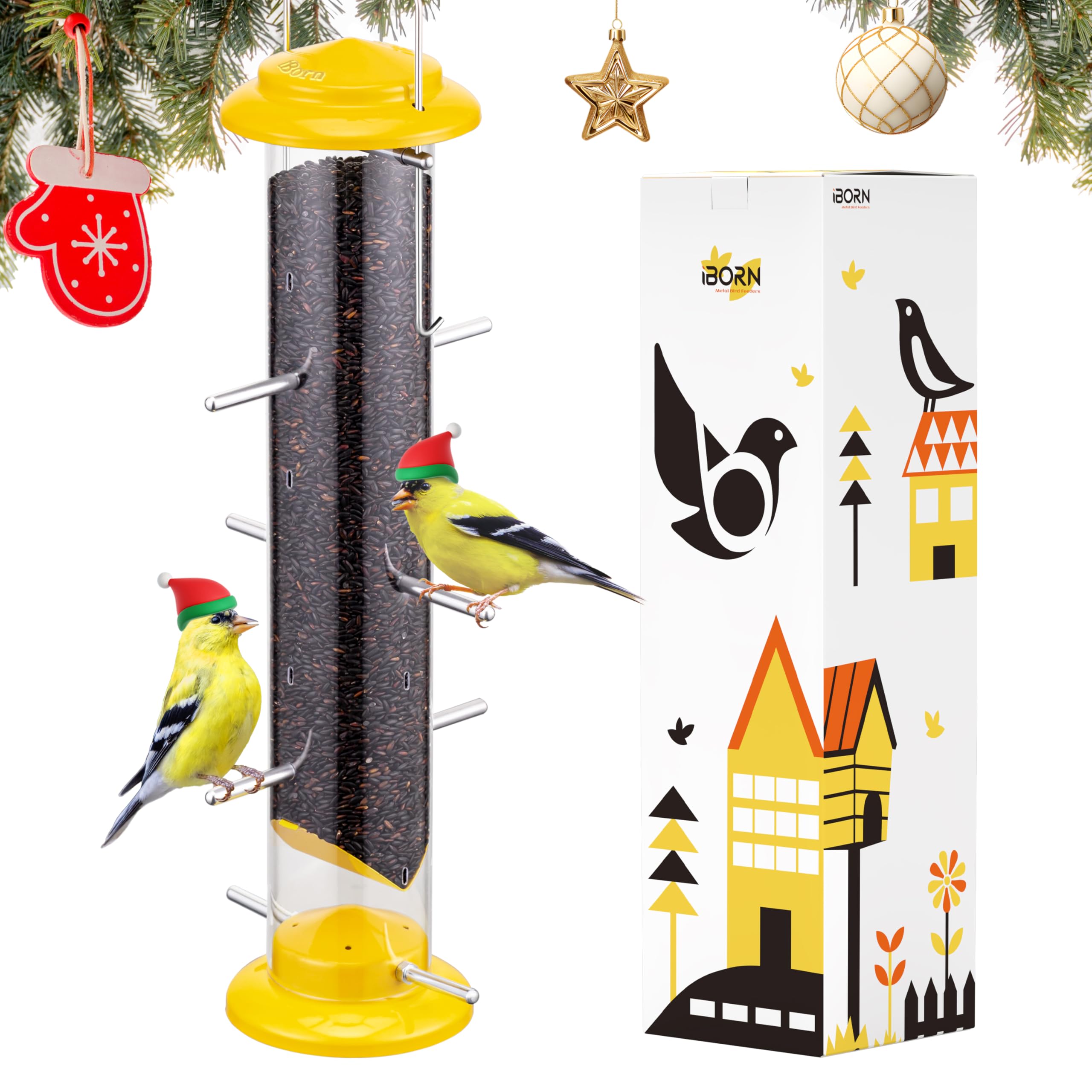
The iBorn 14-inch feeder addresses the stability problem that many finch feeders ignore. Most tube feeders hang from a thin wire or plastic string, which swings wildly in wind and makes finches — already nervous birds — hesitant to land. iBorn uses a reinforced metal hook that fastens tightly to a tree branch or pole hook, significantly reducing swing. The difference is immediate: birds land and feed without the wobble that sends them fluttering away.
With 12 small feeding ports and 8 metal perches, this feeder can accommodate multiple finches simultaneously without conflict. The ports are sized for Nyjer and fine thistle seed, preventing spillage while allowing easy extraction. V-shaped spacers inside the tube prevent seed from settling in dead zones at the bottom, so every seed is accessible. Four drainage holes at the base evacuate any moisture that enters through the ports.
Cleaning is handled through a flip-top lid that opens wide for refilling. The transparent seed compartment lets you monitor levels at a glance. The all-metal construction — top, base, ports, and perches — means this feeder will outlast plastic alternatives, and the yellow powder coating protects against corrosion in humid climates or coastal yards.
Why we love it
- Reinforced metal hook eliminates wind-swing
- 12 ports and 8 perches support flock feeding
- V-shaped spacer prevents seed waste at the bottom
Good to know
- Long 14-inch tube can be awkward to clean without a bottle brush
- Metal hook is fixed — cannot be swapped for a different hanger type
4. Stokes Select Thistle Tube Feeder

Stokes Select is a household name in bird feeding for a reason — they build reliable, no-surprise feeders that work year after year. This thistle tube feeder uses rust-proof polycarbonate material, which is stronger and more UV-stable than standard acrylic or ABS plastic. The bright yellow color stands out visually, making it easy for finches to spot from a distance, which speeds up how quickly new birds discover your feeding station.
The defining feature of this feeder is the roof-top design on each of the six feeding portals. A small overhang above each port sheds rainwater away from the seed opening, preventing moisture from seeping into the tube. For a plastic feeder, this is the most effective rain protection design available — it keeps Nyjer seed dry even during heavy downpours without relying on drainage alone.
The 1.6-pound capacity (1.1 quarts) is modest but adequate for a pair of finches or a small flock that visits daily. The feeder is easy to clean and refill through the top opening. Stokes Select also donates a portion of all proceeds to bird habitat and conservation, so buying this feeder supports the birds you are feeding in a broader ecological sense.
Why we love it
- Roof-top port covers keep seed dry in rain
- Rust-proof polycarbonate is UV-stable and durable
- Proceeds support bird habitat conservation
Good to know
- Plastic tube is vulnerable to squirrel chewing over time
- 1.6 lb capacity requires more frequent refills with a large flock
5. Woodlink Coppertop Thistle Mini Tube Feeder

The Woodlink Coppertop Mini Tube Feeder takes a minimalist approach to finch feeding. It is a small, single-port tube feeder with a copper-finished top cap that adds a decorative element to your yard while serving a functional role — the metal cap reflects heat and protects the seed compartment from direct sun exposure, which helps keep Nyjer seed from overheating and turning rancid.
The mini size is ideal for small spaces — balconies, patios, or yards where a full-size tube feels visually heavy. It also works well as a secondary feeder placed away from your main station, giving shy finches a less competitive feeding spot. The single port limits feeding to one bird at a time, but for a yard that sees a single goldfinch pair or occasional siskin visits, that is exactly enough.
Cleaning is simple because the tube is small and the top comes off easily. The coppertop material does not rust, and the tube body is made of durable plastic that resists cracking. This feeder is best used with straight Nyjer seed, as finch blends with larger seeds can jam the single port. It is the quietest, most unobtrusive option on this list — and that is exactly the point for birders who want a subtle feeder that blends into the garden.
Why we love it
- Coppertop cap protects seed from heat and sun
- Compact size fits small yards and balconies
- Simple single-port design is easy to clean
Good to know
- Single port limits feeding to one bird at a time
- Small capacity means daily refills with regular visitation
FAQ
Why do finches ignore my feeder even though it has Nyjer seed?
Can I use a finch feeder for mixed seed or only Nyjer?
How do I keep squirrels off my finch feeder?
Should I clean a finch feeder differently than a regular bird feeder?
Final Thoughts: The Verdict
For most birders, the bird feeder for finches winner is the Gtongoko 2.5 lb Metal Mesh Feeder because its all-metal construction, high capacity, and mesh-cling design create a finch-exclusive feeding station that requires minimal intervention. If you specifically want perch-controlled feeding that blocks doves entirely, grab the Kingsyard Metal Feeder with its 1.5-inch perches. And for wind-prone locations or yards where stability is the limiting factor, nothing beats the iBorn 14-Inch Feeder with its reinforced fixed hook.