
Few things ruin a morning coffee on the porch faster than watching a fat squirrel empty a freshly filled feeder while the songbirds wait in the trees. The right feeder solves that, and it also keeps seed dry, resists UV damage, and attracts the species you actually want to see — chickadees, cardinals, finches, nuthatches — instead of pigeons and grackles.
I’m Mo Mahin — the founder and writer behind Furric. I spend my time studying comparative product data, analyzing real owner feedback across tens of thousands of reviews, and mapping material specifications to real-world backyard conditions to find what truly works.
After breaking down dozens of models by build material, capacity, drainage design, and squirrel-defense mechanism, these five models stand apart as best bird feeders for different priorities — from budget twin-packs to premium caged platforms that lock out pests.
How To Choose The Best Bird Feeders
A feeder isn’t just a bucket with a hole. The wrong design wastes seed, attracts pests, and rots in two seasons. Focus on these four specs to match your yard’s bird population and weather pattern.
Material Durability vs Weight
Powder-coated metal resists squirrel chewing and UV fading but adds weight that can stress a thin branch. Recycled plastic board (often HDPE-based) won’t crack in sub-zero temps and is lighter, but some finishes fade after two years of direct sun. ABS plastic is the cheapest option and works fine if the feeder is under an eave, but it becomes brittle in sustained freezing weather. Consider your local winter severity before choosing.
Capacity and Seed Flow
A 2–3 lb capacity is standard for a hanging tube or hopper feeder. Larger 5 lb platforms reduce refill frequency but expose more seed to moisture if drainage is poor. Look for mesh or perforated base panels that let air circulate — slotted trays without drain holes trap humidity and grow mold within a week of wet weather.
Squirrel Deterrence Level
Weight-sensitive perches close feeding ports when a heavy mammal lands — these work 80% of the time if the perch mechanism is calibrated to a songbird’s mass. Metal cages with 1.5-inch openings physically block squirrels and large bullies like grackles and pigeons, but also exclude cardinals and blue jays because their bodies are too wide. Choose the type based on which birds you want to keep versus which you want to block.
Cleaning Access
Feeders with removable tops or base panels let you scrub inside corners where old seed hulls and droppings accumulate. A feeder that requires a screwdriver to disassemble will never be cleaned often enough. Every serious buyer should prioritize a model that opens wide enough to fit a bottle brush or sponge.
Quick Comparison
On smaller screens, swipe sideways to see the full table.
| Model | Category | Best For | Key Spec | Amazon |
|---|---|---|---|---|
| Kingsyard Caged Platform | Premium Cage | Small songbird sanctuary | 1.5″ mesh openings | Amazon |
| Kingsyard Platform with Dome | Platform / Dome | Mixed-species feeding | 11″ hexagon tray | Amazon |
| Dreamdrawer Squirrel Proof | Weight-Activated | Heavy squirrel pressure | Weight-sensitive perch | Amazon |
| Kingsyard Dual-Use Mesh | All-Metal Tube | Multi-seed variety | 3 lb capacity, 360° mesh | Amazon |
| Jealoeur 2-Pack Plastic | Budget Twin-Pack | New birders / multiple spots | 2.2 lb each, 360° perch | Amazon |
In‑Depth Reviews
1. Kingsyard Caged Platform Feeder
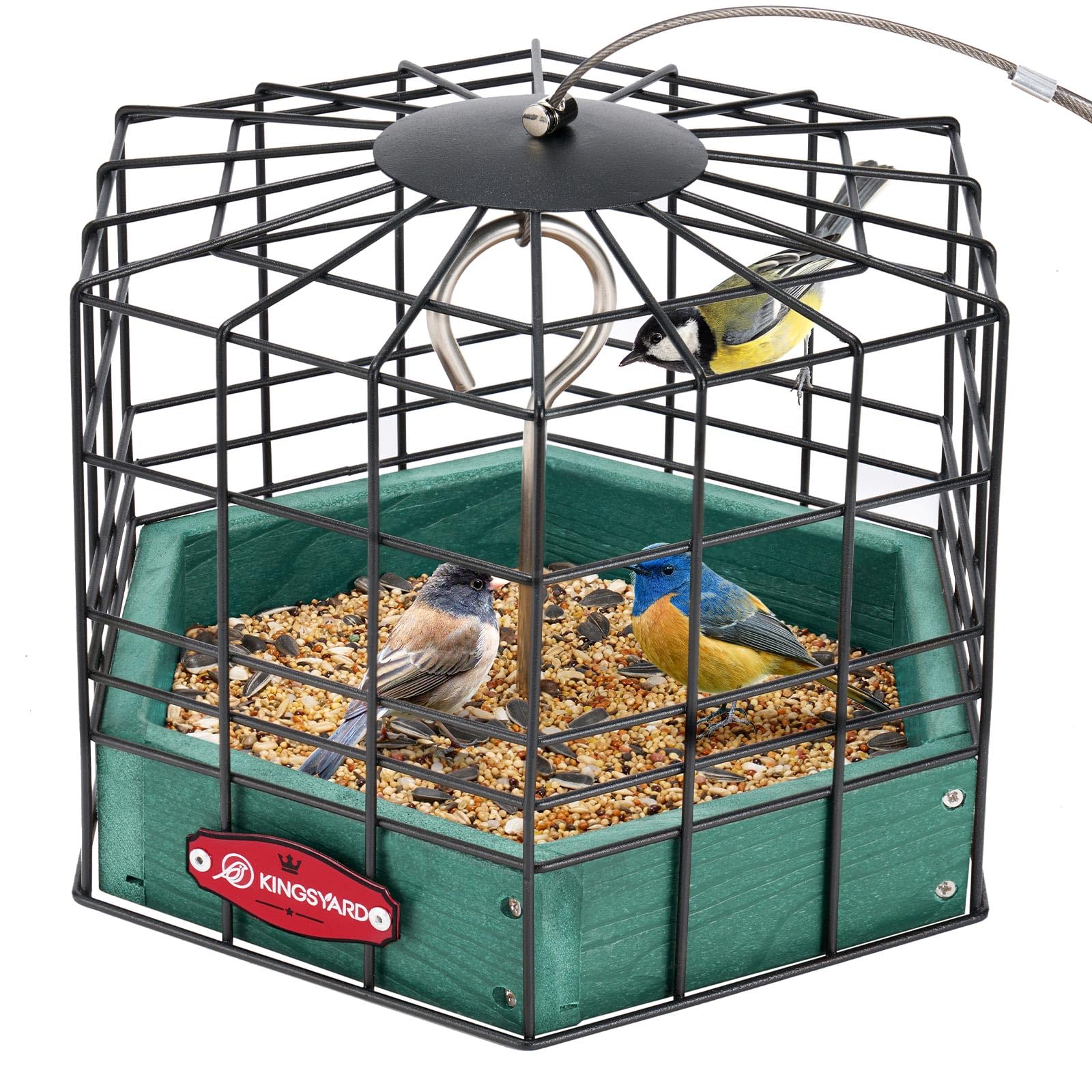
This cage design solves the single biggest feeding problem — seed theft by grey squirrels, pigeons, doves, and starlings. The metal mesh openings measure exactly 1.5 x 1.5 inches, which allows titmice, chickadees, nuthatches, and house finches to enter but physically blocks any bird or rodent with a wider chest. Owners consistently report that squirrels cannot chew through the powder-coated metal cage, and larger pest birds simply ignore it because they cannot fit.
The platform is built from recycled plastic boards over a metal seed tray with a mesh bottom that provides excellent ventilation. Seed stays dry even after several days of rain, and the drainage design prevents the mold growth that plagues solid-bottom feeders. The 5 lb capacity is generous — you refill less often than with standard tube feeders. Several buyers noted that larger species like cardinals and blue jays cannot enter, so this feeder is strictly for small songbirds.
The only functional drawback reported is that the cage is somewhat finicky to refill — you either pour seed through the top slot or unscrew the base, which takes a moment. One owner had the eye bolt unscrew under squirrel chewing, but a quick tightening resolved it. Overall, this is the most targeted pest-blocking feeder available for small backyard songbirds.
Why we love it
- Physically blocks squirrels, doves, pigeons, and starlings
- Mesh base keeps seed dry and mold-free
- Recycled plastic construction resists UV and freezing temps
Good to know
- Excludes cardinals and blue jays due to 1.5-inch openings
- Refilling requires slight disassembly of base or cage
2. Kingsyard Platform Feeder with Adjustable Dome

If you want cardinals, blue jays, finches, and chickadees all feeding from the same station, this platform design is the most accommodating. The 11-inch hexagon tray holds roughly 2.5 lb of seed, and the dome slides up and down the hanging cable to adjust access — lower it to 3 inches to block grackles and larger birds, or raise it fully for open access to all species. The dome also rotates, which helps destabilize squirrels that try to jump onto it.
The tray body is made of recycled plastic boards that are significantly tougher than standard wood. Heat and moisture do not warp them, and UV exposure does not cause fading as fast as it does on cheaper plastics. The metal mesh bottom features drainage holes that allow rainwater to fall through rather than pooling on the seed surface. Owners consistently mention that seed stays dry after storms, which drastically cuts down on waste and cleaning frequency.
The main limitation is that the dome, while adjustable, cannot fully deter a determined squirrel if the feeder is hung from a shepherd’s pole without a separate baffle. A few owners also noted that adding seed is slightly awkward when the dome is set low. For pure versatility across species and weather resistance, this is one of the best open-platform feeders available.
Why we love it
- Adjustable dome height controls which birds can access the tray
- Rotating dome destabilizes squirrels before they land
- Recycled plastic boards resist warping and UV damage
Good to know
- Dome set at 3 inches fails to deter grackles completely
- Refilling is slightly tricky when dome is in low position
3. Dreamdrawer Squirrel Proof Feeder
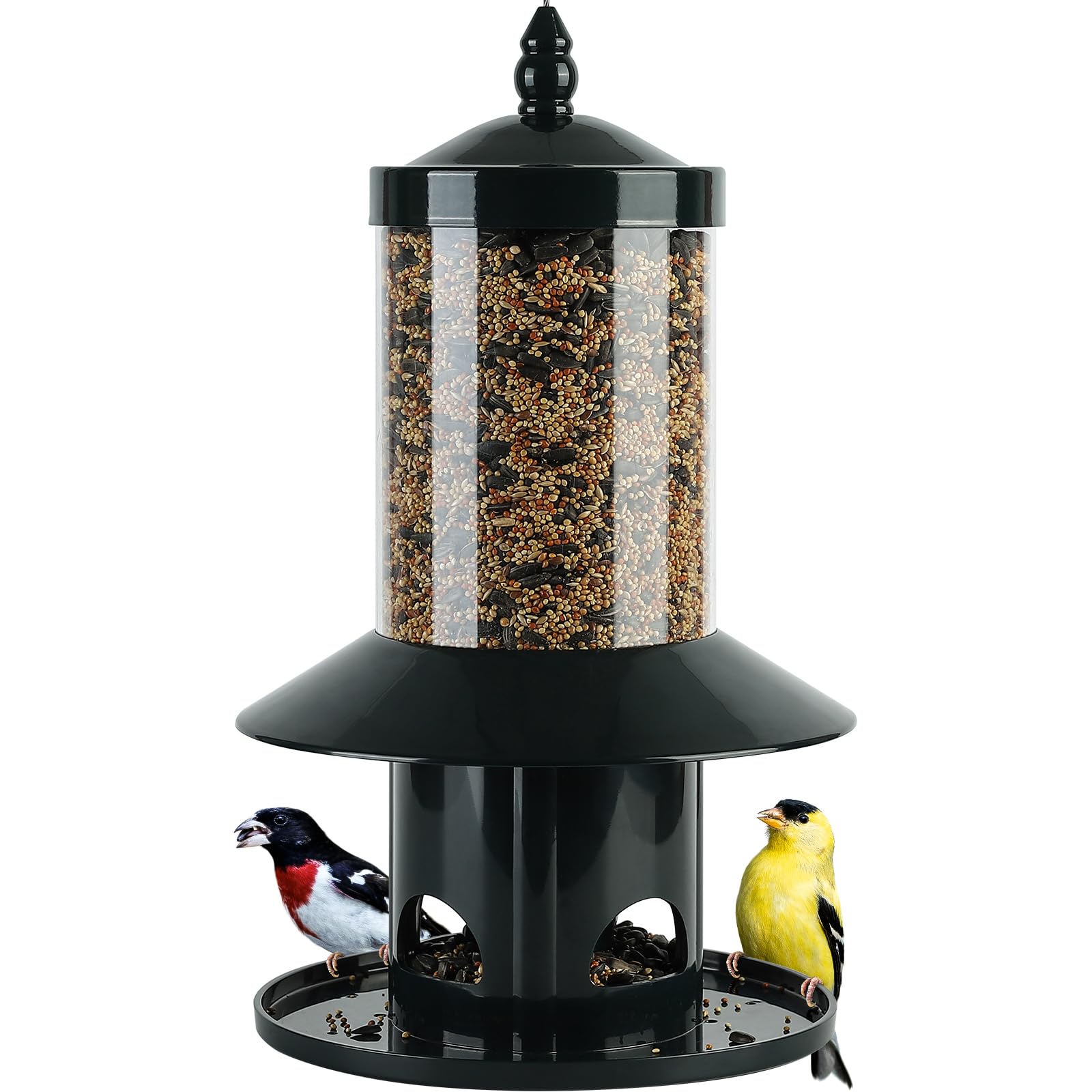
This feeder uses a mechanical weight-sensitive system: when a squirrel or heavy bird lands on the perch, the feeding ports snap shut, blocking access. The mechanism works most of the time — multiple owners confirmed that squirrels could not get seed from the ports — though one reviewer noted that a very persistent squirrel still found a way, so total squirrel proofing is not guaranteed. The body is constructed from ABS plastic and metal, keeping the unit lightweight at under 1 kg.
The 360-degree feeding perch tray allows smaller songbirds like sparrows, nuthatches, and chickadees to feed from any angle, and the rainproof roof keeps the interior seed dry through storms. Owners praised the one-handed refill mechanism — press a button on the roof, slide the top up the steel cable, pour seed, and lock it back in place. This is significantly faster than unscrewing a lid or removing a cage. The 3 lb capacity is standard for a hanging tube feeder.
The primary downside is the feeding area itself — the ports are small, which limits the feeder to smaller songbird species. Larger birds like cardinals cannot perch comfortably. One owner also found the tray design caused some birds to struggle with grip. It is lightweight and weatherproof, but the mechanical mechanism may not satisfy buyers who want a physical barrier against all pests.
Why we love it
- Weight-sensitive perch closes ports when squirrels land
- One-handed refill mechanism is quick and tool-free
- Rainproof roof keeps seed dry through storms
Good to know
- Small feeding ports exclude cardinals and larger birds
- Persistent squirrels may still find a workaround
4. Kingsyard Dual-Use Metal Mesh Feeder
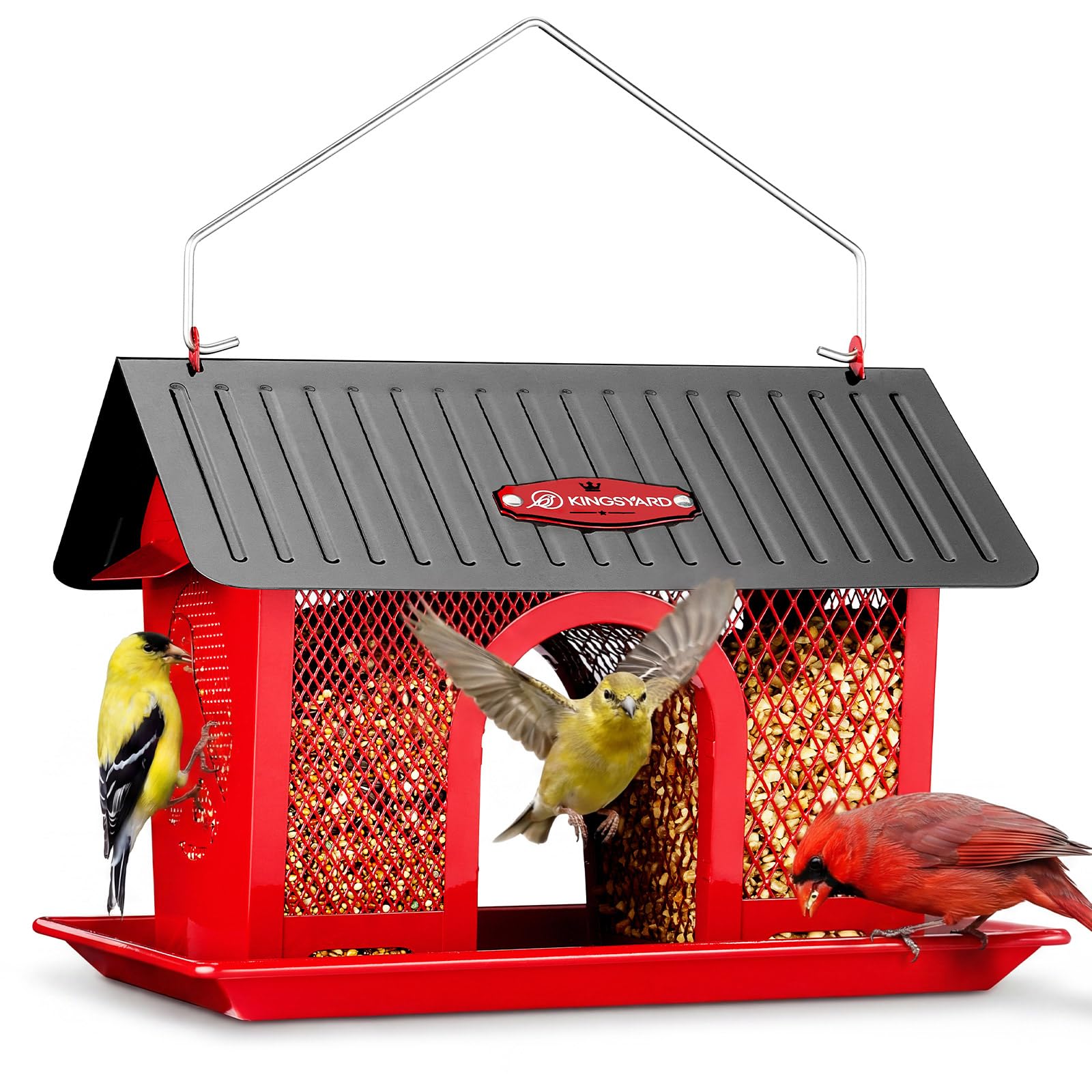
This all-metal feeder uses a clever split-compartment design — one side has fine mesh for thistle or nyjer seed to attract finches, and the other has wider openings for sunflower or blend mixes that appeal to cardinals, chickadees, and sparrows. Birds can feed from the 360-degree mesh surface and also perch on the integrated seed tray, which gives you two feeding styles in one hanging unit. The powder-coated metal body is rust-resistant and chew-proof, which matters if you have squirrels that like to gnaw on plastic.
The 3 lb capacity is solid for a tube feeder. Refilling is straightforward: lift the removable top cover and pour seed directly into each chamber. The wide opening gives full access to the interior for cleaning, which owners consistently note makes it easy to wipe out hull debris between refills. The feeder comes fully assembled — just attach the hanging hook and fill. Multiple reviewers reported it attracted the highest daily activity of all their feeders, likely because the dual compartments serve multiple species simultaneously.
The only real downside is that the top cover must be removed completely for refilling — it does not have a hinge. A few owners also noted that the metal construction makes the unit heavier than plastic equivalents, so it needs a sturdy hook or branch. For durability against chewing, rust, and UV, this is the toughest all-metal tube feeder in this lineup.
Why we love it
- Dual compartments handle thistle and sunflower simultaneously
- Rust-resistant powder-coated metal resists squirrel chewing
- 360-degree mesh and tray offer two feeding styles
Good to know
- Top cover must be fully removed for refilling
- Heavier than plastic feeders; needs a sturdy hanging point
5. Jealoeur 2-Pack Plastic Hanging Feeder
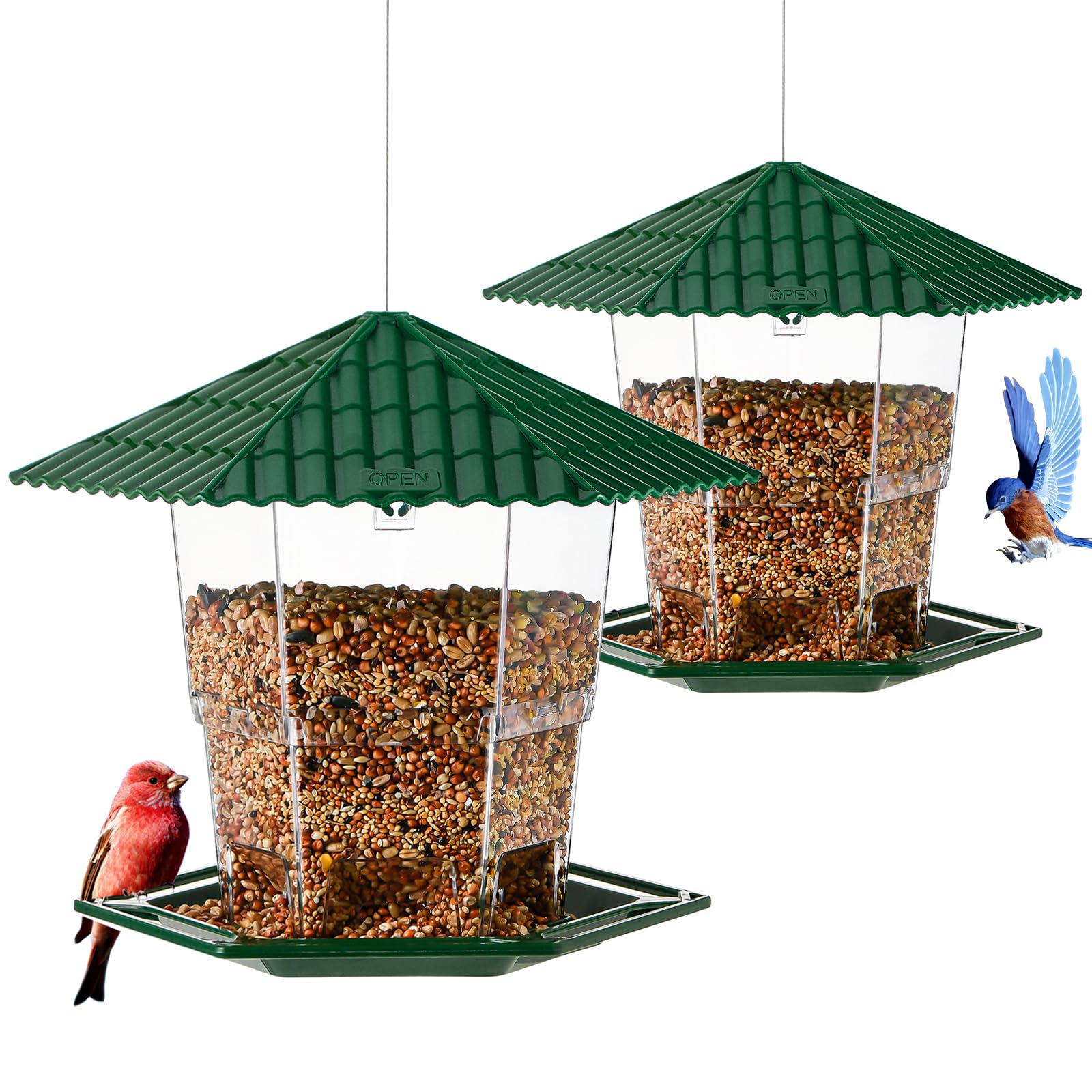
This twin pack is built for someone setting up multiple feeding stations without spending heavily per unit. Each feeder holds 2.2 lb of seed and features a retractable body that expands to increase capacity — the clear plastic reservoir lets you see the seed level at a glance. The hexagonal roof provides basic sun and rain protection, and the seed tray automatically refills from the tube above as birds eat. The green color blends reasonably well into garden foliage.
Owners report that birds prefer this style over tall skinny tube feeders because the 360-degree perch allows them to feed from any side. Chickadees, nuthatches, and cardinals were all observed using the tray. The feeder comes fully assembled and ready to hang, and the top lid flips open for pouring seed. Cleaning is simple because the base can be removed without tools.
The key weakness appears in wet weather. Several reviewers noted that rain collects in the tray, causing seed to become wet and eventually harden or mold. The crevice between the clear reservoir and the base is difficult to scrub when seed residue cakes there. If you live in a region with frequent rain, you will need to bring these feeders under an eave or store them in heavy storms. For dry climates or sheltered hanging spots, this is an excellent value pair.
Why we love it
- Two feeders let you cover multiple yard locations
- Retractable body adjusts capacity as needed
- Birds consistently prefer the 360-degree perch over tall tubes
Good to know
- Rainwater collects in tray and can cause seed to mold
- Crevice between reservoir and base is hard to clean thoroughly
FAQ
What mesh size stops squirrels but lets cardinals feed?
How do I stop seed from molding in a plastic tube feeder?
Can I use a squirrel-proof weight feeder with mixed seed?
Do recycled plastic feeders last longer than wood feeders?
Final Thoughts: The Verdict
For most backyard birders, the best bird feeders winner is the Kingsyard Platform with Adjustable Dome because it accommodates the widest variety of desirable songbirds — cardinals, finches, chickadees, nuthatches — while the rotating dome deters squirrels and its recycled plastic body shrugs off years of sun and rain. If your main problem is squirrels and pest birds stealing seed, grab the Kingsyard Caged Platform Feeder for a physical barrier that only lets small songbirds through. And for birders setting up multiple stations on a budget, nothing beats the Jealoeur 2-Pack for the price-per-feeder value, as long as you hang them in a sheltered spot away from heavy rain.