
The difference between a birdhouse that gets used and one that sits empty often comes down to a single measurement: the entrance hole diameter. Too large, and aggressive sparrows or starlings take over. Too small, and the target species—wrens, chickadees, titmice, nuthatches—simply won’t enter. This guide focuses on houses calibrated for these cavity-nesting small birds, addressing ventilation, drainage, predator defenses, and material longevity so you can pick a structure that shelters successive broods for years.
I’m Mo Mahin — the founder and writer behind Furric. I’ve spent hundreds of hours analyzing birdhouse specifications, studying nesting behavior data from ornithological sources, and cross-referencing owner reports to determine which designs actually win the trust of small birds in real-world garden settings.
Whether you’re mounting a box on a fence post or hanging one from a tree branch, choosing the right model ensures safe roosting and successful fledging. This is your complete guide to bird houses for small birds, built from the spec sheet up and informed by what actual nesting pairs demand.
How To Choose The Best Bird Houses For Small Birds
Small cavity-nesting birds have specific housing requirements that differ significantly from what works for larger species. Ignoring these details often results in a box that stays vacant or, worse, becomes a death trap. Here are the four criteria that separate an effective nest box from a decorative ornament.
Entrance Hole Diameter
This single dimension is the most critical filter. A 1-inch hole admits Carolina chickadees and house wrens while excluding house sparrows. A 1⅛-inch hole works well for wrens and also allows smaller birds easy passage. Any larger than 1¼ inches, and you invite competition from European starlings and tree swallows. Measure the plate or guard material around the hole—thin metal guards prevent predators from enlarging the opening.
Ventilation & Drainage
A box that traps heat or moisture can kill a brood within hours. Look for at least two to three air vents near the top and multiple weep holes in the floor. Cedar naturally wicks some humidity, but plastic models need even more airflow because they don’t breathe. Stagnant air promotes fungal growth, while pooled water saturates nesting material and chills eggs.
Predator Defense
Raccoons, snakes, squirrels, and domestic cats all target nest boxes. A predator guard—a metal plate or thick wood ring around the entrance—stops critters from gnawing the hole wider. Models with a steeply pitched roof and a deep overhang also block climbing predators from reaching the opening. Hanging designs should use stainless steel or vinyl-coated cables because cheap wire rusts or snaps.
Material & Cleanability
Untreated cedar is the gold standard because it resists rot and doesn’t off-gas chemicals. Recycled plastic lasts longer and won’t crack in freeze-thaw cycles, but it can heat up in direct sun unless painted in light colors. A clean-out door—hinged or latch-secured—is essential because you must remove old nesting material between broods to reduce parasite loads.
Quick Comparison
On smaller screens, swipe sideways to see the full table.
| Model | Category | Best For | Key Spec | Amazon |
|---|---|---|---|---|
| Wild Wings WWLH2-DECO | Premium Cedar | Decorative wren house with safe cable hanging | 1⅛″ hole; 8.25″ height | Amazon |
| Kingsyard Recycled Plastic | Premium Plastic | Year-round durability with viewing panel | Recycled plastic; viewing window | Amazon |
| Woodlink NABB Audubon | Premium Cedar | Audubon-approved bluebird specification | 13.75″ height; side door | Amazon |
| Kingsyard Wren House | Mid-Range Cedar | Garden post mounting with predator guard | 1″ hole; easy-open lid | Amazon |
| SISTERBIRD Wren House | Budget Cedar | Hanging box with fledging kerfs | 1⅛″ hole; metal latch | Amazon |
In‑Depth Reviews
1. Wild Wings WWLH2-DECO Farmhouse Wren House, White
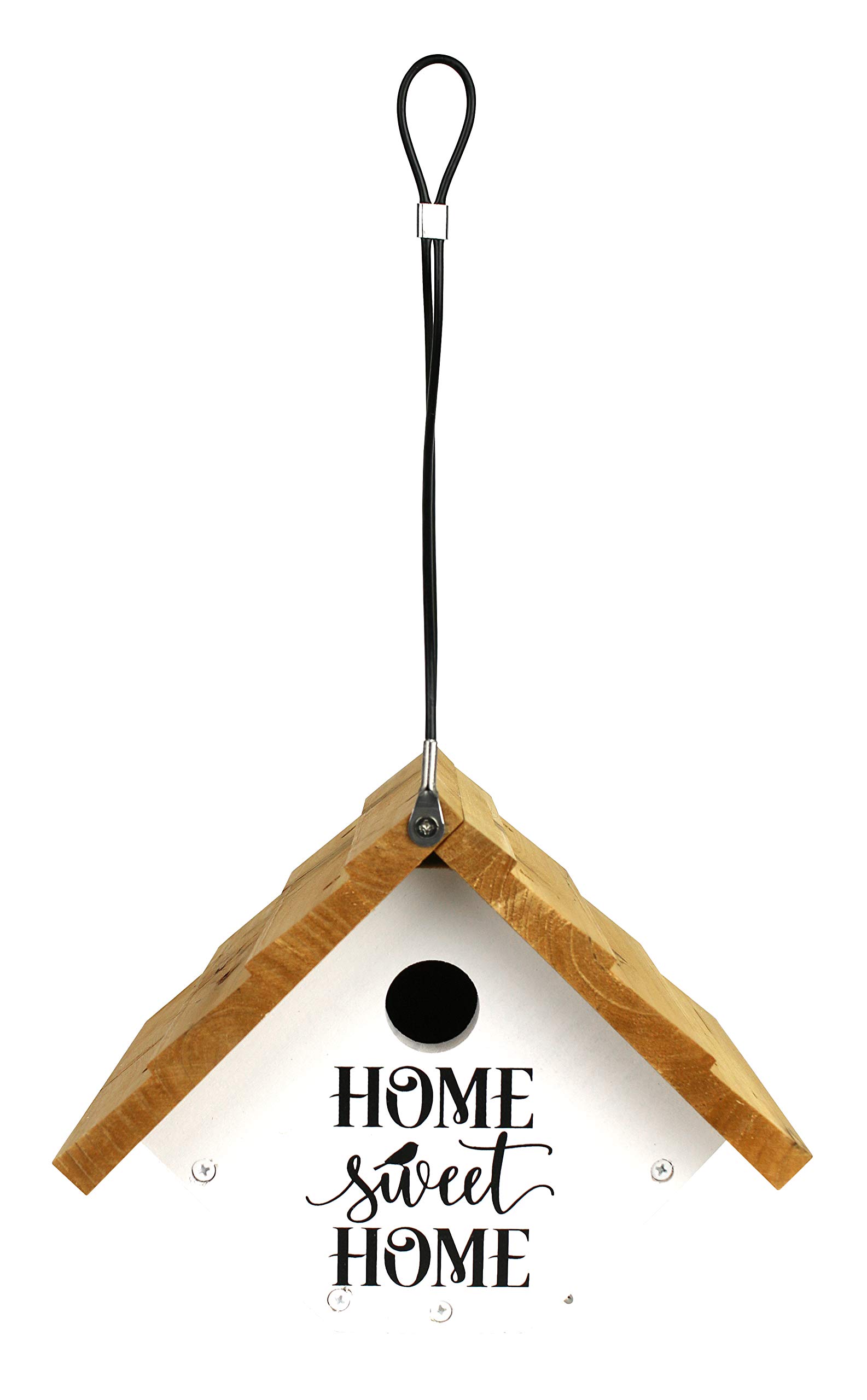
Wild Wings marries farmhouse aesthetics with practical wren-specific engineering. The white-washed cedar sides and stained roof bring a clean, decorative look to any garden, but the real work is done by the 1⅛-inch hole that excludes sparrows while inviting wrens and chickadees. The vinyl-coated steel hanging cable won’t rust or fray, a common failure point on cheaper hanging boxes.
Air vents are cut through the wall and floor openings, creating passive airflow that prevents stagnant heat buildup on summer afternoons. The removable tray and the rear clean-out door simplify seasonal maintenance—you lift the latch, brush out old material, and close it without tools. At 7.25 inches on each side, the footprint fits narrow tree crotches or brackets.
Owners report that the decorative finish holds up well under porch eaves but can fade faster in full, direct sun. The cedar construction resists rot, but the white paint is a surface treatment rather than a stain, so periodic touch-up may be needed after two or three seasons.
Why we love it
- TVinyl-coated hanging cable is chew-proof and rust-resistant
- Decorative farmhouse styling fits visible garden spots
- Multiple cleaning access points reduce maintenance effort
Good to know
- White finish may weather faster in direct sunlight
- Hanging orientation requires a sturdy branch or hook
2. Kingsyard Recycled Plastic Bird House for Outdoor – Durable Nesting Box with Clear View Panel & Predator Guard, Blue & Brown

Kingsyard solves the biggest complaint with wooden boxes—material degradation—by using high-quality recycled plastic that won’t dent, crack, or rot. This model measures 12.2 inches tall with a 7.6-inch width and a 6.3-inch depth, offering a roomy interior suitable for bluebirds, chickadees, and nuthatches. The predator guard extends around the entrance hole, blocking squirrels and raccoons from enlarging the opening.
The standout feature is the clear viewing panel on the side door. You can observe nesting activity, check for eggs, and monitor fledging progress without opening the box. The bottom includes air vents for airflow, and the clean-out access is straightforward—lift the latch and tilt the door. Owners in cold climates report the plastic survives -30°F winters without cracking, something cedar cannot guarantee.
Assembly requires attaching the front panel with the included hardware, which takes about five minutes. Some users note that the recycled plastic absorbs heat faster than wood in intense afternoon sun, so mounting it in partial shade is a best practice to keep interior temperatures moderate.
Why we love it
- Recycled plastic withstands extreme cold and rain without rot
- Clear viewing panel allows disturbance-free monitoring
- Predator guard integrated into the entrance design
Good to know
- Requires minor assembly (front panel attachment)
- Can heat up in direct sun; partial shade recommended
3. Woodlink NABB Audubon Cedar Bluebird House
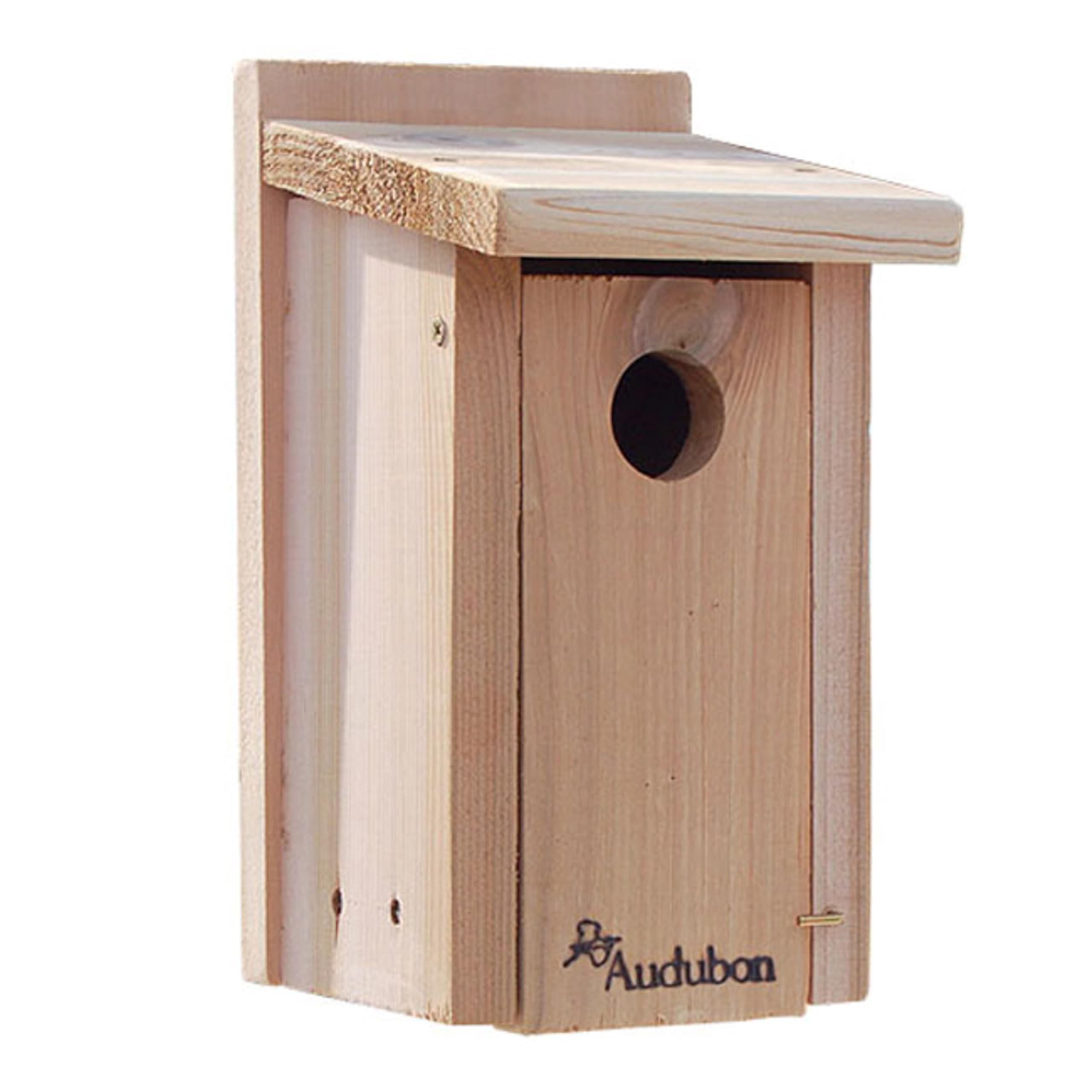
Woodlink builds this house to the exact specifications set by the National Audubon Society, making it a proven option for serious bird conservationists. The 13.75-inch height creates a deeper cavity that bluebirds and tree swallows favor. The 5.25-inch width and 8-inch depth are deliberately scaled to discourage house sparrows, which prefer wider, shallower boxes.
Natural cedar construction means no chemical treatments or paints—just durable wood that resists decay and blends into natural settings. The front door swings open from a top hinge for cleaning, a design that Audubon recommends to allow minimal disturbance while removing old nests. Two ventilation slots sit near the roof apex, and drain gaps at the corners of the floor prevent water accumulation.
Seasoned owners report these houses attracting the target bluebird species consistently, often within the first year. The door opener can interfere with certain aftermarket predator guards that attach over the hole, so if you plan to add an external guard, measure the clearance before installing.
Why we love it
- Built to National Audubon Society cavity specifications
- Untreated natural cedar offers superior rot resistance
- Consistent year-one nesting success reported by owners
Good to know
- Top-hinged door may block installation of some external guards
- Pre-drilled back for post or wall mounting only (no hanging cable)
4. Kingsyard Wooden Wren House with Predator Guard – Bird Nesting Box, Royal Blue

Kingsyard’s wooden wren house delivers a metal predator guard and a 1-inch entrance hole at a price point that makes it accessible without cutting corners. The New Zealand pine construction is thicker than many budget boxes, giving it heft (2.09 pounds) that resists wind sway when mounted on a fence post. The royal blue painted finish adds visibility for easy monitoring.
The easy-open lid swings up on a hinge, giving you full access to the interior for end-of-season cleaning. Air vents on the sides and floor openings maintain airflow, and the 8.94-inch depth provides enough cavity space for wrens to build their twig nests comfortably. Owners note that the metal guard fits flush against the cedar exterior and remains corrosion-free after several seasons.
Some users recommend applying a water-seal coating to the raw interior surfaces to extend the box’s life, especially in high-humidity regions. The paint on the exterior holds up well but can chip if the box is frequently opened and closed—a light sand-and-paint touch-up every two years keeps it fresh.
Why we love it
- Metal predator guard prevents hole enlargement
- Easy-open lid simplifies seasonal clean-out
- Thick New Zealand pine construction resists wind sway
Good to know
- Exterior paint may chip with repeated lid opening
- Interior raw wood benefits from annual sealing
5. SISTERBIRD Wren Bird Houses for Outside Cedar Hanging Birdhouses – 1⅛″ Entrance Hole, Blue
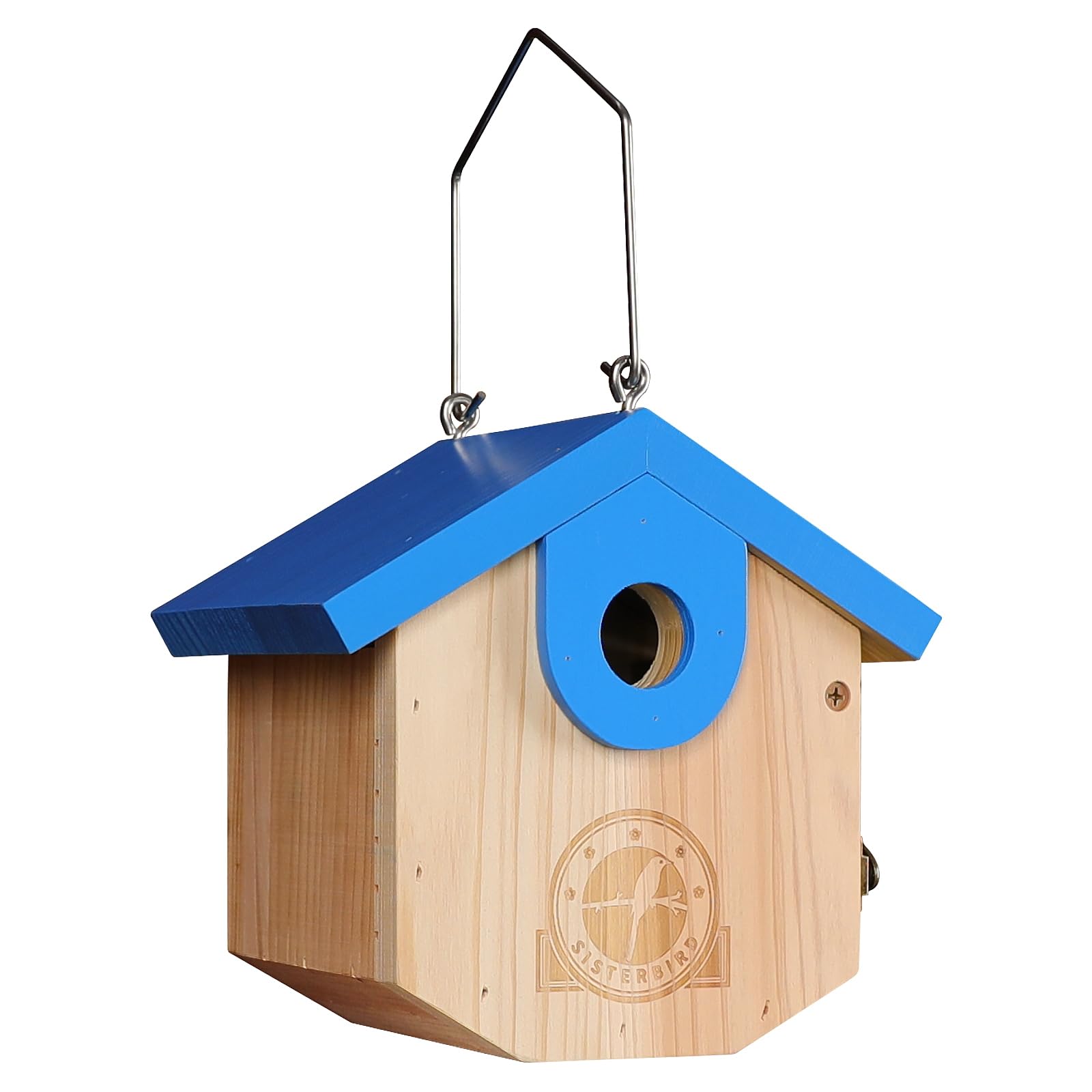
SISTERBIRD focuses on the specific needs of tiny cavity nesters with a 1⅛-inch entrance hole and a U-shaped interior floor that mimics a natural nest cup. The 304 stainless steel hanging hook resists corrosion and chewing, while the wide, sloped roof overhang keeps rainwater out. This model targets wrens, chickadees, and titmice, and the blue color helps it stand out against foliage for easy visual monitoring.
The design includes five fledging kerfs—vertical grooves on the interior wall below the entrance hole. These ladders let young birds grip and climb to the exit, reducing the risk of fledgling entrapment, a genuine hazard in smooth-walled boxes. Three top air vents and six drain holes in the floor regulate temperature and moisture effectively during hot or rainy spells.
The metal door latch uses four screws for a firm seal, a clear improvement over the L-screw latches on competing models that squirrels sometimes twist open. Owners appreciate that the box arrives fully assembled—unpack, attach the hook, and hang. The cedar is left untreated, so applying an exterior wood preservative to the roof and sides can prolong the box’s service life beyond three years.
Why we love it
- Interior fledging kerfs help young birds exit safely
- Stainless steel hanging hook is chew-proof and rust-proof
- U-shaped floor mimics natural nest shape, attracting wrens
Good to know
- Untreated cedar benefits from annual sealing
- Hanging placement requires a sturdy branch or hook mount
FAQ
What is the best entrance hole size for small birds?
Should I paint or stain the birdhouse?
How do I keep predators away from a hanging birdhouse?
Can I use a recycled plastic birdhouse in full sun?
Final Thoughts: The Verdict
For most gardeners, the bird houses for small birds winner is the Wild Wings WWLH2-DECO because it combines a precisely sized 1⅛-inch entrance, vinyl-coated hanging cable, and multiple clean-out doors with a decorative farmhouse finish that fits visible garden spots. If you want a plastic model that will outlast cedar by decades, grab the Kingsyard Recycled Plastic Bird House. And for a proven Audubon-spec box that bluebirds consistently choose, nothing beats the Woodlink NABB.