
Blue Jays are loud, intelligent, and incredibly picky eaters. They will toss cheap filler blends to the ground, leaving you with a messy lawn and an empty feeder. The key to keeping them coming back is offering high-energy, protein-dense foods they can crack or swallow whole — not the dusty mix of millet and milo that other birds ignore.
I’m Mo Mahin — the founder and writer behind Furric. I’ve spent years studying bird feeding behavior, analyzing seed composition data, and comparing nutritional profiles to help backyard birders select the right food without wasting money on ingredients that end up as litter.
Whether you want to attract vibrant blue jays to your yard or simply feed them without the mess, this guide breaks down the best options. My goal is to help you find the best bird seed for blue jays by focusing on ingredients that actually matter to these members of the corvid family.
How To Choose The Best Bird Seed For Blue Jays
Blue jays are corvids — related to crows and ravens — which means they have strong beaks designed for cracking hard shells and a preference for large, high-energy morsels. Choosing the right seed involves understanding their nutritional needs, feeding style, and the mess factor that comes with shell fragments.
Whole Peanuts vs. Shelled Peanuts
Whole peanuts in the shell provide mental enrichment as jays manipulate and crack them open. Shelled peanuts offer the same protein and fat content without the mess. If you want to minimize cleanup, shelled peanuts are the smarter choice. If you enjoy watching jays work for their food, go with in-shell peanuts.
Black Oil Sunflower Seeds as a Base
Black oil sunflower seeds have a thinner shell than gray striped sunflower seeds, making them easier for smaller songbirds while still appealing to jays. The high oil content provides the dense calories jays need, especially during colder months. Look for blends that list black oil sunflower as the first ingredient.
No Mess or Waste-Free Blends
Shell-free blends — sunflower hearts, chips, and peanut pieces — eliminate the hull accumulation under feeders. This is critical if your feeder sits over a patio, deck, or lawn where clean appearance matters. Jays readily eat sunflower hearts and peanut pieces, making these blends effective without the litter.
Avoid Fillers: Millet, Milo, and Cracked Corn
Blue jays ignore tiny seeds like millet and milo. Cracked corn attracts them but can also attract starlings and grackles in large numbers. The best blue jay seed mix is one that emphasizes large, protein-rich components and leaves the dust-and-filler blends for ground-feeding sparrows.
Quick Comparison
On smaller screens, swipe sideways to see the full table.
| Model | Category | Best For | Key Spec | Amazon |
|---|---|---|---|---|
| Desert Valley Shelled Peanuts | Single Ingredient | Protein-rich blue jay treat | 5 lbs shelled peanuts, no filler | Amazon |
| Audubon Park Waste Free Blend | No Mess | Clean deck/patio feeding | 12 lbs shell-free blend | Amazon |
| Kaytee Seed & Suet No Mess | Seed & Suet | High-attraction blend with suet | 10 lbs blueberry-flavored suet nuggets | Amazon |
| Audubon Park Extreme Variety | Variety Blend | Attracting diverse songbirds | 15 lbs blend with peanuts & raisins | Amazon |
| Happy Wings Black Oil Sunflower | Single Ingredient | Budget-friendly daily feeding | 5 lbs black oil sunflower seed | Amazon |
In‑Depth Reviews
1. Desert Valley Shelled Peanuts
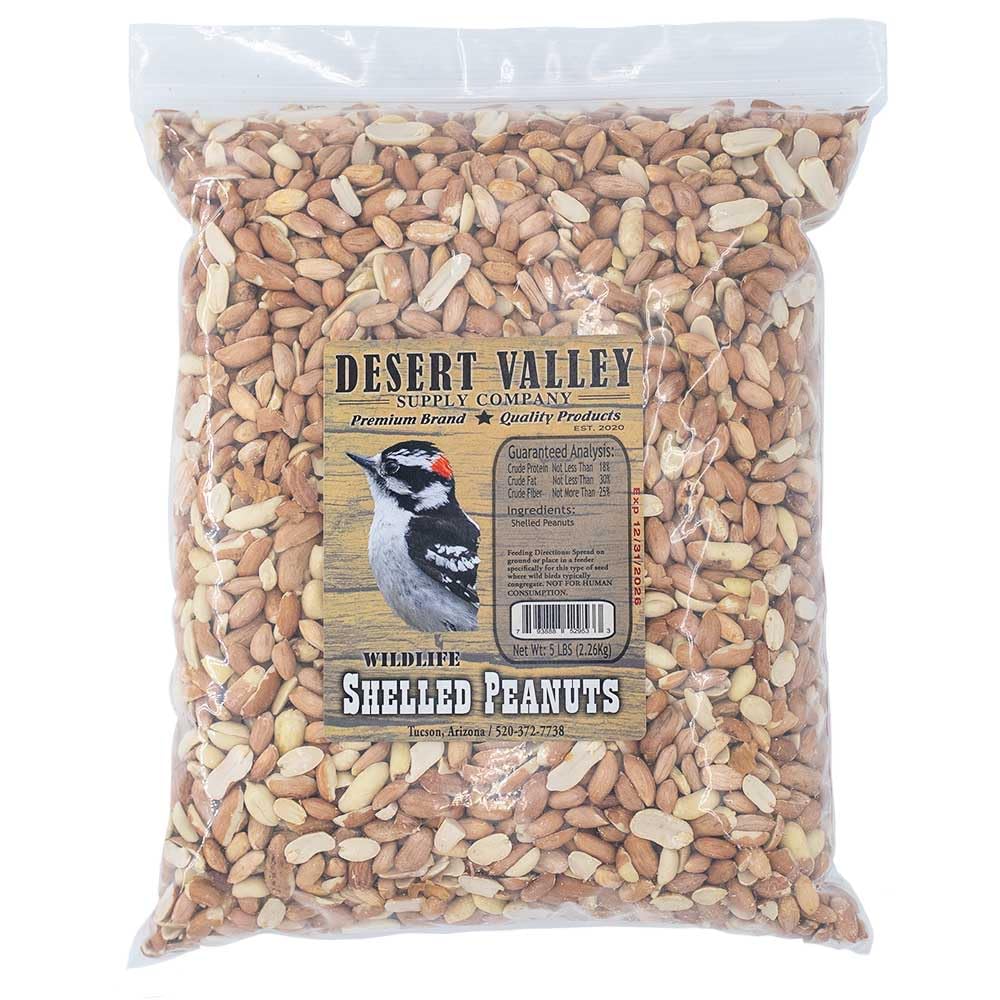
Blue jays are obsessed with peanuts, and Desert Valley delivers them shelled, all-natural, and free from any additives. Each 5-pound bag contains raw, unsalted peanut halves and pieces that jays can swallow quickly without the mess of shell fragments scattering across your yard. The high protein and fat content make this an ideal winter food when birds need maximum energy per bite.
What sets this product apart is its versatility. You can offer these peanuts in a mesh feeder, platform feeder, or mix them into a standard seed blend to increase its appeal. Customers consistently report that jays, cardinals, nuthatches, and woodpeckers all visit within hours of putting these out. The resealable bag keeps the peanuts fresh between refills.
Desert Valley sources its peanuts from the USA and processes them without artificial flavors, colors, or preservatives. Since the peanuts are shell-free, there is zero hull waste to clean up — a major advantage for anyone feeding near patios or decks. This is the single most effective food for targeting blue jays specifically.
Why we love it
- Shelled format means no litter under feeders
- High-protein composition matches blue jay dietary needs
- Attracts jays, cardinals, nuthatches, and woodpeckers
Good to know
- Peanuts can spoil in wet conditions if not eaten quickly
- Larger birds may empty a 5 lb bag faster than expected
2. Audubon Park Waste Free Wild Bird Seed Blend
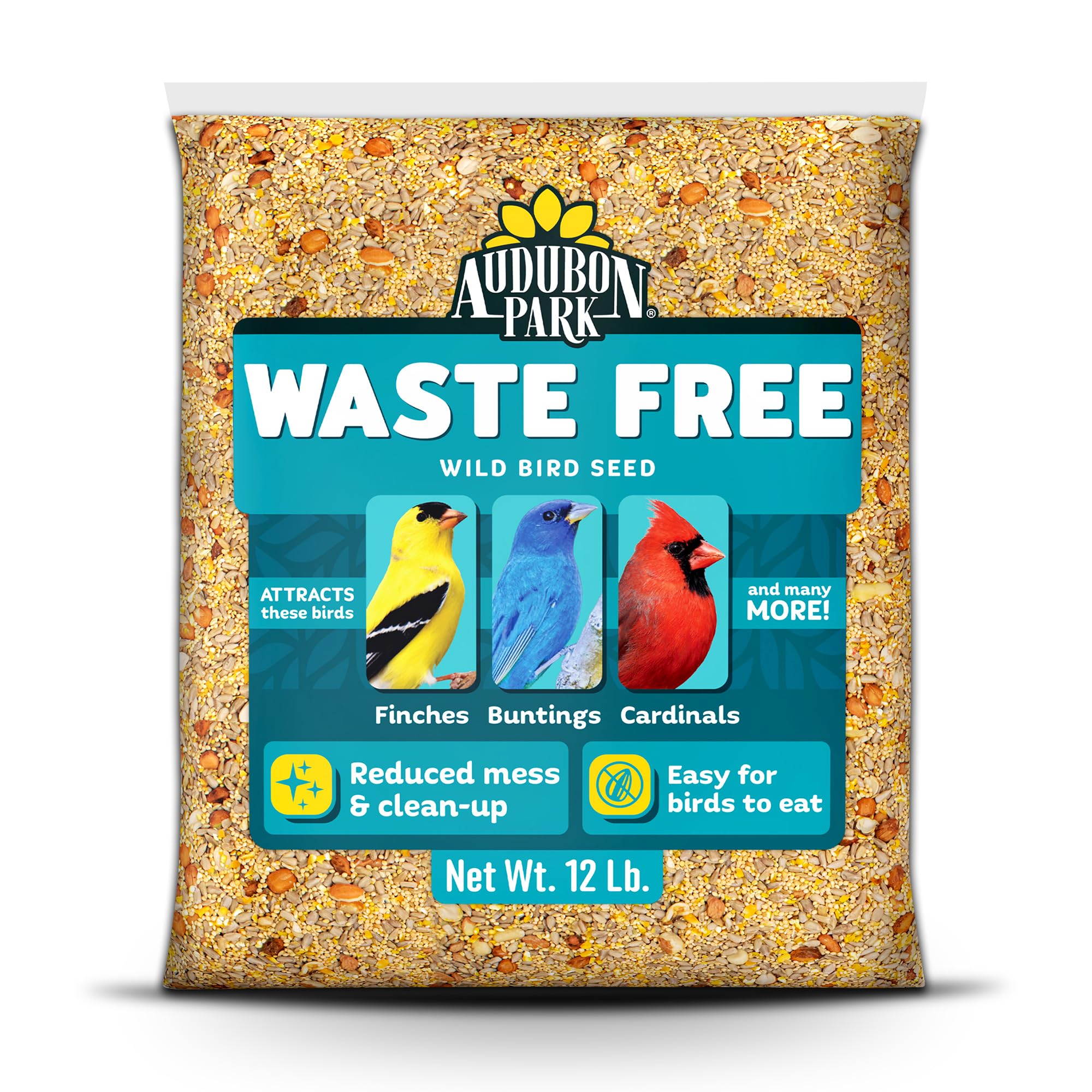
Audubon Park formulated this 12-pound blend to be completely shell-free, using sunflower hearts, sunflower chips, and peanut pieces. For blue jays, the peanut pieces provide the protein punch they crave, while the sunflower chips deliver steady energy. Because every component is edible, there is nothing left on the ground for jays to discard.
This blend is specifically designed for tube, tray, hopper, and platform feeders. Jays have no trouble extracting the large sunflower hearts and peanut chunks through standard feeder ports. The absence of shells also means fewer crushed hulls accumulating on your lawn, which keeps the area looking clean and reduces the chance of mold growth under the feeder.
While this blend attracts a wide variety of songbirds — finches, cardinals, chickadees, thrushes, and buntings — blue jays are consistently among the first visitors. If you want the convenience of a no-mess mix without sacrificing the high-calorie foods jays need, this is the best mid-range option on the market.
Why we love it
- Zero shell waste keeps feeding area clean
- Peanut pieces deliver targeted nutrition for jays
- Works in all standard feeder types
Good to know
- More expensive per pound than seed with shells
- Smaller birds may dominate the feeder before jays arrive
3. Kaytee Seed & Suet No Mess Blend

Kaytee takes a creative approach by infusing suet nuggets with blueberry flavor and mixing them with seed for a 100% edible, no-mess formula. Blue jays are naturally attracted to suet for its high fat content, and the blueberry scent adds an extra layer of interest. Seeds and suet nuggets are both fully consumable, so nothing gets left behind under the feeder.
The manufacturer claims this blend attracts twice as many birds as black oil sunflower alone, and three times more woodpeckers — but what matters for jay enthusiasts is the combination of textures. Jays can either crush the suet nuggets or pick at the seeds, giving them feeding variety that keeps them coming back throughout the day. It works in tube, hopper, or platform feeders.
At 10 pounds, this bag offers solid volume for the price. The blueberry flavoring is subtle and doesn’t mask the natural seed aroma. If you have been using plain sunflower seed and want to upgrade your offering to something more enticing, this hybrid seed-and-suet blend is a clever mid-range choice that blue jays find hard to resist.
Why we love it
- Suet nuggets provide high-fat energy jays need in cold weather
- 100% edible formula eliminates shell waste
- Blueberry flavor adds a novel attractant
Good to know
- Suet can melt in direct sun during summer
- Some extremely picky jays may ignore the suet pieces at first
4. Audubon Park Extreme Variety Wild Bird Seed
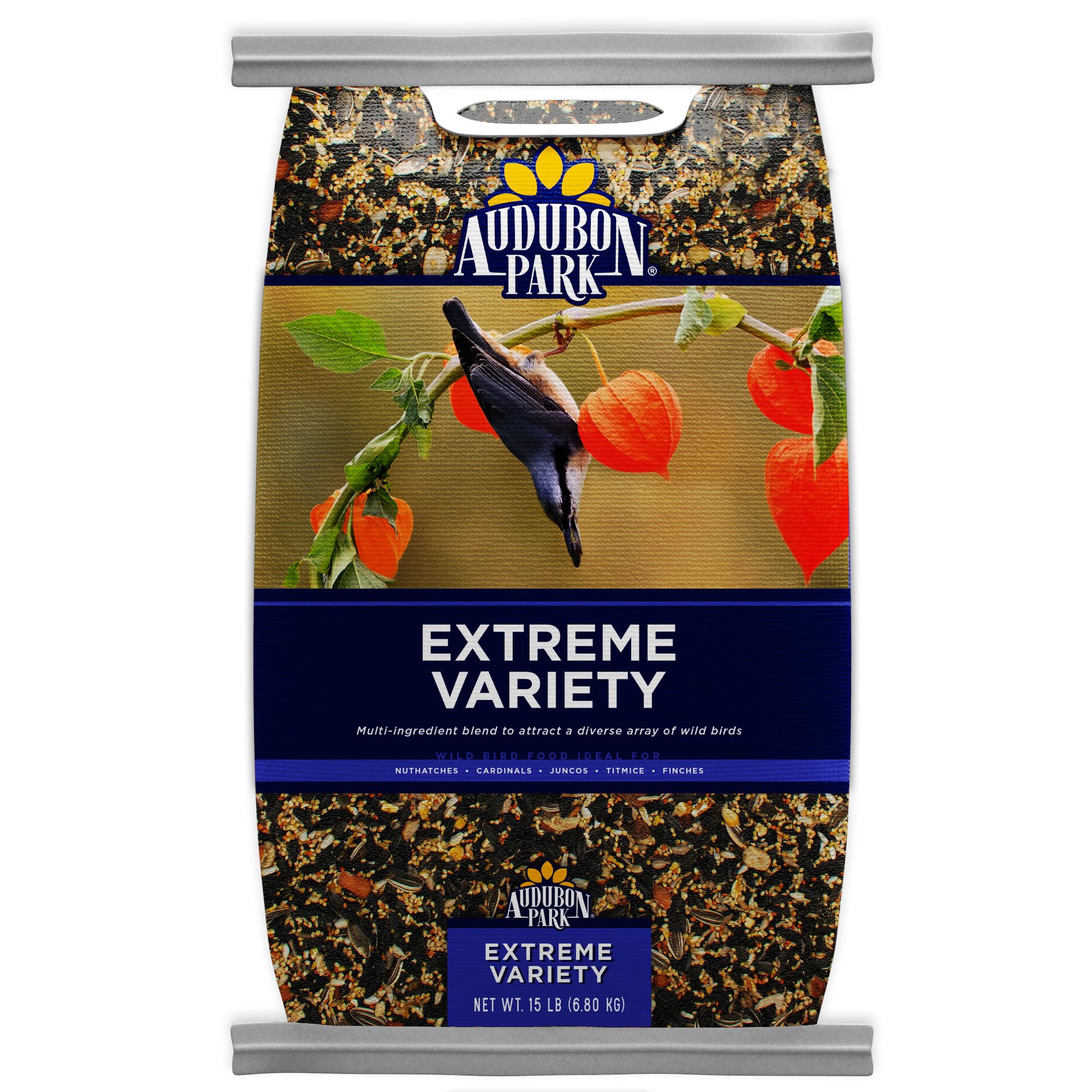
Audubon Park’s Extreme Variety blend lives up to its name by mixing black oil sunflower seeds, striped sunflower seeds, peanuts, sunflower chips, raisins, and other nuts into one 15-pound bag. For blue jays, the whole peanuts and striped sunflower seeds are the primary draw — both are large enough that jays can handle them easily with their strong beaks.
The inclusion of raisins adds a touch of natural sweetness that some jays find irresistible, especially during late winter when natural fruit sources are scarce. This blend is designed to attract nuthatches, cardinals, juncos, titmice, and finches alongside jays, making it a great choice if you want a lively, diverse feeder station rather than a jay-only setup.
The 15-pound bag offers strong value per pound compared to shell-free blends. However, the striped sunflower seeds do have shells, meaning you will see some hull accumulation under the feeder. If you are willing to accept minor debris in exchange for attracting more bird species, this blend delivers excellent versatility.
Why we love it
- Large ingredient variety attracts jays and many other songbirds
- Whole peanuts and striped sunflower are jay-friendly sizes
- Raisins offer a unique sweetener that jays enjoy
Good to know
- Striped sunflower shells create some under-feeder mess
- Millet and smaller seeds in the blend may go uneaten by jays
5. Happy Wings Black Oil Sunflower Seeds
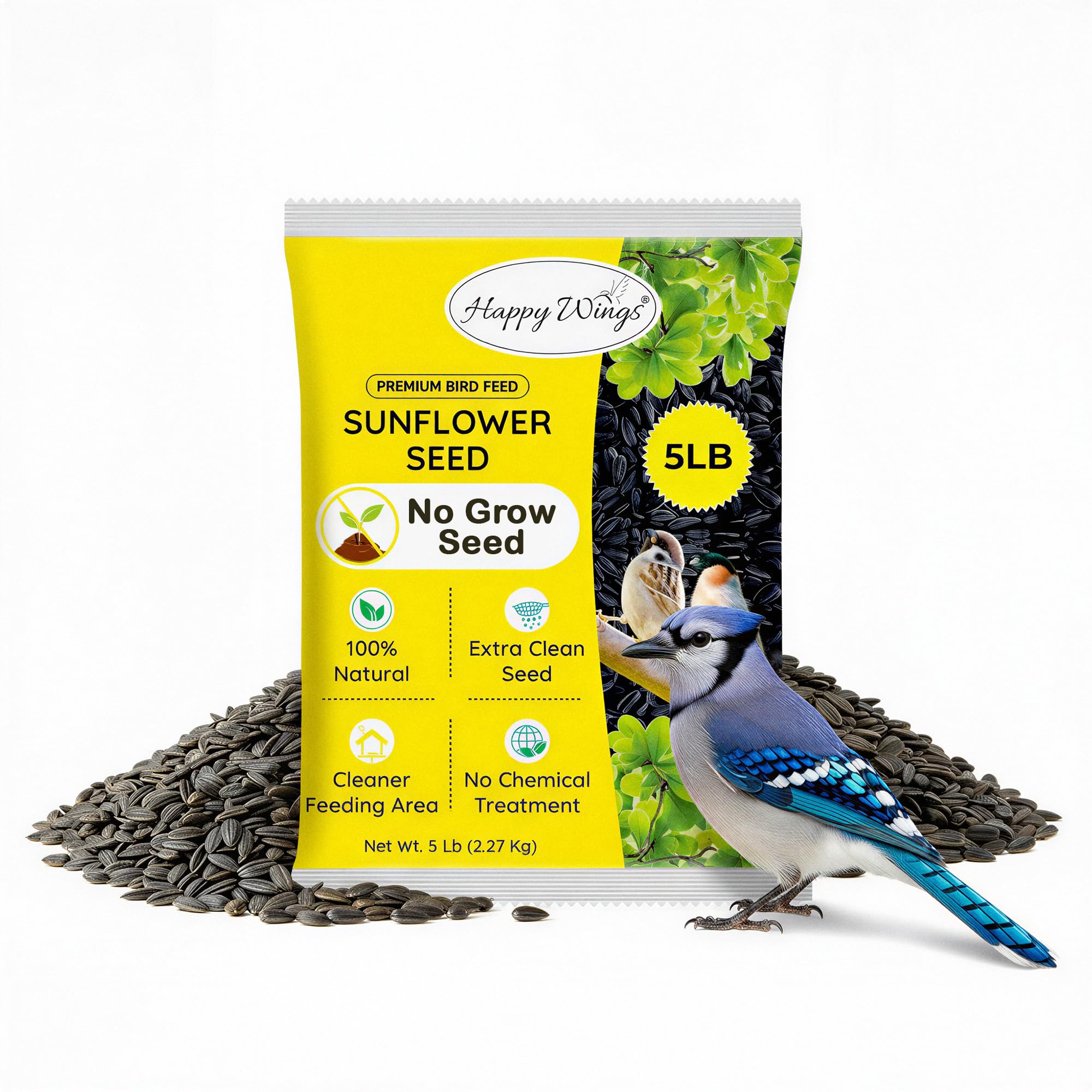
Happy Wings offers pure black oil sunflower seeds in a 5-pound bag, with no filler seeds or artificial ingredients. Black oil sunflower is the single most reliable base food for attracting blue jays — they crack the thin shells easily and are drawn to the high oil content that provides dense energy. This is a straightforward, no-nonsense bird seed that delivers exactly what it promises.
The seeds are processed in USDA and BRC-GS approved facilities, meeting standards set by the Wild Bird Feeding Institute. Customers report bright, clean seeds with very little dust or debris in the bag. The “no grow” claim means the seeds have been heat-treated to prevent germination, so you won’t find sunflower sprouts popping up beneath the feeder after rain.
At this price point, this is the most cost-effective way to feed blue jays if you don’t mind dealing with shell hulls under the feeder. The 5-pound size is ideal for beginners who want to test whether jays in their area respond to black oil sunflower before committing to a larger bag. It’s a solid entry-level choice with proven results.
Why we love it
- Pure black oil sunflower with no filler or dust
- Heat-treated to prevent sprouting under feeders
- Budget-friendly price per pound
Good to know
- Shell hulls accumulate and need regular cleanup
- Smaller birds may empty the feeder before jays get a chance
FAQ
Do blue jays prefer whole peanuts or shelled peanuts?
Can blue jays eat black oil sunflower seeds?
Why are blue jays ignoring my bird feeder?
Is it safe to feed blue jays peanuts year-round?
Final Thoughts: The Verdict
For most gardeners, the best bird seed for blue jays winner is the Desert Valley Shelled Peanuts because it delivers pure protein with zero waste, directly matching what blue jays seek in the wild. If you want a no-mess blend that keeps your deck clean, grab the Audubon Park Waste Free Blend. And for a cost-effective daily feeding option, nothing beats the Happy Wings Black Oil Sunflower Seeds.