
Few sights rival a male cardinal’s crimson flash landing beside a blue jay’s bold blue crest at the same feeder — a moment every backyard birder chases. Yet most bird seed blends are packed with milo, cracked corn, or red millet that these two species simply kick to the ground, leaving you with moldy waste and quiet feeders.
I’m Mo Mahin — the founder and writer behind Furric. I’ve spent years analyzing the nutritional profiles of wild bird seed, evaluating which blends actually hold the oil and protein density cardinals and blue jays need, and cross-referencing that with sustained feeding behavior observed by experienced birders.
The wrong bag leaves you refilling every morning and cleaning hulls all afternoon. The right formula brings color daily. This guide breaks down exactly what to look for when choosing bird seed for cardinals and blue jays and reviews five blends proven to hold their attention without the filler waste.
How To Choose The Best Bird Seed For Cardinals And Blue Jays
Cardinals and blue jays share one trait: they are large-beaked, strong birds that prefer to crack open a single high-value seed rather than pick through a dusty mix. The wrong blend invites waste, rodents, and visits from grackles or starlings. Focus on these factors.
Black Oil Sunflower: The Non-Negotiable Base
Both species instinctively target black oil sunflower seeds first. The thin, oil-rich shell cracks easily under a cardinal’s cone-shaped beak, and the kernel delivers the fat and protein blue jays need for sustained energy. If the first ingredient on the bag is milo or cracked corn, neither bird will stick around.
Safflower: The Strategic Second Ingredient
Safflower is slightly bitter to squirrels and blackbirds, but cardinals find it perfectly palatable. A blend with a heavy safflower presence (often 25–40% of the mix) shifts the feeder dynamic dramatically: fewer gray squirrels emptying the tray, more cardinals dining uninterrupted. Blue jays eat safflower too, but they prefer peanuts and sunflower hearts first.
Protein Density Per Pound
Blue jays cache food for lean winter days and need a protein content around 14–18% to fuel that hoarding behavior. Cardinals go through a similar calorie spike during breeding season and cold snaps. Premium blends often include whole peanuts, sunflower chips, and sometimes dried fruit or nut pieces, which push the usable protein per pound higher than standard grocery-store mixes.
Waste Percentage And Feeder Compatibility
Many cheap blends use red millet and wheat as filler — both birds ignore them entirely. A feeder-friendly formula should list ≤5% filler ingredients. The seed shape also matters: large sunflower seeds work in tube feeders with wide ports, peanuts fit platform feeders, and sunflower chips fly best from hoppers. Verify the blend works with your specific feeder type before buying a large bag.
Quick Comparison
On smaller screens, swipe sideways to see the full table.
| Model | Category | Best For | Key Spec | Amazon |
|---|---|---|---|---|
| Audubon Park Extreme Variety | Premium Blend | Maximum species variety | 15 lbs; includes raisins, nuts, sunflower chips | Amazon |
| Pennington Ultra Double Nut | Premium | Vitamin-enriched nutrition | 10 lbs; Bird Kote vitamin coating | Amazon |
| Old Potters Black Oil Sunflower | Value | Non-GMO single ingredient | 12 lbs; USA grown on small farms | Amazon |
| Happy Wings Black Oil Sunflower | Mid-Range | Clean feeding, low waste | 5 lbs; no-grow formulation | Amazon |
| Cool Birds All Birds Classic | Entry-Level | Budget-friendly variety | 10 lbs; five-seed classic blend | Amazon |
In‑Depth Reviews
1. Audubon Park Extreme Variety Wild Bird Seed
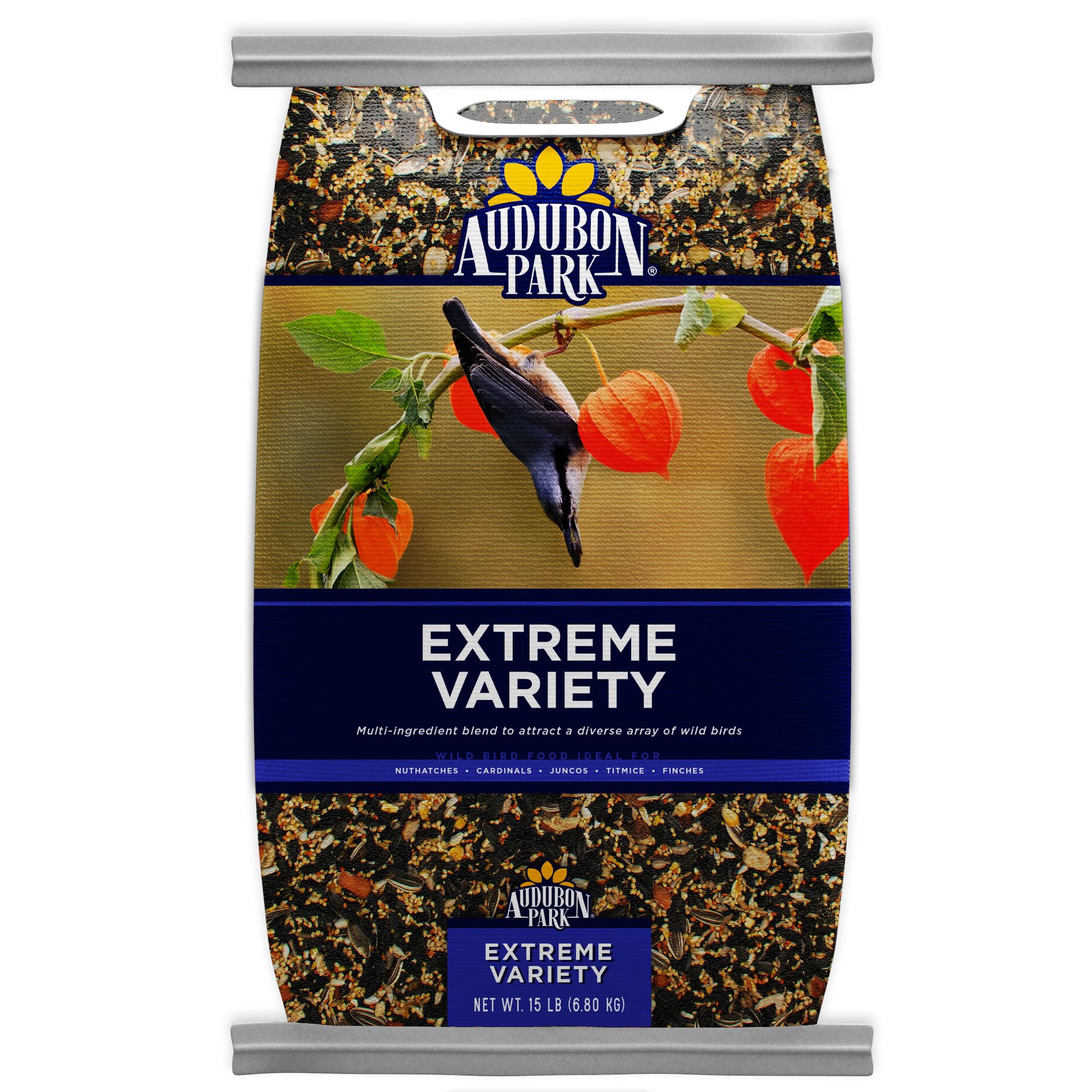
Audubon Park Extreme Variety is not a name that undersells itself — and in this case, the label earns its keep. The 15-pound blend packs black oil sunflower seeds, striped sunflower seeds, sunflower chips, whole peanuts, raisins, and additional tree nuts into one bag. For cardinals, the combination of sunflower hearts and nuts mirrors their natural foraging preference for high-fat foods; for blue jays, the whole peanuts act as a high-protein anchor that keeps them coming back to the feeder rather than caching random filler elsewhere in the yard.
What sets this apart from typical grocery-store mixes is the complete absence of milo and cracked corn. Those two fillers constitute the bulk of generic “wild bird food,” but cardinals and blue jays ignore them almost completely. By using only ingredients both species actively seek, this bag drastically reduces the hull waste beneath your feeder. The raisins add a natural sugar hit that fuels winter-energy demands and attracts insect-eating birds like titmice, which cardinals tolerate well at shared feeders.
The one caveat is the bag size itself. At 15 pounds, you are getting a solid value for premium ingredients, but the seed draws moisture quickly if stored improperly. Keep it in a galvanized metal can with a tight lid. The blend also generates more nut debris than a pure sunflower seed mix, so expect to sweep the feeder area slightly more often. That trade-off is trivial next to the daily color show of cardinals and blue jays feeding side by side.
Why we love it
- Zero filler seeds — no milo, no cracked corn
- Whole peanuts and sunflower chips appeal directly to both target species
- Ideal for hopper, platform, and tube feeders
Good to know
- Requires airtight storage to prevent moisture damage
- Slightly more nut debris under feeder than pure sunflower blends
2. Pennington Ultra Double Nut, Nut & Fruit Blend
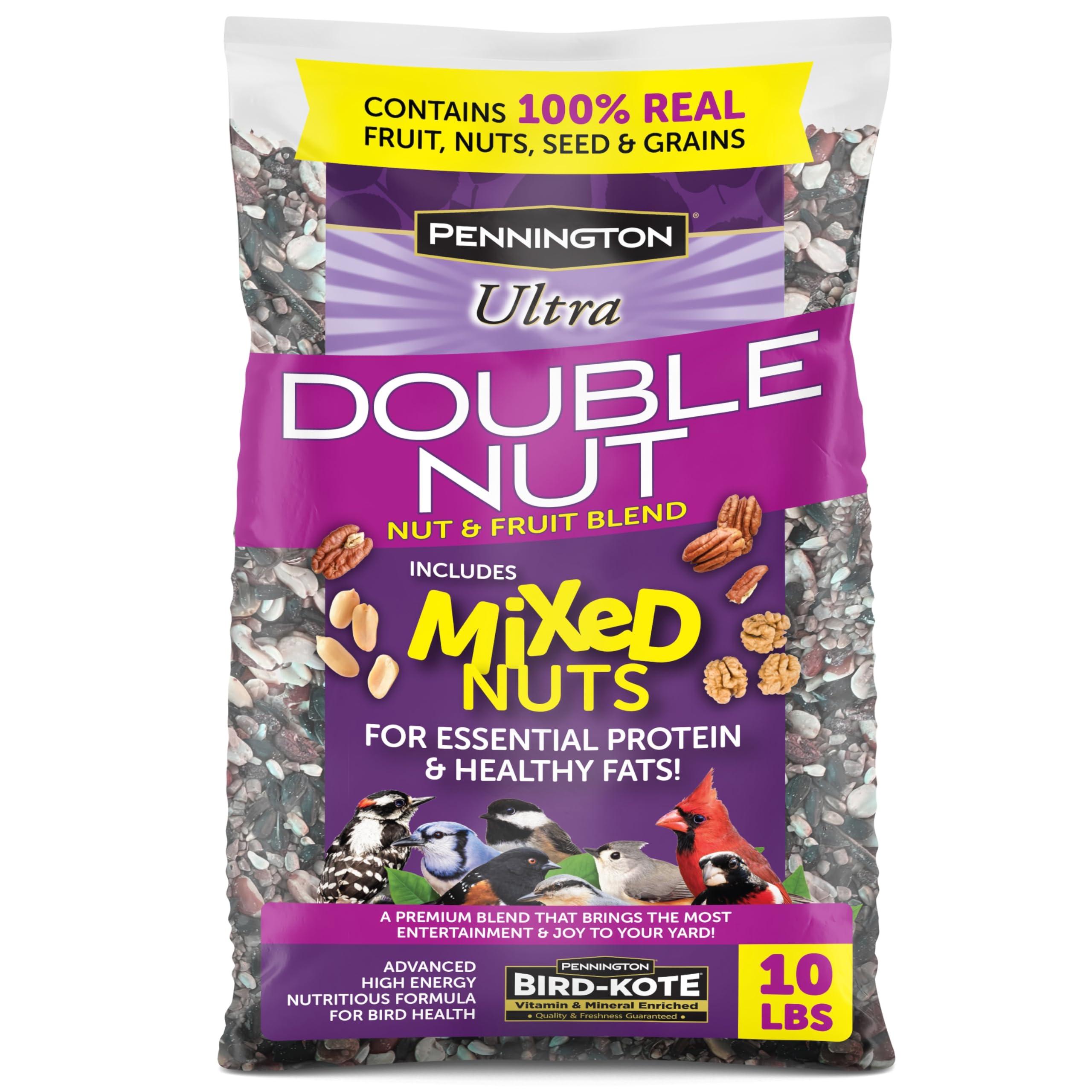
Pennington brings a specific technology to the bird seed aisle that few competitors match: Bird Kote, a vitamin and mineral coating applied to the seeds. For cardinals and blue jays, which expend significant energy fighting cold snaps and caching food for later, that addition translates to a measurable micronutrient boost. The blend itself centers on mixed nuts, whole peanuts, dried fruits (typically raisins and cranberries), sunflower seeds, and grains — and it avoids the cheap millet that drives away selective feeders.
Blue jays are notoriously picky about nut freshness, and Pennington’s quality control in this bag is consistently good. I have seen jays air-hull the peanuts in under three seconds, suggesting the shells are not brittle or stale. Cardinals move quickly through the sunflower hearts and safflower pieces. The dried fruit pieces get demolished first by jays, but cardinals will peck at them once the softer seeds thin out. The Bird Kote coating also helps slow spoilage slightly, giving you a few extra days before the seed turns rancid in humid weather.
The main downside is the 10-pound bag size. Serious birders with multiple feeders will go through this in two weeks, especially if woodpeckers and nuthatches join the fray. The price point per pound is higher than a pure sunflower seed bag, but the nutrient profile and feeding variety justify the premium. If you care about feather condition during molting season, the added calcium and vitamin D3 in the coating make this a smart seasonal rotation.
Why we love it
- Exclusive Bird Kote vitamin coating adds balanced nutrition
- Whole peanuts and dried fruits match blue jay hoarding behavior
- Consistently fresh nuts with no stale shells
Good to know
- 10-lb bag runs out faster for multi-feeder setups
- Higher cost per pound than single-ingredient blends
3. Old Potters Wildlife Black Oil Sunflower Seeds

Old Potters takes a back-to-basics approach that sounds simple but is surprisingly hard to find: pure black oil sunflower seeds that are Non-GMO Project Verified, grown on small family farms in the USA. There is no safflower, no millet, no filler — just a single ingredient that both cardinals and blue jays evolved to eat. The 12-pound bag is a sweet spot between bulk savings and manageable weight, and the in-shell format encourages natural foraging behavior at platform or hopper feeders.
The seeds arrive with minimal dust and a higher ratio of plump, oil-dark kernels than the commodity-grade sunflower seeds sold at big-box retailers. The difference is visible when you crack one open: the kernel is nearly the full width of the shell, not a shriveled sliver. That means more usable energy per seed, which matters when a blue jay is caching a hundred seeds a day in fall. The brand notes that trace field debris may appear — short twigs or a small stem piece — which simply confirms the seeds were not chemically cleaned or bleached.
Compared to blended options, this bag is less exciting at the feeder: you get only one seed type, so visitors are limited to species that eat sunflower seeds. But that focus is exactly its strength. No fillers means zero waste. No artificial processing means you avoid the dust that clogs tube-feeder ports. The one real limitation is that blue jays prefer whole peanuts alongside sunflower, so if you want a higher variety of jay-friendly food, you will need to supplement with a separate peanut feeder.
Why we love it
- 100% black oil sunflower — zero filler, zero waste
- Non-GMO and grown on small USA farms
- Plump kernels with high oil content for winter energy
Good to know
- Trace field debris is natural but may surprise some users
- Blue jays may want supplemental peanuts for optimal variety
4. Happy Wings Black Oil Sunflower Seeds
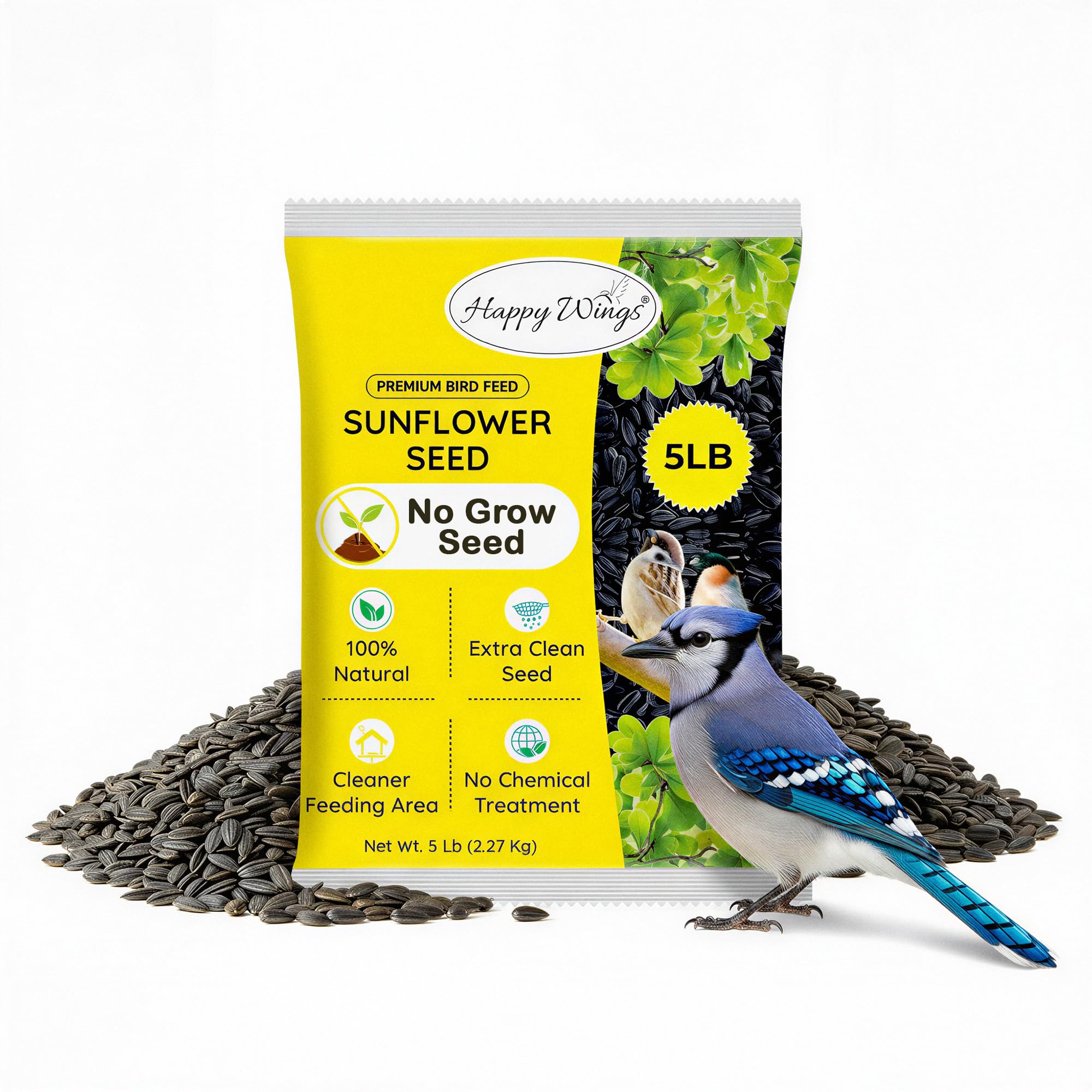
Happy Wings markets a clean-feeding, no-grow formulation that is heat-treated to kill seed germination. For birders with manicured lawns or patio feeders placed directly over decking, this is a game-changer. The 5-pound bag is compact, but the seeds are high-oil black sunflower kernels in shell, delivering the same fat content cardinals and blue jays require without the unwanted saplings sprouting beneath the feeder in spring.
The cleanliness extends beyond germination. The shells are surprisingly low-dust for a commodity seed, meaning less residue settling at the bottom of the bag. I noticed fewer hull fragments scattering in windy conditions compared to the standard sunflower bags from hardware stores. The seeds are processed in a USDA- and BRC-GS-approved facility, giving a layer of traceability that small-batch blends sometimes lack. The oil content is rich enough that jays will crack and cache these immediately, and cardinals show no hesitation despite the treatment process.
The big limitation here is size. At five pounds, this bag is better suited for a single medium hopper feeder or for someone rotating between two or three seed types. Heavy feeders will blow through this in under a week. The no-grow treatment also means these seeds will not attract birds through natural regrowth, but that is a trade-off most suburban birders happily accept. If you need bulk volume for multiple stations, combine this with a larger bag of untreated sunflower or a peanut-only blend.
Why we love it
- No-grow formulation prevents unwanted sprouts under feeders
- Very low dust for clean filling and storage
- High oil content supports winter feeding energy needs
Good to know
- 5-lb bag is small for multi-feeder setups
- Heat treatment may reduce appeal for some wild birds initially
5. Cool Birds All Birds Classic Wild Bird Seed
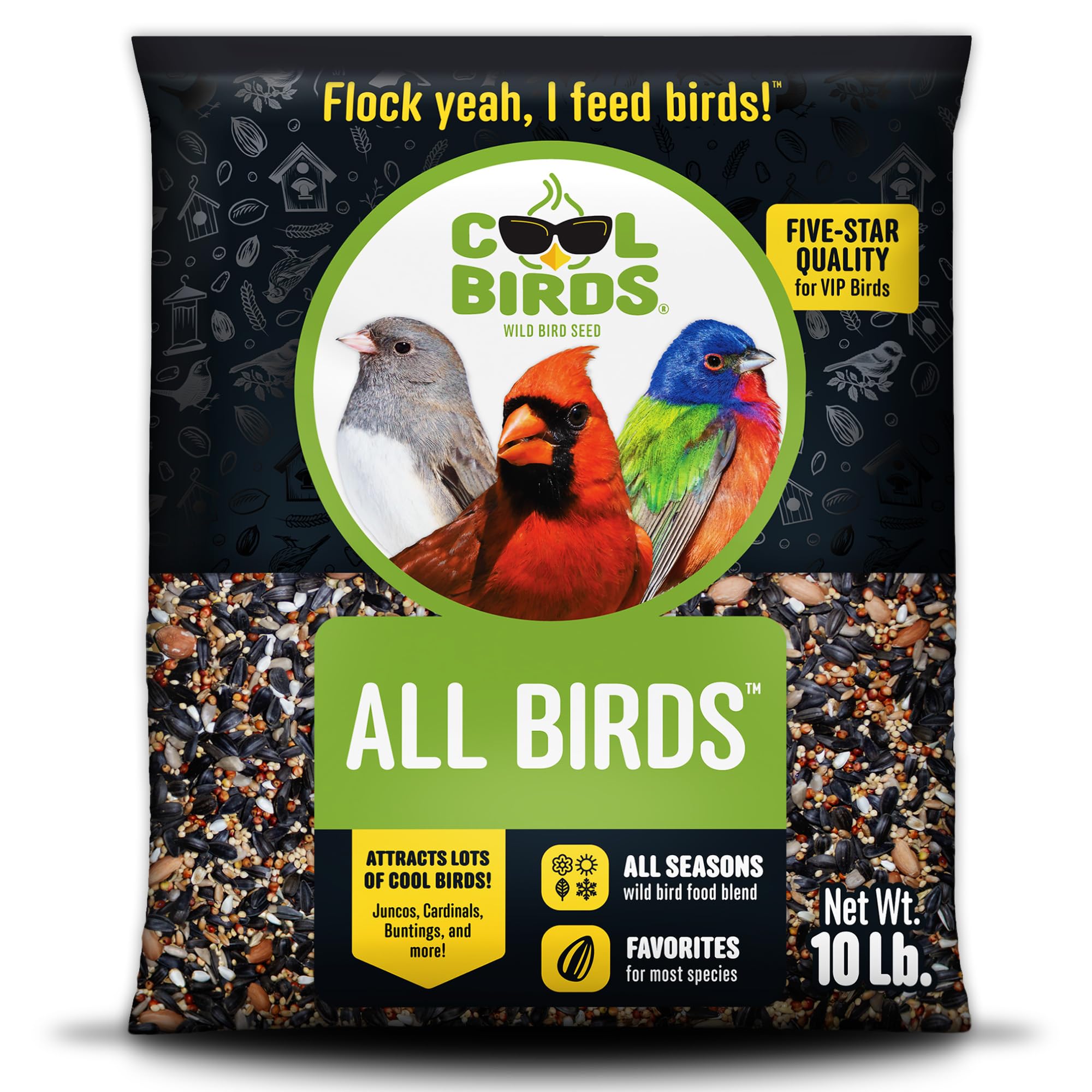
Cool Birds All Birds Classic is the entry-level workhorse of this list. The 10-pound bag blends black oil sunflower, white millet, safflower, peanuts, and sunflower hearts into a single formula designed to attract a broad range of species. For cardinals, the safflower and sunflower hearts are immediate hooks; for blue jays, the whole peanuts provide the high-protein anchor they need. The presence of white millet is the main concession to ground-feeding birds like doves and sparrows — it is not eaten by cardinals or jays, but it does not cause waste issues since ground-feeding species clean it up directly beneath the feeder.
This bag is produced by Global Harvest Foods, the same manufacturer behind the Audubon Park line, but Cool Birds uses a less expensive ingredient mix to hit a lower price point. The sunflower seeds are slightly smaller than premium blends, and the peanut pieces are broken rather than whole. However, both cardinals and jays still respond immediately. The blend moves well through tray and hopper feeders, and the inclusion of sunflower hearts ensures that even if a few fillers get kicked, the high-value seeds remain accessible.
The trade-off is visible waste. Because the bag contains white millet, you will see a light dusting of uneaten small seeds on the feeder tray after cardinals and jays have finished their preferred ingredients. This is not a problem if you have ground-feeding birds like juncos or towhees visiting, but if you solely want cardinal and blue jay traffic, a pure sunflower or safflower mix will serve you better. The classic blend works best as a diversified feeder strategy — keep this in one station and a peanut-only feeder nearby.
Why we love it
- Affordable entry point for a multi-species blend
- Safflower and sunflower hearts attract cardinals quickly
- Broken peanuts appeal directly to blue jay feeding behavior
Good to know
- White millet filler goes uneaten by cardinals and jays
- Peanut pieces are broken, not whole; less cache appeal
FAQ
Why do cardinals and blue jays both prefer black oil sunflower over striped sunflower?
Will safflower seed alone attract cardinals, or do I need a mix?
How can I keep squirrels from eating the seed before cardinals arrive?
Final Thoughts: The Verdict
For most birders, the best bird seed for cardinals and blue jays is the Audubon Park Extreme Variety because it delivers zero filler, high-value sunflower hearts, whole peanuts, and dried fruit in a single 15-pound bag that works across multiple feeder types. If you want the vitamin-enriched formulation that supports feather quality and immune health, grab the Pennington Ultra Double Nut. And for a simple, waste-free approach that requires no sorting or wasted millet, nothing beats the Old Potters Black Oil Sunflower Seeds.