
The mix you choose determines whether your feeder becomes a busy hub of chickadees, cardinals, and finches or a silent platform for moldy, uneaten filler. New England’s cold winters and brief, vibrant summers place a premium on high-fat, no-waste blends that deliver energy without spoiling your lawn with weeds.
I’m Mo Mahin — the founder and writer behind Furric. I’ve spent years comparing bird seed formulas, studying regional feeding patterns, and analyzing customer feedback to find the blends that perform in New England’s specific climate.
Whether you want a no-grow mix for tidy patios or a protein-packed blend for winter survival, this guide breaks down the top options to help you choose the best bird seed for new england.
How To Choose The Best Bird Seed For New England
New England’s harsh winters and humid summers demand blends that remain fresh, resist mold, and provide high calorie density. Avoiding filler seeds like milo or wheat is the first step to a clean, active feeder.
High-oil seeds for cold weather
Black oil sunflower seeds, nyjer, and sunflower hearts offer the fat content needed to keep birds warm overnight. Many premium blends push oil content above 40% to sustain winter visitors like dark-eyed juncos and pine siskins.
No-grow vs germinating seeds
Some blends heat-treat seeds to prevent germination, keeping your lawn or patio free of volunteer seedlings. This is especially important for tray feeders or ground feeding where dropped seeds can take root.
Target species and regional preferences
Cardinals favor safflower and sunflower hearts. Finches flock to nyjer and hulled sunflower. Woodpeckers and nuthatches prioritize peanuts and high-protein mixes. Choosing a blend that matches your local bird population increases feeder traffic.
Quick Comparison
On smaller screens, swipe sideways to see the full table.
| Model | Category | Best For | Key Spec | Amazon |
|---|---|---|---|---|
| Old Potters Black Oil Sunflower | Single-Ingredient | Winter energy for all species | Non-GMO, USA grown, 12 lbs | Amazon |
| Songbird Melody by Valley Splendor | Premium Blend | Year-round songbird attraction | Vitamin-enriched, 7 lbs | Amazon |
| Valley Farms Fruit Nut & Berry | Specialty Mix | Dried fruit and nut lovers | Vacuum cleaned, 4 lbs | Amazon |
| Schoen Farms Gourmet Wild Bird Food | Family Farm Blend | Cardinals and grosbeaks | Safflower-rich, 10 lbs | Amazon |
| Happy Wings Finch Blend | Specialty Mix | Finch-heavy feeders | No-grow, 5 lbs | Amazon |
In‑Depth Reviews
1. Old Potters Wildlife Black Oil Sunflower Seeds

This single-ingredient, USA-grown black oil sunflower seed supplies the high oil content that New England birds need during sub-freezing nights. Customers report that the seeds remain plump and fresh, unlike older or cheaper alternatives where the kernel shrinks inside the shell. The resealable bag keeps moisture out during humid summer months, preserving the seed’s energy density.
Traces of field debris and twigs signal minimal processing, which some purists prefer as a sign of authentic natural sourcing. The 12-pound size is practical for multi-feeder setups without creating long-term storage concerns. Many reviewers noted that birds eat less than they did with lower-quality seed because each shell delivers more edible meat.
Squirrels and chipmunks will also visit, so a squirrel-proof feeder or baffle is recommended if you want to reserve the seeds for birds alone. For a clean, high-energy foundation that works across all feeder types, this bag delivers exceptional freshness per pound.
Why we love it
- Exceptional kernel-to-shell ratio reduces waste
- Resealable bag protects seed quality in humid conditions
- Attracts cardinals, chickadees, nuthatches, and finches
Good to know
- Field debris may require sifting for tray feeders
- Strong squirrel interest without a baffle
2. Valley Splendor Songbird Melody
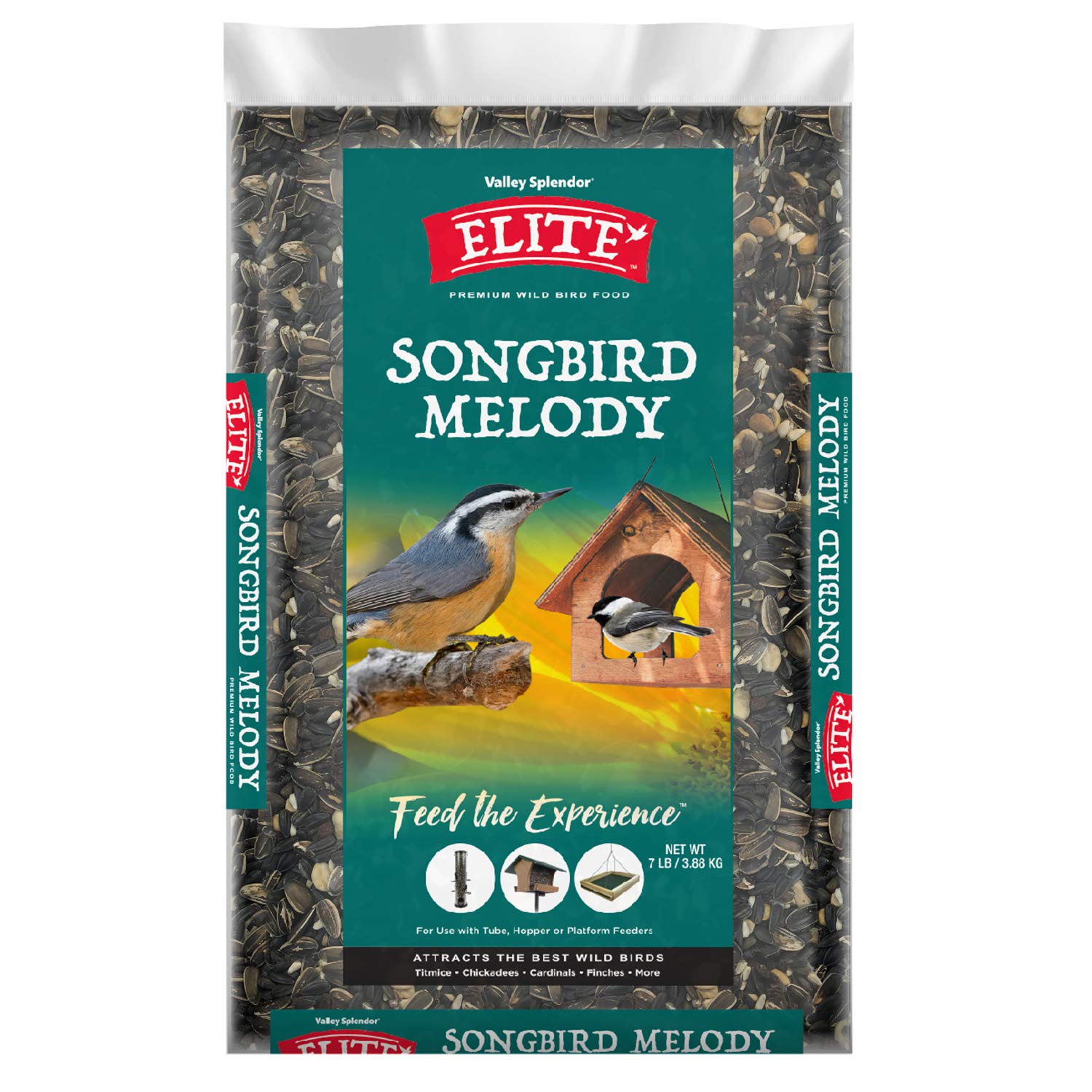
This berry-scented, vitamin-enriched blend combines black oil sunflower seeds, safflower, peanuts, striped sunflower, and raisins. The addition of vitamin A and D supports feather development and bone health during molting season, which begins in late summer across New England. The berry scent is mild for humans but appears to increase feeder discovery speed based on customer observations.
The absence of filler ingredients like milo or wheat means nearly every seed in the bag gets consumed. The 7-pound size is a good compromise for single-feeder households that want variety without committing to a larger bag that might go stale. Peanuts and raisins add protein and natural sugars that attract woodpeckers and blue jays.
Some users noted that the raisins can clump if exposed to high humidity, so a covered feeder or hopper with proper ventilation is ideal. For a mid-size blend that covers multiple species while delivering extra trace nutrients, this bag hits a strong balance.
Why we love it
- Vitamin A and D help birds during molt and winter
- Berry scent aids rapid feeder discovery
- No filler seeds reduces waste under the feeder
Good to know
- Raisins may clump in damp weather
- Small bag size requires more frequent refills
3. Valley Farms Fruit Nut & Berry
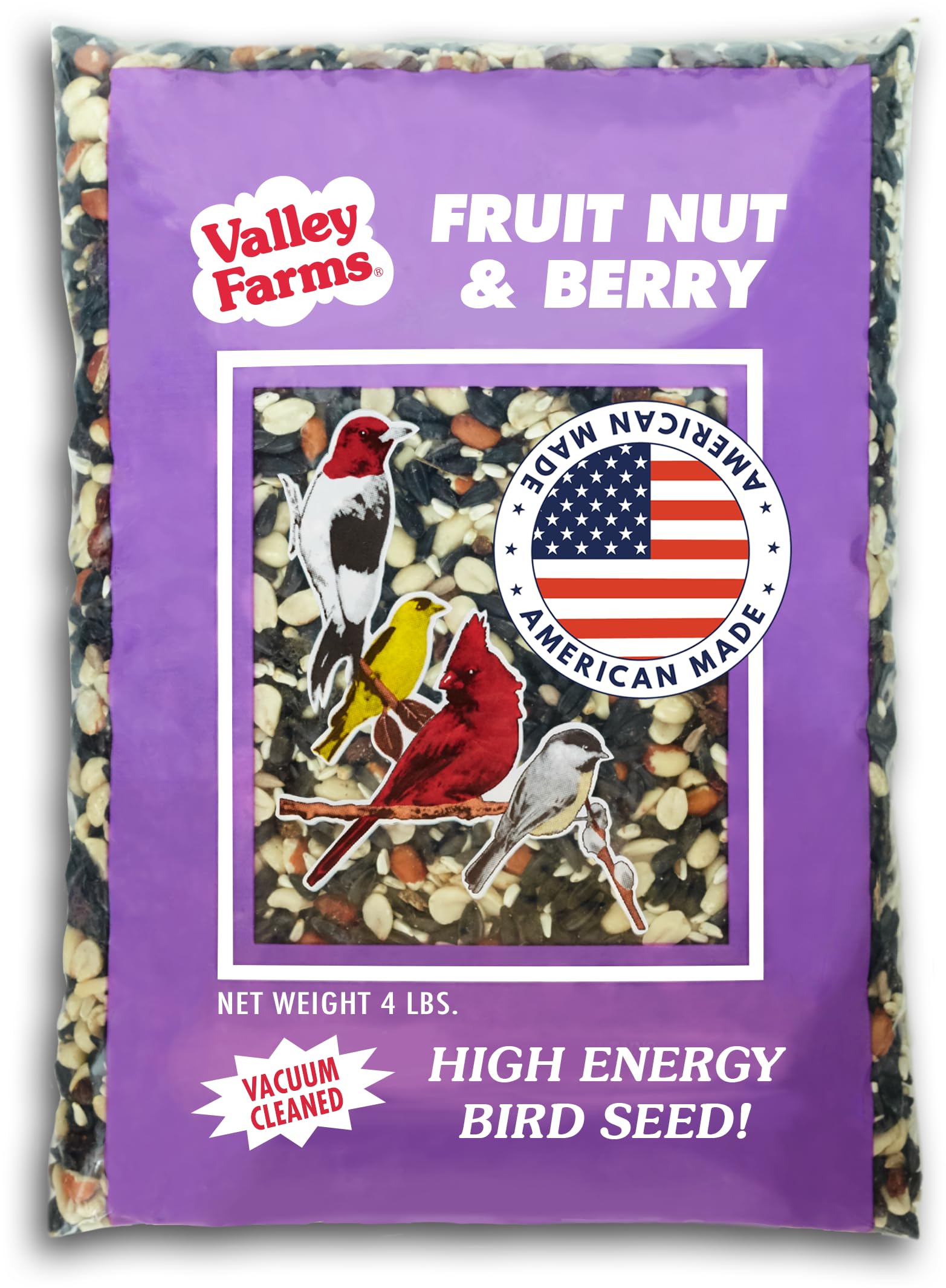
This USA-made specialty mix features dried berries and fruit pieces alongside sunflower hearts, peanut kernels, black oil sunflower, and safflower seed. The vacuum-cleaned processing removes dust and chaff, which is a major advantage during New England’s wet springs when damp dust can accelerate mold growth in feeders. The fruit content mimics the natural diet of tanagers, thrushes, and orioles that pass through during migration.
Sunflower hearts and peanut kernels provide direct energy without the hull debris that accumulates under feeders. The safflower component draws cardinals and grossbeaks specifically, while the black oil sunflower keeps chickadees and titmice visiting. The 4-pound bag is compact, making it easy to store in a sealed container without taking up much space.
Because of the fruit content, this blend works best in large-port feeders or open trays where birds can pick out their preferred pieces. Some customers reported that squirrels are especially drawn to the dried fruit, so a cage-style feeder may be necessary for squirrel-heavy yards.
Why we love it
- Vacuum-cleaned to minimize dust and mold risk
- Dried fruit attracts migratory species not drawn to plain seed
- Sunflower hearts offer waste-free eating
Good to know
- Small 4-pound bag is not suited for high-traffic feeders
- Fruit pieces can soften in heavy rain
4. Schoen Farms Gourmet Wild Bird Food Mix
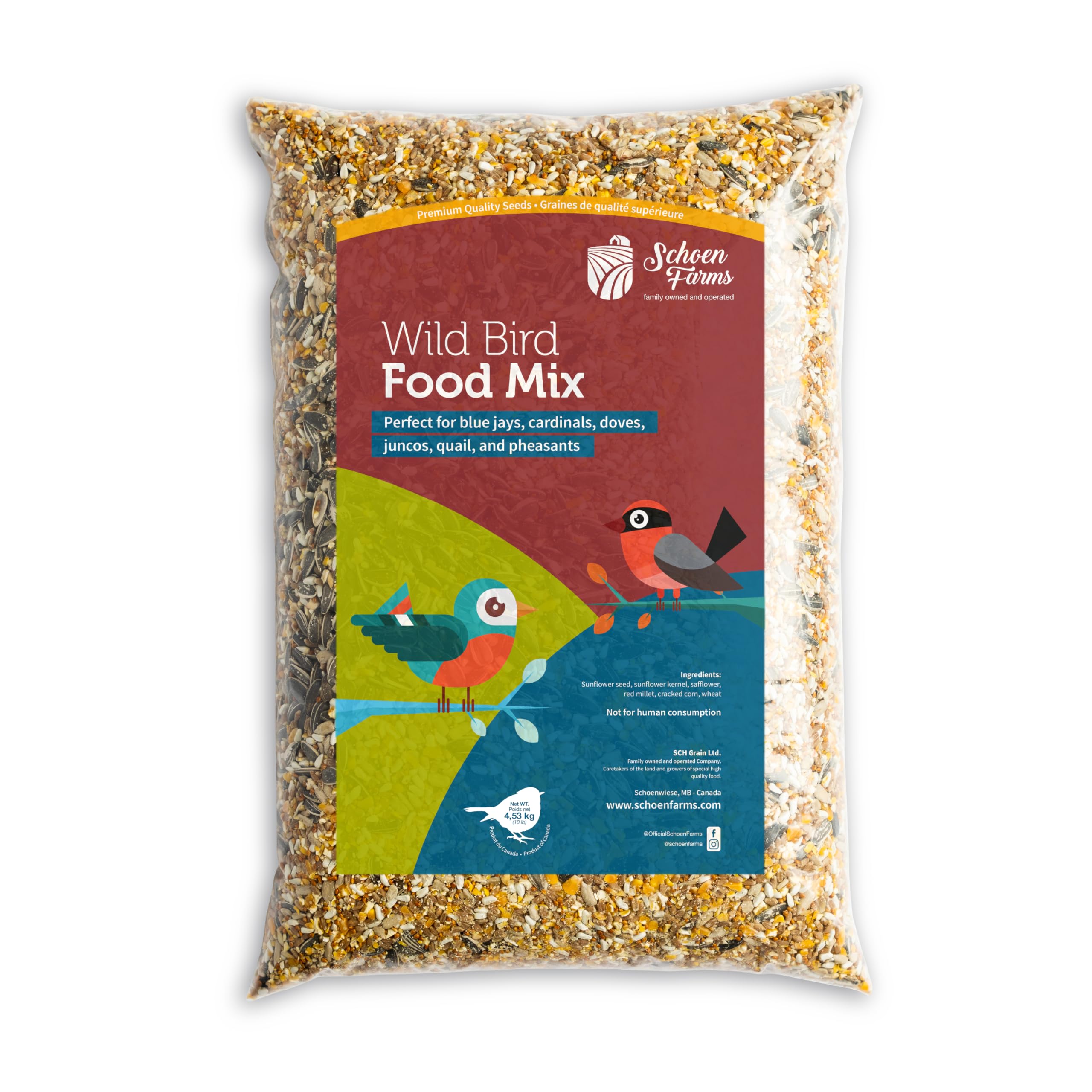
This family-farm blend combines sunflower seeds, sunflower kernels, safflower, red millet, cracked corn, and wheat. The safflower seed content helps deter grackles and starlings while attracting cardinals, making it a strategic choice for New England yards dominated by these species. The 10-pound bag offers strong volume for multi-feeder setups at a weight that is easy to pour without needing a scoop.
Customer feedback highlights that birds consume nearly everything in the mix, leaving little mess compared to grocery store blends with high millet content. Red millet and cracked corn appeal to ground-feeding birds like doves and sparrows, widening the species range without encouraging aggressive flocking. The family-farm sourcing claim aligns with buyers who prioritize supply chain transparency.
Because wheat and corn are included, this blend is best stored in a weatherproof container to prevent moisture from spoiling the grains. For feeders placed over concrete or gravel, the limited germination reported by users is a practical bonus.
Why we love it
- Safflower seed reduces unwanted bully birds
- High consumption rate means less wasted seed
- 10-pound bag offers strong value for volume
Good to know
- Wheat and corn can spoil if not stored dry
- Ground feeders may still drop uneaten millet
5. Happy Wings Finch Blend
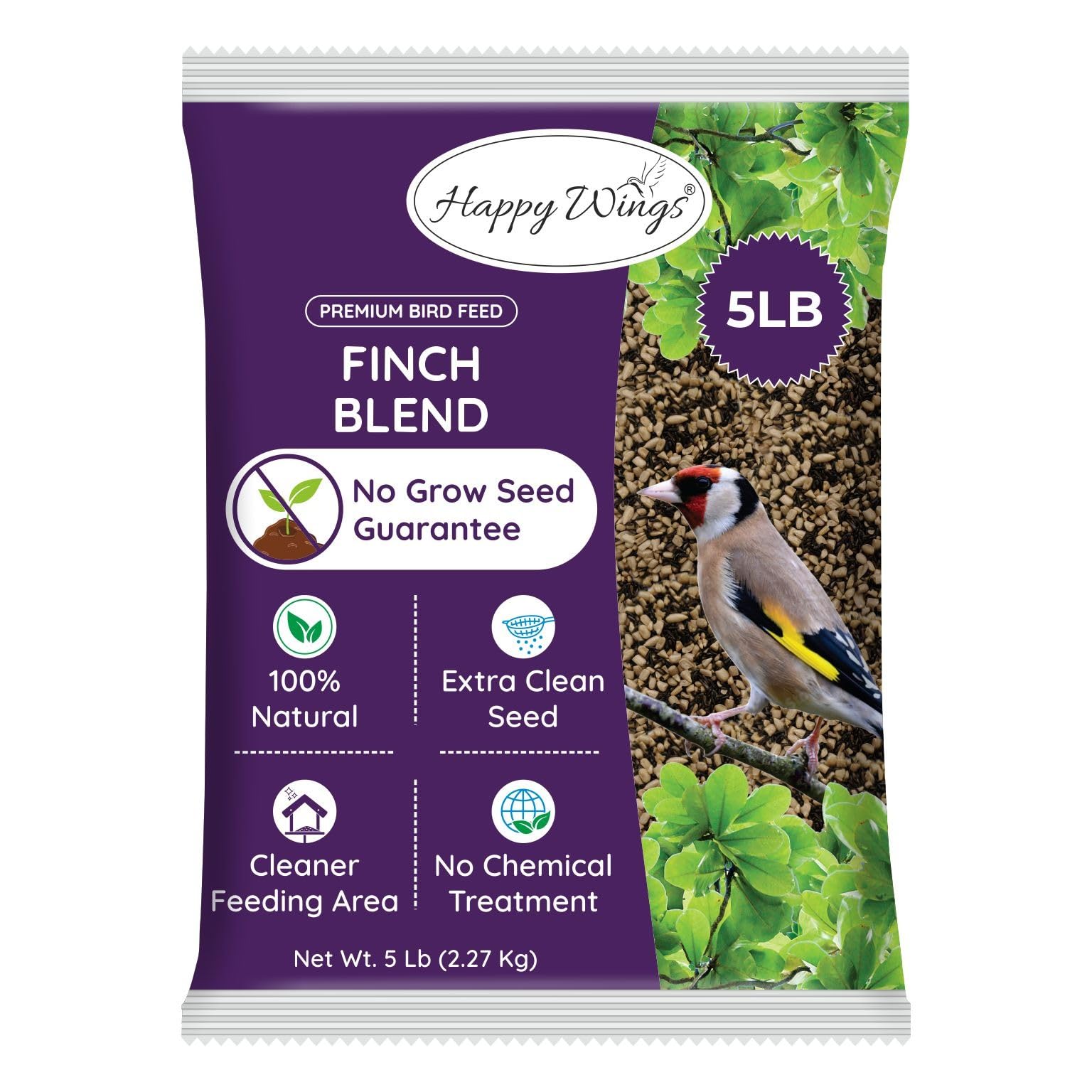
This finch-specific blend pairs sunflower hearts with nyjer (thistle) seed, both of which have been heat-treated to prevent germination. For New England homeowners who hate battling weeds under the feeder, this no-grow feature is a major time saver. The high oil content from both ingredients delivers the calorie density finches need during cold snaps, and the absence of shells means zero hull cleanup.
Processed in a USDA and BRC-GS approved facility, this blend meets the Wild Bird Feeding Institute’s quality standards. The 5-pound bag is a practical size for finch-specific tube feeders that use small ports designed for nyjer. Customers report strong attraction from goldfinches, house finches, and pine siskins even during late fall when many finches migrate south.
Because the seed is heat-treated, it may be slightly drier than raw seed, so storing the bag in a cool, dark location helps maintain moisture content. For anyone managing a tidy backyard or a patio feeder where dropped seeds are not acceptable, this blend solves the weed problem directly.
Why we love it
- No-grow seeds prevent weed sprouts in lawn and gravel
- Hull-free blend leaves no shell mess
- High oil content fuels finches during winter
Good to know
- 5-pound bag may need frequent refills for busy feeders
- Heat treatment can reduce moisture slightly
FAQ
What seeds should I avoid in a New England bird feeder?
How do I prevent seeds from sprouting under my feeder?
Will black oil sunflower seeds attract squirrels in New England?
Final Thoughts: The Verdict
For most gardeners, the bird seed for new england winner is the Old Potters Black Oil Sunflower Seeds because its freshness and high oil content support the widest variety of species through harsh winters. If you want a no-mess experience with vitamin enrichment, grab the Songbird Melody by Valley Splendor. And for a clean backyard free of weed sprouts, nothing beats the Happy Wings Finch Blend.