
Every serious backyard birder knows the frustration: you buy a large bag of seed, scatter it in the feeder, and watch half of it get kicked to the ground by hungry finches—or worse, ignored entirely by the cardinals you were hoping to attract. The difference between a feeder that sits full and one that gets mobbed by songbirds often comes down to a single decision: what blend you pour into it.
I’m Mo Mahin — the founder and writer behind Furric. I’ve spent years combing through nutritional data, analyzing seed-to-waste ratios across hundreds of blends, and studying the feeding habits of North American songbirds to help birders make smarter purchases without the guesswork.
This guide cuts through the marketing fluff and filler ingredients to deliver a curated, no-nonsense selection of the best bird seed for wild birds, ranked by nutritional density, species appeal, and how much actual food hits the ground versus the feeder.
How To Choose The Best Bird Seed For Wild Birds
Not all seed blends are created equal—many contain cheap fillers like milo, wheat, and oats that most wild birds will toss aside rather than eat. Selecting the right mix for your area and feeder type directly impacts how many birds visit your yard and how much money you waste on uneaten seed.
Understand the Ingredient Hierarchy
Black oil sunflower seed is the gold standard for attracting the widest variety of songbirds, including cardinals, chickadees, and finches. White millet appeals to ground-feeding birds like doves and sparrows, while safflower is a favorite of cardinals and is less attractive to squirrels. Peanut pieces provide high-energy fat for woodpeckers and nuthatches. Blends with a high percentage of these premium ingredients will always outperform bags filled with red milo or cracked corn.
Match the Blend to Your Feeder Type
Tube feeders with small ports work best with hulled seeds or sunflower chips, while hopper and platform feeders can handle whole seeds and mixes. If you use a smart camera feeder or a tray feeder on a patio, a “no mess” or “waste free” blend—composed of shell-less seeds and nut pieces—will keep your feeding area clean and prevent unwanted growth beneath the feeder.
Consider No-Grow and Waste-Free Formulations
“No grow” bird seed is heat-treated to prevent germination, making it ideal for lawns and landscaped areas where you do not want volunteer seedlings popping up. “No mess” blends remove the indigestible hulls so that birds eat the entire seed, leaving no pile of empty shells on the ground. Both formulations reduce cleanup effort and attract more birds by eliminating the debris many species avoid.
Quick Comparison
On smaller screens, swipe sideways to see the full table.
| Model | Category | Best For | Key Spec | Amazon |
|---|---|---|---|---|
| Happy Wings 15 lb | Black Oil Sunflower | Attracting many species year-round | 15 pounds, high-oil content | Amazon |
| Audubon Park 12 lb | No Mess Blend | Clean patios and decks | 12 pounds, shell-free | Amazon |
| Cool Birds Classic Blend | Mixed Blend | Attracting a variety of perching and ground birds | 10 pounds, multi-ingredient | Amazon |
| Happy Wings 5 lb | Black Oil Sunflower | Pinpoint feeding for finches and chickadees | 5 pounds, no-grow | Amazon |
| Kaytee Seed & Suet | Seed & Suet Mix | Attracting woodpeckers | 10 pounds, blueberry flavor | Amazon |
In‑Depth Reviews
1. Happy Wings Black Oil Sunflower Seeds – 15 Pounds
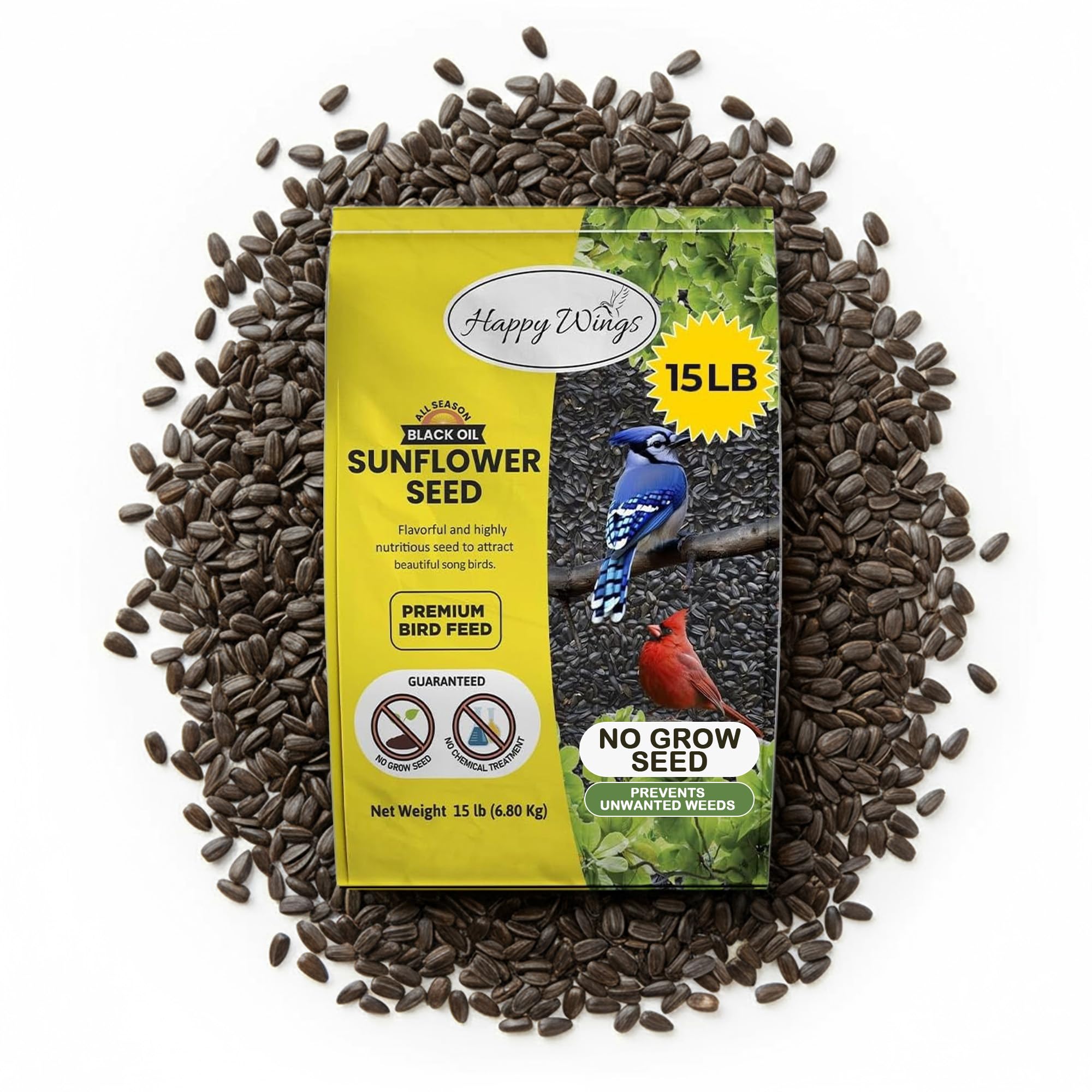
At 15 pounds of pure black oil sunflower seed, this bag from Happy Wings is the single-grain powerhouse that serious birders rely on when they want to maximize species diversity. Black oil sunflower is the most universally accepted seed among North American songbirds, and this formulation is heat-treated to eliminate germination, meaning you won’t see sunflower sprouts popping up under your feeder. The high oil content—around 40 percent—provides essential fat and protein that helps birds maintain energy reserves during cold months and nesting season.
This seed is processed in a USDA- and BRC-GS–approved facility and meets the quality standards of the Wild Bird Feeding Institute, which means you are getting consistent kernel size and minimal dust or debris in the bag. It attracts mourning doves, siskins, tufted titmice, chickadees, and cardinals, making it a versatile option for nearly any backyard setup. The 15-pound size strikes a practical balance between value and storage—large enough to reduce refill frequency but not so massive that it becomes difficult to pour into a tube or hopper feeder.
Because it is a whole-seed product, some hull waste will accumulate under the feeder over time. However, the no-grow treatment ensures those hulls do not lead to unwanted plants, and the seed itself is 100 percent edible with no filler ingredients. If you have a busy feeder area or want to support a large local bird population through the winter, this bag delivers the highest raw nutritional density per pound in this roundup.
Why we love it
- Pure black oil sunflower—no filler ingredients like milo or oats
- No-grow treatment prevents unwanted sprouts beneath feeders
- Processed in USDA-approved facility with consistent quality
Good to know
- Whole seeds produce empty hulls that accumulate on the ground
- Does not include safflower, millet, or peanut pieces for species variety
2. Audubon Park Waste Free Wild Bird Seed – 12 lb
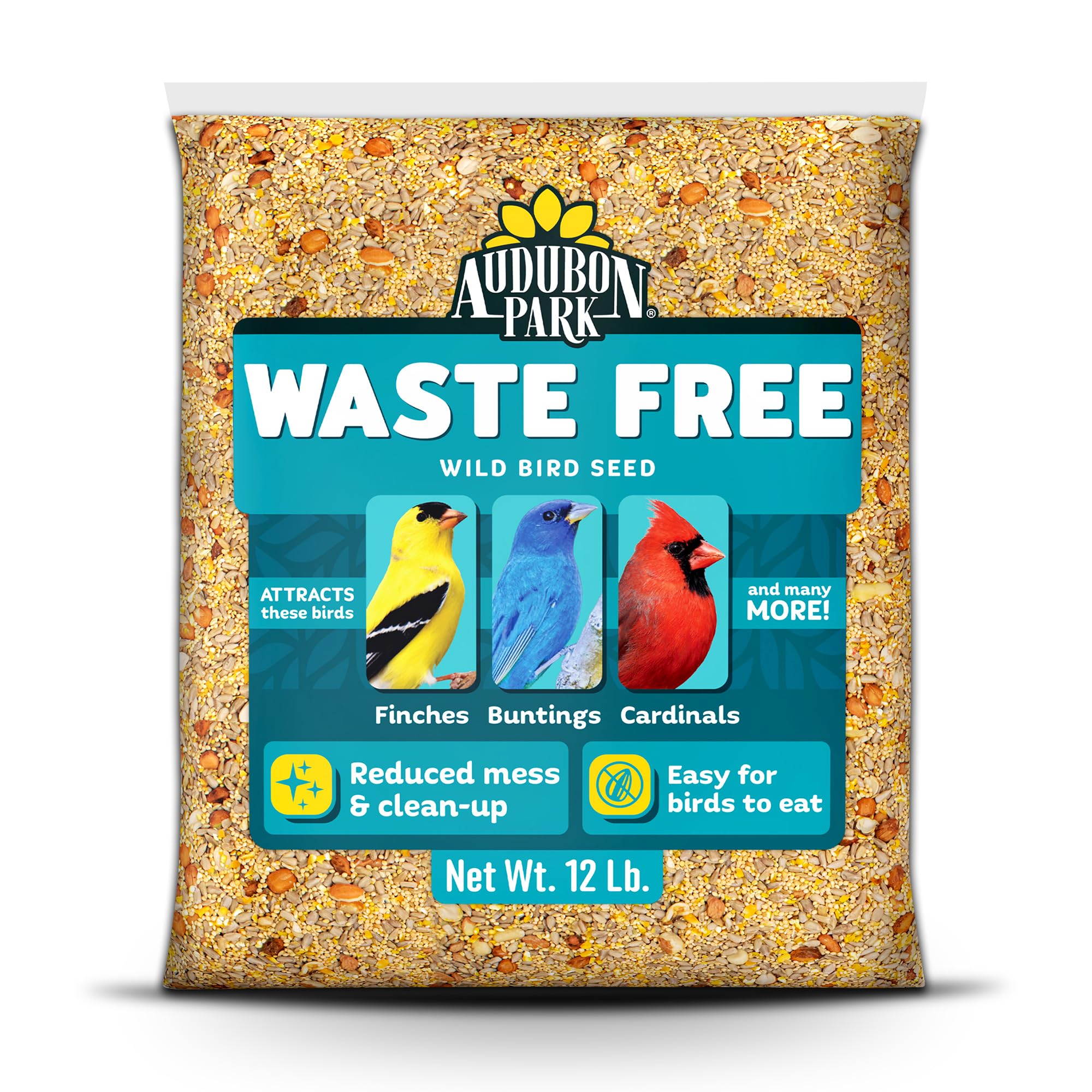
Audubon Park’s Waste Free blend is engineered specifically for birders who want to eliminate the mess of shell debris. The 12-pound bag contains only sunflower hearts, sunflower chips, and peanut pieces—no hulls, no fillers, and no waste. Every gram in this bag is 100 percent edible, which means zero accumulation of emptied hulls under your feeder. For anyone maintaining a feeder on a wooden deck, a concrete patio, or a shared balcony, this feature alone justifies the purchase.
The nutritional profile is built around high-energy ingredients that appeal to finches, cardinals, thrushes, wrens, buntings, and a wide range of other songbirds. The sunflower hearts provide the same oil and protein punch as whole sunflower seeds but without the indigestible outer shell, so smaller birds can feed more efficiently. The peanut pieces add an extra fat source that draws woodpeckers and nuthatches. This blend works well in tube, tray, hopper, platform, and smart camera feeders, giving you flexibility to use whichever setup you prefer.
The main trade-off is that shell-free seed tends to spoil faster than whole seeds if exposed to moisture, especially in humid climates or during rainy seasons. You should only fill your feeder with enough for a few days and store the sealed bag in a cool, dry location. If you prioritize a pristine feeding area and are willing to manage smaller refill batches, this is the cleanest option on the list.
Why we love it
- Zero waste—no hulls, no shells, no ground debris
- High-energy mix of sunflower hearts and peanut pieces
- Ideal for decks, patios, and smart camera feeders
Good to know
- Shell-free seed can spoil faster in humid weather
- Lacks millet and safflower, so ground-feeding birds may visit less
3. Cool Birds All Birds Wild Bird Seed – 10 lb
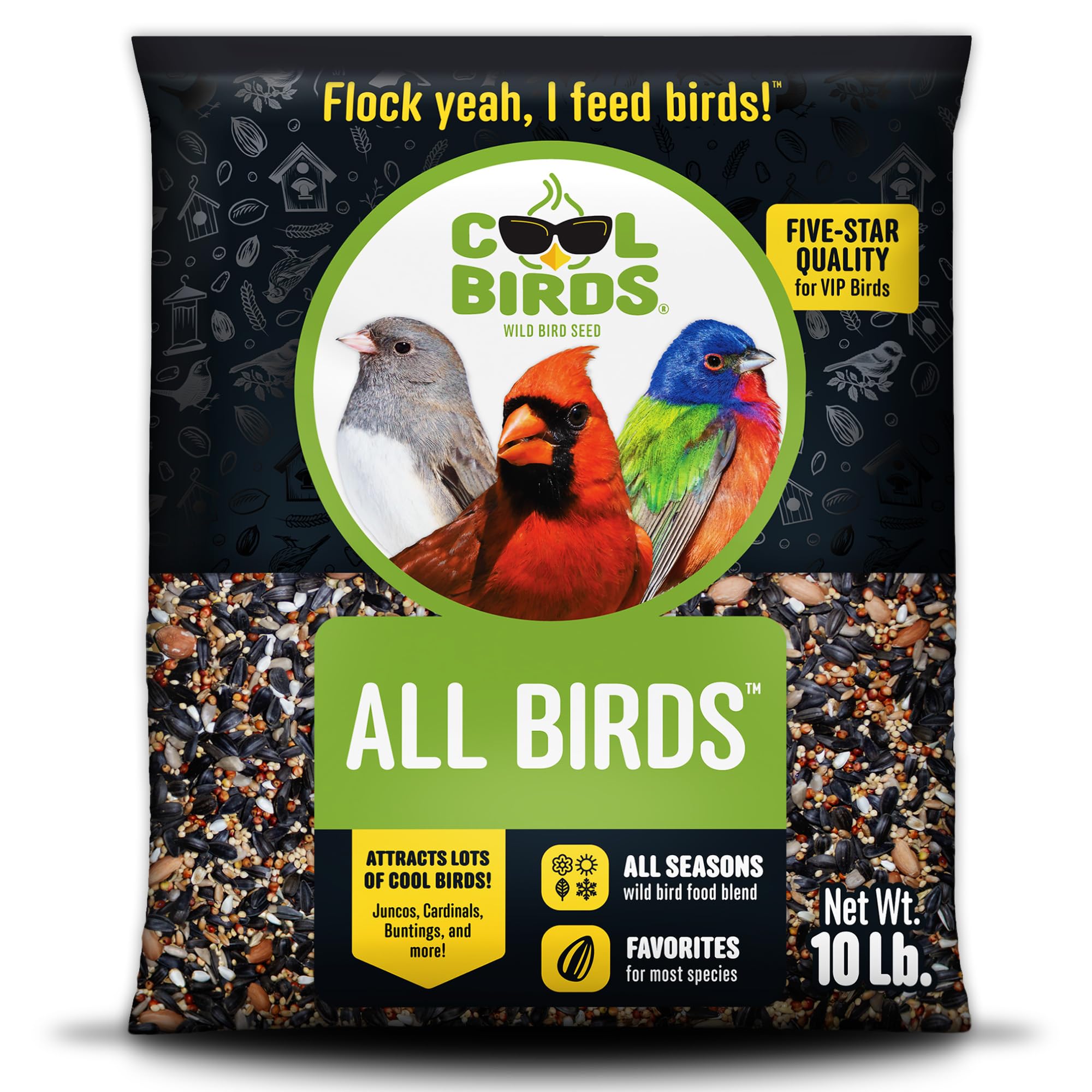
The Cool Birds Classic Blend is a well-rounded mix that includes black oil sunflower, white millet, safflower, peanuts, and sunflower hearts—five ingredients that collectively attract the broadest range of species in this review. Sunflower brings the cardinals and chickadees, white millet appeals to doves and sparrows, safflower is a squirrel-resistant option that cardinals love, and peanuts deliver high-calorie fat for jays and woodpeckers. The sunflower hearts add a waste-free core that minimizes the accumulation of empty hulls.
This 10-pound bag is formulated to work in tray, tube, hopper, platform, and smart camera feeders, so you are not locked into a single feeding method. The blend is also appropriate for ground-feeding birds, which means you can scatter a portion on a clean patch of lawn to attract species that prefer foraging at ground level. The lack of artificial colors and the “raw” dietary type ensure that the seeds are in their natural state, with no unnecessary coatings or preservatives.
Because this is a multi-ingredient mix, some birds may selectively eat their preferred seeds and leave others behind. Safflower and millet are generally well-accepted, but if your local bird population is heavily skewed toward one species, you may see some ingredient sorting. The 10-pound size is convenient for moderate feeders—you can keep it fresh without committing to a massive bag that takes months to empty.
Why we love it
- Five premium ingredients attract the widest species variety
- Works in all feeder types including smart camera models
- No artificial colors or preservatives
Good to know
- Some birds may selectively pick preferred seeds and leave others
- 10-pound bag may require more frequent refills during heavy feeding periods
4. Happy Wings Black Oil Sunflower Seeds – 5 lb
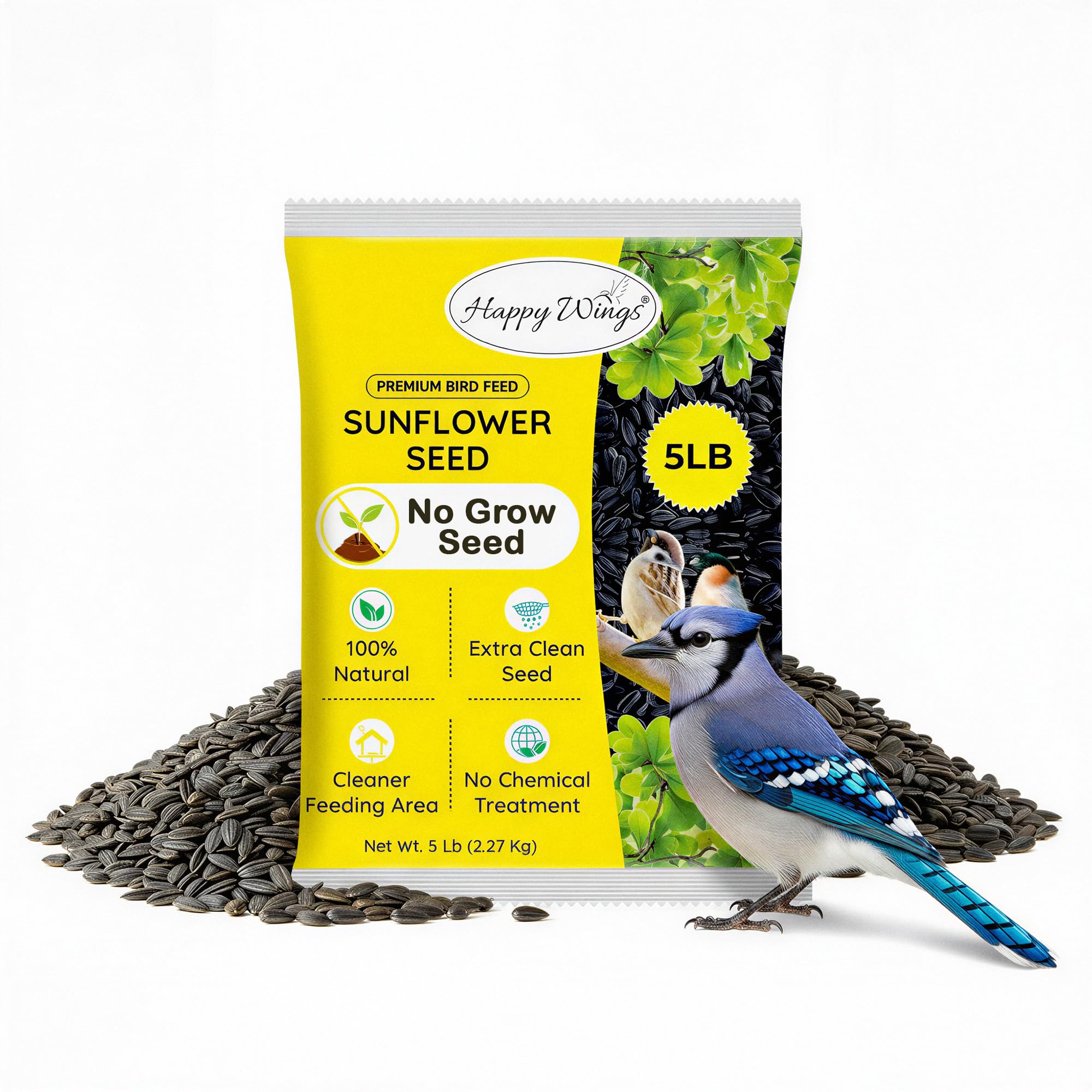
If you are new to feeding wild birds or have a small outdoor space like a balcony or a tiny patio, the Happy Wings 5-pound bag of black oil sunflower seeds is the ideal entry point. It offers the same nutritional value as the larger 15-pound sibling—rich in natural oils, fats, and proteins that support year-round health—but in a size that is easier to store and use up before the seed loses freshness. The no-grow formulation prevents unwanted sprouts under your feeder, which is especially important in small or landscaped areas where you want to avoid volunteer sunflower plants.
The seeds are processed in USDA- and BRC-GS–approved facilities, and the brand adheres to the quality standards of the Wild Bird Feeding Institute. This means you get clean seeds with minimal dust and consistently sized kernels that work well in tube feeders with small ports. The high-oil content makes it a favorite among finches, sparrows, chickadees, and cardinals, and the 5-pound bag is light enough to refill easily without lifting heavy loads.
Because this is a whole-seed product, you will still see some hull accumulation under the feeder over time. The no-grow treatment ensures those hulls do not lead to sprouting, but you will need to sweep or rake the area periodically. The best use case for this bag is as a trial run for a new feeder setup, or as a secondary seed type if you already have a larger mixed blend in a hopper feeder.
Why we love it
- No-grow treatment prevents germination beneath feeders
- 5-pound size is ideal for small spaces and trial feeding
- High-oil black oil sunflower seed—proven species attractant
Good to know
- Whole seeds produce hull waste that requires periodic cleanup
- Only 5 pounds—frequent refill needed for active feeders
5. Kaytee Seed & Suet No Mess Blend Blueberry Flavor – 10 Pounds

Kaytee’s Seed & Suet blend is the only product in this roundup that combines traditional seed with suet nuggets in a single bag, delivering a dual-texture feeding experience that wild birds find irresistible. The blueberry-flavored suet adds a fruit-based energy boost that standard seed blends lack, and the brand claims this formulation attracts three times more woodpeckers than black oil sunflower alone. For birders specifically targeting woodpeckers, flickers, and other suet-loving species, this blend is a powerful tool.
The entire mixture is 100 percent edible—seeds and suet nuggets alike—so there is no leftover waste on your lawn. It performs well in tube, hopper, and platform feeders, although the suet nuggets are larger than standard seeds, so you will want a feeder with openings wide enough to accommodate them. The 10-pound bag provides a good balance of volume and freshness, and the lack of hulls means you can use it on a deck or patio without shell debris piling up underneath.
The blueberry flavor is a natural fruit enhancer rather than a synthetic chemical additive, but birds are primarily attracted by the high-fat content of the suet rather than the fruit taste itself. If you have a mix of suet-loving and seed-eating birds in your area, this blend simplifies feeding by giving you one bag that covers both groups. The main limitation is that it does not include millet or safflower, so ground-feeding species like doves may visit less frequently.
Why we love it
- 100 percent edible—no hull waste on the ground
- Suet nuggets attract three times more woodpeckers than sunflower alone
- Blueberry flavor adds natural fruit-based energy without synthetics
Good to know
- Suet nuggets are larger than standard seeds—check feeder port size
- Lacks millet and safflower, so ground-feeding birds may be less attracted
FAQ
What is the difference between black oil sunflower and striped sunflower seed?
How do I prevent squirrels from eating my bird seed?
Should I feed wild birds year-round or only in winter?
What does “no grow” bird seed mean and is it necessary?
Final Thoughts: The Verdict
For most gardeners, the bird seed for wild birds winner is the Happy Wings Black Oil Sunflower Seeds 15-Pound Bag because it delivers the highest nutritional density per pound with zero filler ingredients, a no-grow treatment to prevent yard sprouts, and a size that keeps your feeder full for weeks. If you want a completely mess-free experience on a deck or patio, grab the Audubon Park Waste Free 12-Pound Blend with its shell-free sunflower hearts and peanut pieces. And for attracting woodpeckers and suet-loving species with ease, nothing beats the Kaytee Seed & Suet Blueberry Blend.