
Every serious birder knows the feeling — you spot a rare warbler through the brush, raise your gear, and either capture a sharp, frame-worthy image or watch the moment slip away. That split-second difference between a keeper and a miss comes down to one decision: the optics and camera system you trust in the field. After years of watching photographers struggle with slow autofocus, soft telephoto reach, and gear that can’t handle a light drizzle, I’ve learned exactly what separates reliable field equipment from disappointing shelfware.
I’m Mo Mahin — the founder and writer behind Furric. I’ve spent countless hours comparing optical performance, studying autofocus systems, and evaluating feedback from experienced bird photographers to bring you honest, practical recommendations that hold up in real conditions.
After comparing dozens of models and reading real owner feedback, this guide will help you find the right best birding camera for your budget and style.
How To Choose The Best Birding Camera
Bird photography demands gear that balances reach, speed, and durability. Unlike general photography, you’re often shooting small, fast-moving subjects at significant distances, sometimes in challenging light and weather. Understanding the key specifications that matter for birding will save you from investing in equipment that looks good on paper but disappoints in the field.
Focal Length and Effective Reach
The single most important factor for birding is how close you can make a distant bird appear. Full-frame shooters typically need at least 400mm, while Micro Four Thirds users get a 2x crop factor, turning a 300mm lens into a 600mm equivalent. Don’t overlook superzoom cameras like the Nikon COOLPIX P1000 either — a built-in 125x optical zoom eliminates the need to carry multiple lenses and offers incredible reach in a single, portable package.
Autofocus Performance and Tracking
Birds move unpredictably. A camera with fast, reliable autofocus and subject tracking is non-negotiable. Look for systems with phase-detection AF points across a wide area of the frame, and pay attention to real-world reviews of tracking performance — especially for birds in flight. Mirrorless cameras have closed the gap with DSLRs in this area, and many now offer dedicated bird or animal eye-tracking modes that make a noticeable difference.
Image Stabilization and Low-Light Capability
Handheld birding at long focal lengths amplifies every tiny shake. In-body image stabilization (IBIS) combined with lens-based optical stabilization gives you the best chance at sharp shots when shutter speeds drop. A 5-stop or better stabilization system can mean the difference between a blurry mess and a publishable image at dawn or dusk. Consider sensor size too — larger sensors generally perform better in low light, but modern stacked sensors in Micro Four Thirds bodies have closed the gap impressively.
Quick Comparison
On smaller screens, swipe sideways to see the full table.
| Model | Type | Best For | Key Feature | Amazon |
|---|---|---|---|---|
| OM SYSTEM OM-1 | Mirrorless Camera | Birding in tough weather | 20MP Stacked Sensor, IP53 Sealing | Amazon |
| Panasonic LUMIX G9 | Mirrorless Camera | High-speed burst shooting | 20.3MP, 6.5-Stop Dual I.S.2 | Amazon |
| Sony FE 200-600mm | Telephoto Lens | Long-reach wildlife | 5x ED Glass, DDSSM Autofocus | Amazon |
| Nikon COOLPIX P1000 | Superzoom Camera | Extreme zoom reach | 125x Optical Zoom, 4K UHD Video | Amazon |
| Canon RF100-400mm | Telephoto Lens | Lightweight telephoto | 5.5-Stop IS, Nano USM | Amazon |
| OM SYSTEM 150-600mm | Telephoto Lens | Maximum focal length | 1200mm Reach, Sync IS | Amazon |
| Canon EF 100-400mm II | Telephoto Lens | Professional wildlife | L-Series Build, ASC Coating | Amazon |
| Vortex Razor HD | Spotting Scope | Long-distance glassing | Triplet APO Lens, 27-60x Zoom | Amazon |
| Panasonic LUMIX G7KS | Mirrorless Camera | Entry-level 4K | 16MP, 4K Photo Modes | Amazon |
| Nikon D5100 | DSLR Camera | Budget DSLR start | 16.2MP, Articulating LCD | Amazon |
| Swarovski NL Pure 12×42 | Binoculars | Premium handheld view | 12×42, Waterproof/Fogproof | Amazon |
In-Depth Reviews
1. OM SYSTEM OM-1

The OM SYSTEM OM-1 represents a genuine leap forward for bird photographers who demand performance without sacrificing portability. Its 20MP Stacked BSI Live MOS sensor paired with the TruePic X engine delivers processing power that rivals much larger and heavier full-frame systems. The Cross Quad Pixel AF system covers the entire frame with 1,053 cross-type phase-detection points, giving you fast, confident focus even when tracking a small bird darting through branches. This camera was built specifically for outdoor enthusiasts who need reliable autofocus in challenging conditions.
What truly sets the OM-1 apart is its computational photography suite and extreme weather resilience. Handheld High Res Shot, Live ND, Focus Stacking, and HDR modes give you creative freedom without a tripod. The IP53 rating means it shrugs off dust, rain, and freezing temperatures down to -10°C — a serious advantage for winter birders and tropical field work alike. The 120fps sequential shooting with AF tracking is overkill for most scenarios, but having that buffer for a split-second flight shot provides real peace of mind. The 5-axis image stabilization works seamlessly with Olympus and OM System lenses.
For birders who want a lightweight, rugged body that handles anything the weather throws at it, the OM-1 is the most complete package available today. The Micro Four Thirds system gives you a 2x crop factor, turning every lens into a telephoto powerhouse, and the lens ecosystem is mature and affordable compared to full-frame alternatives. If you shoot in harsh conditions or simply refuse to let a little rain stop your session, this camera is worth every bit of its premium price. Experienced bird photographers consistently praise its keeper rate in real-world use.
Why we love it
- Incredible weather sealing for all-conditions birding
- Cross Quad Pixel AF locks onto birds instantly
- Stacked sensor delivers excellent resolution and low noise
- Computational modes add creative flexibility in the field
Good to know
- Micro Four Thirds sensor has more noise at high ISO than full-frame
- Menu system can feel dense for new users
- Battery life is adequate but not class-leading
2. Panasonic LUMIX G9

The Panasonic LUMIX G9 is a photographer-first mirrorless body that prioritizes handling, burst speed, and stabilization above all else. Its 20.3MP sensor with 80MP high-resolution mode gives you flexibility for both action and detail-oriented shots. The 0.04-second autofocus lock and 60fps burst with electronic shutter mean you can capture the exact moment a bird takes flight without hunting for focus. The massive 3,680K-dot OLED viewfinder with 120fps refresh and 0.83X magnification is among the best in class, making manual focus and composition a genuine pleasure even in bright sunlight.
Where the G9 truly shines for birding is the 5-Axis Dual I.S.2 stabilization, which combines gyro, accelerometer, and image sensor data for up to 6.5 stops of correction. When paired with a compatible Lumix O.I.S. lens, you can handhold shots at shutter speeds that would normally require a tripod. The dual UHS-II SD card slots give you backup and relay options for extended field sessions, and the magnesium alloy body is splash-proof and dust-proof for reliable outdoor use. The 225-area contrast-detect AF system is fast and accurate, though phase-detect fans may notice the difference in low-contrast scenarios.
Serious birders who value viewfinder quality, stabilization, and blistering burst speeds will find the G9 a capable and comfortable companion. The Leica Vario-Elmarit 12-60mm kit lens offers versatile coverage, but pairing this body with a dedicated telephoto lens like the Panasonic 100-400mm unlocks its full potential for bird photography. The Micro Four Thirds system keeps the overall kit compact, and the G9’s ergonomic grip is well-suited for long handheld sessions. It delivers excellent value for the performance on offer.
Why we love it
- Best-in-class viewfinder makes composition effortless
- 6.5-stop stabilization enables sharp handheld telephoto shots
- 60fps burst captures split-second flight action
- Dual card slots for backup peace of mind
Good to know
- Contrast-detect AF can struggle in very low contrast scenes
- Battery life is average for mirrorless
- Menu system has a learning curve
3. Sony FE 200-600mm f/5.6-6.3 G OSS

The Sony FE 200-600mm f/5.6-6.3 G OSS is a dedicated super-telephoto zoom lens built for full-frame E-mount users who demand sharpness across the entire focal range. The 5x ED (extra-low dispersion) glass elements aggressively control chromatic aberration and flaring, delivering clean, contrasty images even wide open. The Direct Drive Supersonic Wave Motor (DDSSM) provides fast, near-silent autofocus that locks onto birds without startling them. The internal zoom mechanism keeps the lens balanced during shooting, which is critical when tracking erratic flight paths.
Optical stabilization rated at 5 stops gives you a solid foundation for handheld shooting, and when paired with a Sony body that has IBIS, the combined stabilization is genuinely impressive for such a long lens. The Nano AR coating suppresses reflections and ghosting, making backlit bird shots much more manageable. The lens accepts 95mm filters and is compatible with Sony’s 1.4x and 2x teleconverters, pushing the reach to 840mm or 1200mm respectively. Build quality is robust with dust and moisture resistance, though it’s not sealed to the same standard as higher-end G Master lenses.
Full-frame Sony shooters looking for a dedicated birding telephoto that doesn’t cost as much as a G Master will find the 200-600mm G OSS to be an outstanding balance of reach, image quality, and value. It pairs beautifully with the Sony A1, A7R V, or A9 series for birds-in-flight work, and the autofocus performance is snappy enough to keep up with fast-moving subjects. Experienced bird photographers rate this lens highly for its consistent sharpness and reliable autofocus tracking in real-world conditions. It is a go-to recommendation for serious Sony birders.
Why we love it
- Excellent sharpness from 200mm to 600mm
- Fast, quiet DDSSM autofocus suits wildlife work
- Internal zoom keeps balance stable while shooting
- Teleconverter compatible for extended reach
Good to know
- f/6.3 at the long end limits low-light performance
- Large and heavy for extended handheld use
- Weather sealing is good but not pro-grade
4. Nikon COOLPIX P1000

The Nikon COOLPIX P1000 is a superzoom bridge camera that defies expectations with a built-in 125x optical zoom lens reaching an incredible 3000mm equivalent. This single camera eliminates the need for multiple lenses, tripods, and heavy camera bags — you get extreme telephoto reach in a self-contained package that fits in a standard camera backpack. The 16MP sensor is modest by modern standards, but the sheer optical reach allows you to capture birds at distances that would leave interchangeable lens systems struggling even with massive telephoto primes. Dual Detect Optical Vibration Reduction helps keep handheld shots steady at full extension.
Beyond the headline zoom, the P1000 offers 4K UHD video with HDMI output, an accessory hot shoe for external microphones, and full manual controls for photographers who want to grow their skills. The vari-angle 3.2-inch LCD screen makes it easy to compose shots from awkward angles, and the electronic viewfinder provides a clear view in bright conditions. RAW (NRW) shooting gives you post-processing flexibility, and the camera includes time-lapse and super-lapse modes for creative projects. The Snap-Back zoom feature helps you locate a bird at wide angle and instantly return to your telephoto position — a practical tool for field use.
Birders who prioritize maximum zoom reach without the complexity, cost, and weight of interchangeable lens systems will find the Nikon COOLPIX P1000 to be a uniquely capable tool. It is not a low-light champion, and the small sensor means image quality tops out below what larger systems can deliver, but for daytime birding at extreme distances, nothing in this price range comes close. Dedicated bird photographers often keep one as a dedicated scope camera or travel companion. It fills a niche that few other cameras can touch.
Why we love it
- Unmatched 125x optical zoom in a single unit
- No lens swapping needed for extreme reach
- Snap-Back zoom aids fast target acquisition
- 4K video with external mic support
Good to know
- Small sensor limits low-light and dynamic range
- Autofocus can hunt at full zoom extension
- Bulky for a fixed-lens camera
5. Canon RF100-400mm f/5.6-8 IS USM

The Canon RF100-400mm f/5.6-8 IS USM is a compact, lightweight telephoto zoom lens purpose-built for Canon EOS R series cameras. Its versatile 100-400mm range covers a wide variety of birding scenarios, from perched songbirds to larger wading birds at moderate distance. The Nano USM motor delivers fast, smooth, and nearly silent autofocus that pairs beautifully with Canon’s Dual Pixel CMOS AF system for reliable tracking. Optical Image Stabilization rated at 5.5 stops on its own jumps to 6 stops when combined with an R-series body that has In-Body Image Stabilizer, giving you confident handheld performance.
One of the standout features of this lens is its minimum focusing distance of just 2.89 feet at 200mm, with a maximum magnification of 0.41x at 400mm. This allows you to capture small birds and even insects with impressive close-up detail without switching lenses. The lens is remarkably portable for a telephoto zoom, making it an ideal choice for birders who hike long distances or travel frequently. Build quality is solid with a dust and moisture-resistant design that handles typical outdoor conditions, though it lacks the full weather sealing of L-series lenses. The 67mm filter thread keeps accessory costs reasonable.
Canon EOS R users seeking an affordable, lightweight telephoto that delivers reliable autofocus and effective stabilization for birding will find the RF100-400mm to be an excellent entry point into wildlife photography. It punches above its weight in image quality, especially when stopped down slightly, and the compact size means you are more likely to carry it on every hike. Dedicated bird photographers often recommend this lens as a starter telephoto that grows with you. For the balance of cost, portability, and performance, it is a genuinely smart buy.
Why we love it
- Lightweight and compact for long treks
- Nano USM autofocus is fast and whisper-quiet
- 0.41x magnification doubles as a pseudo-macro lens
- Excellent stabilization for handheld shooting
Good to know
- f/8 at 400mm limits low-light capability
- Not full L-series weather sealing
- Plastic lens mount feels less durable than metal
6. OM SYSTEM M.Zuiko 150-600mm f/5.0-6.3 IS

The OM SYSTEM M.Zuiko Digital ED 150-600mm f/5.0-6.3 IS brings extraordinary telephoto reach to Micro Four Thirds users, delivering an equivalent focal length of 300-1200mm on the long end. This lens was engineered specifically for wildlife and bird photography, with 25 elements in 15 groups including 4 Super ED lenses, 2 ED lenses, and 6 HR lenses to maintain sharpness and color fidelity across the entire zoom range. When paired with a 2x teleconverter, the maximum reach extends to an astonishing 2400mm equivalent, giving you the ability to capture birds that are barely visible to the naked eye.
Sync Image Stabilization is a highlight feature, delivering up to 7.0 stops of correction at wide angles and 6.0 stops at telephoto when used with compatible OM SYSTEM bodies. This level of stabilization makes handheld shooting at extreme focal lengths practical and rewarding. The IPX1 splash-proof and dust-proof construction, combined with a fluorine coating on the front element, means this lens can handle rain, spray, and dusty conditions without missing a beat. The autofocus system is responsive and quiet, and the lens is teleconverter-compatible for those times when only maximum reach will do.
Micro Four Thirds birders who want the absolute maximum reach in a native lens mount will find the OM SYSTEM 150-600mm to be a formidable tool for serious wildlife photography. The combination of extreme focal length, class-leading stabilization, and rugged weather sealing makes it a go-to choice for dedicated bird photographers who work in challenging environments. Experienced users praise its consistent sharpness and the confidence that Sync IS brings to long handheld sessions. If your primary goal is getting close from far away, this lens delivers.
Why we love it
- 1200mm equivalent reach straight out of the box
- Sync IS delivers incredible handheld stability
- Teleconverter compatible for 2400mm max reach
- Weather sealed for real-world outdoor use
Good to know
- Large and heavy for Micro Four Thirds system
- Autofocus speed is good but not class-leading
- Premium price reflects the specialized reach
7. Canon EF 100-400mm f/4.5-5.6L IS II USM

The Canon EF 100-400mm f/4.5-5.6L IS II USM is a professional-grade L-series super-telephoto zoom that has earned its reputation among wildlife photographers over years of field use. The rotation-type zoom ring provides precise composition control and excellent balance when handholding, and the improved zoom torque adjustment ring lets you set the tension exactly where you want it. The 21-element optical design includes one fluorite and one Super UD element to suppress chromatic aberration, delivering sharp, high-contrast images even at the long end. The rounded 9-blade diaphragm creates pleasing background bokeh that isolates your subject beautifully.
New Air Sphere Coating (ASC) significantly reduces backlit flaring and ghosting, a common challenge when shooting birds against bright sky or water. The 4-stop Optical Image Stabilizer is effective for handheld shooting, and the lens is highly resistant to dust and water, enabling reliable performance in harsh field conditions. The minimum focusing distance of 3.2 feet is surprisingly close for a telephoto zoom, and the lens hood ET-83D provides generous shading. The build quality is everything you expect from Canon L-series — durable, precise, and designed to withstand years of professional use.
Canon DSLR and mirrorless users (via adapter) who demand L-series optical quality and ruggedness for serious birding will find the EF 100-400mm II to be a time-tested workhorse that continues to deliver exceptional results. It works beautifully on Canon EOS R-series cameras with the EF-RF adapter, retaining full autofocus and stabilization functionality. Experienced bird photographers consistently rank this lens as one of the best telephoto zooms ever made for its balance of reach, image quality, and handling. It is an investment that pays dividends in keeper rate and creative freedom.
Why we love it
- L-series build quality for professional durability
- ASC coating eliminates flaring in backlit scenes
- Fluorite element delivers outstanding sharpness
- Zoom torque adjustment for customized handling
Good to know
- EF mount requires adapter for R-series cameras
- Heavier and bulkier than newer RF alternatives
- Premium L-series pricing
8. Vortex Razor HD 27-60×85 Angled

The Vortex Razor HD 27-60×85 Angled Spotting Scope is a high-end optical instrument designed for birders who need maximum detail at extreme distances. The Triplet Apochromatic lens combined with high-density, extra-low dispersion glass delivers unparalleled resolution and color fidelity, allowing you to identify subtle field marks at ranges where lesser scopes show only a blur. XR Plus anti-reflective coatings on all air-to-glass surfaces maximize light transmission, giving you bright, clear images even during the low-light hours when birds are most active. The built-in pull-out sunshade reduces glare on sunny days.
The smooth helical focus dial provides razor-sharp resolution adjustments while keeping the scope trim for easy packing in the field. The multi-position eyecup twists up to give proper eye relief, and the locking collar allows you to rotate the scope to acquire the best viewing angle for any situation. O-ring sealed and argon purged, the Razor HD delivers waterproof and fog-proof performance you can trust in rain, humidity, or temperature swings. ArmorTek coatings protect the lenses from oil, scratches, and dirt, while the rubber armor provides extreme durability for rough field use. The VIP Warranty is unconditional and lifetime.
Serious birders who want a dedicated spotting scope for long-distance identification and digiscoping will find the Vortex Razor HD 27-60×85 to be a top-tier instrument that competes with scopes costing significantly more. The angled eyepiece is ideal for shared viewing and comfortable use from a blind or vehicle. Experienced birders consistently praise its clarity, color accuracy, and the peace of mind that comes with Vortex’s legendary warranty. If you spend serious time in the field and need optical performance you can count on, this scope is a long-term investment in better birding.
Why we love it
- Triplet APO lens delivers exceptional resolution
- XR Plus coatings provide bright low-light views
- Argon purged and O-ring sealed for all-weather use
- Unconditional lifetime VIP Warranty
Good to know
- Large 85mm objective adds weight and bulk
- Premium pricing reflects professional-grade optics
- Requires a sturdy tripod for best performance
9. Panasonic LUMIX G7KS

The Panasonic LUMIX G7KS is a compact, affordable mirrorless camera that brings 4K video and high-quality stills to birders who want an entry point into the Micro Four Thirds system. Its 16MP Digital Live MOS sensor delivers excellent image quality for its class, and the camera’s small size makes it easy to bring along on every outing. The 14-42mm kit lens provides a versatile starting range, and the Micro Four Thirds mount gives you access to a vast ecosystem of affordable telephoto lenses that can extend your reach significantly. The 49-area autofocus system is quick and accurate in good light.
Where the G7KS stands out is its 4K Photo modes, which let you pull 8MP stills from 4K video at 30fps — a practical way to capture fast-moving birds without relying on the mechanical shutter. The camera also features integrated Wi-Fi for easy image transfer and remote control via smartphone. The electronic viewfinder is adequate for composition, and the 3-inch touchscreen LCD provides intuitive menu navigation and touch focus. While the autofocus system uses contrast detection rather than phase detection, it performs well for perched birds and moderate action in good lighting conditions.
Budget-conscious birders who want to get started with mirrorless photography without a large investment will find the LUMIX G7KS to be a capable and expandable platform. Invest the savings in a quality telephoto lens like the Panasonic 100-300mm or Olympus 75-300mm, and you will have a lightweight birding kit that delivers impressive results for the money. Several experienced bird photographers have noted that this camera punches above its weight for price and portability. It is a smart starting point that you can grow with over time.
Why we love it
- Affordable entry into Micro Four Thirds system
- 4K Photo modes capture fast action
- Compact and lightweight for travel
- Expandable lens ecosystem
Good to know
- Contrast-detect AF struggles in low light and fast action
- 16MP sensor is modest by modern standards
- Kit lens is not suitable for birding without telephoto add-on
10. Nikon D5100

The Nikon D5100 is a classic entry-level DSLR that introduced many photographers to birding with its 16.2MP DX-format CMOS sensor and 11-point autofocus system with 3D tracking. While it is an older model, its combination of 14-bit RAW shooting, 1080p HD video, and an ISO range expandable to 25600 makes it a viable budget option for beginners who want to learn the fundamentals of bird photography. The 4fps continuous shooting is modest by modern standards but adequate for perched birds and slower action. The 3-inch side-articulated LCD with 920K dots is useful for composing shots from low or awkward angles in the field.
The D5100’s 11-point AF system with 3D tracking was well-regarded in its day and remains functional for basic bird photography, especially with Nikon’s affordable AF-S telephoto lenses like the 70-300mm or 55-200mm. Full-time AF in Live View gives you flexibility for video work, and the in-camera effects allow creative expression straight out of camera. The camera accepts SD, SDHC, and SDXC cards, and compatibility with Eye-Fi cards enables wireless transfer. Battery life is excellent compared to mirrorless alternatives, making it a solid choice for long days in the field where charging is not an option.
Beginners on a tight budget who want a dedicated camera to learn bird photography will find the Nikon D5100 to be a reliable and affordable starting point. The large used market means you can pick up a body for very little and invest the savings in glass. Several experienced bird photographers have noted that this camera is a good learning tool that teaches the basics of exposure, focus, and composition without overwhelming complexity. It is not a performance leader by any modern measure, but it remains a functional and forgiving entry into the world of birding photography.
Why we love it
- Excellent battery life for full-day field sessions
- Articulating LCD helps with creative angles
- Large used market keeps entry cost very low
- 14-bit RAW files provide editing flexibility
Good to know
- Only 4fps burst limits fast-action capture
- 11-point AF system is dated for birds in flight
- No built-in Wi-Fi or modern connectivity
11. Swarovski NL Pure 12×42 Binoculars
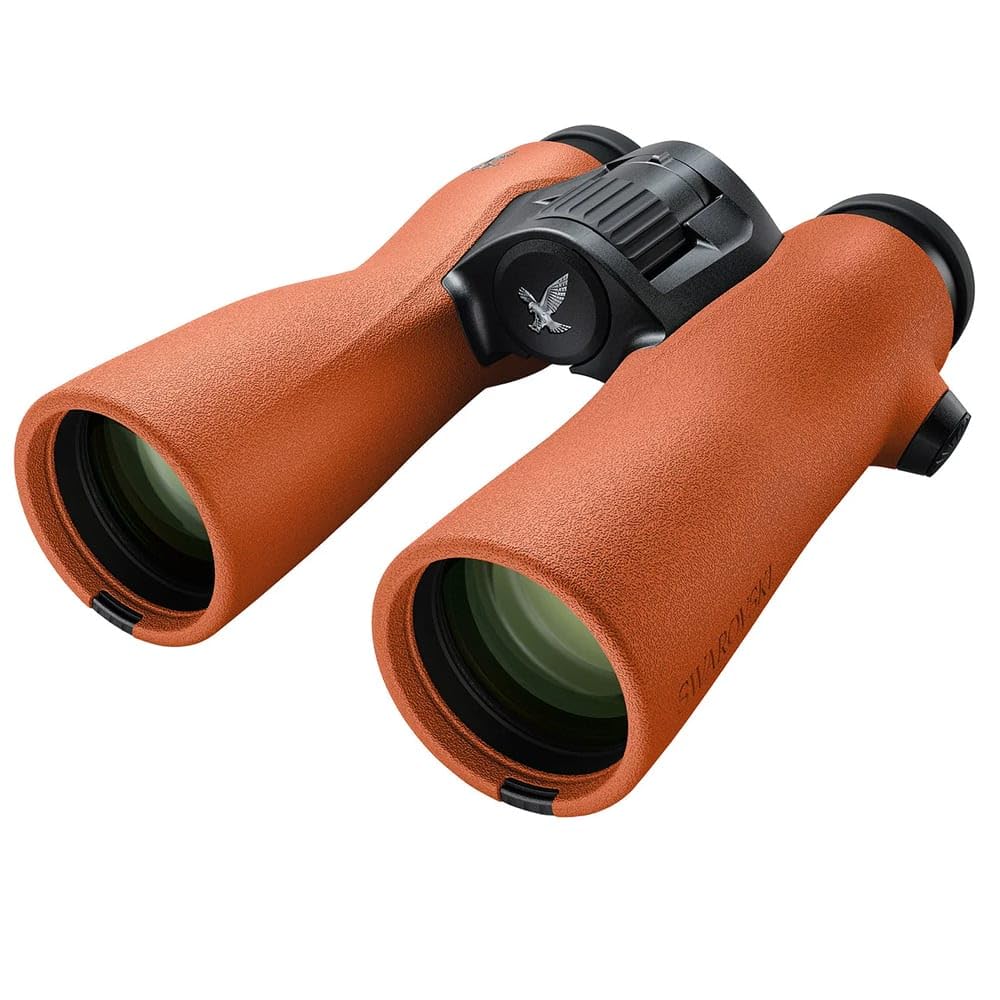
The Swarovski NL Pure 12×42 Binoculars represent the absolute peak of handheld optical performance for serious birders who demand the finest viewing experience. The 12x magnification paired with 42mm objective lenses delivers exceptional detail at distance while maintaining a surprisingly wide field of view for high-power binoculars. Swarovski’s legendary optical coatings and lens craftsmanship produce images that are stunningly bright, sharp, and color-true, even in challenging low-light conditions at dawn and dusk. The distinctive burnt orange finish gives them a unique, stylish appearance that stands out in the field.
Ergonomics and user comfort have been engineered to an extraordinary degree. The lightweight construction and balanced design allow for comfortable extended viewing without the arm fatigue common with high-magnification binoculars. The center focus mechanism is smooth and precise, and the diopter adjustment range of +/-4 diopters accommodates most vision differences. Fully waterproof and fog-proof construction means you can use them confidently in rain, humidity, and temperature extremes. The 3.5mm exit pupil provides a bright, comfortable view even during twilight hours when many birds are most active.
Dedicated birders who consider their binoculars the most essential piece of gear they own will find the Swarovski NL Pure 12×42 to be a transformative investment in their hobby or profession. The optical quality, ergonomic design, and build durability justify the premium positioning for those who spend countless hours in the field. Experienced birders consistently describe the viewing experience as unmatched, with clarity and brightness that reveal details other binoculars miss entirely. If you want the best handheld view money can buy, this is the benchmark.
Why we love it
- World-class optical clarity and color fidelity
- Comfortable ergonomics for all-day use
- Waterproof and fog-proof for any weather
- Wide field of view for 12x magnification
Good to know
- Premium price reflects top-tier optical engineering
- 12x magnification requires steady hands
- Not a camera — for observation only
Safety & Care Tips
Protecting Your Optics in the Field
Birding gear faces constant exposure to dust, moisture, and temperature changes. Always use a lens hood to reduce flare and physically protect the front element from branches and debris. Keep a quality microfiber cloth and a blower brush in your bag for quick cleaning in the field. Never wipe a dry lens — always blow off loose particles first to avoid scratching the coating. For cameras with interchangeable lenses, practice changing lenses quickly in a sheltered position to minimize sensor dust.
Storing Gear Between Outings
After a day in the field, allow your equipment to gradually acclimate to indoor temperatures before storing it in a sealed bag to prevent condensation. Store cameras and lenses in a dry, ventilated cabinet with silica gel desiccant packs if you live in a humid climate. Remove batteries for long-term storage and keep lens caps on to protect glass. For spotting scopes and binoculars, ensure the eyepiece and objective covers are secured. Regularly check seals and gaskets on weather-sealed gear to maintain their protective integrity over time.
FAQ
What focal length do I need for bird photography?
Is image stabilization important for birding cameras?
Should I choose a DSLR or mirrorless camera for birding?
Final Thoughts: The Verdict
For most bird photographers, the best birding camera winner is the OM SYSTEM OM-1 because it delivers extraordinary autofocus performance, rugged IP53 weather sealing, and a stacked sensor that punches above its size in a lightweight Micro Four Thirds body. If you want maximum reach without swapping lenses, grab the Nikon COOLPIX P1000. And for pure handheld optical quality, nothing beats the Swarovski NL Pure 12×42 Binoculars.