
A bit that does not suit your horse’s mouth can undo weeks of training in minutes. Many riders grab a standard snaffle only to watch their horse brace, toss its head, or simply ignore the rein aids entirely. Finding the right mouthpiece material and cheek style is the difference between a conversation and a fight.
I’m Mo Mahin — the founder and writer behind Furric. I spend my time comparing bit dimensions, studying mouthpiece metals, and cross-referencing owner feedback across English and Western disciplines to find what truly works for sensitive and trained mouths alike.
Whether you are starting a green horse or refining the response of a seasoned campaigner, choosing from the right bits for horses means matching the mouthpiece, cheek, and material to your specific riding goal.
How To Choose The Best Bits For Horses
Picking a bit blindly based on price or popularity is the fastest way to buy something your horse will fight. Three factors dominate the decision: the mouthpiece metal, the joint design, and the cheek shape. Get these right, and the bit practically works itself.
Mouthpiece Material Drives Acceptance
Horses salivate in response to sweet iron and copper because both metals have a taste that encourages mouthing. A dry mouth resists the bit; a wet mouth yields. Stainless steel is neutral and durable but does not stimulate salivation. Rubber is gentle but can be thicker, which matters for low-palate clearance. Pick the metal that matches your horse’s sensitivity and mouth moisture level.
Single-Jointed vs Double-Jointed
A single-jointed mouthpiece bends in the middle and can create a nutcracker pinch on the bars and palate if the horse sets against it. Double-jointed designs (including lozenge or oval-link centres) spread pressure more evenly and eliminate the roof-of-mouth contact that causes head tossing. For horses with low palates or a history of resisting, double-jointed is almost always the safer starting point.
Cheek Style Determines Leverage
Loose rings allow the widest range of lateral movement and give the horse no fixed pressure point, ideal for basic schooling. D-rings stabilise the bit so it does not slide through the mouth, offering better steering without added leverage. Hanging cheeks add a small shank that introduces poll pressure, helping with head carriage without the severity of a full curb. Match the cheek to how much control you actually need — not more, not less.
Quick Comparison
On smaller screens, swipe sideways to see the full table.
| Model | Category | Best For | Key Spec | Amazon |
|---|---|---|---|---|
| Shires Hanging Cheek w/ Copper Lozenge | Premium | Balanced head carriage on responsive horses | 5″ mouth, hanging cheek, copper lozenge | Amazon |
| JP Korsteel Oval Link Loose Ring Snaffle | Premium | Mouth-loose schooling & salivation | 5″ stainless/copper oval link | Amazon |
| CHALLENGER D-Ring Comfort Snaffle | Mid-Range | Versatile daily work English or Western | 6″ mouth, stainless/copper rollers | Amazon |
| Shires Bevel Bit w/ Copper Lozenge | Mid-Range | Even pressure distribution on sensitive bars | 4.5″-5″, double-jointed copper lozenge | Amazon |
| Weaver Leather Copper Cheek Snaffle | Mid-Range | Riders wanting copper in a Western cheek | 5″ mouth, copper mouth, 6.5″ cheeks | Amazon |
| Weaver Equine Rubber Dee Ring Snaffle | Mid-Range | Young/very sensitive mouths needing padding | 5″ rubber mouth, 2 7/8″ dees | Amazon |
| HILASON Sweet Iron Snaffle | Budget | Budget Western starter bit | 5″ sweet iron mouth, Western style | Amazon |
In‑Depth Reviews
1. Shires Hanging Cheek with Copper Lozenge
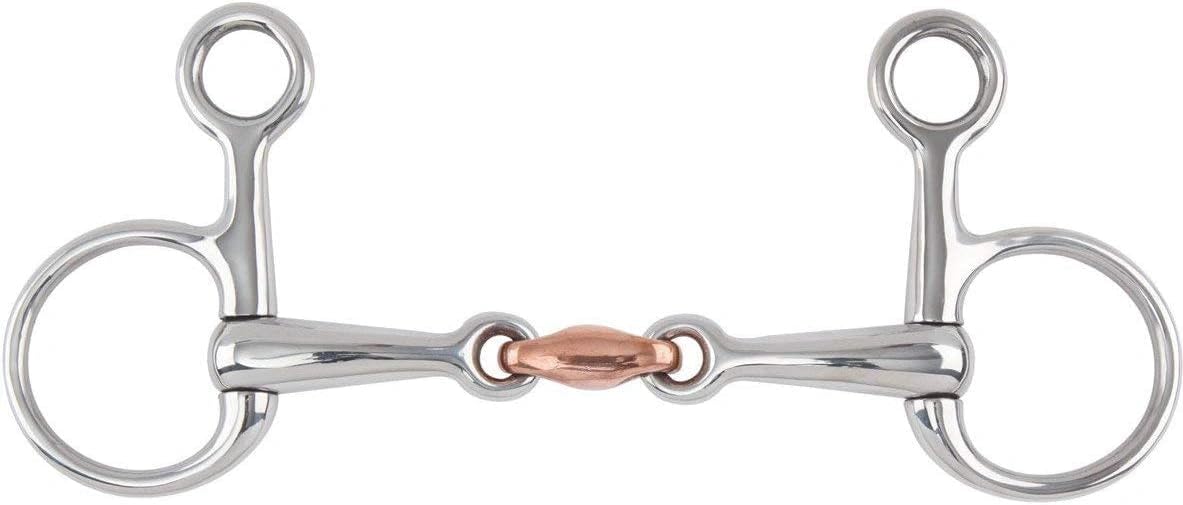
The hanging cheek design on this Shires bit applies subtle poll pressure that encourages a horse to soften at the poll without the harsh leverage of a full shank. The stainless steel mouthpiece is paired with a copper lozenge centre, so you get rust-free durability together with the saliva-triggering taste that helps a horse accept the bit. The 5-inch mouth suits average-size horses, and the small shank keeps the action gentle enough for sensitive mounts that still need a bit of guidance on head carriage.
In practice, the copper lozenge distributes pressure evenly across the tongue and bars, and the double-jointed construction eliminates the palate pinch that makes single-jointed bits problematic for lower-palate horses. Owners report that horses previously resistant to hand contact start chewing and reaching for the bit within a few rides. The hanging cheek also stabilises the position so the bit does not slide side to side during lateral work.
This is a premium bit that delivers refined communication, but it requires that you already have a decent feel for rein aids — the subtle poll cue can be lost in heavy hands. The shiny stainless finish stays clean with a simple rinse, though the copper centre may develop a natural patina over time. For riders wanting a step up from a basic loose ring, this is a high-value investment in head-to-hand connection.
Why we love it
- Copper lozenge promotes salivation and soft acceptance
- Hanging cheek provides gentle poll pressure without harsh leverage
- Double-jointed design avoids palate discomfort
Good to know
- Not ideal for beginners still learning light rein contact
- Patina on the copper may develop over time
2. JP Korsteel Stainless Steel Copper Mouth Oval Link Loose Ring Snaffle
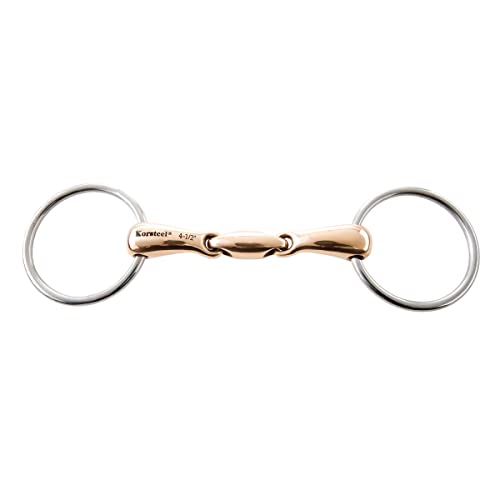
The Korsteel oval link is a problem-solver for horses that brace against a nutcracker action. The central copper oval link sits flat on the tongue and spreads rein pressure across a wider surface rather than concentrating it in one hinge point. The loose ring allows the bit to rotate freely when the horse mouths, which encourages self-carriage and prevents the horse from locking onto the bit as a fixed brace.
Because the mouthpiece is both mobile and gentle on the palate, this bit works exceptionally well in schooling sessions where you want independent hand use and a horse that reaches forward into contact. The glossy stainless steel cheeks frame the mouth neatly, and the copper segment triggers salivation without the full taste intensity of a copper-mouthed bit. Riders transitioning a horse from a basic single-jointed snaffle often see immediate softening.
One point to note is that the 5-inch size fits most warmbloods and Thoroughbreds, but very large draft crosses may need the larger option if available. The loose ring can occasionally pinch the corner of the mouth if the rings are not fitted with bit guards. Overall, this is a mid-premium option that punches well above its price in refinement.
Why we love it
- Oval link eliminates palate contact and nutcracker pinch
- Copper segment increases salivation and acceptance
- Loose ring design encourages soft, self-carriage
Good to know
- Loose ring can pinch corners without bit guards
- Sizing is limited for very large warmbloods
3. CHALLENGER Horse Stainless Steel Mouth D-Ring Comfort Snaffle Bit Copper Rollers
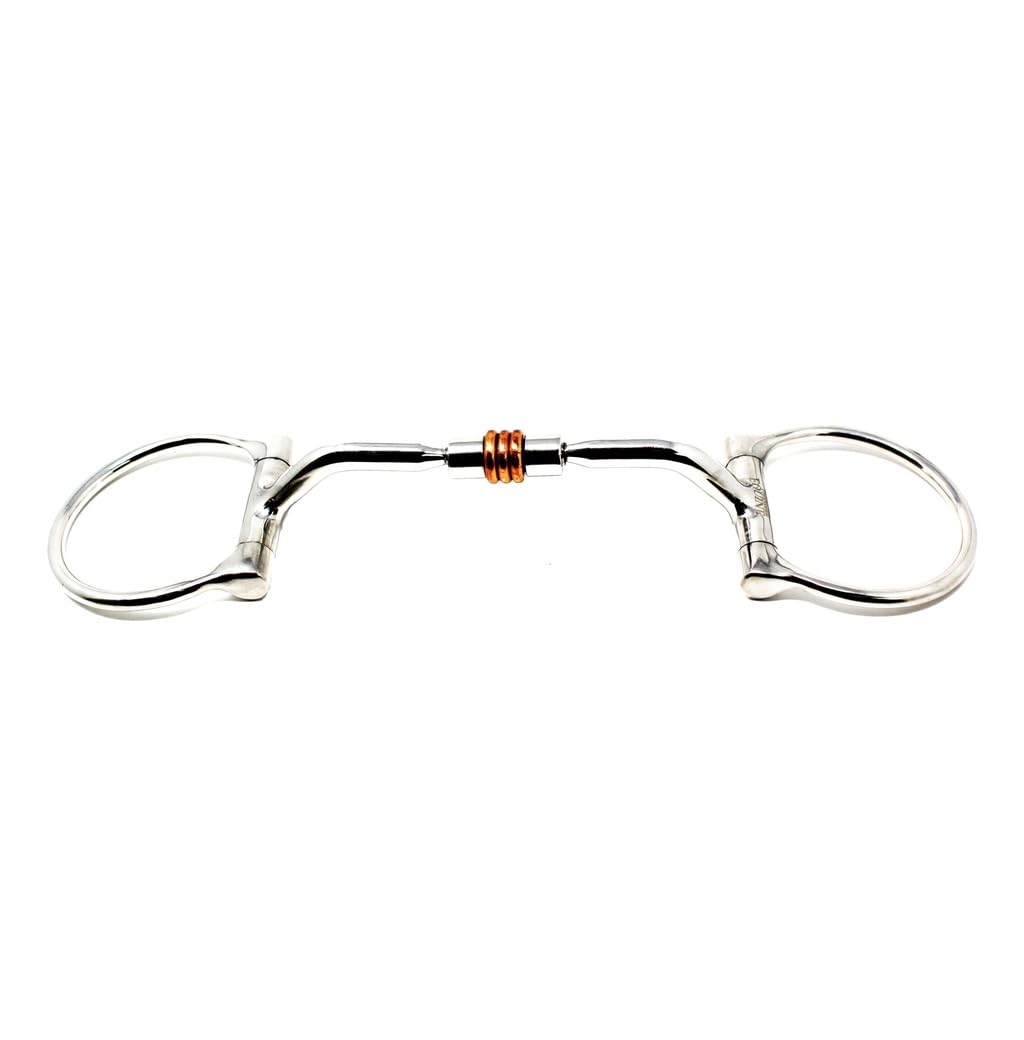
The D-ring on this Challenger snaffle keeps the bit stabilised in the horse’s mouth so it does not slide through, which is a real advantage during turns and lateral work. The mouthpiece is a smooth stainless steel bar set with copper rollers that give the horse something to play with, encouraging salivation and relaxation. The 6-inch mouth option offers extra width for horses with wider bars, which is uncommon at this price tier.
Because the mouthpiece is straight (single-jointed), riders should check their horse’s palate clearance — horses with low palates may still feel some pressure, but the copper rollers distract the tongue and keep most animals working soft. The D-ring also prevents the cheek from pinching the lips, a common complaint with loose ring designs. Western and English riders both fit this bit comfortably, making it one of the most versatile options in the mid-range pool.
The finish is solid chrome-plated steel that resists rust with normal care, though heavy use in wet conditions may dull the sheen. Some reports note the copper rollers can loosen over extended use, so regular inspection is recommended. For the price, this is the best all-rounder for riders who want copper benefits and D-ring stability without stepping into the premium bracket.
Why we love it
- D-ring prevents bit slide and lip pinching
- Copper rollers encourage salivation and relaxation
- 6-inch size available for wider mouths
Good to know
- Single-jointed design may contact low palates
- Copper rollers may require periodic tightening
4. Shires Bevel BIT with Copper Lozenge
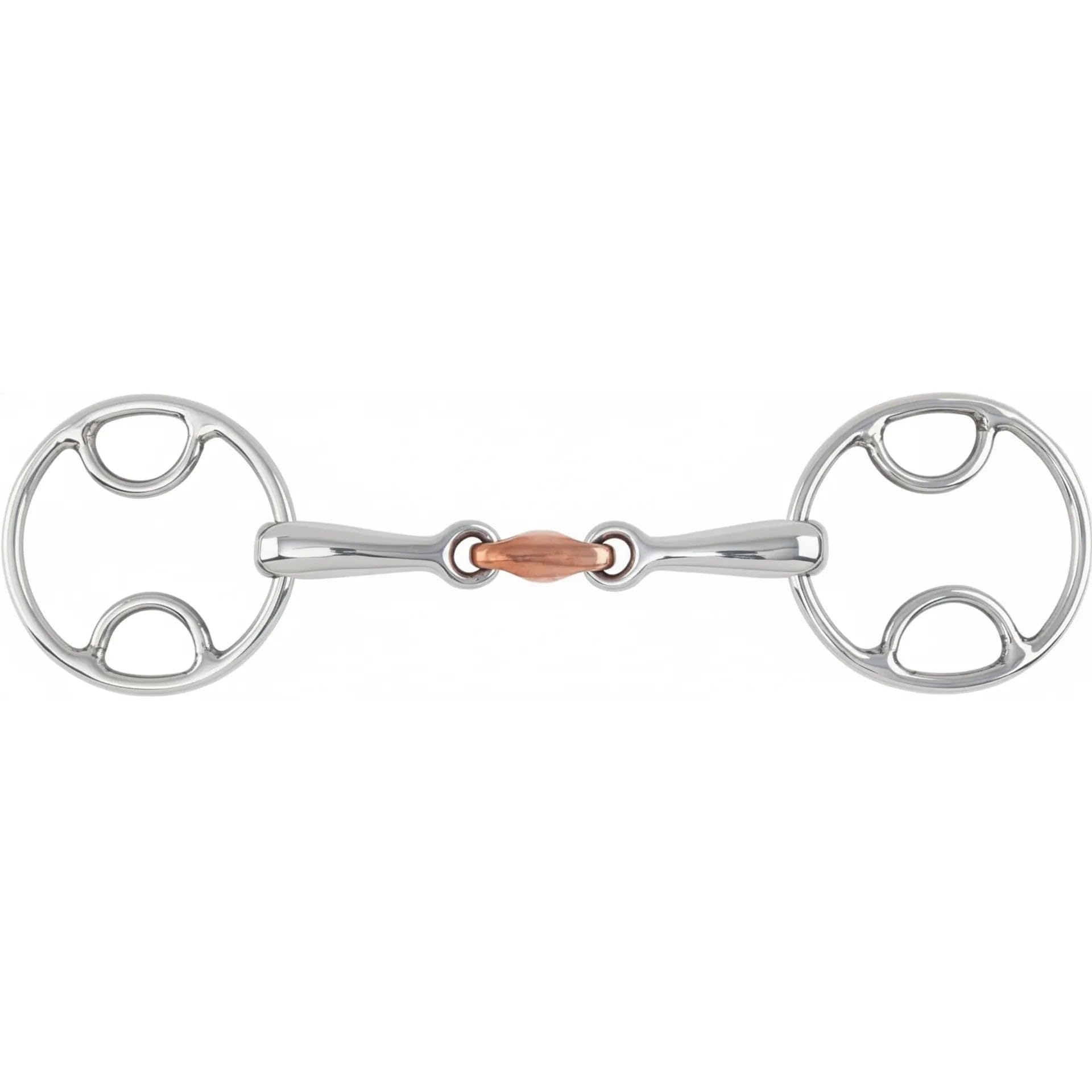
The bevel (also called Dr. Bristol) design on this Shires bit changes the angle of the mouthpiece joints: the centre link sits flat rather than folding upward, which reduces the chance of pressure against the roof of the mouth. Combined with the copper lozenge, this bit delivers even distribution across the tongue and bars while the sweet taste of copper encourages a horse to soften and salivate. The straight shank and plain cheeks keep the action neutral without any poll or curb leverage.
Horses that have gone dead in the mouth from a basic single-jointed snaffle often perk up with this conformation because the bevel link does not create the same pinch point. The 4.5-inch minimum bore size suits smaller-headed ponies and Arabians, while the same model is available in 5 inches for larger horses. Owners consistently note improved mouth moisture and a quieter head carriage within two to three rides.
The bevel style is less common than a traditional French-link, which means some riders initially adjust to the slightly different feel of the centre link. The stainless steel body is easy to clean, but the copper lozenge will tarnish — this is cosmetic and does not affect function. A strong mid-range option for horses that react poorly to standard single joints.
Why we love it
- Bevel link sits flat, reducing palate pressure
- Copper lozenge drives salivation and mouthing
- Available in smaller sizes for ponies and Arabs
Good to know
- Bevel feel differs slightly from a French-link
- Copper lozenge will tarnish over time
5. Weaver Leather Copper Plated Mouth Snaffle

Weaver Leather’s copper-plated mouth with 6.5-inch cheeks gives this Western-style snaffle a wider frame that sits prominent on the face — a traditional look that suits ranch riding and trail work. The mouth is 5 inches with a copper plating over the steel, so the horse experiences the taste of copper without the full softness of pure sweet iron. The chrome-plated finish on the cheeks keeps the bit looking crisp after washes.
Because the cheeks are longer than a typical snaffle, the bit stays centred and gives the rider a clear visual cue when the horse is straight in the mouth. The copper plating does encourage saliva, though it is a thinner layer than a solid copper mouth and may wear through on horses that chew aggressively. Riders who want the copper benefit at a lower price point appreciate this design, and the weight is light enough for long trail days.
The biggest caveat is that this is a chrome-plated bit, not solid stainless. If the plating chips on a hard-mouthed horse, the underlying steel can develop roughness. Rinsing after every ride is essential to avoid rust potential on any nicked areas. For the money, it is a solid Western entry that gives copper taste without paying for a solid-copper mouthpiece.
- Long 6.5-inch cheeks keep the bit centred
- Copper plating encourages salivation at low cost
- Lightweight for all-day trail use
- Chrome plating can chip on rugged chewers
- Copper layer may wear thin over time
6. Weaver Equine Rubber Dee Ring Snaffle Bit

For the greenest horses, youngstock, or mouths with existing tenderness, the rubber mouthpiece on this Weaver Equine Dee Ring is the kindest option in this list. The rubber is thick and soft, sitting wide over the tongue to distribute pressure over a larger surface, and it does not transfer cold or metallic shock. The 2 7/8-inch Dee rings stabilise the mouthpiece so it cannot slide, giving the rider steering confidence while the horse stays comfortable.
Because there is no copper or metal taste to prompt salivation, horses that are naturally dry-mouthed may need extra time to accept the rubber texture. However, for a horse coming off a tooth injury, wolf tooth extraction, or just showing extreme bit shyness, this rubber dee ring can be a transitional bridge to a regular bit. The chrome-plated dees hold up well, and the rubber is replaceable on some models if it wears unevenly.
The rubber mouth does mean the bit is thicker overall, so ensure your horse’s bit seat has enough room — some narrow-mouthed horses feel crowded. Rinse the rubber after every ride because dried saliva and feed particles can roughen the surface. This is a niche bit, but for the horse that needs maximum gentleness, it is worth keeping in the tack room.
Why we love it
- Soft rubber is ideal for sore or green mouths
- Dee rings prevent bit from sliding through
- No cold shock from metal contact
Good to know
- Thicker mouthpiece may crowd narrow mouths
- Rubber needs thorough cleaning after each ride
7. HILASON Stainless Steel Tack Horse Snaffle Bit 5″ Sweet Iron Mouth

If you need a functioning Western snaffle at an entry-level price, the HILASON sweet iron mouth offers the taste benefit that encourages a horse to salivate without the cost of a premium build. The sweet iron develops a surface rust over time that horses actually prefer — it is not a degradation of quality, but a characteristic that gives the bit a familiar flavour. At 5 inches, it fits most average-size stock horses and quarter horses.
The cheek style is a straight ring with no offset, keeping pressure direct and simple. There is no copper, no fancy jointing, and no poll leverage — just a single-jointed sweet iron mouth on a basic stainless loop. For a horse that already accepts a plain snaffle and you just want the salivation benefit of sweet iron at the lowest possible cost, this does the job. Riders starting a young horse in groundwork or casual trail riding find it adequate.
However, the 30-day warranty is short, and the finish is basic; riders doing multiple hours of daily arena work will outgrow this bit quickly. The sweet iron mouth is not as durable as a solid stainless piece, and the single joint can cause palate pressure on horses with lower palates. This is a budget tool, not a lifetime piece — buy it for the sweet iron, expect to upgrade if your riding demands increase.
Why we love it
- Sweet iron mouth encourages natural salivation
- Low cost makes it a safe trial bit
- Standard 5-inch size fits average horses
Good to know
- Single-jointed design can press on low palates
- Short warranty and basic overall finish
FAQ
What size bit does my horse need?
Is copper or sweet iron better for a dry-mouthed horse?
How tight should the bit fit in the mouth?
Can I use a hanging cheek bit for basic turn-and-stop riding?
Final Thoughts: The Verdict
For most riders, the best bits for horses winner is the Shires Hanging Cheek with Copper Lozenge because it combines poll shaping with a gentle, salivation-friendly mouthpiece in a durable stainless build. If you want the mobility and palate relief of a loose-ring oval link, grab the JP Korsteel Oval Link Loose Ring Snaffle. And for a budget-friendly sweet iron starter that works on a trail horse, nothing in this list beats the HILASON Sweet Iron Snaffle for pure low-cost function.