
Watching bluebirds claim a nest box is one of the purest joys of backyard birding, but a house that fails to protect hatchlings from weather, predators, or invasive species can turn that joy into heartbreak. A properly designed box with a precise 1.5-inch entrance hole, adequate ventilation, and a clean-out door separates a successful nesting season from an empty, abandoned shelter.
I’m Mo Mahin — the founder and writer behind Furric. I’ve spent years studying comparative product specifications, analyzing owner feedback across hundreds of nesting seasons, and breaking down the horticultural and behavioral data that determines whether a bluebird house is genuinely functional or merely decorative.
This guide breaks down five top contenders to help you find the most effective bluebird houses for attracting and safely fledging Eastern, Western, or Mountain bluebirds in your yard.
How To Choose The Best Bluebird Houses
Bluebirds are cavity-nesting songbirds with very specific requirements for their man-made homes. A generic birdhouse may attract house sparrows or starlings, and poorly ventilated boxes can kill nestlings in hot weather. Focus on the following four criteria to pick a house that bluebirds will actually use.
Entrance Hole Diameter
The single most important dimension is a 1.5-inch entrance hole. This exact size is large enough for bluebirds and tree swallows to enter but prevents European starlings (which require a 1.75-inch opening) from intruding and destroying eggs. A 1-inch hole, by contrast, is designed for wrens and will exclude bluebirds entirely. Always verify the hole measurement before buying.
Interior Fledgling Grooves
Bluebird nestlings need textured surfaces below the entrance hole to climb out when they fledge. Smooth interior walls can trap young birds inside, leading to starvation or failed first flights. Look for houses with vertical grooves or a roughened front panel just below the opening — this simple detail dramatically increases fledging success rates.
Ventilation and Drainage
Overheating is a leading cause of nestling mortality. A well-designed bluebird house includes upper ventilation slots or gaps under the roof to allow hot air to escape, plus weep holes in the floor to drain rain moisture. Without these features, the interior can reach lethal temperatures on a sunny 85°F day.
Clean-Out Access
After each brood or at season’s end, you must remove old nesting material to prevent parasite buildup. Houses with a hinged side door, a lift-off roof, or a latchable front panel make this task simple. Fixed-entry boxes with no clean-out door are unsuitable for bluebird trails and should be avoided.
Quick Comparison
On smaller screens, swipe sideways to see the full table.
| Model | Category | Best For | Key Spec | Amazon |
|---|---|---|---|---|
| Auslar Wooden Bird House | Mid-Range | Decorative hanging setup | 1.57-inch entrance hole | Amazon |
| Kingsyard Wren House | Mid-Range | Wrens and chickadees | 1-inch entrance hole | Amazon |
| Dreyoo Cedar Bluebird House | Premium | Dedicated bluebird nesting | 1.5-inch entrance + metal guard | Amazon |
| Woodlink NABB Audubon House | Premium | Audubon-spec bluebird trail | 13.75-inch overall height | Amazon |
| MEWANG Colorful Condo | Budget | Decorative feeder combo | 7.3 x 7.3 x 9.7 inches | Amazon |
In‑Depth Reviews
1. Dreyoo Cedar Bluebird House with Predator Guard

The Dreyoo Cedar Bluebird House nails every critical spec that bluebird conservationists demand. The 1.5-inch entrance hole is precisely the correct diameter to admit bluebirds and tree swallows while excluding European starlings, and the metal predator guard prevents raccoons or squirrels from gnawing the opening larger. Inside, vertical fledgling grooves give hatchlings the traction they need to climb out on fledging day — a feature many cheaper houses omit entirely.
The front door hinges downward via a secure latch, providing full access for end-of-season clean-out without needing to unscrew the entire box. The solid wood body is carbonized at high temperatures, which resists warping and rot far better than unfinished pine. Pre-drilled mounting holes and included rustproof screws make installation on a fence post or tree trunk a five-minute job.
A few owners noted the interior floor area is compact compared to some larger gourd-style houses, but bluebirds actually prefer snug quarters that minimize heat loss. The combination of correct hole size, predator defense, clean-out ease, and proofed wood earns this model the top spot for both beginner and experienced bluebird landlords.
Why we love it
- Exact 1.5″ hole and metal predator guard for starling exclusion
- Fledgling grooves inside increase nestling survival
- Front latch clean-out door for simple maintenance
Good to know
- Interior is on the smaller side compared to gourd houses
- No perch included — bluebirds don’t need one anyway
2. Woodlink NABB Audubon Cedar Bluebird House
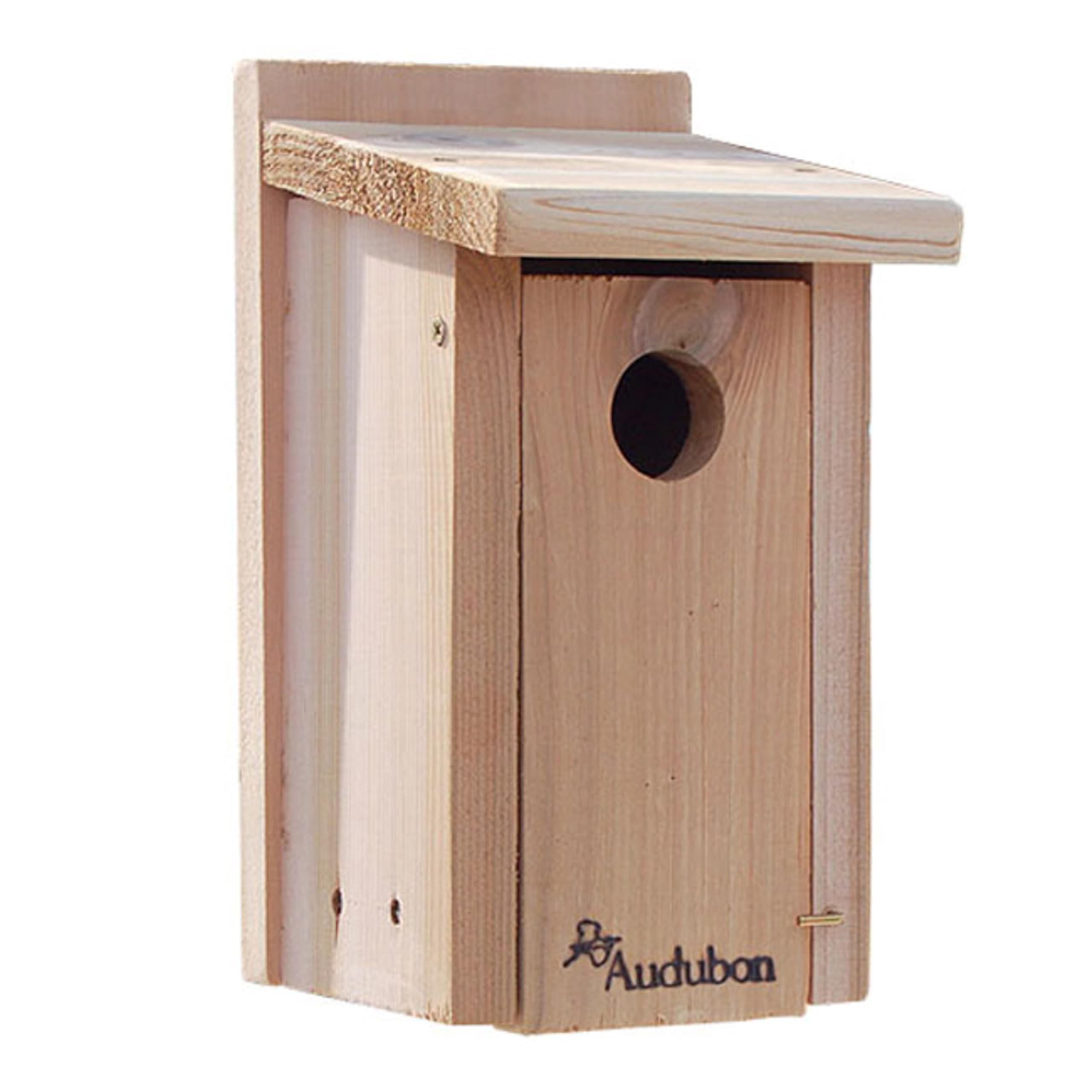
The Woodlink NABB is built to the exact dimensions recommended by the National Audubon Society, a standard that bluebird trail managers have trusted for decades. At 13.75 inches tall, the interior cavity provides the vertical depth that bluebirds prefer for nesting, with a 1.5-inch entrance hole placed at the correct height above the floor to discourage predators from reaching eggs. The house is handcrafted from natural cedar, which naturally resists moisture and insect damage without chemical treatments.
The front wall swings open on a simple latch system for clean-out, and the floor features slots for drainage. Installation is straightforward with pre-drilled pilot holes, though some owners recommend applying a clear caulk to the roof/back seam for added weatherproofing. The design is utilitarian and lacks ornamental frills — but that is exactly what serious bluebird monitors want.
A minority of buyers noted the Audubon branding is stamped prominently on the front, which some found visually distracting. A few units shipped with minor misalignments in the door latch. These quality-control variations are uncommon, but they are worth inspecting upon arrival. Overall, this remains the gold-standard pattern for official bluebird nesting trails.
Why we love it
- Audubon-specified dimensions trusted by conservation groups
- Natural cedar offers long rot resistance
- Swing-out front panel for thorough clean-out
Good to know
- Brand logo stamped on front panel may bother some
- Inconsistent latch alignment reported on rare units
3. Auslar Wooden Bird House with Blue Roof
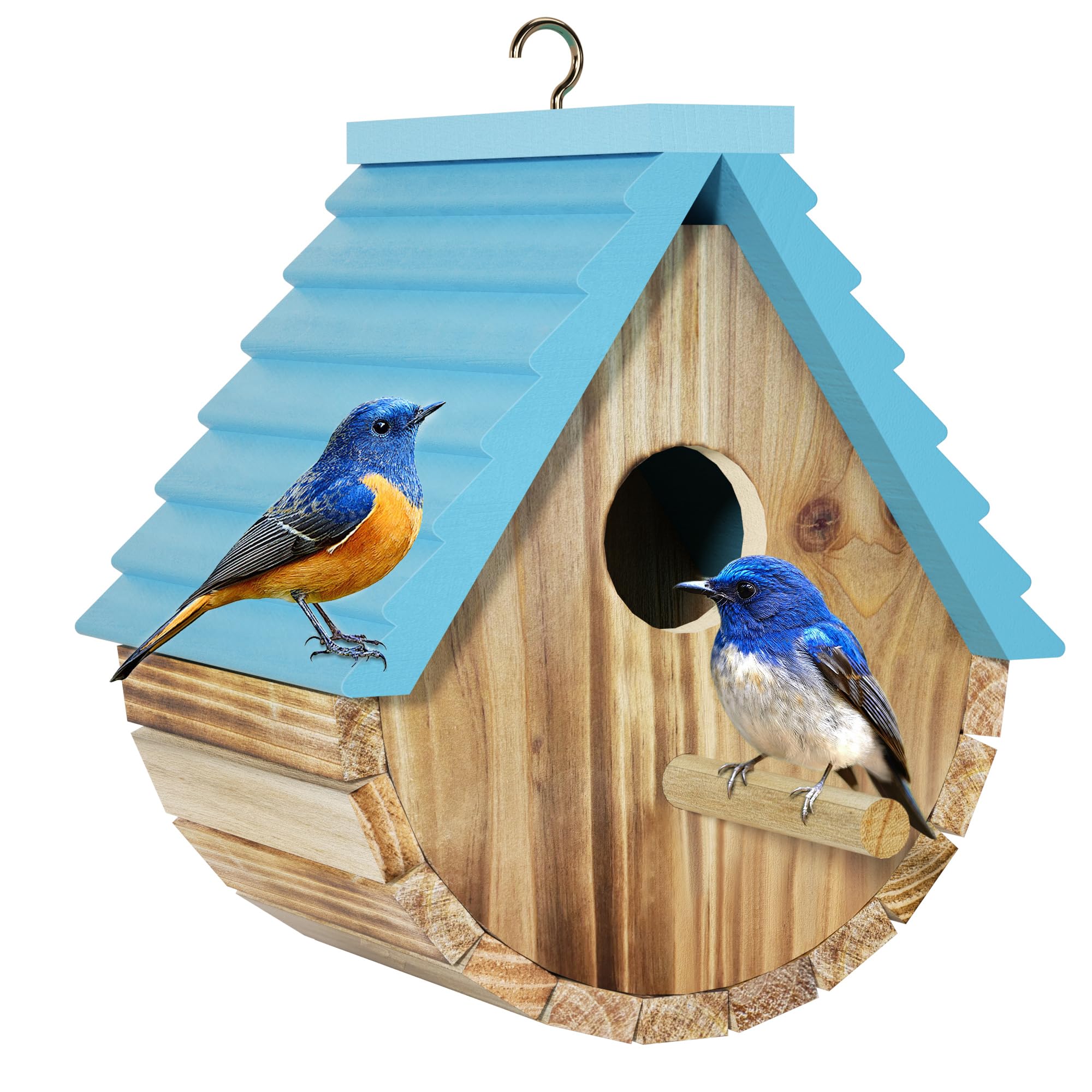
The Auslar Bird House offers a compelling balance between aesthetics and function, especially for homeowners who want a decorative box that still meets basic bluebird-friendly criteria. It arrives fully assembled — simply hang it by the included hook or mount it via the rear screw holes, and you are ready. The herringbone-style roof in vibrant blue provides a pop of color that makes spotting the box from a distance easy.
Made from premium cedar wood, the body is naturally weather-resistant. The entrance hole measures 1.57 inches — close enough to the 1.5-inch standard that most bluebirds will enter, though European starlings could potentially slip through. A swivel back door provides access for cleaning, and the 80mm standing foot offers a landing perch, though bluebirds do not strictly require one.
Owners consistently report that the construction feels sturdy and well-crafted for the price point. The compact dimensions (roughly 7 x 6 x 8 inches) mean it works best as a secondary box or for smaller cavity nesters like wrens or chickadees. If you are establishing a single bluebird nest box on a budget and want a pop of garden color, this is a strong entry-level pick.
Why we love it
- Zero assembly required — hang and go immediately
- Cedar wood resists outdoor weather well
- Attractive blue roof design stands out in garden
Good to know
- 1.57″ hole may admit starlings in some regions
- Compact size better suited for wrens or chickadees as secondary box
4. Kingsyard Wooden Wren House with Predator Guard

The Kingsyard Wren House is a premium offering for attracting wrens, chickadees, and other small cavity nesters, but it is important to note that the 1-inch entrance hole is too small for Eastern bluebirds. The thick New Zealand Pine construction feels substantial in hand at 2.09 pounds, and the metal predator guard encircling the hole prevents any creature from enlarging the opening to reach inside.
Ventilation slots on the side walls and floor openings promote airflow, which is crucial during summer heatwaves. The roof lifts off without any screws or tools, making clean-out exceptionally easy — a point that multiple longtime buyers mention as their favorite feature. The royal blue painted roof adds a cheerful accent without toxic paints that could harm birds.
This box has earned repeat purchases from several owners who report wrens and chickadees moving in within days of installation. If you already have a dedicated bluebird house and want to diversify your bird trail to attract smaller species, the Kingsyard is a durable, thoughtfully designed addition. Just confirm your target species before buying, because bluebirds will not fit through that 1-inch entry.
Why we love it
- Thick New Zealand Pine is exceptionally durable
- Tool-free roof removal for fast seasonal cleaning
- Metal predator ring foils raccoon attacks
Good to know
- 1-inch entrance is too small for bluebirds — wrens and chickadees only
- Hanging wire hook may need reinforcement in high wind
5. MEWANG Colorful Wooden Bird House Condo
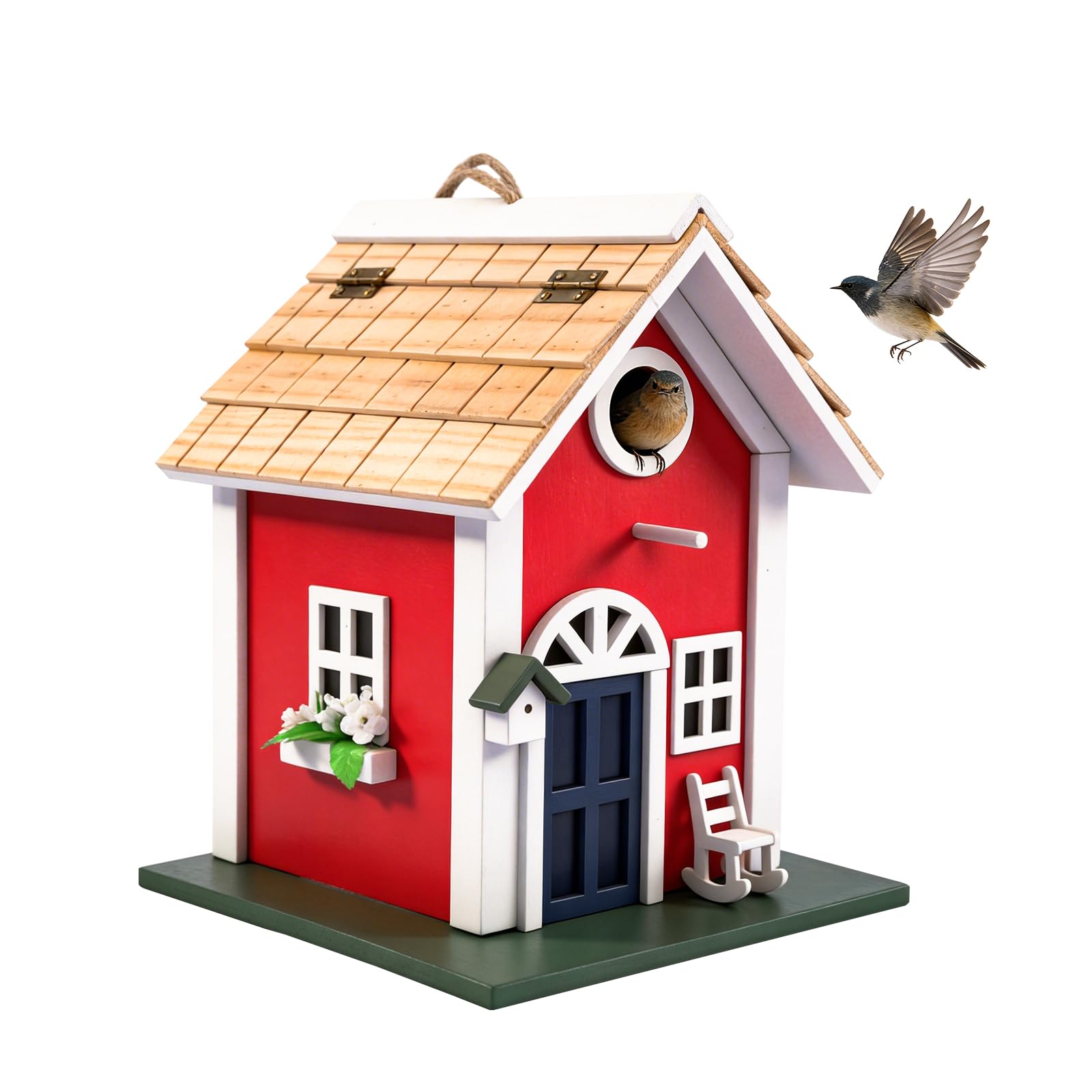
The MEWANG Colorful Condo leans heavily into ornamentation, offering a charming cottage aesthetic that appeals to gardeners wanting a whimsical focal point. The wooden construction is painted in bright red with decorative trim, and the hinged roof provides access to the interior for refilling birdseed — this unit functions equally as a feeder. The jute hanging rope makes installation as simple as draping it over a sturdy branch.
Composite wood is used rather than solid cedar, which means this house is best placed under a porch eave or other sheltered location to avoid direct rain exposure. Owners who mounted it in protected spots reported wrens and finches nesting quickly, and the decorative porch railing adds visual charm that traditional boxes lack. Painted accents can chip over time, but the overall build feels sturdy for the price.
This is not a primary bluebird house — the entrance dimensions are not standardized to the 1.5-inch specification, and there is no predator guard. Think of it as a supplemental feeder or decorative accent that smaller bird species may occasionally use. If your goal is a guaranteed bluebird nest box, choose the Dreyoo or Woodlink models above. But if you want a conversation piece that doubles as a feeder, the MEWANG delivers on charm.
Why we love it
- Decorative cottage styling adds garden character
- Hinged roof allows easy seed refill and basic cleaning
- No assembly needed — hang from branch instantly
Good to know
- Composite wood needs sheltered placement from rain
- Not a true bluebird house — lacks predator guard and standard hole size
FAQ
What is the correct entrance hole size for a bluebird house?
Do bluebird houses need a perch at the entrance?
How close together can I place multiple bluebird houses?
Final Thoughts: The Verdict
For most gardeners, the best bluebird houses winner is the Dreyoo Cedar Bluebird House because its 1.5-inch entrance, metal predator guard, fledgling grooves, and hinged clean-out door cover every functional requirement at a fair mid-range price. If you want an official trail-ready box built to Audubon specifications, grab the Woodlink NABB. And for a budget-friendly decorative option that still uses rot-resistant cedar, nothing beats the Auslar Wooden Bird House.