
Walk down any pet supply aisle and the sheer number of bags labeled “rabbit food” can feel overwhelming. Bright packaging, bold claims, and ingredient lists that read like a chemistry exam — none of it tells you what your bunny actually needs to thrive.
I’m Mo Mahin — the founder and writer behind Furric. I’ve spent months analyzing veterinary nutrition standards, reviewing ingredient safety protocols, and studying real owner feedback to separate the genuinely healthy options from the marketing fluff.
Your bunny’s health starts with what goes into their bowl. After evaluating fiber content, ingredient safety, and owner feedback, the best bunny food here prioritizes digestive health and natural foraging.
How To Choose The Best Bunny Food
Not all rabbit food is created equal. Many popular mixes are loaded with sugary fruits, seeds, and corn that can lead to obesity, dental disease, and gut imbalance. Understanding a few key principles will help you pick a diet that supports your bunny from nose to tail.
Fiber First — Why Timothy Hay Matters
A rabbit’s digestive system is designed to process high-fiber forage constantly. Timothy hay should be the foundation of every meal because the long-strand fiber keeps the gut moving and grinds down continuously growing teeth. Look for food that lists timothy hay or another grass hay as the first ingredient — alfalfa hay is too rich in calcium and protein for adult rabbits and should only be fed to juveniles.
Pellets vs. Muesli Mixes — What to Avoid
Uniform, plain pellets are far safer than colorful muesli-style mixes. When rabbits pick out the sugary pieces and leave the pellets, they miss essential nutrients and develop selective eating habits. A high-quality pellet with at least 18 percent fiber and no added sugars or artificial colors provides complete, balanced nutrition in every bite.
Life Stage and Special Needs
Young, growing rabbits under one year old benefit from the extra protein and calcium found in alfalfa-based formulas. Adult rabbits need a maintenance diet built on timothy hay with moderate protein and calcium levels. Senior bunnies or those with sensitive stomachs may do best with a prebiotic or probiotic-enhanced formula that supports gentle digestion.
Quick Comparison
On smaller screens, swipe sideways to see the full table.
| Model | Type | Best For | Key Feature | Amazon |
|---|---|---|---|---|
| Supreme Petfoods Science Selective | Pellet | Digestive & Dental Health | No Added Sugars, Linseed for Coat | Amazon |
| Vitakraft VitaSmart 8 lbs | Pellet | Adult Daily Maintenance | Timothy Hay Base, Fortified Vitamins | Amazon |
| Sunseed Vita Prima Young | Pellet | Growing Rabbits Under 1 Year | Ancient Grains & Alfalfa for Protein | Amazon |
| Kaytee Timothy Hearty Hay | Hay | Fiber-Rich Forage | First Cut Crunchy Texture | Amazon |
| Vitakraft Vita Smart 4 lbs | Pellet | Foraging Enrichment | Probiotics & Produce Blend | Amazon |
In-Depth Reviews
1. Supreme Petfoods Science Selective House Rabbit Food

Supreme Petfoods has built a reputation for species-appropriate nutrition, and this Science Selective formula lives up to it. Timothy hay and grass form the base, providing the long-strand fiber that keeps rabbit digestive systems moving smoothly and teeth worn down naturally. The addition of thyme adds a natural aromatic that bunnies find incredibly appealing, making it easier to transition picky eaters.
What sets this formula apart is the careful nutritional engineering behind it. Essential vitamins A and D support immune function and bone health, while the balanced calcium-to-phosphorus ratio helps prevent urinary sludge — a common problem in adult house rabbits. Linseed provides omega-3 fatty acids that promote a soft, glossy coat and healthy skin, and the prebiotic fiber supports beneficial gut bacteria.
Bunny parents who prioritize clean ingredients will appreciate the complete absence of added sugars. This is a steady, reliable daily pellet that delivers consistent nutrition without gimmicks. For a house rabbit eating a hay-based diet, this pellet fills in the nutritional gaps perfectly without encouraging selective eating.
Why we love it
- No added sugars or artificial ingredients
- High fiber content supports dental and digestive health
- Linseed promotes healthy skin and coat
Good to know
- Nut allergen warning may concern some owners
- Slightly smaller bag size than some competitors
2. Vitakraft VitaSmart Complete Nutrition Rabbit Food, 8 lbs
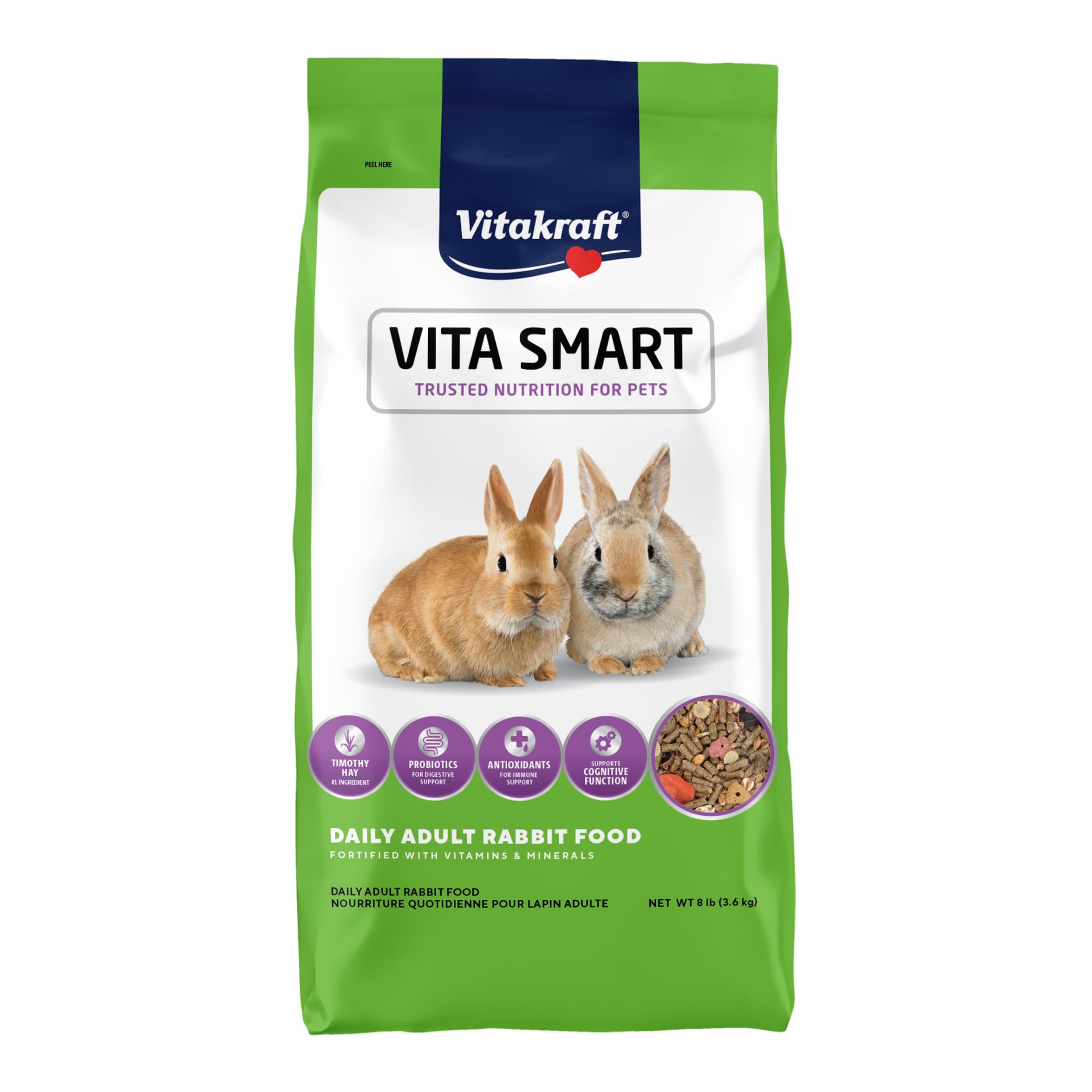
Vitakraft brings over 180 years of pet nutrition experience to this formula, and it shows in the thoughtful ingredient blend. Timothy hay and alfalfa fiber work together to deliver the roughage adult rabbits need for healthy digestion, while wholesome vegetables add natural variety without relying on sugary fruit pieces that disrupt gut flora. The pellet format ensures every bite is nutritionally complete.
The vitamin and mineral fortification is particularly well-balanced. Vitamin D3 and calcium support strong bones, while B vitamins contribute to energy metabolism and skin health. The mix encourages natural foraging behavior through varied textures and shapes, which helps reduce cage boredom and promotes mental stimulation during mealtime. Owners report that even finicky bunnies adapt to this formula readily.
This larger 8-pound bag offers excellent value for multi-rabbit households or owners who prefer to buy in bulk. The formulation is designed specifically for adult rabbits, so protein and calcium levels are moderated to prevent urinary issues. It is a dependable, no-fuss daily pellet that supports long-term health without overcomplicating the diet.
Why we love it
- Large bag size offers extended feeding value
- No artificial colors or preservatives
- Encourages natural foraging behavior
Good to know
- May contain traces of fish, peanuts, and wheat
- Some owners prefer a simpler ingredient list
3. Sunseed Vita Prima Young Rabbit Food

Young rabbits have higher protein and calcium requirements than adults because their bones and muscles are still developing. Sunseed Vita Prima addresses this need directly with a nutrient-rich blend of ancient grains and alfalfa hay that provides the extra building blocks growing bunnies require. The inclusion of probiotics supports the developing digestive system, which can be especially sensitive during the first year.
The formula goes beyond basic nutrition by incorporating omega-3 fatty acids and vitamins A, E, and D3 to support immune development, vision, and bone growth. The varied textures — from grains to vegetables — encourage instinctive foraging behavior that keeps young rabbits mentally engaged and physically active. Experienced breeders note that the balanced calcium content helps prevent developmental bone issues without overloading the system.
This is a specialized product for a specific life stage, and it excels in that role. Once your bunny reaches one year of age, you will want to transition to a timothy-based adult formula, but for the crucial growing period, this food provides targeted nutrition that general-purpose pellets cannot match. The resealable packaging also keeps the food fresh between feedings.
Why we love it
- Specifically formulated for growing rabbits
- Probiotics and omega-3 support development
- Encourages natural foraging instincts
Good to know
- Not suitable for adult rabbits over one year
- Contains alfalfa, which is too rich for maintenance diets
4. Kaytee Timothy Hearty Hay, 48 oz

Kaytee has been America’s number one hay brand for good reason. This first-cut timothy hay is harvested early in the growing season, which means the stalks are thicker, crunchier, and higher in fiber than later cuts. The hearty texture provides the abrasive chewing action that rabbits need to keep their continuously growing molars properly ground down, preventing painful dental spurs.
The hay is grown specifically for small animals without the use of pesticides, which matters because rabbits consume hay in large volumes and their sensitive digestive systems can react poorly to chemical residues. The high fiber content supports gut motility and helps prevent the dangerous gastrointestinal stasis that can develop when rabbits do not eat enough roughage. Many rescue organizations specifically recommend Kaytee for its consistent quality and reliable sourcing.
While this product is not a complete diet on its own, it is the essential foundation that every bunny diet should be built upon. Offer it freely alongside a high-quality pellet and fresh vegetables for optimal nutrition. The 48-ounce bag is a practical size for single-rabbit households, and the crinkly texture keeps bunnies coming back to the hay rack throughout the day.
Why we love it
- First-cut hay provides maximum crunch and fiber
- Grown without pesticides for safety
- Promotes natural dental wear and digestive health
Good to know
- Must be paired with pellets for complete nutrition
- Some bunnies prefer softer second-cut hay
5. Vitakraft Vita Smart Rabbit Food, 4 lbs
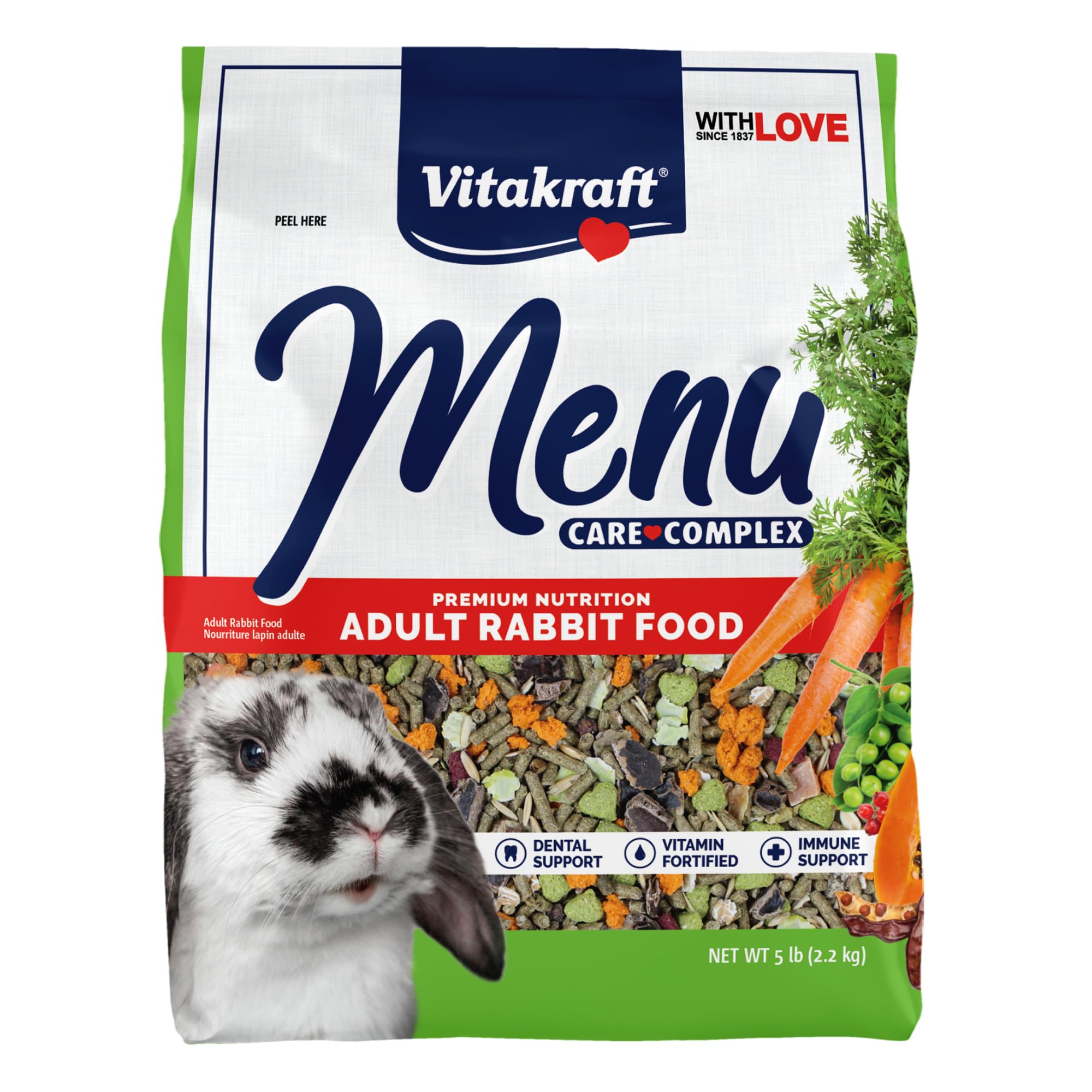
Vitakraft’s Vita Smart formula places timothy hay as the very first ingredient, which immediately sets it apart from cheaper brands that lead with corn or wheat middlings. The 4-pound bag is fortified with vitamins A, D3, E, riboflavin, and B12 to cover nutritional bases, while the added probiotics gently support digestive balance. The produce blend of fruits and vegetables provides natural variety that mimics the diverse diet rabbits would encounter in the wild.
The foraging texture is where this food truly shines. Unlike uniform pellets that offer no mental challenge, this mix contains a variety of shapes and ingredients that encourage rabbits to sort, explore, and engage with their food. Rescue volunteers have noted that shy or bored bunnies often perk up when offered this mix, making it a useful tool for enrichment. The resealable packaging keeps the food fresh and the aromatics intact between servings.
For the price point, this delivers impressive nutritional value. The high fiber content from the timothy hay base supports digestive health, while the moderate protein level is appropriate for adult rabbits. A small handful per day alongside unlimited hay and fresh water provides a balanced diet that keeps bunnies healthy, engaged, and satisfied. It is a solid entry-level choice for new bunny owners.
Why we love it
- Timothy hay is the first listed ingredient
- Probiotics aid gentle digestion
- Foraging textures reduce cage boredom
Good to know
- May contain traces of common allergens
- Some rabbits selectively eat fruit pieces first
Safety & Care Tips
Hay Should Be the Star of Every Meal
No pellet, no matter how well-formulated, can replace the long-strand fiber that timothy hay provides. Offer fresh, unlimited hay at all times — it keeps the gut moving, grinds down teeth, and prevents obesity. Discard any soiled or damp hay daily and refill with fresh material to maintain hygiene and encourage consistent eating.
Introduce New Foods Gradually
Rabbits have sensitive digestive systems that react poorly to sudden dietary changes. When transitioning to a new pellet or introducing fresh vegetables, do so over seven to ten days by mixing increasing amounts of the new food with the old. Watch for changes in stool size, shape, or consistency, and slow the transition if you notice soft droppings or reduced appetite.
FAQ
What is the single most important ingredient in bunny food?
How much pellet food should a bunny eat each day?
Can different brands of bunny food be mixed together?
Final Thoughts: The Verdict
For most pet parents, the best bunny food winner is the Supreme Petfoods Science Selective because it combines clean ingredients, no added sugars, and targeted digestive support in a pellet that rabbits genuinely enjoy. If you want a larger bag with balanced daily nutrition for an adult bunny, grab the Vitakraft VitaSmart 8 lbs. And for growing rabbits under one year, nothing beats the targeted protein and calcium in the Sunseed Vita Prima Young Rabbit Food.