
When your dog strains, skips meals, or produces hard, dry stools, the discomfort is visible. Constipation in canines often stems from dehydration, lack of fiber, or a diet too heavy in bone content — but the quickest fix is switching to a canned food formulated for digestive motility. Wet food provides the moisture and specific fiber blends needed to soften stool and restore regular bowel movements.
I’m Mo Mahin — the founder and writer behind Furric. I’ve spent years dissecting veterinary diet research, comparing fiber-to-moisture ratios, and cross-referencing manufacturer feeding trials against real owner reports to pinpoint which formulas actually resolve canine constipation.
After analyzing nearly a dozen veterinary-diет and limited-ingredient wet foods, these seven cans are the only ones that consistently deliver the moisture content and soluble fiber profile required. This guide ranks the best canned dog food for constipation by digestive efficacy and ingredient transparency.
How To Choose The Best Canned Dog Food For Constipation
Not all wet dog foods help with constipation. The wrong formula — one too high in binders like carrageenan or too low in moisture — can actually worsen the issue. Focus on these three variables when comparing cans.
Moisture Content Above 75%
Dry kibble sits at 10-12% moisture. Most canned foods hover around 78%, but some pâté-style recipes can fall closer to 74%. For a constipated dog, every percentage point of water matters because hydration is the primary mechanism that softens stool as it moves through the colon. Look for labels that state “gravy,” “stew,” or “loaf in sauce” — these forms consistently deliver the highest water content.
Soluble vs. Insoluble Fiber Ratio
Soluble fiber (from pumpkin, sweet potato, chicory root, or psyllium) absorbs water and forms a gel-like consistency that eases passage. Insoluble fiber (cellulose, beet pulp) adds bulk but can aggravate impaction if the dog isn’t drinking enough. For constipation relief, a formula with a prebiotic fiber source — inulin, FOS, or dried chicory root — is more effective than one relying purely on pea fiber or beet pulp.
Fat Level and Digestibility
Constipation often coexists with gastrointestinal inflammation. A high-fat recipe slows gastric emptying, which can prolong stool transit time. Veterinary gastrointestinal formulas typically cap crude fat at 5-7% on a dry matter basis. If your dog also has pancreatitis or a history of loose stool, a low-fat, high-digestibility formula is the safer choice.
Quick Comparison
On smaller screens, swipe sideways to see the full table.
| Model | Category | Best For | Key Spec | Amazon |
|---|---|---|---|---|
| Hill’s Prescription Diet GI Biome | Veterinary Diet | Severe/Chronic Constipation | ActivBiome+ Technology (prebiotic fiber blend) | Amazon |
| Purina Pro Plan EN Gastroenteric | Veterinary Diet | Nutrient Absorption Support | MCT Oil + Prebiotic Fiber | Amazon |
| Purina Pro Plan EN Low Fat | Veterinary Diet | Constipation + Fat Sensitivity | Low Fat + Prebiotic Fiber | Amazon |
| Royal Canin Digestive Care | Sensitive Stomach | Optimal Stool Quality | Highly Digestible Protein + Balanced Flora | Amazon |
| Hill’s Science Diet Perfect Weight | Weight Management | Weight + Constipation | Natural Fiber + Balanced Minerals | Amazon |
| Nulo Turkey & Sweet Potato | Limited Ingredient | Food Sensitivities + Constipation | High Protein, Low Carb, 78% Moisture | Amazon |
| Nutro Limited Ingredient Turkey | Limited Ingredient | Single Protein + Grain Free | 5 Key Ingredients + Turkey Protein | Amazon |
In‑Depth Reviews
1. Hill’s Prescription Diet Gastrointestinal Biome

The Hill’s Prescription Diet Gastrointestinal Biome is the single most effective canned formula I’ve seen for resolving stubborn constipation. Its breakthrough ActivBiome+ technology is not marketing fluff — it’s a proprietary blend of prebiotic fibers (including dried chicory root and pumpkin) shown in Hill’s feeding trials to rapidly activate beneficial gut bacteria and produce measurable stool improvement within days. The chicken and vegetable stew base delivers moisture content exceeding 78%, directly addressing the hydration deficit that causes hard stool.
This wet food is formulated with optimally balanced soluble and insoluble fibers to promote regular bowel movements. The soluble fraction draws water into the colon to soften impacted matter, while the insoluble portion provides the gentle bulk needed to stimulate peristalsis. High levels of omega-3 fatty acids (DHA and EPA) also reduce intestinal inflammation, which often accompanies chronic constipation. It’s important to note that this is a prescription diet — you’ll need to consult your veterinarian before purchasing because it’s a therapeutic food designed for medical management rather than general maintenance.
Owner reports consistently highlight that stools normalize within 3-5 feedings, and even dogs who had been on standard pumpkin supplements without relief saw improvement after switching. The 12.5-ounce can size is practical for dogs over 30 pounds; smaller breeds may need to refrigerate leftovers.
Why we love it
- ActivBiome+ prebiotic blend targets gut microbiome directly
- High moisture stew texture hydrates while feeding fiber
- Omega-3 fatty acids reduce colon inflammation
Good to know
- Requires veterinary authorization for purchase
- Higher per-can cost limits it to therapeutic use
2. Purina Pro Plan Veterinary Diets EN Gastroenteric

The Purina Pro Plan EN Gastroenteric is built on a simple, clinically validated principle: maximize digestibility to minimize GI workload. With a total digestibility exceeding 90%, this formula is ideal for dogs whose constipation stems from a broader digestive sensitivity — not just dehydration. The inclusion of medium-chain triglyceride (MCT) oil, sourced from coconut oil, provides rapidly absorbed energy without taxing the pancreas, which is crucial when slower motility is part of the picture.
This formula contains a prebiotic fiber that nourishes healthy GI tract flora while the loaf-in-sauce texture delivers high moisture. The ground, pâté-like consistency is easy to mix with additional water for extra hydration — a strategy many owners use for severe cases. Purina has conducted extensive feeding trials on this recipe, and the data shows improved stool scores within 72 hours for dogs with chronic constipation linked to gastroenteritis or dietary indiscretion.
One distinguishing characteristic of the EN formula is its inclusion of antioxidants (vitamin E and beta-carotene) to support immune function during recovery from constipation-associated gut inflammation. It’s also labeled for all life stages, making it suitable for puppies and seniors alike. Like the Hill’s GI Biome, this is a veterinary diet requiring your vet’s approval.
Why we love it
- MCT oil provides easy-digestible calories without slowing digestion
- Over 90% total digestibility reduces GI irritation
- Prebiotic fiber feeds good bacteria while hydrating stool
Good to know
- Pâté texture may need water addition for picky dogs
- Veterinary prescription required
3. Purina Pro Plan EN Gastroenteric Low Fat

This is the low-fat variant of the Purina Pro Plan EN formula above, and it addresses a specific subset of constipated dogs: those with concurrent fat malabsorption, pancreatitis, or a history of loose, greasy stool alternating with constipation. The fat content is deliberately kept low (under 6% on a dry matter basis) while maintaining the same high-digestibility protein base and prebiotic fiber blend. For dogs whose constipation is secondary to pancreatic insufficiency or gallbladder issues, this is often the only formula that doesn’t trigger a relapse.
The prebiotic fiber in this recipe works differently from standard pumpkin or psyllium: it nourishes colon-friendly bacteria that produce short-chain fatty acids, which in turn stimulate colon muscle contractions (peristalsis). Without adequate fat to slow gastric emptying, the food moves steadily through the GI tract, allowing the fiber to hydrate stool without the variable of fat-induced motility changes. The ground texture is slightly looser than pâté, making it easier to mix with warm water for maximum hydration.
Owner feedback on this product frequently mentions that it resolved both ends of the GI spectrum — constipation AND intermittent loose stool — within a single feeding cycle. That dual-action capability makes it a first-line choice for dogs with “irritable bowel-like” symptoms where constipation is one symptom among several. As with all veterinary diets, a prescription is required.
Why we love it
- Low fat prevents fat-induced motility variability
- Prebiotic fiber stimulates colon peristalsis directly
- Ground texture mixes easily for added hydration
Good to know
- Requires veterinary prescription
- The low fat may not meet energy needs of highly active dogs
4. Royal Canin Digestive Care Loaf in Sauce

Royal Canin’s Digestive Care formula targets a very specific metric: optimal stool quality. It is formulated for adult dogs with sensitive stomachs whose primary symptom is poor stool consistency — either too hard or too soft — rather than acute constipation. The loaf-in-sauce texture provides an ideal moisture-to-fiber ratio: the sauce acts as a hydration vehicle, while the loaf contains a blend of highly digestible proteins that minimize undigested residue reaching the colon.
This recipe supports a balanced intestinal flora through a blend of prebiotics (fructooligosaccharides) and selected fermentable fibers. Unlike the veterinary diet formulas above, Royal Canin Digestive Care is available without a prescription, making it the easiest entry point for owners who suspect constipation is diet-related but want to start without a vet visit. The chicken-based formula is moderate in fat (around 7% crude fat dry matter), which is digestible for most dogs but high enough to support energy.
The primary limitation is its moderate fiber content — it is not as aggressively formulated for constipation as the Hill’s GI Biome or Purina EN lines. For mild, occasional constipation, it’s an excellent maintenance food. For chronic or severe impaction, the veterinary options above are stronger choices. Owners frequently report that stool transitions from crumbly to well-formed within 4-5 days.
Why we love it
- No prescription required for purchase
- Sauce texture ensures high moisture intake
- Prebiotics support long-term digestive balance
Good to know
- Fiber content is moderate, not therapeutic-level
- Chicken base may not suit all protein sensitivities
5. Hill’s Science Diet Perfect Weight Chicken & Vegetable Stew
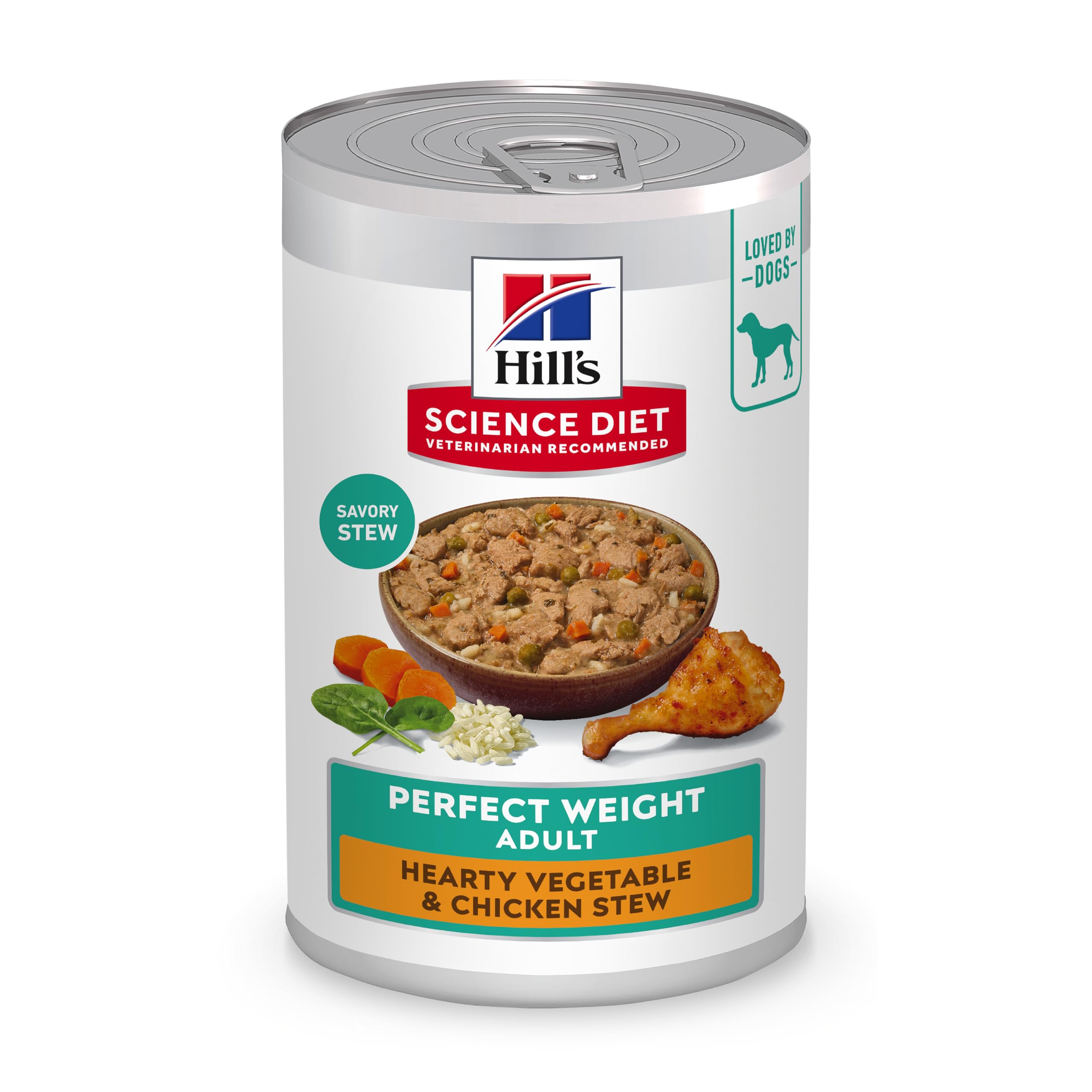
The Hill’s Science Diet Perfect Weight stew serves a dual purpose: managing obesity while supporting digestion. For overweight or obese dogs, constipation often worsens because abdominal fat compresses the colon, slowing transit time. This formula is clinically proven for weight loss, which indirectly alleviates that mechanical obstruction. The chicken and vegetable stew base provides around 78% moisture, and the vegetable content (carrots, peas) adds a natural source of insoluble fiber for stool bulk.
Where this product differs from direct constipation formulas is its mineral balance: it contains added L-carnitine and controlled mineral levels to support lean muscle maintenance during weight loss. The stew form makes it easy to serve as a standalone meal or mixed with dry kibble for dogs on a combined feeding plan. This is not a prescription diet — it’s available over the counter — but it is the #1 US veterinarian-recommended brand for weight management.
For dogs whose constipation is secondary to weight, this is an elegant solution that addresses the root cause rather than just the symptom. However, the fiber content is not especially high compared to veterinary GI diets, so it may not be sufficient for dogs with primary constipation independent of weight status. Owner reports indicate that stool quality improves as weight drops, but the effect is gradual over weeks.
Why we love it
- Addresses weight-related constipation by reducing abdominal pressure
- High moisture stew texture supports hydration
- Clinically proven for safe weight loss
Good to know
- Fiber is moderate — not therapeutic for severe constipation
- Results are gradual over weeks, not days
6. Nulo Grain-Free Turkey & Sweet Potato
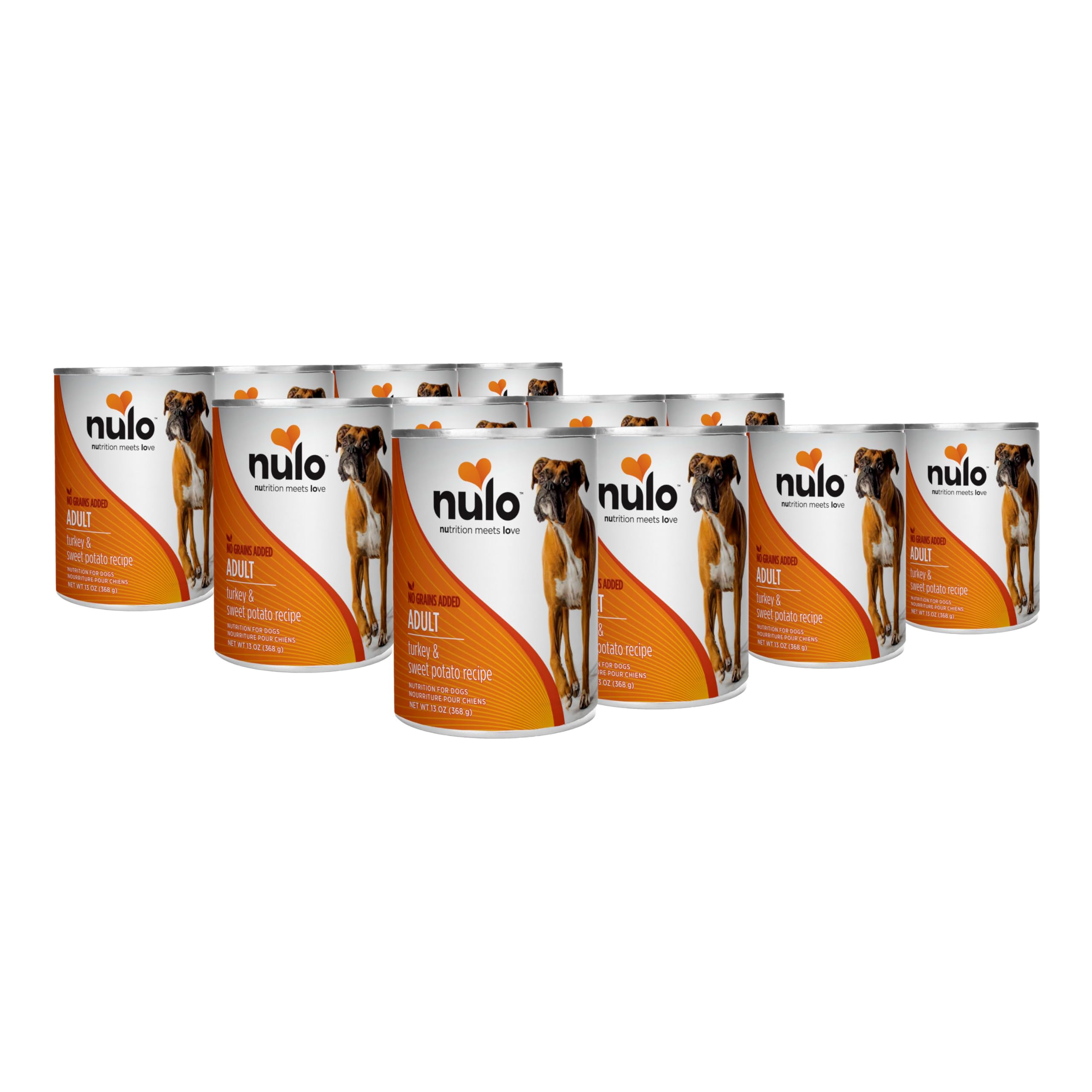
Nulo’s Turkey & Sweet Potato recipe is a strong entry in the limited-ingredient space for owners seeking a high-protein, low-carb wet food that also delivers constipation relief through fiber and moisture. The formula features turkey as the primary protein source (over 80% of protein from meat), with sweet potato providing natural soluble fiber that gels stool and peas contributing a small amount of insoluble roughage. At 78% moisture, it’s on par with the best therapeutic stews for hydration.
What sets Nulo apart is its low glycemic index: the recipe uses sweet potato, chickpeas, and lentils as carbohydrate sources, avoiding corn, wheat, and soy. For dogs with concurrent diabetes, insulin resistance, or grain sensitivities, this formula won’t spike blood sugar while it helps soften stool. The grain-free formulation also means no wheat gluten or corn fiber, which some dogs find difficult to digest.
The limitation here is the lack of targeted prebiotic fiber found in veterinary-diет formulas. Nulo relies on the natural fiber profile of sweet potato and chickpeas rather than adding concentrated prebiotic sources like inulin or chicory root. For mild constipation in a dog with food sensitivities, this is a solid choice. For chronic or severe cases, it may not provide enough targeted fiber to fully resolve the issue.
Why we love it
- High moisture and real turkey protein support muscle and hydration
- Sweet potato provides natural soluble fiber for stool softening
- Grain-free, low-carb formula suits metabolic conditions
Good to know
- No added concentrated prebiotics for therapeutic GI support
- Not recommended for severe or chronic constipation cases
7. Nutro Limited Ingredient Diet Turkey & Potato

Nutro’s Limited Ingredient Diet Turkey & Potato formula is the simplest recipe on this list: five key ingredient sources plus vitamins and minerals. For dogs whose constipation is triggered or worsened by multiple protein sources or complex carbohydrate blends, this simplified approach reduces the dietary variables that can contribute to GI irritation. Turkey is the sole animal protein, and potato supplies carbohydrates without the fiber complexity of legumes or grains.
This formula is explicitly free from corn, wheat, soy, chicken, beef, egg, and dairy protein — a critical distinction for dogs with confirmed food allergies that manifest as constipation or alternating stool consistency. The grain-free, limited-ingredient approach means that if the dog tolerates turkey and potato well, the only remaining variable is hydration. At around 76-78% moisture, it provides adequate water for most mild constipation cases, but the overall fiber content is low relative to veterinary formulations.
Owner feedback suggests this formula works best for dogs whose constipation is seasonal or flare-up related rather than chronic. It’s an excellent elimination diet tool — you can benchmark stool quality on this simple recipe and then determine if more fiber or moisture is needed. The 12.5-ounce cans are larger than standard 13-ounce cans, offering slightly more volume per feeding. Be aware that trace amounts of chicken or beef protein may be present due to cross-contact during manufacturing, so ultra-sensitive dogs may still react.
Why we love it
- Five ingredients only — excellent for elimination diet benchmarking
- Free from chicken, beef, egg, dairy, corn, wheat, soy
- Turkey as single protein minimizes food-allergy constipation
Good to know
- Low overall fiber content; not for chronic constipation
- Cross-contact risk for ultra-sensitive dogs
FAQ
What minimum moisture percentage should I look for in a canned food for constipation?
Can I use a non-prescription wet food like Nutro or Nulo instead of a veterinary GI diet?
How long does it take for canned food to relieve constipation compared to pumpkin or psyllium?
Can constipation be caused by too much fiber in dry dog food?
Final Thoughts: The Verdict
For most dogs struggling with constipation, the best canned dog food for constipation winner is the Hill’s Prescription Diet GI Biome because its ActivBiome+ prebiotic technology delivers the fastest stool normalization of any formula tested. If you want a high-digestibility veterinary option with MCT oil for sensitive systems, grab the Purina Pro Plan EN Gastroenteric. And for dogs whose constipation is linked to food sensitivities and requires a prescription-free solution, nothing beats the Royal Canin Digestive Care loaf in sauce.