
Basement concrete is cold, hard, and perpetually fighting moisture — a combination that makes standard broadloom carpet a disaster waiting to happen. Carpet tiles solve this by letting you remove, replace, and dry individual squares when spills or damp spots appear, giving you the warmth of carpet without the mold risk.
I’m Mo Mahin — the founder and writer behind Furric. I spend my time analyzing material specs, comparing moisture-resistance backings, and cross-referencing real owner feedback to find the carpet tiles that actually survive below-grade conditions.
After studying dozens of boxes and hundreds of verified reviews, I’ve narrowed the field to the best carpet tiles for basement use — ranked by their ability to handle concrete, humidity, and heavy furniture without buckling or delaminating.
How To Choose The Best Carpet Tiles For Basement
Not every carpet tile can handle the unique challenges of a basement. Temperature swings, concrete alkalinity, and potential moisture wicking all attack the tile’s backing and adhesive. Here are the three factors that separate tiles that last from tiles that bubble and peel.
Backing Construction: The Layer That Touches Concrete
The backing is everything below grade. Bitumen/asphalt backings resist moisture wicking and lay flat without curling at the edges — they’re the industry standard for below-grade installations. EVA backings are lighter and cheaper but can trap moisture against the concrete, leading to mildew over time. PE backing (polyethylene) offers good moisture resistance but is less rigid, which matters if you’re installing over uneven floors.
Pile Height: Comfort vs. Chair Mobility
Basements double as home offices, gyms, and playrooms, so pile height affects more than just feel. Low pile (under 0.25 inches) is ideal for rolling office chairs and allows easy vacuuming. Medium pile (0.25 to 0.5 inches) gives better insulation against cold concrete but may catch chair casters. High pile in a basement is a moisture and dirt trap — avoid it unless the space is perfectly climate controlled and dry.
Installation Method: Peel-and-Stick vs. Glue-Down vs. Floating
Peel-and-stick tiles are the most DIY-friendly but rely on the adhesive bond to the concrete — moisture can compromise the stick over time. Glue-down installation with a moisture barrier adhesive is the most permanent and professional, but harder to remove individual tiles. Floating installations (FlexLok or interlocking with edge tape) allow the tiles to expand and contract with temperature changes without buckling — critical for unconditioned basements.
Quick Comparison
On smaller screens, swipe sideways to see the full table.
| Model | Category | Best For | Key Spec | Amazon |
|---|---|---|---|---|
| VEVOR Carpet Tiles Reusable (24×24) | Soft Padding | Basement offices & living spaces | 0.236″ pile height, asphalt backing | Amazon |
| Mohawk Basics Berber 24×24 | Pro-Grade Berber | High-traffic basements & warranty peace of mind | PET fiber, 10-year wear warranty | Amazon |
| Mohawk Home Indoor/Outdoor 24×24 | All-Weather | Basements with moisture risk & renters | 0.25″ pile, peel-and-stick polyester | Amazon |
| VEVOR Garage Floor Tiles 12×12 | Heavy-Duty Rigid | Basement workshops & storage areas | 0.53″ thick, 5500lb load capacity | Amazon |
| Assorted Carpet Tile 24×24 | Budget Assortment | Playrooms & pet zones needing easy swaps | Nylon low pile, EVA backing | Amazon |
In‑Depth Reviews
1. VEVOR Carpet Tiles Reusable (24×24)
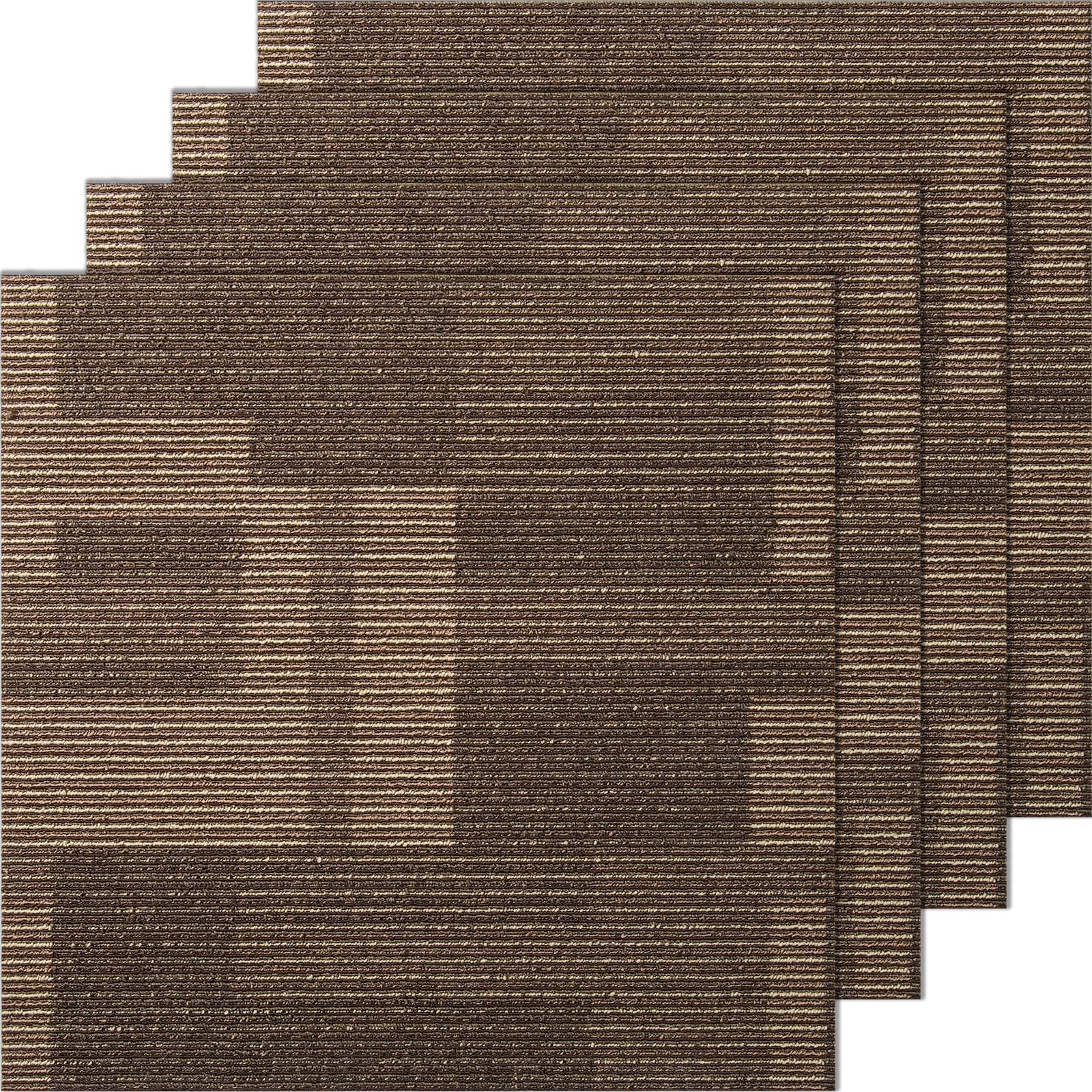
The VEVOR 24×24 carpet tiles use a bitumen/asphalt backing — the same material trusted in commercial below-grade installations — paired with a PP face fiber and a 0.236-inch pile height. That combination gives you the warmth you want on concrete without the moisture-trapping plushness that leads to mildew. The 24-tile box covers 96 square feet, making it a direct fit for a standard 10×10 basement room with no math needed.
Owners consistently note the tiles cut easily with a utility knife and lay flat without curling — a critical test for basement subfloors that are never perfectly level. The included adhesive stickers work for light traffic, but many reviewers recommend upgrading to a full-coverage carpet tape for a permanent bond on concrete. The 5-layer build with asphalt backing also minimizes telegraphing of concrete imperfections through the surface.
The main trade-off is firmness: some users describe the feel as “hard” underfoot, which actually makes these tiles excellent for rolling office chairs but less forgiving for sitting on the floor directly. The color consistency between separate boxes can vary, so order enough for your full space in one shipment. For a warm, durable basement floor that installs without professional help, this is the most balanced option available.
Why we love it
- Bitumen backing resists moisture wicking from concrete
- Firm surface works perfectly with rolling desk chairs
- Covers 96 sqft per box with easy DIY installation
Good to know
- Felt firmer than traditional residential carpet — not plush
- Color may vary slightly between separate box orders
2. Mohawk Basics Berber 24×24

The Mohawk Basics Berber tiles bring commercial-grade credentials to a basement — PET fiber with a 10-year limited wear warranty and an EcoFlex Matrix backing that is impervious to moisture damage from spills and water extraction cleaning. The 0.09-inch pile height is notably low, which means these are among the flattest tiles in this lineup and prioritize durability over cushioning. Each 24×24 tile weighs about 1.6 pounds, giving them a dense, substantial feel.
Installation flexibility sets these apart: you can glue them down with a moisture-barrier adhesive for a permanent bond, or use the FlexLok floating system (tabs sold separately) for a no-glue option that allows individual tile replacement. Multiple reviewers confirm that these tiles have no chemical smell out of the box — a real concern when installing in a confined basement space. The stone-walk multi-colored loop pattern does an excellent job hiding dirt and minor stains between cleanings.
The low pile means these tiles do not provide much thermal insulation against cold concrete — you’ll want an underlayment pad if warmth is your primary goal. Cutting requires more effort than softer tiles; a sharp utility knife with frequent blade changes or a carpet shear is recommended. For a long-term basement solution backed by one of the largest flooring manufacturers, this is the most warranty-protected choice available.
Why we love it
- 10-year wear and stain resistance warranty
- Multiple installation options including floating FlexLok
- No chemical odor and impervious to moisture damage
Good to know
- Very low pile offers minimal insulation from concrete
- Stiff tiles require more effort to cut and trim
3. Mohawk Home Indoor/Outdoor 24×24

The Mohawk Home Indoor/Outdoor tile is built specifically for spaces where moisture is a concern — the 100% polyester fiber resists moisture absorption and the peel-and-stick backing creates a seal against the concrete when pressed firmly. With a 0.25-inch pile height, it hits the sweet spot between the thin commercial berber of the Mohawk Basics and the firmer VEVOR tiles. The grey couture color is notably lighter than the product images suggest, which buyers should factor in.
Installation is genuinely tool-free for full squares: peel, press, and stick. The tiles cut easily with sharp scissors or a utility knife, and the adhesive holds well on clean, dry concrete above 50°F. Reviewers praise the forgiving nature of the pattern — alternating every other tile a quarter turn creates a subtle visual texture that hides any minor alignment gaps. The 15-tile box covers 60 square feet, making it a better fit for smaller basement areas or accent zones rather than a full room.
The primary concern reported by long-term users is shedding: the Roomba fills up daily for the first few weeks, though this diminishes over time. Color consistency between separate box orders is also a real issue — one reviewer described a significant color shift between two boxes ordered at different times. For a basement that sees occasional dampness or a rental where you want removable flooring, these tiles offer the best moisture resilience in this lineup.
Why we love it
- Polyester fiber resists moisture better than nylon or PP
- Easy peel-and-stick install with no extra adhesive needed
- 0.25″ pile offers good warmth without being too plush
Good to know
- Initial shedding requires frequent vacuuming
- Color can vary significantly between different order batches
4. VEVOR Garage Floor Tiles 12×12

The VEVOR 12×12 garage tiles are a different category entirely from the soft carpet tiles above — these are rigid, 0.53-inch thick polypropylene interlocking tiles with a 5500-pound load capacity. They are not carpet in the traditional sense but rather a hard-surface floor covering that works exceptionally well in basement workshops, storage rooms, or any area where you need impact protection and easy cleaning. The 3D diamond-textured surface provides traction even when the floor is dusty or slightly damp.
Installation is the fastest of any product here: no adhesive, no tools — just snap the six interlocking loops together on each tile. The upgraded locking mechanism from VEVOR creates a seamless fit without protruding edges, and the tiles can be removed and reinstalled without damage. Owners report cutting them easily with a table saw for perimeter pieces, and the tiles hold up well under heavy shelving units, tool boxes, and even vehicle jacks without cracking.
The major caution comes from temperature sensitivity: one long-term reviewer reported tiles becoming brittle and cracking after months of direct sunlight through a basement window combined with cold winter temperatures. These tiles are best suited for basements with stable, moderate temperatures and no direct UV exposure. They are also hard and cold underfoot — if you want warmth, lay a rug on top. For a durable, cleanable floor in a basement workshop, this is the most practical option.
Why we love it
- Interlocking design installs without glue or tools
- 5500lb load capacity handles heavy storage equipment
- Double-sided texture allows flipping for extended life
Good to know
- Hard plastic surface is cold and unyielding underfoot
- Brittle in extreme temperature swings — avoid direct sun exposure
5. Assorted Carpet Tile 24×24

The 4URFloor Assorted Carpet Tiles offer a nylon low-pile face with an EVA backing at a price point that makes them disposable — which is actually a feature for certain basement uses. At 24×24 inches and 32 pounds per box of 24 tiles, they are lighter than the VEVOR or Mohawk options, making them easier to transport down basement stairs. The pre-applied double-sided tape on each tile provides a peel-and-stick installation that holds well on clean concrete once pressed firmly.
The “assorted” nature of these tiles is both the selling point and the limitation: every box contains randomly selected colors and patterns, so you get a unique patchwork look every time. This makes them ideal for kids’ playrooms, pet areas, or temporary basement spaces where you plan to replace the floor in a few years. Reviewers confirm the tiles are heavy enough to stay in place without shifting, and the nylon face resists crushing from furniture better than polyester at this price tier.
The EVA backing is the weakest point for basement use — it is less moisture-resistant than bitumen or EcoFlex, and the adhesion may degrade in consistently damp conditions. Cutting requires tin snips rather than a razor knife to prevent fraying. For a budget-conscious basement renovation where the floor is a secondary concern to other room uses, these tiles deliver surprising quality for the investment, with the added benefit of easy individual tile replacement.
Why we love it
- Lowest cost per square foot for covering large basement areas
- Nylon face resists crushing from furniture better than polyester
- Random patterns create unique, custom look every time
Good to know
- EVA backing less moisture-resistant — not for damp basements
- Cut with tin snips, not a razor knife, to prevent fraying
FAQ
Can I install carpet tiles directly over concrete in a basement?
Will carpet tiles on concrete cause mold or mildew?
How do I cut carpet tiles to fit around basement support columns and corners?
Should I use peel-and-stick or glue-down for a basement?
Final Thoughts: The Verdict
For most basement owners, the best carpet tiles for basement winner is the VEVOR 24×24 Carpet Tiles because the bitumen backing directly addresses the moisture risk that kills other carpets below grade, while the 0.236-inch pile provides warmth without creating a rolling-chair hazard. If you want the longest warranty and commercial-grade stain resistance, grab the Mohawk Basics Berber. And for a basement workshop where impact protection matters more than softness, nothing beats the VEVOR 12×12 Interlocking Tiles.